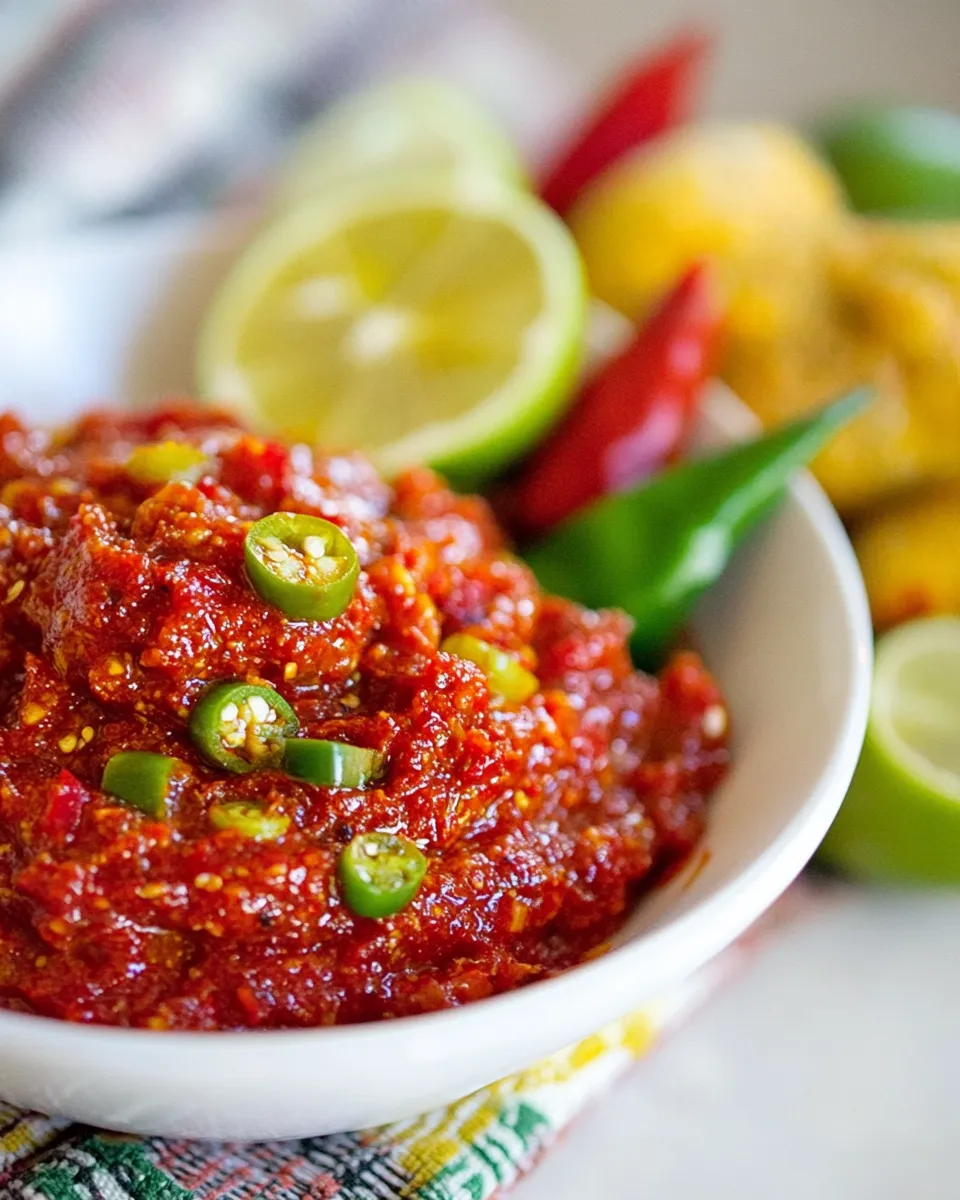
I fell in love with sambal belacan the first time I tried it on a rainy evening in Kuala Lumpur — a bright, fiery hit that woke up every bite of plain rice and fried fish. It’s the kind of condiment that’s simple in ingredients but complex in effect: chili heat, the saltiness and umami of shrimp paste, and a citrus lift that ties it all together. Once you make it at home, you’ll keep a jar in the fridge and find excuses to spoon it onto everything.
This version is straightforward and honest: chilies, toasted belacan (shrimp paste), a touch of sugar, a squeeze of calamansi or lime, and salt to taste. It’s quick to assemble if you have a mortar and pestle, and forgiving of texture — make it smooth or leave it rustic and chunky. I’ll walk you through each step and share practical tips so your sambal comes out balanced and bright every time.
Below you’ll find the ingredients, the exact step-by-step method, plus notes on what to watch for, sensible alternatives, and how to keep a batch tasting fresh. If you’re new to shrimp paste, don’t be intimidated — a little toasted belacan goes a long way in building savory depth.
Gather These Ingredients
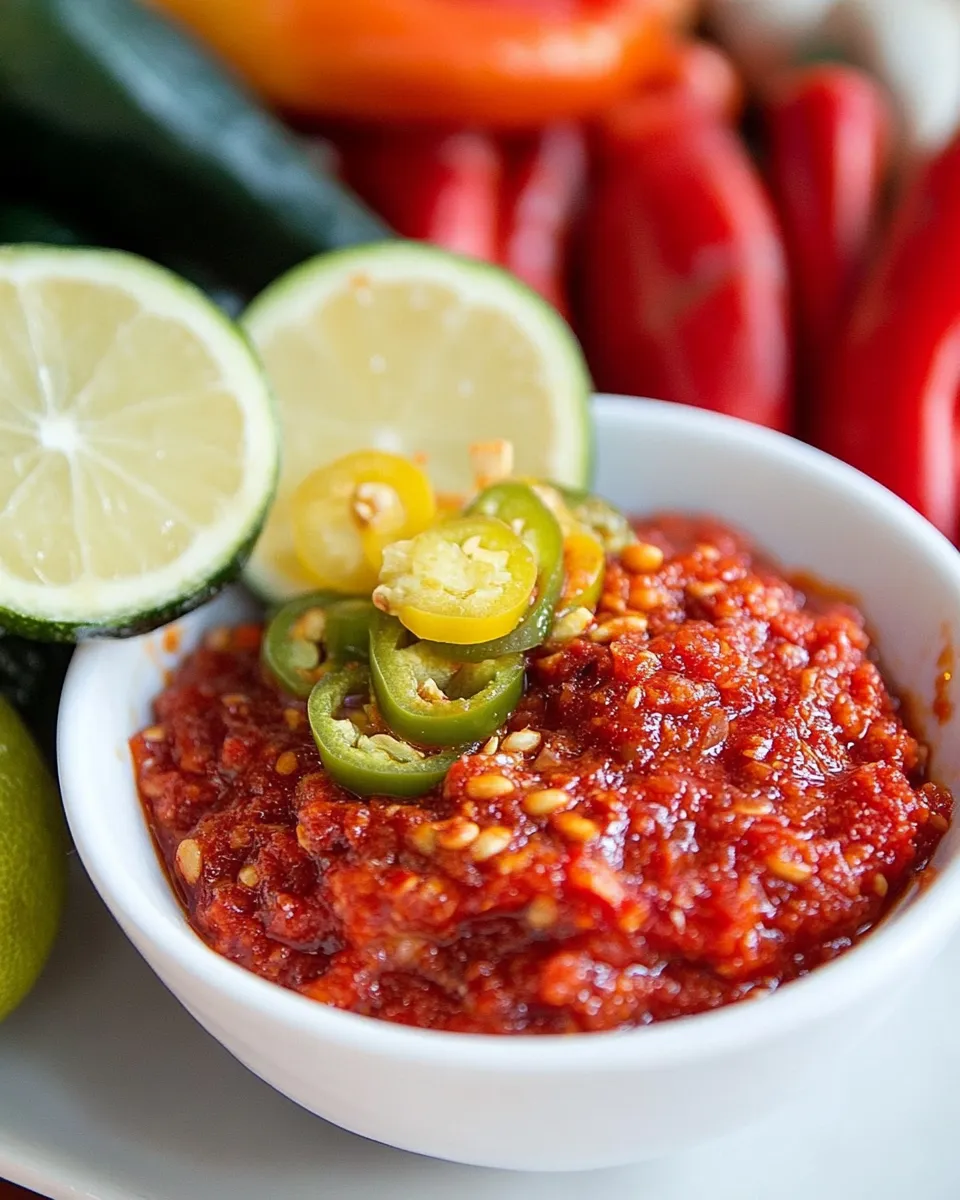
- 4oz (125g) red chilies, seeded, thinly sliced — the main source of heat and color; slicing makes them easier to pound and helps release juices.
- 1 tablespoon belacan, shrimp paste — toasted briefly for fragrance and to take off raw edge; provides savory umami backbone.
- salt to taste — used sparingly to round flavors; add incrementally and taste as you go.
- 1 – 1 1/2 teaspoons sugar — balances heat and acidity; start with 1 teaspoon and increase only if needed.
- 2 tablespoons Calamansi lime juice, or lime juice — brightens the sambal and lifts the flavors; fresh juice is best.
Stepwise Method: Sambal Belacan
- Rinse 4 oz (125 g) red chilies under running water. Remove the stems, cut the chilies open and scrape out the seeds, then thinly slice them. Place the sliced chilies in a mortar.
- Heat a dry wok or small skillet over low heat. Add 1 tablespoon belacan (shrimp paste) and toast, stirring or turning frequently, until aromatic and drier in texture (it may become crumbly or powdery), about 1–2 minutes. Do not add oil.
- Immediately transfer the toasted belacan to the mortar with the sliced chilies.
- Using a pestle, pound and grind the chilies and belacan together until you reach your preferred texture (fine or slightly coarse).
- Transfer the pounded mixture to a bowl. Add salt to taste, 1 to 1 1/2 teaspoons sugar (start with 1 teaspoon and use up to 1 1/2 teaspoons if you prefer), and 2 tablespoons calamansi lime juice (or lime juice). Mix thoroughly.
- Taste and adjust only the salt and sugar within the amounts given.
- Store the sambal in an airtight container in the refrigerator for a couple of days or freeze for longer storage.
The Upside of Sambal Belacan
Sambal belacan is a small jar of concentrated flavor that transforms simple dishes. A spoonful wakes up plain rice, drizzled grilled fish, steamed vegetables, and even a humble bowl of noodle soup. Because the ingredients are few, each one plays a clear role: the chilies for heat, belacan for umami depth, sugar to balance, and lime for brightness.
It’s also adaptable: make it coarser for a lively texture or smoother for a more integrated relish. The toasting step for the belacan is the real game-changer — it removes any raw sharpness and develops savory notes that read almost smoky. Finally, because the recipe stores well in the refrigerator and freezes easily, you can batch-make it and have quality sambal on hand whenever you want to boost a meal.
Flavor-Forward Alternatives
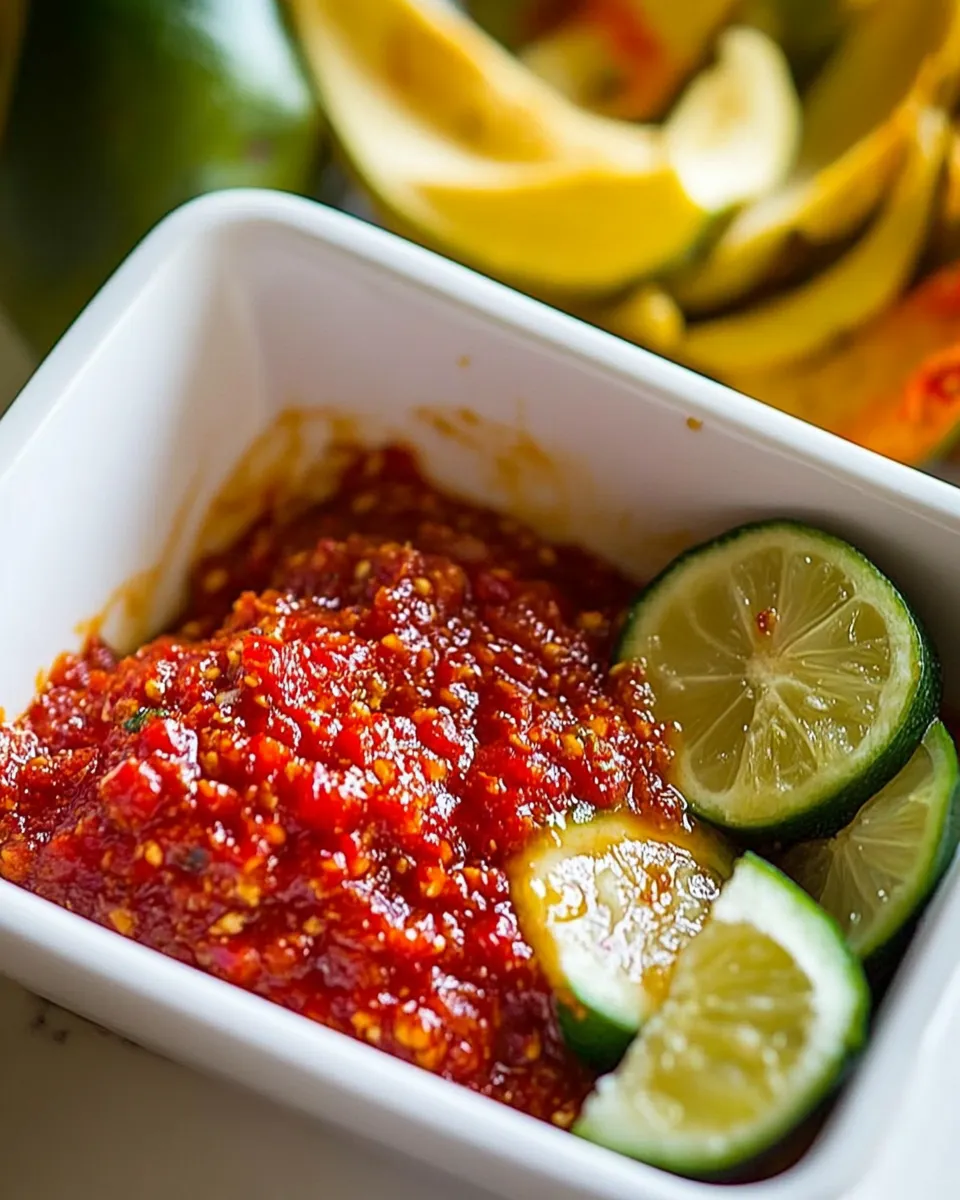
If you like experimenting, there are gentle ways to nudge the flavor without changing the spirit of the recipe. Toast the belacan slightly longer for a deeper, smokier note; keep some chili seeds if you want more aggressive heat; or let the mixture sit for an hour after mixing so flavors meld before you judge balance. Another option is to vary the texture: pound less for a chunky relish that adds bursts of chile and paste, or pound more for a saucy, spreadable condiment.
Appliances & Accessories
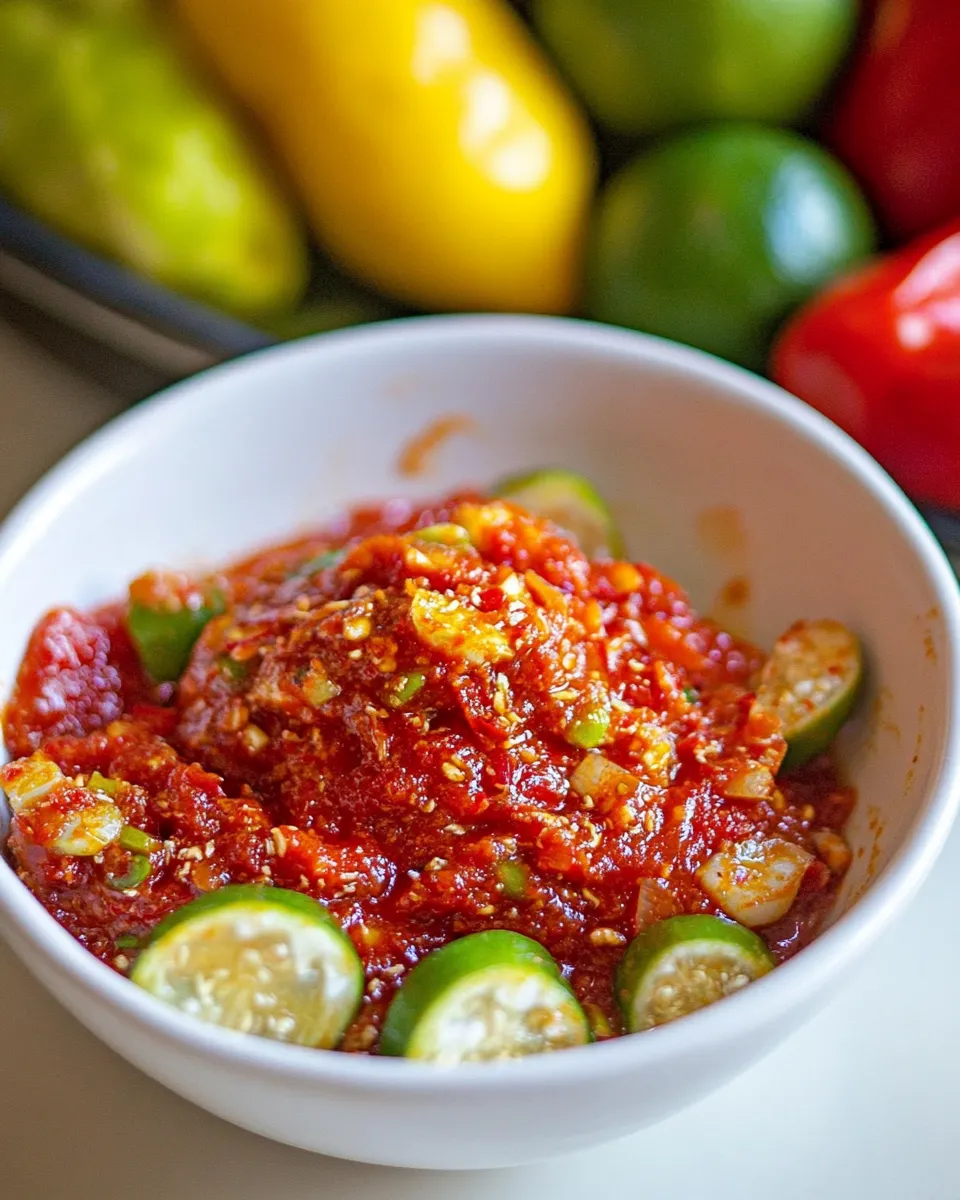
- Mortar and pestle — traditional tool for pounding and marrying the chilies and belacan; gives the best texture and flavor release.
- Dry wok or small skillet — for toasting the belacan over low heat without oil.
- Bowl — for mixing and tasting the sambal.
- Airtight container — keeps the sambal fresh in the refrigerator or suitable for freezing portions.
- Knife and cutting board — for removing stems and slicing chilies thinly.
Errors to Dodge
- Over-toasting the belacan. A quick 1–2 minutes over low heat is enough to coax aroma and reduce rawness; too much heat turns it bitter. Watch and smell carefully.
- Not tasting as you go. Salt and sugar need small adjustments. Add incrementally and taste between additions.
- Leaving stems or too many seeds. Stems add fibrous texture; seeds add harsh, unpredictable heat. Remove stems and scrape most seeds out for a cleaner result.
- Using citrus that isn’t fresh. Bottled juices lack brightness and can make the sambal taste flat. Fresh calamansi or lime is preferable.
- Storing warm. Cool the sambal to room temperature before sealing and refrigerating to avoid condensation and faster spoilage.
Substitutions by Diet
This recipe centers on belacan, which is a fermented shrimp paste and not suitable for vegetarian or strict pescatarian diets if seafood is excluded. If you need to avoid shrimp paste, the key consideration is that you’ll be losing that savory umami anchor. To keep the relish bold without introducing new specialty ingredients, you can skip the belacan and rely on a little extra salt and longer, gentle toasting of the chilies to coax deeper flavors. The result will be a bright, straightforward chili-lime condiment rather than traditional sambal belacan, but it still functions beautifully as a spicy-acidic boost.
For those watching sugar, stick to 1 teaspoon and rely more on lime and salt to balance heat. If you need to reduce sodium, add salt very conservatively and taste repeatedly — the calamansi or lime will help lift flavors so you can get away with less salt overall.
Recipe Notes & Chef’s Commentary
Texture and personal preference
My favorite texture is slightly coarse: you can still see flecks of chili and the toasted belacan adds little beads of savory. If you prefer a smoother paste, pound longer until the oils release and the mixture becomes more cohesive. Both are correct. The key is to make it the way you like so it blends effortlessly into the dishes you pair it with.
Balancing tips
Start with the lower amount of sugar and add up to 1 1/2 teaspoons only if you need to soften the acidity or heat. Salt should be adjusted to taste because belacan itself is salty — taste after mixing before adding more. If the mixture feels too sharp, give it a few minutes and re-taste; flavors settle and round out.
On calamansi vs. lime
Calamansi has a floral, slightly sweeter citrus character compared to plain lime. If you have it, use it — but lime is an excellent and accessible substitute that keeps the sambal bright. Use fresh juice in either case.
Storing, Freezing & Reheating
Store the sambal in an airtight container in the refrigerator for a couple of days. Because it contains fresh citrus, I recommend consuming refrigerated batches within 48–72 hours for the best flavor and safety. For longer storage, freeze in small portions (ice cube trays work well) and transfer frozen cubes to a sealed bag. Thaw in the refrigerator and stir before serving. Note that freezing can slightly mute the fresh citrus scent but the overall savory profile will remain intact.
FAQ
How long will sambal belacan keep in the fridge?
Stored in an airtight container, use it within a couple of days for peak freshness because of the fresh lime/calamansi juice. For anything beyond that, freeze portions.
Can I skip toasting the belacan?
Toasting calms the raw edge of belacan and adds aroma. If you don’t toast it, the paste will be more pungent and assertive. Toasting for 1–2 minutes over low heat is recommended.
What if it’s too spicy?
If heat is overwhelming, add the maximum 1 1/2 teaspoons of sugar to help balance, and increase a bit of lime juice to brighten. Serving the sambal alongside plain rice, cucumber slices, or a neutral protein also helps mellow the perceived heat.
Can I make this with different chilies?
The recipe uses red chilies for color and heat. If you have milder or hotter varieties, adjust how many you use and seed removal accordingly. Always taste and adjust salt and sugar after mixing.
The Last Word
Sambal belacan is one of those condiments that makes straightforward meals feel deliberate and delicious. It’s easy to make, quick to vary, and endlessly useful — a jar in the fridge will change how you think about weeknight dinners. Follow the simple steps here, adjust salt and sugar to your palate, and don’t be afraid to make it your own by dialing the texture and heat. Once you’ve had that first hit of bright, umami-packed sambal, you’ll understand why it’s a staple in so many kitchens.

Sambal Belacan
Ingredients
Ingredients
- 4 oz 125 gred chilies, seeded, thinly sliced
- 1 tablespoonbelacan shrimp paste
- salt to taste
- 1 – 1 1/2 teaspoonssugar
- 2 tablespoonsCalamansi lime juice or lime juice
Instructions
Instructions
- Rinse 4 oz (125 g) red chilies under running water. Remove the stems, cut the chilies open and scrape out the seeds, then thinly slice them. Place the sliced chilies in a mortar.
- Heat a dry wok or small skillet over low heat. Add 1 tablespoon belacan (shrimp paste) and toast, stirring or turning frequently, until aromatic and drier in texture (it may become crumbly or powdery), about 1–2 minutes. Do not add oil.
- Immediately transfer the toasted belacan to the mortar with the sliced chilies.
- Using a pestle, pound and grind the chilies and belacan together until you reach your preferred texture (fine or slightly coarse).
- Transfer the pounded mixture to a bowl. Add salt to taste, 1 to 1 1/2 teaspoons sugar (start with 1 teaspoon and use up to 1 1/2 teaspoons if you prefer), and 2 tablespoons calamansi lime juice (or lime juice). Mix thoroughly.
- Taste and adjust only the salt and sugar within the amounts given.
- Store the sambal in an airtight container in the refrigerator for a couple of days or freeze for longer storage.
Equipment
- Mortar and pestle
- wok or small skillet
- Bowl
- Spoon
- Airtight Container
Notes
If you don’t have a mortar and pestle, you can use a mini food processor to grind everything. If you like extra fiery kick in your sambal, you can add a few bird’s eye chilies.