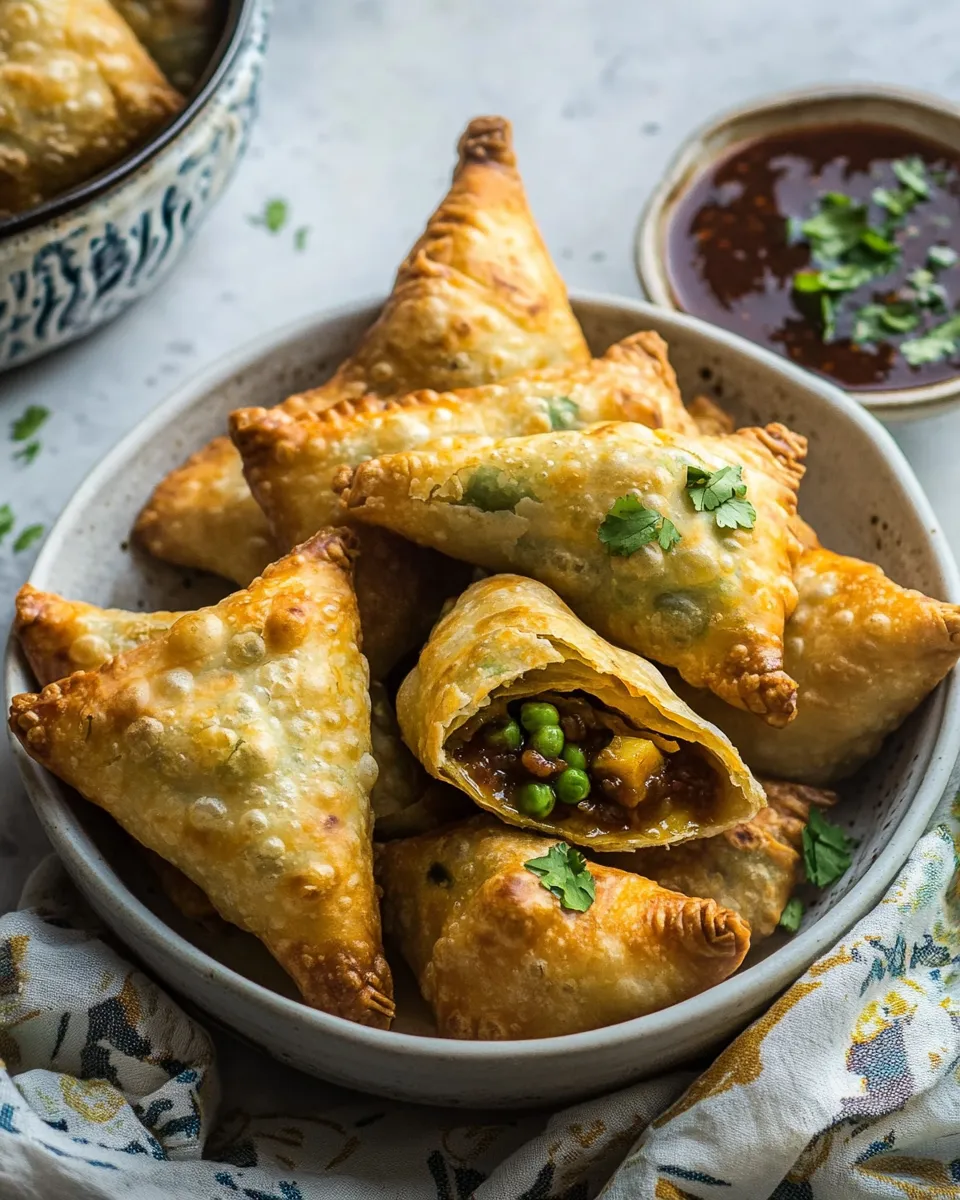
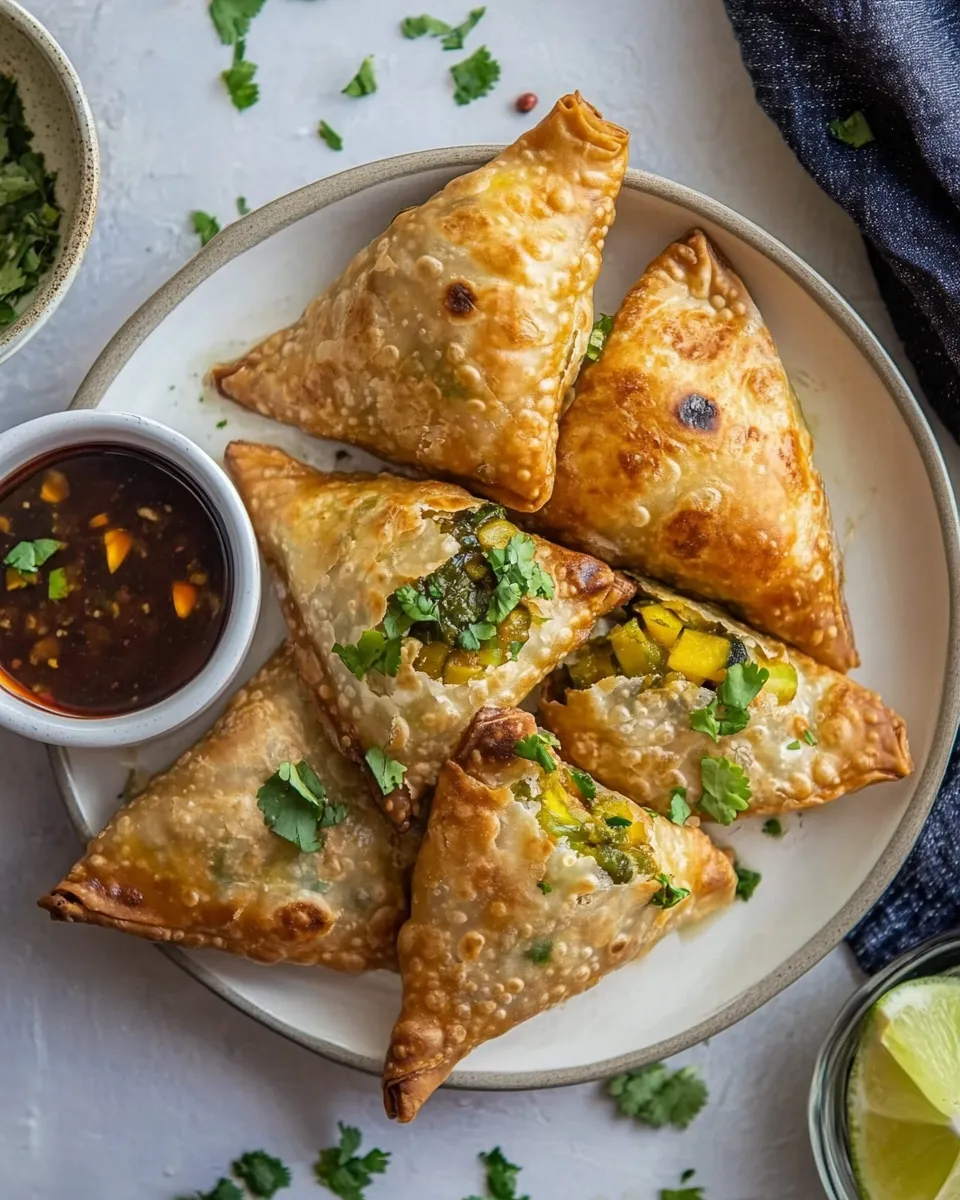
I make samosas the way my grandmother taught me: with patience, a forgiving hand and a very hot pan. They’re a small engineering feat—crispy, golden pastry wrapped around a warmly spiced potato and pea filling. When done right they are crunchy, flavorful and addictive. When rushed, they can be greasy or under-sealed. I’ll walk you through a reliable method that gives consistent results.
This recipe produces 12 samosas and uses simple pantry spices and clarified butter (ghee) for the dough and filling. The technique focuses on texture: a shaggy, sturdy dough that fries to a flake, and a filling that’s fluffy rather than pasty. There are clear steps for assembly and frying so you can avoid common pitfalls.
Gather These Ingredients
- 2 cups all purpose flour — forms the dough; choose a standard AP flour for structure and crispness.
- 1 teaspoon thyme — a subtle herb note in the pastry; it’s mild here, not overpowering.
- 1 teaspoon salt — salt in the dough balances the filling and boosts flavor.
- ¼ cup ghee, clarified butter — rubbed into the flour for a flaky, slightly rich crust.
- 8-12 tablespoons cold water — added gradually to form a fairly stiff dough that doesn’t stick.
- 1 lb russet potatoes — starchier potatoes hold shape when chunked rather than mashed.
- 1 tablespoon ghee, clarified butter — used for tempering spices and lightly coating the filling.
- 1 teaspoon cumin seeds — toasting whole seeds gives a warm, toasty base flavor.
- 1 teaspoon coriander seeds — adds citrusy, nutty depth when lightly sautéed.
- ½ teaspoon fennel seeds — a sweet-anise lift; used in both tempering and powder form later.
- 1 tablespoon ginger, minced — brightness and a little heat; mince finely so it distributes.
- 1 green chili, diced — fresh heat; remove seeds if you want milder samosas.
- 1 cup green peas — texture and color; frozen peas work fine, just thaw or cook through.
- 1 teaspoon lemon juice — a small acid touch to brighten the filling.
- 1 teaspoon fennel powder — reinforces the fennel seed flavor without big bits.
- ½ teaspoon turmeric — color and a hint of earthiness; use measured for balance.
- 1 teaspoon garam masala — warm, blended spice to finish the filling.
- 1 tablespoon cilantro, minced — fresh herb lift in the finished filling.
- salt to taste — final seasoning for the filling; adjust after mixing ingredients.
- oil for frying — neutral oil with a high smoke point (peanut, canola, sunflower).
Samosas, Made Easy
- In a large bowl, whisk together 2 cups all purpose flour, 1 teaspoon thyme, and 1 teaspoon salt.
- Add ¼ cup ghee (clarified butter) to the flour mixture. Using your fingers, rub the ghee into the flour until the mixture is evenly combined and has a shaggy texture that will hold its shape when pressed.
- Add 8–12 tablespoons cold water, one tablespoon at a time, kneading as you add water until you have a fairly stiff dough that does not stick to your hands.
- Cover the dough and let it rest for 30 minutes.
- While the dough rests, prepare the potatoes: peel 1 lb russet potatoes and cut into 2-inch chunks. Place in a pot of salted water, bring to a boil, and cook until just fork-tender (not mushy). Drain well.
- Roughly chop or crumble the drained potatoes; do not mash. Set them aside.
- Make the filling: heat 1 tablespoon ghee in a medium pan over medium-high heat. Add 1 teaspoon cumin seeds, 1 teaspoon coriander seeds, and ½ teaspoon fennel seeds and sauté until the seeds begin to sizzle and become fragrant, about 30–60 seconds.
- Add 1 tablespoon minced ginger, 1 green chili (diced), and 1 cup green peas. Sauté about 2 minutes, stirring, until the peas are heated through.
- Add the chopped potatoes, 1 teaspoon lemon juice, ½ teaspoon turmeric, 1 teaspoon garam masala, 1 teaspoon fennel powder, 1 tablespoon minced cilantro, and salt to taste. Mix gently to combine and sauté for another 1–2 minutes to blend flavors.
- Transfer the filling to a bowl and let it cool to near room temperature before assembling.
- Divide the rested dough into six equal portions and form each into a ball. Cover the balls and let them rest for about 10 minutes.
- Working with one ball at a time, roll each ball into a flat disk about 7 inches across. You may press or roll between two pieces of parchment paper to keep the surface smooth. Keep the other dough balls covered so they do not dry out.
- Cut each 7-inch round in half. Moisten the straight (flat) edge of one half with a little water, then fold and press the moistened edges together to form a cone with an open top.
- Fill each cone with about 2 tablespoons of the potato-pea filling, gently pack the filling down, then moisten the inside edge of the open side and press to seal the samosa. Repeat for the other half-rounds to make 12 samosas.
- Heat about 2 inches of oil for frying in a large, heavy-bottom pan over medium heat. Test the oil by inserting a wooden skewer or toothpick — it should sizzle and produce steady small bubbles.
- Fry the samosas in batches, leaving space between them so they do not touch. Fry until golden and crispy, turning as needed (about 1 minute per side as a guideline), adjusting heat so they brown evenly without developing dark brown spots.
- Remove fried samosas with a slotted spoon and drain on a paper towel-lined plate.
- Serve the samosas warm. (Yield: 12 samosas.)
Reasons to Love Samosas
- Crisp contrast: The flaky exterior and soft, spiced interior create a satisfying bite every time.
- Make-ahead friendly: Dough and filling can be prepared in advance, then assembled and fried when guests arrive.
- Customizable heat: Adjust the green chili and seasoning to suit your taste without changing technique.
- Comfort food: Potatoes and peas are familiar and forgiving ingredients—comfort wrapped in a perfect little triangle.
- Portable snack: They travel well to picnics or potlucks, and taste great at room temperature.
International Equivalents
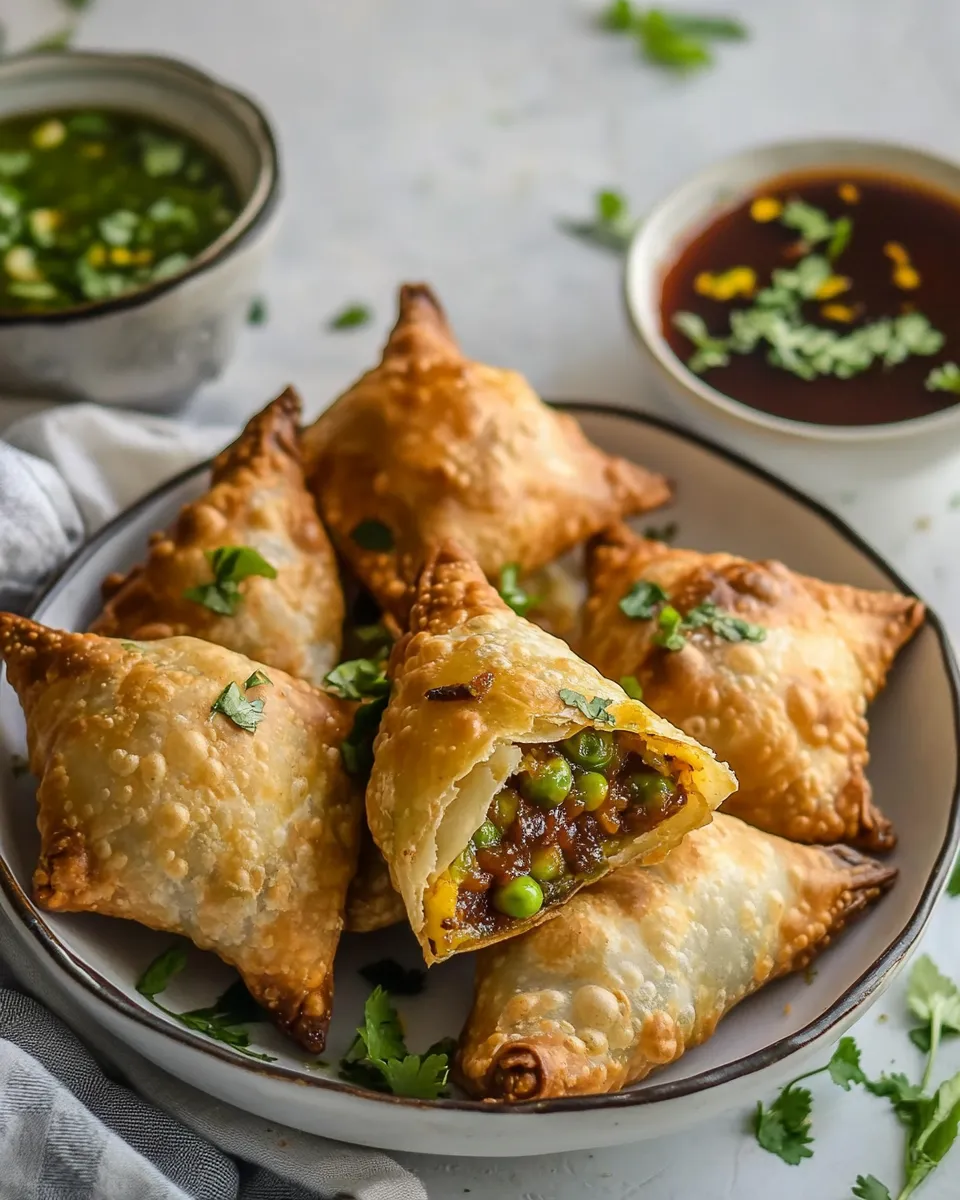
Samosas have cousins around the world. In North Africa and parts of the Mediterranean you’ll find borek and sambousek—filled pastries that use similar folding or filling principles but different doughs and spices. In East Africa, samosas (often spelled sambusa) are popular with variations in meat and spice mixes. In Southeast Asia, empanada-like turnovers share the same idea: a sealed pastry pocket holding savory fillings. The common thread is easy portability and a crisp shell hiding a flavorful center.
What You’ll Need (Gear)
- Large mixing bowl — for the dough; roomy enough to mix and knead.
- Rolling pin — to roll each ball into a 7-inch disk.
- Heavy-bottomed frying pan or pot — holds heat steady for even frying.
- Slotted spoon — for safe removal of samosas from hot oil.
- Paper towels or wire rack — to drain excess oil after frying.
- Measuring cups and spoons — stick to the recipe amounts for reliable results.
Frequent Missteps to Avoid
- Dough too wet: If the dough sticks to your hands you added too much water. Keep it fairly stiff; it should not stick.
- Overcooked potatoes: Boil until just fork-tender. Mushy potatoes make the filling glue-like and harder to shape.
- Skipping the rest: Resting the dough relaxes gluten and makes rolling easier. Don’t skip the 30-minute rest.
- Oil too hot or too cool: If oil is too hot, samosas will brown outside and remain raw inside. If too cool, they absorb oil. Aim for steady small bubbles around a skewer test.
- Under-sealing edges: Moisten and press firmly. A poorly sealed samosa will open in the fryer and the filling will leak.
How to Make It Lighter
If you want a lighter version without deep frying, consider shallow-frying or baking:
- Shallow-fry: Use a skillet with about 1/4 to 1/2 inch oil and turn frequently to brown all sides; this reduces oil absorption somewhat compared to deep frying.
- Bake: Brush or lightly spray samosas with oil and bake at 400°F (200°C) on a parchment-lined sheet. Flip halfway and bake until golden and crisp. Texture will be different—less puff and crunch than deep frying, but still enjoyable.
- Air-fryer option: If you own an air-fryer, arrange samosas in a single layer, spray lightly with oil, and air-fry at 370°F (190°C) until golden, watching closely so they don’t dry out.
Author’s Commentary
I love making samosas because they reward attention to small details: the dough’s texture, the degree to which potatoes are broken up, and the toasted aroma of whole spices. I favor ghee in both dough and filling because it adds a toasty, butter-like richness that keeps the crust flakey. The filling here intentionally avoids mashing the potatoes—those small lumps give the samosa body and a pleasing mouthfeel.
For gatherings I often prepare the filling a day ahead and keep the dough chilled, then assemble and fry just before serving. It keeps the kitchen timeline smooth and lets you focus on frying steady batches rather than juggling raw prep and hot oil at the same time.
Storage & Reheat Guide
Short-term
Store cooled samosas in an airtight container in the refrigerator for up to 3 days. Reheat in a 350°F (175°C) oven or an air fryer until warmed through and crisp—about 8–12 minutes depending on size.
Freezing
To freeze, assemble samosas but do not fry. Arrange them in a single layer on a baking sheet and freeze until firm, then transfer to a freezer bag. Fry from frozen; add a minute or two to frying time so the center warms through. Alternatively, you can bake or air-fry from frozen, though times will vary.
Your Questions, Answered
- Can I use mashed potatoes? The recipe instructs to roughly chop or crumble the potatoes and explicitly says do not mash. Chunks maintain texture and prevent a gluey filling.
- What if I don’t have ghee? Clarified butter is called for, but neutral oil or melted butter can substitute in a pinch. Expect a slightly different flavor and flakiness.
- Can I make them spicy or mild? Yes. Adjust the green chili and salt to taste. You can also add a pinch of red chili powder to the filling for more heat.
- How do I test frying oil temperature without a thermometer? Insert a wooden skewer or toothpick—if bubbles form steadily around it, the oil is ready. If bubbles are vigorous and the skewer browns quickly, the oil is too hot.
Before You Go
Take your time with the dough and don’t rush the filling cooling step—sealing hot filling tends to open seams in the fryer. Keep the dough balls covered while working so they don’t dry out, and fry in small batches to maintain oil temperature. These little habits make the difference between a good samosa and a great one.
Make a batch, share with friends, and notice which spice balance they prefer. Samosas are forgiving and adaptable. Enjoy the ritual of folding and frying—it’s the part that transforms simple ingredients into something celebratory.

Samosas
Ingredients
Ingredients
- 2 cupsall purpose flour
- 1 teaspoonthyme
- 1 teaspoonsalt
- 1/4 cupghee clarified butter
- 8-12 tablespoonscold water
- 1 lbrusset potatoes
- 1 tablespoonghee clarified butter
- 1 teaspooncumin seeds
- 1 teaspooncoriander seeds
- 1/2 teaspoonfennel seeds
- 1 tablespoonginger minced
- 1 green chili diced
- 1 cupgreen peas
- 1 teaspoonlemon juice
- 1 teaspoonfennel powder
- 1/2 teaspoonturmeric
- 1 teaspoongaram masala
- 1 tablespooncilantro minced
- salt to taste
- oil for frying
Instructions
Instructions
- In a large bowl, whisk together 2 cups all purpose flour, 1 teaspoon thyme, and 1 teaspoon salt.
- Add ¼ cup ghee (clarified butter) to the flour mixture. Using your fingers, rub the ghee into the flour until the mixture is evenly combined and has a shaggy texture that will hold its shape when pressed.
- Add 8–12 tablespoons cold water, one tablespoon at a time, kneading as you add water until you have a fairly stiff dough that does not stick to your hands.
- Cover the dough and let it rest for 30 minutes.
- While the dough rests, prepare the potatoes: peel 1 lb russet potatoes and cut into 2-inch chunks. Place in a pot of salted water, bring to a boil, and cook until just fork-tender (not mushy). Drain well.
- Roughly chop or crumble the drained potatoes; do not mash. Set them aside.
- Make the filling: heat 1 tablespoon ghee in a medium pan over medium-high heat. Add 1 teaspoon cumin seeds, 1 teaspoon coriander seeds, and ½ teaspoon fennel seeds and sauté until the seeds begin to sizzle and become fragrant, about 30–60 seconds.
- Add 1 tablespoon minced ginger, 1 green chili (diced), and 1 cup green peas. Sauté about 2 minutes, stirring, until the peas are heated through.
- Add the chopped potatoes, 1 teaspoon lemon juice, ½ teaspoon turmeric, 1 teaspoon garam masala, 1 teaspoon fennel powder, 1 tablespoon minced cilantro, and salt to taste. Mix gently to combine and sauté for another 1–2 minutes to blend flavors.
- Transfer the filling to a bowl and let it cool to near room temperature before assembling.
- Divide the rested dough into six equal portions and form each into a ball. Cover the balls and let them rest for about 10 minutes.
- Working with one ball at a time, roll each ball into a flat disk about 7 inches across. You may press or roll between two pieces of parchment paper to keep the surface smooth. Keep the other dough balls covered so they do not dry out.
- Cut each 7-inch round in half. Moisten the straight (flat) edge of one half with a little water, then fold and press the moistened edges together to form a cone with an open top.
- Fill each cone with about 2 tablespoons of the potato-pea filling, gently pack the filling down, then moisten the inside edge of the open side and press to seal the samosa. Repeat for the other half-rounds to make 12 samosas.
- Heat about 2 inches of oil for frying in a large, heavy-bottom pan over medium heat. Test the oil by inserting a wooden skewer or toothpick — it should sizzle and produce steady small bubbles.
- Fry the samosas in batches, leaving space between them so they do not touch. Fry until golden and crispy, turning as needed (about 1 minute per side as a guideline), adjusting heat so they brown evenly without developing dark brown spots.
- Remove fried samosas with a slotted spoon and drain on a paper towel-lined plate.
- Serve the samosas warm. (Yield: 12 samosas.)
Equipment
- Large Bowl
- Mixing spoon
- Rolling Pin
- Parchment Paper
- Pot
- medium pan
- large heavy-bottom pan or deep-fryer
- Slotted spoon
- Paper Towels