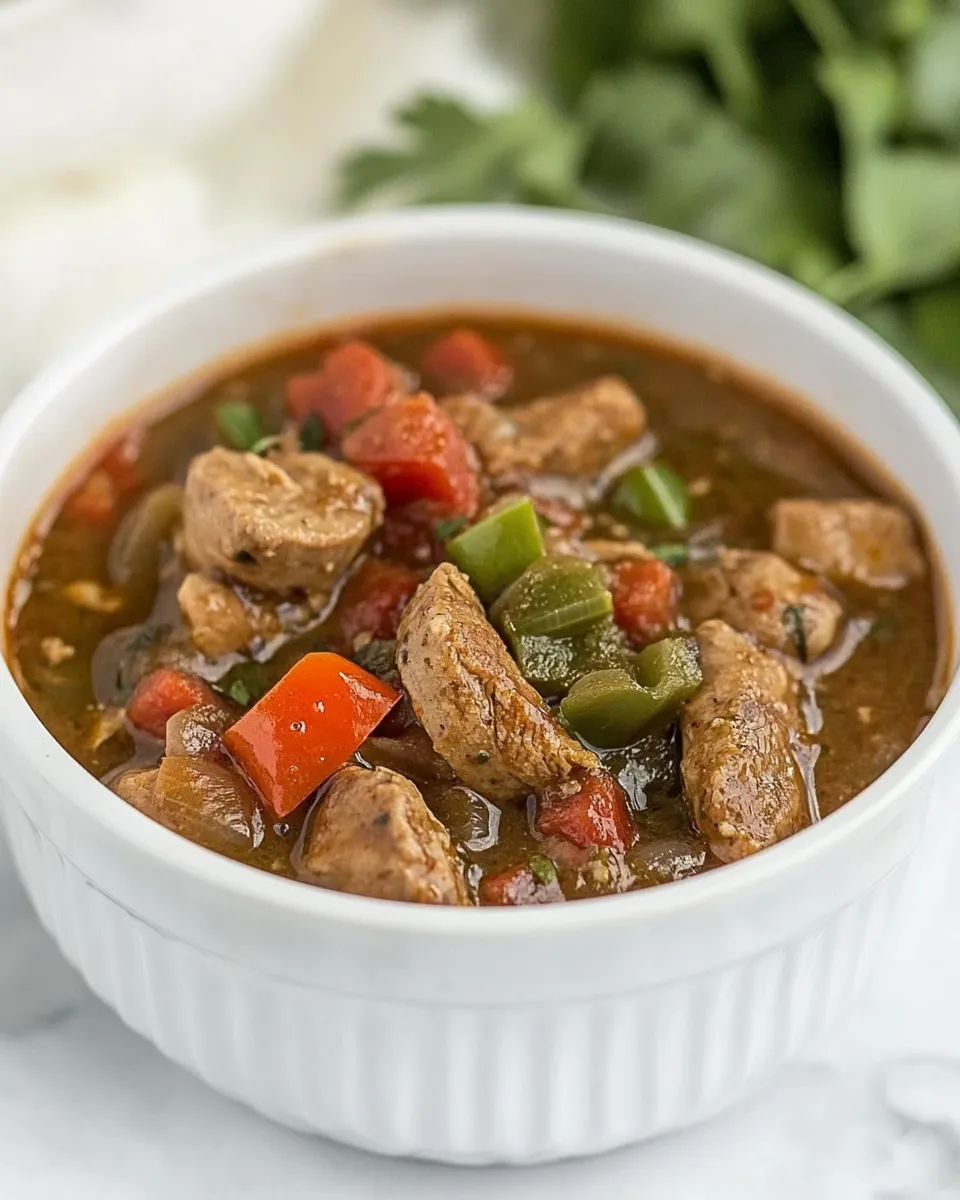
Gumbo is one of those dishes that asks for patience and returns it tenfold. This sausage and chicken version leans into deep, toasted roux and smoky andouille, with tender, falling-off-the-bone chicken soaking up every bit of seasoned broth. It’s comforting, bold, and worth the bit of hands-on attention the roux requires.
I write this from a practical place: you don’t need fancy tools or rare spices to make a great gumbo, but you do need to respect a few steps—browning the chicken, building the roux slowly, and seasoning in layers. Follow those, and you’ll be rewarded with a bowl that’s rich, hearty, and balanced.
Below you’ll find the exact ingredients and step-by-step method I use at home and on the blog, plus equipment notes, common mistakes, swap ideas, and storage tips. Read through once, gather your mise en place, and then get cooking.
Gather These Ingredients
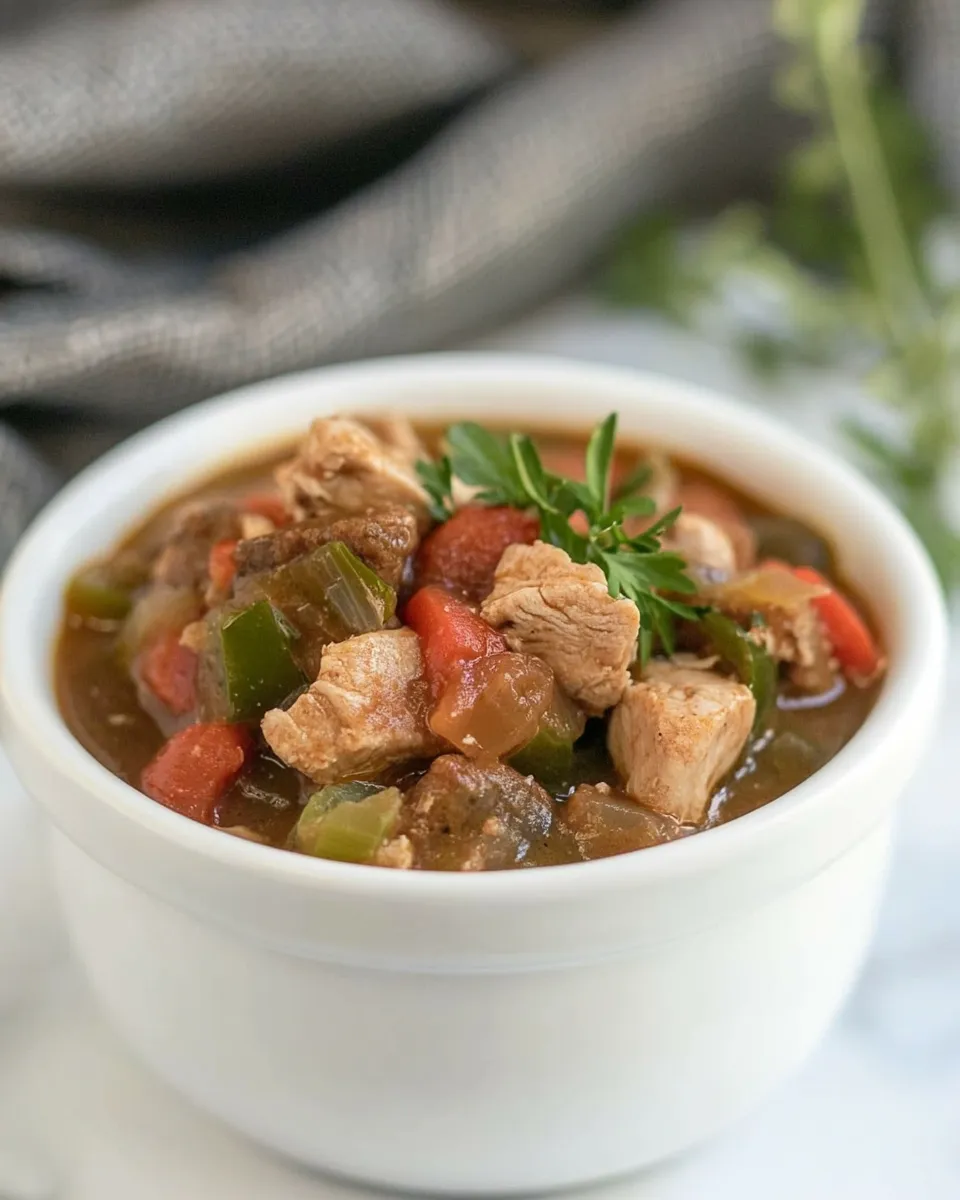
- 3 tablespoons plus ¾ cup vegetable oil — oil splits between initial sear and making the roux; choose a neutral oil with a high smoke point.
- 2 ½ pounds bone-in chicken breasts — bones add flavor and body to the broth as the chicken simmers.
- Kosher salt and freshly ground black pepper — essential for layering seasoning; taste and adjust as you go.
- 1 cup flour, divided — some to lightly coat the chicken for browning, the rest for the roux; temperature control matters.
- 4 stalks celery, thinly sliced — one part of the classic “holy trinity” for gumbo; adds texture and aromatics.
- 4 large onions, diced — sweetness and depth when softened; don’t rush this step.
- 4 bell peppers, diced (I used 2 green and 2 red) — color and a sweeter, peppery note; use what you like.
- 2 tablespoons minced garlic — added after the roux and vegetables; brightens the finished gumbo.
- ½ to 1 teaspoon cayenne pepper (to taste) — start lower if sensitive to heat; you can always add more.
- ¾ teaspoon oregano — herbaceous backbone in the seasoning mix.
- ¾ teaspoon basil — adds a warm, sweet-herb note.
- ¾ teaspoon thyme — pairs well with the chicken and sausage.
- 4 bay leaves — simmer with the broth to add depth; remove before serving.
- 8 cups chicken broth, good quality canned or homemade — the foundation of the gumbo; richer broth equals richer gumbo.
- 1 ½ pounds andouille sausage cut into slices, then quartered — smoky sausage is a must; it contributes fat and flavor.
- 1 tablespoon filé powder or gumbo seasoning with filé powder — used at the end for traditional flavor and slight thickening.
- 4 cups cooked white rice — serve the gumbo over rice to soak up the sauce.
Sausage and Chicken Gumbo Made Stepwise
- Pat the chicken breasts dry, season generously with kosher salt and freshly ground black pepper, and lightly coat them in 1/4 cup of the flour, tapping off any excess.
- In a large heavy pot, heat 3 tablespoons of the vegetable oil over medium-high to high heat until shimmering. Add the chicken and brown on both sides, about 8 minutes total. Remove the chicken to a plate and set aside.
- Reduce the heat to medium-high. Add the sliced celery, diced onions, and diced bell peppers to the same pot (use any browned bits left in the pot). Cook, stirring occasionally, until the vegetables are softened, about 6–10 minutes. Remove the vegetables and set aside.
- Wipe the pot if there is an excessive burnt residue, then add 3/4 cup vegetable oil and warm it over medium heat for a few minutes.
- Gradually add the remaining 3/4 cup of flour to the warmed oil, stirring constantly with a wooden spoon or heatproof spatula. Cook the roux, stirring and scraping the bottom and sides of the pot to prevent scorching, until it reaches a deep mahogany brown color, about 10–20 minutes. Reduce the heat if it is browning too quickly. If the roux scorches, discard and start over.
- When the roux is a deep mahogany brown, return the cooked vegetables to the pot. Add the minced garlic, cayenne pepper (start with 1/2 teaspoon and increase to taste), oregano, basil, thyme, and the bay leaves. Stir and cook together for about 3 minutes. Season lightly with kosher salt and black pepper.
- Slowly pour in the 8 cups of chicken broth while stirring constantly to blend the roux with the liquid and prevent lumps. Continue stirring until the mixture is smooth.
- Add the browned chicken breasts and the sliced, quartered andouille sausage to the pot. Bring the mixture to a gentle simmer. Skim off any excess fat or foam from the surface with a spoon.
- Simmer the gumbo uncovered, maintaining a gentle simmer and occasionally skimming fat, until the chicken is falling off the bone, about 1 to 1 1/2 hours.
- Remove the chicken and any bones from the pot. Discard the bones and shred or cut the chicken into bite-sized pieces. Return the chicken pieces to the gumbo.
- Bring the gumbo briefly to a boil, then whisk in the 1 tablespoon filé powder (or gumbo seasoning with filé) a little at a time so it dissolves and does not clump. Taste and adjust seasoning with additional kosher salt and black pepper as needed.
- To serve, spoon cooked white rice into bowls and ladle the gumbo over the rice.
Why Sausage and Chicken Gumbo is Worth Your Time
Gumbo builds flavor slowly and deliberately. The roux provides a nutty, almost chocolate-like base when cooked to mahogany; the andouille supplies smoke and fat; the chicken contributes body and a comforting, savory note. Together they create a layered broth that feels both rustic and refined.
This dish rewards a few patience-driven techniques: taking the time to brown the chicken properly, softening the vegetables, and coaxing the roux to the right color without burning it. Those minutes in front of the pot are the difference between bland soup and a deeply flavored gumbo that wakes up your palate.
Finally, gumbo serves well for a crowd and for meal prep. It improves after a day in the refrigerator when the flavors meld, and it freezes beautifully if you want to save portions for quick weeknight dinners.
Dairy-Free/Gluten-Free Swaps
This particular recipe uses flour for coating and for the roux, so for a strict gluten-free adaptation, replace the wheat flour with a gluten-free all-purpose flour designed for cooking and thickening. Be aware that gluten-free flours may brown and behave differently, giving a slightly different texture and color to your roux. Work slowly and watch for color changes.
The recipe is naturally dairy-free as written. If you choose to finish with a splash of cream or butter for richness (I don’t recommend it here), note that would no longer be dairy-free. Filé powder is a traditional, gluten-free thickener and flavoring, and is a safe, classic finish.
Equipment Breakdown
Essential
- Large heavy pot (Dutch oven preferred) — for even heat and enough surface area to brown and make the roux safely.
- Wooden spoon or heatproof spatula — for stirring the roux without scratching your pot.
- Chef’s knife and cutting board — for quick, even chopping of the trinity and sausage.
- Ladle and slotted spoon — to skim fat and serve.
Nice to Have
- Instant-read thermometer — helps you manage oil temperature and doneness.
- Fine-mesh strainer — handy if you want to strain debris or foam.
Common Errors (and Fixes)
- Roux scorches — fix: discard and start a new roux. Work at medium heat and stir constantly; if it moves from brown to black, it’s burned.
- Gumbo is thin — fix: simmer longer to concentrate flavors, or finish with filé powder a bit at a time. Avoid adding raw flour to thicken; it will taste raw.
- Gumbo tastes flat — fix: adjust seasoning in stages, and taste after the final filé addition. A final pinch more salt or a squeeze of acid (small amount of lemon or vinegar) can brighten a heavy gumbo.
- Chicken dry or overcooked — fix: simmer gently at a low simmer rather than a rolling boil. Remove the chicken once it falls from the bone and shred before returning.
Dietary Swaps & Alternatives
If you want to lighten the gumbo, use skinless boneless chicken thighs instead of bone-in breasts. Thighs offer more fat and remain moist even with long simmering. For a leaner approach, swap in turkey breasts or extra vegetables, but note the aromatic profile will shift.
Vegetarian? Replace the chicken and sausage with hearty mushrooms, smoked tempeh, or crumbled vegetarian sausage and use vegetable broth. Keep the roux and seasonings the same; the depth comes from the roux, not just the meat. For lower sodium, choose low-sodium broth and season gradually.
Recipe Notes & Chef’s Commentary
A few practical notes from the stove: when making the roux, patience is your ally. It will go from sandy to brown to deep mahogany; taste and smell as it darkens. If it smells burned, it is burned. If it’s just richly nutty, you’re on the right track.
Skimming fat while simmering keeps the broth cleaner and lets the spices show. I like to reserve some of the sautéed vegetables to ensure they don’t over-soften in the long simmer. Also, don’t add the filé powder until the end and off direct heat if possible; filé can thicken aggressively and loses some of its character if boiled for long.
Portion the rice separately; spoon cooked rice into bowls and ladle hot gumbo over it so the rice soaks up the sauce without turning mushy in the pot.
Leftovers & Meal Prep
Gumbo stores well. Cool to room temperature, then refrigerate in an airtight container for up to 3–4 days. Reheat gently on the stove over low heat, stirring occasionally. If the gumbo thickens in the fridge, thin it with a splash of chicken broth or water when reheating.
For freezing, separate portions into freezer-safe containers and freeze up to 3 months. Thaw overnight in the refrigerator before reheating. Keep rice separate when freezing—freeze gumbo without rice and cook or reheat rice fresh when serving for best texture.
Common Qs About Sausage and Chicken Gumbo
Q: Can I make the roux ahead of time?
A: Yes. You can make a roux and refrigerate it for a day or two, but it will thicken and solidify. Gently warm it before using and whisk in a bit of oil or broth to loosen. Fresh roux gives the best color and flavor, but pre-made roux saves time.
Q: Is andouille mandatory?
A: No, but andouille provides a characteristic smokiness. Substitute another smoked sausage you like if andouille isn’t available, understanding the flavor will change slightly.
Q: Why add filé powder at the end?
A: Filé powder (ground sassafras leaves) adds a distinctive flavor and slight thickening. Add it at the end to avoid mucilaginous textures from long boiling after filé is added.
Q: My gumbo is too thick after chilling—what do I do?
A: Thin with a splash of hot chicken broth or water while reheating, and re-season if necessary. Chilled roux and gelatinized broth naturally thicken in the fridge.
That’s a Wrap
Make this gumbo when you have a few hours to focus on the pot. The hands-on parts—browning the chicken and coaxing the roux to a deep brown—are what turn simple ingredients into something special. Serve it over hot white rice, take your time eating it, and enjoy the way the flavors deepen overnight.
Keep notes as you go. Maybe you’ll want more heat next time, or a deeper smokiness. That’s the beauty of gumbo: it’s a forgiving canvas for your preferences once you master the fundamentals.

Sausage and Chicken Gumbo
Ingredients
Ingredients
- 3 tablespoons plus 3/4 cup vegetable oil
- 2 1/2 pounds bone-in chicken breasts
- Kosher salt and freshly ground black pepper
- 1 cup flour divided
- 4 stalks celery thinly sliced
- 4 large onions diced
- 4 bell peppers diced (I used 2 green and 2 red)
- 2 tablespoons minced garlic
- 1/2 to 1 teaspoon cayenne pepper to taste
- 3/4 teaspoon oregano
- 3/4 teaspoon basil
- 3/4 teaspoon thyme
- 4 bay leaves
- 8 cups chicken broth good quality canned or homemade
- 1 1/2 pounds andouille sausage cut into slices then quartered
- 1 tablespoon filé powder or gumbo seasoning with filé powder
- 4 cups cooked white rice
Instructions
Instructions
- Pat the chicken breasts dry, season generously with kosher salt and freshly ground black pepper, and lightly coat them in 1/4 cup of the flour, tapping off any excess.
- In a large heavy pot, heat 3 tablespoons of the vegetable oil over medium-high to high heat until shimmering. Add the chicken and brown on both sides, about 8 minutes total. Remove the chicken to a plate and set aside.
- Reduce the heat to medium-high. Add the sliced celery, diced onions, and diced bell peppers to the same pot (use any browned bits left in the pot). Cook, stirring occasionally, until the vegetables are softened, about 6–10 minutes. Remove the vegetables and set aside.
- Wipe the pot if there is an excessive burnt residue, then add 3/4 cup vegetable oil and warm it over medium heat for a few minutes.
- Gradually add the remaining 3/4 cup of flour to the warmed oil, stirring constantly with a wooden spoon or heatproof spatula. Cook the roux, stirring and scraping the bottom and sides of the pot to prevent scorching, until it reaches a deep mahogany brown color, about 10–20 minutes. Reduce the heat if it is browning too quickly. If the roux scorches, discard and start over.
- When the roux is a deep mahogany brown, return the cooked vegetables to the pot. Add the minced garlic, cayenne pepper (start with 1/2 teaspoon and increase to taste), oregano, basil, thyme, and the bay leaves. Stir and cook together for about 3 minutes. Season lightly with kosher salt and black pepper.
- Slowly pour in the 8 cups of chicken broth while stirring constantly to blend the roux with the liquid and prevent lumps. Continue stirring until the mixture is smooth.
- Add the browned chicken breasts and the sliced, quartered andouille sausage to the pot. Bring the mixture to a gentle simmer. Skim off any excess fat or foam from the surface with a spoon.
- Simmer the gumbo uncovered, maintaining a gentle simmer and occasionally skimming fat, until the chicken is falling off the bone, about 1 to 1 1/2 hours.
- Remove the chicken and any bones from the pot. Discard the bones and shred or cut the chicken into bite-sized pieces. Return the chicken pieces to the gumbo.
- Bring the gumbo briefly to a boil, then whisk in the 1 tablespoon filé powder (or gumbo seasoning with filé) a little at a time so it dissolves and does not clump. Taste and adjust seasoning with additional kosher salt and black pepper as needed.
- To serve, spoon cooked white rice into bowls and ladle the gumbo over the rice.
Equipment
- large heavy pot
- Wooden Spoon
- heatproof spatula
- Plate
- Spoon