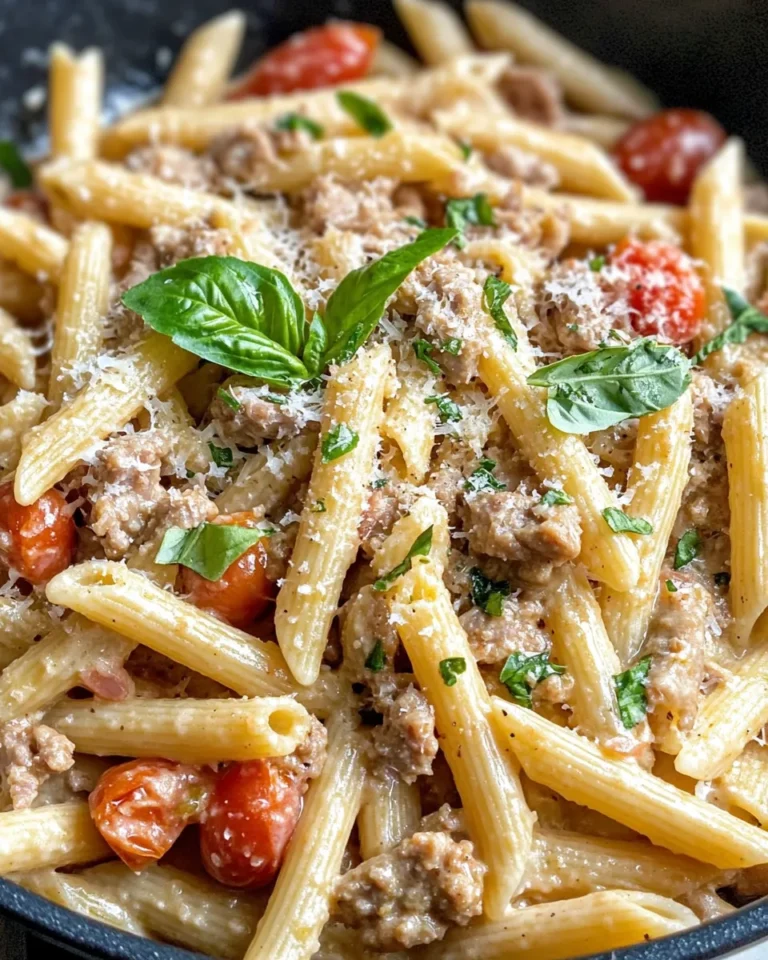
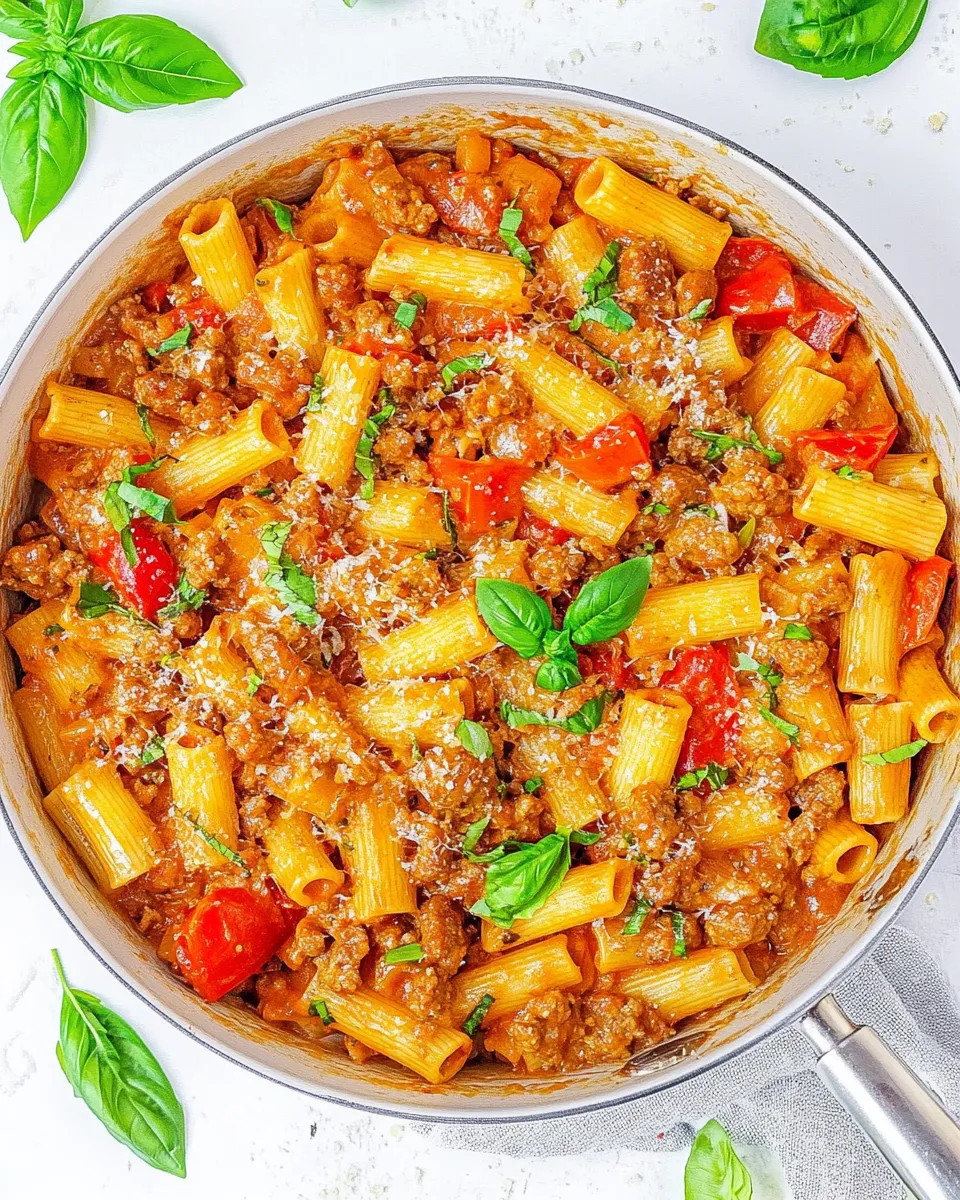
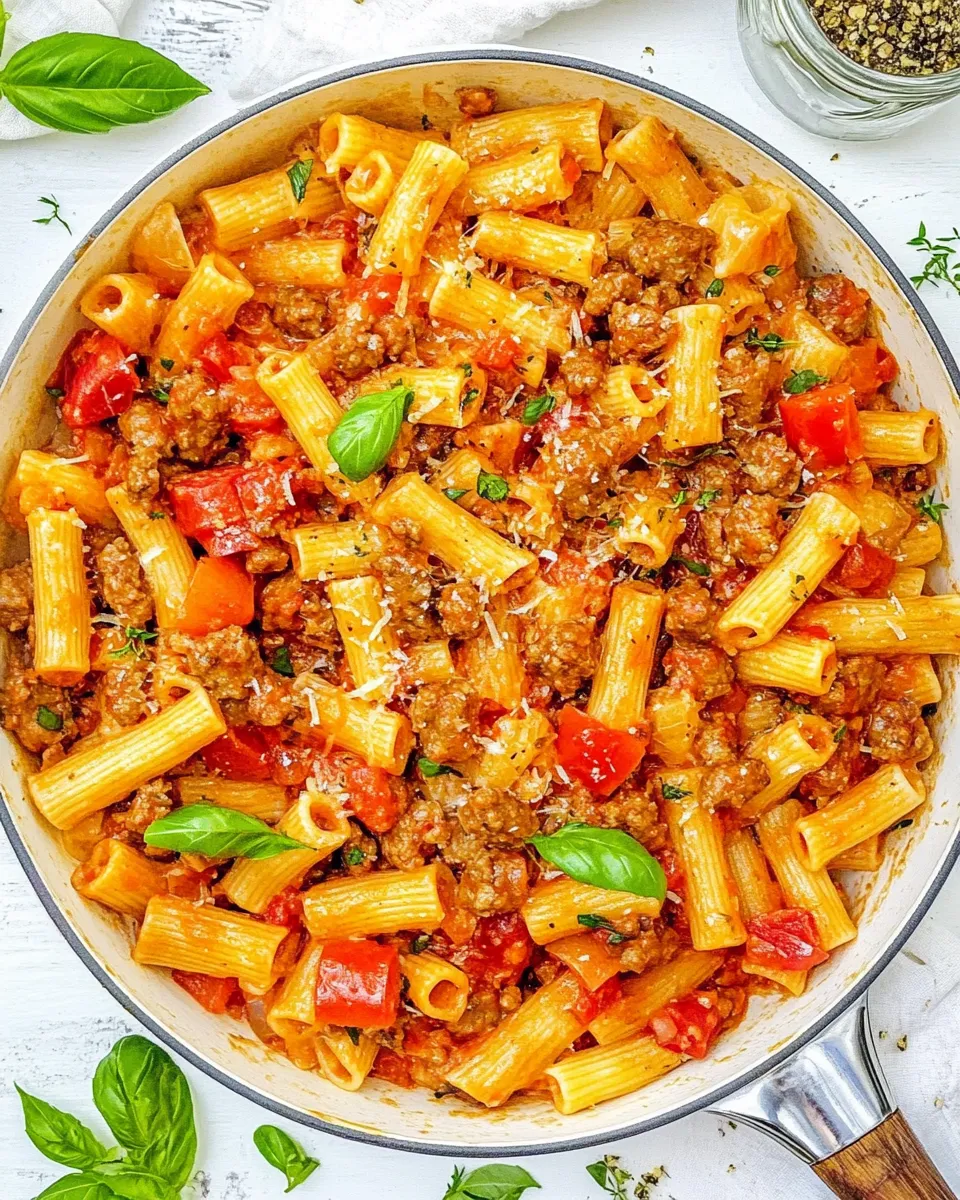
If you want a weeknight dinner that wakes up the table without demanding a lot of time or technique, this skillet rigatoni is it. It’s the sort of meal I make when I want something comforting and bold but don’t want to spend the evening fussing. Ground Italian sausage, bright tomatoes, zucchini, and a hit of lemon come together in one pan and finish with salty Parmesan and fresh basil.
I love that it’s flexible. Use mild or spicy sausage. Swap rigatoni for penne or ziti. Keep it simple or dress it up for guests. The method stays the same and gives you a reliably saucy, textured pasta every time. There are a few small habits I follow—reserve a splash of pasta water, don’t overcook the zucchini, and always finish with fresh basil—that make a big difference.
This post walks through the ingredients, the exact process, troubleshooting, sensible swaps for dietary needs, gear, testing notes, and storage. Read the ingredient breakdown and the process once, then you’ll be able to whip it up with confidence. Let’s get cooking.
Ingredient Breakdown
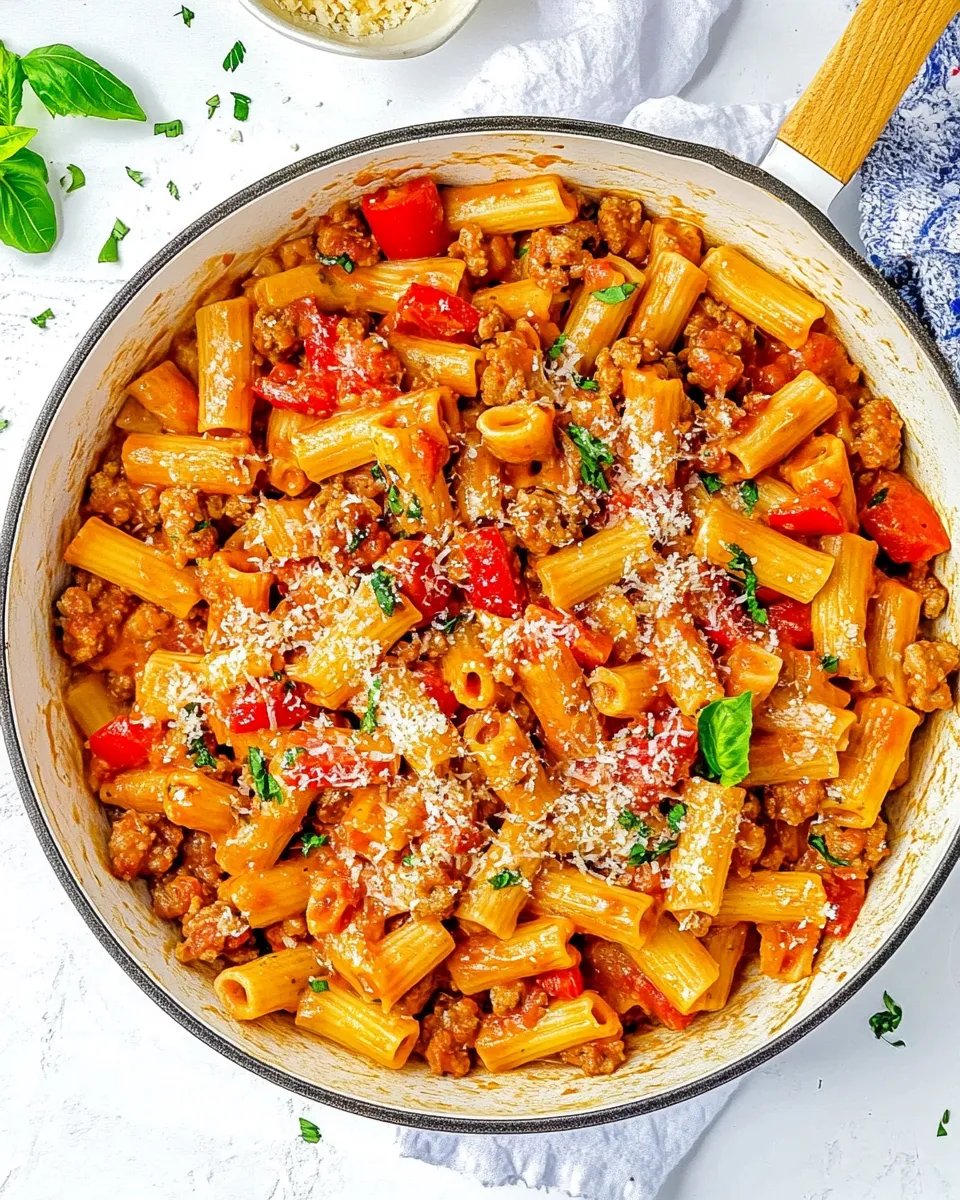
- 1 pound rigatoni pasta — The sturdy tubes hold sauce; another small shaped pasta such as ziti, penne, elbow macaroni, ditali, etc. may be substituted.
- 2 tablespoons olive oil — For browning the sausage and softening the onion; use a neutral oil if you prefer.
- 1 pound ground Italian sausage — I used mild; hot or spicy may be substituted. If using sausage in links, remove the casings. Provides the primary savory fat and seasoning.
- 1 large yellow onion — Diced small; adds sweetness and body to the sauce.
- 4 garlic cloves — Finely minced; gives the sauce its aromatic backbone.
- 16 ounce grape tomatoes — Cherry tomatoes may be substituted; they soften and burst to create fresh tomato pockets.
- ½ cup reduced sodium chicken broth — Adds deglazing liquid and flavor; reduced sodium vegetable broth may be substituted.
- 1 large zucchini — Quartered or diced; gives tender bite and soaks up sauce. If not a fan, omit or sub with yellow squash or diced bell peppers.
- 14 ounce can crushed tomatoes — Do not drain; forms the saucy base.
- Juice of half a lemon — Brightens and balances the tomatoes.
- 1 teaspoon Italian seasoning — Convenient herb blend for rounded flavor.
- 1 teaspoon dried oregano — Adds herbal depth; adjust to taste.
- 1 teaspoon kosher salt — Or to taste; seasons the whole dish.
- 1 teaspoon freshly ground black pepper — Or to taste; adds bite.
- ½ teaspoon red chili flakes — Or to taste; brings background heat.
- ½ cup freshly grated Parmesan cheese — Divided; stirred into the pasta for creaminess and used as garnish.
- Pinch granulated sugar — Optional but likely necessary to tame acidity in the sauce; add a pinch at a time.
- ¼ cup fresh basil — Thinly sliced; used as a finishing herb for brightness and aroma.
Cooking Sausage Rigatoni Pasta Skillet: The Process
- Bring a large pot of water to a rolling boil. Cook 1 pound rigatoni according to package directions until al dente. Before draining, reserve a small splash of the pasta cooking water (optional). Drain and set the pasta aside.
- While the pasta cooks, heat a large high-sided skillet over medium-high heat. Add 2 tablespoons olive oil.
- Add 1 pound ground Italian sausage (if using sausage links, remove casings) and 1 large diced yellow onion to the skillet. Cook 5–6 minutes, crumbling the sausage and turning the onions frequently, until the sausage is browned and the onions are softened.
- Add 4 finely minced garlic cloves and cook, stirring constantly, for 1 minute. If there is excess grease you want to remove, spoon off as needed.
- Add 16 ounces grape tomatoes and 1/2 cup reduced-sodium chicken broth to the skillet. Sauté about 4 minutes, stirring occasionally, until the tomatoes are softened and will burst when pressed with a spoon.
- Add 1 large zucchini (quartered or diced), 14 ounces canned crushed tomatoes (do not drain), the juice of half a lemon, 1 teaspoon Italian seasoning, 1 teaspoon dried oregano, 1 teaspoon kosher salt, 1 teaspoon freshly ground black pepper, and 1/2 teaspoon red chili flakes. Stir to combine, bring just to a boil, then reduce the heat and simmer about 5 minutes, stirring intermittently, until the zucchini is as tender as you like.
- If the mixture looks too wet, simmer a little longer uncovered to reduce excess liquid. If it seems dry or too thick, add a splash of the reserved pasta cooking water or a small extra splash of broth if available.
- Add the cooked pasta to the skillet and stir to combine. Stir in half of the 1/2 cup freshly grated Parmesan cheese.
- Taste and adjust seasoning as needed. If the sauce tastes too acidic, add a pinch of granulated sugar, a pinch at a time, stirring after each addition. Add more salt, pepper, or red pepper flakes to taste.
- Remove from heat. Garnish with the remaining Parmesan and 1/4 cup thinly sliced fresh basil. Serve immediately.
Why You’ll Keep Making It
This skillet hits several points that make a recipe sticky in a household: it’s fast, forgiving, and flavorful. It cooks in roughly the same time the pasta needs, so you’re not babysitting multiple pans. The sausage brings instant seasoning; the tomatoes and lemon balance richness with brightness. Texture is satisfying—the rigatoni’s ridges and tube shape trap sauce in every bite.
It’s also easy to scale up for friends or scale down for two. The components are pantry-friendly: canned tomatoes, dried herbs, and a little pasta in the cupboard mean you can assemble this without a supermarket run. Finally, because it’s skillet-based, cleanup stays minimal. That’s a real plus on a busy night.
Dairy-Free/Gluten-Free Swaps
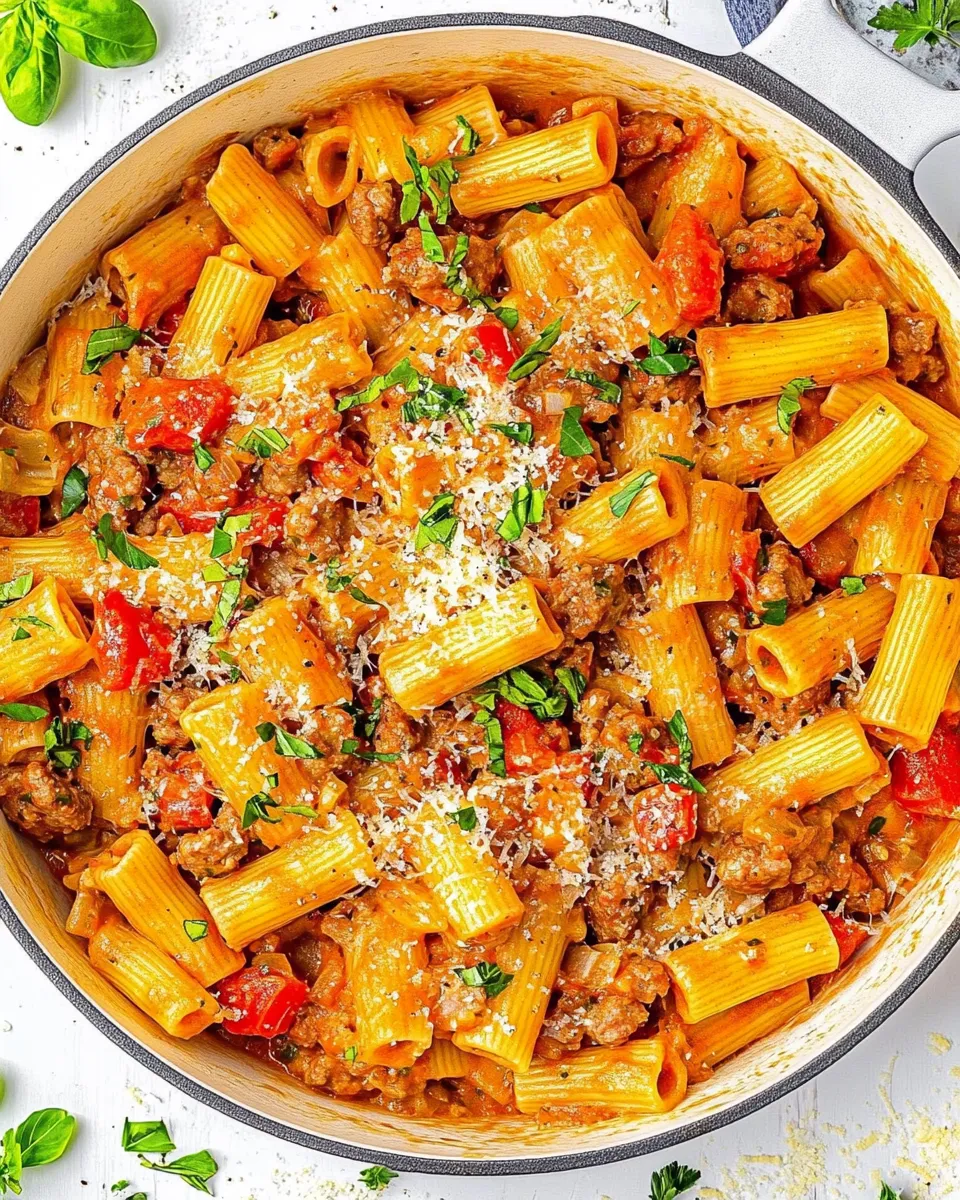
- Dairy-Free — Omit the Parmesan and finish with a drizzle of good olive oil and extra basil. Nutritional yeast can offer a cheesy note if you like.
- Gluten-Free — Use your favorite gluten-free rigatoni or rotini. Watch the cooking time; many gluten-free pastas get soft faster, so check for al dente early.
- Vegetarian option — Substitute the sausage with a plant-based Italian crumble or use extra mushrooms and smoked paprika for depth; use vegetable broth instead of chicken broth.
What’s in the Gear List
Must-haves
- Large pot for boiling pasta — big enough so the rigatoni cooks freely.
- Large high-sided skillet (10–12 inches) — the high sides let you cook the sauce and toss pasta without splatter.
- Colander — to drain pasta, and to save a splash of pasta water if you want.
- Microplane or grater — for fresh Parmesan and zest if you feel like adding it.
Nice-to-haves
- Tongs — for lifting and tossing pasta in the skillet.
- Wooden spoon or spatula — for crumbling sausage and stirring tomatoes without scratching pans.
- Instant-read thermometer — helpful if you’re unsure about sausage doneness (internal of 160°F for pork sausage).
Watch Outs & How to Fix
Problems happen. Here are the ones I see most often and how I recover quickly.
- Too much liquid — If the skillet looks soupy after adding crushed tomatoes, simmer uncovered to concentrate the sauce. Stir occasionally and remove from heat when the sauce clings to the back of a spoon.
- Too dry — Add a splash of reserved pasta water or an extra splash of broth. The starchy pasta water helps emulsify and bring the sauce together.
- Sausage not browned evenly — Don’t overcrowd the pan. Brown in a single layer, breaking it up so it contacts the pan. If there’s excess grease, spoon some off before adding garlic so it doesn’t become overly oily.
- Zucchini mushy — Cut it into larger pieces or add it later in the cooking process. If it’s already soft, a short simmer until just-tender is best; avoid prolonged simmering.
- Sauce too acidic — Add a pinch of granulated sugar, a little at a time, tasting as you go. Lemon juice brightens but can make tomatoes taste sharp if you add too much.
Seasonal Twists
Change a few elements to match what’s at the farmers’ market.
- Summer — Swap crushed tomatoes for ripe, chopped garden tomatoes and reduce canned tomatoes. Add a handful of fresh cherry tomatoes at the end for bursts of sweetness.
- Fall — Replace zucchini with diced eggplant or cubes of butternut squash roasted first; both soak up sausage flavor beautifully.
- Winter — Use root vegetables—carrot and parsnip diced small—and add a splash of red wine with the broth for depth.
- Spring — Fold in peas and baby spinach at the end for freshness and color.
Testing Timeline
I test this recipe across three quick checkpoints during development and every time I adapt it.
- Checkpoint 1 — Pasta timing — Cook the pasta to package-recommended al dente and taste. If you plan to finish pasta in the sauce, drop the cook time by 1–2 minutes so it finishes in the skillet.
- Checkpoint 2 — Sausage and onion color — The sausage should be browned and the onion softened before garlic goes in; garlic cooks fast and will brown quickly if the pan is too hot.
- Checkpoint 3 — Sauce balance — After adding crushed tomatoes and lemon, taste and adjust salt, pepper, and a pinch of sugar to balance acidity. Finish with half the Parmesan, then taste again and correct final seasoning.
Make-Ahead & Storage
Make-ahead options are straightforward. Cook through step 6, cool the skillet, then refrigerate up to 2 days. When ready, reheat gently over medium heat, add the cooked pasta, and finish with Parmesan and basil. If the sauce thickened too much in the fridge, stir in a splash of broth or reserved pasta water as you reheat.
For leftovers, store in an airtight container in the fridge for up to 3–4 days. Reheat on the stovetop over medium-low, stirring frequently; add a splash of water or broth if it needs loosening. I don’t recommend freezing the finished pasta—the texture of the zucchini and dairy can change—but the sauce component (without pasta) freezes well for up to 2 months.
Helpful Q&A
Can I use sausage links instead of ground?
Yes. Remove the casings and crumble the meat before cooking. The recipe accounts for that instruction in step 3.
Do I need to reserve pasta water?
It’s optional but useful. The starch helps bind the sauce to the pasta. Keep a small splash for adjustments if the sauce seems dry.
Is the lemon necessary?
The juice of half a lemon brightens the sauce and keeps it from tasting heavy. If you dislike lemon, a splash of red wine or a teaspoon of balsamic will add depth instead.
Can I make this spicier?
Yes. Increase the red chili flakes, use spicy Italian sausage, or add a drizzle of Calabrian chili oil at the end.
Before You Go
This Sausage Rigatoni Pasta Skillet is a reliably good weeknight option: fast, flexible, and satisfying. Keep these three simple habits and you’ll get it right every time—reserve a bit of pasta water, don’t overcook the zucchini, and taste for balance before serving. It’s the kind of recipe that becomes a go-to because it rewards small attentions with big flavor.
If you try it, let me know what sausage you used and whether you added any seasonal twists. I love hearing what readers swap in and how they finish it at their table.

Sausage Rigatoni Pasta Skillet
Ingredients
Ingredients
- 1 poundrigatoni pasta another small shaped pasta such as ziti, penne, elbow macaroni, ditali, etc.may be substituted
- 2 tablespoonsolive oil
- 1 poundground italian sausage I used mild, hot/spicy may be substituted; if using sausage in links remove the casings
- 1 large yellow onion diced small
- 4 garlic cloves finely minced
- 16 ouncegrape tomatoes cherry tomatoes may be substituted; if you have garden tomatoes to use feel free
- 1/2 cupreduced sodium chicken broth reduced sodium vegetable broth may be substituted
- 1 large zucchini quartered or diced (not a fan? omit. Sub with yellow squash or diced bell peppers)
- 14 ouncecan crushed tomatoes do not drain
- Juice of half a lemon
- 1 teaspoonItalian seasoning
- 1 teaspoondried oregano or to taste
- 1 teaspoonkosher salt or to taste
- 1 teaspoonfreshly ground black pepper or to taste
- 1/2 teaspoonred chili flakes or to taste
- 1/2 cupfreshly grated parmesan cheese divided (or as desired)
- pinchgranulated sugar optional but likely necessary
- 1/4 cupfresh basil thinly sliced (or more if desired)
Instructions
Instructions
- Bring a large pot of water to a rolling boil. Cook 1 pound rigatoni according to package directions until al dente. Before draining, reserve a small splash of the pasta cooking water (optional). Drain and set the pasta aside.
- While the pasta cooks, heat a large high-sided skillet over medium-high heat. Add 2 tablespoons olive oil.
- Add 1 pound ground Italian sausage (if using sausage links, remove casings) and 1 large diced yellow onion to the skillet. Cook 5–6 minutes, crumbling the sausage and turning the onions frequently, until the sausage is browned and the onions are softened.
- Add 4 finely minced garlic cloves and cook, stirring constantly, for 1 minute. If there is excess grease you want to remove, spoon off as needed.
- Add 16 ounces grape tomatoes and 1/2 cup reduced-sodium chicken broth to the skillet. Sauté about 4 minutes, stirring occasionally, until the tomatoes are softened and will burst when pressed with a spoon.
- Add 1 large zucchini (quartered or diced), 14 ounces canned crushed tomatoes (do not drain), the juice of half a lemon, 1 teaspoon Italian seasoning, 1 teaspoon dried oregano, 1 teaspoon kosher salt, 1 teaspoon freshly ground black pepper, and 1/2 teaspoon red chili flakes. Stir to combine, bring just to a boil, then reduce the heat and simmer about 5 minutes, stirring intermittently, until the zucchini is as tender as you like.
- If the mixture looks too wet, simmer a little longer uncovered to reduce excess liquid. If it seems dry or too thick, add a splash of the reserved pasta cooking water or a small extra splash of broth if available.
- Add the cooked pasta to the skillet and stir to combine. Stir in half of the 1/2 cup freshly grated Parmesan cheese.
- Taste and adjust seasoning as needed. If the sauce tastes too acidic, add a pinch of granulated sugar, a pinch at a time, stirring after each addition. Add more salt, pepper, or red pepper flakes to taste.
- Remove from heat. Garnish with the remaining Parmesan and 1/4 cup thinly sliced fresh basil. Serve immediately.
Equipment
- 1large skillet
Notes
Storage:
Leftovers will keep airtight in the fridge for up to 5 days (they taste even better than next day in my opinion because the flavors marry and meld) or in the freezer for up to 3-4 months. Reheat in the microwave, or as desired.