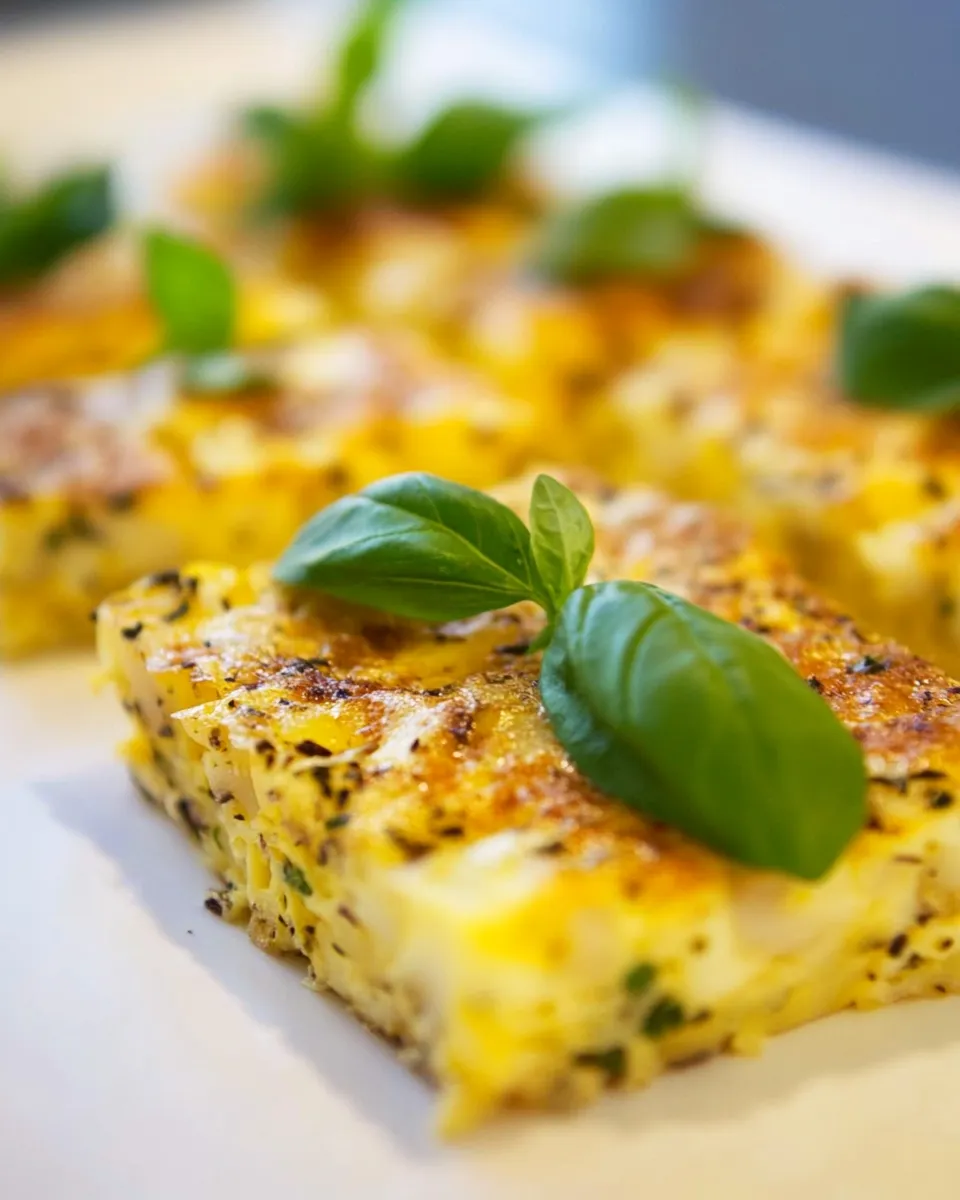
Bright herbs, melty cheddar and tender potato dice — this sheet-pan frittata is the kind of recipe I turn to when I need something that feeds a crowd, keeps well and looks as good on the brunch table as it does at a midweek dinner. It’s unfussy in technique but generous in flavor. You can slice it into neat squares, pile them on a platter and watch people reach for them.
I like to make this on a weekend when I have time to simmer a coffee and chop herbs, then warm pieces during the week for quick breakfasts or light lunches. It’s dependable: the texture is rich but not heavy, and the basil and chive add a fresh lift that keeps every bite interesting. You’ll want a large baking tray and a sharp knife; everything else is straightforward.
Below I cover what to buy, the exact steps to follow, swaps for dietary needs and the small mistakes I’ve learned to avoid. Follow the instructions as written for reliable results, and use the tips to adapt once you’re comfortable with the method.
Ingredients
- 6 tablespoons butter — divided use: 2 tablespoons for cooking potatoes, 4 tablespoons melted for the egg mixture.
- 2 large potatoes — I use Nicola potatoes but Yukon Gold would be a good choice too; dice small so they cook through quickly.
- 2 ½ cups mature cheddar cheese — gives sharpness and structure; pulsed into coarse crumbs for even distribution.
- 6 large eggs — the main binder; use room temperature eggs if you can for a smoother mix.
- 1 ¼ cups ricotta cheese — adds creaminess and keeps the squares tender.
- 6 tablespoons chopped chives — fresh chives add mild oniony brightness throughout.
- small handful fresh basil leaves — chop most for the mix and reserve a few whole leaves for garnish.
- 1 teaspoon salt — seasons the whole dish; start here and adjust if needed next time.
- ½ teaspoon black pepper — freshly ground if possible for best aroma.
- 3 tablespoons plain flour — a little structure so the squares hold together when cut.
- ½ teaspoon baking powder — lightens the texture slightly so the frittata sets without becoming rubbery.
What to Buy
- Produce: 2 large potatoes, small handful of fresh basil leaves, fresh chives.
- Dairy & eggs: 6 large eggs, 1 ¼ cups ricotta cheese, 2 ½ cups mature cheddar, butter (6 tablespoons total).
- Pantry: plain flour (3 tablespoons), baking powder (½ teaspoon), salt and black pepper.
- Other: parchment paper if you prefer for easy removal, or be prepared to grease the tray well.
Sheet Pan Potato Frittata Squares with Basil and Chive Cooking Guide
- Preheat the oven to 350°F / 170°C. Line the base of a baking tray with parchment paper or grease it well.
- Peel the 2 large potatoes and cut them into small dice (about 1/2 inch pieces).
- Melt 2 tablespoons of the butter in a frying pan over low–medium heat. Add the diced potatoes and cook, stirring occasionally, for about 15 minutes until the potatoes are tender and just cooked through. Remove from heat.
- Melt the remaining 4 tablespoons of butter in a small pan or the microwave and set aside.
- Put the 2½ cups mature cheddar cheese into a food processor and pulse until it forms coarse crumbs.
- Chop the small handful of fresh basil leaves; reserve a few whole leaves for garnish and add the rest to the food processor. Add the 6 large eggs, the melted 4 tablespoons butter, 1¼ cups ricotta cheese, 6 tablespoons chopped chives, 1 teaspoon salt, and ½ teaspoon black pepper. Pulse until the mixture is well combined.
- Sprinkle 3 tablespoons plain flour and ½ teaspoon baking powder over the mixture in the food processor and pulse a few times until evenly incorporated.
- Spread the cooked diced potatoes in an even layer over the prepared baking tray. Pour the egg-cheese mixture evenly over the potatoes and smooth the top with a spatula.
- Bake in the preheated oven for 20–25 minutes, until the top is browned and the frittata is set in the center (a knife inserted should come out clean).
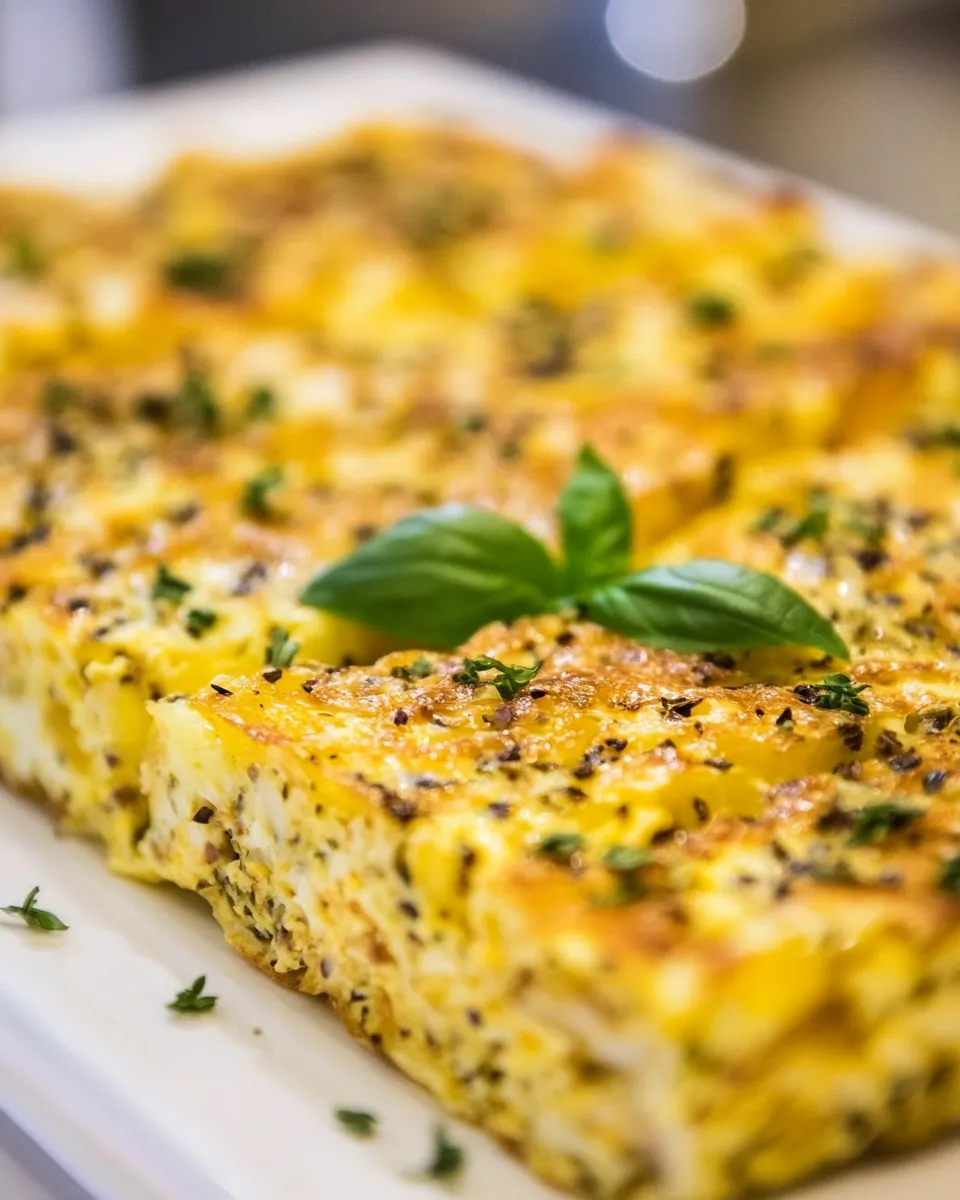
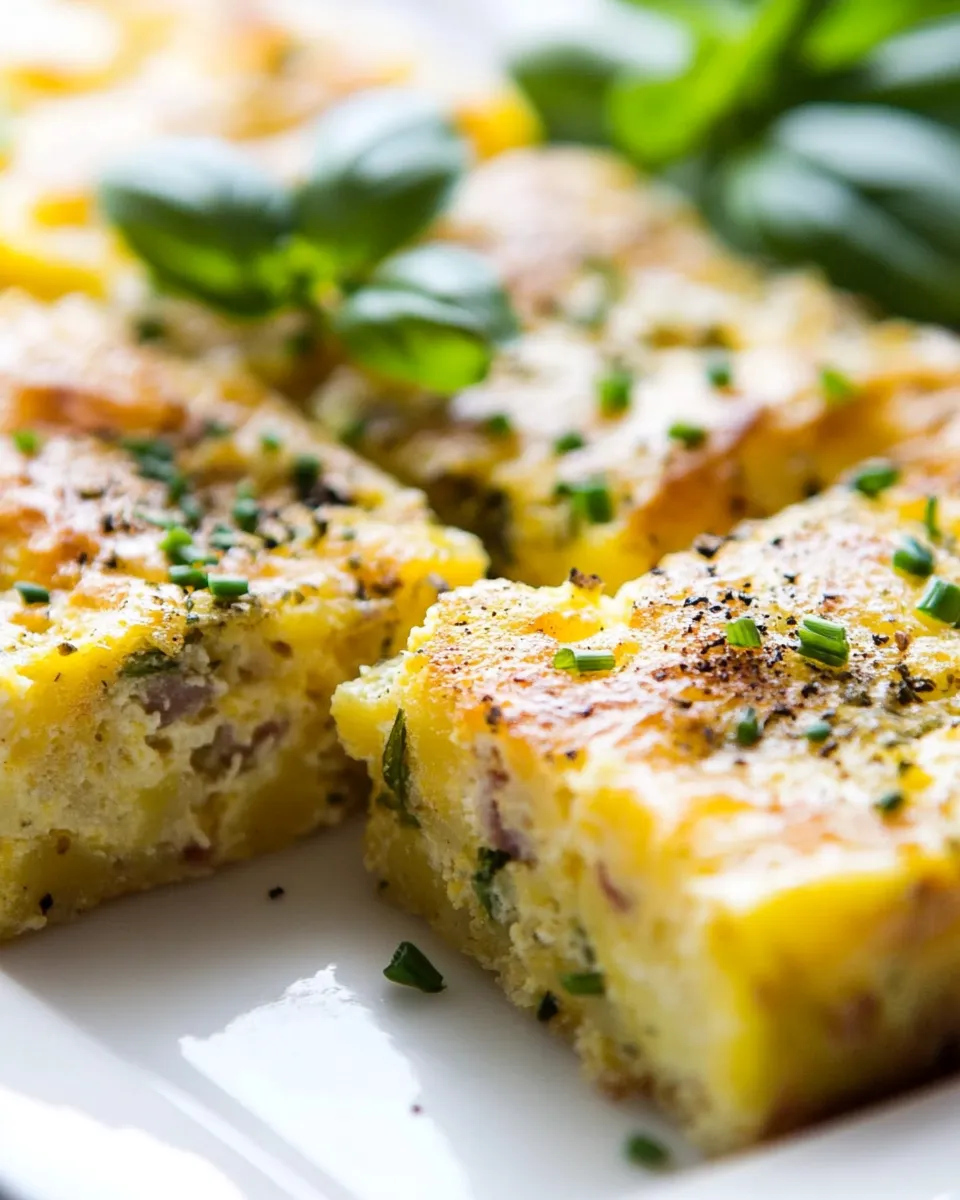
- Remove from the oven and let cool for about 10 minutes in the tray. Cut into 20 small squares and serve garnished with the reserved basil leaves.
Why This Recipe Is Reliable
- Simple technique: Pan-cook the potatoes and then bake; there are no tempering steps or tricky folds. That lowers the chance of errors.
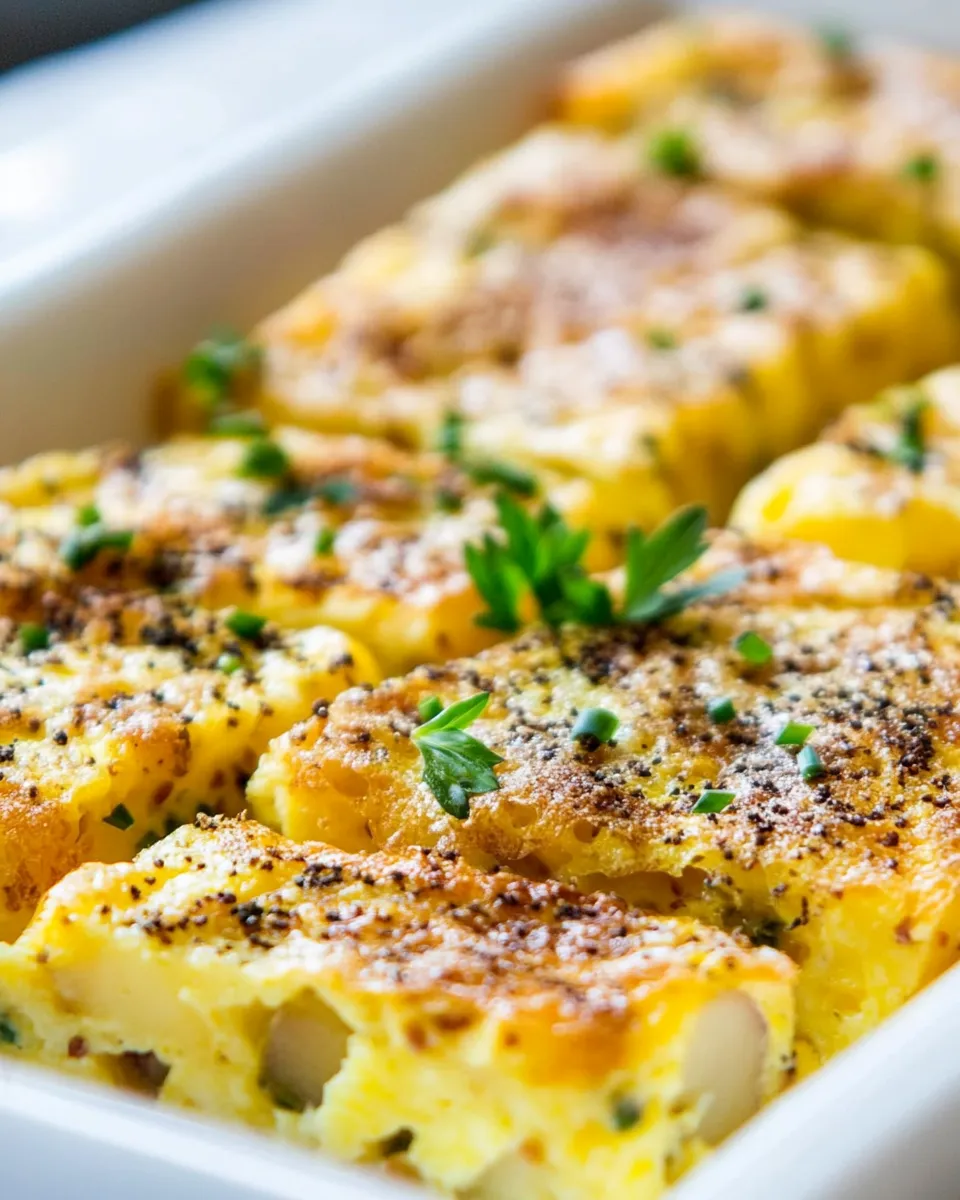
- Balanced binding: The combination of eggs, ricotta and a small amount of flour plus a touch of baking powder gives a set, tender square that slices cleanly.
- Distributed flavor: Pulsing the cheddar and basil breaks them into small pieces so every square gets cheese and herb evenly — no pockets of blandness.
- Sheet-pan format: Uses a single tray, which gives consistent oven heat and predictable baking time for even doneness.
Healthier Substitutions
- Butter: Replace some or all of the butter with a neutral oil (light olive or avocado) if you prefer fewer saturated fats; keep the initial 2 tablespoons low–medium when frying the potatoes to avoid browning too fast.
- Cheese: Use a lower-fat mature cheddar or reduce to 2 cups and increase ricotta slightly for moisture if you want fewer calories while keeping creaminess.
- Potatoes: Swap half the potatoes for diced sweet potato for more fiber and vitamin A; increase cooking time for the sweet potato if needed until tender.
li>Flour: Substitute plain flour with an equal amount of whole wheat flour for added fiber, though it will change texture subtly.
Equipment at a Glance
- Large baking tray (sheet pan): Wide, rimmed tray so the frittata can spread thin and bake evenly.
- Frying pan: For sautéing the diced potatoes until tender.
- Food processor: For pulsing the cheddar, basil and combining the wet ingredients. A bowl and whisk will work, but the texture will differ slightly.
- Spatula: To smooth the mixture and transfer to the tray.
- Parchment paper or nonstick spray: Makes removal and cleanup easier.
Common Errors (and Fixes)
- Potatoes undercooked: If you skip the step of cooking diced potatoes thoroughly, the tray bake will have hard bits. Fix: cook until tender and tasting soft before spreading on the tray.
- Too wet mixture: If your ricotta is very loose, the mixture can be excessively wet. Fix: drain ricotta on paper towel for a few minutes or use a slightly thicker ricotta; allow an extra minute in the oven if needed.
- Overbrowned top but unset center: Oven hot spots can cause this. Fix: tent lightly with foil and extend baking by a few minutes, or reduce oven temperature by 10–15°F and bake a bit longer.
- Squares fall apart when cutting: Cutting too soon can cause crumbling. Fix: let them rest in the tray for about 10 minutes so the structure firms up.
Allergy-Friendly Swaps
- Dairy-free: Use dairy-free ricotta and a plant-based cheddar alternative; switch butter to a neutral oil or dairy-free spread.
- Egg allergy: This recipe relies on eggs as the primary binder; for severe egg allergy, consider making a chickpea flour bake instead (note: this changes the recipe entirely and is no longer a frittata).
- Gluten-free: Substitute the plain flour with a gluten-free 1:1 baking blend or rice flour to keep the structure without gluten.
What I Learned Testing
I made this sheet-pan version several times to dial in the texture. The first batch was too dense because I used cold eggs straight from the fridge; letting eggs warm to room temperature gave a silkier finish. Pulsing the cheddar instead of shredding it kept the cheese distributed and prevented large pockets of oil. Lastly, resting in the tray for at least 10 minutes makes a huge difference—cutting immediately created ragged squares.
Practical adjustments I settled on
- Dice the potatoes uniformly (about 1/2 inch) so they cook at the same rate.
- Use mature cheddar for depth; milder cheddars need more seasoning.
- Reserve some basil leaves whole for garnish — they add color and freshness after baking.
Keep It Fresh: Storage Guide
- Room temperature: Best served within a few hours of baking if left out; keep covered to avoid drying.
- Refrigerator: Store in an airtight container for up to 4 days. Reheat gently in a low oven (300°F / 150°C) or in a skillet with a splash of water to refresh moisture.
- Freezer: Freeze individual squares on a tray until firm, then transfer to a freezer bag for up to 2 months. Reheat from frozen in a 350°F / 175°C oven for 15–20 minutes or until heated through.
Reader Q&A
- Q: Can I halve the recipe? A: Yes. Use a smaller tray and scale ingredients by half, but keep an eye on baking time—smaller quantity may set faster.
- Q: Can I add other vegetables? A: You can, but be mindful of moisture. Pre-cook any watery vegetables (mushrooms, zucchini) to prevent a soggy bake.
- Q: How do I get a fluffier texture? A: Make sure eggs are room temperature and don’t over-process the mixture. A light hand when pulsing helps keep some air in the mix.
- Q: My top browned too quickly. What now? A: Cover loosely with foil and continue baking until the center sets; this prevents burning while completing the bake.
Time to Try It
Make a tray on Sunday and grab a square for weekday breakfasts. The method is forgiving and the result is a crowd-pleasing tray of savory bites that travel well and reheat beautifully. Follow the steps above and keep the tips in mind: cook the potatoes through, pulse the cheese and herbs for even distribution, and let the frittata rest before slicing. You’ll get tidy, flavorful squares every time.
If you try it, I’d love to hear how you adapted it — did you add a veggie, switch the cheese, or freeze a batch? Share your results and any learnings so the next reader benefits from what you discovered in your kitchen.
Sheet Pan Potato Frittata Squares with Basil and Chive
Ingredients
Ingredients
- 6 tablespoonbutter
- 2 large potatoes I use Nicola potatoes but Yukon Gold would be a good choice too
- 2 1/2 cupsmature cheddar cheese
- 6 large eggs
- 1 1/4 cupsricotta cheese
- 6 tablespoonchopped chives
- small handful fresh basil leaves
- 1 teaspoonsalt
- 1/2 teaspoonblack pepper
- 3 tablespoonplain flour
- 1/2 teaspoonbaking powder
Instructions
Instructions
- Preheat the oven to 350°F / 170°C. Line the base of a baking tray with parchment paper or grease it well.
- Peel the 2 large potatoes and cut them into small dice (about 1/2 inch pieces).
- Melt 2 tablespoons of the butter in a frying pan over low–medium heat. Add the diced potatoes and cook, stirring occasionally, for about 15 minutes until the potatoes are tender and just cooked through. Remove from heat.
- Melt the remaining 4 tablespoons of butter in a small pan or the microwave and set aside.
- Put the 2½ cups mature cheddar cheese into a food processor and pulse until it forms coarse crumbs.
- Chop the small handful of fresh basil leaves; reserve a few whole leaves for garnish and add the rest to the food processor. Add the 6 large eggs, the melted 4 tablespoons butter, 1¼ cups ricotta cheese, 6 tablespoons chopped chives, 1 teaspoon salt, and ½ teaspoon black pepper. Pulse until the mixture is well combined.
- Sprinkle 3 tablespoons plain flour and ½ teaspoon baking powder over the mixture in the food processor and pulse a few times until evenly incorporated.
- Spread the cooked diced potatoes in an even layer over the prepared baking tray. Pour the egg-cheese mixture evenly over the potatoes and smooth the top with a spatula.
- Bake in the preheated oven for 20–25 minutes, until the top is browned and the frittata is set in the center (a knife inserted should come out clean).
- Remove from the oven and let cool for about 10 minutes in the tray. Cut into 20 small squares and serve garnished with the reserved basil leaves.
Equipment
- Baking tray
- Parchment Paper
- Frying pan
- small pan or microwave
- Food Processor
- Spatula
- Knife
Notes
If you want to serve these with a a dollop of sour cream and a ribbon of smoked salmon, I would buy the smallest sour cream you can and 100g of smoked salmon.
Cook as normal and then allow to cool to room temperature.
Just before you serve spoon on the sour cream and curl a piece of smoked salmon on top. Maybe use any left over chives as a little garnish.