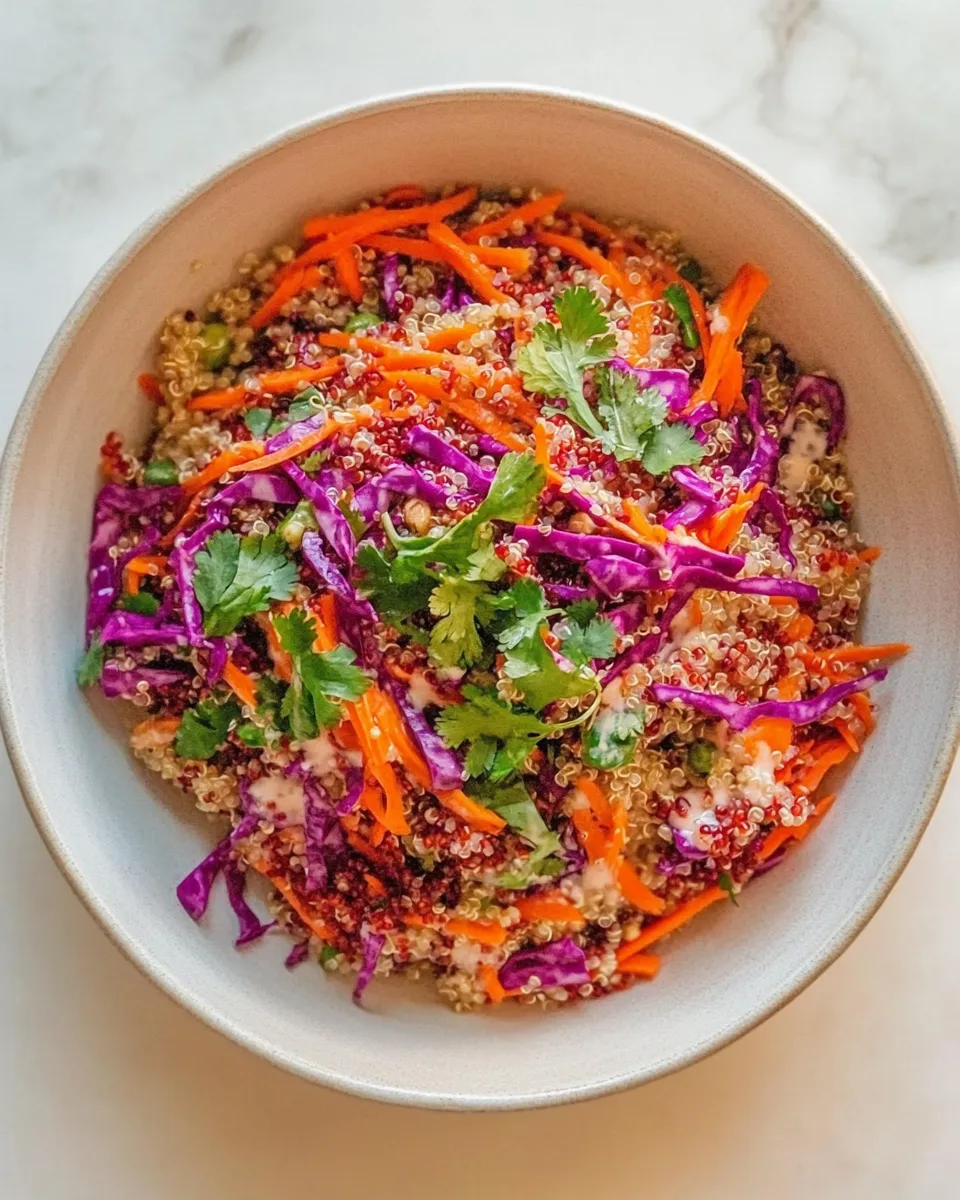
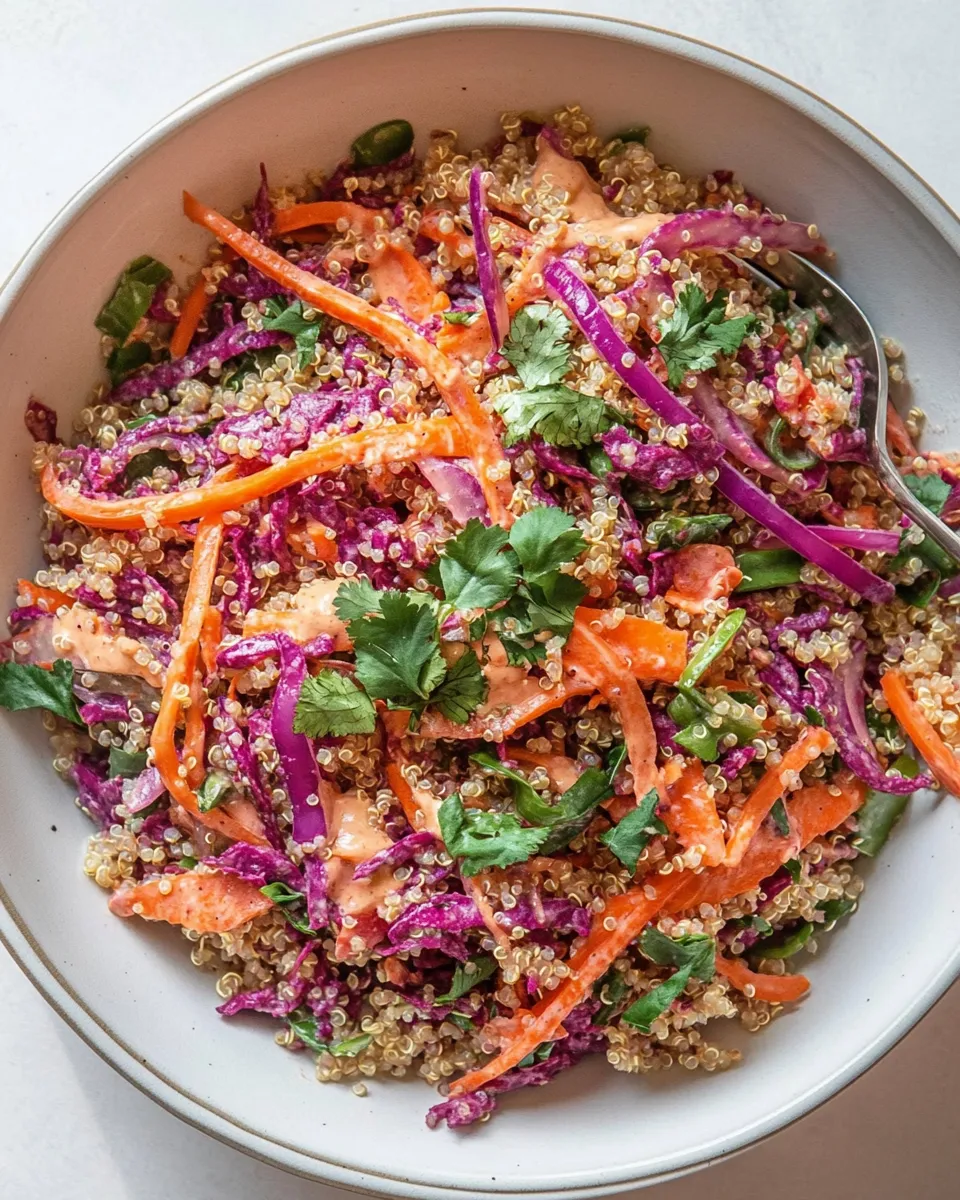
Bright, crunchy, and unapologetically bold — this Spicy Peanut Quinoa Salad is one of those weekday heroes I make when I want something that feels special but doesn’t demand babysitting. The peanut sauce is tangy, a little sweet, and packs a chili-forward kick that clings to each grain and sliver of cabbage. It keeps well, too, so it’s perfect for lunch prep or a bring-and-share bowl.
I love that the textures are so lively: fluffy quinoa, crisp purple cabbage, and ribbons of carrot all get a glossy coating of sauce. The basil brings a fresh lift at the end, but you can skip it if you don’t have any on hand. The salad works cold or at room temperature, which makes it flexible for picnics, potlucks, or a relaxed weeknight dinner.
Below you’ll find everything you need — exact ingredients, the step-by-step method, troubleshooting notes, and practical swaps. Read the equipment and storage tips before you begin if you plan to make this ahead. Ready? Let’s get to it.
The Essentials
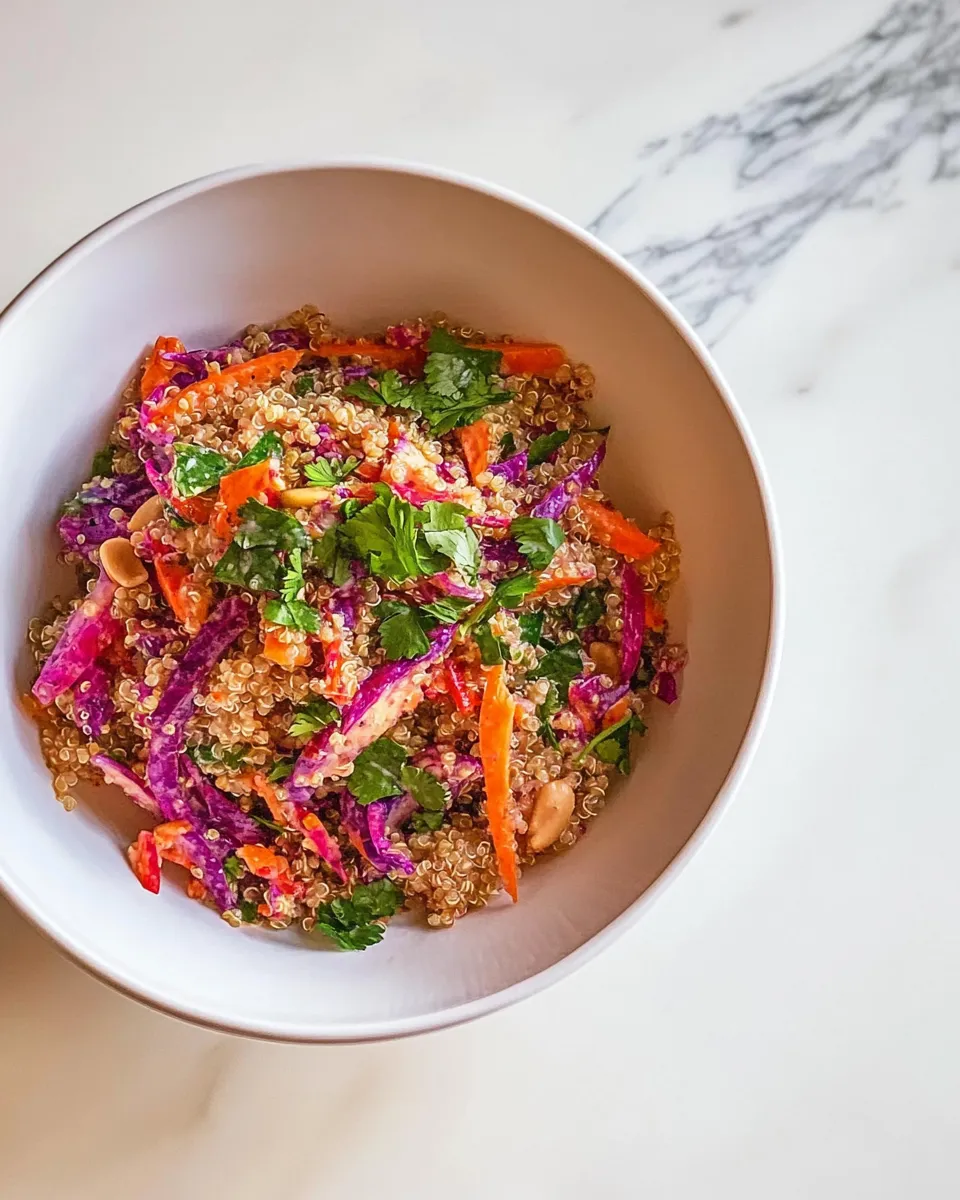
What this recipe is: a make-ahead quinoa salad dressed in a spicy peanut sauce. It’s about balance — nutty quinoa, crunchy veg, and a creamy, bright dressing. Prep time is mostly passive: cooking quinoa and letting flavors meld.
When to serve: cold or at room temperature. Bring it from fridge to table with a quick toss so the sauce re-coats the quinoa and veggies.
Ingredients
- 1 cup quinoa uncooked — the grain base; cooks up fluffy and soaks up the peanut sauce.
- 2 cups purple cabbage finely sliced — crunchy body for the salad (I usually use 1/4–1/3 of a head of cabbage).
- 1/2 red bell pepper finely sliced — sweet crunch and color contrast.
- 4 green onions finely sliced — mild oniony lift throughout the bowl.
- 2 carrots grated or julienned — sweetness and texture; carrots hold up well in make-ahead salads.
- salt to taste — final seasoning; add after tasting because the sauce contains soy.
- spicy peanut sauce — see below — the flavor engine; mix separately and toss with the salad.
- 1/2 cup peanut butter — creamy base for the sauce; natural or smooth works depending on texture preference.
- 1/4 cup low sodium soy sauce* — savory umami and salt; low sodium keeps the dressing from overwhelming the salad.
- 1/4 cup rice vinegar — bright acidity to balance richness.
- 1 tablespoon sesame oil — toasty depth and aroma.
- 1–2 tablespoons brown sugar — sweetness to round out tang and spice; adjust to your taste.
- 1 tablespoon fresh lime juice — added brightness; fresh is best here.
- 4 garlic cloves finely minced or pressed — a savory pop; mince finely so it disperses through the sauce.
- 2–3 teaspoons freshly grated ginger — warm, sharp lift; adjust within the range for a stronger ginger note.
- 1–2 teaspoons chili garlic sauce — heat and garlicky punch; increase for more spice.
- 1 cup fresh basil (optional, but good) — aromatic finish; folded in at the end for herbaceous lift.
Spicy Peanut Quinoa Salad Made Stepwise
- Cook the 1 cup uncooked quinoa according to package instructions; transfer to a bowl and let it cool to room temperature (no longer hot).
- While the quinoa cooks or cools, combine all peanut sauce ingredients — ½ cup peanut butter, ¼ cup low sodium soy sauce, ¼ cup rice vinegar, 1 tablespoon sesame oil, 1–2 tablespoons brown sugar, 1 tablespoon fresh lime juice, 4 garlic cloves (minced or pressed), 2–3 teaspoons freshly grated ginger, and 1–2 teaspoons chili garlic sauce — in a food processor and blend until smooth.
- Place the cooled quinoa, 2 cups finely sliced purple cabbage, ½ red bell pepper (finely sliced), 4 finely sliced green onions, and 2 grated or julienned carrots in a large bowl; toss to combine.
- Pour the peanut sauce over the quinoa-vegetable mixture and stir or toss until everything is evenly coated.
- If using, add 1 cup fresh basil and gently toss to distribute.
- Taste the salad and add salt to taste as needed.
- Cover and refrigerate (or let sit at room temperature) for at least 1 hour before serving to allow the flavors to meld. It can be served cold or at room temperature.
- Store any leftovers in the refrigerator.
Why This Recipe is a Keeper
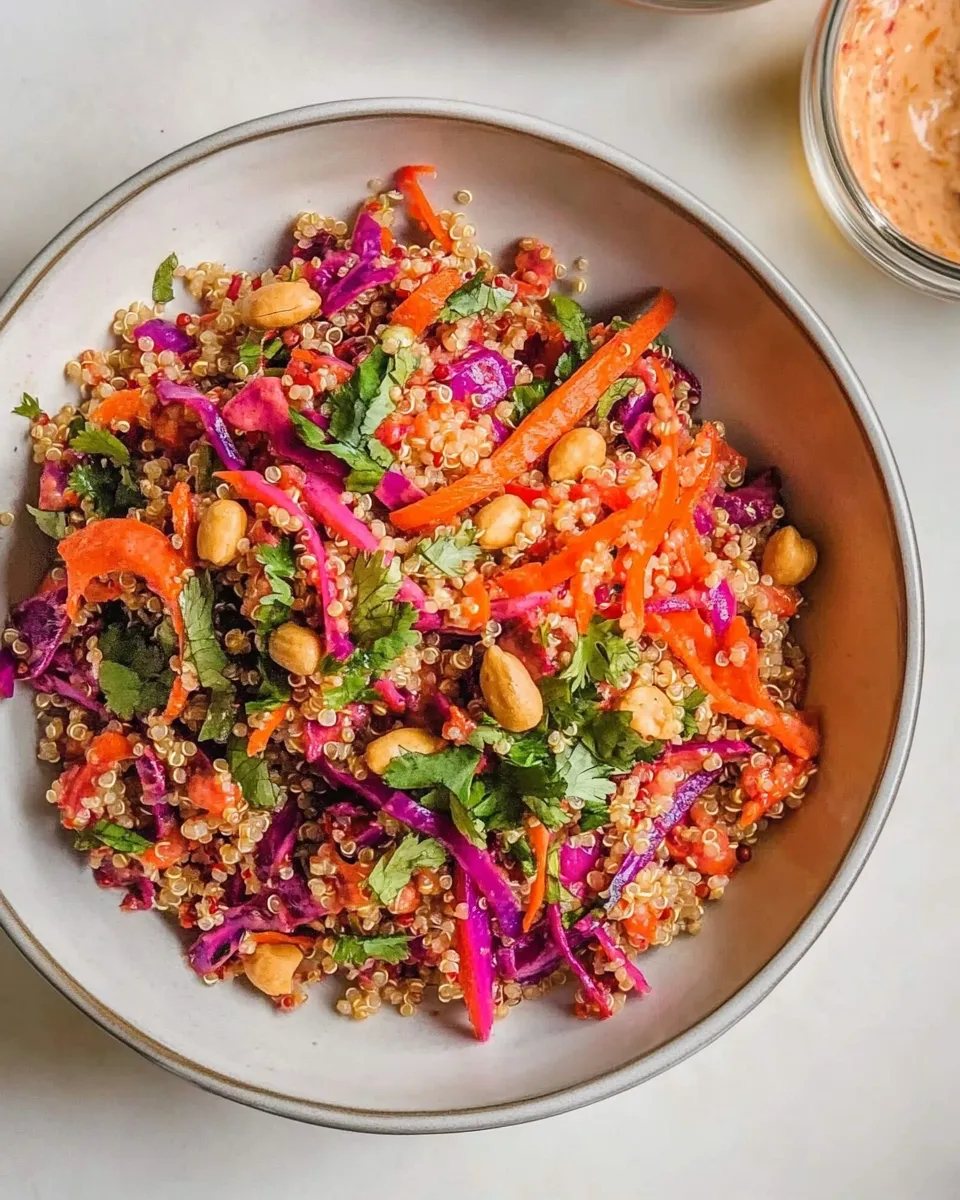
The flavor profile is layered: savory-sweet-spicy-acid in a compact package. The peanut sauce is concentrated, so a little coats a lot — economical and intense. Texturally, it’s endlessly satisfying: tender quinoa, crisp cabbage and bell pepper, and the soft slurp of sauce. It’s also incredibly adaptable. Make it for lunches, double it for a crowd, or keep it in the fridge for post-gym protein bowls.
What to Use Instead
- Quinoa swaps: cooked farro or brown rice work when you want a heartier chew.
- Peanut butter alternatives: almond or sunflower seed butter if you need a nut-free or different-nut option.
- Soy sauce alternatives: tamari or reduced-sodium varieties will change the salt profile slightly but keep the umami.
- Vinegar alternatives: if you don’t have rice vinegar, a mild white wine or apple cider vinegar can stand in, but use slightly less and taste as you go.
- Herb switches: cilantro or mint can replace basil for a different fresh note.
Equipment Breakdown
- Medium pot with lid — to cook the quinoa reliably.
- Food processor or blender — for a silky peanut sauce; a whisk will work but expect a chunkier texture.
- Large mixing bowl — to toss the salad without spilling.
- Measuring cups and spoons — the sauce balance relies on accurate measures for a predictable result.
- Sharp knife and cutting board — thin, even slicing of cabbage and pepper makes for consistent bites.
Mistakes Even Pros Make
- Serving the quinoa while it’s still hot — residual heat breaks down the cabbage and softens textures. Always cool to room temperature first.
- Adding salt before tasting the full dressing — the soy in the sauce already contributes saltiness; taste before salting.
- Over-blending the sauce with too much liquid — the dressing should be thick enough to cling; thin it sparingly with water or lime juice if needed.
- Skipping the resting time — the flavors need at least an hour to marry; rushing the meld reduces complexity.
Spring to Winter: Ideas
- Spring: fold in sliced cucumbers and a handful of radishes for peppery crunch.
- Summer: add chopped cherry tomatoes and extra basil for a bright, juicy finish.
- Fall: stir in roasted sweet potato cubes (cooled) for warmth and sweetness.
- Winter: toss in quick-pickled shallots or roasted Brussels sprout shards for depth.
Pro Tips & Notes
- Make the sauce first and refrigerate. It thickens as it chills — let it sit at room temperature briefly and whisk before tossing if it firms up.
- If the sauce seems too thick to toss, add water one teaspoon at a time until you reach a pourable but clingy texture.
- For a smoother mouthfeel, warm the peanut butter slightly before blending so it emulsifies more easily.
- If nut allergies are a concern, use sunflower seed butter and test flavor balance because seed butters can be more assertive.
Keep It Fresh: Storage Guide
Store leftovers in an airtight container in the refrigerator. The salad keeps well because of the sturdy cabbage, but the texture of the quinoa will continue to soften over time. For best quality, eat within 3–4 days. If you plan to serve later, reserve extra basil and fold it in right before serving to keep the herb vibrant.
Spicy Peanut Quinoa Salad Q&A
- Can I make this gluten-free? — Yes, swap in gluten-free tamari for the soy sauce.
- Is this salad good for meal prep? — Absolutely. It’s designed to hold up in the fridge and tastes even better after the flavors meld for an hour or overnight.
- Can I add protein? — Cooked chicken, shrimp, or tofu are great additions if you want to bulk it up. Add them after the salad is dressed so they pick up flavor.
- How spicy is it? — The chili garlic sauce gives a noticeable heat at 1–2 teaspoons; increase for a stronger kick or reduce if you prefer mild.
- Can I serve it warm? — It’s intended cold or room temperature; serve warm only if you are reheating components separately and not the dressed salad.
Wrap-Up
Spicy Peanut Quinoa Salad is a reliable player in my weekly rotation because it’s fast, flexible, and full of flavor. Follow the steps, make the peanut sauce with care, and give it time to rest. A little preparation up front pays off with a bowl that’s bright, balanced, and endlessly satisfying. Enjoy, and tweak the heat and herbs to make it your own.

Spicy Peanut Quinoa Salad
Ingredients
Ingredients
- 1 cupquinoauncooked
- 2 cupspurple cabbagefinely sliced I usually use 1/4-1/3 of a head of cabbage
- 1/2 red bell pepperfinely sliced
- 4 green onionsfinely sliced
- 2 carrotsgrated or julienned.
- saltto taste
- spicy peanut saucesee below
- 1/2 cuppeanut butter
- 1/4 cuplow sodium soy sauce*
- 1/4 cuprice vinegar
- 1 tablespoonsesame oil
- 1-2 tablespoonsbrown sugar
- 1 tablespoonfresh lime juice
- 4 garlic clovesfinely minced or pressed
- 2-3 teaspoonsfreshly grated ginger
- 1-2 teaspoonschili garlic sauce
- 1 cupfresh basiloptional but good
Instructions
Instructions
- Cook the 1 cup uncooked quinoa according to package instructions; transfer to a bowl and let it cool to room temperature (no longer hot).
- While the quinoa cooks or cools, combine all peanut sauce ingredients — ½ cup peanut butter, ¼ cup low sodium soy sauce, ¼ cup rice vinegar, 1 tablespoon sesame oil, 1–2 tablespoons brown sugar, 1 tablespoon fresh lime juice, 4 garlic cloves (minced or pressed), 2–3 teaspoons freshly grated ginger, and 1–2 teaspoons chili garlic sauce — in a food processor and blend until smooth.
- Place the cooled quinoa, 2 cups finely sliced purple cabbage, ½ red bell pepper (finely sliced), 4 finely sliced green onions, and 2 grated or julienned carrots in a large bowl; toss to combine.
- Pour the peanut sauce over the quinoa-vegetable mixture and stir or toss until everything is evenly coated.
- If using, add 1 cup fresh basil and gently toss to distribute.
- Taste the salad and add salt to taste as needed.
- Cover and refrigerate (or let sit at room temperature) for at least 1 hour before serving to allow the flavors to meld. It can be served cold or at room temperature.
- Store any leftovers in the refrigerator.
Equipment
- saucepan or pot
- Mixing Bowl
- Food Processor
Notes
*If gluten free, be sure to use gluten free soy sauce!