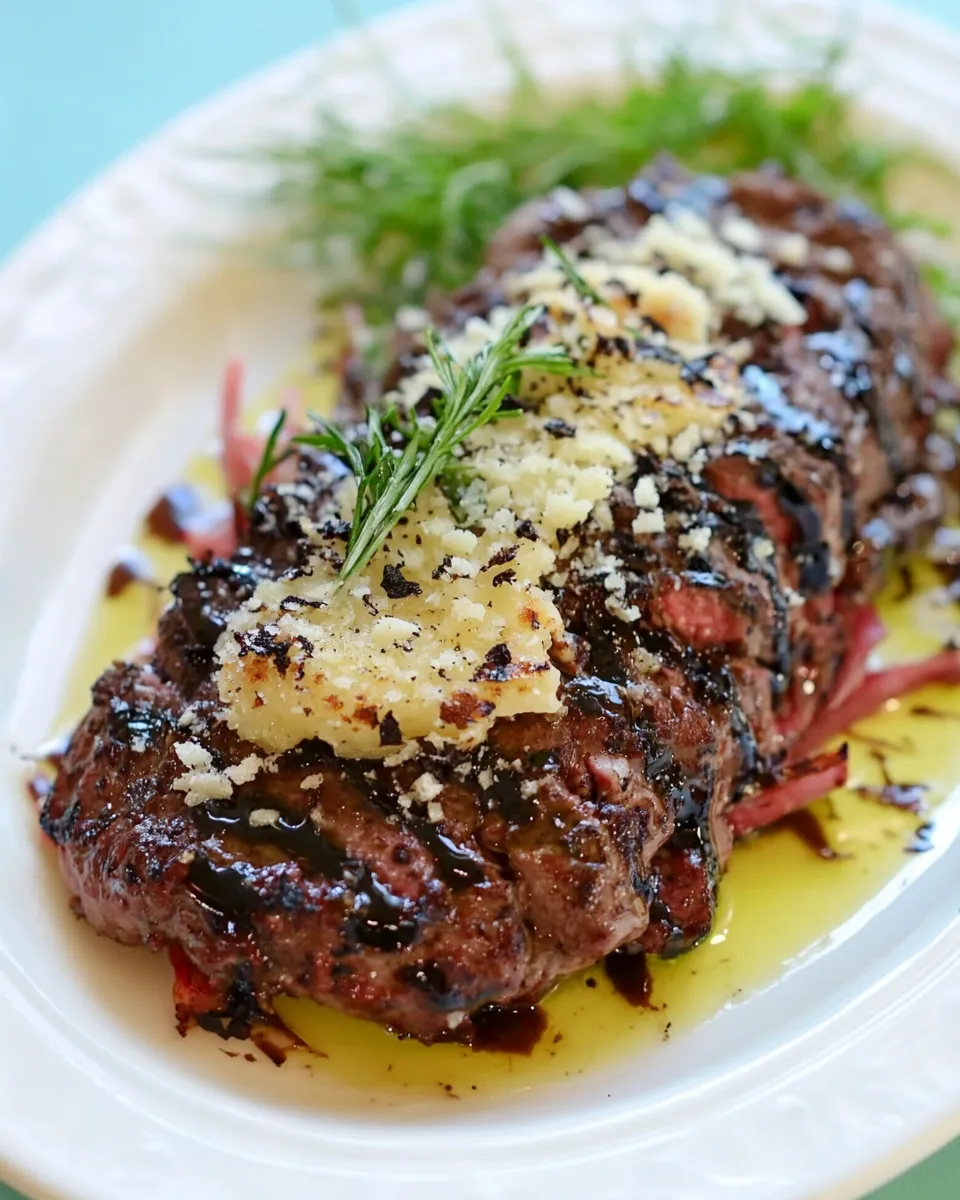
There are dinners that demand fuss and there are dinners that land big flavor with simple technique. This one falls in the second camp. A well-seared rib‑eye, a quick Parmesan butter to melt on top, and a fast balsamic glaze finish—together they read like a restaurant plate but take far less time than you might think.
I keep this recipe in my weeknight rotation when I want something special without overcommitting. The components are short, the instructions are straightforward, and each element has a clear job: the butter brings richness, the glaze adds brightness, and the greens keep the plate fresh.
Follow the steps, let the steak rest, and you’ll have juicy slices that pair perfectly with peppery arugula and a glossy balsamic drizzle. Below you’ll find the ingredients, the exact method, swaps, troubleshooting, and tips so the results are reliable every time.
Ingredients at a Glance
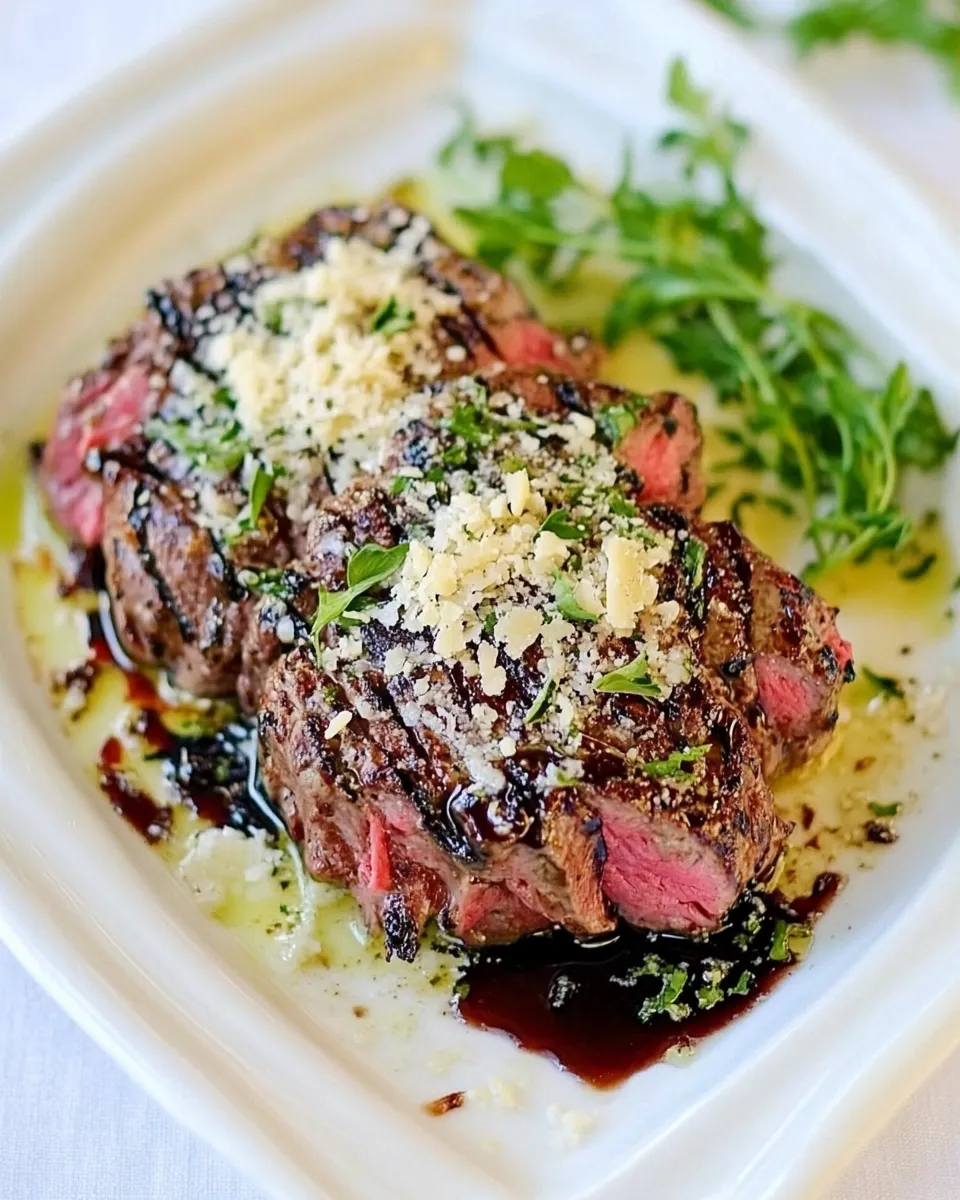
- 2 tablespoons grated Parmesan cheese — for the Parmesan butter; adds salty, nutty flavor and helps the butter emulsify.
- Parmesan cheese shavings — to scatter over the greens and steak for texture and a bright finish.
- 1 1/2 tablespoons butter, room temperature — mixed with grated Parmesan to form the compound butter that melts over the steak.
- 1 12-ounce rib-eye steak — the main protein; pick one with good marbling for the best flavor and tenderness.
- 1 teaspoon olive oil — used to sear the steak and prevent sticking to the pan.
- 1/4 cup balsamic vinegar — reduced into a sweet-tangy glaze to finish the steak.
- 1/4 cup finely chopped shallots — provides aromatic depth and a mild onion flavor to the glaze.
- 1/2 teaspoon (packed) dark brown sugar — helps the balsamic reduce to a glossy glaze with a hint of caramel.
- 4 cups (lightly packed) arugula or mixed greens — the bed for the sliced steak; adds freshness and a peppery note.
- 2 large lemon wedges — squeezed over the greens to brighten the entire plate.
The Method for Steak with Parmesan Butter and Balsamic Glaze
- In a small bowl, combine 2 tablespoons grated Parmesan cheese and 1 1/2 tablespoons room-temperature butter; mix until smooth and set aside.
- Heat 1 teaspoon olive oil in a medium skillet over medium-high heat until shimmering.
- Add the 12-ounce rib‑eye steak to the skillet and cook to desired doneness, about 4 minutes per side for medium-rare. Flip once using tongs.
- Transfer the steak to a plate and let rest for about 5 minutes.
- While the steak rests, return the skillet to medium-high heat if it has cooled. Add 1/4 cup balsamic vinegar, 1/4 cup finely chopped shallots, and 1/2 teaspoon (packed) dark brown sugar to the skillet. Bring to a boil and cook, stirring constantly, until the liquid reduces to a glossy glaze, about 1 minute. Remove from heat.
- Divide 4 cups (lightly packed) arugula or mixed greens and the Parmesan cheese shavings between 2 plates. Squeeze one large lemon wedge over each plate.
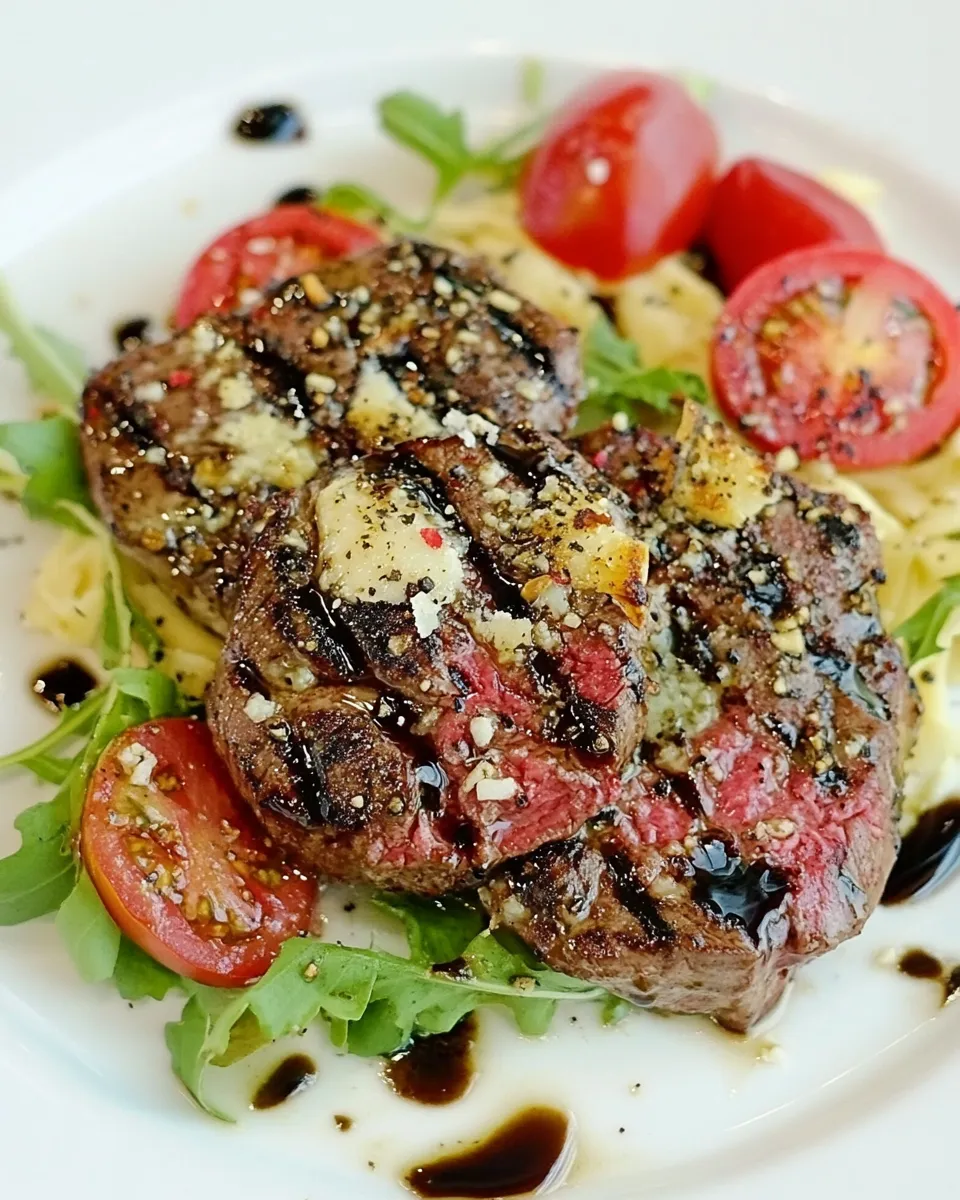
- Slice the rested steak against the grain and place the slices atop the arugula on each plate.
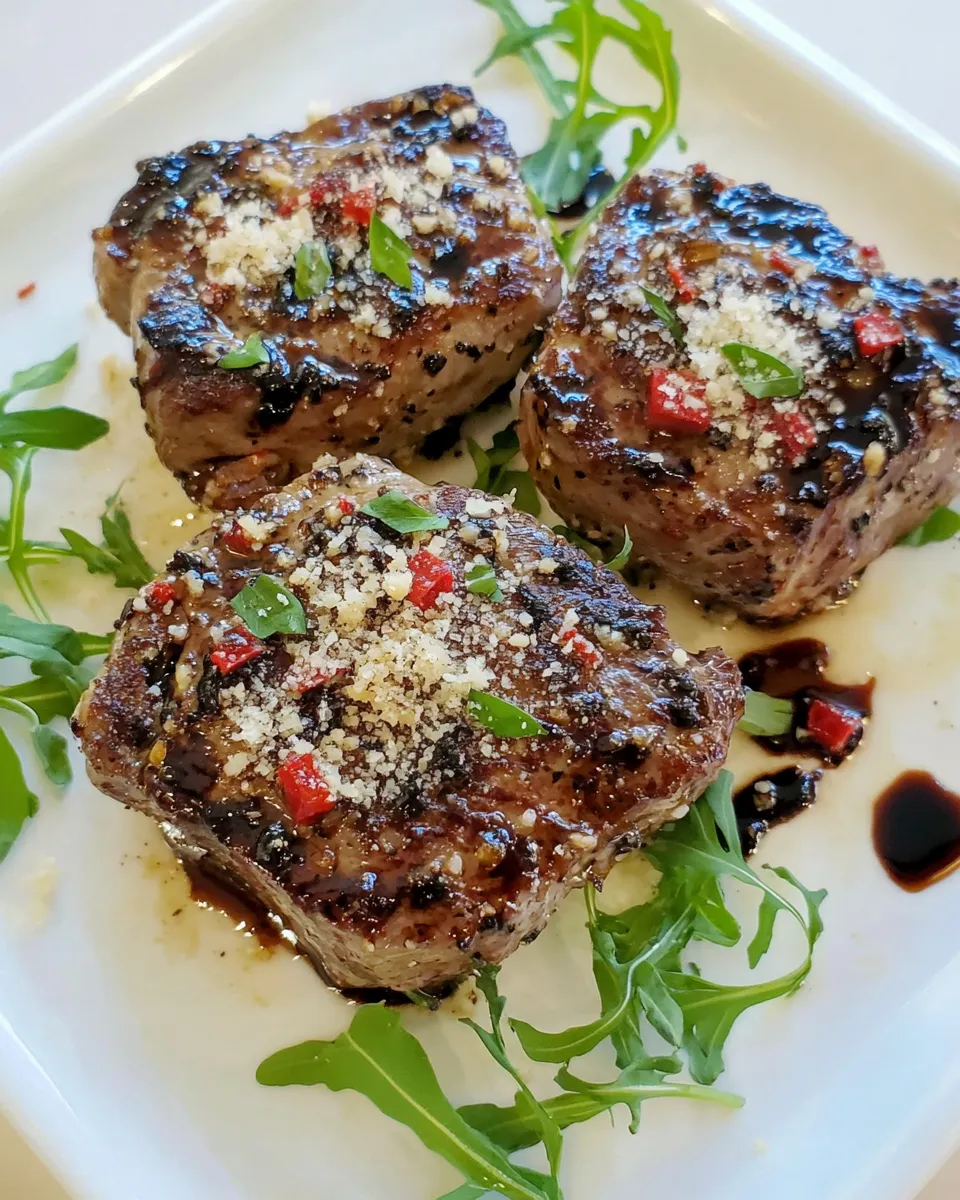
- Top the steak slices with portions of the Parmesan butter so it melts, then drizzle lightly with the balsamic glaze.
Why This Recipe Is Reliable
The approach here is intentionally simple and stage-driven, which makes the result repeatable. Sear the steak in a hot skillet to develop a brown crust; that crust equals flavor. Resting is non-negotiable—those five minutes let the juices redistribute so slices stay juicy instead of running dry onto the plate.
The Parmesan butter is a quick compound butter: mixing grated cheese into softened butter creates a melt that flavors each slice immediately. The balsamic step is equally forgiving. Because you’re boiling a small volume, it reduces quickly; the dark brown sugar simply helps it shine and temper the vinegar’s sharp edge.
Everything relies on timing more than technique. If you follow the sequence—make the butter, sear the steak, rest while you reduce—the components come together warm and balanced every time.
Swap Guide
- Steak cut: If rib‑eye isn’t available, choose another well-marbled cut for similar richness. Leaner cuts will work but cook a little faster and can be less forgiving.
- Greens: Use any sturdy salad green if you don’t have arugula; mixed greens work fine—just keep them lightly dressed with lemon.
- Sugar in the glaze: If you prefer, a small amount of granulated sugar or honey can balance the vinegar; use sparingly since the recipe only needs a hint of sweetness.
- Butter: If you want a more herbal compound butter, fold in a small amount of chopped herbs at the end (no extra instructions required here—just a light hand).
Before You Start: Equipment
- Medium skillet (cast iron preferred) — for even heat and the best sear.
- Small bowl — to combine the Parmesan and butter.
- Tongs — for flipping the steak safely and cleanly.
- Sharp knife and cutting board — to slice the rested steak against the grain.
- Spoon or small ladle — to drizzle the glaze over the plated steak.
Watch Outs & How to Fix
Steak undercooked: If the center is too rare after the recommended time, return the steak to the skillet over medium heat and cook in 30–60 second increments until it reaches the doneness you want. Let it rest again before slicing.
Steak overcooked: If it goes past your target, slice it thin against the grain and serve promptly. Thin slices are more forgiving and retain more perceived tenderness.
Glaze too thin: If the balsamic doesn’t reduce enough, keep it over medium heat a little longer, stirring constantly. It should become glossy and coat the back of a spoon. Note that it reduces quickly, so watch closely to avoid burning.
Glaze too thick or syrupy: Remove from heat and stir in a small splash of water to loosen it slightly; warm it again briefly if needed.
Butter doesn’t melt on the steak: Make sure the steak is still warm when you place the Parmesan butter on top. If the steak has cooled, place the plated steak under a warm broiler for 15–30 seconds—not long, just enough to melt the butter.
Substitutions by Diet
- Lower-fat option: Choose a leaner steak cut and trim excess fat before cooking. Expect a firmer texture and adjust cooking time downward slightly.
- Lower-sodium option: Use the Parmesan more sparingly and omit any extra salt before serving; the Parmesan provides most of the saltiness here.
- Dairy-free / Vegan adjustments: Replace the Parmesan butter with a plant-based butter blended with a small amount of nutritional yeast for savory depth, and ensure your balsamic glaze is reduced without added butter.
- Make it lighter: Serve the steak over a larger bed of greens and use lemon as primary seasoning instead of adding extra salt or oil.
Pro Tips & Notes
Timing and temperature
Let room-temperature butter sit until soft but not melted; this makes it easy to blend with the grated Parmesan. Heat the skillet until the oil shimmers—this ensures a good sear. The 4 minutes per side target is a guideline for medium-rare on a 12-ounce rib‑eye; adjust based on thickness and your stove.
Slicing and serving
Always slice against the grain. That simple step shortens muscle fibers and makes each bite feel tender. Arrange the greens first so the steak juices mingle with the salad, then top with Parmesan shavings and a drizzle of glaze for an attractive, balanced plate.
Make-ahead
The Parmesan butter can be made a day ahead and kept chilled. Bring it back to room temperature before serving so it blends and melts properly on the steak.
Leftovers & Meal Prep
Store sliced steak and any remaining glaze separately from the greens in airtight containers. Steak keeps well in the refrigerator for 2–3 days. Reheat gently: warm slices in a skillet over low heat with a splash of water or broth, or briefly in the oven at low temperature—avoid high heat to prevent drying out.
Greens should be dressed just before serving. Leftover steak reheated and sliced can be used cold over salads, in sandwiches, or chopped into a warm grain bowl. The glaze can be kept in a small jar in the fridge and warmed briefly before using.
Your Top Questions
Q: Can I cook the steak on a grill instead of a skillet?
A: Yes. A hot, clean grill will give you a great sear and smoky flavor. Watch timing closely; grill grates can cook faster than a skillet depending on heat.]
Q: What if I don’t have shallots?
A: Finely chopped mild onion will work in a pinch, though shallots give a softer, sweeter profile. Keep the volume similar and cook briefly—you’re only reducing for about a minute.
Q: How do I know when the steak is done?
A: Use a thermometer for precision: about 125–130°F for medium-rare (carryover will raise it a few degrees while resting). If you don’t use a thermometer, touch and feel or follow the suggested timings for a typical 12-ounce rib‑eye.
Q: Can I make the balsamic glaze ahead?
A: Yes, make it and store in the fridge for a few days. Warm it gently before drizzling so it’s glossy and pourable.
Q: Any plating tips?
A: Layer the greens, lemon, and cheese first, then fan the sliced steak across the bed. Dot or place the Parmesan butter on top so it melts into the meat, and finish with a light drizzle of glaze for a restaurant-style look.
Final Bite
This dish is one of those rare weeknight winners: short ingredient list, quick steps, and a high flavor payoff. It teaches a few useful techniques—proper searing, quick compound butter, and a vinegar reduction—that you’ll use again. Make the butter ahead if you like, rest the steak properly, and finish with the warm glaze. Simple moves that add up to an impressive plate.
Enjoy the balance of rich meat, melting Parmesan, peppery greens, and that glossy balsamic finish. It’s a straightforward recipe that reads and tastes like something from a favorite neighborhood restaurant—without the reservation.
Steak with Parmesan Butter and Balsamic Glaze
Ingredients
Ingredients
- 2 tablespoons grated Parmesan cheese plus Parmesan cheese shavings1 1/2 tablespoons butter room temperature1 12-ounce rib-eye steak1 teaspoon olive oil1/4 cup balsamic vinegar1/4 cup finely chopped shallots1/2 teaspoon (packed) dark brown sugar4 cups (lightly packed) arugula or mixed greens2 large lemon wedges
Instructions
Instructions
- In a small bowl, combine 2 tablespoons grated Parmesan cheese and 1 1/2 tablespoons room-temperature butter; mix until smooth and set aside.
- Heat 1 teaspoon olive oil in a medium skillet over medium-high heat until shimmering.
- Add the 12-ounce rib‑eye steak to the skillet and cook to desired doneness, about 4 minutes per side for medium-rare. Flip once using tongs.
- Transfer the steak to a plate and let rest for about 5 minutes.
- While the steak rests, return the skillet to medium-high heat if it has cooled. Add 1/4 cup balsamic vinegar, 1/4 cup finely chopped shallots, and 1/2 teaspoon (packed) dark brown sugar to the skillet. Bring to a boil and cook, stirring constantly, until the liquid reduces to a glossy glaze, about 1 minute. Remove from heat.
- Divide 4 cups (lightly packed) arugula or mixed greens and the Parmesan cheese shavings between 2 plates. Squeeze one large lemon wedge over each plate.
- Slice the rested steak against the grain and place the slices atop the arugula on each plate.
- Top the steak slices with portions of the Parmesan butter so it melts, then drizzle lightly with the balsamic glaze.
Equipment
- Small Bowl
- Skillet
- Tongs
- Plate