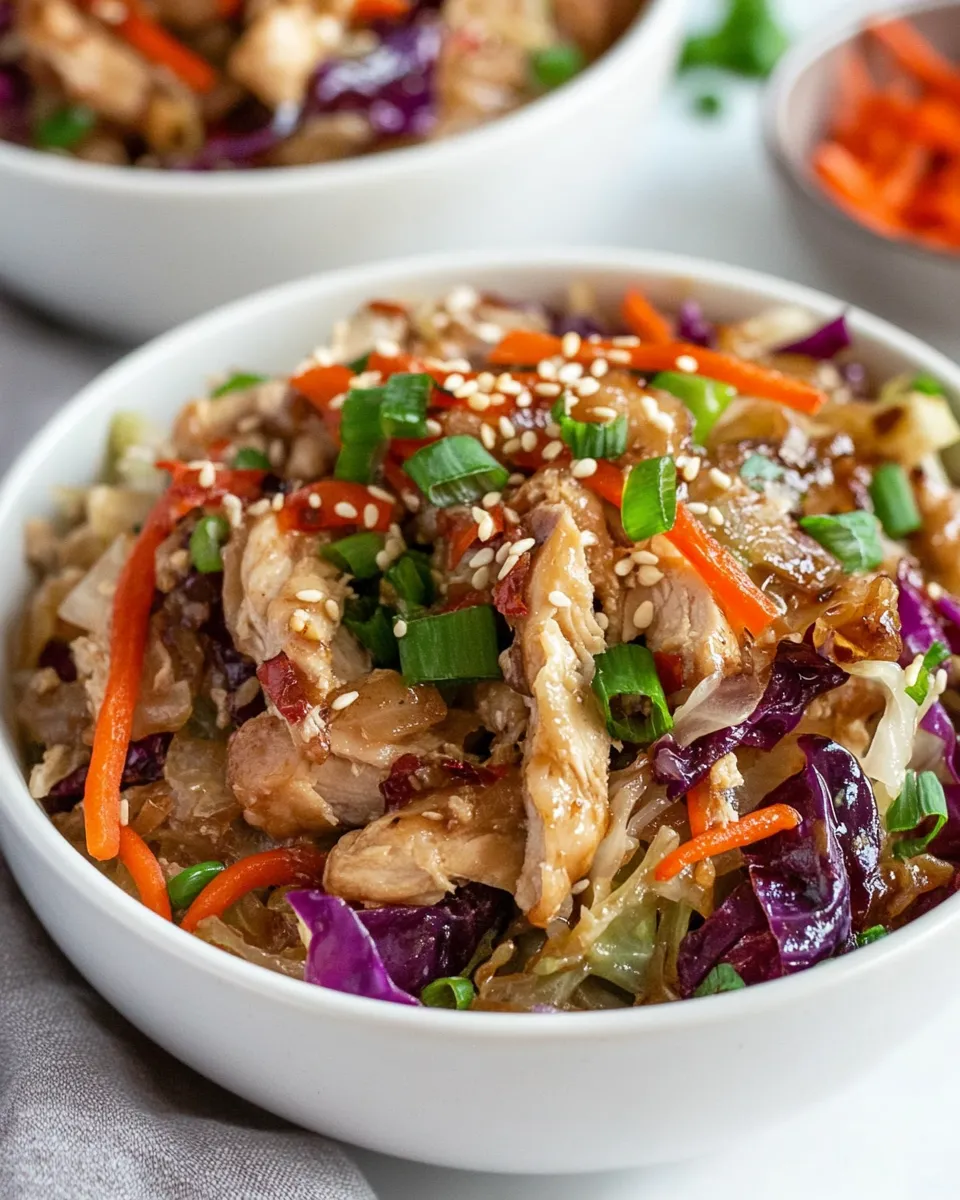
This bowl is one of those weeknight wins: fast, flexible, and forgiving. You get the sweet-savory lift of a homemade teriyaki, tender browned chicken, and a pile of cabbage that softens without losing all of its crunch. It’s an easy dinner to make after work and elegant enough to bring to a small dinner with friends.
I wrote this recipe because I wanted a full bowl where vegetables take center stage alongside the protein. Cabbage cooks down quickly and carries flavor well, and the teriyaki glaze ties everything together. The method keeps the chicken and veggies distinct while you get good caramelization on the meat before everything finishes in the pan.
Below you’ll find a clear ingredient list, step-by-step directions, troubleshooting notes, and tips for swapping ingredients safely without sacrificing texture. Read through once, and you’ll be ready to make this in about 30–40 minutes from start to finish.
What We’re Using
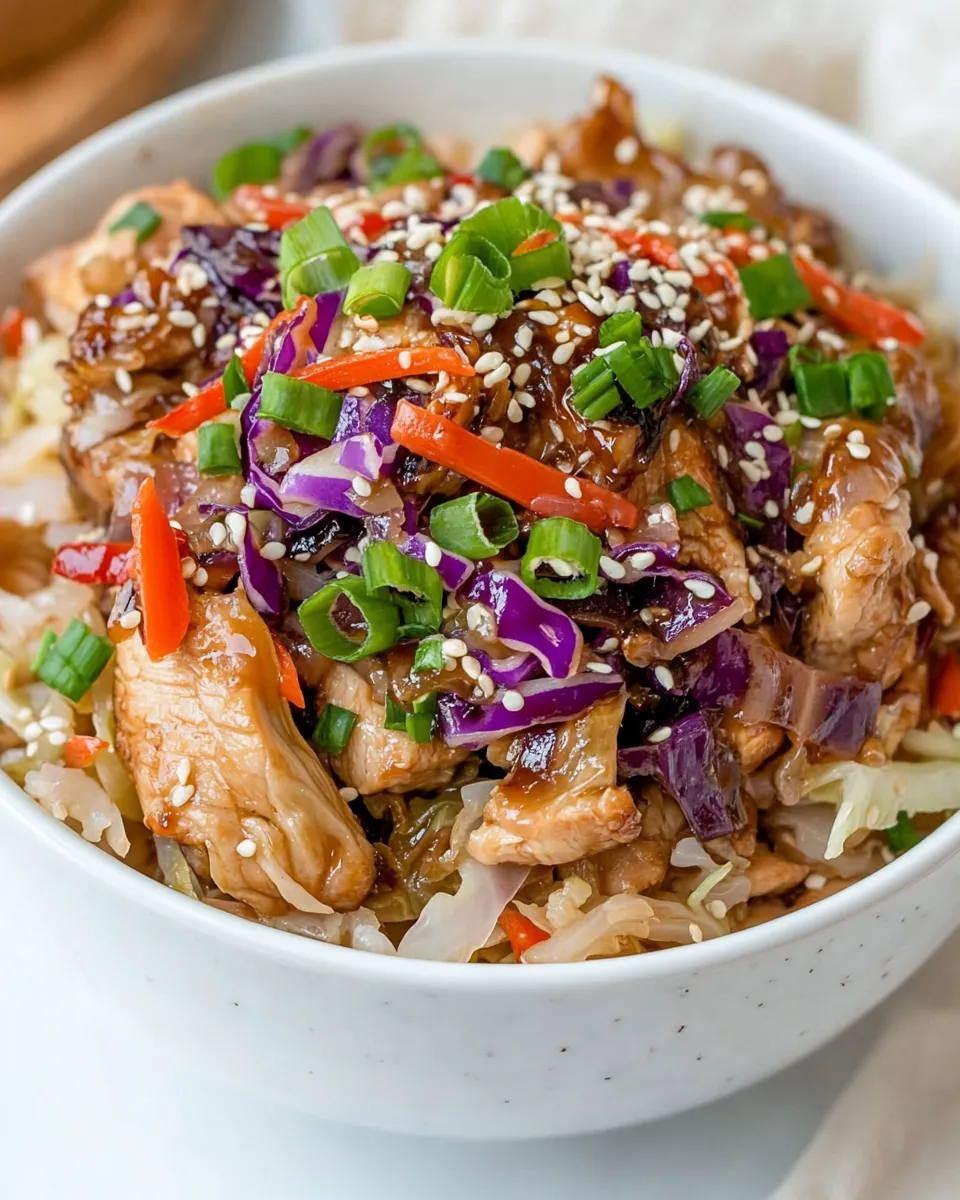
Simple, everyday ingredients that come together quickly: a little oil for searing, a fresh onion for aromatics, carrots and bell pepper for color, a large quantity of thinly sliced green cabbage for bulk and texture, scallions to finish, and a homemade teriyaki that thickens beautifully. I keep the sauce components flexible (liquid aminos or soy; maple syrup or honey) so you can easily adapt based on what’s in your pantry.
Ingredients
- 1Tbspavocado oil — for the initial sauté; high smoke point helps with browning.
- 1medium-sizedyellow onionchopped — builds savory sweetness and softens quickly.
- 6 to 8cupsgreen cabbagethinly sliced* — main vegetable; slices cook down and soak up sauce.
- 1largecarrotgrated — adds color, sweetness, and a little crunch.
- 1red bell peppercut into matchsticks — brightens the bowl and keeps a fresh snap when cooked briefly.
- 1 1/2lbsboneless skinless chicken breastschopped into bite-sized pieces** — lean protein; bite-sized pieces cook evenly and brown faster.
- 5stalksgreen onionchopped — stirred in with the chicken and used as garnish for fresh flavor.
- 1pinchsea saltto taste — seasons the vegetables; adjust later to taste.
- 5Tbspliquid aminosor soy sauce*** — salty, umami backbone of the teriyaki sauce.
- 1Tbspavocado oil — second tablespoon for searing the chicken; keeps pieces from sticking.
- 2Tbsprice vinegar — brightens the sauce and balances the sweetness.
- 2Tbsppure maple syrupor honey — sweetener for the glaze; use maple for complexity, honey for a quicker pantry swap.
- 4largecloves garlicminced — aromatic punch in the sauce; don’t overcook raw garlic or it will turn bitter.
- 1Tbspfresh gingerpeeled and grated — adds fresh warmth and lift against the sweet glaze.
- 1Tbsptapioca flouror cornstarch**** — thickener; creates a glossy, clingy sauce that coats chicken and vegetables.
Teriyaki Chicken and Cabbage Bowls, Made Easy
- Prepare the teriyaki sauce: in a small bowl or measuring cup whisk together 5 Tbsps liquid aminos (or soy sauce), 2 Tbsps rice vinegar, 2 Tbsps pure maple syrup (or honey), 4 large cloves garlic (minced), 1 Tbsp fresh ginger (peeled and grated), and 1 Tbsp tapioca flour (or cornstarch) until smooth. Set aside.
- Heat 1 Tbsp avocado oil in a large heavy pot or a deep 12-inch skillet over medium-high heat until shimmering.
- Add 1 medium-sized yellow onion (chopped) and sauté 3–4 minutes, until it begins to soften and become translucent.
- Add 6–8 cups thinly sliced green cabbage, 1 large grated carrot, and 1 red bell pepper (cut into matchsticks). Sprinkle the 1 pinch of sea salt over the vegetables. Cover and cook, stirring occasionally, until the cabbage has wilted, about 8–10 minutes.
- Push the vegetables to one side of the pan. Add the remaining 1 Tbsp avocado oil to the empty side, then add 1 1/2 lbs chopped boneless skinless chicken breasts (bite-sized) and 5 stalks green onion (chopped). Let the chicken brown for 5–8 minutes, stirring once or twice and keeping it separated from the vegetables at first to encourage browning.
- Stir the browned chicken into the vegetables, cover, and continue cooking over medium-high, stirring occasionally, until the chicken is cooked through and reaches an internal temperature of 165°F, about 8–15 minutes depending on piece size.
- Pour the prepared teriyaki sauce into the pot and stir to coat everything. Cook over medium-high, stirring frequently, until the sauce thickens and coats the chicken and vegetables, about 2–5 minutes.
- Taste the finished dish. If you or your guests want stronger seasoning, serve additional liquid aminos (or soy sauce), rice vinegar, or maple syrup/honey on the side for individual adjustment.
- Divide the Teriyaki Chicken and Cabbage into bowls and serve immediately.
Why This Recipe Works
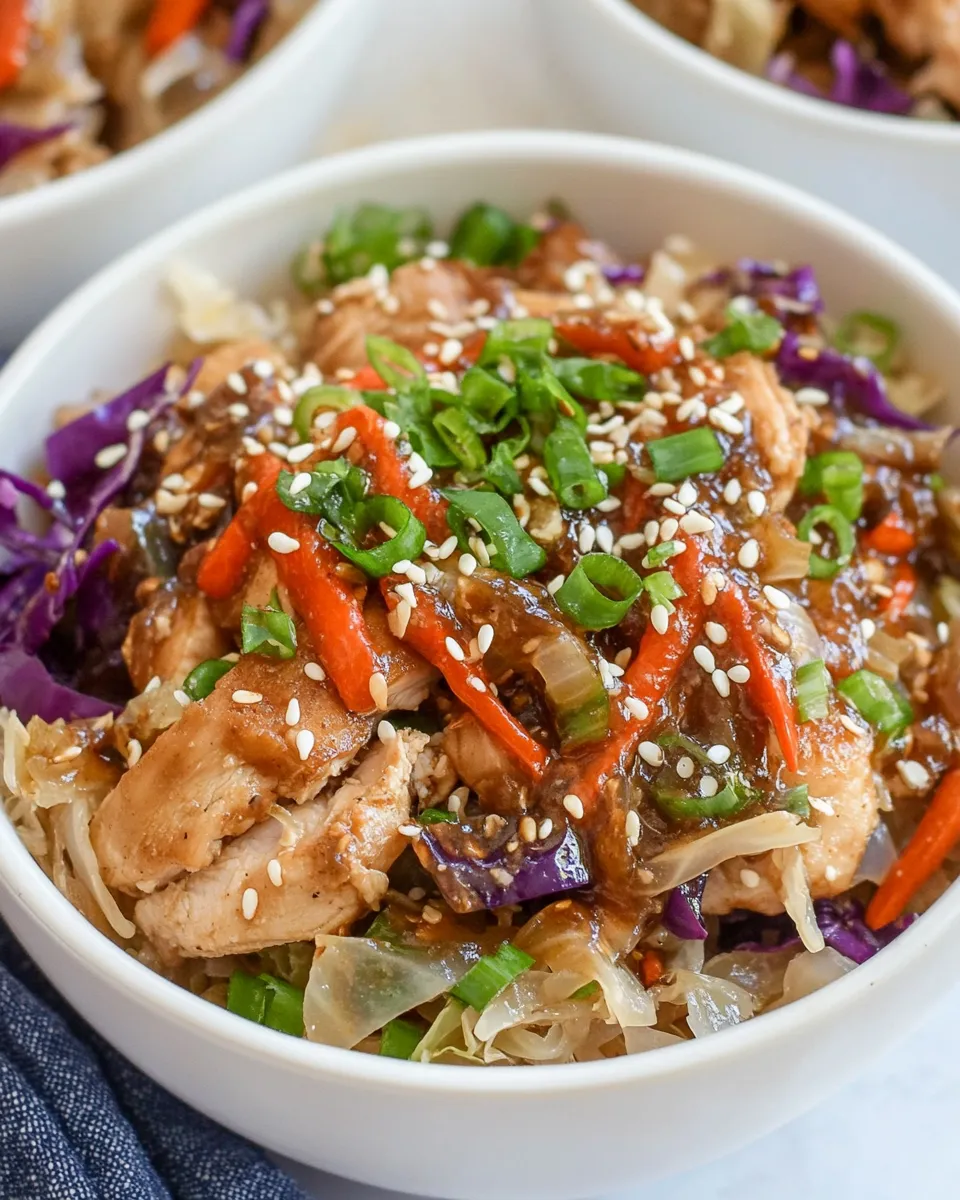
The technique separates cooking into stages so each component reaches its best texture. You brown the chicken against the hot pan to develop caramelized flavor. By shifting the vegetables to one side and searing the meat on the empty side, you avoid steaming the chicken. Then, finishing everything together lets flavors combine without overcooking.
The teriyaki sauce is intentionally balanced: salty liquid aminos or soy for umami, rice vinegar for brightness, maple or honey for sweetness, garlic and ginger for aromatics, and tapioca or cornstarch to thicken and make the sauce cling. That glossy coating is what makes a bowl feel composed and satisfying.
Texture-Safe Substitutions
If you need to swap ingredients but want to preserve texture, pick substitutes that behave similarly under heat.
- Chicken — thin-sliced thighs work well if you want more fat and juiciness; they brown quickly. Firm tofu (pressed and cubed) is a good plant swap; sear until golden and add to the pan late to keep it from breaking down.
- Cabbage — napa cabbage is softer and will collapse faster, so cut back on cook time to keep some bite. If using kale, remove the stems and add it earlier as it takes longer to soften.
- Liquid aminos/soy — tamari or coconut aminos are fine; coconut aminos are milder and less salty, so taste before adding extra.
- Thickener — if you don’t have tapioca or cornstarch, reduce the sauce slightly in a small saucepan until it thickens, but watch it closely to prevent burning.
Must-Have Equipment
- Large heavy pot or deep 12-inch skillet — gives enough surface for browning and space for the cabbage to wilt.
- Wooden spoon or spatula — for pushing veggies aside and scraping up brown bits during searing.
- Small bowl or measuring cup — to whisk together the teriyaki sauce so the starch dissolves evenly.
- Instant-read thermometer (optional but useful) — to ensure chicken reaches 165°F without overcooking.
- Sharp knife and cutting board — bite-sized pieces cook evenly and are easier to eat in a bowl.
Easy-to-Miss Gotchas
- Don’t overcrowd the pan when searing the chicken. If pieces touch too much, they steam instead of brown. Keep them spread out and brown in batches if needed.
- Make sure the tapioca flour or cornstarch is fully dissolved in the sauce. If it clumps, it won’t thicken smoothly when added to the hot pan.
- Overcooking cabbage will turn it mushy and flabby. Keep an eye on it during the 8–10 minute wilting step and uncover to check texture.
- Garlic added too early in a hot pan can burn and taste bitter. In this recipe the garlic and ginger are in the sauce, not cooked alone, which protects them from burning and keeps their fresh flavor.
Fresh Seasonal Changes
Adjust the veggie mix for what’s best at the market. Early spring: add thin asparagus spears or sugar snap peas at the end for crunch. Summer: swap or add thin zucchini ribbons or sliced summer squash, but add them late since they cook quickly. Fall and winter: use shredded Brussels sprouts in place of some cabbage for a nuttier bite, or stir in thinly sliced apple at the very end for brightness and texture contrast.
Pro Perspective
Two small habits make a big difference: dry your chicken pieces before searing, and don’t be shy about high heat at the start. Patting chicken dry with paper towels removes surface moisture, helping the Maillard reaction and giving you that browned flavor. When you first heat the pan and oil until shimmering, you set yourself up to form a crust that adds depth to the finished bowl.
Also, consider finishing with a quick acidity hit—just a splash of rice vinegar or a few drops of fresh lime—right before serving. It lifts the flavors and cuts through the glaze’s sweetness.
Storage & Reheat Guide
Store leftovers in an airtight container in the refrigerator for up to 3–4 days. The sauce thickens as it cools; that’s normal. If you froze the dish, expect some texture change in the cabbage. Freeze in a resealable container for up to 2 months.
To reheat: gently warm on the stovetop over medium-low, adding a tablespoon or two of water or broth to loosen the sauce and prevent drying. Microwave reheating works too—use medium power in 30–45 second increments, stirring between bursts to re-distribute heat.
Helpful Q&A
- Can I make the sauce ahead of time? Yes. Whisk the teriyaki sauce and store it in the fridge for up to 3 days. Re-whisk before using as the starch may settle.
- What if I don’t have liquid aminos? Use regular soy sauce or tamari. Taste the sauce before adding it to the pan to adjust sweetness or acidity.
- Is there a vegetarian version? Replace chicken with firm tofu or tempeh. Press tofu well and sear until golden. You may need a slightly thicker sauce to cling to tofu.
- How do I keep vegetables crisp-tender? Slice vegetables uniformly and clock their cook time. Add quick-cooking items toward the end and tougher items earlier.
Let’s Eat
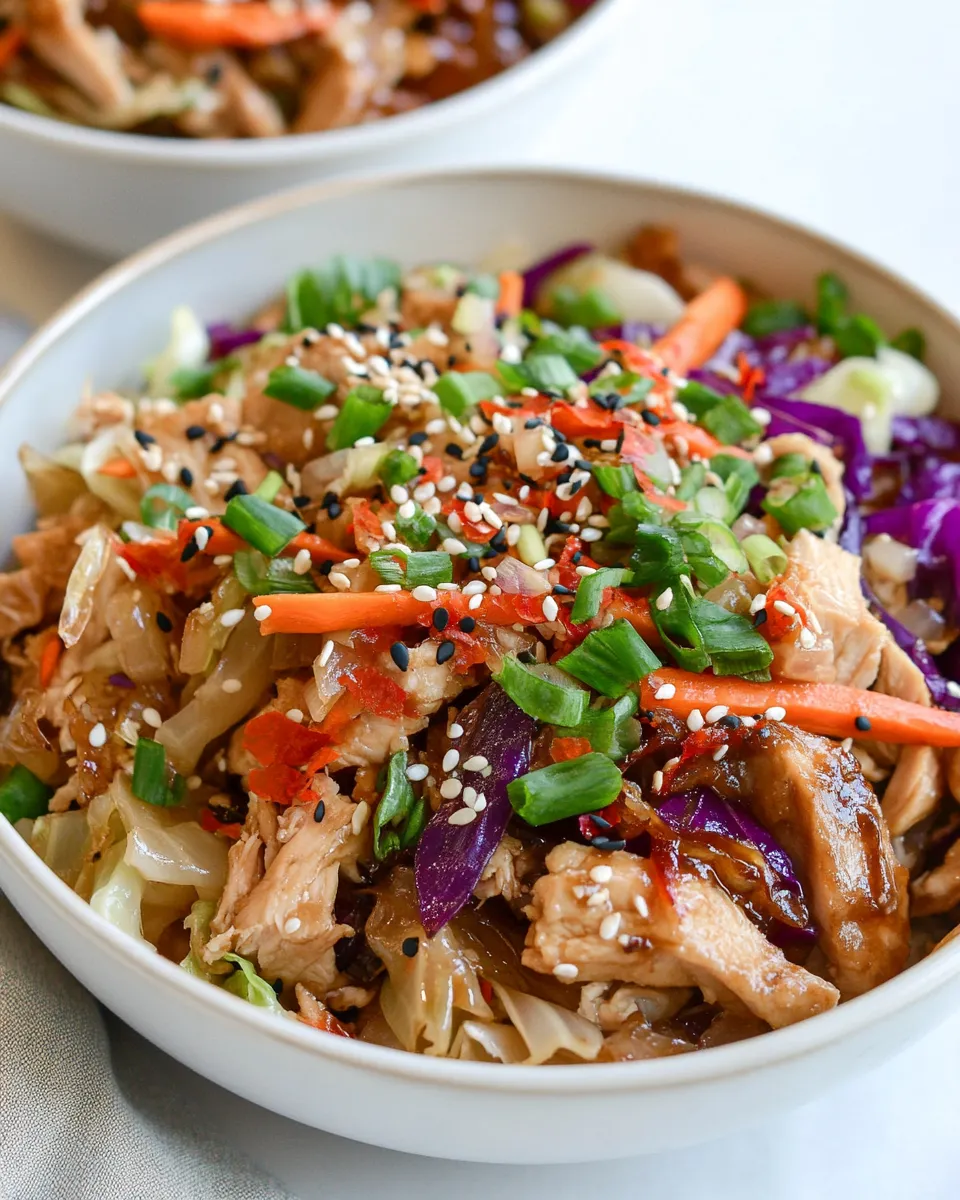
Assemble bowls with a base of steamed rice or noodles if you like, pile on a generous portion of the cabbage and chicken, and spoon any remaining glaze over the top. Scatter extra green onions or a sprinkle of sesame seeds for color and crunch. Serve immediately while the sauce is glossy and the chicken still warm.
This meal is straightforward, forgiving, and customizable. Once you’ve made it twice, you’ll know exactly how you like your balance of sweet, salty, and tangy—and you’ll have a reliable, crowd-pleasing bowl for any weeknight.
Teriyaki Chicken and Cabbage Bowls
Ingredients
Ingredients
- 1 Tbspavocado oil
- 1 medium-sizedyellow onionchopped
- 6 to 8 cupsgreen cabbagethinly sliced*
- 1 largecarrotgrated
- 1 red bell peppercut into matchsticks
- 1 1/2 lbsboneless skinless chicken breastschopped into bite-sized pieces**
- 5 stalksgreen onionchopped
- 1 pinchsea saltto taste
- 5 Tbspliquid aminosor soy sauce***
- 1 Tbspavocado oil
- 2 Tbsprice vinegar
- 2 Tbsppure maple syrupor honey
- 4 largecloves garlicminced
- 1 Tbspfresh gingerpeeled and grated
- 1 Tbsptapioca flouror cornstarch****
Instructions
Instructions
- Prepare the teriyaki sauce: in a small bowl or measuring cup whisk together 5 Tbsps liquid aminos (or soy sauce), 2 Tbsps rice vinegar, 2 Tbsps pure maple syrup (or honey), 4 large cloves garlic (minced), 1 Tbsp fresh ginger (peeled and grated), and 1 Tbsp tapioca flour (or cornstarch) until smooth. Set aside.
- Heat 1 Tbsp avocado oil in a large heavy pot or a deep 12-inch skillet over medium-high heat until shimmering.
- Add 1 medium-sized yellow onion (chopped) and sauté 3–4 minutes, until it begins to soften and become translucent.
- Add 6–8 cups thinly sliced green cabbage, 1 large grated carrot, and 1 red bell pepper (cut into matchsticks). Sprinkle the 1 pinch of sea salt over the vegetables. Cover and cook, stirring occasionally, until the cabbage has wilted, about 8–10 minutes.
- Push the vegetables to one side of the pan. Add the remaining 1 Tbsp avocado oil to the empty side, then add 1 1/2 lbs chopped boneless skinless chicken breasts (bite-sized) and 5 stalks green onion (chopped). Let the chicken brown for 5–8 minutes, stirring once or twice and keeping it separated from the vegetables at first to encourage browning.
- Stir the browned chicken into the vegetables, cover, and continue cooking over medium-high, stirring occasionally, until the chicken is cooked through and reaches an internal temperature of 165°F, about 8–15 minutes depending on piece size.
- Pour the prepared teriyaki sauce into the pot and stir to coat everything. Cook over medium-high, stirring frequently, until the sauce thickens and coats the chicken and vegetables, about 2–5 minutes.
- Taste the finished dish. If you or your guests want stronger seasoning, serve additional liquid aminos (or soy sauce), rice vinegar, or maple syrup/honey on the side for individual adjustment.
- Divide the Teriyaki Chicken and Cabbage into bowls and serve immediately.
Equipment
- 1large pot such as a Dutch oven
Notes
*This is equivalent to about 1 medium-sized head green cabbage or two 14-oz. Bags of coleslaw mix.
**Use leftover cooked chicken or rotisserie chicken to save time if you’d like.
Rather than making your own teriyaki sauce, you can use ¼ cup to ⅓ cup of your favorite store-bought teriyaki sauce.
***You can use coconut aminos instead of soy sauce for a paleo version that is soy-free. If you do so, you can omit the honey or pure maple syrup because coconut aminos are already sweet tasting.
****The tapioca flour or cornstarch is used to thicken the sauce. If you aren’t concerned about the sauce turning out like a teriyaki glaze, you can skip it.
Store leftover teriyaki chicken in an airtight container in the refrigerator for up to 5 days.