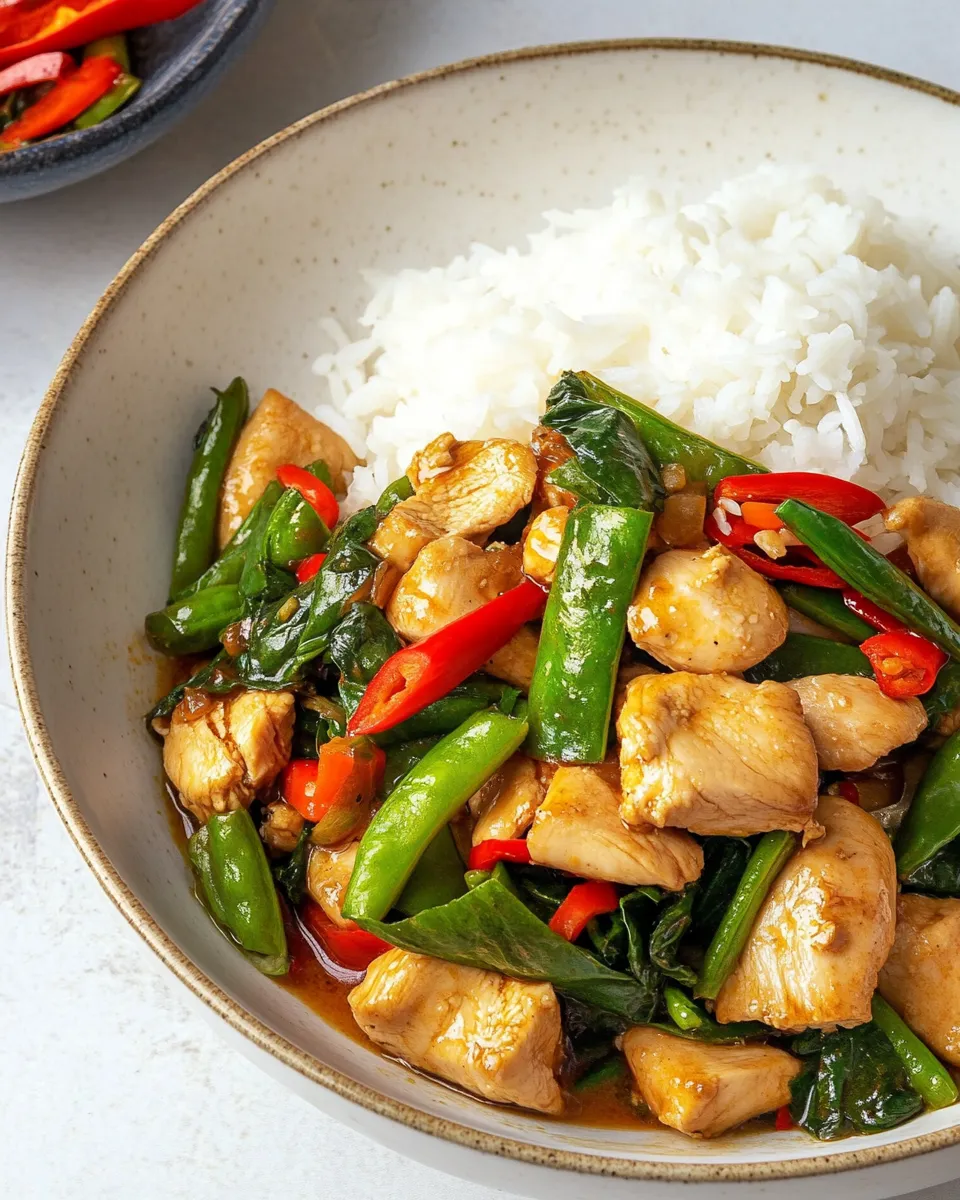
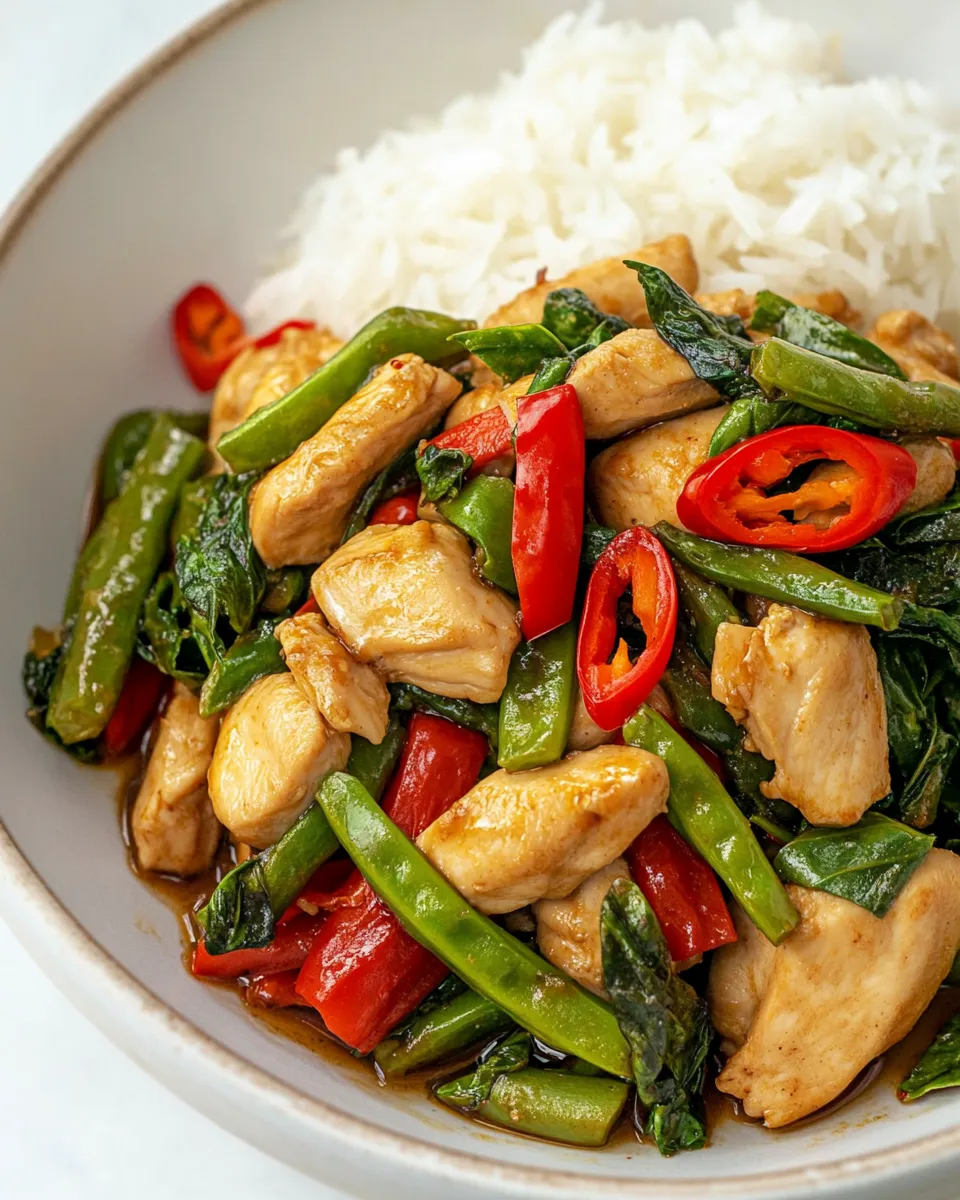
I love this Thai basil chicken for its quick turnaround and bold, familiar flavors. It’s the kind of dish that makes weeknights feel intentional — bright chile, fragrant basil, and a savory sauce that clings to tender pieces of dark meat chicken. No elaborate prep, just sensible mise en place and a hot pan.
This recipe is forgiving: the sauce comes together in a minute, the vegetables stay crisp if you don’t overcook, and the basil folds in at the end for a punch of aroma. I’ll walk you through the exact sequence I use every time so you can get restaurant-style results from a single skillet.
Ingredient Notes
Ingredients
- 3 tablespoons oyster sauce — the backbone of the sauce; brings salty-sweet umami and thickness.
- 2 tablespoons low sodium soy sauce — depth and savory saltiness without overpowering the dish.
- 1 tablespoon fish sauce — a little goes a long way; adds complex savory notes and an authentic savory kick.
- 1 tablespoon sugar — balances the salty and acidic flavors and helps the sauce glaze the chicken.
- water if needed — used only to loosen the sauce if it reduces too much.
- 2 tablespoons peanut oil or coconut oil — high-heat oil for searing; peanut adds a neutral, slightly nutty flavor; coconut oil adds a subtle fragrance.
- 2 ½ pounds boneless chicken thighs cut into bite-size pieces — thighs stay juicy and brown nicely; cut to even pieces so they cook uniformly.
- 6-8 cloves garlic minced — aromatic backbone; add to the pan once you clear space so it doesn’t burn.
- 3-6 Thai bird chiles minced — adjust to taste; these deliver the classic sharp heat.
- 1 bunch scallions chopped and separated into whites and greens — whites add savory bite when cooked; greens finish the dish with fresh color and mild onion flavor.
- 1 large red bell pepper seeded and cut into 1-inch pieces — sweetness and crunch; cut so pieces are similar in size to the chicken.
- 8 ounces green beans trimmed and halved — crisp texture and color; trim and halve for quick, even cooking.
- 1 cup packed fresh Thai basil leaves or sweet basil — Thai basil is ideal for its anise-like aroma; sweet basil works if Thai basil isn’t available.
Stepwise Method: Thai Basil Chicken
- In a small bowl or measuring pitcher, whisk together 3 tablespoons oyster sauce, 2 tablespoons low sodium soy sauce, 1 tablespoon fish sauce, and 1 tablespoon sugar until the sugar dissolves. Set the sauce aside.
- Prepare the produce and chicken: cut 2 ½ pounds boneless chicken thighs into bite-size pieces; mince 6–8 cloves garlic; mince 3–6 Thai bird chiles; trim and halve 8 ounces green beans; seed and cut 1 large red bell pepper into 1-inch pieces; chop 1 bunch scallions and separate the whites from the greens; pack 1 cup fresh Thai basil leaves. Keep the items in separate piles so you can add them to the pan in order.
- Heat a large wok or sauté pan over medium-high heat until hot. Add 2 tablespoons peanut oil (or coconut oil) and swirl to coat the pan.
- Add the chicken pieces to the hot pan. Stir and sauté 3–5 minutes, stirring often, until the chicken pieces are almost cooked through (edges opaque).
- Push the chicken toward the sides of the pan to create space in the center. Add the minced garlic, minced Thai bird chiles, scallion whites, red bell pepper, and green beans to the center. Stir and sauté another 3–5 minutes, stirring frequently, until the vegetables are cooked but still firm.
- Pour the prepared sauce over the chicken and vegetables. Stir to combine and simmer 1–2 minutes, stirring, until the sauce coats the ingredients and the chicken finishes cooking. If the sauce seems too thick, add 1–2 tablespoons water to loosen it.
- Add the basil leaves and the scallion greens. Stir just until the basil wilts (about 30 seconds). Turn off the heat.
- Serve warm.
Follow the steps in order: sauce first, prep everything, then the quick high-heat sear and finish with basil. Timing and a hot pan matter more than precise seconds — watch for opaque chicken edges and bright, still-firm vegetables.
The Upside of Thai Basil Chicken
This dish is fast, flavor-forward, and versatile. It’s an excellent midweek main because it cooks in under 20 minutes once the pieces are prepped, and the ingredients travel well from fridge to table. The sauce is balanced—umami from oyster and fish sauce, salty warmth from soy, and a touch of sweetness to round the edges. Fresh basil at the end gives it that unmistakable Thai aroma that makes the dish feel complete.
It’s also a great template: you can scale quantities, swap the vegetables, or change the protein, and still get a satisfying result. That adaptability makes it a kitchen workhorse: weeknight dinners, meal-prep bowls, or even a simple take-along for friends.
Budget & Availability Swaps
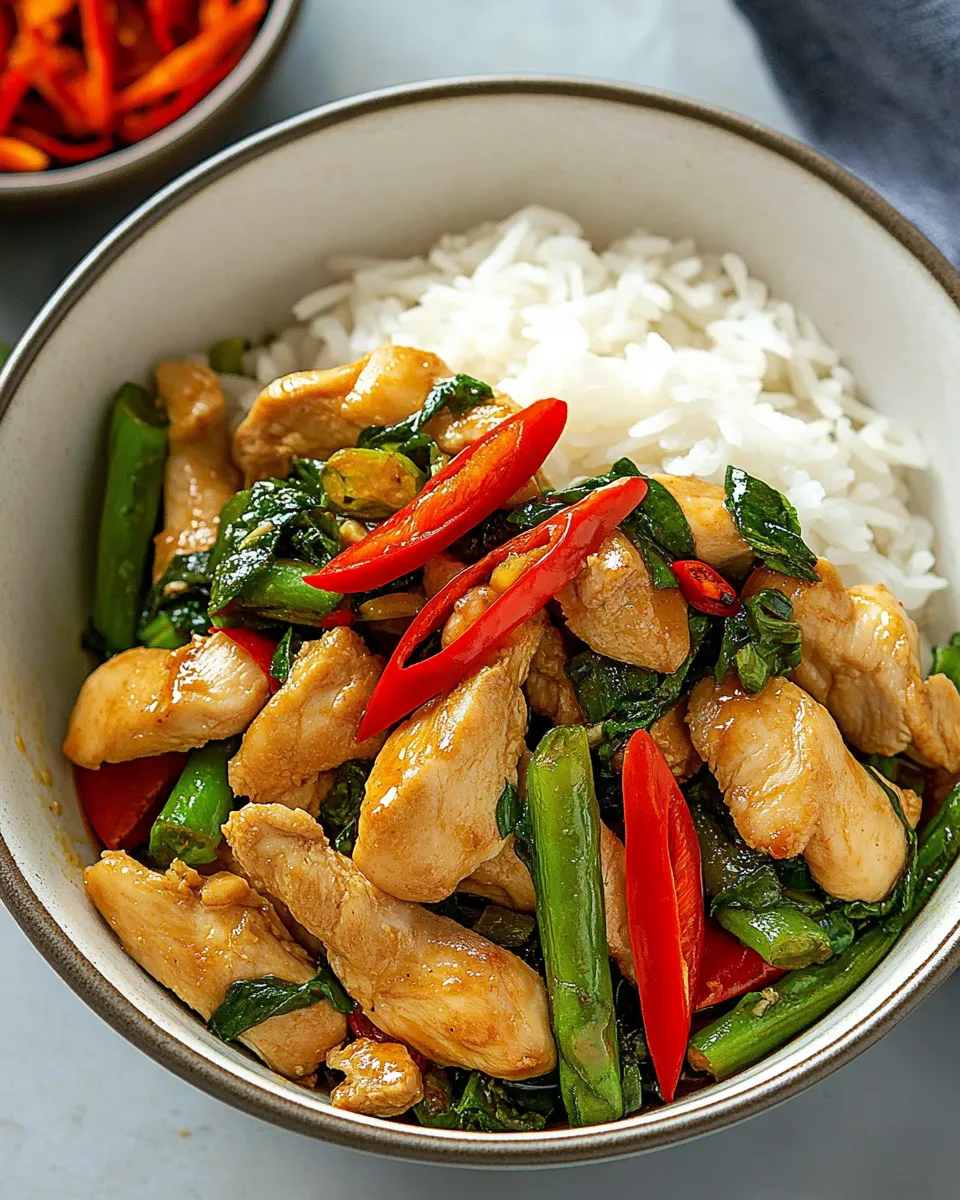
- Chicken thighs → Chicken breasts: Use breasts if you prefer leaner meat; reduce cooking time a touch to avoid drying out.
- Thai basil → Sweet basil: Sweet basil is fine if Thai basil is hard to find; the flavor will be milder and less anise-like.
- Thai bird chiles → Serrano or jalapeño: Serranos give similar heat; jalapeños are milder — adjust quantity.
- Peanut oil → Vegetable or canola oil: Neutral high-heat oils work well; coconut oil adds a subtle aroma if you like that profile.
- Green beans → Broccoli, snap peas, or bok choy: Any firm green vegetable that holds up to a quick stir-fry will work.
- Oyster sauce → Hoisin (in a pinch): Hoisin will change the profile (sweeter), so reduce added sugar if using.
Gear Checklist
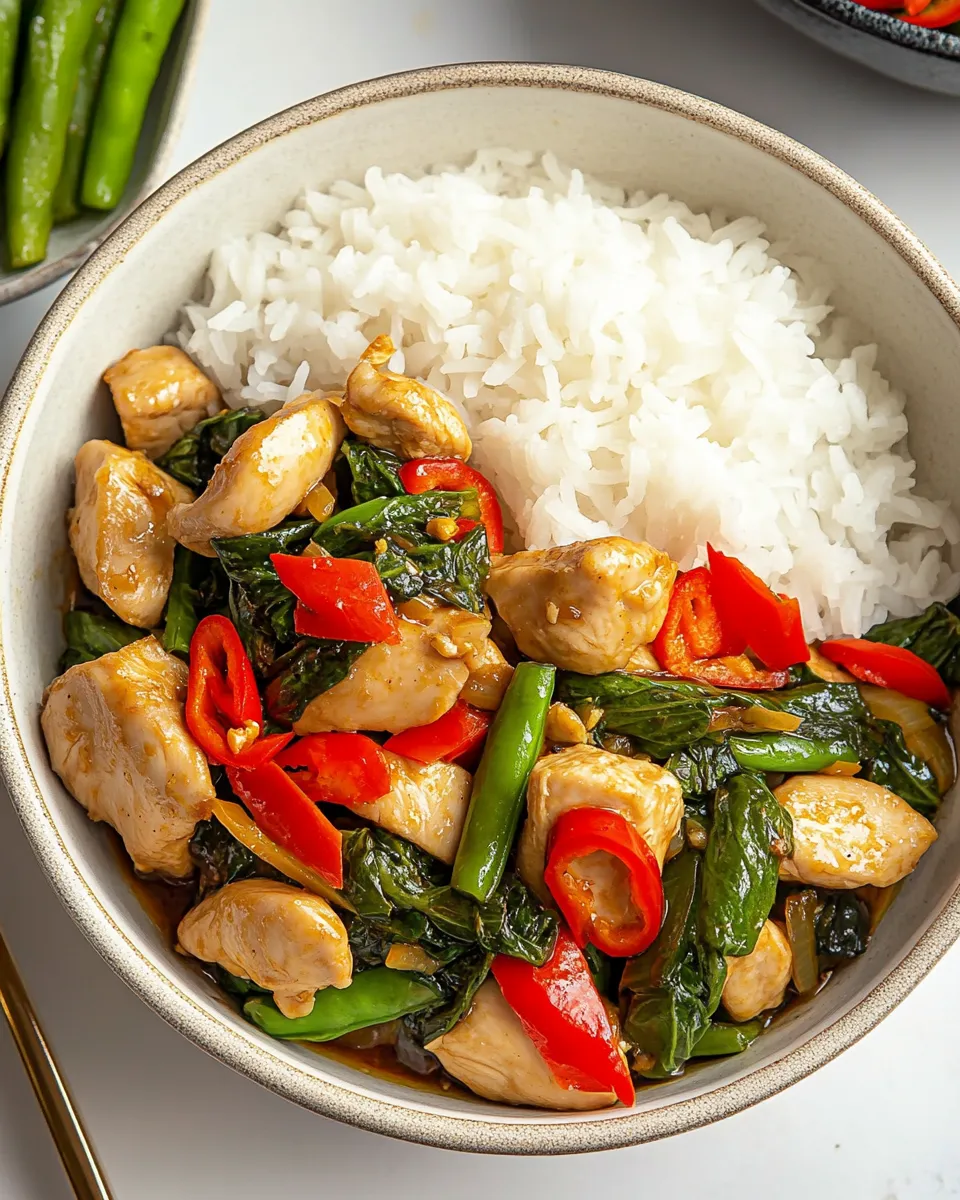
- Large wok or heavy-bottomed sauté pan — surface area matters for high-heat searing.
- Sharp chef’s knife and cutting board — even pieces cook more predictably.
- Small bowl or measuring pitcher — for whisking the sauce so it’s ready to go.
- Spatula or wooden spoon — for pushing chicken aside and stirring without tearing basil.
- Tongs (optional) — helpful for moving pieces quickly in a hot pan.
Pitfalls & How to Prevent Them
Several common missteps can blunt the flavors or ruin the texture. Here’s what to watch for and how to fix it:
- Overcrowding the pan: If the pan is too full, the chicken steams instead of searing. Use a large pan and, if needed, cook in two batches.
- Burning the garlic: Garlic turns bitter when charred. Add it after you push the chicken aside and keep the center hot but don’t let it sit too long without stirring.
- Soggy vegetables: Cook vegetables just until tender-crisp. They should retain some bite when served.
- Too-salty sauce: Taste as you go. Using low-sodium soy sauce helps; fish sauce is potent—measure carefully.
- Basil cooked too long: Add basil at the very end and stir briefly so it wilts but keeps its aroma.
Spring–Summer–Fall–Winter Ideas
Use seasonality to adapt the vegetables and presentation:
- Spring: Swap green beans for sugar snap peas and add a handful of fresh peas for sweetness. Serve over jasmine rice with a wedge of lime.
- Summer: Add thinly sliced zucchini or summer squash and use fresh Thai basil from the garden. Serve with chilled cucumber salad on the side.
- Fall: Incorporate thinly sliced carrots or baby bok choy for heft. A bed of warm grain like brown rice or farro makes it feel cozier.
- Winter: Use sturdier greens like broccolini or kale (add a minute earlier), and consider a drizzle of toasted sesame oil at the end for warmth.
Insider Tips
- Prep everything first: This recipe moves fast. Have the sauce mixed and all ingredients chopped and separated before the pan heats.
- Temperature control: Start with a hot pan, but reduce slightly if garlic begins to brown too quickly. Medium-high is the sweet spot.
- Uniform pieces: Cut chicken and vegetables to similar sizes so they finish at the same time.
- Let the pan do the work: Don’t stir constantly while searing the chicken at the beginning; brief contact with the hot pan builds flavor.
- Adjust heat with chiles: If you like things less fiery, remove seeds from the chiles or use fewer.
How to Store & Reheat
Cool leftovers to room temperature quickly, then refrigerate in an airtight container for up to 3–4 days. The basil will darken and soften over time; if you want a fresher finish, reserve a small handful of basil to stir in after reheating.
To reheat: warm in a skillet over medium heat with a splash of water or a teaspoon of oil to loosen the sauce; toss until heated through. Microwave on medium power in 30–45 second bursts, stirring between intervals, to avoid overcooking the chicken. For longer storage, freeze in a shallow, airtight container for up to 2 months; thaw overnight in the fridge and reheat in a skillet.
FAQ
Can I make this vegetarian? Yes. Replace the chicken with firm tofu (pressed and cubed) or a medley of mushrooms, and replace oyster and fish sauce with a mushroom-based vegan oyster sauce and extra soy. Keep the basic method the same but watch tofu and mushrooms for moisture release.
How spicy is it? The heat depends on the chilies. Thai bird chiles are potent; use fewer or substitute milder chiles to tame the spice.
Can I use other proteins? Shrimp cooks faster (1–3 minutes) and works well; thinly sliced beef is also excellent — adjust cook time accordingly.
Is this authentic? It follows the essential elements of Thai basil chicken: savory-sweet sauce, fish sauce for depth, fresh basil folded in at the end. There are many regional and personal variations; this recipe aims for a reliable, home-kitchen approach.
Bring It Home
Thai Basil Chicken is one of those dishes that rewards good prep with big returns: vibrant flavors, minimal fuss, and fast service. Once you’ve mastered the timing—hot pan, quick sear, vegetables that stay crisp—you’ll find this a go-to for busy nights and casual entertaining alike. Make the sauce, chop the veg, and let the aroma of wilted basil tell you dinner is ready.
If you try it, I’d love to hear how you adjusted the heat or which swaps you used. Tag your photos or leave a note so we can swap tips — the best kitchen lessons come from trying, tasting, and tweaking.
Thai Basil Chicken Recipe
Ingredients
Ingredients
- For the Sauce –
- 3 tablespoonsoyster sauce
- 2 tablespoonslow sodium soy sauce
- 1 tablespoonfish sauce
- 1 tablespoonsugar
- water if needed
- For the Chicken Stir Fry –
- 2 tablespoonspeanut oilor coconut oil
- 2 1/2 poundsboneless chicken thighscut into bite-size pieces
- 6-8 clovesgarlicminced
- 3-6 Thai bird chilesminced
- 1 bunchscallionschopped and separated into whites and greens
- 1 largered bell pepperseeded and cut into 1-inch pieces
- 8 ouncesgreen beanstrimmed and halved
- 1 cuppacked fresh Thai basil leavesor sweet basil
Instructions
Instructions
- In a small bowl or measuring pitcher, whisk together 3 tablespoons oyster sauce, 2 tablespoons low sodium soy sauce, 1 tablespoon fish sauce, and 1 tablespoon sugar until the sugar dissolves. Set the sauce aside.
- Prepare the produce and chicken: cut 2 ½ pounds boneless chicken thighs into bite-size pieces; mince 6–8 cloves garlic; mince 3–6 Thai bird chiles; trim and halve 8 ounces green beans; seed and cut 1 large red bell pepper into 1-inch pieces; chop 1 bunch scallions and separate the whites from the greens; pack 1 cup fresh Thai basil leaves. Keep the items in separate piles so you can add them to the pan in order.
- Heat a large wok or sauté pan over medium-high heat until hot. Add 2 tablespoons peanut oil (or coconut oil) and swirl to coat the pan.
- Add the chicken pieces to the hot pan. Stir and sauté 3–5 minutes, stirring often, until the chicken pieces are almost cooked through (edges opaque).
- Push the chicken toward the sides of the pan to create space in the center. Add the minced garlic, minced Thai bird chiles, scallion whites, red bell pepper, and green beans to the center. Stir and sauté another 3–5 minutes, stirring frequently, until the vegetables are cooked but still firm.
- Pour the prepared sauce over the chicken and vegetables. Stir to combine and simmer 1–2 minutes, stirring, until the sauce coats the ingredients and the chicken finishes cooking. If the sauce seems too thick, add 1–2 tablespoons water to loosen it.
- Add the basil leaves and the scallion greens. Stir just until the basil wilts (about 30 seconds). Turn off the heat.
- Serve warm.
Equipment
- small bowl or measuring pitcher
- large wok or sauté pan
Notes
This recipe can be made
Gluten-Free
if you buy GF oyster sauce, soy sauce, and fish sauce.
You can add or omit the bell peppers and/or green beans if you like.
This is a great make-ahead meal, and leftovers are delicious! Transfer cooled leftover Spicy Thai Basil Chicken to an airtight container and keep in the refrigerator for
up to 3-4 days
. I suggest either storing leftover rice
separately
or simply making it fresh to enjoy with reheated Pad Krapow Gai.
I
do not
recommend freezing, as defrosting and reheating will cause the veggies to become mushy.