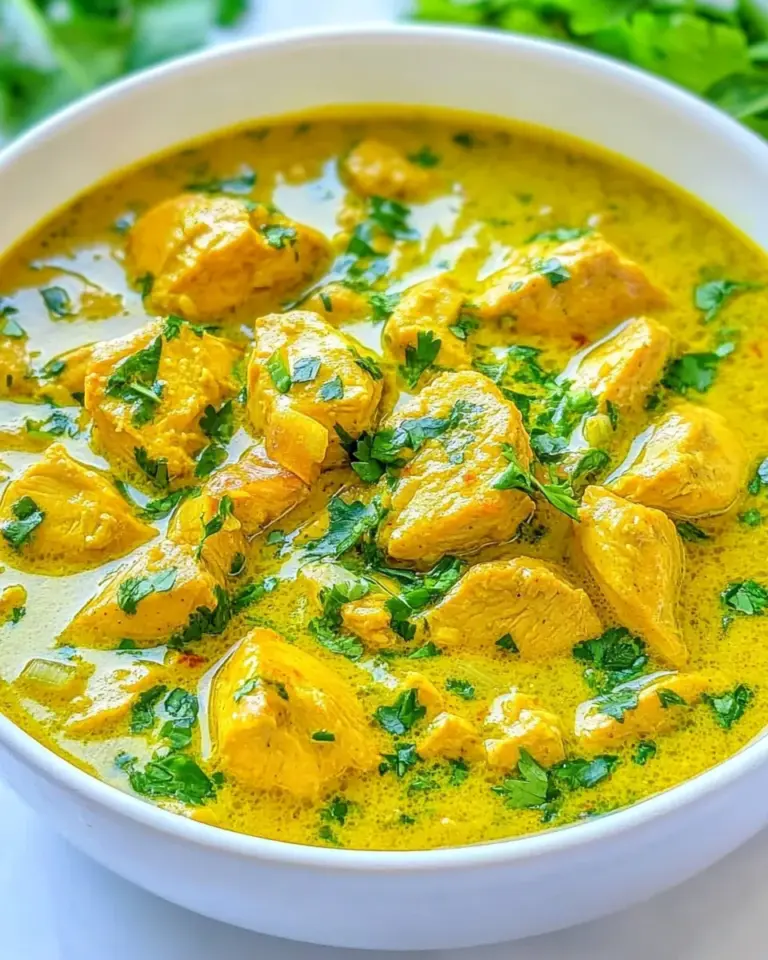
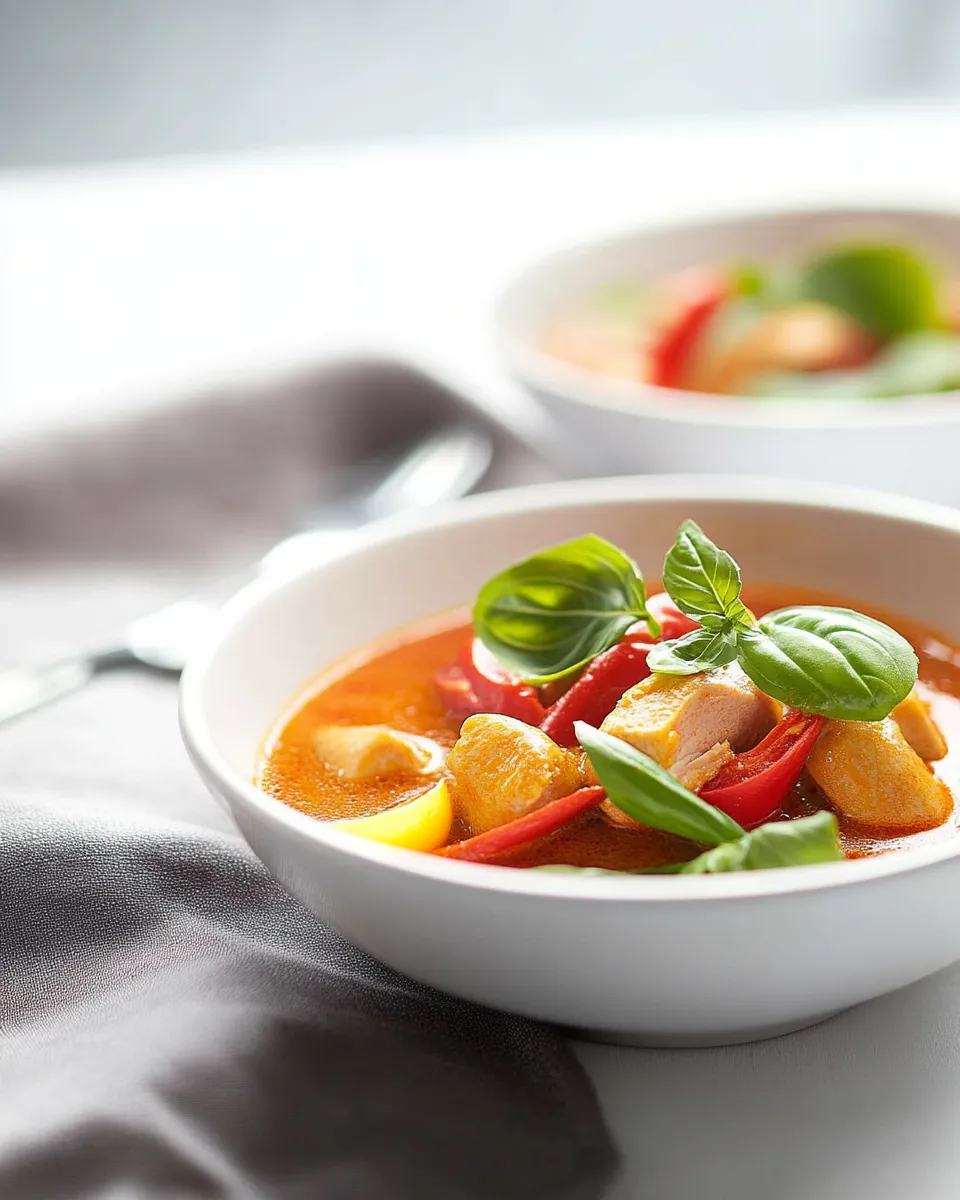
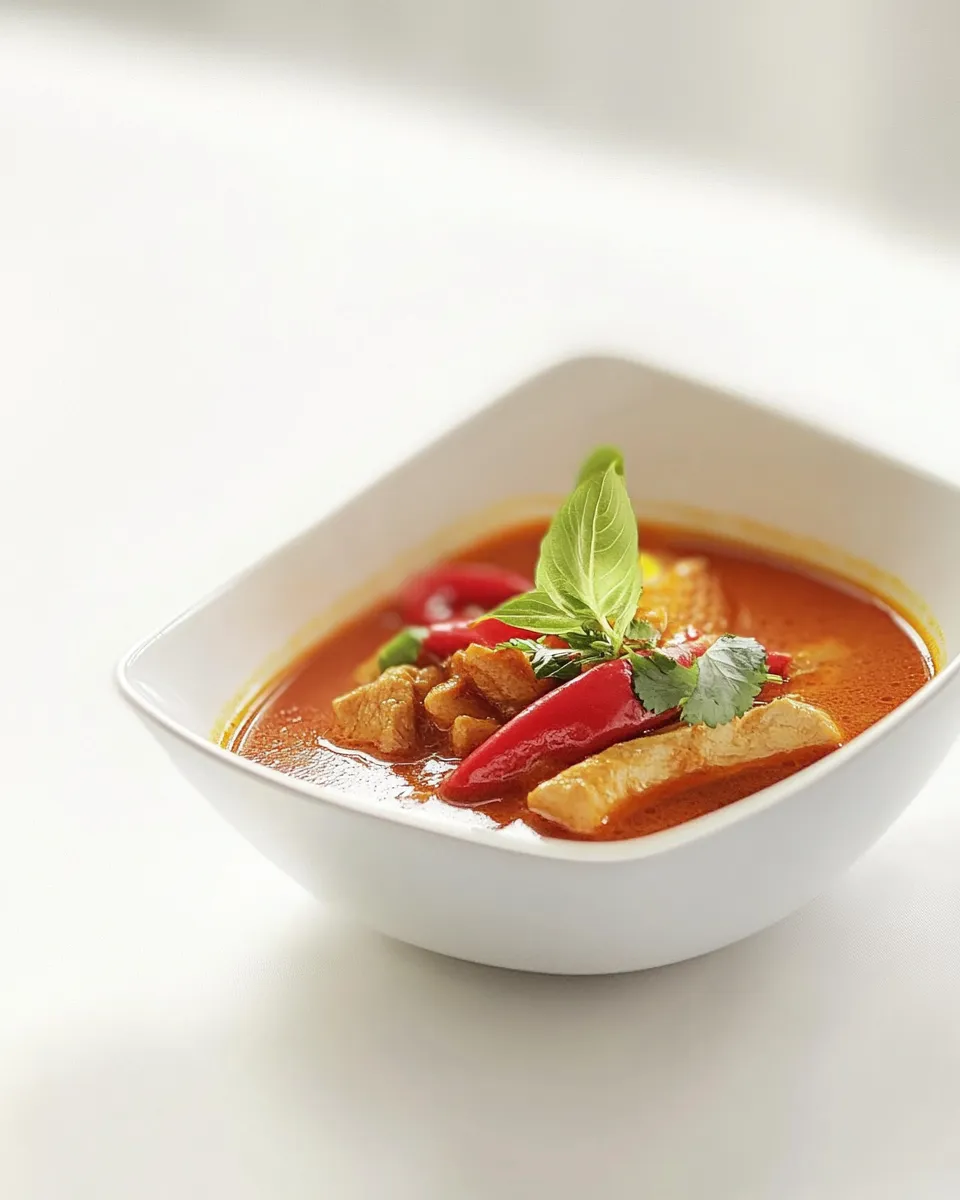
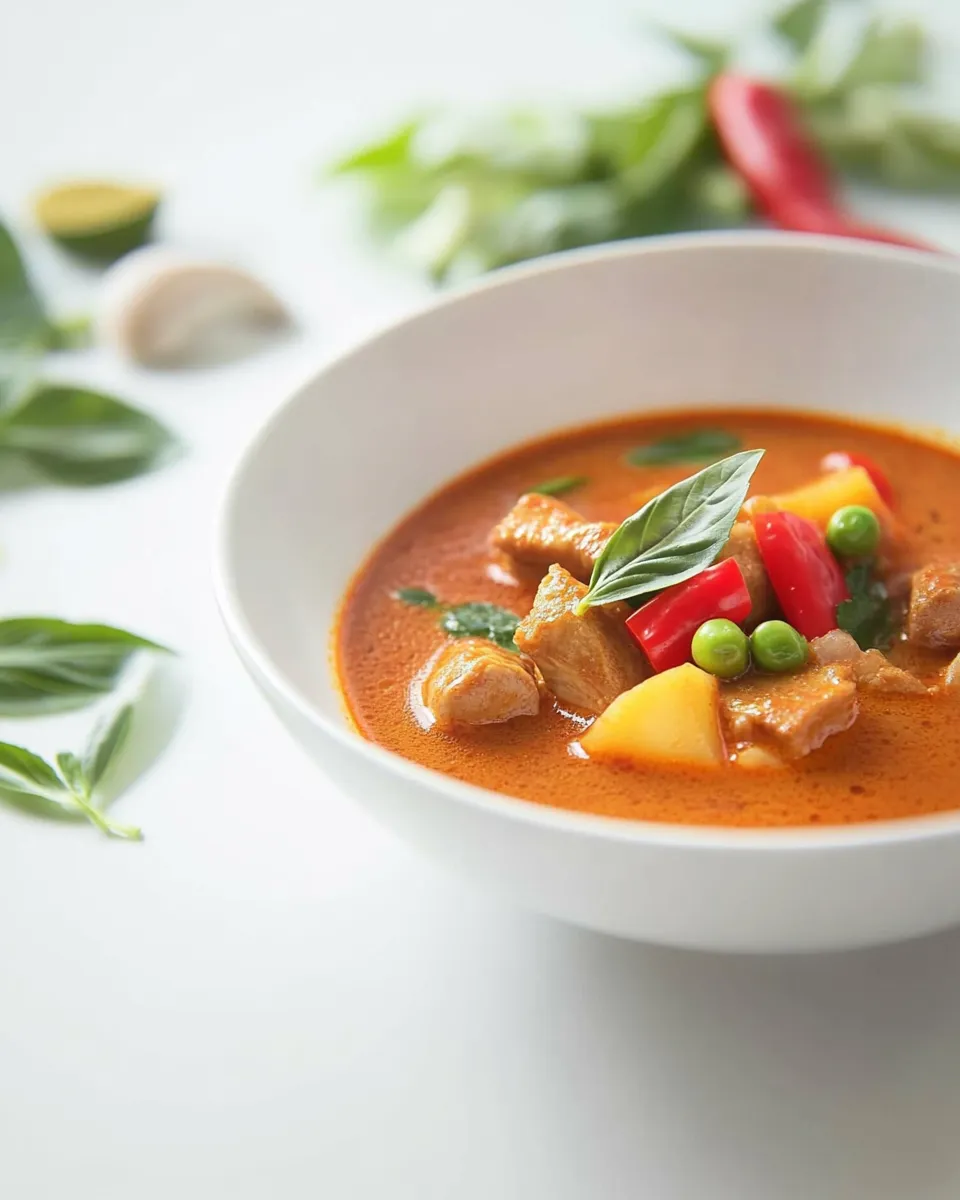
I fell in love with this Thai red duck curry the first time I tasted the sweet, spicy, and deeply savory combination all in one spoonful. It’s the kind of bowl that feels celebratory without being fussy — a rich coconut broth, a bright red chile paste, tender shredded duck, and pops of pineapple and tomato to keep everything balanced.
I cook this when I want something impressive on the table that’s also honest and straightforward to make. You do need a little time up front for soaking and pounding the paste, but most of that is hands-off. The payoff is a curry that’s layered, aromatic, and endlessly adaptable.
Below I’ll walk you through exactly what to buy, how to build the curry paste, the step-by-step cooking, sensible substitutions, and how to troubleshoot common issues. Read through once, then follow the directions — the recipe is very forgiving, and the results are worth the few extra steps.
Shopping List
- New Mexico or guajillo dried chiles and optional Thai red chiles — these form the backbone of the paste; buy whole dried chiles, not powder.
- Shallots, garlic, ginger, cilantro stems — aromatics for the paste; fresh is best.
- Ground coriander, ground turmeric, red curry powder — dried spices that season the paste; check your spice rack and replace if more than a year old.
- Unsweetened coconut milk (two 14-ounce cans) and low-sodium chicken broth — the rich and savory liquids for the broth.
- Duck legs or duck breasts (1 1/2 pounds) or chicken as a substitute — choose based on what’s available and your timeline.
- Pineapple chunks, cherry tomatoes, red bell pepper — fresh produce for brightness and texture.
- Fish sauce, soy sauce, light brown sugar — final seasoning for balance; have these on hand for tasting at the end.
- Garnishes: red onion, fresh basil, cilantro, bamboo shoots, bean sprouts, lime wedges — pick the ones you love.
- Jasmine rice — to serve and soak up the curry.
Ingredients
For Curry Paste
- 4 large dried New Mexico or guajillo chiles, stemmed, halved, seeded — base of the paste; mild, fruity heat.
- 1 to 2 dried Thai red chiles or other hot chile (optional, to taste) — add for more heat; optional so you can control the spice level.
- 2 medium shallots, halved — mellow sweetness and depth.
- 8 garlic cloves — savory backbone; roast a clove or two ahead if you want gentler garlic notes.
- 1 2-inch piece ginger, peeled and coarsely chopped — fresh bite and warmth.
- 1/4 cup chopped cilantro stems — concentrated herb flavor; don’t toss the stems.
- 1 tablespoon ground coriander — earthy, citrusy spice.
- 1 tablespoon ground turmeric — color and subtle earthiness.
- 2 teaspoons red curry powder — layered curry character and aromatics.
For Soup
- 2 tablespoons vegetable oil — for cooking the paste; neutral oil works well.
- 2 14-ounce cans unsweetened coconut milk — creamy base; unsweetened keeps the curry balanced.
- 2 cups low-sodium chicken broth — adds savory depth without overpowering the coconut.
- 1 1/2 pounds duck legs (about 4) or duck breasts (substitute chicken if desired) — the main protein; duck gives richness, chicken makes it lighter.
- 1 tablespoon fish sauce (or more to taste) — umami; add gradually when seasoning.
- 1 tablespoon soy sauce (or more to taste) — salt and savory balance.
- 1/2 tablespoon light brown sugar (or to taste) — a touch of sweetness to round flavors.
- 1 cup pineapple chunks, from about 1/4 fresh pineapple — sweet-tart contrast; canned will work in a pinch.
- 1 cup cherry tomatoes, halved — juicy acidity that brightens the curry.
- 1 red bell pepper, seeded and thinly sliced — color, crunch, and sweetness.
Toppings
- Bamboo shoots (optional) — for texture; optional but traditional.
- 1/4 red onion, thinly sliced — sharpness and crunch.
- Small handful fresh basil leaves, roughly chopped — herbal finish; Thai basil if you can find it.
- Cilantro sprigs (optional) — fresh brightness.
- Bean sprouts (optional) — crunchy garnish.
- Lime wedges — acidity to finish each bowl.
- Jasmine rice, for serving — traditional and comforting with this curry.
Mastering Thai Red Duck Curry: How-To
- Prepare the dried chiles: remove stems, halve, and seed the 4 New Mexico/guajillo chiles and the optional 1–2 Thai red chiles (if using). Place them in a heatproof bowl, cover with boiling water, and soak until softened, about 25–30 minutes. Drain the chiles, reserving the soaking liquid.
- Make the curry paste: in a food processor combine the soaked chiles, 2 halved shallots, 8 garlic cloves, the peeled and chopped 2-inch piece of ginger, 1/4 cup chopped cilantro stems, 1 tablespoon ground coriander, 1 tablespoon ground turmeric, and 2 teaspoons red curry powder. Add 2 tablespoons of the reserved chile soaking liquid and purée. If needed, add more of the soaking liquid 1 tablespoon at a time and pulse until the mixture forms a smooth paste.
- Heat 2 tablespoons vegetable oil in a large heavy pot over medium heat. Add the chile paste and cook, stirring constantly, until the paste darkens slightly and becomes fragrant, about 4–6 minutes.
- Pour in the two 14-ounce cans of unsweetened coconut milk and 2 cups low-sodium chicken broth, stirring to combine. Bring the mixture to a boil.
- Add 1 1/2 pounds duck legs or duck breasts to the pot. Reduce the heat to a gentle simmer and cook, uncovered, until the duck is tender and mostly cooked through, about 30–35 minutes.
- Transfer the duck to a plate and let it cool slightly. Remove and discard any skin and bones (if present), and shred the remaining meat.
- Return the pot to the heat. Add the shredded duck, 1 cup pineapple chunks, 1 cup halved cherry tomatoes, and 1 seeded, thinly sliced red bell pepper. Simmer for 10 minutes, until the tomatoes are softened and the peppers are tender.
- Stir in 1 tablespoon fish sauce, 1 tablespoon soy sauce, and 1/2 tablespoon light brown sugar. Taste and adjust by adding more fish sauce, soy sauce, or sugar as desired.
- Divide the curry among bowls. Top as desired with bamboo shoots (optional), 1/4 thinly sliced red onion, a small handful of roughly chopped fresh basil, cilantro sprigs (optional), and bean sprouts (optional). Serve with lime wedges and jasmine rice.
Why This Recipe is a Keeper
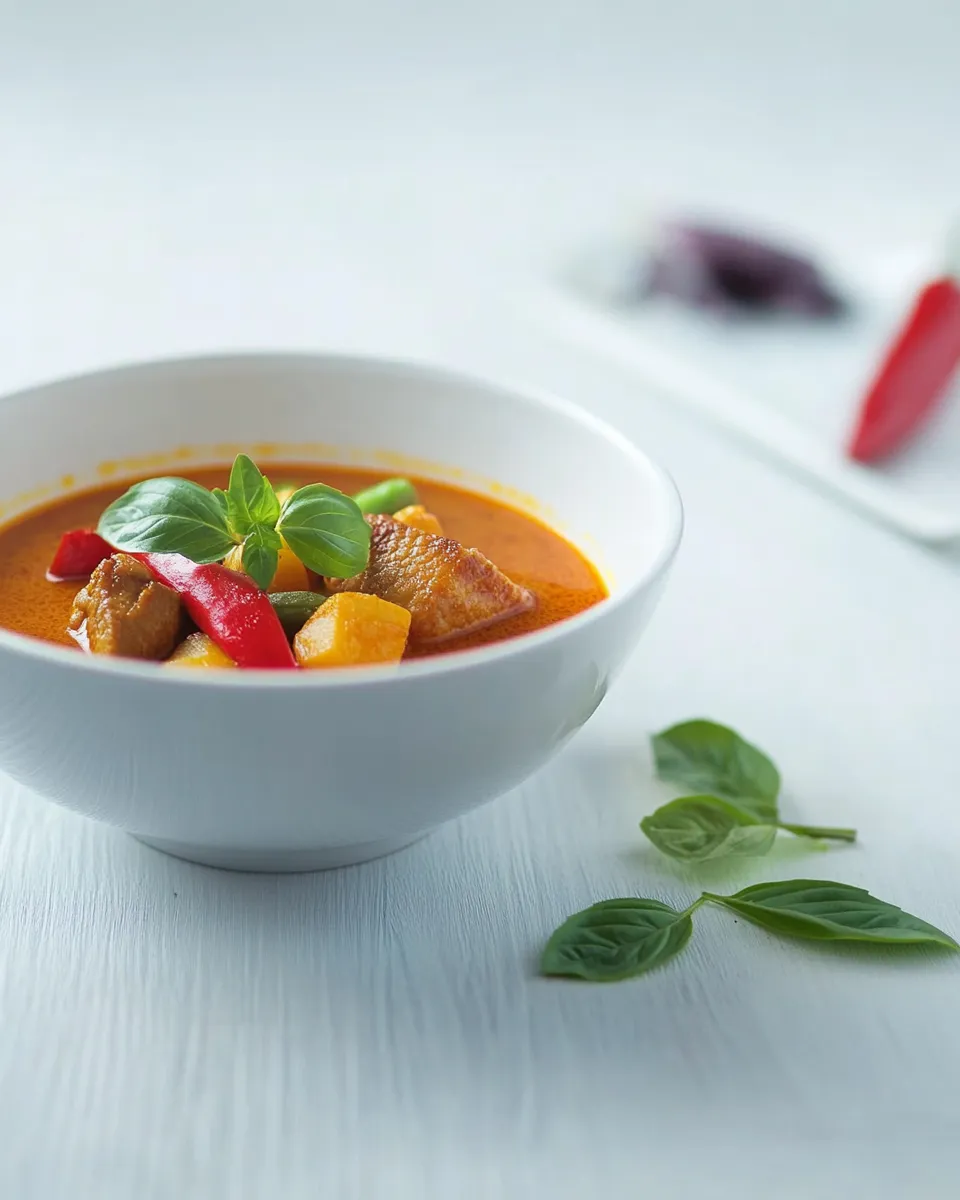
This curry balances richness and brightness. The coconut milk gives the broth a silkiness that plays beautifully against the bold chile paste; pineapple and cherry tomatoes cut the richness with sweetness and acidity. Duck brings an almost buttery meatiness that stands up to the curry without getting lost.
It’s also versatile. You can make the paste ahead, scale the heat by omitting the Thai chiles, or swap duck for chicken if you’re short on time. The final seasoning is all about tasting — fish sauce, soy sauce, and a touch of sugar let you tune saltiness and sweetness quickly.
Substitutions by Category
- Protein: Duck legs or breasts are listed; substitute chicken if you prefer a lighter curry (already noted in the ingredients).
- Chiles/Paste heat: Omit the optional Thai red chiles to keep it mild; add them if you want more heat.
- Sweetness: The recipe calls for light brown sugar; adjust the 1/2 tablespoon up or down to taste.
- Garnishes: Bamboo shoots, cilantro, basil, bean sprouts, and lime are optional—pick the ones you enjoy and skip the rest.
Before You Start: Equipment
- Heatproof bowl for soaking dried chiles.
- Food processor for puréeing the curry paste (a blender can work in a pinch).
- Large heavy pot with a lid for simmering the curry and cooking the duck.
- Tongs or slotted spoon for removing the duck from the pot.
- Sharp knife and cutting board for prepping vegetables and shredding meat.
Errors to Dodge
Don’t skip soaking the dried chiles — they need time to soften so the paste comes together smoothly. When frying the paste, keep stirring; burnt paste will taste bitter, so lower the heat if it starts to stick. Also, season at the end: fish sauce and soy sauce can quickly over-salt if added too early or in excess. Taste and adjust gradually.
Fresh Takes Through the Year
In summer, lean into the tomatoes and fresh pineapple for a bright curry that doesn’t feel heavy. In cooler months, focus on the coconut and duck richness — use canned pineapple if fresh isn’t available and let the curry sit a little longer off-heat so flavors meld. If you want a slightly smokier note, grill the duck first and then simmer it in the curry.
Behind the Recipe
I developed this version out of a love for Thai red curries and a desire to showcase duck’s depth without overcomplicating things. The homemade chile paste makes a real difference; it’s worth the 30 minutes of soaking and a few minutes in the processor. When friends come over, this is a dish that looks like you spent hours but really rewards a little planning.
Storing, Freezing & Reheating
Store leftovers in an airtight container in the refrigerator for up to 3 days. The curry will thicken as it cools; loosen it with a splash of water or broth when reheating. You can freeze the curry (without rice) for up to 2 months — cool completely, portion into freezer-safe containers, and thaw overnight in the refrigerator before reheating gently on the stovetop.
Questions People Ask
- Can I make the paste ahead? Yes. The paste can be refrigerated in a sealed container for up to 3 days or frozen for up to 2 months.
- What if I can’t find New Mexico or guajillo chiles? They’re recommended here for their flavor. If unavailable, use another mild dried chile and adjust the optional Thai chile for heat.
- How spicy is this curry? It’s medium by default; omit the optional Thai red chiles for mild. Add more if you want it hotter.
- Do I have to remove the skin from the duck? The recipe instructs removing and discarding skin and bones after simmering; you can remove skin before cooking if you want less fat in the broth, but cooking with the skin on adds flavor.
Before You Go
If you make this curry, start the paste the night before or the morning of — that small bit of prep makes dinner feel effortless. Serve with jasmine rice and a few lime wedges, and don’t be shy with fresh basil at the end; it brightens every spoonful. If you try it, I’d love to hear how you adjusted it — heat level, protein swaps, or garnish choices. Happy cooking.
Thai Red Duck Curry
Ingredients
Ingredients
- For Curry Paste:4 large dried New Mexico or guajillo chiles stemmed, halved, seeded1 to 2 dried Thai red chiles or other hot chile (optional, to taste)2 medium shallots, halved8 garlic cloves1 2-inch piece ginger, peeled and coarsely chopped1/4 cup chopped cilantro stems1 tablespoon ground coriander1 tablespoon ground turmeric2 teaspoons red curry powder
- For Soup:2 tablespoons vegetable oil2 14-ounce cans unsweetened coconut milk2 cups low-sodium chicken broth1 1/2 pounds duck legs about 4 or duck breasts (substitute chicken if desired)1 tablespoon fish sauce (or more to taste)1 tablespoon soy sauce (or more to taste)1/2 tablespoon light brown sugar (or to taste)1 cup pineapple chunks, from about 1/4 fresh pineapple1 cup cherry tomatoes, halved1 red bell pepper, seeded and thinly sliced
- Toppings:bamboo shoots optional1/4 red onion, thinly slicedsmall handful fresh basil leaves, roughly choppedcilantro sprigs (optional)bean sprouts (optional)Lime wedgesJasmine rice, for serving
Instructions
Instructions
- Prepare the dried chiles: remove stems, halve, and seed the 4 New Mexico/guajillo chiles and the optional 1–2 Thai red chiles (if using). Place them in a heatproof bowl, cover with boiling water, and soak until softened, about 25–30 minutes. Drain the chiles, reserving the soaking liquid.
- Make the curry paste: in a food processor combine the soaked chiles, 2 halved shallots, 8 garlic cloves, the peeled and chopped 2-inch piece of ginger, 1/4 cup chopped cilantro stems, 1 tablespoon ground coriander, 1 tablespoon ground turmeric, and 2 teaspoons red curry powder. Add 2 tablespoons of the reserved chile soaking liquid and purée. If needed, add more of the soaking liquid 1 tablespoon at a time and pulse until the mixture forms a smooth paste.
- Heat 2 tablespoons vegetable oil in a large heavy pot over medium heat. Add the chile paste and cook, stirring constantly, until the paste darkens slightly and becomes fragrant, about 4–6 minutes.
- Pour in the two 14-ounce cans of unsweetened coconut milk and 2 cups low-sodium chicken broth, stirring to combine. Bring the mixture to a boil.
- Add 1 1/2 pounds duck legs or duck breasts to the pot. Reduce the heat to a gentle simmer and cook, uncovered, until the duck is tender and mostly cooked through, about 30–35 minutes.
- Transfer the duck to a plate and let it cool slightly. Remove and discard any skin and bones (if present), and shred the remaining meat.
- Return the pot to the heat. Add the shredded duck, 1 cup pineapple chunks, 1 cup halved cherry tomatoes, and 1 seeded, thinly sliced red bell pepper. Simmer for 10 minutes, until the tomatoes are softened and the peppers are tender.
- Stir in 1 tablespoon fish sauce, 1 tablespoon soy sauce, and 1/2 tablespoon light brown sugar. Taste and adjust by adding more fish sauce, soy sauce, or sugar as desired.
- Divide the curry among bowls. Top as desired with bamboo shoots (optional), 1/4 thinly sliced red onion, a small handful of roughly chopped fresh basil, cilantro sprigs (optional), and bean sprouts (optional). Serve with lime wedges and jasmine rice.
Equipment
- Heatproof bowl
- Food Processor
- large heavy pot
- Plate
- Knife
- Cutting Board