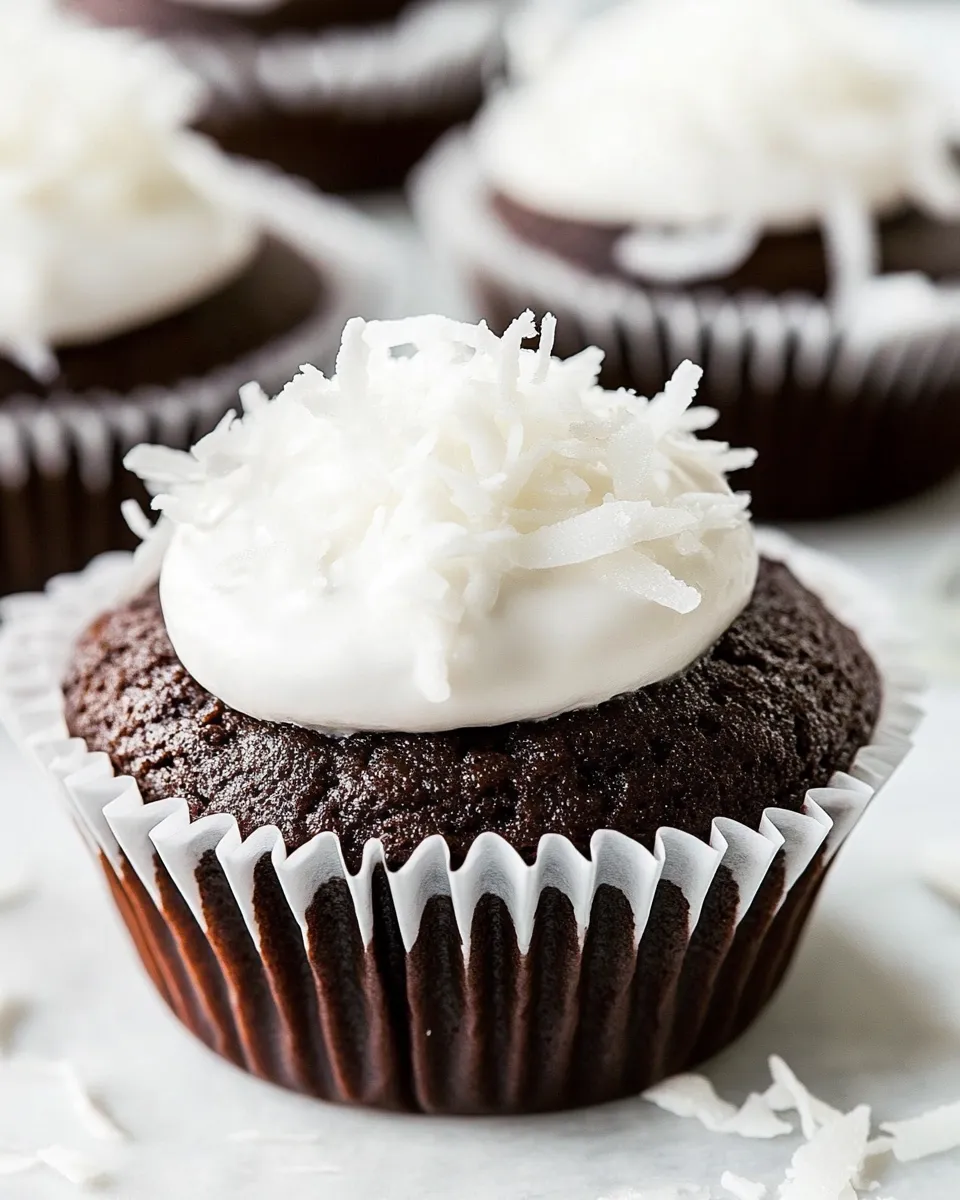
These cupcakes are exactly what I reach for when I want a quick, comforting chocolate treat that’s dairy-free and still feels indulgent. They’re simple to make, rely on pantry staples, and the coconut elements — both in the batter and the whipped topping — give them a soft, tropical lift without overwhelming the chocolate.
I tested this recipe until the texture was reliably moist and the frosting behaved predictably. The whipped coconut cream won’t hold tall, bakery-style swirls, so this is a cupcake for gentle dollops and toasted-shredded-coconut hugs. That loose, pillowy top is part of the charm.
You’ll keep things clean and straightforward: one mixing bowl for the wet ingredients, one for the dry, an overnight-chilled can of coconut cream, and about 20 minutes in the oven. Read through the steps once before you start, chill the coconut cream ahead, and you’ll breeze through these.
What Goes Into Vegan Chocolate Coconut Cupcakes
Ingredients
- 1 cup full-fat coconut milk — provides moisture and a tender crumb; use the canned variety for body.
- 3/4 cup granulated sugar — balances the cocoa and helps with structure and browning.
- 1/3 cup coconut oil (softened) — adds richness and keeps the cupcakes moist; soften but don’t fully liquefy.
- 1 teaspoon vanilla extract — brightens flavor and lifts the chocolate notes.
- 1 1/4 cup all-purpose flour — the base of the batter; measure by spooning and leveling for accuracy.
- 1/3 cup cocoa powder, sifted — the chocolate flavor; sifting prevents lumps and distributes evenly.
- 3/4 teaspoon baking soda — gives lift and reacts with the acidic components.
- 1/2 teaspoon baking powder — provides additional rise and lightness.
- 1/4 teaspoon salt — enhances the chocolate flavor and balances sweetness.
- 12 ounces coconut cream, chilled overnight* — the thick solids are whipped into the frosting; chilling is essential.
- 1/2 cup powdered sugar — sweetens and stabilizes the whipped coconut cream slightly.
- 1/2 cup shredded coconut — for coating the frosted tops; adds texture and a clean coconut finish.
Mastering Vegan Chocolate Coconut Cupcakes: How-To
- Preheat the oven to 350°F (175°C). Line a cupcake pan with paper liners.
- In a medium bowl, whisk together 1 cup full‑fat coconut milk, 3/4 cup granulated sugar, and 1/3 cup softened coconut oil until incorporated. If the coconut oil still has solid pieces, warm the mixture in short 10–15 second microwave bursts just until the oil melts so no chunks remain. Stir in 1 teaspoon vanilla extract.
- In a separate bowl, sift together 1 1/4 cups all‑purpose flour, 1/3 cup sifted cocoa powder, 3/4 teaspoon baking soda, 1/2 teaspoon baking powder, and 1/4 teaspoon salt.
- Make a well in the center of the dry ingredients, pour in the coconut milk mixture, and stir gently until the dry ingredients are just incorporated. Do not overmix.
- Spoon the batter into the lined cupcake tins, filling each liner to no more than 2/3 full (about a scant 1/4 cup of batter per cupcake). Bake for 20 minutes, or until a toothpick inserted in the center comes out clean.
- Transfer the cupcakes to a cooling rack and let them cool completely before frosting.
- For the whipped coconut cream: ensure the 12 ounces coconut cream has been chilled overnight. Open the can and spoon only the solid coconut cream into a chilled mixing bowl, discarding or reserving any liquid. Beat the solid coconut cream on high speed until smooth. Add 1/2 cup powdered sugar and beat until the mixture is smooth and holds soft peaks. Return the bowl to the refrigerator for 15–20 minutes to firm up slightly.
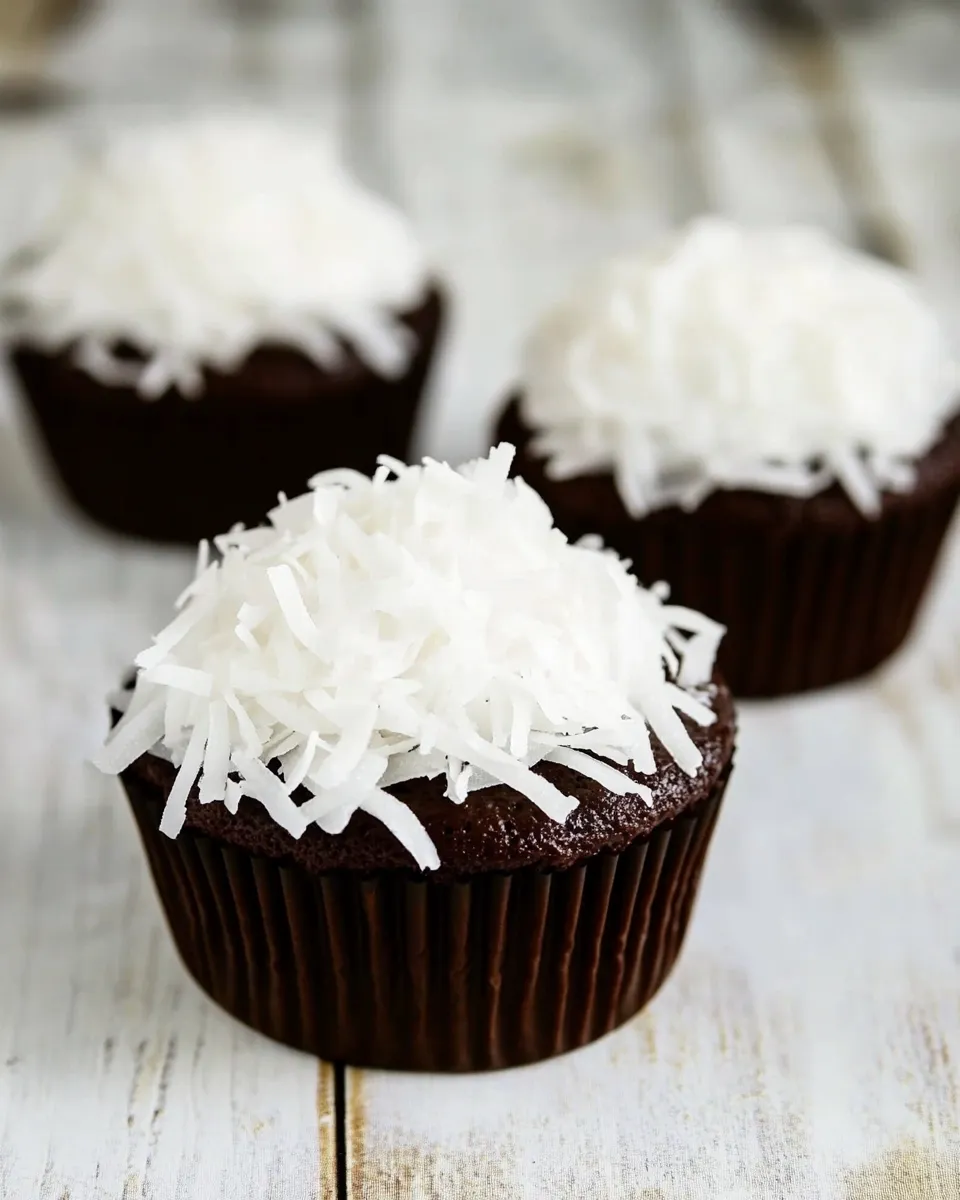
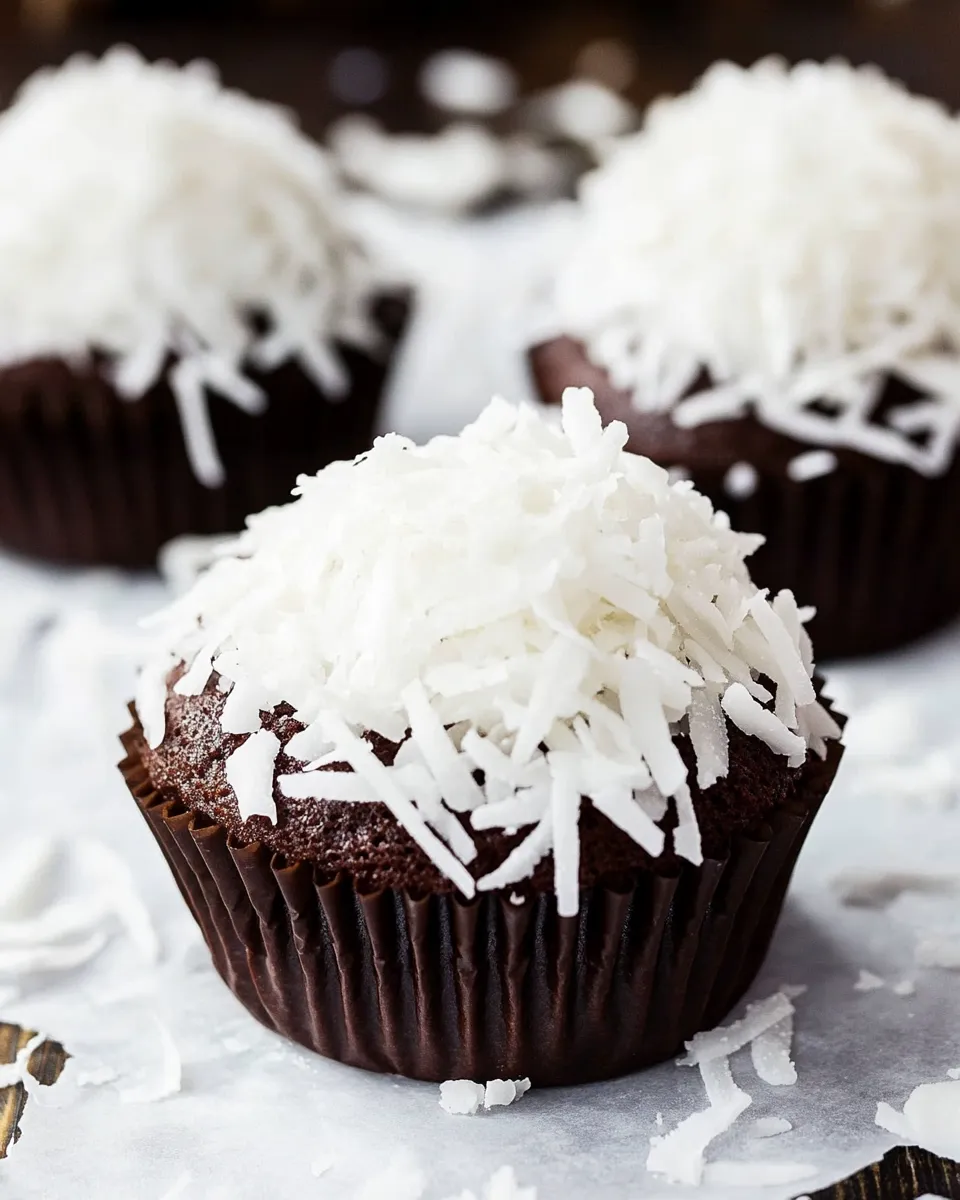
- Frost the completely cooled cupcakes with a thin layer or small dollop of the whipped coconut cream (it will be loose and will not hold large swirls). Immediately dip the top of each frosted cupcake into 1/2 cup shredded coconut so the coconut adheres to the frosting.
- Serve the cupcakes the day they are made for best texture. Store any leftovers in an airtight container in the refrigerator for 1–2 days.
Why This Recipe is a Keeper
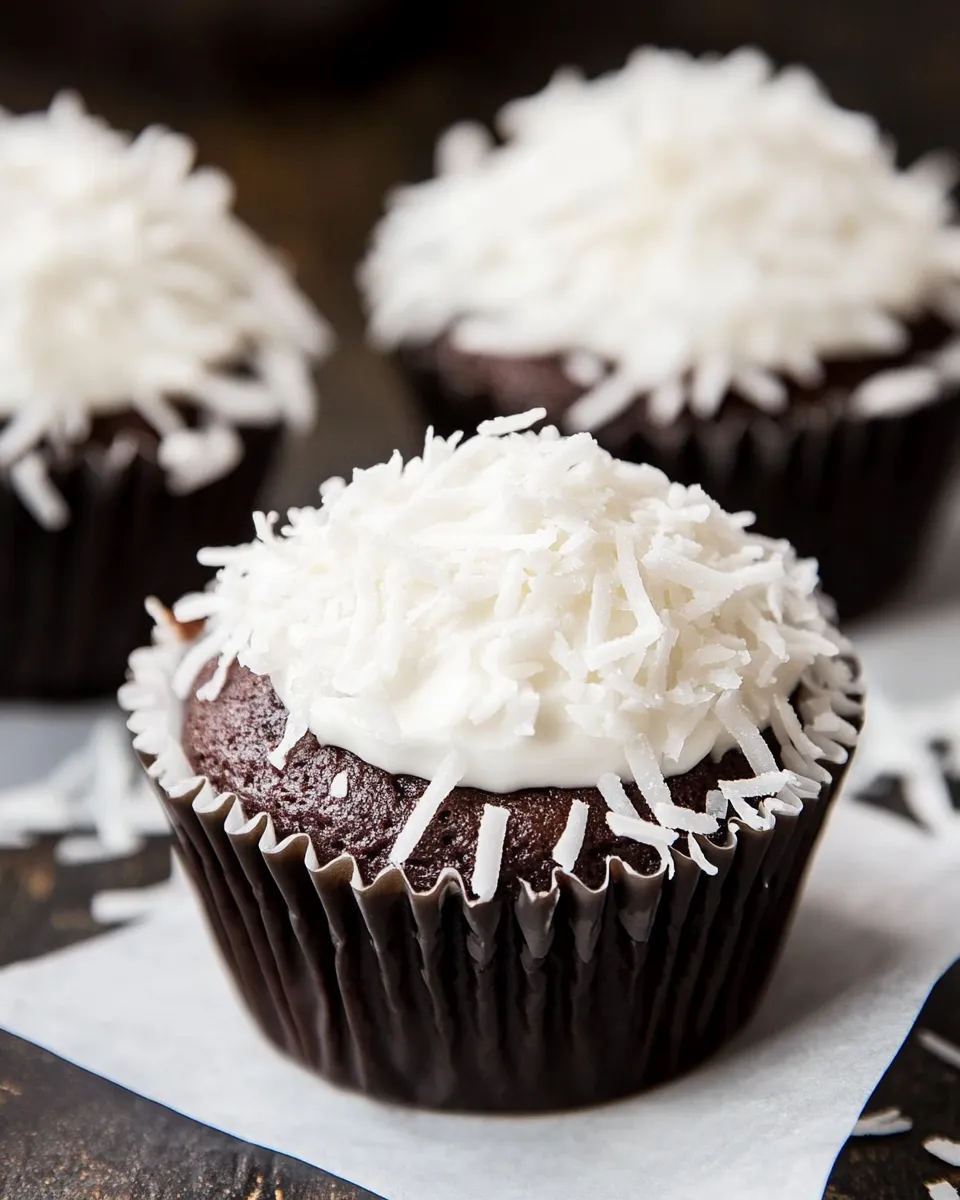
These cupcakes strike a rare balance: they’re uncomplicated to make but still feel special. The coconut components do double duty — the milk and oil add richness to the cake while the whipped coconut cream gives a light, dairy-free topping that won’t outshine the chocolate.
They’re forgiving, too. The batter mixes up quickly and tolerates small timing or temperature variations. The method relies on straightforward chemical leaveners and gentle mixing, so you don’t need technical skills to get consistent results. For weekday treats or casual gatherings, they deliver every time.
International Equivalents
Flour, sugar, cocoa, and common leaveners are widely available around the world, so this recipe adapts globally with minimal fuss. If local packaging differs, match by function: choose a full‑fat canned coconut milk and a canned coconut cream labeled as the thick cream for whipping.
Metric conversions are straightforward if you prefer grams. For best results in other regions, weigh flour for accuracy, especially where cup measures vary. The technique — whisk wet, sift dry, combine gently — remains universal.
Toolbox for This Recipe
- Cupcake pan — standard 12-cup works well for even baking.
- Paper liners — prevent sticking and make serving easier.
- Two mixing bowls — one for wet, one for dry ingredients to keep things tidy.
- Whisk and spatula — whisk the wet ingredients and the dry; spatula for folding.
- Electric mixer (or sturdy whisk) — helps whip the chilled coconut cream smooth; a stand or hand mixer speeds this up.
- Cooling rack — cool cupcakes completely before frosting to prevent the topping from melting.
Avoid These Traps
Don’t skip chilling the coconut cream. If it’s warm or not fully solid, you’ll end up with a runny topping that won’t hold shape or adhere to the coconut flakes. Chill the can overnight as instructed.
Don’t overmix the batter. Stir until just combined. Overmixing develops gluten and yields denser cupcakes. A few streaks of flour are better than a tough crumb.
Watch the oven during the last few minutes. Ovens vary. A toothpick should come out clean or with a few moist crumbs — wet batter means more time, but don’t overbake. Overbaking dries these out quickly.
How to Make It Lighter
These cupcakes are meant to be rich but you can nudge things lighter without changing major ingredients. Use the smallest reasonable amount of frosting and apply a thin dollop rather than a piled swirl. A sparse dusting of shredded coconut reduces the overall richness per bite while keeping the flavor profile intact.
Serve with a simple fresh fruit on the side — berries cut through the richness and make each serving feel less heavy. Keep portion control in mind: modest-sized cupcakes look and feel lighter.
Notes on Ingredients
Full-fat coconut milk and coconut cream are key to texture here. The milk contributes to the batter’s moisture and tenderness; the canned cream provides the solids that whip into a light topping. If your coconut oil is completely solid, soften it until you can stir it smoothly into the wet mixture. If it’s overly hot or fully liquid, it will change the batter’s consistency.
Sift the cocoa and flour to avoid lumps and to help the dry ingredients incorporate evenly. The baking soda and baking powder are both included for a balanced rise; don’t omit either unless you understand how their roles differ in the chemistry of the bake.
Make Ahead Like a Pro
Timing and assembly
You can bake the cupcakes a few hours ahead and keep them uncovered at room temperature until fully cooled, then refrigerate in a single layer in an airtight container if you need them later the same day. Frost just before serving for the freshest look and best texture.
Storage
The source method recommends serving the day they’re made for best texture. Leftovers should go into an airtight container and be refrigerated for 1–2 days. The whipped coconut cream will firm slightly when chilled but will not support tall decorations.
Common Qs About Vegan Chocolate Coconut Cupcakes
Q: Can I make the coconut cream frosting ahead? A: You can whip the coconut cream and chill it briefly, but it’s best applied shortly before serving. Chilling will firm it, but long refrigeration can make it denser.
Q: My coconut cream didn’t separate into solids and liquid. Now what? A: The can likely wasn’t chilled long enough. Place it in the fridge or freezer until the solids set. If you still can’t get solids, the cream may be a thinner variety; the frosting won’t behave the same.
Q: Can I toast the shredded coconut? A: Yes. Toasting adds a nutty crunch and deeper flavor. Do it lightly in a dry skillet or oven and cool before dipping the frosted cupcakes.
Q: Do these freeze well? A: The cake can be frozen unfrosted. Thaw fully and then apply the whipped coconut cream just before serving. Frosted cupcakes do not freeze well because of the coconut cream texture.
Wrap-Up
If you want a reliably moist chocolate cupcake with clean, tropical notes, this recipe delivers. It’s low-fuss, depends on pantry-friendly ingredients, and the frosting — while simple — gives that special, homemade finish. Chill the coconut cream, be gentle with your mixing, and enjoy the fluffy, chocolatey results.
Make a batch and share them. They’re perfect for small gatherings, picnics, or an easy weekend bake that feels thoughtful without being complicated.

Vegan Chocolate Coconut Cupcakes
Ingredients
Ingredients
- 1 cup full-fat coconut milk
- 3/4 cup granulated sugar
- 1/3 cup coconut oil softened
- 1 teaspoon vanilla extract
- 1 1/4 cup all-purpose flour
- 1/3 cup cocoa powder sifted
- 3/4 teaspoon baking soda
- 1/2 teaspoon baking powder
- 1/4 teaspoon salt
- 12 ounces coconut cream chilled overnight*
- 1/2 cup powdered sugar
- 1/2 cup shredded coconut
Instructions
Instructions
- Preheat the oven to 350°F (175°C). Line a cupcake pan with paper liners.
- In a medium bowl, whisk together 1 cup full‑fat coconut milk, 3/4 cup granulated sugar, and 1/3 cup softened coconut oil until incorporated. If the coconut oil still has solid pieces, warm the mixture in short 10–15 second microwave bursts just until the oil melts so no chunks remain. Stir in 1 teaspoon vanilla extract.
- In a separate bowl, sift together 1 1/4 cups all‑purpose flour, 1/3 cup sifted cocoa powder, 3/4 teaspoon baking soda, 1/2 teaspoon baking powder, and 1/4 teaspoon salt.
- Make a well in the center of the dry ingredients, pour in the coconut milk mixture, and stir gently until the dry ingredients are just incorporated. Do not overmix.
- Spoon the batter into the lined cupcake tins, filling each liner to no more than 2/3 full (about a scant 1/4 cup of batter per cupcake). Bake for 20 minutes, or until a toothpick inserted in the center comes out clean.
- Transfer the cupcakes to a cooling rack and let them cool completely before frosting.
- For the whipped coconut cream: ensure the 12 ounces coconut cream has been chilled overnight. Open the can and spoon only the solid coconut cream into a chilled mixing bowl, discarding or reserving any liquid. Beat the solid coconut cream on high speed until smooth. Add 1/2 cup powdered sugar and beat until the mixture is smooth and holds soft peaks. Return the bowl to the refrigerator for 15–20 minutes to firm up slightly.
- Frost the completely cooled cupcakes with a thin layer or small dollop of the whipped coconut cream (it will be loose and will not hold large swirls). Immediately dip the top of each frosted cupcake into 1/2 cup shredded coconut so the coconut adheres to the frosting.
- Serve the cupcakes the day they are made for best texture. Store any leftovers in an airtight container in the refrigerator for 1–2 days.
Equipment
- Oven
- Cupcake pan
- Paper liners
- Mixing bowls
- Sifter
- Whisk
- Spoon
- Electric mixer or hand mixer
- chilled mixing bowl
- Cooling rack
- toothpick