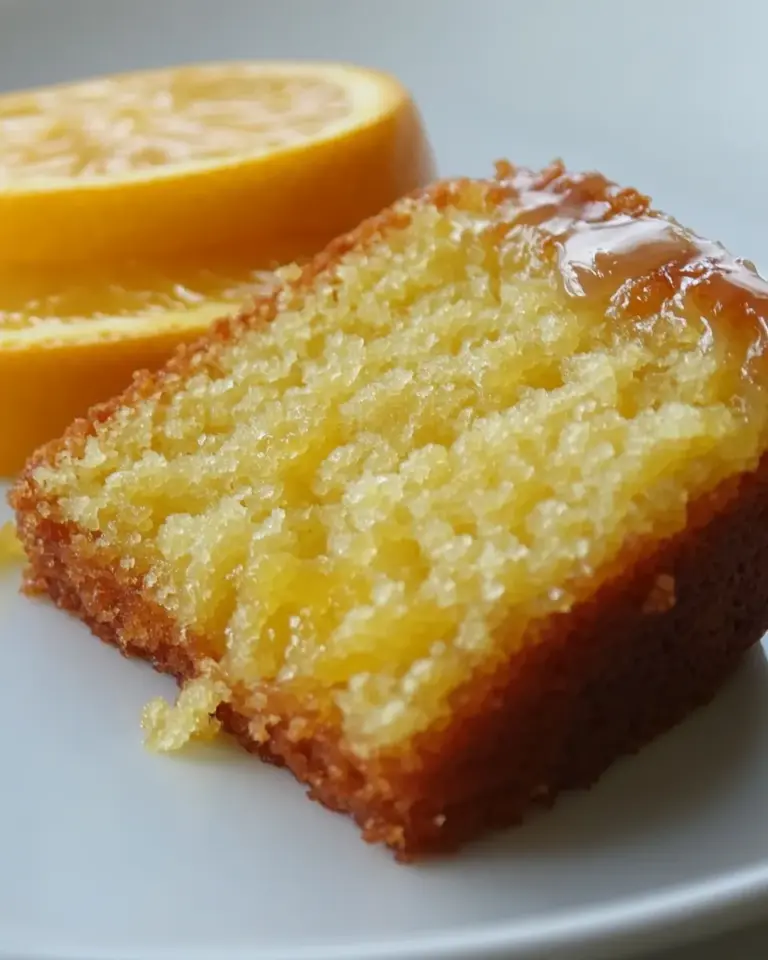
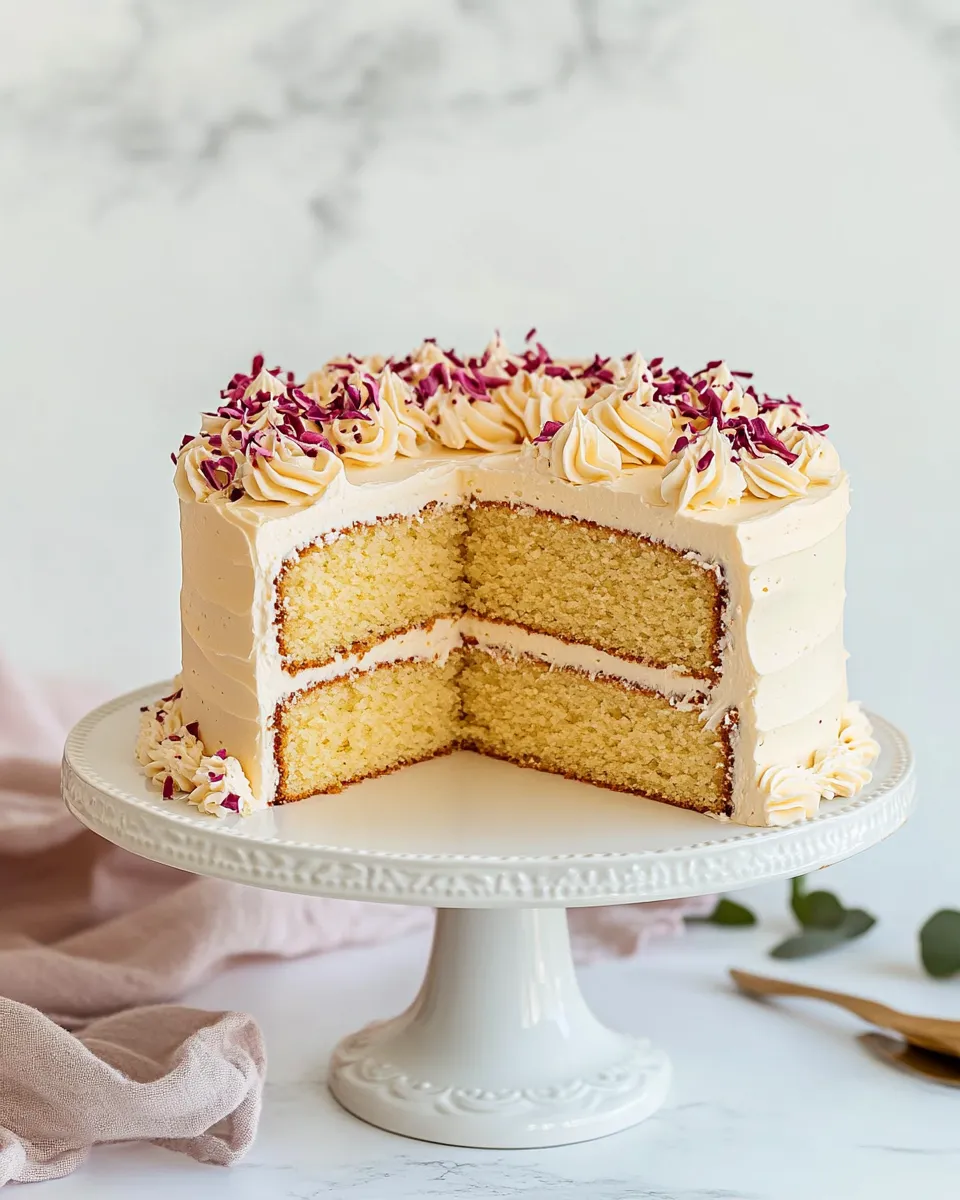
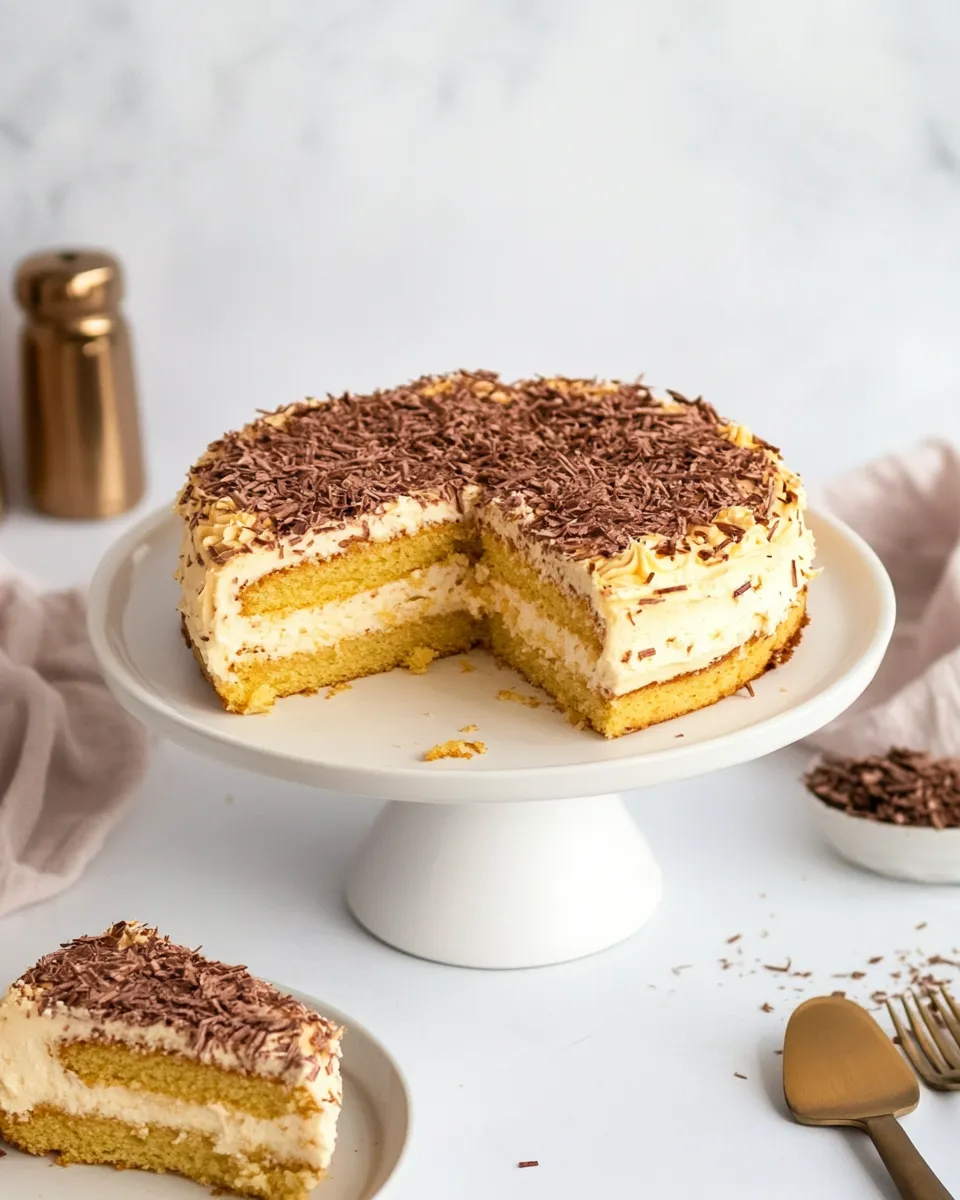
There are days when you want a cake that’s reliably tender, buttery, and unapologetically classic. This Yellow Cake recipe does exactly that: three even layers, a silky chocolate-ganache buttercream, and a crumb structure that holds up to filling and frosting without ever feeling heavy. I make this when I need a cake that feeds a crowd and lands applause without stress.
I’ll be direct: the technique matters more than fancy tools. Room-temperature ingredients, measured flour, and a confident mixing order make the difference between a dense slab and an airy, sliceable cake. Follow the steps below and you’ll get consistent results whether you’re building a celebration cake or just craving a slice with coffee.
There are practical tips scattered through the post — from substitutions that preserve texture to troubleshooting common mistakes. Read the shopping guide, scan the tools, and then get baking. You’ll have a lovely Yellow Cake on the counter before you know it.
Ingredients
- 3cups(345 g) cake flour — cake flour gives a tender crumb; measure carefully by spooning into the cup or use a scale.
- 2teaspoons(8 g) baking powder — the leavening that lifts the layers.
- 1teaspoon(6 g) salt — balances sweetness and enhances flavor.
- 1cup(226 g) unsalted butter, at room temperature — provides richness and structure in the cake batter.
- 1 3/4cups(350 g) granulated sugar — sweetens and helps with aeration when creamed with butter.
- 1/3cup(72 g) grapeseed oil — adds moisture and keeps the cake tender; neutral-flavored oil is important here.
- 5large eggs,at room temperature — eggs add structure, lift, and moisture; room temperature helps them blend smoothly.
- 2egg yolks,at room temperature — extra yolks deepen color and add fat for richness.
- 1teaspoon(4.2 g) pure vanilla extract — flavor anchor for the batter.
- 1teaspoon(4.2 g) butter extract — boosts buttery aroma without extra fat.
- 1cup(240 g) sour cream, at room temperature — keeps the crumb moist and tender; acid also helps with lift.
- 2cups(452 g) unsalted butter, slightly cold — used for the buttercream; slightly cold butter helps achieve silky texture after whipping with warm ganache.
- 5cups(625 g) confectioner’s sugar, measured then sifted — sweetens and stabilizes the buttercream; sifting prevents lumps.
- 1tablespoon(12 g) pure vanilla extract — gives the buttercream a clean vanilla note.
- 1cup(170 g) semi-sweet or dark chocolate chips — melts into the ganache and provides chocolate depth.
- 1/4cup(57.75 g) heavy whipping cream — hot cream makes the ganache smooth; use the exact amount for balance.
- Pinchof salt — lifts flavors in the buttercream; even a pinch matters.
Your Shopping Guide
Buy quality where it matters: fresh eggs, real butter, and good chocolate. Cake flour is worth picking up — it yields a finer, softer crumb than all-purpose flour. If your store doesn’t carry cake flour, plan ahead to either order it or take the substitution notes in this post into account.
Check package dates on baking powder. Old leavening gives flat layers, and that’s a disappointment that’s entirely avoidable. For the ganache, semi-sweet or dark chocolate chips both work; choose the one that matches the final balance you want between sweet and rich. Finally, if you don’t have grapeseed oil, grab a neutral oil with a high smoke point.
Yellow Cake in Steps
- Preheat the oven to 325°F (163°C). Spray three 8-inch round cake pans with nonstick cooking spray, line the bottoms with parchment paper, and spray the parchment; set the pans aside.
- In a medium bowl, whisk together 3 cups (345 g) cake flour, 2 teaspoons (8 g) baking powder, and 1 teaspoon (6 g) salt; set aside.
- In the bowl of a stand mixer fitted with the paddle attachment, combine 1 cup (226 g) unsalted butter (room temperature), 1/3 cup (72 g) grapeseed oil, and 1 3/4 cups (350 g) granulated sugar. Beat on medium-high speed for 3 minutes, until the mixture is light in color and fluffy.
- With the mixer on medium speed, add the 5 large eggs, one at a time, scraping down the bowl between each addition. After the last egg, add the 2 egg yolks and continue to beat on medium-high speed for 2 minutes, until smooth.
- Add 1 teaspoon (4.2 g) pure vanilla extract and 1 teaspoon (4.2 g) butter extract to the batter and mix briefly to combine.
- Reduce the mixer speed to low. Add the dry ingredients and 1 cup (240 g) sour cream in this order, in intervals, mixing briefly after each addition: one-third of the dry mix, half of the sour cream (1/2 cup), one-third of the dry mix, the remaining half of the sour cream (1/2 cup), then the final one-third of the dry mix. Scrape down the bowl and mix 20 to 30 seconds more to ensure everything is combined.
- Divide the batter evenly among the three prepared pans. Bake the layers for 25 to 30 minutes, or until a toothpick inserted in the centers comes out with just a few moist crumbs attached.
- Remove the pans from the oven and let the layers cool in the pans for 15 minutes. Then invert the layers onto cooling racks and allow them to cool completely.
- While the cakes are cooling, make the chocolate ganache: place 1 cup (170 g) semi-sweet or dark chocolate chips in a microwave-safe bowl. Heat 1/4 cup (57.75 g) heavy whipping cream in the microwave until hot (do not boil), pour the hot cream over the chocolate chips, and stir until the chocolate is fully melted and the mixture is smooth. If needed, heat briefly in additional 20–30 second bursts to finish melting. Set the ganache aside to cool slightly until warm and pourable.
- Sift the 5 cups (625 g) confectioner’s sugar and have it ready to add to the butter.
- Prepare the buttercream: in the stand mixer fitted with the paddle attachment, beat 2 cups (452 g) unsalted butter (slightly cold) on medium-high speed for 3 to 5 minutes. Scrape down the bowl.
- With the mixer on medium speed, gradually add the warm ganache to the butter and mix until smooth. Scrape down the bowl.
- With the mixer on low speed, gradually add the sifted confectioner’s sugar, mixing briefly to combine after each addition. Add 1 tablespoon (12 g) pure vanilla extract and a pinch of salt. Mix to combine.
- Increase the mixer to medium-high speed and beat the buttercream for an additional 3 to 5 minutes, scraping down the bowl at least twice during this time. The buttercream should be lighter in color and silky-smooth. If the buttercream is too soft to spread, refrigerate it for 15 to 20 minutes, then re-whip briefly to restore spreadability.
- Assemble the cake: place the first cake layer, top side up, centered on your cake board or serving plate.
- Evenly spread 1 cup of the buttercream over the first layer, checking at eye level to ensure the layer of buttercream is level.
- Place the second cake layer, top side up, on top of the buttercream. Evenly spread 1 cup of buttercream over the second layer.
- Place the final cake layer, top side down, onto the second layer of buttercream (this helps create a flat top).
- Apply a thin coat of buttercream around the entire cake to lock in crumbs (the crumb coat). Smooth as needed, then place the cake in the freezer for 10 to 15 minutes to set the crumb coat.
- Once the crumb coat is set, use the remaining buttercream to frost and decorate the cake as desired.
Why This Yellow Cake Stands Out
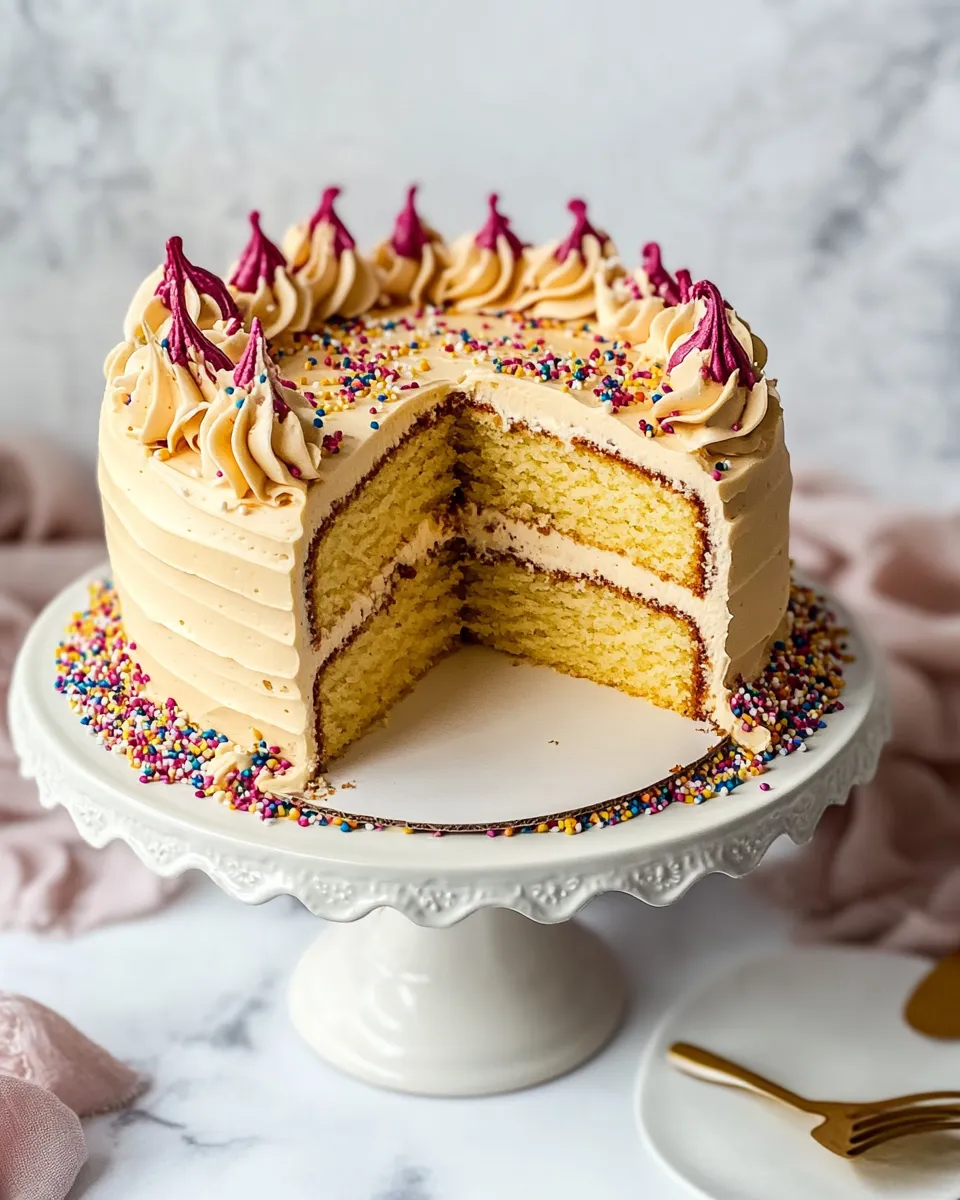
This Yellow Cake blends butter and oil for the best of both worlds: butter for flavor and structure, oil for tender, moist crumb. The extra yolks deepen the flavor and give a rich, golden interior without making the cake greasy. Folding the dry ingredients in intervals with sour cream prevents overmixing while maintaining moisture.
The combination of a chocolate ganache mixed into butter for the frosting creates a shiny, stable buttercream with chocolate depth and a smooth, spreadable texture. It stays firm enough for a clean finish but soft enough to slice without dragging crumbs.
Texture-Safe Substitutions
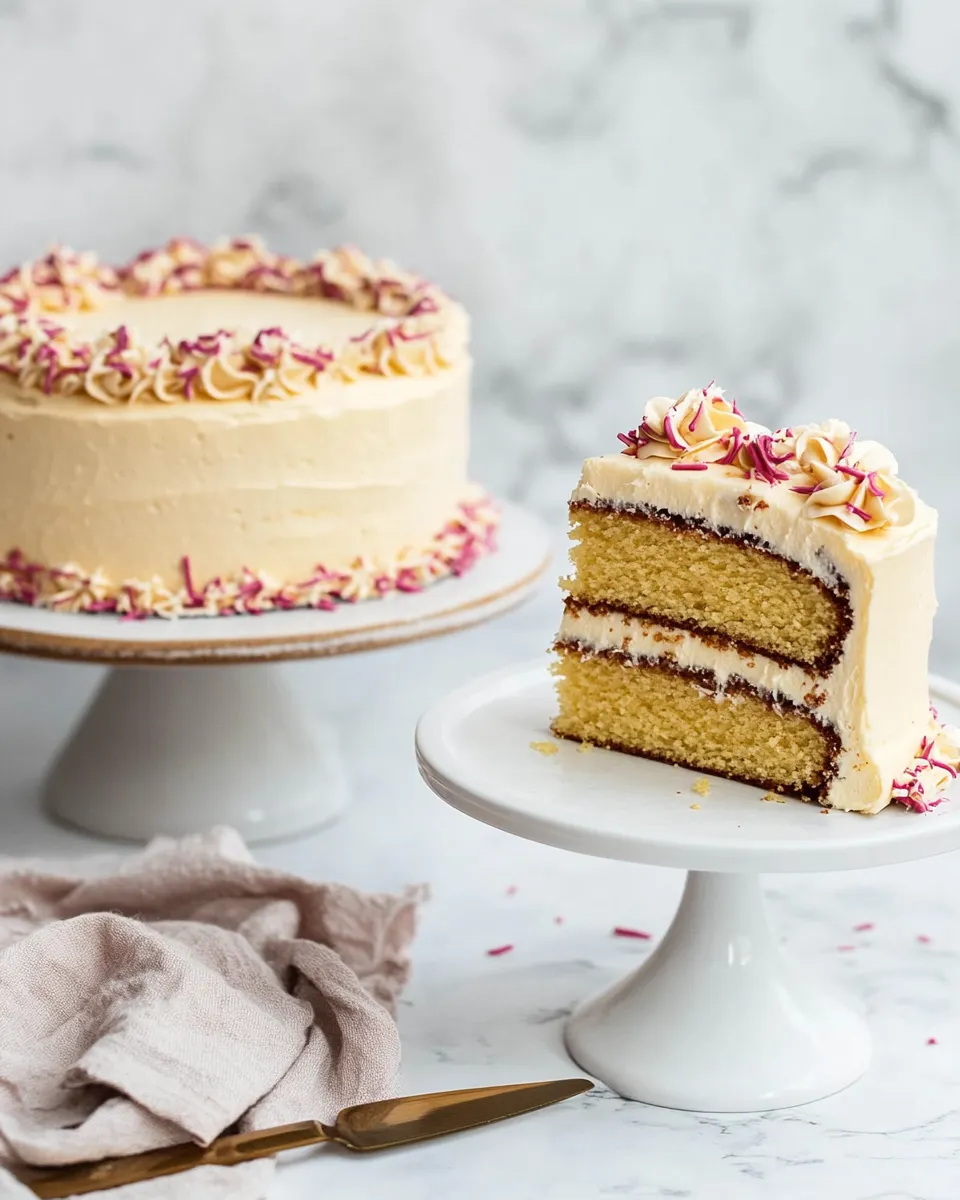
When texture is your priority, substitute carefully. Swap the sour cream for full-fat Greek yogurt — it keeps moisture and acidity similar. If you must replace grapeseed oil, use a neutral-flavored oil; avoid strongly flavored oils that change the cake’s profile.
If you substitute one element, keep the rest the same. The recipe’s balance of fat and liquid is tuned; big swaps can alter crumb and structure.
Essential Tools for Success
- Stand mixer with paddle attachment — required for the creaming and for making the buttercream smoothly.
- Three 8-inch round cake pans — same size ensures even stacking and consistent bake times.
- Cooling racks — allow cakes to cool evenly and prevent soggy bottoms.
- Scale — highly recommended for accuracy, especially for the flour and sugar.
- Offset spatula — makes spreading buttercream and leveling layers far easier.
- Parchment paper and nonstick spray — for clean release and intact layers.
Easy-to-Miss Gotchas
Room temperature matters. If the butter or sour cream is cold, the batter can seize or fail to incorporate smoothly. Conversely, buttercream made with butter that’s too warm will be floppy and hard to work with — chill and rewhip as instructed.
Don’t skip sifting the confectioner’s sugar. Any lumps will turn into grainy buttercream. Also, watch the oven: thicker pans or older ovens can shift bake times. Test the centers with a toothpick at the lower end of the time window and add minutes only as needed.
Smart Substitutions
If you want small changes with predictable results:
- Chocolate — use higher-quality chopped chocolate instead of chips for a silkier ganache.
- Oil — neutral vegetable oil works if grapeseed isn’t available.
- Sour cream — full-fat Greek yogurt preserves texture and acidity.
- Chocolate chips — swap semi-sweet for dark if you prefer less sweetness in the frosting.
If You’re Curious
Why three layers? Three thin layers heat and cool evenly and make for a prettier slice. Thicker two-layer cakes often need longer baking and can dry near the edges before the center is done.
Why mix butter and oil? Butter brings flavor; oil keeps the crumb soft even if the cake sits a day. Use both to maintain flavor and tenderness without compromise.
Store, Freeze & Reheat
Room temperature: Store the assembled cake under a dome or in a cake carrier for up to 2 days at cool room temperature. The buttercream will keep the cake moist; avoid warm spots.
Refrigeration: If you need to store longer or your kitchen is warm, refrigerate the cake in an airtight container for up to 5 days. Bring slices to room temperature before serving so the buttercream softens and flavors bloom.
Freezing: To freeze layers, wrap cooled, unfilled layers tightly in plastic wrap and place in a freezer bag for up to 3 months. Thaw in the refrigerator overnight, then bring to room temperature before assembling. For a fully frosted cake, freeze for up to 2 months, then thaw overnight in the fridge and come to room temp for a few hours before serving.
Reader Q&A
Can I use all-purpose flour?
Yes, but expect a slightly firmer crumb. If you must, replace cake flour with a mix of AP flour and cornstarch or reduce the mixing time to avoid toughness.
My ganache seized; what now?
Warm it gently in short bursts and stir constantly. If it still separates, whisk in a teaspoon or two of hot cream at a time until smooth. Never overheat.
Buttercream too soft to spread?
Refrigerate the buttercream for 15 to 20 minutes, then re-whip briefly to restore spreadability. Slight chill firms up the fat so it behaves better when frosting.
Can I make this as cupcakes?
Yes. Use a standard cupcake tin and fill liners two-thirds full. Bake at the same temperature but check earlier — cupcakes will typically finish in 15–20 minutes.
Wrap-Up
This Yellow Cake is dependable, celebratory, and versatile. Once you master the order and temperature cues, you’ll return to it again and again. The combination of butter, oil, and a bit of extra yolk gives you a tender crumb that stands up to chocolate buttercream without collapsing or drying out.
Make it for birthdays, for neighbors, or just because you deserve a slice. I’ve tested these steps enough times to know they work — now it’s your turn. Bake, decorate, and share. Let me know how yours turns out.

Yellow Cake
Ingredients
Ingredients
- 3 cups 345 g cake flour
- 2 teaspoons 8 g baking powder
- 1 teaspoon 6 g salt
- 1 cup 226 g unsalted butter, at room temperature
- 1 3/4 cups 350 g granulated sugar
- 1/3 cup 72 g grapeseed oil
- 5 large eggs at room temperature
- 2 egg yolks at room temperature
- 1 teaspoon 4.2 g pure vanilla extract
- 1 teaspoon 4.2 g butter extract
- 1 cup 240 g sour cream, at room temperature
- 2 cups 452 g unsalted butter, slightly cold
- 5 cups 625 g confectioner's sugar, measured then sifted
- 1 tablespoon 12 g pure vanilla extract
- 1 cup 170 g semi-sweet or dark chocolate chips
- 1/4 cup 57.75 g heavy whipping cream
- Pinchof salt
Instructions
Instructions
- Preheat the oven to 325°F (163°C). Spray three 8-inch round cake pans with nonstick cooking spray, line the bottoms with parchment paper, and spray the parchment; set the pans aside.
- In a medium bowl, whisk together 3 cups (345 g) cake flour, 2 teaspoons (8 g) baking powder, and 1 teaspoon (6 g) salt; set aside.
- In the bowl of a stand mixer fitted with the paddle attachment, combine 1 cup (226 g) unsalted butter (room temperature), 1/3 cup (72 g) grapeseed oil, and 1 3/4 cups (350 g) granulated sugar. Beat on medium-high speed for 3 minutes, until the mixture is light in color and fluffy.
- With the mixer on medium speed, add the 5 large eggs, one at a time, scraping down the bowl between each addition. After the last egg, add the 2 egg yolks and continue to beat on medium-high speed for 2 minutes, until smooth.
- Add 1 teaspoon (4.2 g) pure vanilla extract and 1 teaspoon (4.2 g) butter extract to the batter and mix briefly to combine.
- Reduce the mixer speed to low. Add the dry ingredients and 1 cup (240 g) sour cream in this order, in intervals, mixing briefly after each addition: one-third of the dry mix, half of the sour cream (1/2 cup), one-third of the dry mix, the remaining half of the sour cream (1/2 cup), then the final one-third of the dry mix. Scrape down the bowl and mix 20 to 30 seconds more to ensure everything is combined.
- Divide the batter evenly among the three prepared pans. Bake the layers for 25 to 30 minutes, or until a toothpick inserted in the centers comes out with just a few moist crumbs attached.
- Remove the pans from the oven and let the layers cool in the pans for 15 minutes. Then invert the layers onto cooling racks and allow them to cool completely.
- While the cakes are cooling, make the chocolate ganache: place 1 cup (170 g) semi-sweet or dark chocolate chips in a microwave-safe bowl. Heat 1/4 cup (57.75 g) heavy whipping cream in the microwave until hot (do not boil), pour the hot cream over the chocolate chips, and stir until the chocolate is fully melted and the mixture is smooth. If needed, heat briefly in additional 20–30 second bursts to finish melting. Set the ganache aside to cool slightly until warm and pourable.
- Sift the 5 cups (625 g) confectioner's sugar and have it ready to add to the butter.
- Prepare the buttercream: in the stand mixer fitted with the paddle attachment, beat 2 cups (452 g) unsalted butter (slightly cold) on medium-high speed for 3 to 5 minutes. Scrape down the bowl.
- With the mixer on medium speed, gradually add the warm ganache to the butter and mix until smooth. Scrape down the bowl.
- With the mixer on low speed, gradually add the sifted confectioner's sugar, mixing briefly to combine after each addition. Add 1 tablespoon (12 g) pure vanilla extract and a pinch of salt. Mix to combine.
- Increase the mixer to medium-high speed and beat the buttercream for an additional 3 to 5 minutes, scraping down the bowl at least twice during this time. The buttercream should be lighter in color and silky-smooth. If the buttercream is too soft to spread, refrigerate it for 15 to 20 minutes, then re-whip briefly to restore spreadability.
- Assemble the cake: place the first cake layer, top side up, centered on your cake board or serving plate.
- Evenly spread 1 cup of the buttercream over the first layer, checking at eye level to ensure the layer of buttercream is level.
- Place the second cake layer, top side up, on top of the buttercream. Evenly spread 1 cup of buttercream over the second layer.
- Place the final cake layer, top side down, onto the second layer of buttercream (this helps create a flat top).
- Apply a thin coat of buttercream around the entire cake to lock in crumbs (the crumb coat). Smooth as needed, then place the cake in the freezer for 10 to 15 minutes to set the crumb coat.
- Once the crumb coat is set, use the remaining buttercream to frost and decorate the cake as desired.
Notes
This buttercream lightens in color quite a bit as you beat it to that silky smooth texture. If you prefer a darker color, cover the mixing bowl and let the buttercream rest for 20 to 30 minutes. The color will darken with time.
Recipe from Cake, by Courtney Cookbook