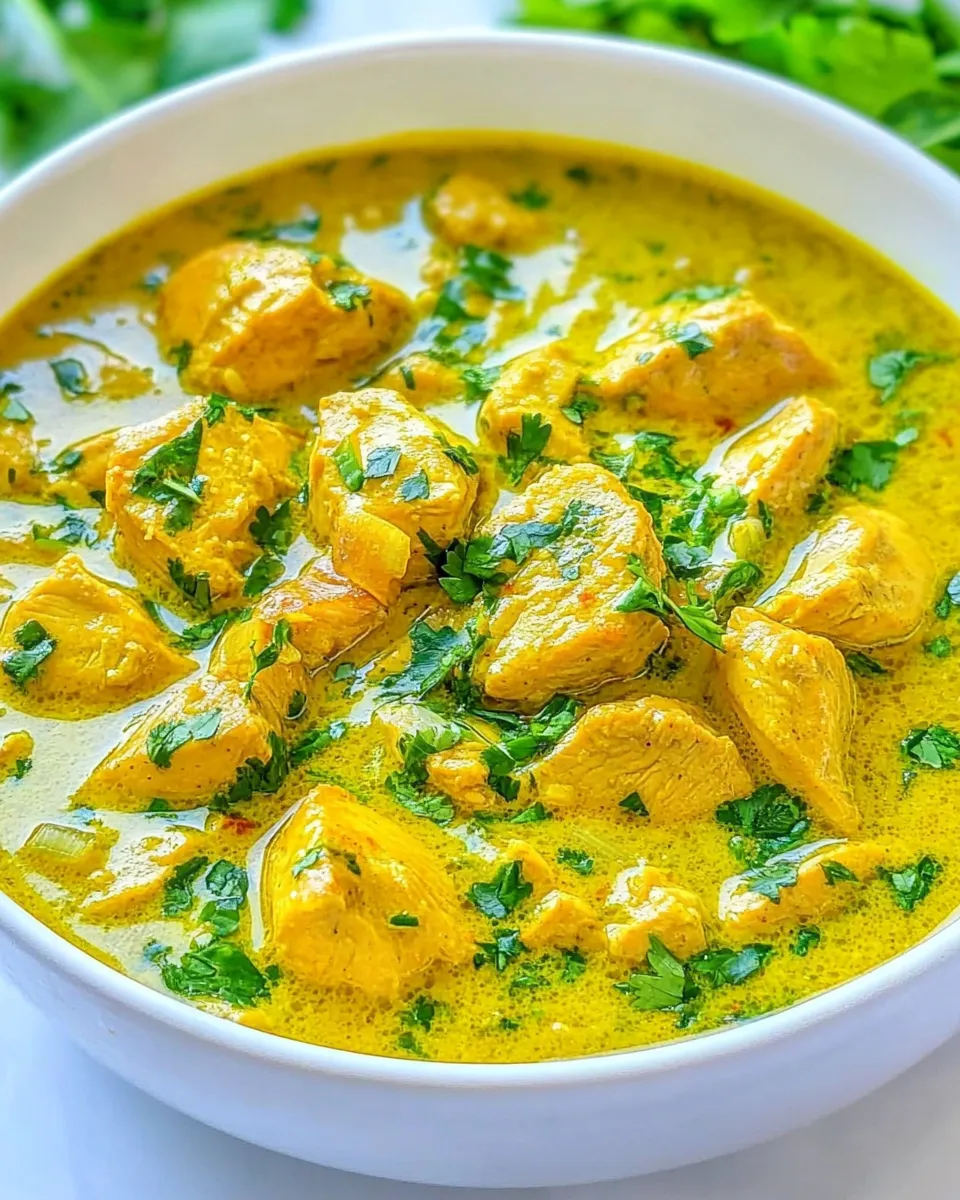
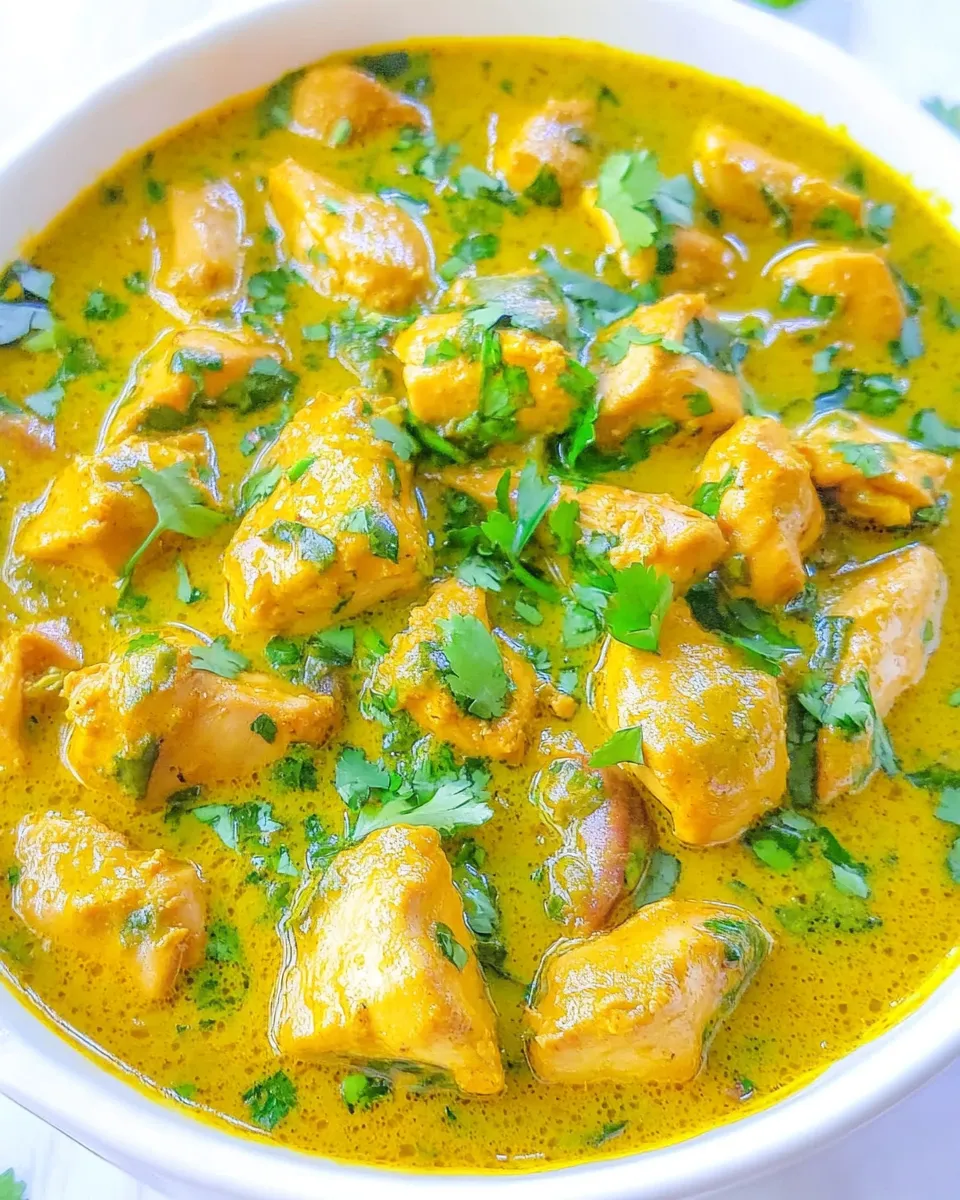
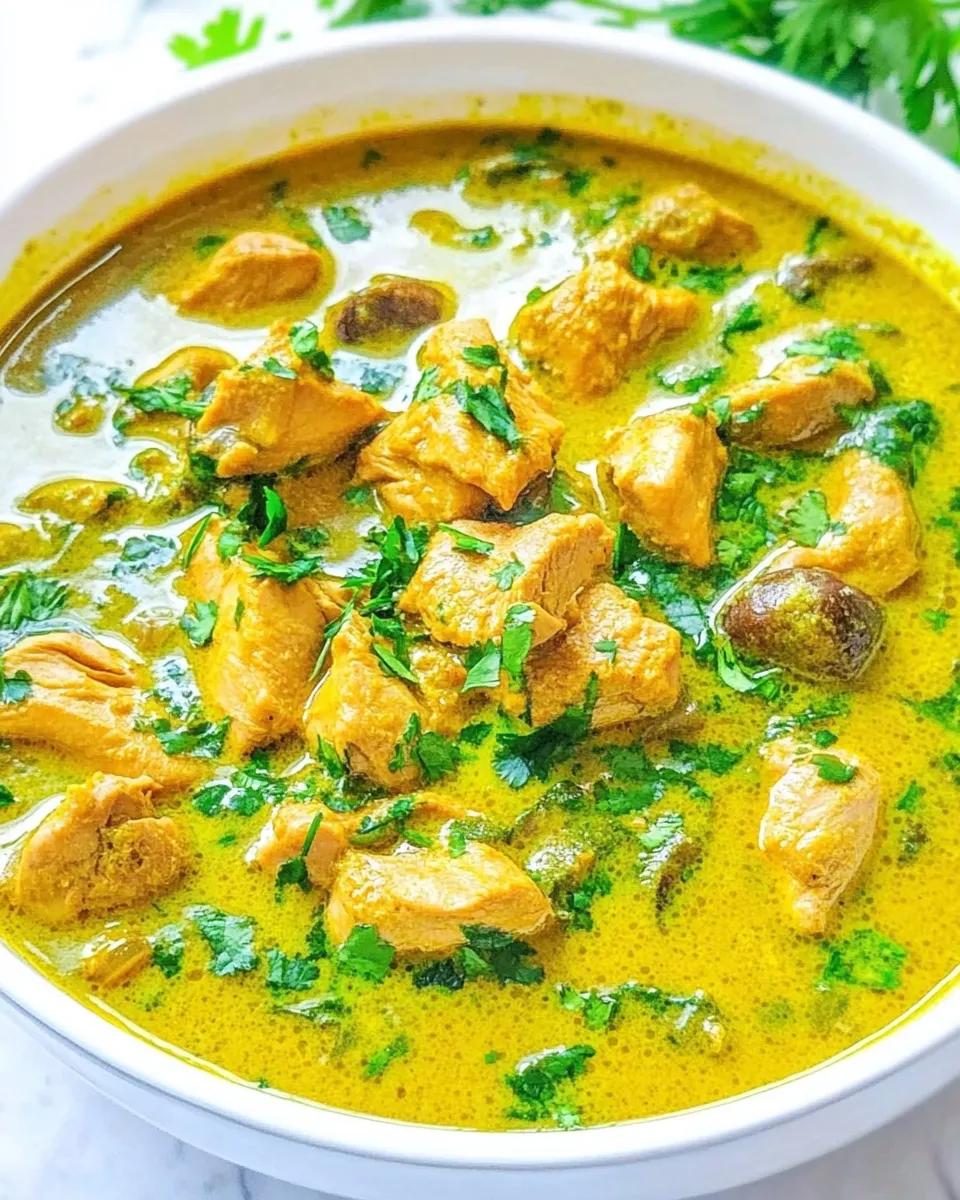
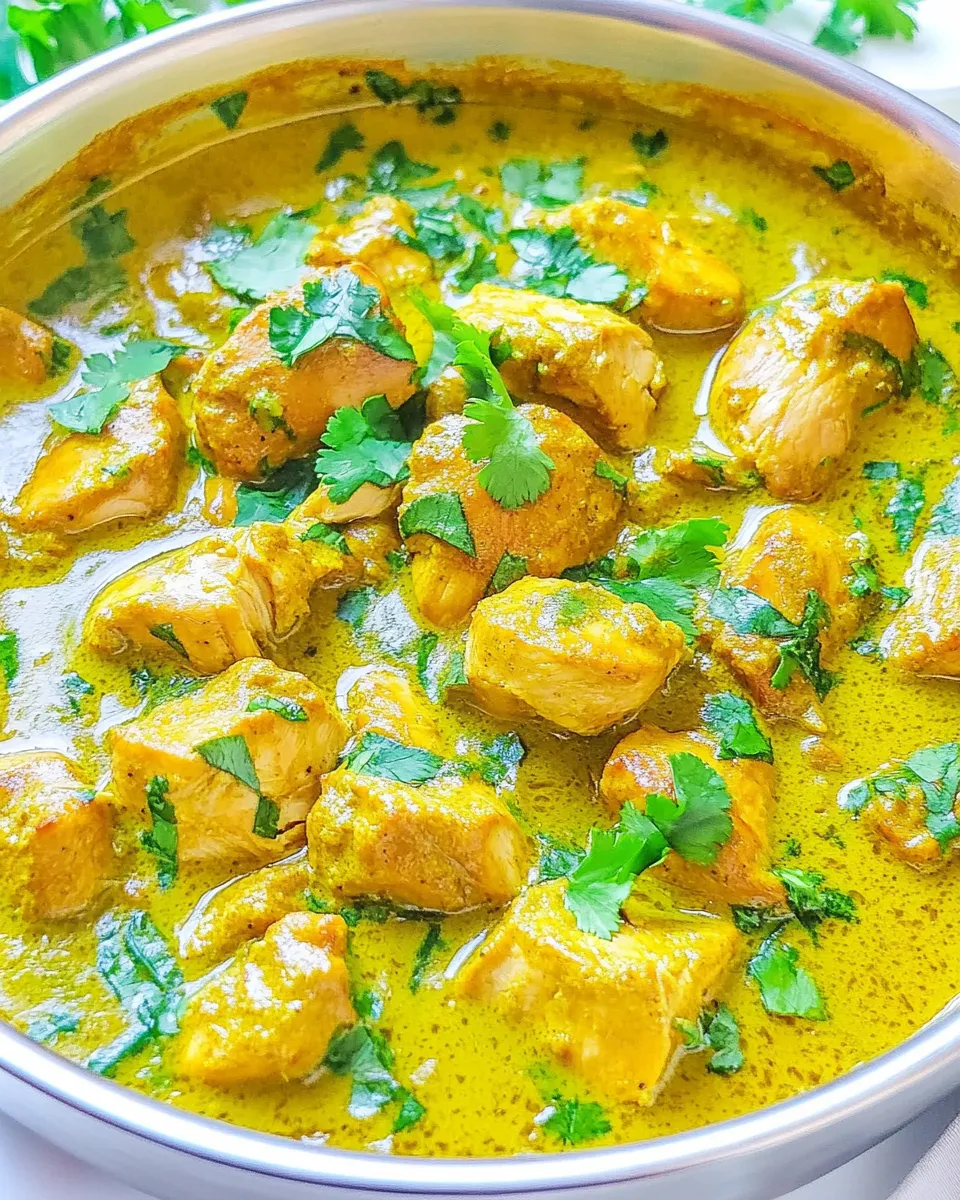
This is the kind of curry I turn to when I want something comforting, bright, and reliably satisfying. It’s gently spiced, creamy from coconut milk, and rounded out with cashews for texture and a touch of sweetness when you want it. I call it Yellow Chicken Coconut Curry, though many of you will recognize the milder korma-style vibe: warm turmeric, garam masala’s complexity, and coconut smoothing everything into a sauce that clings to bite-sized chicken pieces.
I like this recipe because it’s straightforward, forgiving, and quick on a weeknight. Prep is simple: dice an onion and chicken, measure your spices, and the skillet does the rest. The sauce comes together without a fuss, and small adjustments—lime, sugar, heat—let you steer it toward sweet, tangy, or spicy based on what your crowd prefers.
Ingredient List
- 3 tablespoons coconut oil — primary cooking fat for sautéing; olive oil may be substituted.
- 1 large sweet Vidalia onion — provides the aromatic base and mild sweetness.
- 1 to 1.25 pounds boneless skinless chicken breast — diced into bite-sized pieces for quick, even cooking.
- 4 to 6 cloves garlic — finely minced or pressed; garlic brightens and layers savory flavor.
- 1 tablespoon ground turmeric — the yellow backbone of the curry; adds color and warm, earthy notes.
- 2 teaspoons garam masala — gives rounded, fragrant warmth toward the end of cooking.
- 1 teaspoon ground ginger — dry ground ginger adds gentle heat and brightness.
- 1 teaspoon cumin — earthy, toasty base spice that pairs with coriander.
- 1 teaspoon coriander — citrusy, floral lift to the spice mix.
- 1+ teaspoons kosher salt — start with this and adjust to taste; critical for balancing the coconut milk.
- 1 teaspoon freshly ground black pepper — adds mild bite; adjust to taste.
- one 14.5-ounce can coconut milk — I used and recommend full-fat for richness and mouthfeel.
- ¾ to 1 cup cashews — I used 50% reduced sodium; they give body and a subtle nutty creaminess.
- 1 to 4 tablespoons white or brown sugar — optional and to taste; helps balance acidity and heat.
- 1 to 2 tablespoons lime juice — optional and to taste; brightens and lifts the finished sauce.
- pinch cayenne pepper and/or red chile flakes — optional and to taste; add heat if you like it spicy.
- 2 to 4 tablespoons fresh cilantro — finely minced for garnishing and fresh herbal contrast.
Yellow Chicken Coconut Curry (Chicken Korma): How It’s Done
- Prep: Finely dice the 1 large sweet Vidalia onion, confirm the 1 to 1.25 pounds boneless skinless chicken breast is diced into bite-sized pieces, and mince or press the 4 to 6 cloves garlic. Measure the spices and remaining ingredients so they’re ready.
- Heat 3 tablespoons coconut oil (olive oil may be substituted) in a large skillet over medium-high heat until shimmering.
- Add the diced onion and sauté 3 to 4 minutes, stirring occasionally, until the onion is just beginning to soften.
- Add the diced chicken to the skillet and cook about 5 minutes, stirring and flipping intermittently, until the chicken is cooked through and no longer pink in the center.
- Reduce heat slightly if needed. Add the garlic, 1 tablespoon ground turmeric, 2 teaspoons garam masala, 1 teaspoon ground ginger, 1 teaspoon cumin, 1 teaspoon coriander, 1 teaspoon kosher salt (or more to taste), and 1 teaspoon freshly ground black pepper (or more to taste). Stir to combine and sauté about 1 minute, stirring nearly continuously, until the spices are fragrant.
- Pour in one 14.5-ounce can coconut milk and add 3/4 to 1 cup cashews. Stir to combine and bring the mixture to a gentle simmer.
- Lower the heat to maintain a gentle simmer and cook about 7 minutes, stirring occasionally, until the sauce has reduced slightly and thickened.
- Taste and, if desired, adjust seasonings: add 1 to 4 tablespoons white or brown sugar, 1 to 2 tablespoons lime juice, and/or a pinch of cayenne pepper and/or red chile flakes to taste. Adjust salt and pepper if needed.
- Remove from heat, garnish with 2 to 4 tablespoons finely minced fresh cilantro, and serve immediately.
- Store leftovers airtight in the refrigerator for up to 5 days.
Why It’s Crowd-Pleasing
There’s a reason this curry works for so many people: it balances comfort with bright flavor. Coconut milk softens spices and gives a creamy mouthfeel without heavy cream. Turmeric gives the dish a warm, inviting color that looks great on the plate. Garam masala brings aromatic depth without overpowering, while lime and sugar let you dial in brightness and sweetness for different palates.
Texture matters. Bite-sized chicken cooks quickly and remains tender. Whole cashews add a pleasant chew and a hint of richness that makes the sauce feel more substantial. Serve it over plain rice or with flatbreads and you’ve got a complete meal that appeals to kids and adults alike.
Ingredient Swaps & Substitutions
- Coconut oil — olive oil works fine if you prefer a neutral pantry choice.
- Chicken — boneless skinless thighs can be used in place of breast if you want juicier, more forgiving meat; adjust cooking time slightly.
- Coconut milk — full-fat gives best texture; if you must, use light coconut milk but expect a thinner sauce.
- Cashews — almonds, blanched or slivered, will work for crunch; almonds are firmer, so soak briefly in warm water if you want them softer.
- Sugar — honey or maple syrup can replace sugar, but add sparingly and taste as you go.
- Heat — cayenne or red chile flakes are interchangeable; add a pinch at a time.
Setup & Equipment
You don’t need special gear. Here’s what I use and recommend:
- Large skillet — 10–12 inches, heavy-bottomed so the heat is even and the sauce reduces predictably.
- Sharp chef’s knife and cutting board — for uniform dice on chicken and onion; uniform pieces cook more evenly.
- Measuring spoons and cups — for spices and coconut milk; pre-measuring (mise en place) speeds the process and prevents over-spicing.
- Spatula or wooden spoon — for stirring without damaging the pan.
- Small bowl — to hold minced cilantro and any finishing adjustments (sugar, lime) so you can taste and add gradually.
Things That Go Wrong
Here are common pitfalls and how to fix them quickly.
- Chicken is dry — Likely overcooked. Use uniform, bite-sized pieces and cook only until no longer pink. If it happens, try a splash of water or extra coconut milk and a short simmer to soften the meat.
- Sauce too thin — Simmer a few extra minutes to reduce and thicken. Turn up heat briefly but keep it gentle to avoid splitting the coconut milk.
- Sauce splits or looks oily — This can happen if heat is too high or coconut milk separates. Lower the heat and stir gently. A small splash of lime juice can help reincorporate; otherwise, remove from heat and whisk vigorously.
- Too salty or too sweet — If too salty, add more coconut milk or a small peeled, raw potato simmered briefly to absorb salt (remove before serving). If too sweet, add lime juice incrementally to rebalance.
Dietary Customizations
Adapt this recipe to suit common dietary needs without losing its character.
- Vegetarian/Vegan — Replace chicken with firm tofu, tempeh, or a mix of roasted cauliflower and chickpeas. Sauté until well browned and proceed with the same spices and coconut milk.
- Nut-free — Omit cashews. For body, simmer the sauce a bit longer to reduce, or stir in a spoonful of tahini (if tolerated) or pureed cooked potato for thickness.
- Lower fat — Use light coconut milk and reduce oil to 1 tablespoon; expect a thinner sauce and adjust seasoning accordingly.
- Gluten-free — This recipe is naturally gluten-free; just verify your garam masala or any packaged spice blends don’t include additives with gluten.
Chef’s Notes
Little steps that make a big difference:
- Dice the chicken into consistent sizes for even cooking. Stop guessing and use a kitchen scale if you want precision.
- Toast your spices briefly in the pan with the garlic to bloom the flavors—don’t let them burn though. One minute is enough.
- If you prefer a silkier sauce, blitz a handful of the cashews with a few tablespoons of the coconut milk before adding them back in. That’s a mild variation that keeps the cashew flavor but removes the chew.
- Finish with lime juice at the end, not in the middle. Acidity fades if simmered too long; add it at the end to get a bright pop.
Best Ways to Store
Cool the curry to room temperature (no more than two hours at room temp) before storing. Transfer to airtight containers and refrigerate. The recipe stores well for up to 5 days in the refrigerator.
To reheat: warm gently on the stove over low-medium heat, stirring occasionally. If the sauce has thickened in the fridge, stir in a splash of coconut milk or water to loosen it. For make-ahead meals, portion into single-serving containers and reheat only what you need.
Your Questions, Answered
Q: Can I make this on the weekend and freeze it?
A: Yes—freeze in airtight containers for up to 2 months. Thaw overnight in the fridge and reheat gently. Note that coconut milk texture can change slightly after freezing; stirring in a little fresh coconut milk or water while reheating smooths it out.
Q: Can I skip the cashews?
A: Absolutely. The dish will have less body but remain flavorful. If you want texture, add roasted vegetables or toasted seeds at the end.
Q: Is garam masala interchangeable with curry powder?
A: They’re different. Garam masala is warmer and aromatic; curry powder is a British spice blend with turmeric and often fenugreek. Use curry powder if that’s what you have, but reduce additional turmeric slightly and taste as you go.
Save & Share
If you make this Yellow Chicken Coconut Curry (Chicken Korma), take a photo and save it somewhere you’ll find it again—this is a keeper for busy weeks and casual dinners alike. Share it with friends who like mild, aromatic curries, and encourage them to adjust lime, sugar, and heat to their taste. I read every comment and love hearing how you customized it—did you go nut-free, extra spicy, or swap chicken for cauliflower? Tell me what you tried and how it turned out.
Yellow Chicken Coconut Curry (Chicken Korma)
Ingredients
Ingredients
- 3 tablespoonscoconut oil olive oil may be substituted
- 1 large sweet Vidalia onion
- 1 to 1.25 poundsboneless skinless chicken breast diced into bite-sized pieces
- 4 to 6 clovesgarlic finely minced or pressed
- 1 tablespoonground turmeric
- 2 teaspoonsgaram masala
- 1 teaspoonground ginger
- 1 teaspooncumin
- 1 teaspooncoriander
- 1 + teaspoons kosher salt or to taste
- 1 teaspoonfreshly ground black pepper or to taste
- one 14.5-ounce can coconut milk I used and recommend full-fat
- 3/4 to 1 cupcashews I used 50% reduced sodium
- 1 to 4 tablespoonswhite or brown sugar optional and to taste
- 1 to 2 tablespoonslime juice optional and to taste
- pinchcayenne pepper and/or red chile flakes optional and to taste
- 2 to 4 tablespoonsfresh cilantro finely minced for garnishing
Instructions
Instructions
- Prep: Finely dice the 1 large sweet Vidalia onion, confirm the 1 to 1.25 pounds boneless skinless chicken breast is diced into bite-sized pieces, and mince or press the 4 to 6 cloves garlic. Measure the spices and remaining ingredients so they’re ready.
- Heat 3 tablespoons coconut oil (olive oil may be substituted) in a large skillet over medium-high heat until shimmering.
- Add the diced onion and sauté 3 to 4 minutes, stirring occasionally, until the onion is just beginning to soften.
- Add the diced chicken to the skillet and cook about 5 minutes, stirring and flipping intermittently, until the chicken is cooked through and no longer pink in the center.
- Reduce heat slightly if needed. Add the garlic, 1 tablespoon ground turmeric, 2 teaspoons garam masala, 1 teaspoon ground ginger, 1 teaspoon cumin, 1 teaspoon coriander, 1 teaspoon kosher salt (or more to taste), and 1 teaspoon freshly ground black pepper (or more to taste). Stir to combine and sauté about 1 minute, stirring nearly continuously, until the spices are fragrant.
- Pour in one 14.5-ounce can coconut milk and add 3/4 to 1 cup cashews. Stir to combine and bring the mixture to a gentle simmer.
- Lower the heat to maintain a gentle simmer and cook about 7 minutes, stirring occasionally, until the sauce has reduced slightly and thickened.
- Taste and, if desired, adjust seasonings: add 1 to 4 tablespoons white or brown sugar, 1 to 2 tablespoons lime juice, and/or a pinch of cayenne pepper and/or red chile flakes to taste. Adjust salt and pepper if needed.
- Remove from heat, garnish with 2 to 4 tablespoons finely minced fresh cilantro, and serve immediately.
- Store leftovers airtight in the refrigerator for up to 5 days.
Equipment
- Large Skillet
Notes
All spices were added to my taste preferences and I find the dish to be very well-spiced, but not overpowering. If you prefer more subdued flavors, you may wish to start with less spices to being with and add more later, if needed.
I definitely recommend the sugar (balances the spices), the lime juice (acidity really brightens the dish and helps it pop), and the cayenne and chile flakes (I added both because Indian food is boring for me if there's not a teeny tiny hint of heat), but of course add based on your palate.