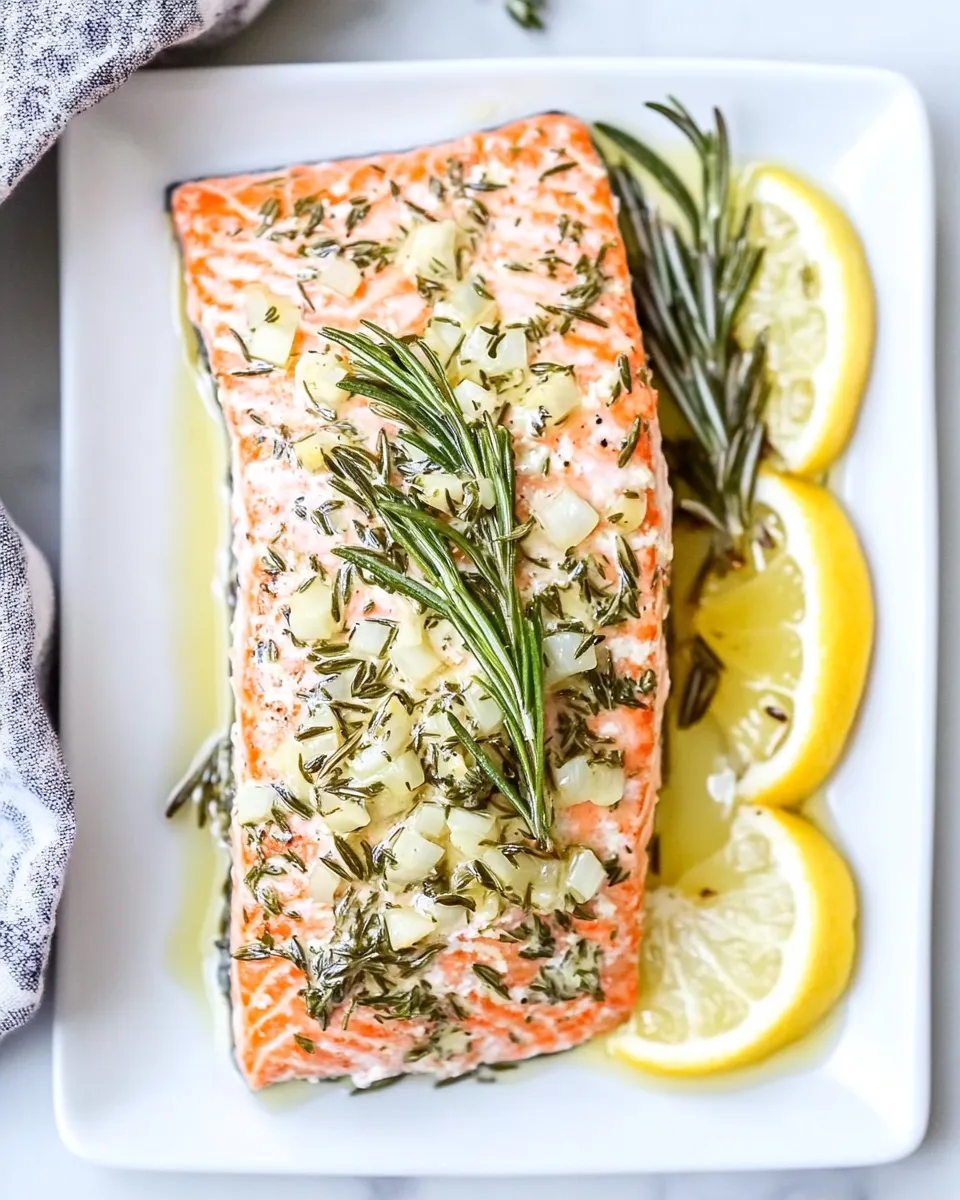
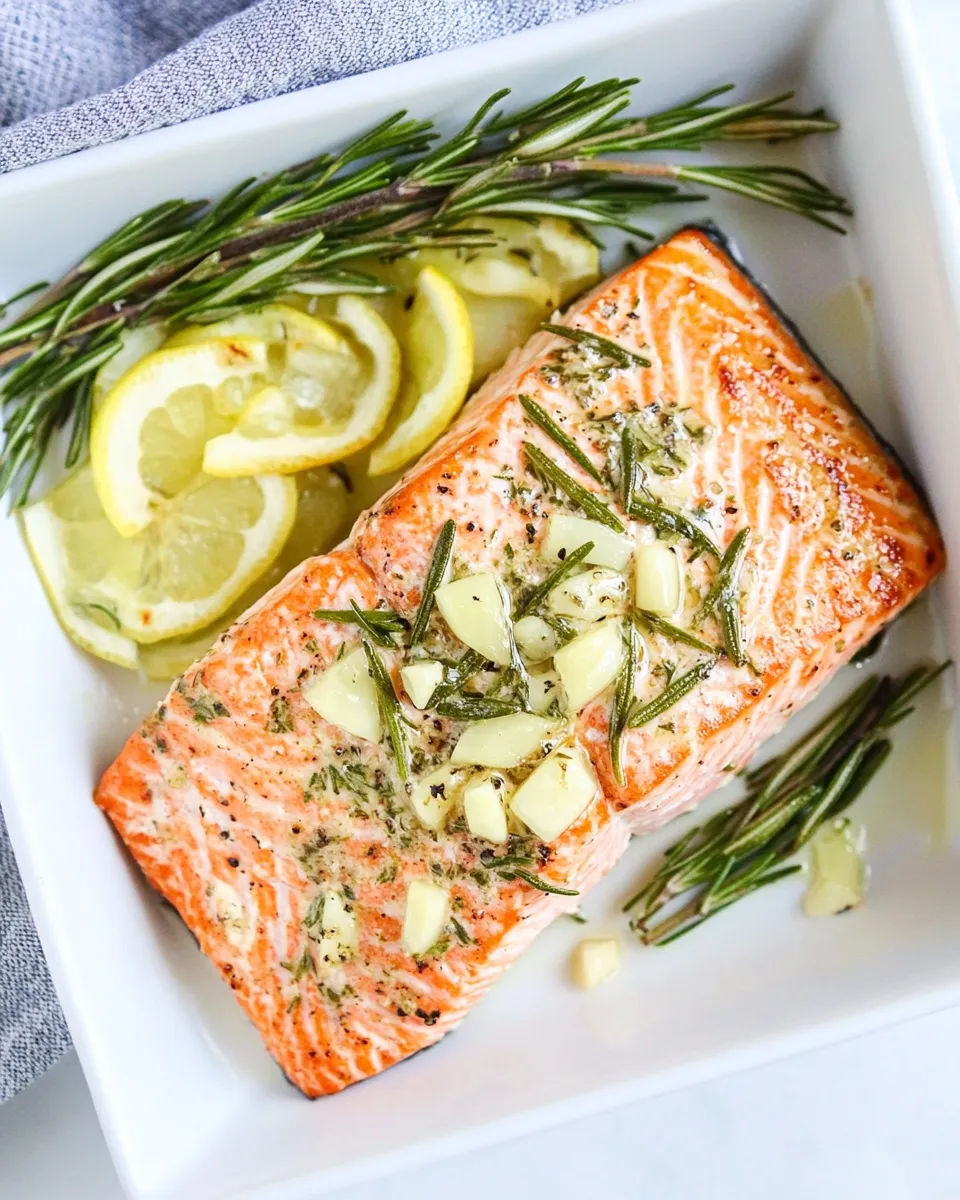
Ten minutes in the oven and you have a meal that looks and tastes like you spent far more time on it. This garlic-and-rosemary combination is classic for a reason: it brightens the natural richness of sockeye salmon without covering it up. The olive oil keeps the surface glossy and helps the garlic and rosemary toast just enough to perfume the fish.
I rely on this recipe on busy weeknights and for casual dinner guests. It’s forgiving, fast, and the timing is predictable — pop the tray in, set a timer, and you’ll get flaky, tender fillets every time. A squeeze of lemon right before serving wakes the whole dish up.
Shopping List
Ingredients
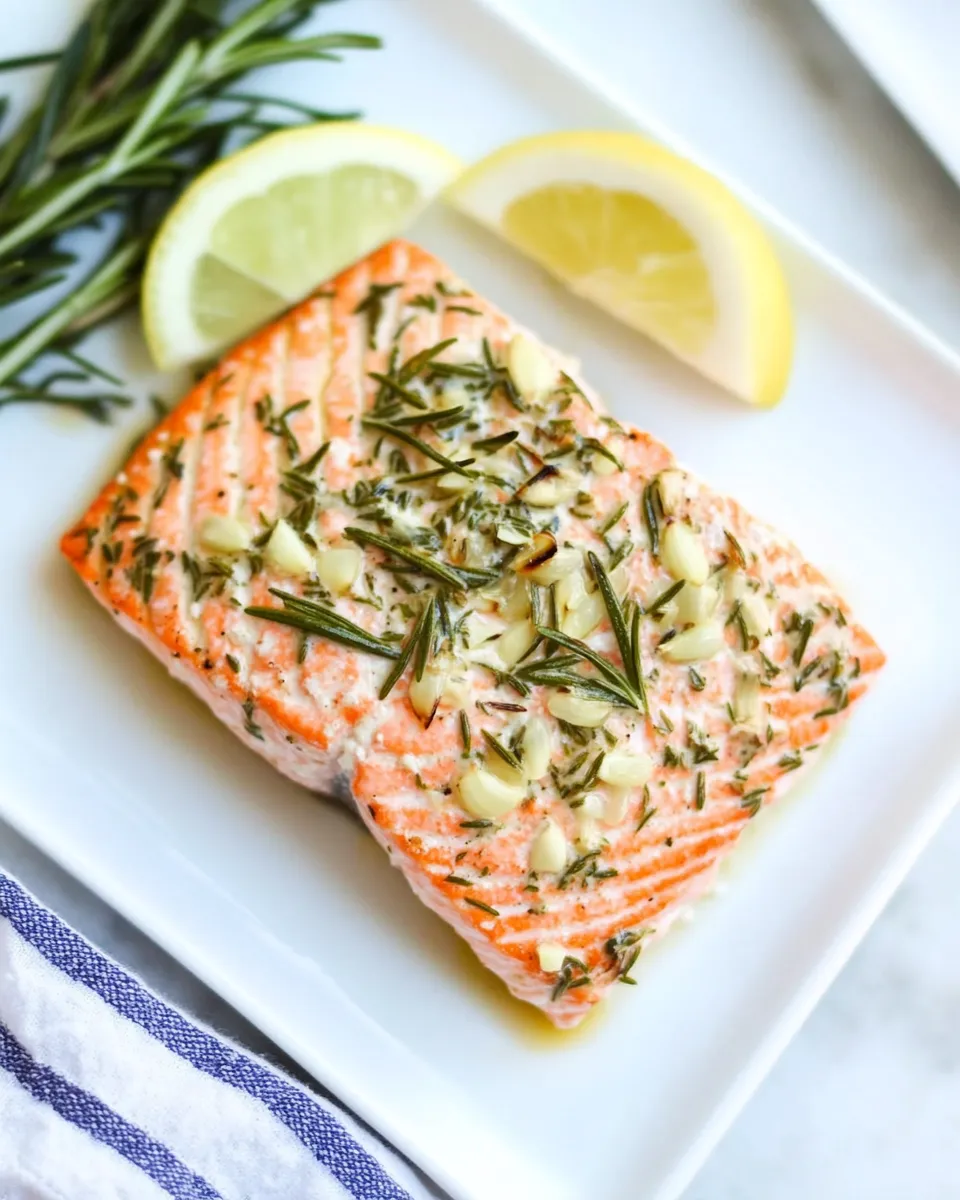
- 6 wild-caught sockeye salmon fillets — 6 to 8 ounces each — main protein; bring to room temperature for even cooking.
- 1 T. olive oil — coats the tops to promote browning and keep the surface moist.
- 2 garlic cloves, minced — provides bright, savory flavor; distribute evenly over the fillets.
- 1-1/2 T. chopped fresh rosemary — aromatic herb; chop fine so it adheres to the fish.
- 1 tsp. sea salt — seasons and enhances the salmon’s natural flavor.
- ½ tsp. fresh ground black pepper — adds a subtle bite; grind fresh for best flavor.
- fresh lemon wedges for squeezing over the top (optional) — adds acidity and freshness at the end.
Garlic and Rosemary Roasted Salmon: Step-by-Step Guide
- Remove the 6 salmon fillets from the refrigerator and let them rest at room temperature for 20 minutes while you preheat the oven to 425°F (place the oven rack in the center position).
- Line a baking sheet with parchment paper.
- Arrange the 6 fillets on the parchment-lined baking sheet, spacing them so air can circulate between each piece.
- Drizzle 1 tablespoon olive oil evenly over the tops of the fillets.
- Evenly sprinkle the minced garlic (2 garlic cloves), chopped fresh rosemary (1-1/2 tablespoons), sea salt (1 teaspoon), and fresh ground black pepper (1/2 teaspoon) over the tops of the fillets.
- Place the baking sheet in the preheated oven and bake for 10 to 12 minutes, or until the salmon flakes easily with a fork.
- Remove from the oven and serve hot, with fresh lemon wedges for squeezing over the top if desired.
Why It’s Crowd-Pleasing
This dish hits a lot of crowd-pleasing marks: fast, flavorful, and visually appealing. The bright garlic and piney rosemary accentuate the rich, oily nature of sockeye salmon, while the brief roasting time keeps the flesh tender and moist. Even people who aren’t huge fish fans are often won over by the simplicity and clarity of flavor here.
Presentation is effortless but effective. Arrange the fillets on a platter, add lemon wedges, and you’re ready for company. Because the flavors are straightforward, it pairs well with many sides — roasted vegetables, a grain salad, or a simple green salad — so you can adapt it to any guest’s preferences.
Ingredient Swaps & Substitutions
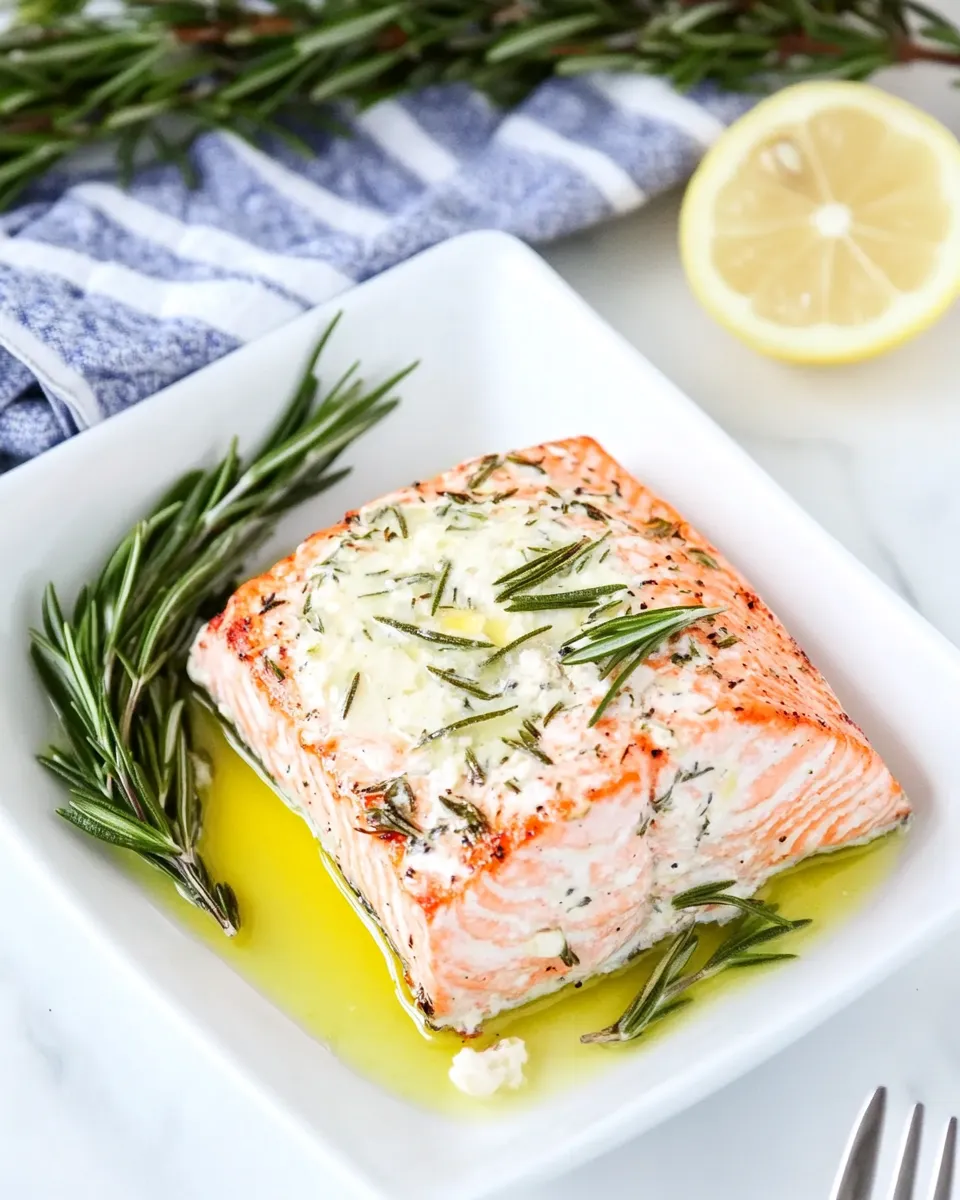
- Salmon type: If sockeye isn’t available, use any firm fillet salmon (coho, king, or Atlantic) though flavor and color will vary slightly. Thicker fillets may need an extra minute or two.
- Herbs: If you don’t have fresh rosemary, substitute with fresh thyme or a smaller amount of dried rosemary. If using dried rosemary, crush it between your fingers to release oils and use about one-third the volume of fresh.
- Garlic: Garlic powder can be used in a pinch (use sparingly — about 1/4 to 1/2 teaspoon) but fresh minced garlic gives the best aroma and texture.
- Oil: A neutral oil with a high smoke point (avocado or light olive oil) works if you prefer a milder oil flavor.
Cook’s Kit
- Baking sheet — rimmed to catch any juices.
- Parchment paper — prevents sticking and makes cleanup simple.
- Sharp knife and cutting board — for trimming and chopping rosemary and garlic.
- Measuring spoons — to measure salt, pepper, oil, and herbs.
- Oven mitts and timer — essential when roasting at high heat.
- Serving platter and tongs or a spatula — to transfer fillets without breaking them.
Errors to Dodge
- Cooking straight from cold: Don’t skip the 20-minute rest at room temperature. Putting cold fillets into a hot oven causes uneven cooking and can lead to overcooked edges and a raw center.
- Overbaking: Ten to twelve minutes is the window. Watch closely at the 10-minute mark. Salmon continues to cook off the heat, so remove it as soon as it flakes easily.
- Too much oil or too little seasoning: A tablespoon of oil is enough to lightly coat six fillets. Heavy oiling can drown the herbs; under-seasoning leaves the fish flat.
- Using old dried herbs: Fresh rosemary makes a big difference. If your dried rosemary is years old, the flavor will be muted; swap it or increase the quantity cautiously.
- Skipping parchment or using too high heat: Parchment prevents sticking and keeps cleanup simple. If you broil or use higher temps, the garlic can burn quickly and taste bitter.
Substitutions by Diet
- Low-sodium: Reduce the sea salt to 1/2 teaspoon and add lemon at the table to compensate for flavor.
- Keto / Low-carb: This recipe is naturally low-carb and suitable for keto diets as written.
- Pescatarian: Fits perfectly — the dish is centered on fish and fresh herbs.
- Dairy-free: The recipe contains no dairy; serve with dairy-free sides to keep it that way.
- Gluten-free: Naturally gluten-free if you check that any pre-packaged ingredients (rare here) haven’t been cross-contaminated.
Recipe Notes & Chef’s Commentary
Timing and doneness
Salmon cooks quickly. The 10–12 minute bake time at 425°F aims for a tender, flaky interior. If your fillets are on the thicker side (closer to 8 ounces or more), err toward the 12-minute end. For a slightly rarer center, aim for 10 minutes and check; the fish should give slightly under a fork and flake along the lines of the muscle.
Herb handling
Fresh rosemary has woody stems. Chop the needles finely and avoid leaving large pieces on the fish; they can be chewy. If you want the rosemary flavor without the bits, tie the sprigs and remove them after baking — but I generally prefer the texture the chopped needles add.
Garlic considerations
Minced fresh garlic browns and mellows in the oven. If any garlic falls onto the pan and darkens too much, scrape it off before serving; bitter bits can affect the whole bite. Alternatively, press the garlic into the oil so it adheres to the flesh rather than the pan.
Refrigerate, Freeze, Reheat
Refrigerate: Store leftover salmon in an airtight container in the refrigerator for up to 3 days. Cool to room temperature for no more than two hours before refrigerating.
Freeze: You can freeze cooked fillets wrapped tightly in plastic and then foil, or vacuum-sealed, for up to 2 months. Thaw overnight in the refrigerator before reheating.
Reheat: Gently reheat in a 300°F oven on a baking sheet for 6–10 minutes until warmed through. Use a microwave for speed but keep power low and cover loosely to prevent drying. Reheated salmon won’t be quite as flaky as freshly roasted, so consider flaking it into salads or a warm grain bowl rather than presenting it as a centerpiece.
Quick Questions
- Can I broil instead of roast? Yes, but watch closely. Broiling will brown the tops faster, which can be nice, but minced garlic can burn quickly under a broiler. If broiling, position the rack a little farther from the heat and reduce cook time.
- How do I tell when salmon is done? It should flake easily with a fork and have an opaque color through most of the fillet. A quick internal check with an instant-read thermometer should read about 125–130°F for medium; adjust to your preferred doneness.
- Can I use dried rosemary? Yes, in a pinch. Use about one-third the quantity and crush it so it releases more flavor. Expect a slightly different texture and a less vibrant herbal note.
- Is sockeye necessary? No — sockeye has a deeper color and a bolder flavor, but other salmon types will work. Thicker fillets may need a touch more time.
Hungry for More?
If you liked this prep, try pairing the salmon with a lemon-herb couscous, roasted asparagus, or a warm buttered farro. For a quick weeknight sheet-pan dinner, roast baby potatoes and halved cherry tomatoes on the same tray (just give the potatoes a head start of 15–20 minutes before adding the salmon). Keep a small stash of herbs and citrus on hand and you’ll be able to turn this formula into a dozen different meals with minimal effort.
Make it your own: swap the rosemary for thyme, add a smear of Dijon for tang, or toss in capers after baking for briny pops. The base technique—room-temperature fish, high heat, short bake—stays the same and rewards small tweaks.
10-Minute Garlic and Rosemary Roasted Salmon
Ingredients
Ingredients
- 6 wild-caught sockeye salmon fillets6 to 8 ounces each
- 1 T.olive oil
- 2 garlic clovesminced
- 1-1/2 T.chopped fresh rosemary
- 1 tsp.sea salt
- 1/2 tsp.fresh ground black pepper
- fresh lemon wedges for squeezing over the topoptional
Instructions
Instructions
- Remove the 6 salmon fillets from the refrigerator and let them rest at room temperature for 20 minutes while you preheat the oven to 425°F (place the oven rack in the center position).
- Line a baking sheet with parchment paper.
- Arrange the 6 fillets on the parchment-lined baking sheet, spacing them so air can circulate between each piece.
- Drizzle 1 tablespoon olive oil evenly over the tops of the fillets.
- Evenly sprinkle the minced garlic (2 garlic cloves), chopped fresh rosemary (1-1/2 tablespoons), sea salt (1 teaspoon), and fresh ground black pepper (1/2 teaspoon) over the tops of the fillets.
- Place the baking sheet in the preheated oven and bake for 10 to 12 minutes, or until the salmon flakes easily with a fork.
- Remove from the oven and serve hot, with fresh lemon wedges for squeezing over the top if desired.
Equipment
- Oven
- Baking Sheet
- Parchment Paper
- Fork
Notes
Note: Salmon can be prepared, covered with plastic wrap and stored in the refrigerator the morning prior to roasting.
Adapted very slightly from
Effortless Entertaining Cookbook
by Meredith Steele of SteeleHouseKitchen.com