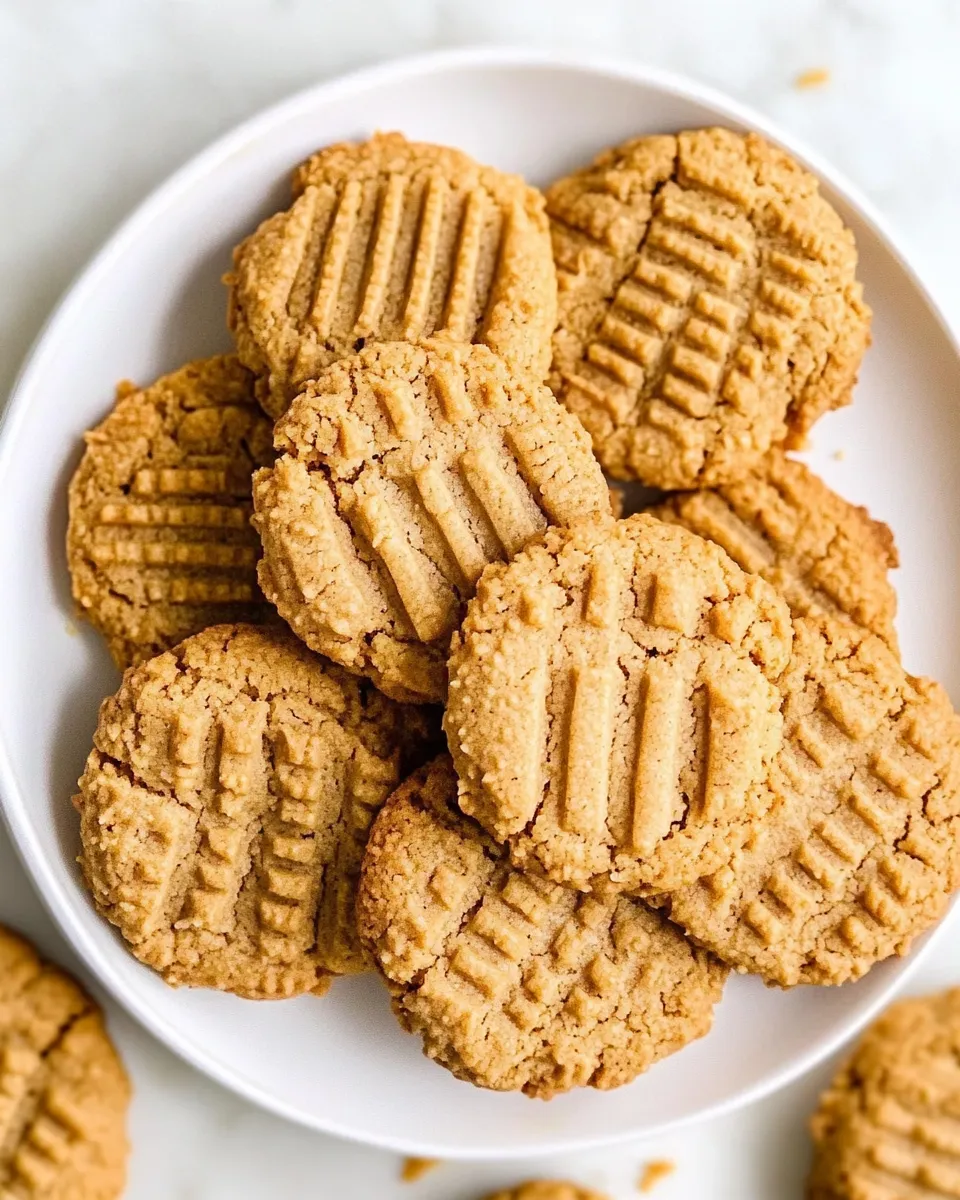
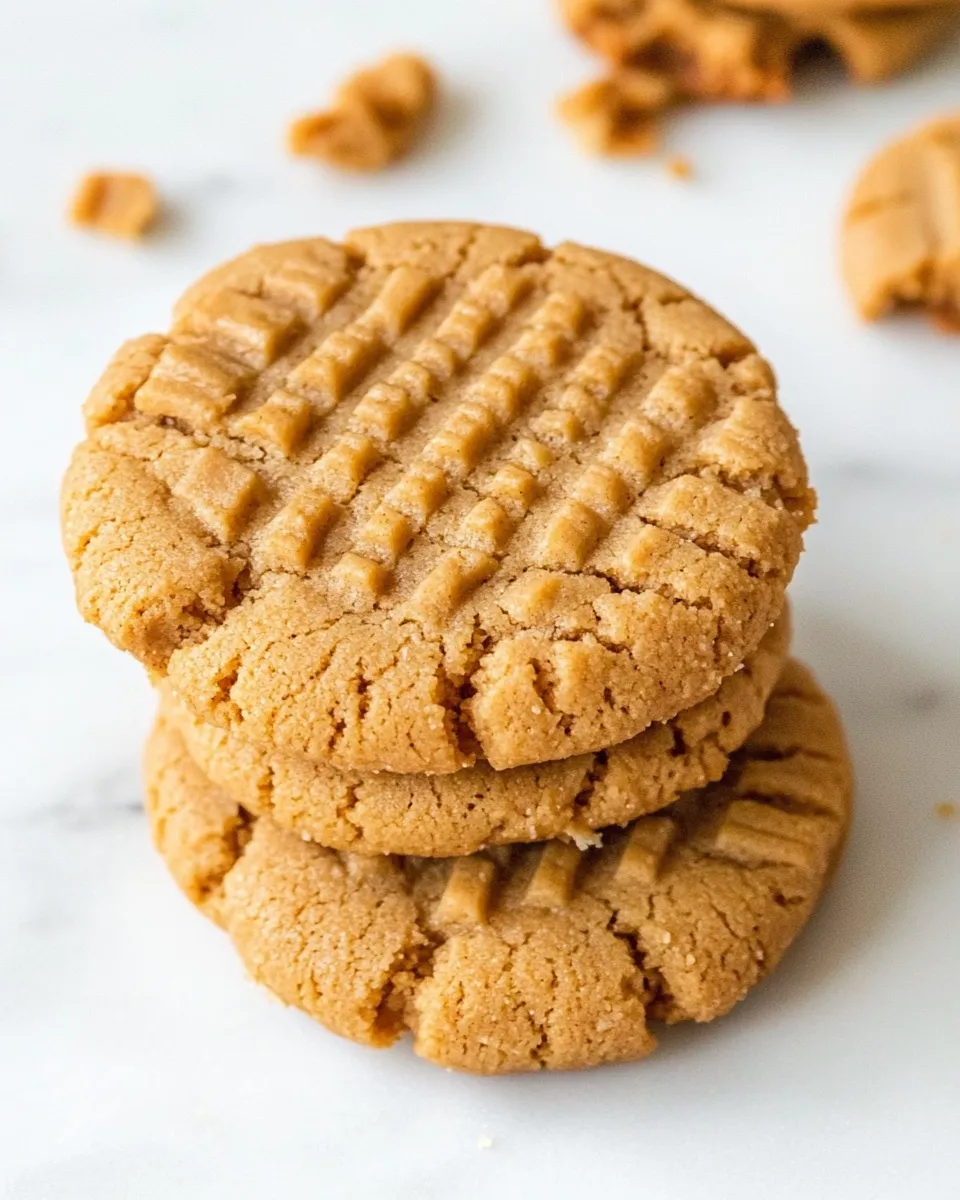
These cookies are the kind I reach for when I want something fast, predictable, and deeply comforting. No special equipment, no chilling, and only five pantry staples stand between you and a tray of warm peanut-buttery cookies. They crisp at the edges, stay tender inside, and the fork-crisscross finish is oddly satisfying every time.
I test small-batch recipes constantly for the blog, and this one survives because it’s honest: straightforward technique, reliable timing, and ingredients you already have. If you want a no-fuss cookie that still tastes homemade, this is it. Read through once, then get your hands a little messy—these cookies are forgiving and fast.
Ingredients at a Glance
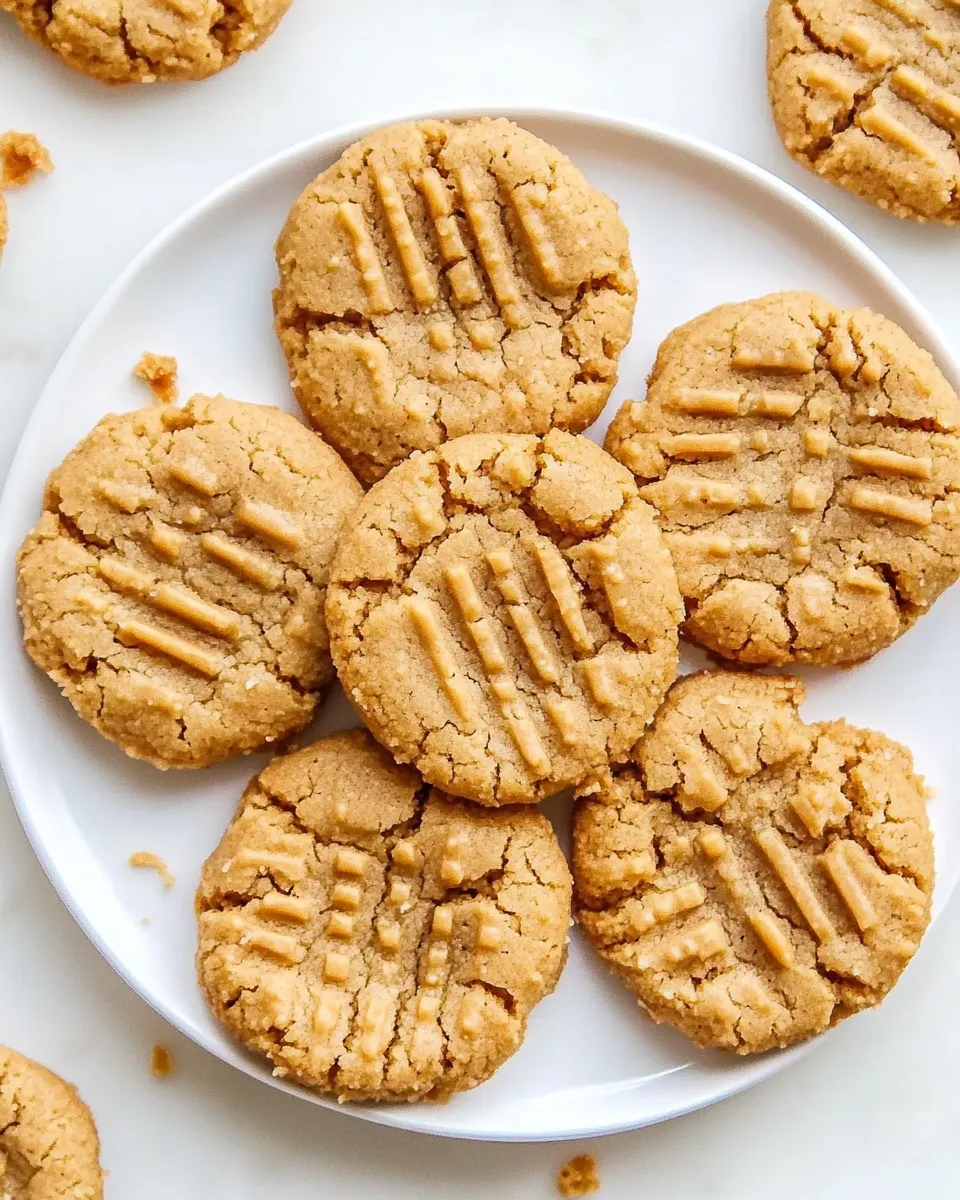
- 2 cups peanut butter — the base: provides fat, flavor, and structure. Use a common commercial brand (such as Jiff or Skippy) for consistent texture.
- 2 cups white sugar — sweetness and a bit of crunch at the edges; creaming isn’t required here because the sugar mixes directly into the peanut butter.
- 2 large eggs — bind the dough and add a touch of lift. Use large eggs at room temperature for even mixing.
- 1 tsp vanilla extract — balances and rounds the peanut flavor. Pure vanilla is best, but use what you have.
- ½ tsp salt — enhances flavor and cuts the sweetness. If your peanut butter is salted, you can keep the salt as written for balance.
Directions: 5 Ingredient Peanut Butter Cookies
- Preheat the oven to 350° F. Line a baking sheet with parchment paper or a silicone baking mat.
- In a large bowl combine the ingredients: 2 cups peanut butter, 2 cups white sugar, 2 large eggs, 1 tsp vanilla extract, and ½ tsp salt. Stir with a sturdy spoon just until the dough forms and ingredients are evenly combined.
- Scoop the dough into 1½-inch dough balls (use a 1½-inch cookie scoop or measure and roll by hand).
- Place the dough balls about 2 inches apart on the prepared baking sheet.
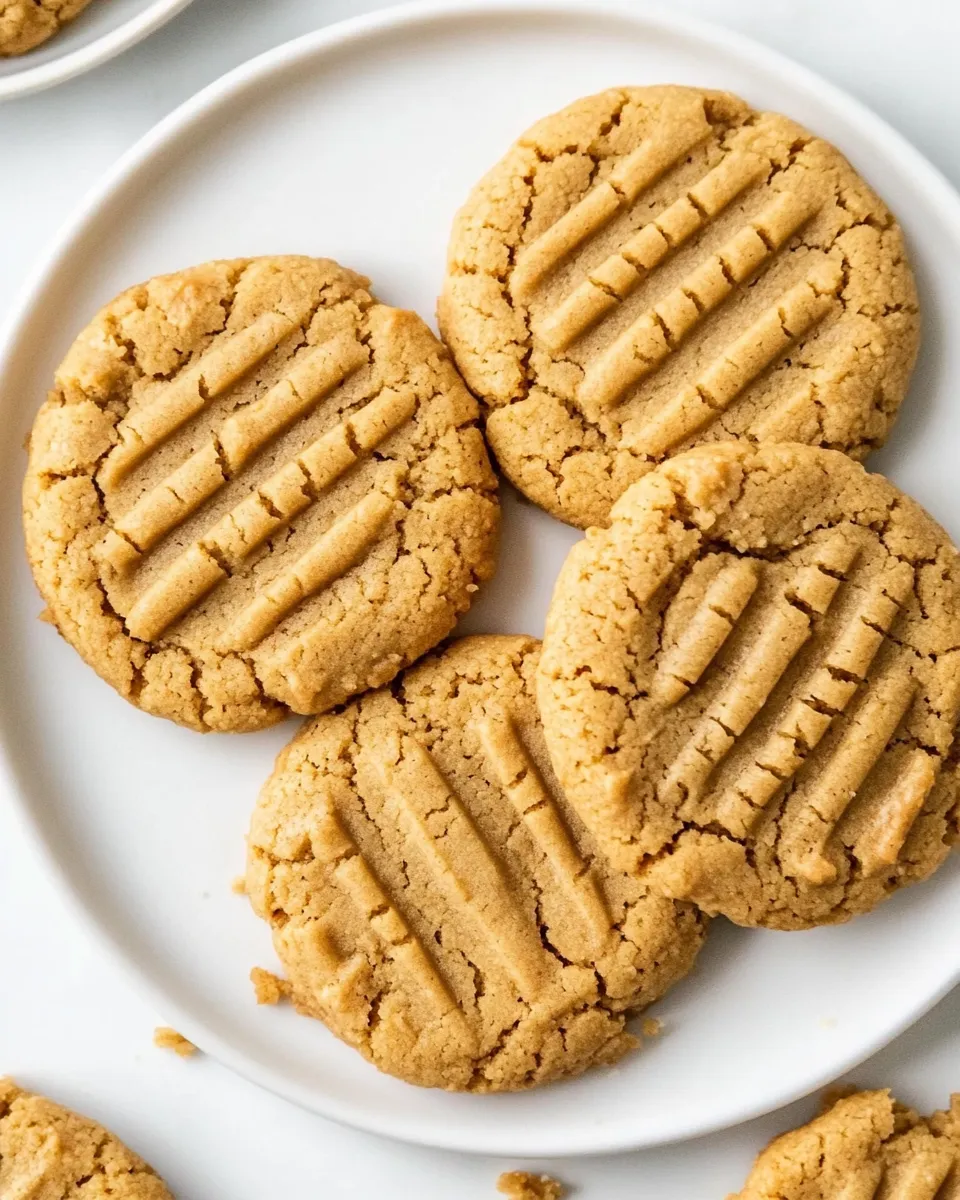
- Use the tines of a fork to gently press each dough ball down, then rotate the fork 90° and press again to make a criss-cross pattern on top of each cookie.
- Bake for 12 minutes.
- Let the cookies cool on the baking sheet for 2 minutes, then transfer them to a cooling rack to cool completely.
- Store cooled cookies in an airtight container to retain the best texture.
What You’ll Love About This Recipe
It’s quick. From bowl to oven in under 10 minutes if you’re organized. You don’t need to cream butter, flour, or even measure out tiny spices—just five things, mixed and scooped.
The texture is dependable. The cookies hold a crisp edge with a tender center—if you prefer a chewier cookie, pull them out a minute early. They keep shape well and the fork pattern gives a classic look without any special technique.
Finally, the flavor is straightforward and familiar. Pure peanut butter comes through, rounded by vanilla and salt. Kids love them. Guests rarely believe they were so fast to make.
International Equivalents
- Oven temperature: 350° F ≈ 175° C (fan/ convection ovens may run hotter; reduce by 10–15° C if using convection).
- Peanut butter: 2 cups ≈ 480–500 g (volume measure; density varies by brand). If you prefer metric weighing, aim for about 500 g for a close match.
- White sugar: 2 cups ≈ 400 g of granulated sugar.
- Eggs: 2 large eggs — standard large eggs remain the same worldwide; if using medium eggs, add a splash of beaten egg white to reach similar volume.
- Vanilla & salt: 1 tsp vanilla ≈ 5 ml; ½ tsp salt ≈ 2.5 ml.
Equipment & Tools
- Large mixing bowl — plenty of room to stir without splashing.
- Sturdy spoon or spatula — the dough is thick; use something solid to mix.
- Baking sheet — rimmed works best to catch any small spread.
- Parchment paper or silicone mat — prevents sticking and speeds cleanup.
- 1½-inch cookie scoop or measuring spoon — ensures uniform cookies for even baking.
- Fork — to make the classic criss-cross finish.
- Cooling rack — transfers heat away so bottoms don’t steam and soften.
Problems & Prevention
- Cookies are crumbly or fall apart: Usually means the peanut butter is dry or the dough didn’t get enough binding. Make sure eggs are well mixed in and use a creamy peanut butter for best cohesion.
- Cookies spread too much: If your peanut butter is very oily or runny (some natural brands are), cookies will spread. Chill the scoop of dough 10 minutes on the baking sheet before pressing, or use a firmer commercial peanut butter.
- Cookies too flat and greasy: This can happen with high oven temperatures or very oily peanut butter. Check oven accuracy with an oven thermometer and try a firmer peanut butter.
- Undercooked center: If the edges look done but the center is very soft, give them the full 12 minutes. Letting them rest on the hot sheet for 2 minutes helps finish the cooking without overbaking.
- Sticking to the pan: Always line the pan with parchment or a silicone mat. If you skip that step, grease the pan lightly.
Make It Fit Your Plan
Want these cookies to work with your meal plan or preferences? Small swaps and timing changes help without adding fuss.
- Lower-sugar approach: These cookies rely on sugar for texture and crisp edges. You can try reducing sugar slightly, but expect a softer, denser cookie. Taste and texture will change.
- Using crunchy peanut butter: Swap in crunchy for extra texture. The cookie structure stays the same; you’ll just get little peanut bits throughout.
- Allergy-friendly ideas: If you need to avoid peanuts, use a similar-textured seed butter (like sunflower seed butter) and watch for increased spreading—adjust by chilling dough briefly.
- Portion control: Make smaller 1-inch dough balls and reduce bake time by 1–2 minutes; keep an eye so they don’t overbake.
Cook’s Commentary
I love recipes like this because they strip baking back to its essentials. No flour means you’re relying on peanut butter and eggs for structure. That simplicity also means small changes show up quickly—different peanut butter brands will yield slightly different cookies, and that’s okay. Learn your pantry.
The fork press is not just decorative. It slightly flattens the cookie so it bakes evenly. Press gently—too hard and you’ll get paper-thin cookies; too soft and the pattern won’t show. I press once, rotate, then press again. Simple ritual. Reliable results.
Timing matters but don’t obsess. My oven tends to run a touch hot, so I sometimes pull at 11 minutes for a softer bite. If you like crisp edges, the full 12 minutes is your friend. Always let them rest on the sheet for the 2 minutes called for; that finish on residual heat firms them just right.
Freezer-Friendly Notes
- Freeze baked cookies: Cool completely, then layer between sheets of parchment in an airtight container or a freezer bag. They keep well for up to 3 months. Thaw at room temperature.
- Freeze raw dough balls: Scoop dough onto a tray, freeze until solid, then transfer to a bag. Bake from frozen—add 1–2 minutes to the baking time and watch closely.
- Reheat: For a just-baked moment, warm a cookie for 6–8 seconds in the microwave or 3–4 minutes at low temp in a 300° F oven.
Ask & Learn
- Q: Can I use natural peanut butter? A: Yes, but expect more spreading because natural varieties often separate and are oilier. Chill the scooped dough briefly if you use natural peanut butter.
- Q: Why no flour? A: This recipe relies on peanut butter and eggs for structure. The result is a denser, peanut-forward cookie. Flour would change texture and mean different proportions.
- Q: My cookies came out too dry. What went wrong? A: Overbaking is the most common cause. Also, if your peanut butter is very low-fat, the dough will be drier. Try slightly shortening bake time or using a regular commercial peanut butter.
- Q: Can I add chocolate? A: You can fold in chips or press a chocolate square on top after baking, but adding mix-ins changes texture and may require slight timing adjustments.
Next Steps
If you enjoyed these, try making a double batch and freezing half of the dough balls so you can bake fresh cookies whenever the craving hits. Or experiment with crunchy versus creamy peanut butter to find your personal favorite. Keep notes: brand, bake time, and any tweaks. Baking is part recipe, part memory—small adjustments make it yours.
Happy baking. Keep it simple, and enjoy the peanut butter glow.
5 Ingredient Peanut Butter Cookies
Ingredients
Ingredients
- 2 cupspeanut butter such as Jiff or Skippy
- 2 cupswhite sugar
- 2 largeeggs
- 1 tspvanilla extract
- 1/2 tspsalt
Instructions
Instructions
- Preheat the oven to 350° F. Line a baking sheet with parchment paper or a silicone baking mat.
- In a large bowl combine the ingredients: 2 cups peanut butter, 2 cups white sugar, 2 large eggs, 1 tsp vanilla extract, and ½ tsp salt. Stir with a sturdy spoon just until the dough forms and ingredients are evenly combined.
- Scoop the dough into 1½-inch dough balls (use a 1½-inch cookie scoop or measure and roll by hand).
- Place the dough balls about 2 inches apart on the prepared baking sheet.
- Use the tines of a fork to gently press each dough ball down, then rotate the fork 90° and press again to make a criss-cross pattern on top of each cookie.
- Bake for 12 minutes.
- Let the cookies cool on the baking sheet for 2 minutes, then transfer them to a cooling rack to cool completely.
- Store cooled cookies in an airtight container to retain the best texture.
Equipment
- Oven
- Baking Sheet
- Parchment Paper
- Silicone Baking Mat
- Large Bowl
- sturdy spoon
- Cookie Scoop
- Cooling rack
- Airtight Container
Notes
Recipe makes about 4 dozen (48 cookies). Nutrition facts represent 2 cookies.