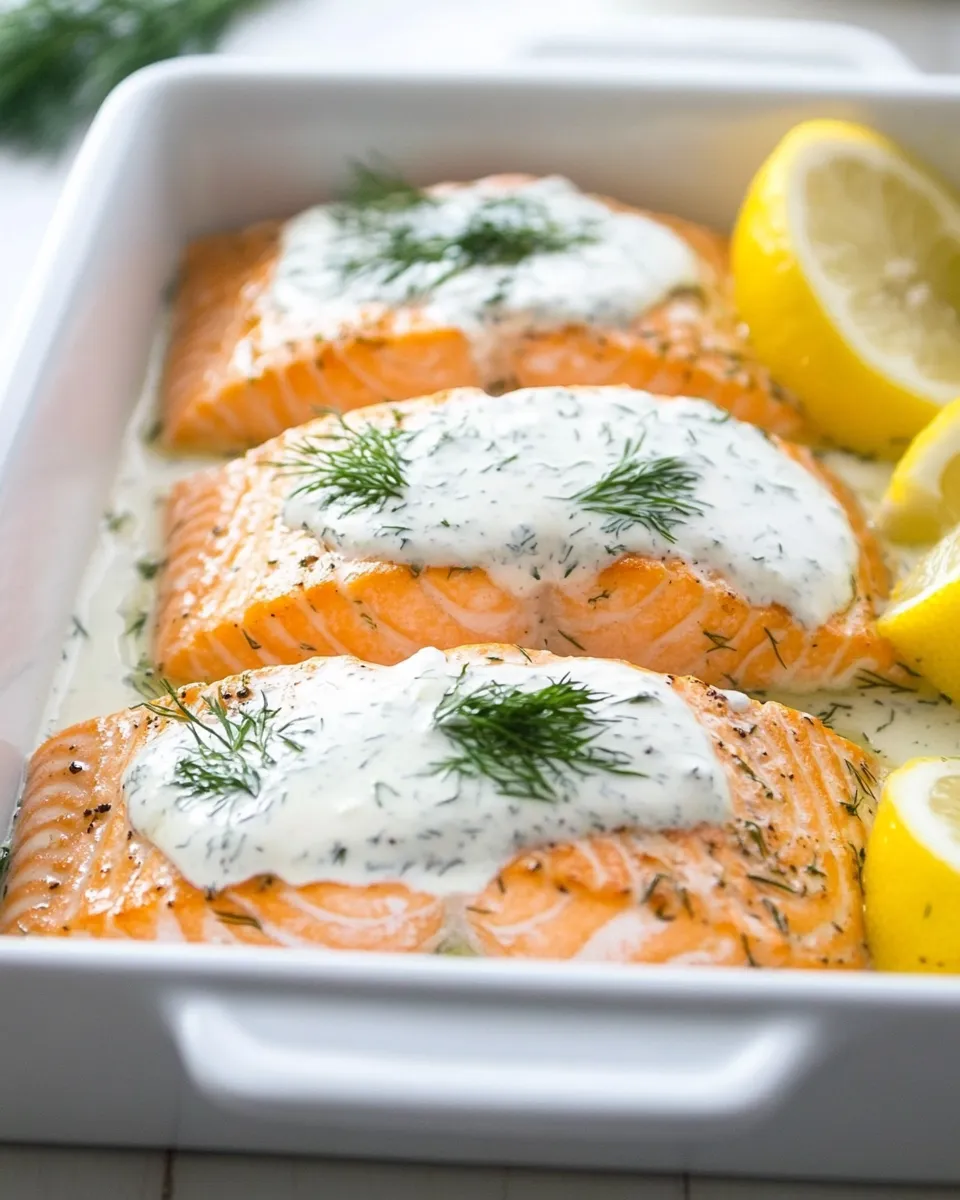
I love recipes that feel effortless and look like you spent a lot of time on them. This baked lemon salmon with creamy dill sauce is one of those: bright, clean flavors and a sauce that makes every bite sing. It’s quick enough for a weeknight, elegant enough for guests, and forgiving if your timing’s a little off.
The technique is simple: a lemon-olive oil rub, a short bake, and a cool, tangy dill sauce finished with a touch of honey. The sauce is mostly Greek yogurt and mayo, so it’s creamy without being heavy, and it brightens the fish instead of overpowering it.
Below you’ll find a straightforward ingredient list, the exact step-by-step directions, and practical tips for timing, storage, and small tweaks to make it yours. Keep the ingredients minimal and the oven steady — this dish rewards restraint.
Ingredient Breakdown
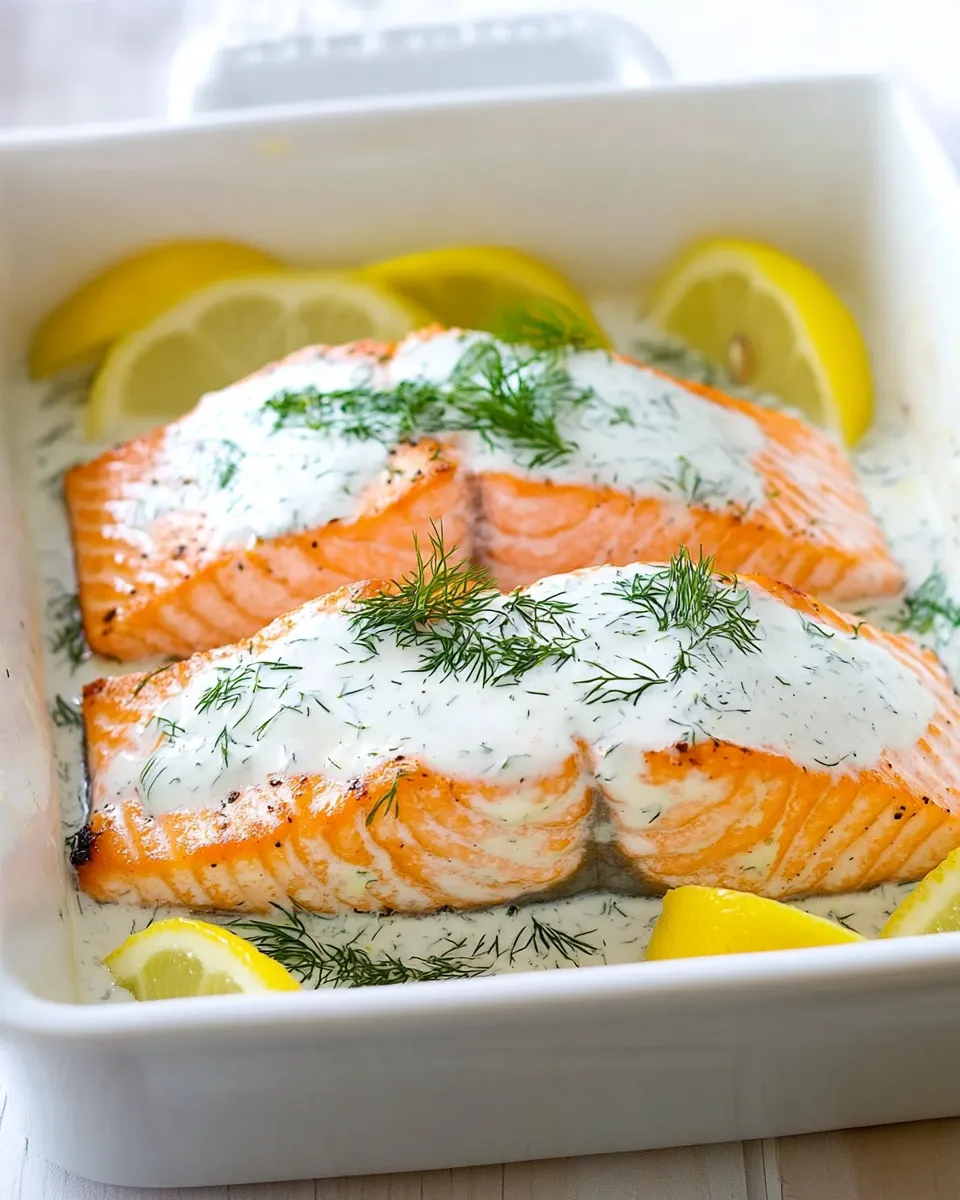
Here I’ll explain the role each ingredient plays so you can understand why we use what we do and what to prioritize when shopping or swapping. The salmon is the centerpiece; everything else exists to highlight its natural richness.
Ingredients
- 4 6-oz salmon fillets — The main protein; choose even-thickness fillets for uniform cooking.
- 2 Tbsp extra virgin olive oil — Fat for flavor and to carry the lemon zest and juice onto the fish.
- 1 1/2 tsp lemon zest — Intense lemon flavor without added liquid; brightens the salmon.
- 2 Tbsp fresh lemon juice — Adds acidity to cut the salmon’s richness and helps the rub adhere.
- Salt and freshly ground black pepper — Essential seasoning; use sparingly on the fish and adjust to taste in the sauce.
- 1/3 cup fat free plain Greek Yogurt — Base of the sauce; gives tang, body, and protein without heaviness.
- 3 Tbsp mayonnaise (full fat) — Adds silkiness and mouthfeel to the sauce.
- 1 clove garlic, finely minced — Provides a gentle savory note; mince finely so it blends smoothly.
- 1 Tbsp chopped fresh dill — The herb that defines the sauce; fresh dill is bright and aromatic.
- 2 – 3 tsp milk — Thins the sauce to the desired consistency; add gradually to avoid runniness.
- 1/2 tsp honey — Balances the acidity in the sauce with a touch of sweetness.
Baked Lemon Salmon with Creamy Dill Sauce, Made Easy
- Preheat oven to 400°F. Grease a 13 by 9-inch baking dish.
- In a small bowl, whisk together 2 Tbsp extra virgin olive oil, 1 1/2 tsp lemon zest, and 2 Tbsp fresh lemon juice.
- Pat the 4 6-oz salmon fillets dry with paper towels and place them in the prepared baking dish (skin-side down if the fillets have skin). Season both sides lightly with salt and freshly ground black pepper.
- Drizzle the lemon-olive oil mixture evenly over the salmon fillets and gently rub to coat. Let the salmon rest at room temperature for 10 minutes.
- Bake in the preheated oven 12–16 minutes, or until the salmon is cooked through (time will vary with fillet thickness and desired doneness). Remove from oven.
- While the salmon bakes (or beforehand), make the Creamy Dill Sauce: in a bowl, mix 1/3 cup fat free plain Greek yogurt, 3 Tbsp mayonnaise (full fat), 1 clove garlic (finely minced), 1 Tbsp chopped fresh dill, and 1/2 tsp honey. Add 2–3 tsp milk, a little at a time, until you reach the desired consistency.
- Season the sauce with salt and freshly ground black pepper to taste. Cover and refrigerate until ready to serve; remove about 20 minutes before serving so it is not ice-cold over the warm salmon.
- Serve the baked salmon warm topped with the Creamy Dill Sauce.
The Upside of Baked Lemon Salmon with Creamy Dill Sauce
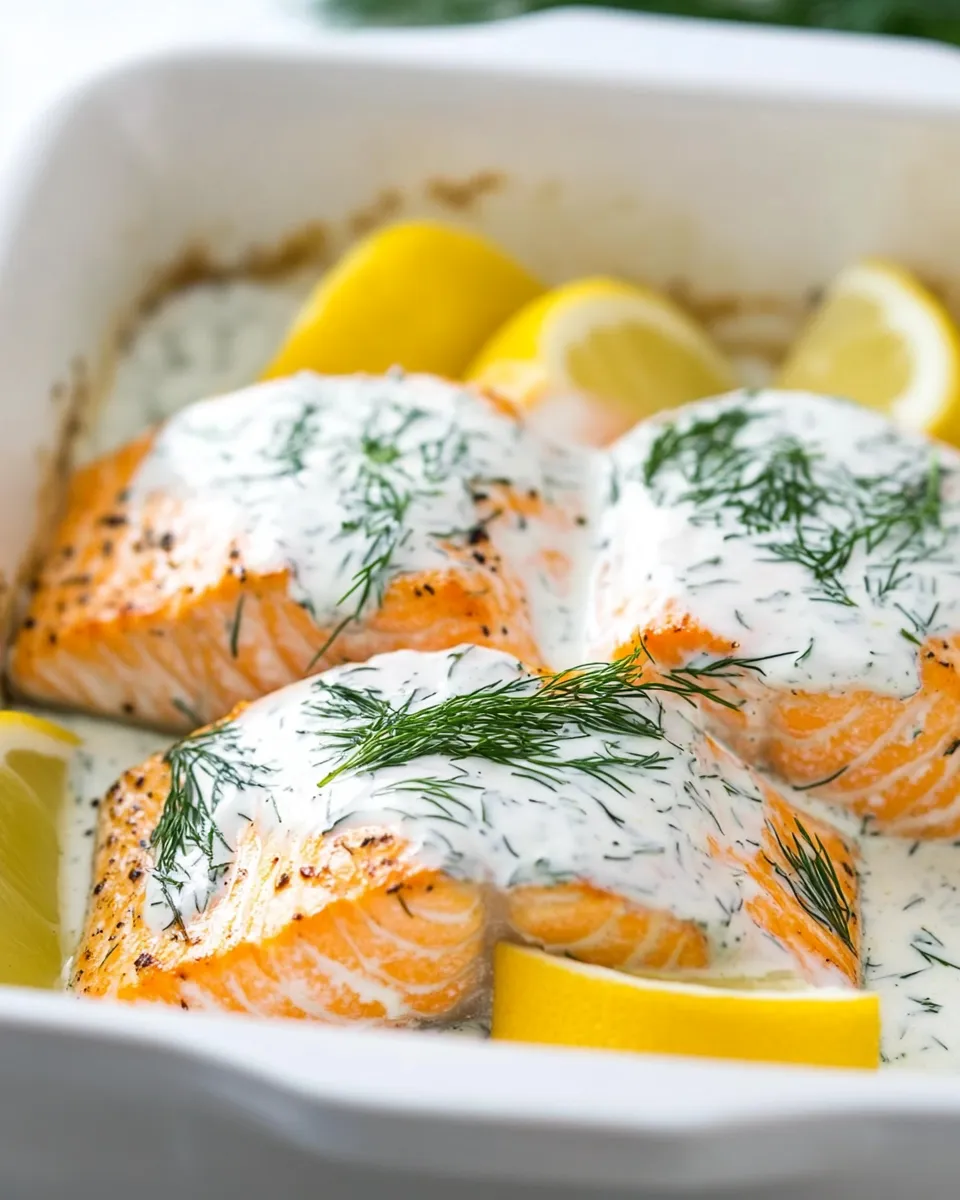
This recipe is fast and forgiving. Baking requires less hands-on attention than pan-searing, so you can prep sides while the salmon cooks. The lemon and dill combination is classic because it cuts through the fish’s oiliness and adds freshness without complicating the flavor profile.
It’s scale-friendly: the method works for fewer or more fillets, and the short ingredient list means you can often make this without special shopping. The sauce keeps well and can be made a day ahead, which turns a weeknight meal into a nearly no-stress dinner.
No-Store Runs Needed
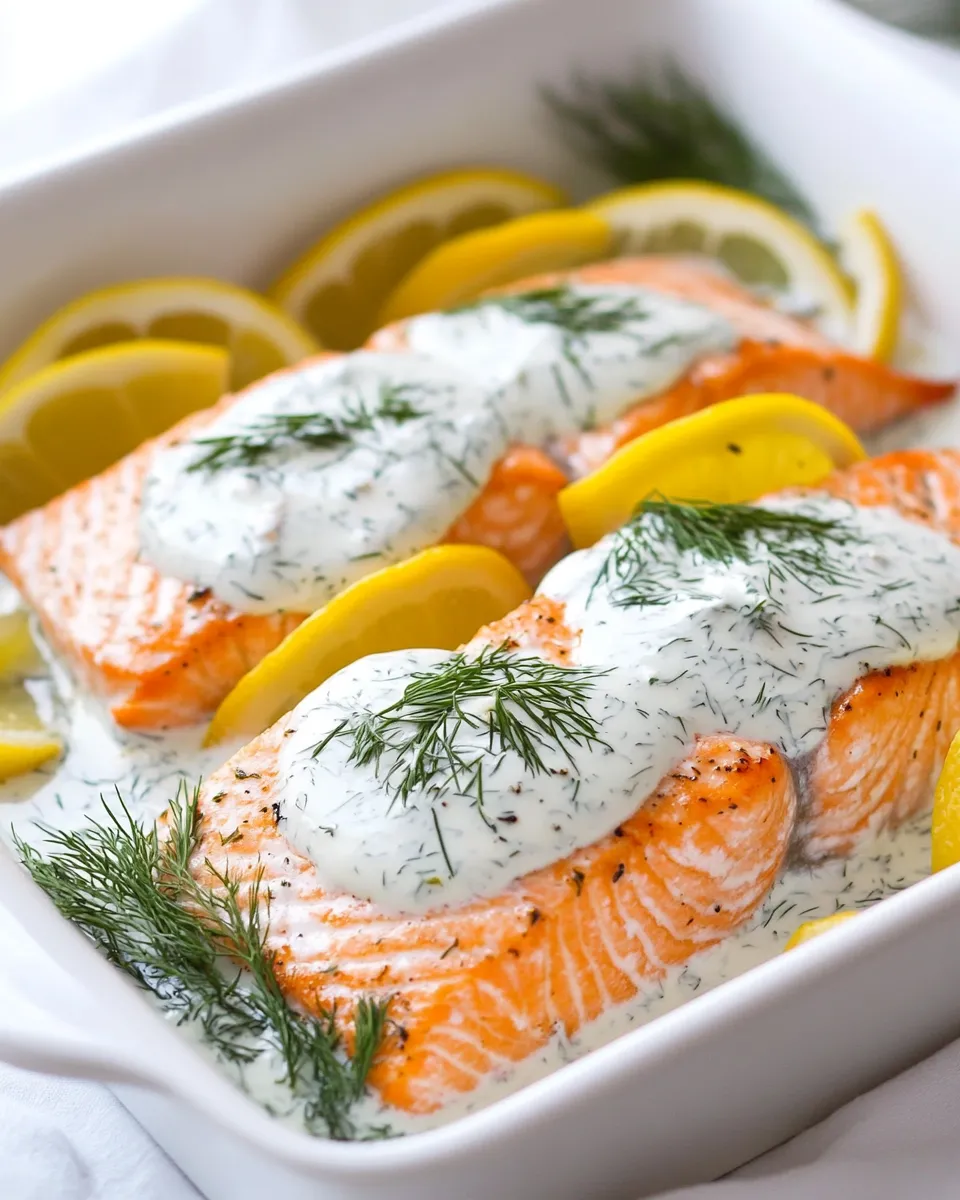
If you already have the basics in your pantry and fridge, you can make this tonight. The core pantry items here are extra virgin olive oil, salt, pepper, and honey. The dairy elements for the sauce — Greek yogurt and mayonnaise — are fridge staples for many households. Fresh dill and a lemon are ideal, but if you’re missing dill, you can skip it and still have a pleasant sauce (the flavor will be less herbaceous).
Equipment & Tools
- 13 by 9-inch baking dish — the size in the recipe; use a similar shallow pan if needed.
- Small mixing bowl — for whisking the lemon-olive oil and for the sauce.
- Whisk or fork — to emulsify the lemon and oil.
- Paper towels — to pat salmon dry for better browning.
- Sharp knife and cutting board — for zesting the lemon and chopping dill.
- Spoon or small spatula — to spread sauce and drizzle oil evenly.
Mistakes Even Pros Make
Overbaking. Salmon continues to cook a bit after you remove it from the oven. If you want moist, tender fillets, aim for the lower end of the time range and check for flakiness. Pulling the fish out at 125–130°F internal temp and letting carryover heat finish it will yield a juicy result.
Not drying the fish first. If the fillets are wet when they go in, the lemon-olive oil won’t adhere as well, and you won’t get a clean baked surface. A quick pat with paper towels makes a big difference.
Serving the sauce ice-cold on hot salmon. The sauce is best slightly cool or room temperature. Taking it out of the fridge 20 minutes before serving softens the flavors and prevents a temperature clash.
Tailor It to Your Diet
Lower-fat
Use plain fat-free Greek yogurt and skip the mayonnaise, or reduce mayo to 1 Tbsp and replace the rest with yogurt. The texture will be a little tangier and less rich, but still very satisfying.
Higher-calorie or richer
Swap the fat-free yogurt for full-fat Greek yogurt and keep the mayo; it will be creamier and more indulgent.
Dairy-free
Replace the Greek yogurt with a plain dairy-free yogurt and use a vegan mayonnaise. The texture will be similar, though flavor may shift slightly depending on the yogurt base.
Lower-sodium
Season the salmon lightly and leave salt out of the sauce until after tasting. Fresh lemon and dill pack flavor so you don’t need much salt to enjoy the dish.
Testing Timeline
Timing is straightforward: prep 10 minutes, rest 10 minutes after coating the fish, and bake 12–16 minutes depending on thickness. Make the sauce while the salmon bakes — it takes 5 minutes to mix and can chill while the fish cooks. Altogether you’re looking at about 30–40 minutes from start to table for most cooks.
If you’re serving guests and want to stagger your work: make the sauce the day before and refrigerate. Pull it out 20 minutes before serving to take the chill off. Prep the salmon and have everything set so it can go into the oven with minimal fuss.
Storing Tips & Timelines
Leftover salmon: store in an airtight container in the refrigerator for up to 2 days. Reheat gently in a low oven (about 275–300°F) for 10–12 minutes or until warmed through; avoid microwaving if you want to keep texture intact.
Sauce: the creamy dill sauce keeps well for up to 3 days in the fridge. Because it contains mayonnaise, keep it chilled and use within that window. If the sauce separates a touch after refrigeration, whisk it briskly or add a teaspoon of milk to bring it back together.
Troubleshooting Q&A
Q: My salmon looked gray and dry — what went wrong?
A: That’s usually overcooking or too much direct heat. Check early; thinner fillets need less time. Pat the fillets dry before seasoning to avoid steaming in the dish.
Q: My sauce is too thick or too thin. How do I fix it?
A: Too thick: whisk in 1/4 to 1/2 tsp milk at a time until you reach the desired consistency. Too thin: add a little more Greek yogurt or a small pinch more mayonnaise and stir until it firms up.
Q: Can I use dried dill instead of fresh?
A: You can, but fresh dill is brighter. If using dried, reduce the amount to about 1/2 tsp and add it sparingly, tasting as you go.
Q: Can I cook salmon from frozen?
A: For best texture follow the recipe with thawed fillets. If you must cook from frozen, increase baking time significantly and check internal temperature; results may be less even.
The Takeaway
This baked lemon salmon with creamy dill sauce hits the essentials: quick prep, clean flavors, and a dependable result. The lemon rub brightens the fish; the dill-yogurt sauce rounds it out. It’s a flexible formula — make the sauce ahead, swap yogurt or mayo to suit your diet, and vary the sides to turn it into anything from a light lunch to a centerpiece for company.
Stick to the simple method: dry the fish, coat it with the lemon-olive oil mixture, give it a short rest, and bake until just done. The sauce is the finishing flourish that makes each forkful sing. Enjoy.
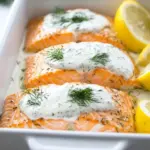
Baked Lemon Salmon with Creamy Dill Sauce
Ingredients
Ingredients
- 4 6- ozsalmon fillets
- 2 Tbspextra virgin olive oil
- 1 1/2 tsplemon zest
- 2 Tbspfresh lemon juice
- Salt and freshly ground black pepper
- 1/3 cupfat free plain Greek Yogurt
- 3 Tbspmayonnaise full fat
- 1 clovegarlic finely minced
- 1 Tbspchopped fresh dill
- 2 - 3 tspmilk
- 1/2 tsphoney
- Salt and freshly ground black pepper
Instructions
Instructions
- Preheat oven to 400°F. Grease a 13 by 9-inch baking dish.
- In a small bowl, whisk together 2 Tbsp extra virgin olive oil, 1 1/2 tsp lemon zest, and 2 Tbsp fresh lemon juice.
- Pat the 4 6-oz salmon fillets dry with paper towels and place them in the prepared baking dish (skin-side down if the fillets have skin). Season both sides lightly with salt and freshly ground black pepper.
- Drizzle the lemon-olive oil mixture evenly over the salmon fillets and gently rub to coat. Let the salmon rest at room temperature for 10 minutes.
- Bake in the preheated oven 12–16 minutes, or until the salmon is cooked through (time will vary with fillet thickness and desired doneness). Remove from oven.
- While the salmon bakes (or beforehand), make the Creamy Dill Sauce: in a bowl, mix 1/3 cup fat free plain Greek yogurt, 3 Tbsp mayonnaise (full fat), 1 clove garlic (finely minced), 1 Tbsp chopped fresh dill, and 1/2 tsp honey. Add 2–3 tsp milk, a little at a time, until you reach the desired consistency.
- Season the sauce with salt and freshly ground black pepper to taste. Cover and refrigerate until ready to serve; remove about 20 minutes before serving so it is not ice-cold over the warm salmon.
- Serve the baked salmon warm topped with the Creamy Dill Sauce.
Equipment
- 13 by 9-inch baking dish
- Mixing Bowl
- Whisk
- Measuring Spoons
- Paper Towels
Notes
Recipe Source: Cooking Classy