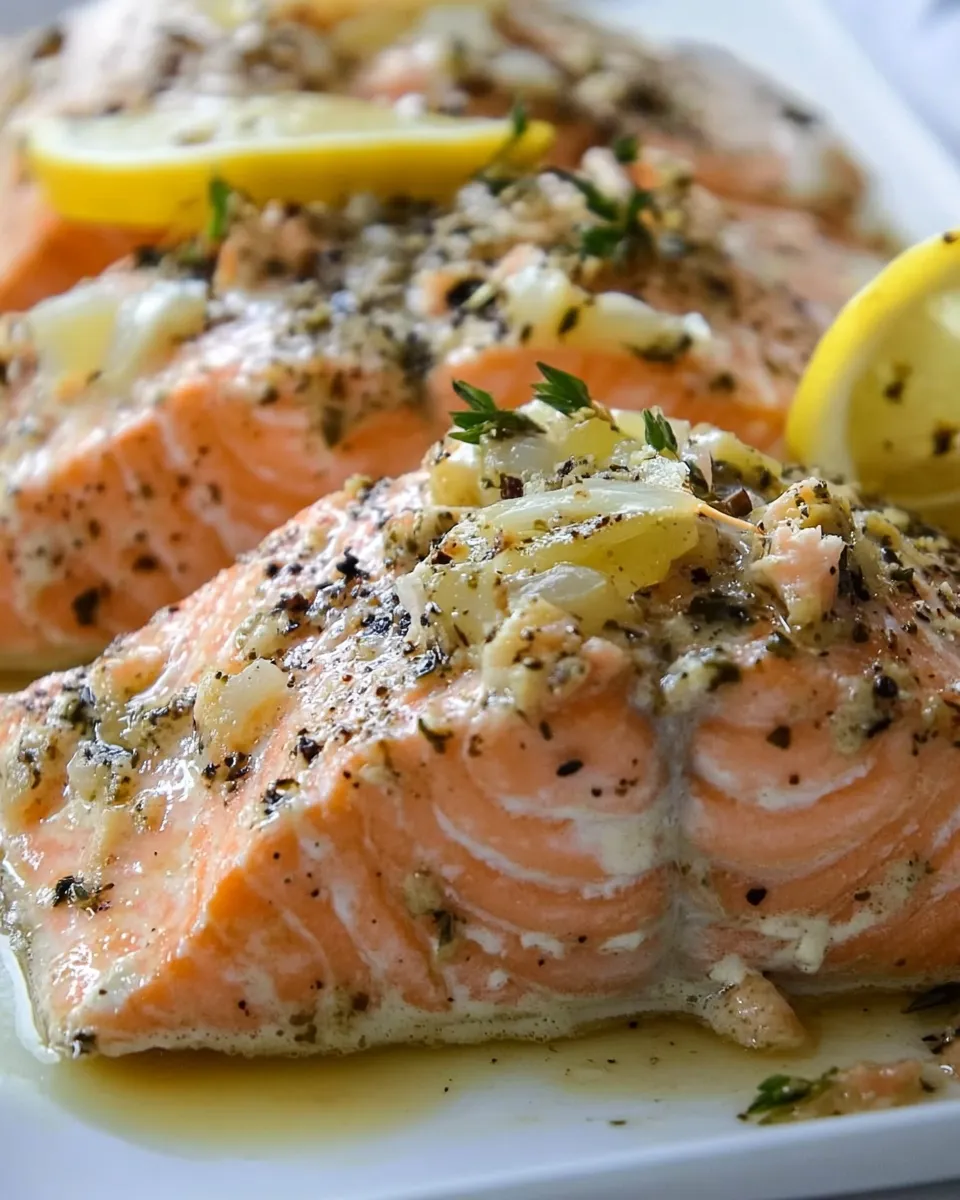
I cook this baked salmon whenever I want something that feels special but doesn’t demand a lot of hands-on time. It’s that kind of weeknight hero that translates to a dinner party dish with almost no fuss. Lemon slices under the fish keep the filets bright and moist, while a honey-butter garlic glaze gives just enough sweetness and shine.
The recipe is straightforward, which is the point. You don’t have to babysit a pan or stand over the stove. Pop the dish in the oven, set a timer, and the oven does the work. That reliable simplicity is exactly why this shows up in my meal rotation so often.
Below you’ll find the exact ingredient list, step-by-step directions I follow every time, and practical notes that answer the questions readers ask most. If you want a flaky, bright, slightly sweet salmon with minimal cleanup, this is the one to keep on repeat.
What Goes In
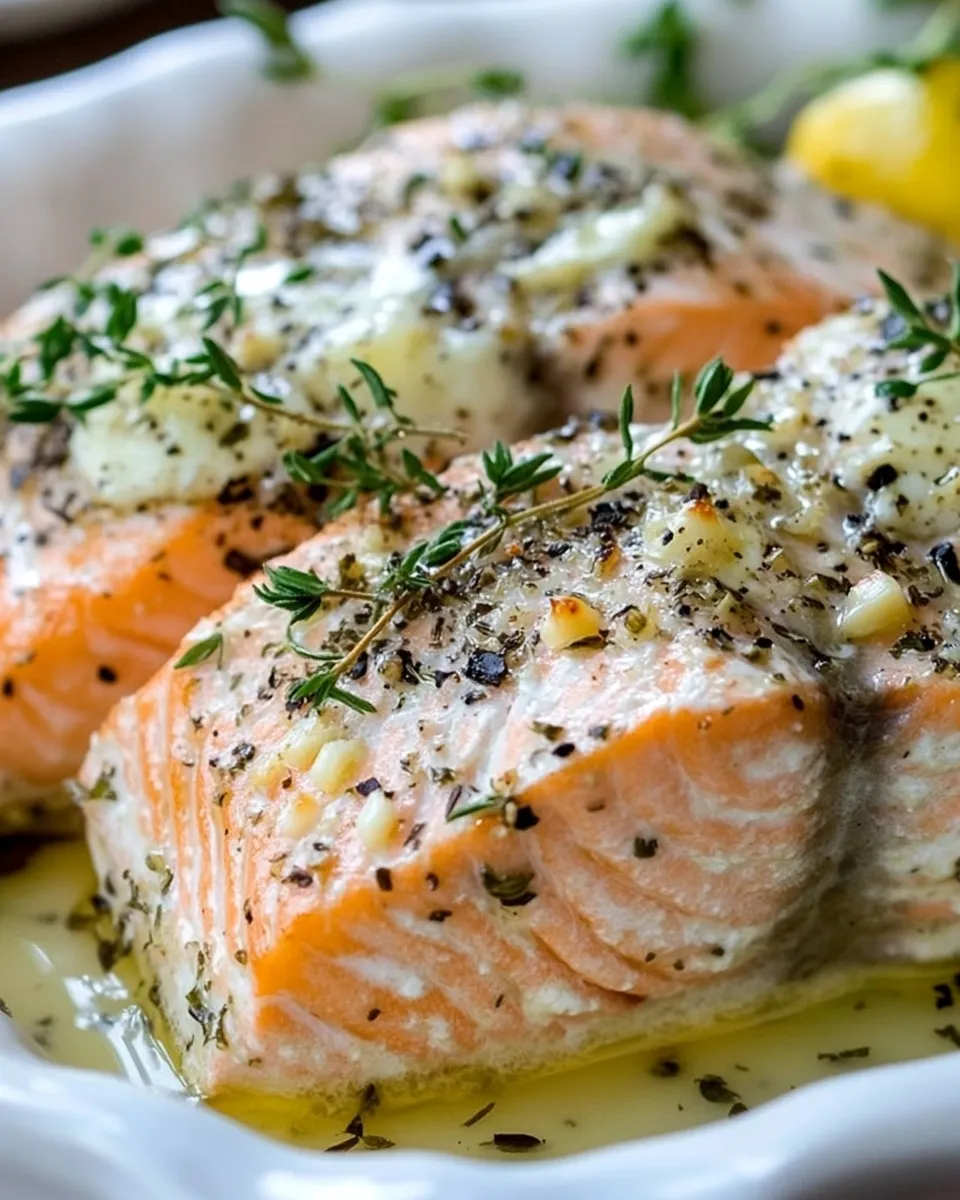
Ingredients
- 4 (4-6 ounce) salmon filets (see note 1) — Choose even-sized filets for consistent cooking; skin-on or skinless both work.
- Salt and freshly ground black pepper — Basic seasoning to enhance the salmon’s natural flavor.
- 2 lemons thinly sliced, plus more for serving — Slices create a bright bed that keeps the fish moist and adds a fresh citrus note.
- 6 tablespoons butter melted — Fat for flavor and browning; melting it first helps it distribute evenly.
- 2 tablespoons honey — Balances the lemon and garlic with gentle sweetness and helps the glaze glaze the fish.
- 3 cloves garlic minced — Garlic gives savory depth; mince fine so it disperses through the butter mixture.
- 1 teaspoon dried oregano — Adds a warm, savory herb note that pairs with the citrus and honey.
- 1 teaspoon chopped fresh thyme or ½ teaspoon dried — Fresh if you have it; dried is a fine and convenient swap.
- 1 teaspoon chopped fresh dill or ½ teaspoon dried, plus more, for garnish — Dill brightens seafood and makes a visually appealing garnish.
Step-by-Step: Baked Salmon Filets
- Preheat the oven to 375°F. Spray a 9×13-inch baking dish with non-stick cooking spray.
- Arrange the 2 lemons (thinly sliced) in a single, even layer to cover the bottom of the prepared baking dish.
- Pat the 4 salmon filets dry with paper towels. Season both sides with salt and freshly ground black pepper.
- Set the salmon filets on top of the lemon slices, spacing them evenly.
- In a small bowl, whisk together the melted butter (6 tablespoons), honey (2 tablespoons), minced garlic (3 cloves), dried oregano (1 teaspoon), chopped fresh thyme (1 teaspoon) or ½ teaspoon dried, and chopped fresh dill (1 teaspoon) or ½ teaspoon dried until combined.
- Pour the butter mixture evenly over the salmon, spooning some over the tops and sides to coat.
- Bake until the salmon is opaque, flakes easily with a fork, and reaches 145°F on a digital thermometer inserted into the thickest part, about 15 to 20 minutes.
- Garnish with additional fresh dill and serve with lemon wedges.
Why Cooks Rave About It
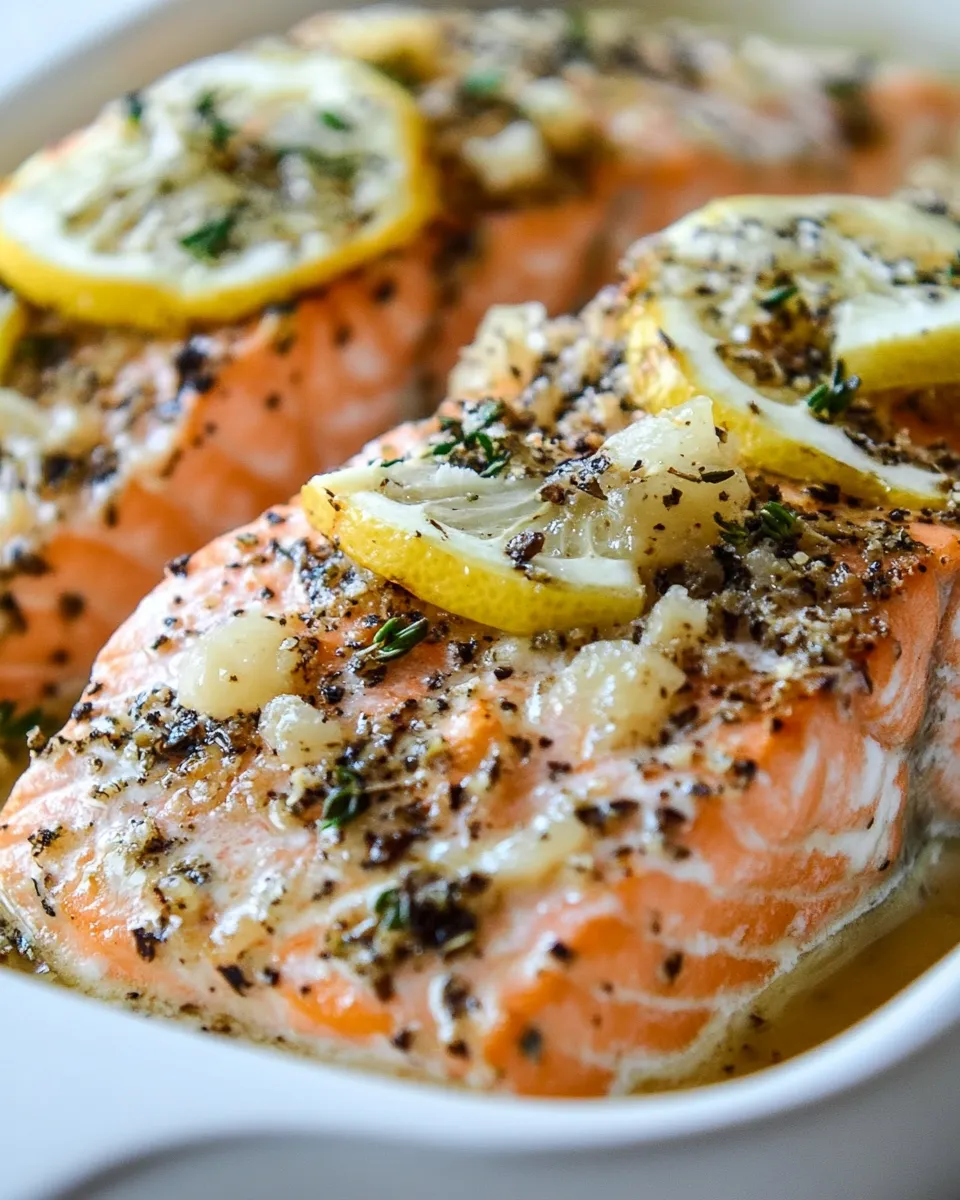
This recipe nails three things that matter with salmon: moisture, flavor balance, and ease. The lemon slices act as a steamy rack, preventing the bottom from drying. Butter and honey build richness and a gentle glaze without overpowering the fish. Garlic and herbs round it out, keeping the profile bright and seafood-forward.
Timing is forgiving. Because the filets are relatively thin (4–6 ounces each), the 15–20 minute bake window is short but forgiving — pull the fish right at 145°F and it’s perfect. The technique requires little skill: good seasoning, a little whisking, and the oven finish the rest.
No-Store Runs Needed
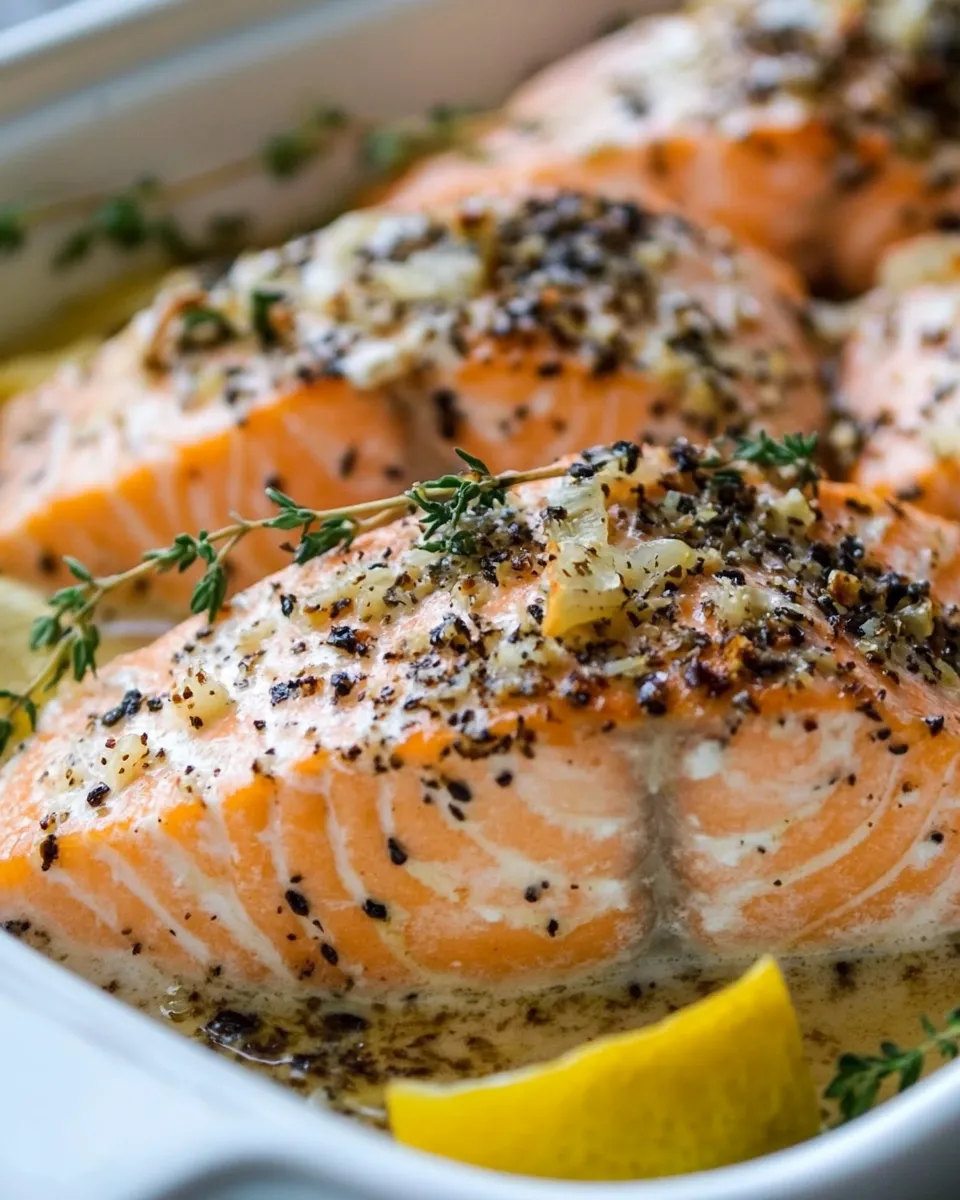
Here’s what you can count on finding without a special trip to the store:
- Salt, pepper, butter, garlic — basic pantry staples that form the backbone of the glaze.
- Honey and dried oregano — shelf-stable and common household ingredients for sweet and savory balance.
- Lemons and a small bunch of herbs — a quick stop if you don’t keep citrus or fresh herbs on hand, but dried herbs will work in a pinch.
- Salmon filets — frozen filets thaw quickly and work fine if fresh isn’t available; just pat dry thoroughly before seasoning.
Prep & Cook Tools
- 9×13-inch baking dish — the recipe is written for this size; it gives the filets room to bake evenly.
- Non-stick cooking spray — makes cleanup easier and prevents sticking.
- Paper towels — for drying the salmon; dryness helps seasoning stick and promotes even cooking.
- Small bowl and whisk or fork — to combine the melted butter, honey, herbs, and garlic.
- Digital thermometer — optional but the most reliable way to ensure the salmon reaches 145°F and isn’t overcooked.
- Measuring spoons and tablespoon — for accurate ingredient amounts.
What Not to Do
- Do not skip patting the salmon dry. Excess moisture prevents proper seasoning adhesion and can steam the fish instead of baking it cleanly.
- Avoid overbaking by relying only on time. Oven temperatures vary; check for 145°F or flaky opacity rather than just the clock.
- Don’t crowd the pan. Give filets a bit of space so heat circulates and the glaze coats evenly.
- Don’t use very high oven temperatures for this preparation. The gentle 375°F lets the butter and honey meld without burning the garlic.
Holiday-Friendly Variations
Want to dress this up for a holiday table? Here are easy, tasteful tweaks that keep the core method intact.
- Double the herb garnish and add lemon wedges on the platter for a bright, decorative presentation. Fresh dill and thyme make it look festive without extra effort.
- Finish with a light sprinkle of toasted sliced almonds or pistachios for crunch — add them in the last 2–3 minutes so they toast but don’t burn.
- For a glazed, slightly deeper flavor, stir a teaspoon of Dijon mustard into the butter-honey mixture before pouring.
- Serve on a bed of roasted root vegetables (carrots, parsnips, small potatoes) that were started in the oven earlier — everything arrives warm at once and looks abundant on the table.
Behind-the-Scenes Notes
Laying the lemon slices on the bottom is a small step that makes a big difference. They buffer the fish from direct heat, provide a gentle steam, and give a subtle lemon oil flavor as their juices mingle with the butter. The melted butter carries the herbs and garlic into every corner of the filet, while the honey helps the top develop a glossy finish.
Use fresh herbs when you can. The difference is noticeable but not necessary — the recipe includes dried herb options for convenience. If you’re using frozen salmon, fully thaw it and pat it very dry before seasoning to avoid excess water in the dish.
Store, Freeze & Reheat
Store: Keep leftover cooked salmon in an airtight container in the refrigerator for up to 3 days. Add a lemon wedge to the container to help maintain brightness.
Freeze: You can freeze cooked salmon, though texture softens slightly upon thawing. Wrap tightly in plastic wrap and then aluminum foil or use a vacuum sealer. Freeze for up to 2 months. Thaw overnight in the refrigerator before reheating.
Reheat: Gently reheat baked salmon in a 275°F oven on a sheet pan covered loosely with foil for 10–15 minutes, or until warmed through. Use the oven rather than the microwave to avoid drying. If you prefer the microwave for speed, use 30-second bursts at 50% power and check often.
Frequently Asked Questions
Can I use skin-on filets? Yes. Bake skin-side down on the lemon slices. The skin helps hold the filet together during baking and is easy to remove after cooking if you don’t eat it.
What if my salmon is thicker than 6 ounces? Thicker filets will need a few extra minutes. Rely on the thermometer—145°F in the thickest part is your target.
Can I swap honey for another sweetener? Maple syrup or agave are reasonable swaps in the same amount, though the flavor profile will shift slightly. The recipe amounts remain the same.
Is it okay to use frozen salmon? Yes, if thawed fully and patted dry beforehand. The rest of the method remains unchanged.
How do I know when it’s done without a thermometer? Look for opaque flesh that flakes easily with a fork. If the center is still translucent and resists flaking, give it a couple more minutes.
Final Bite
This baked salmon recipe is exactly the sort of dish I reach for on busy nights and when I want to impress with minimal effort. It’s forgiving, quick, and the flavors are reliably good: bright citrus, silky butter, a touch of sweetness, and fresh herbs. Keep the base technique and ingredient ratios the same; tweak the garnishes and sides to match the occasion. You’ll have dinner on the table in under 30 minutes, and everyone will think you worked harder than you did.
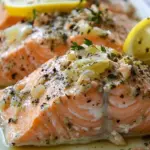
Baked Salmon Filets
Ingredients
Ingredients
- 4 4-6 ouncesalmon filets(see note 1)
- Salt and freshly ground black pepper
- 2 lemonsthinly sliced plus more for serving
- 6 tablespoonsbuttermelted
- 2 tablespoonshoney
- 3 clovesgarlicminced
- 1 teaspoondried oregano
- 1 teaspoonchopped fresh thymeor 1/2 teaspoon dried
- 1 teaspoonchopped fresh dillor 1/2 teaspoon dried plus more, for garnish
Instructions
Instructions
- Preheat the oven to 375°F. Spray a 9x13-inch baking dish with non-stick cooking spray.
- Arrange the 2 lemons (thinly sliced) in a single, even layer to cover the bottom of the prepared baking dish.
- Pat the 4 salmon filets dry with paper towels. Season both sides with salt and freshly ground black pepper.
- Set the salmon filets on top of the lemon slices, spacing them evenly.
- In a small bowl, whisk together the melted butter (6 tablespoons), honey (2 tablespoons), minced garlic (3 cloves), dried oregano (1 teaspoon), chopped fresh thyme (1 teaspoon) or ½ teaspoon dried, and chopped fresh dill (1 teaspoon) or ½ teaspoon dried until combined.
- Pour the butter mixture evenly over the salmon, spooning some over the tops and sides to coat.
- Bake until the salmon is opaque, flakes easily with a fork, and reaches 145°F on a digital thermometer inserted into the thickest part, about 15 to 20 minutes.
- Garnish with additional fresh dill and serve with lemon wedges.
Equipment
- Oven
- 9x13 inch Baking Dish
- non-stick cooking spray
- Small Bowl
- Whisk
- digital thermometer
- Paper Towels
Notes
Yield:This recipe makes 4 generous servings.
Storage:Store leftover cooked salmon covered in the refrigerator for up to 4 days. It’s a great recipe for meal prep along withcooked quinoaorriceandroasted broccoli. Reheat in oven or microwave with a splash of water.