
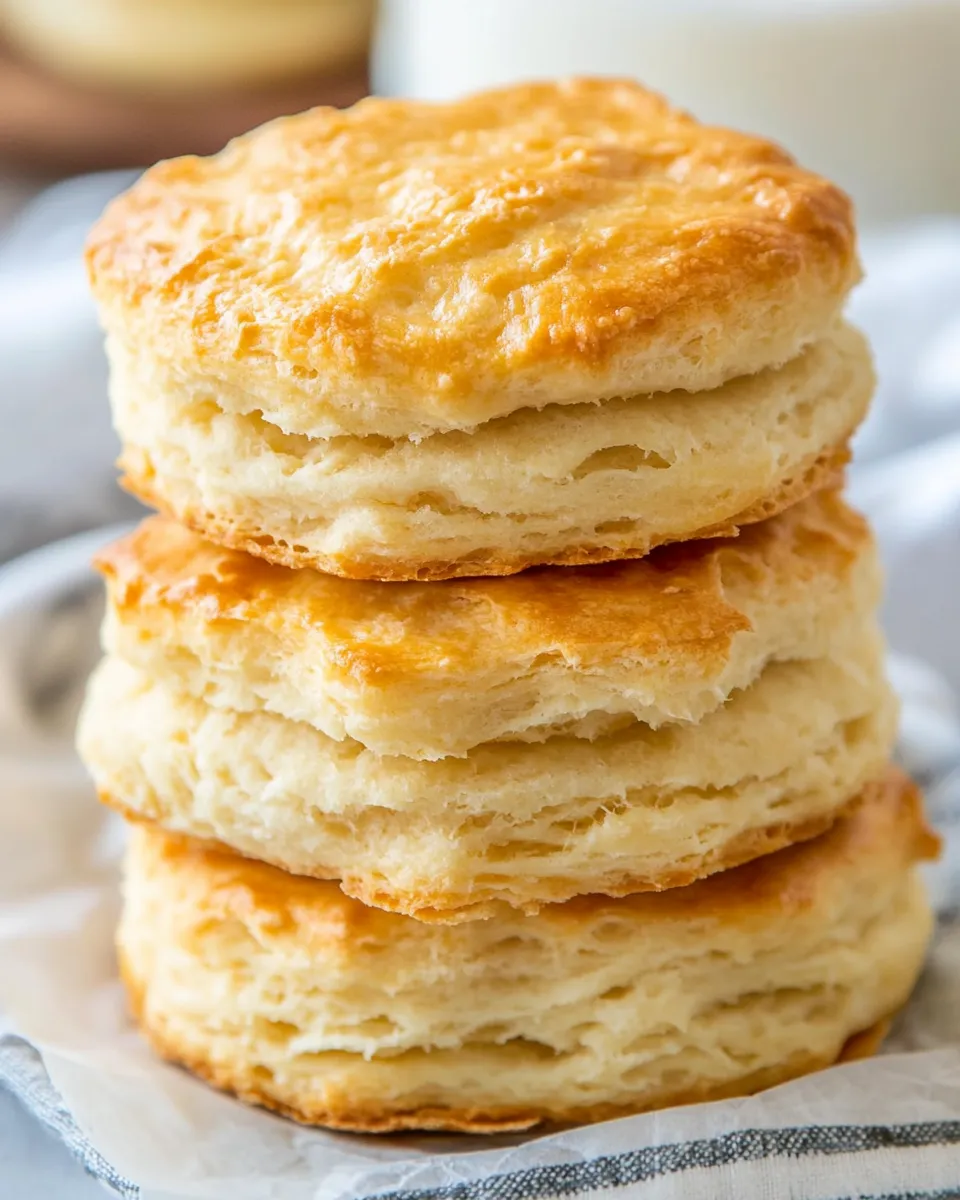
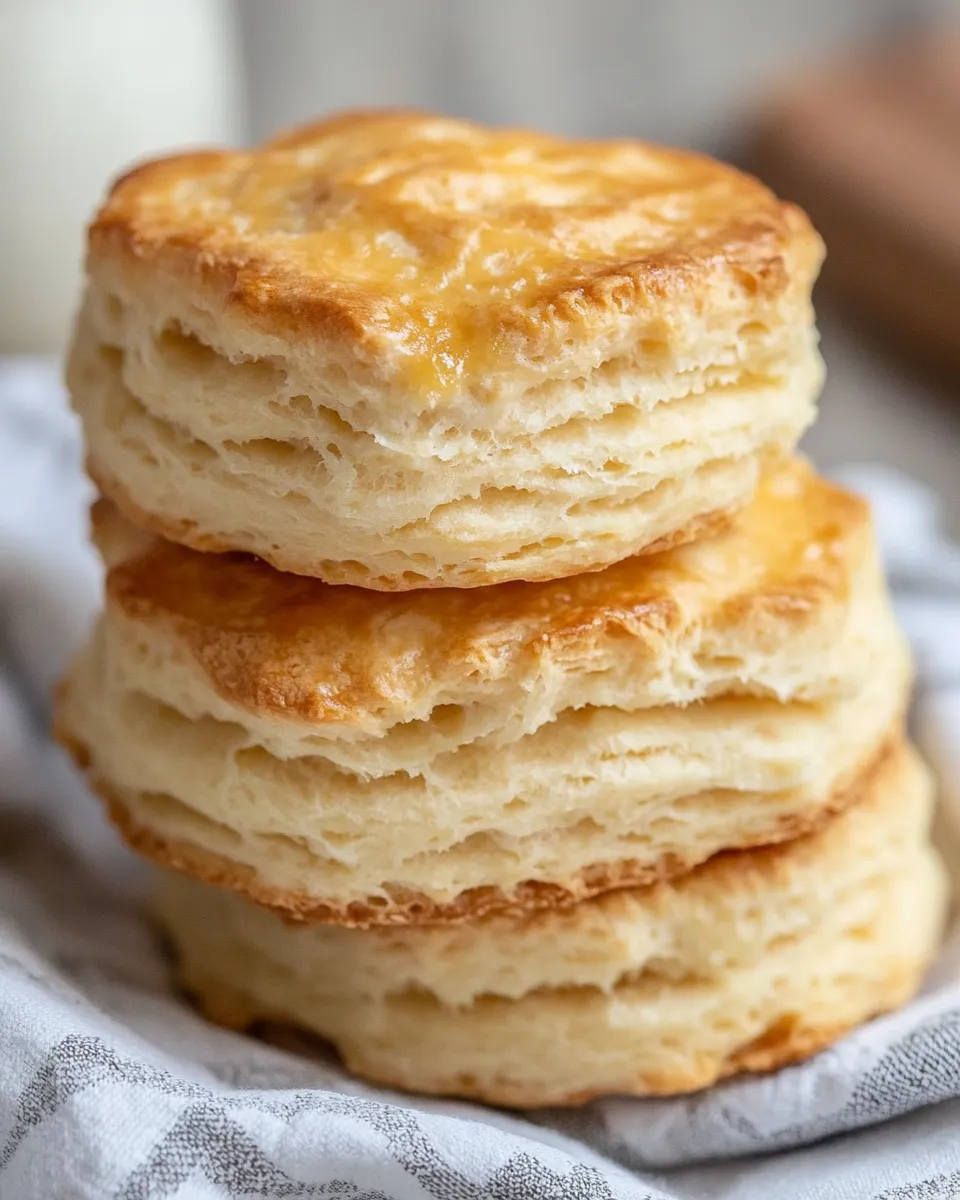
These buttermilk biscuits are the kind I make when the house needs the comfort of warm bread and the schedule is mercifully short. They rise tall, brown evenly, and break apart with a tender, flaky crumb. The method is straightforward and reliable—no fuss, just a few techniques that make all the difference.
Use cold butter and cold liquids, handle the dough minimally, and you’ll be rewarded. I test this version repeatedly because it’s forgiving: if the butter softens a little, a quick chill fixes it; if you underwork the dough, the biscuits are still acceptable; but when everything is timed right, they come out lofty and layered.
Below you’ll find the exact ingredients and the step-by-step method I use when I want consistent results. I also include setup notes, common mistakes to avoid, quick substitutions, and answers to the questions I get most often from readers.
Gather These Ingredients
Ingredients
- 2 cups all-purpose flour — Provides structure; use a spoon-and-level measure for accuracy.
- 1 tablespoon baking powder — Primary leavening to give the biscuits lift.
- 1/2 teaspoon baking soda — Helps with browning and gives a subtle tender crumb when used with buttermilk.
- 1 teaspoon kosher salt — Balances and enhances flavor; adjust if using fine salt.
- 3/4 cup unsalted butter — Cold, grated; creates flaky layers as it melts in the oven.
- 1/2 cup buttermilk, cold and shaken — Acidic liquid that reacts with baking soda and keeps the crumb tender.
- 1 large egg, cold — Mixed with buttermilk to bind and enrich the dough.
- 1 large egg — For the egg wash to encourage golden tops.
- 1 tablespoon milk, or 1 tablespoon water — Mixed with the egg for the wash; optional if you prefer plain egg wash.
Stepwise Method: Buttermilk Biscuits
- Preheat the oven to 400°F. Line a baking sheet with parchment paper and set aside.
- In a large bowl, whisk together 2 cups all-purpose flour, 1 tablespoon baking powder, 1/2 teaspoon baking soda, and 1 teaspoon kosher salt.
- Using a box grater, grate 3/4 cup cold unsalted butter into the flour mixture. Toss lightly to distribute the butter pieces, then transfer the bowl to the freezer for 5–7 minutes.
- While the butter chills, whisk together 1/2 cup cold buttermilk (shaken) and 1 cold large egg in a measuring cup or small bowl until combined. In a separate small bowl, whisk together the remaining large egg and 1 tablespoon milk (or 1 tablespoon water) to make the egg wash. Refrigerate both mixtures until ready to use.
- Remove the flour bowl from the freezer. Using your fingertips, gently break up any large clumps of butter and work the mixture until the butter pieces are the size of small peas and are evenly coated with flour.
- Pour the buttermilk-and-egg mixture into the flour-and-butter mixture all at once. Stir with a fork or spatula just until the dough comes together and there are no large dry streaks of flour. Do not overmix.
- Turn the dough out onto a lightly floured surface. Gently knead the dough 3–6 times until it holds together in a single mass. Pat or roll the dough to an even 3/4-inch thickness.
- Using a 2 1/2-inch biscuit cutter, cut out biscuits by pressing straight down (do not twist). Gently transfer the cut biscuits to the prepared baking sheet. Gather scraps, re-pat to 3/4-inch thickness, and cut additional biscuits (you should end up with about 6–8 total).
- If the butter has softened while you worked, place the baking sheet in the freezer for 5 minutes to firm the biscuits before baking.
- Remove the baking sheet from the freezer and brush the tops of the biscuits with the egg wash. Bake at 400°F for 10–15 minutes, until the biscuits are tall and medium golden brown.
- Remove from the oven and serve warm.
Why Cooks Rave About It
These biscuits offer a dependable combination of crisp exterior and layered, soft interior. The grated-butter method distributes small, consistent butter pieces through the dough, which turn to steam in the oven and create lift and flakiness. Cold ingredients slow gluten development, which keeps the texture tender rather than chewy.
There’s also something efficient about this recipe: grating butter is faster than cutting it into cubes with a pastry cutter, and the quick chill in the freezer is enough to firm the butter without stalling the process for long. The result is a short hands-on time with a high payoff.
Dairy-Free/Gluten-Free Swaps
Want to adapt these biscuits? Here are practical swaps and what to expect from each.
- Dairy-free butter alternative — Use a block-style non-dairy butter that is designed for baking. Keep it cold and grate it the same way. Texture will be close but expect slight differences in flavor and browning.
- Buttermilk substitute (dairy-free) — Mix 1/2 cup unsweetened plant milk with 1/2 tablespoon lemon juice or vinegar and let it sit 5–10 minutes. The acidity helps with rise, but the flavor will differ slightly.
- Gluten-free flour — Swap with a 1:1 gluten-free all-purpose blend that contains xanthan gum. Handle the dough gently; you may need to rest it briefly to hydrate the flours. Rise and texture will be somewhat different—less elastic and more crumbly.
- Egg-free option — For the binding role of the egg in the dough, a commercial egg replacer or a flax “egg” (1 tablespoon ground flax + 3 tablespoons water) might work, but rise may be reduced. Keep the egg wash as optional; brush with plant milk for color.
Setup & Equipment
Minimal tools make this a home-friendly recipe. Here’s what I use every time.
- Large mixing bowl — Big enough to whisk dry ingredients and toss butter.
- Box grater — For grating cold butter quickly and evenly.
- Baking sheet lined with parchment — Prevents sticking and makes cleanup easy.
- 2 1/2-inch biscuit cutter — For tidy rounds; if you don’t have one, a glass of similar diameter works.
- Measuring cups and spoons — Accurate measures matter for consistent rise.
- Fork or spatula — To mix the wet into the dry without overworking.
- Refrigerator and freezer access — For chilling the dough and firming butter as needed.
Mistakes Even Pros Make
Even experienced bakers can slip up. I’ve learned to watch for these mistakes so I can fix them before they wreck a batch.
- Overworking the dough — Folding and kneading too much develops gluten, making biscuits tough instead of tender. Keep kneading to the 3–6 times suggested.
- Twisting the cutter — Twisting seals the edges and prevents lift. Press straight down and lift the cutter up without turning.
- Butter that’s too warm — If the butter softens, chill the cut biscuits or the whole sheet briefly. Warm butter will absorb into the flour and eliminate flakiness.
- Undermeasuring flour — Packed flour yields dry, dense biscuits. Spoon the flour into the cup and level it off.
- Skipping the egg wash — Not essential for flavor, but it gives the attractive medium-golden finish; don’t skip it if presentation matters.
Holiday & Seasonal Touches
Biscuits are a blank canvas. Small seasonal tweaks give them personality without complicating the method.
- Herbed winter biscuits — Add 1–2 tablespoons of finely chopped fresh rosemary or thyme into the dry mix for a savory touch alongside roast meats.
- Cheesy autumn biscuits — Fold 1/2 to 3/4 cup grated sharp cheddar into the dough at step 6. Chill briefly to ensure the butter stays cold.
- Spring lemon biscuits — Add 1 teaspoon lemon zest to the dry ingredients and serve with whipped honey butter for brunch.
- Sweet holiday twist — Sprinkle a little coarse sugar on top after the egg wash for a subtle sweet crunch—good for breakfast or brunch service.
Chef’s Rationale
I prefer grating butter because it gives precise, cold pieces distributed through the flour without the slow work of cutting. The pea-sized bits are ideal: they melt into tiny pockets and steam during baking, which creates rise and internal layering. Freezing the flour-and-butter mix briefly keeps the butter from softening during the rest of the prep—small practices with measurable results.
The egg in the dough enriches and lightly binds; the egg wash browns the tops and gives a glossy look. Baking at 400°F provides a quick, hot environment that promotes immediate rise and set, which leads to taller, airier biscuits.
Save It for Later
Storage and reheating are simple.
- Room temperature — Store fully cooled biscuits in an airtight container for up to 2 days. Reheat gently in a 325°F oven for 5–8 minutes to freshen.
- Refrigerator — Keeps for up to 4 days; wrap tightly to prevent drying.
- Freezing — Freeze baked biscuits individually on a tray until solid, then transfer to a zip-top bag for up to 2 months. Reheat from frozen at 350°F for 12–15 minutes, or thaw and reheat at 325°F for 8–10 minutes.
- Unbaked freezing — Cut the biscuits, arrange on a baking sheet, freeze until firm, then bag. Bake from frozen—add a couple of minutes to the baking time and brush with egg wash before baking.
Buttermilk Biscuits Q&A
Why did my biscuits spread instead of rising?
Usually because the butter warmed too much or the oven wasn’t hot enough. Chill the dough and confirm the oven is fully preheated to 400°F before baking.
How do I get taller biscuits?
Keep everything cold, press straight down with the cutter without twisting, and avoid overworking the dough. Taller biscuits also come from a quick, hot oven.
Can I make these ahead?
Yes. You can assemble and freeze the unbaked biscuits, or bake ahead and reheat. For best texture, freeze unbaked and bake from frozen when ready.
Can I substitute self-rising flour?
Not directly. Self-rising flour has salt and baking powder already added; you’d need to adjust or omit those ingredients. It’s simpler to follow the recipe as written for consistent results.
Final Thoughts
This is a dependable, no-nonsense biscuit recipe: cold butter, minimal handling, and the right heat produce great results. Follow the sequence, respect the chill steps, and you’ll have biscuits that are tall, tender, and full of flavor. They’re easy to customize and forgiving enough to become your go-to for everything from weekday breakfasts to holiday dinners.
Make a batch. Eat some warm with butter and jam, and freeze the rest. You’ll notice the difference the next morning.

Buttermilk Biscuits
Ingredients
Ingredients
- ?2 cupsall-purpose flour
- ?1 tablespoonbaking powder
- ?1/2 teaspoonbaking soda
- ?1 teaspoonkosher salt
- ?3/4 cupunsalted butter
- ?1/2 cupbuttermilk cold and shaken
- ?1 large egg cold
- ?1 large egg
- ?1 tablespoonmilk or 1 tablespoon water
Instructions
Instructions
- Preheat the oven to 400°F. Line a baking sheet with parchment paper and set aside.
- In a large bowl, whisk together 2 cups all-purpose flour, 1 tablespoon baking powder, 1/2 teaspoon baking soda, and 1 teaspoon kosher salt.
- Using a box grater, grate 3/4 cup cold unsalted butter into the flour mixture. Toss lightly to distribute the butter pieces, then transfer the bowl to the freezer for 5–7 minutes.
- While the butter chills, whisk together 1/2 cup cold buttermilk (shaken) and 1 cold large egg in a measuring cup or small bowl until combined. In a separate small bowl, whisk together the remaining large egg and 1 tablespoon milk (or 1 tablespoon water) to make the egg wash. Refrigerate both mixtures until ready to use.
- Remove the flour bowl from the freezer. Using your fingertips, gently break up any large clumps of butter and work the mixture until the butter pieces are the size of small peas and are evenly coated with flour.
- Pour the buttermilk-and-egg mixture into the flour-and-butter mixture all at once. Stir with a fork or spatula just until the dough comes together and there are no large dry streaks of flour. Do not overmix.
- Turn the dough out onto a lightly floured surface. Gently knead the dough 3–6 times until it holds together in a single mass. Pat or roll the dough to an even 3/4-inch thickness.
- Using a 2 1/2-inch biscuit cutter, cut out biscuits by pressing straight down (do not twist). Gently transfer the cut biscuits to the prepared baking sheet. Gather scraps, re-pat to 3/4-inch thickness, and cut additional biscuits (you should end up with about 6–8 total).
- If the butter has softened while you worked, place the baking sheet in the freezer for 5 minutes to firm the biscuits before baking.
- Remove the baking sheet from the freezer and brush the tops of the biscuits with the egg wash. Bake at 400°F for 10–15 minutes, until the biscuits are tall and medium golden brown.
- Remove from the oven and serve warm.
Equipment
- 1large bowl
- 1 (3-inch) cookie cutter or biscuit cutter
- 1Baking Sheet