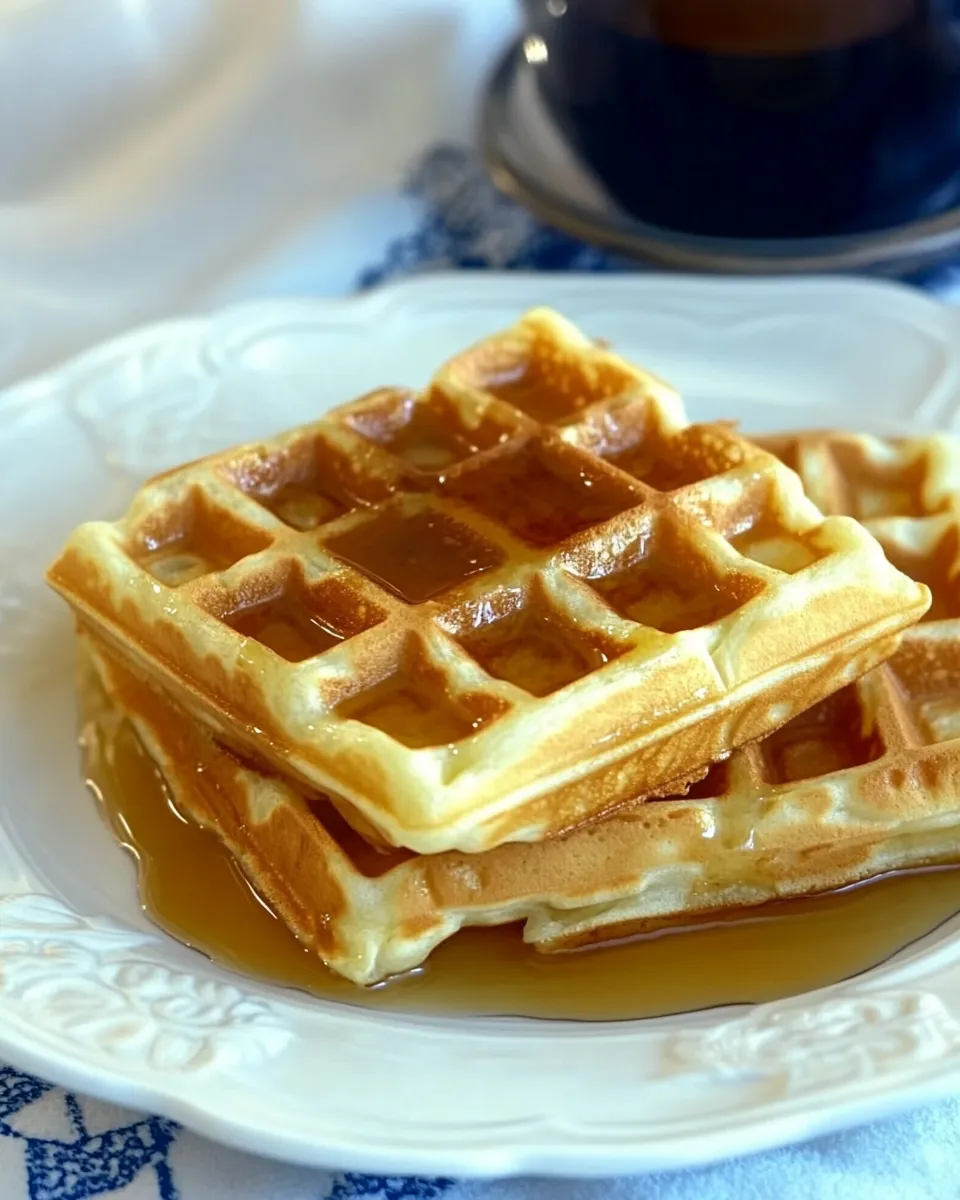
I make a big batch of waffles whenever there’s a morning full of guests, kids, or when the weekend simply demands comfort. This recipe scales cleanly without fuss: classic flavors, reliable texture, and a workflow that keeps waffles coming off the iron warm, crisp, and identical. No single-serving tinkering — just straightforward steps and a plan for holding, freezing, and reheating.
You’ll notice this recipe uses a generous amount of batter and straightforward pantry ingredients. There’s nothing fancy here because for feeding a crowd you want dependability. The waffles are tender inside, crisp on the outside, and they play well with both sweet and savory toppings. Read through the tools and pitfalls so your waffle line moves smoothly.
Below you’ll find the ingredient list, step-by-step cooking directions from start to finish, and practical tips for substitutions, storage, and serving. If you’re hosting, the timing and holding advice will save you time and stress. Let’s get to it.
What We’re Using
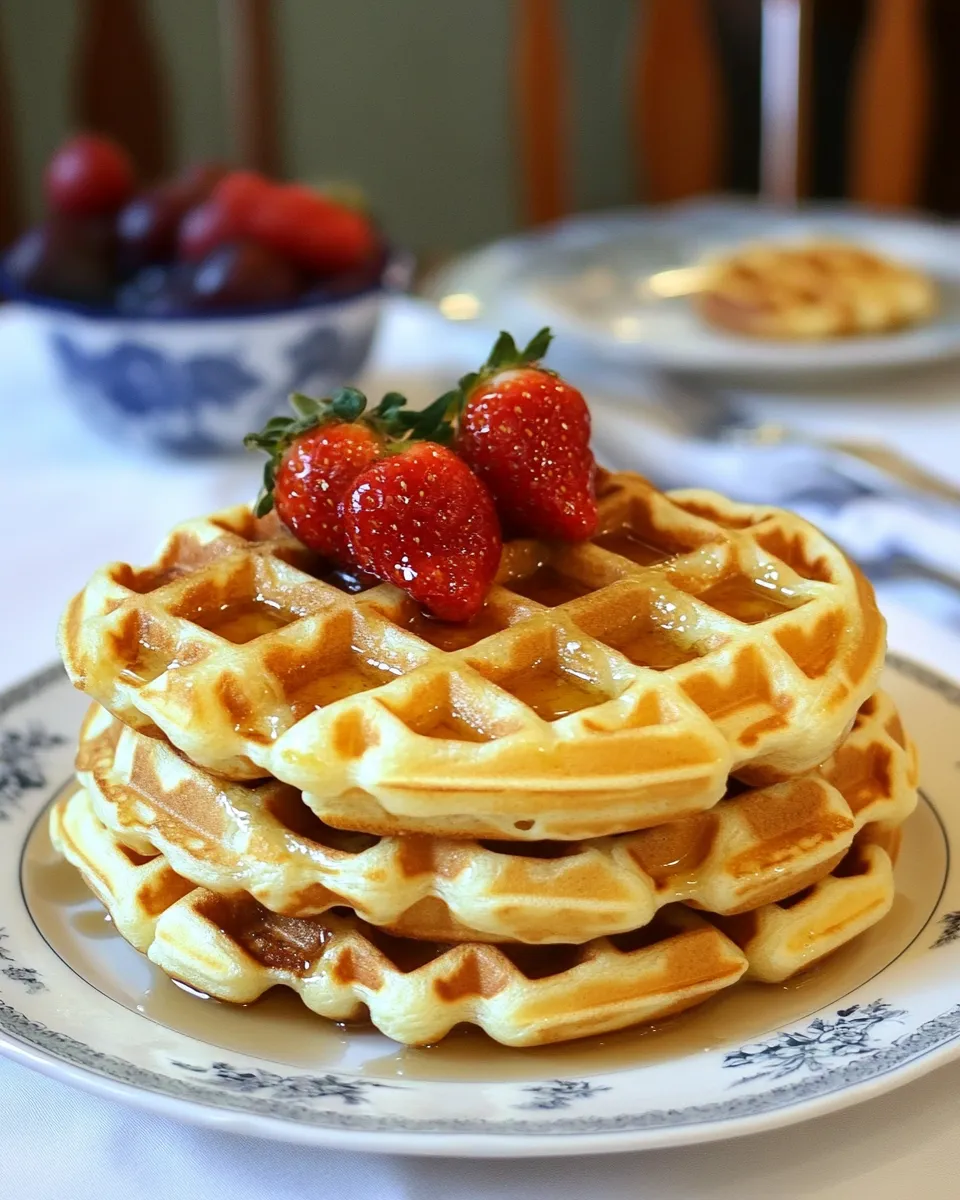
We’re working at scale: enough batter for many waffles so you can feed a crowd without making multiple small batches. The formula relies on buttermilk and a mix of leaveners to keep the inside tender and the exterior crisp. Melted butter adds flavor and helps with browning; vanilla rounds the batter out.
Plan on preheating your waffle iron well and giving yourself a wire rack to keep waffles crisp while you finish the batch. A sturdy bowl and a spatula or wooden spoon are all you need to mix.
Ingredients
- 4 cups (480 g) all-purpose flour — the structure of the waffles; use spoon-and-level scooping for accuracy.
- 1 teaspoon (2.6 g) kosher salt — balances sweetness and enhances flavor.
- 3 tablespoons (36 g) sugar — just enough sweetness for browning and flavor.
- 3 teaspoons (12 g) baking powder — primary leavening for lift and lightness.
- 1 1/2 teaspoons (6 g) baking soda — reacts with buttermilk to tenderize and add lift.
- 4 cups (980 g) buttermilk — keeps the interior tender and adds tang; room temperature for best rise.
- 4 large (200 g) eggs — provide structure and richness; whisked well into the wet mix.
- 1/2 cup (113 g) butter, melted — flavor and better crust development; cool slightly before mixing.
- 2 teaspoons (9 g) vanilla extract — rounds and brightens the batter.
Make Buttermilk Waffles: A Simple Method
- Preheat your waffle iron according to the manufacturer’s instructions until fully hot.
- In a large bowl, whisk together 4 cups (480 g) all-purpose flour, 1 teaspoon (2.6 g) kosher salt, 3 tablespoons (36 g) sugar, 3 teaspoons (12 g) baking powder, and 1 1/2 teaspoons (6 g) baking soda until evenly combined.
- In a separate bowl, whisk together 4 cups (980 g) buttermilk, 4 large (200 g) eggs, 1/2 cup (113 g) melted butter, and 2 teaspoons (9 g) vanilla extract until smooth.
- Pour the wet mixture into the dry ingredients and stir gently with a spatula or wooden spoon just until combined. A few small lumps are fine—do not overmix.
- If needed, lightly grease the waffle iron according to the manufacturer’s guidance.
- Pour enough batter onto the hot waffle iron to cover the waffle grid without overflowing. Close the iron and cook according to your iron’s instructions until the waffles are golden brown and cooked through.
- Remove cooked waffles and place them in a single layer on a wire cooling rack to keep them crisp.
- To serve now: serve immediately with your favorite syrup or toppings.
- To freeze for later: allow waffles to cool completely on the wire rack, then divide and package in zip-top freezer bags in a single layer or separated with parchment. When ready to eat, remove the number of waffles you want and reheat in a toaster or toaster oven according to the appliance manufacturer’s instructions until heated through and crisp.
Why Buttermilk Waffles is Worth Your Time
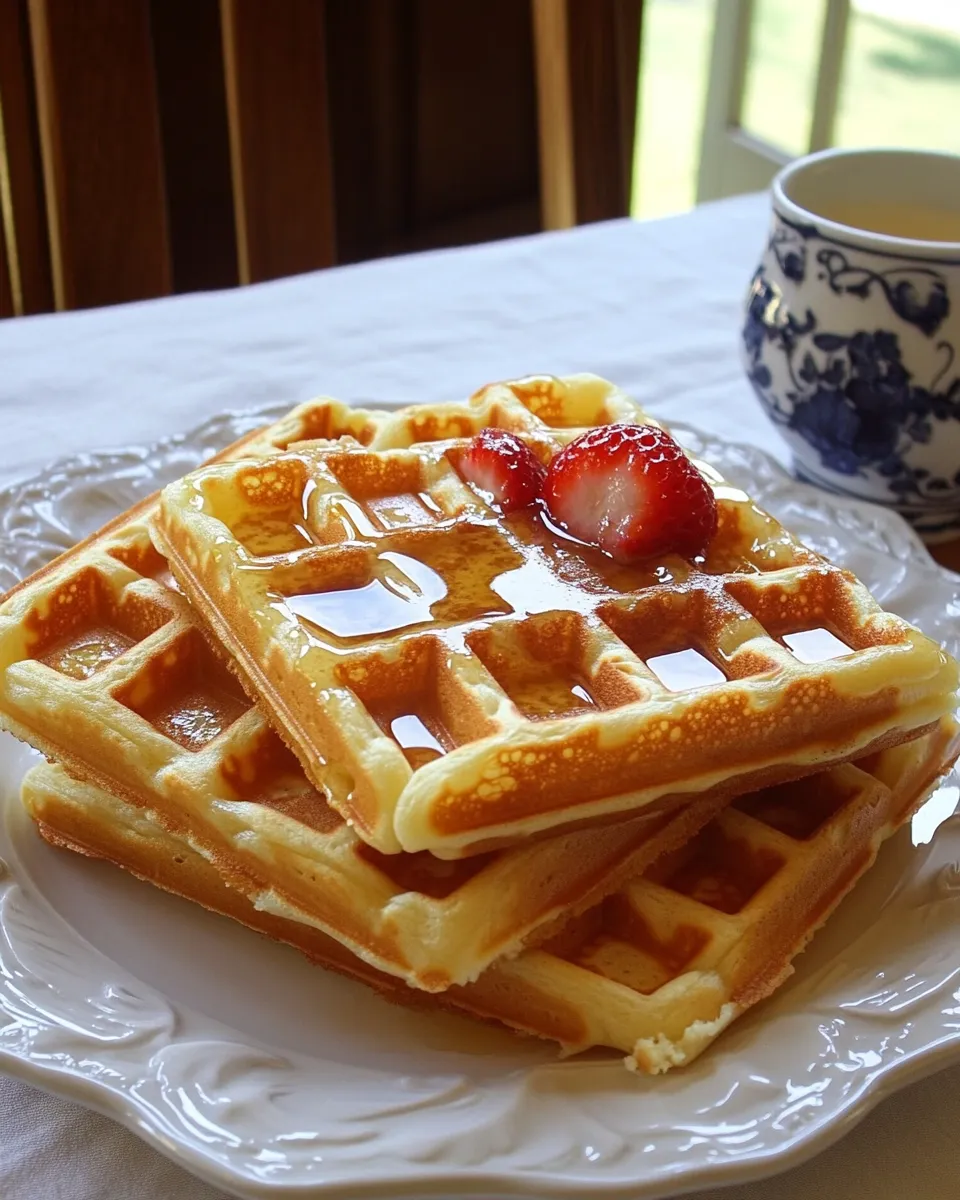
There are two simple reasons to commit to this recipe when you’re feeding a crowd: flavor and forgiveness. Buttermilk adds a tang and tenderness regular milk can’t match, and the combination of baking powder plus baking soda gives a reliable lift even when the batter sits for a short while. The formula tolerates slight mixing errors—don’t worry about a few lumps—and still yields consistent results.
This recipe hits a sweet spot between homey and refined. The exterior crisps well without being overly brittle; the interior stays moist and pillowy. That balance matters when guests want waffles that hold up to toppings — syrup, fruit, whipped cream, or fried chicken. It’s also scalable: you can halve it for a family brunch or keep it as written for a bigger table.
Finally, the workflow is practical. Preheat, mix, cook, and hold on a rack. If you need to get ahead, freezing individual waffles makes morning service effortless. For hosts, that reliability and the ability to reheat successfully is a huge time-saver.
Texture-Safe Substitutions
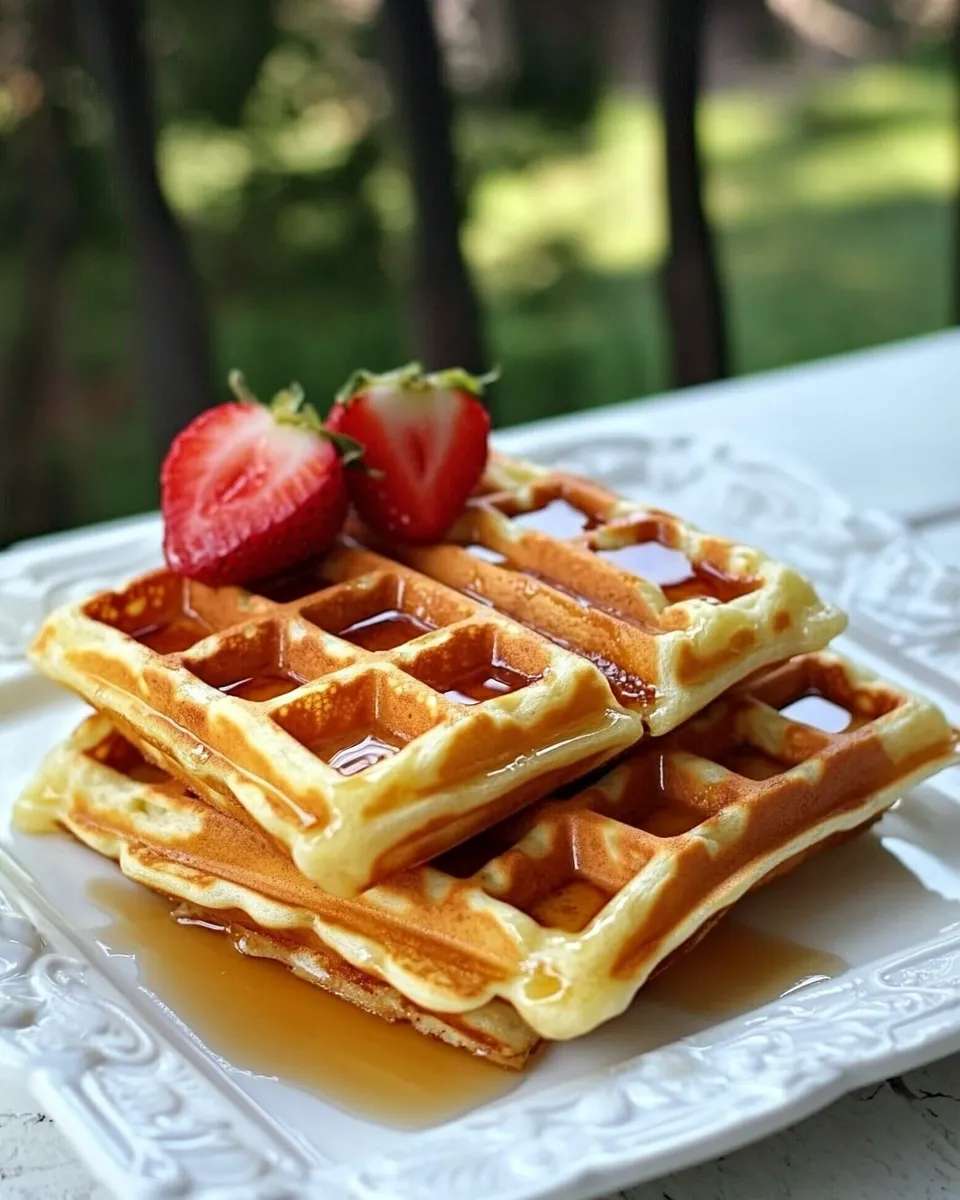
When you’re cooking for a group you might need to swap an ingredient. Below are options that preserve texture; avoid substitutions that change chemistry dramatically (e.g., swapping out all the buttermilk for a plant milk without an acid).
- Buttermilk — If you don’t have cultured buttermilk, mix 4 cups of milk with 4 tablespoons of lemon juice or white vinegar and let rest 5–10 minutes. This creates an acidic environment for the baking soda. Texture and tang will be slightly different but still good.
- Whole milk alternatives — For lower-fat options, use a lower-fat milk but expect slightly less richness and browning; add a tablespoon of butter per cup of milk if you need a richer mouthfeel.
- Butter — Clarified butter or neutral oil can work; melted butter gives flavor and helps crispness. If you use oil, reduce the amount slightly (about 10%) because oil remains liquid at room temperature and affects mouthfeel.
- Flour — All-purpose is best for this texture. If you need to add a portion of whole-wheat flour, replace no more than 25% of the AP flour and accept a denser waffle; add a splash more liquid if batter tightens.
- Eggs — Eggs add lift and structure. For an egg-reduced batter, adding 1/4 cup of plain yogurt per missing egg can help, but texture will be slightly different.
Prep & Cook Tools
Minimal tools keep the line moving. Here’s what I use every time:
- Large mixing bowl for dry ingredients and a second bowl for wet ingredients.
- Whisk and spatula or wooden spoon — whisk the wet, fold together with the spatula.
- Waffle iron — any model that heats evenly; know your iron’s fill amount to avoid overflow.
- Wire cooling rack — crucial. Waffles held directly on a plate steam and get soggy; the rack keeps air circulating so they stay crisp.
- Toaster or toaster oven — for quick reheating of frozen or previously cooked waffles to restore crispness.
- Zip-top freezer bags and parchment — for single-layer freezing to prevent sticking.
Pitfalls & How to Prevent Them
When you feed many people, small mistakes magnify. These are the common problems and straightforward fixes I use.
- Soggy waffles from stacking: Always place cooked waffles in a single layer on a wire rack. Don’t stack them on a plate unless you plan to serve immediately.
- Undercooked centers: Make sure the waffle iron is fully preheated. If you get golden outside but raw inside, lower the heat slightly and cook a bit longer, or check the iron’s recommended settings.
- Overflowing batter: Familiarize yourself with how much batter your iron takes. Pour carefully and scrape excess back into the bowl rather than overfilling.
- Batter overmixing: Stir until just combined. A few lumps are okay. Overmixing develops gluten and makes waffles tougher.
- Cold batter: Bring cold dairy and eggs to room temperature before mixing. This helps the leavening activate uniformly and improves rise.
Seasonal Spins
Waffles are a perfect canvas for seasonal toppings and small batter tweaks that reflect the time of year.
- Spring: Fold in a handful of lemon zest and top with macerated berries for brightness.
- Summer: Serve with warm stone-fruit compote or grilled peaches and a dollop of mascarpone.
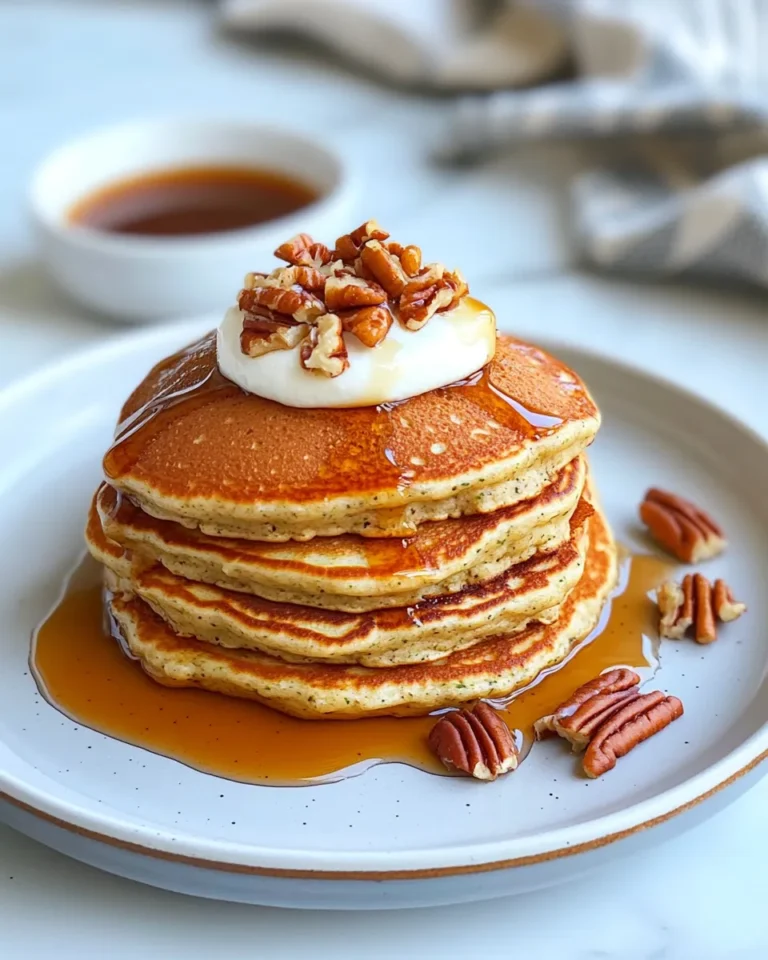
- Fall: Add 1–2 teaspoons cinnamon and a pinch of nutmeg to the dry mix; top with maple syrup and toasted pecans.
- Winter: Fold in a tablespoon of cocoa for chocolate waffles or top with spiced pear preserves and whipped cream.
Pro Perspective
From a pro’s viewpoint, timing and staging make all the difference. Preheat early. Portion your batter with a ladle or measuring cup dedicated to the iron so every waffle is uniform. Keep the waffles warm on a low oven rack set to about 200°F (95°C) if you need to hold them for service — but only for short stretches; prolonged holding will dry them out.
If you’re serving a crowd, get one person on batter and the other on plating and toppings. Efficiency reduces stress and speeds service. Finally, taste as you go: tiny adjustments to salt or a hint more vanilla can bring the whole batch into balance.
Storage & Reheat Guide
Make-ahead friendliness is one of this recipe’s strengths. Once cooled completely, waffles freeze beautifully. Flash-freeze in a single layer on a baking sheet for 30–60 minutes, then transfer to zip-top freezer bags with parchment between pieces if you stack them. They’ll keep well for 1–2 months.
To reheat, use a toaster or toaster oven straight from frozen for best texture. If you thaw first, the toaster will revive them but not as crisply. For a large group, the oven works: arrange waffles on a wire rack over a sheet pan and reheat at 375°F (190°C) for 8–10 minutes or until crisp and hot.
FAQ
Q: Can I halve the recipe for a small family? A: Yes. The formula scales down well; keep the proportions consistent and watch your mixing time.
Q: Can I make the batter the night before? A: You can, but the leavening power from baking powder will begin to dissipate. If you must make it ahead, store it covered in the fridge and expect slightly less rise — let it come back to room temperature before cooking.
Q: Why do you use both baking powder and baking soda? A: The baking powder provides a steady, long-acting rise while the baking soda reacts quickly with the acidity in buttermilk for immediate lift and tenderness. The combination gives a reliable texture.
Q: My waffles stick to the iron. How do I prevent that? A: Follow the manufacturer’s greasing guidance. If your iron tends to stick, brush it lightly with melted butter or a high-smoke-point oil between batches.
Q: Can I add mix-ins like chocolate chips or blueberries? A: Yes. Fold them into the batter gently and add sparingly to avoid weight that can prevent proper steam expansion. Fresh berries are best tossed in a tablespoon of flour first to reduce sinking.
The Last Word
This Buttermilk Waffles recipe is about being practical and reliable when you’re feeding many people. It’s built for flavor and texture, and it adapts to small changes without collapsing. Preheat, mix gently, cook carefully, and use the holding and freezing tips to stay ahead. Guests appreciate warm, crisp waffles, and with this approach you can serve them confidently and without last-minute chaos.

Buttermilk Waffles Recipe for a Crowd
Ingredients
Ingredients
- 4 cups 480 gall-purpose flour
- 1 teaspoon 2.6 gkosher salt
- 3 tablespoons 36 gsugar
- 3 teaspoons 12 gbaking powder
- 1 1/2 teaspoons 6 gbaking soda
- 4 cups 980 gbuttermilk
- 4 large 200 geggs
- 1/2 cup 113 gbutter, melted
- 2 teaspoons 9 gvanilla extract
Instructions
Instructions
- Preheat your waffle iron according to the manufacturer's instructions until fully hot.
- In a large bowl, whisk together 4 cups (480 g) all-purpose flour, 1 teaspoon (2.6 g) kosher salt, 3 tablespoons (36 g) sugar, 3 teaspoons (12 g) baking powder, and 1 1/2 teaspoons (6 g) baking soda until evenly combined.
- In a separate bowl, whisk together 4 cups (980 g) buttermilk, 4 large (200 g) eggs, 1/2 cup (113 g) melted butter, and 2 teaspoons (9 g) vanilla extract until smooth.
- Pour the wet mixture into the dry ingredients and stir gently with a spatula or wooden spoon just until combined. A few small lumps are fine—do not overmix.
- If needed, lightly grease the waffle iron according to the manufacturer's guidance.
- Pour enough batter onto the hot waffle iron to cover the waffle grid without overflowing. Close the iron and cook according to your iron’s instructions until the waffles are golden brown and cooked through.
- Remove cooked waffles and place them in a single layer on a wire cooling rack to keep them crisp.
- To serve now: serve immediately with your favorite syrup or toppings.
- To freeze for later: allow waffles to cool completely on the wire rack, then divide and package in zip-top freezer bags in a single layer or separated with parchment. When ready to eat, remove the number of waffles you want and reheat in a toaster or toaster oven according to the appliance manufacturer’s instructions until heated through and crisp.
Equipment
- Waffle Iron
- Large Bowl
- Mixing Bowl
- Whisk
- Spatula
- Wooden Spoon
- Wire cooling rack
- zip-top freezer bags
- Toaster