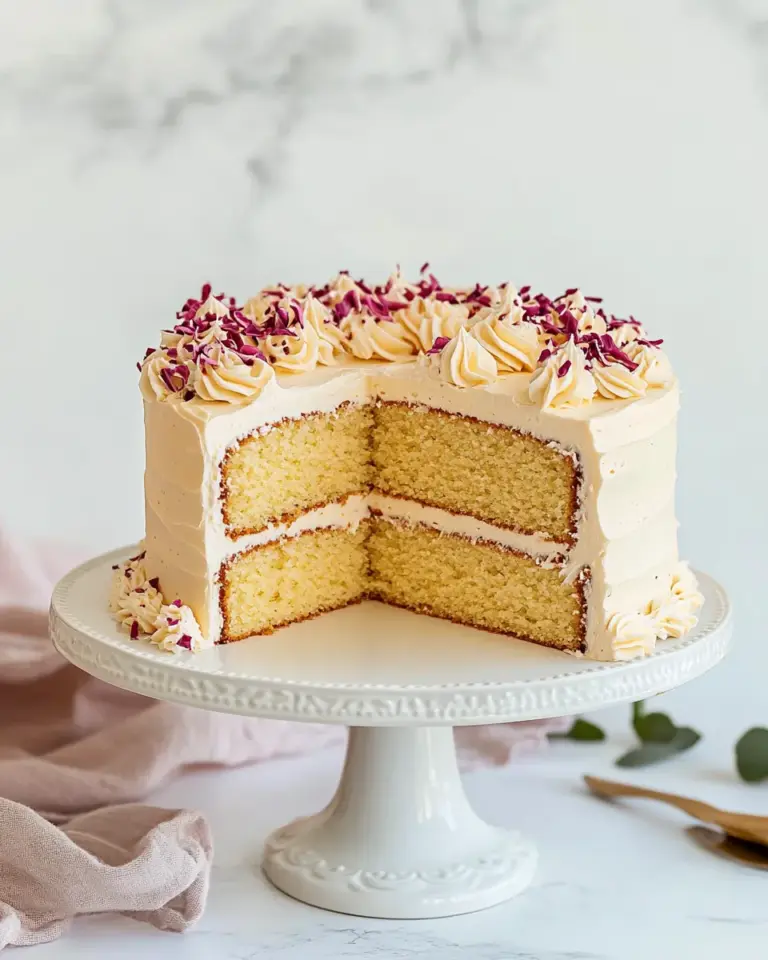
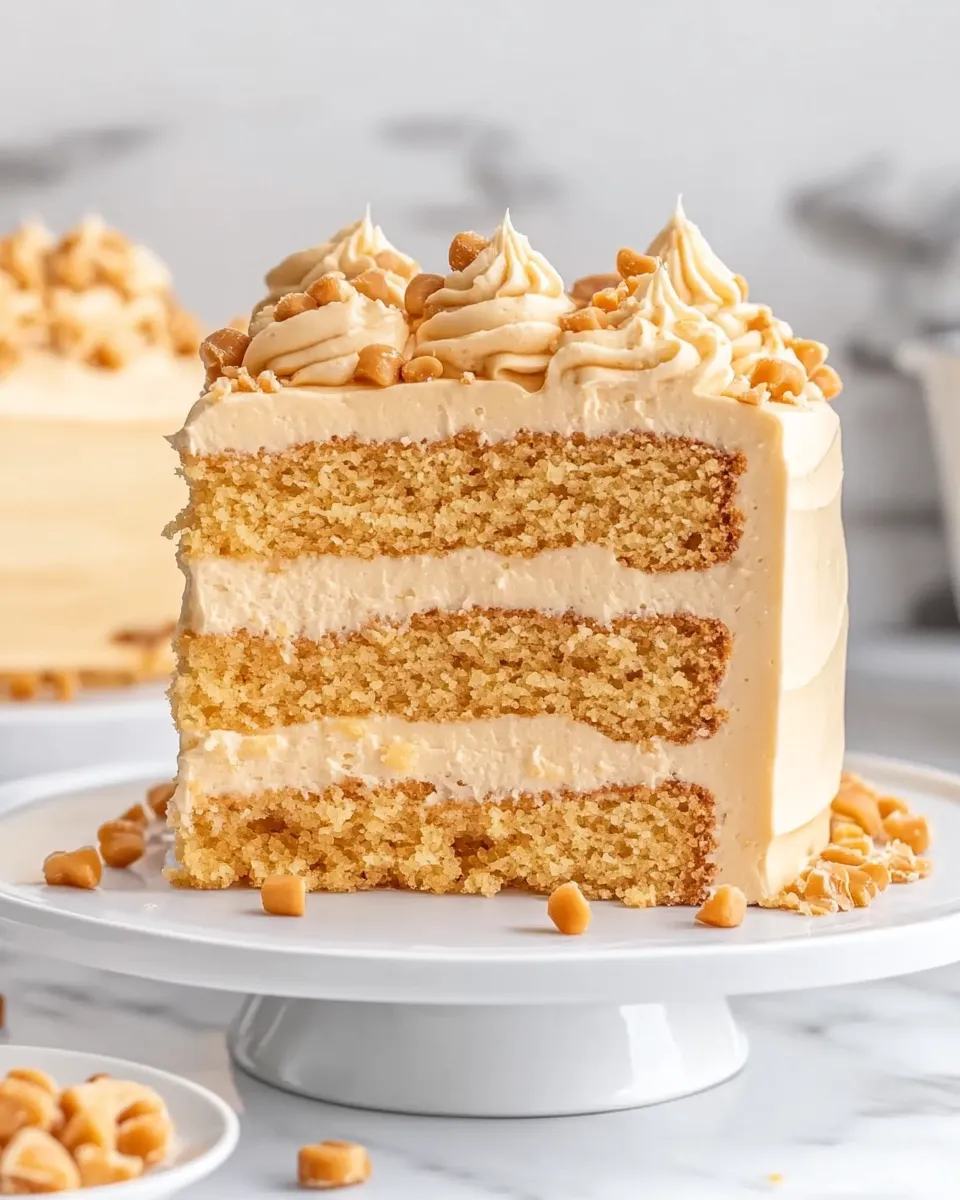
Butterscotch cake is a quiet showstopper: rich, deep caramel notes, a tender crumb, and a frosting that leans into the brown-sugar warmth without being cloying. This recipe builds layers of real butterscotch flavor by folding instant butterscotch pudding into the batter and finishing with both a butterscotch buttercream and a glossy butterscotch ganache. You get texture, shine, and nostalgia in every forkful.
I test recipes the way I cook at home—practical, a bit impatient, and always aiming for reliable results. The method below keeps things straightforward: three 8-inch layers, a simple crumb coat, then a final frosting and ganache drip. If you want to serve this for a celebration, the structure holds up well: it slices cleanly and stores in the fridge.
Read through the ingredients and steps first. There are small timing points—like letting melted butterscotch cool before adding it to the frosting and chilling the cake between frosting stages—that make a big difference in texture and finish. I also include troubleshooting, equipment notes, and storage tips so you can bake this with confidence.
What Goes In
Ingredients
- 2 ¾ cups all-purpose flour — provides structure; measure by spooning into the cup and leveling for accuracy.
- 2 teaspoons baking powder — leavening to help the layers rise evenly.
- 1 teaspoon baking soda — works with the pudding and brown sugar for tender lift.
- ½ teaspoon salt — balances sweetness and enhances flavor.
- 1 cup unsalted butter (softened to room temperature) — creamed with sugars to create a light, tender crumb.
- 1 cup light brown sugar (lightly packed) — adds moisture and that deep molasses note typical of butterscotch.
- ¾ cup granulated sugar — for sweetness and structure in the batter.
- 13.4-ounce package instant butterscotch pudding mix — the flavor base folded into the batter; do not prepare with milk.
- 3 large eggs (at room temperature) — enrich the cake and help emulsify the batter.
- 1 ¼ cups whole milk or 2% — adds moisture; use the temperature the recipe indicates (room temp preferred).
- 1½ cups unsalted butter (softened to room temperature) — for the frosting; beat until very creamy before adding sugar.
- 6 cups powdered sugar — for a stable, pipeable buttercream; add gradually to avoid dust clouds.
- 1½ cups butterscotch chips — melted into the frosting for depth and color.
- 1 teaspoon pure vanilla extract — rounds and brightens the butterscotch flavor.
- ?? cup heavy cream — used to adjust frosting consistency (see method for how it’s used).
- ½ cup butterscotch chips — reserved for the ganache to create drips and top glaze.
- 3 tablespoons heavy cream — heated and poured over the ½ cup butterscotch chips to make a smooth ganache.
The Method for Butterscotch Cake
- Preheat the oven to 350°F (180°C). Grease and lightly flour three 8-inch round cake pans; line bottoms with parchment if desired. Set pans aside.
- In a medium bowl, whisk together 2 ¾ cups all-purpose flour, 2 teaspoons baking powder, 1 teaspoon baking soda, and ½ teaspoon salt. Set aside.
- In a large bowl (or the bowl of a stand mixer fitted with the paddle), cream together 1 cup unsalted butter (softened), 1 cup light brown sugar (lightly packed), ¾ cup granulated sugar, and the 13.4-ounce package instant butterscotch pudding mix on medium-high speed until light and fluffy, about 3–4 minutes.
- Add the 3 large eggs, one at a time, mixing well after each addition. Stir in 1 teaspoon pure vanilla extract.
- With the mixer on low, add half of the flour mixture, then half of the 1 ¼ cups whole milk (or 2%) and mix just until combined. Repeat with the remaining flour mixture and the remaining milk, mixing until batter is smooth and homogenous. Scrape the bowl as needed.
- Divide the batter evenly among the three prepared pans and smooth the tops. Bake for about 30 minutes, or until a toothpick inserted into the centers comes out clean or with a few moist crumbs.
- Let the cakes cool in the pans on a wire rack for 10 minutes. Run a knife around the edges, turn the cakes out onto the rack, remove parchment (if used), and cool completely before frosting.
- While the cakes cool, make the frosting. Melt 1½ cups butterscotch chips until smooth—either in the microwave in 20–30 second intervals, stirring between each, or over a double boiler. Let the melted butterscotch cool slightly so it is warm but not hot.
- In a large mixing bowl, beat 1½ cups unsalted butter (softened) with an electric mixer for about 2 minutes until creamy. Add 6 cups powdered sugar, 1 cup at a time, mixing on low until incorporated and scraping the bowl as needed.
- Add the cooled melted butterscotch and 1 teaspoon pure vanilla extract to the frosting. Add the heavy cream listed in the ingredients (see ingredient list for the amount). Beat on medium-high until the frosting is smooth and fluffy. (If the frosting needs minor thinning or thickening, adjust only with the heavy cream amount provided in the ingredient list.)
- Make the butterscotch ganache: In a small saucepan, heat 3 tablespoons heavy cream just until steaming (do not boil). Remove from heat and pour the hot cream over ½ cup butterscotch chips. Let sit 2 minutes, then stir until completely smooth. Allow the ganache to cool to room temperature before using so it will thicken slightly.
- Level the cooled cake layers with a serrated knife or cake leveler so they stack flat.
- Place one cake layer on a cake plate or turntable. Spread an even layer of frosting over the top. Add the second cake layer, spread another layer of frosting, then place the top layer on.
- Apply a thin layer of frosting to the outside of the stacked cake to create a crumb coat. Smooth lightly, then chill the cake in the refrigerator for at least 30 minutes.
- After chilling, apply a thicker, even layer of frosting to the outside of the cake. Smooth the sides and top as desired. Return the cake to the refrigerator for at least another 30 minutes to set.
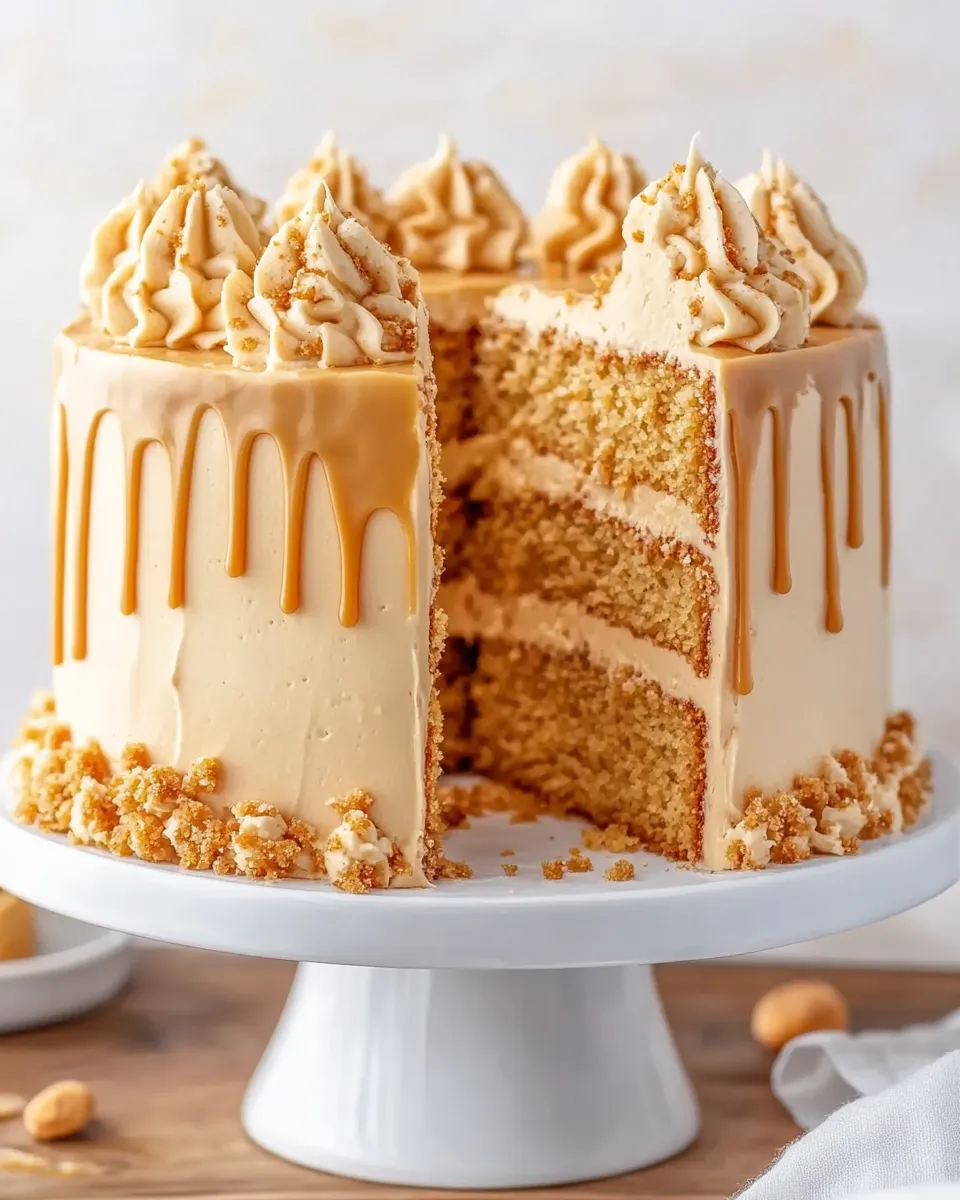
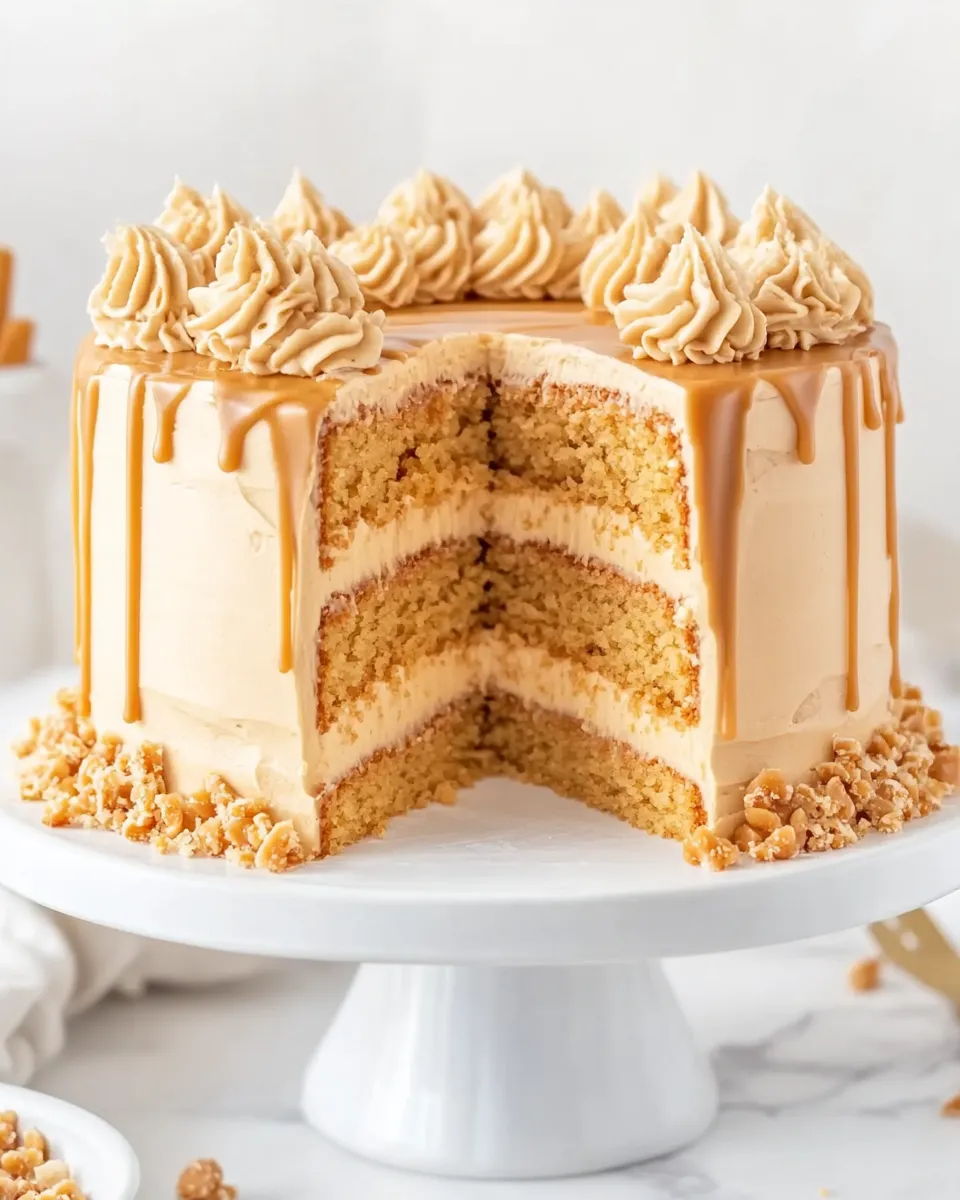
- Use a spoon to drizzle the cooled ganache down the sides of the chilled cake to create drips; pour the remaining ganache onto the center of the top and smooth gently to an even layer.
- If desired, pipe additional frosting decorations on top using a piping bag fitted with an open star tip. Store the finished cake refrigerated until serving; bring to room temperature before slicing if preferred.
Reasons to Love Butterscotch Cake
First, the flavor profile is distinct: butterscotch brings toasted brown-sugar notes that are deeper than plain caramel. Using instant butterscotch pudding in the batter folds that flavor throughout the crumb instead of just on the surface. The buttercream contains real melted butterscotch chips, so every bite echoes the ganache drip on top.
Second, the cake is forgiving. The batter mixes like a typical layer cake and bakes evenly into three stable layers. The technique—crumb coat, chill, final coat—means even novice decorators can get a smooth finish. And because the frosting firms up in the fridge, it slices cleanly for plated desserts or parties.
Finally, it’s versatile. Serve it as a simple slice with coffee, dress it up with piped rosettes for birthdays, or add a scattering of toasted nuts for crunch. Texture, shine, and a classic flavor make it a crowd-pleaser.
Allergy-Friendly Substitutes
- Dairy (butter, milk, heavy cream) — swap unsalted butter for a high-quality dairy-free butter stick and use full-fat oat milk or another neutral plant milk for the batter. For the frosting, use plant-based heavy cream alternatives where possible, but note texture will change.
- Eggs — this recipe relies on eggs for structure and emulsion. If you must replace eggs, try a tested egg replacer blend or 3 tablespoons aquafaba (per egg) whipped into the batter, but expect a slightly different crumb.
- Butterscotch chips — some brands contain dairy. Look for labeled dairy-free butterscotch-style chips or use a dairy-free caramel-flavored chip to mimic the flavor.
- Gluten — use a 1:1 gluten-free flour blend that contains xanthan gum. Allow the batter to rest 10–15 minutes before baking to hydrate the flour for a better crumb.
Before You Start: Equipment
Good tools make a difference. You’ll want three 8-inch round cake pans, parchment rounds (optional but helpful), a reliable stand mixer or hand mixer, and a cooling rack. A bench scraper or offset spatula speeds up smoothing the frosting. A turntable is helpful but not required—work slowly and rotate the cake plate by hand if needed.
Small extras that help
- Serrated knife or cake leveler — for trimming domes and stacking straight layers.
- Heatproof bowl — for melting butterscotch chips safely.
- Spoon or small ladle — for controlled ganache drips.
Troubles You Can Avoid
Don’t skip the cooling steps. Frosting warm cake layers traps steam and softens the crumb; chilling between crumb coat and final coat gives a cleaner finish. Overheat melted butterscotch chips—the chocolate-like sugars can seize if too hot; aim for warm, not piping.
If your frosting is too thin or too thick, adjust only with the heavy cream amount provided in the ingredient list. Adding liquid beyond the recipe can change flavor balance and stability. If the ganache is too runny, cool it until it thickens slightly; if it’s too stiff, warm it gently in short bursts.
Watch bake time carefully. Oven temperatures vary. Begin checking at 25 minutes and remove when a toothpick comes out with a few moist crumbs—not wet batter—to avoid dryness.
In-Season Flavor Ideas
Butterscotch plays beautifully with autumn and winter produce. Try adding a thin layer of spiced pear compote between layers for a seasonal twist. Sliced caramelized apples or a smear of pumpkin butter could also complement the butterscotch notes without overpowering them.
For a lighter, summer-appropriate serving, decorate with toasted pecans and a sprinkle of flaky sea salt instead of heavy piped swirls. The contrast brightens each bite.
Behind-the-Scenes Notes
This recipe leans on three ways to assert butterscotch flavor: instant pudding in the cake, melted chips in the buttercream, and a small ganache for shine and drips. The pudding mix contributes flavor and a bit of stabilization to the crumb—don’t prepare it with milk or you’ll change the intended texture.
When I developed this, I found that letting the melted chips cool to warm prevented the butter in the frosting from melting or loosening. That small pause preserves the buttercream’s airy texture while distributing flavor evenly.
Meal Prep & Storage Notes
Store the finished cake refrigerated in an airtight cake keeper or on a covered cake plate. Because it contains dairy-based frosting and ganache, keep it chilled and consume within 3–4 days. If you prefer room-temperature slices, remove the cake 30–60 minutes before serving so the buttercream softens and the flavor opens.
You can bake the layers a day ahead and wrap them tightly in plastic wrap at room temperature once fully cooled. Prepare the frosting and ganache the day you assemble for the best texture, or store frosting refrigerated and rewhip briefly to return it to spreading consistency.
Frequently Asked Questions
Can I make this as two larger layers instead of three? Yes. Increase baking time and test for doneness with a toothpick. Cool completely and consider thinly slicing each layer if they dome significantly.
What if my ganache doesn’t drip evenly? Chill the cake until the outside frosting is fairly firm. Use a spoon and teaspoonfuls of ganache to control drips, starting with the edges and finishing the center.
Why is the pudding mix used dry in the batter? The dry pudding adds concentrated butterscotch flavor and a slight textural change without adding extra liquid. Preparing the pudding would alter the moisture balance and batter consistency.
Wrap-Up
This Butterscotch Cake is a practical, nostalgic dessert that performs well for gatherings and celebrations. The layered approach—pudding in the cake, melted chips in the buttercream, and a glossy ganache—creates a depth of butterscotch flavor that’s hard to beat. Follow the cooling and chilling steps, measure carefully, and use the equipment notes to keep assembly smooth. You’ll have a dependable, impressive cake that slices neatly and tastes even better than it looks.
Bake, chill, decorate, and enjoy. If you want help adapting the recipe for a crowd or converting to sheet-pan format, say the word and I’ll walk you through it.
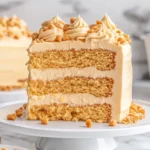
Butterscotch Cake
Ingredients
Ingredients
- ?2 3/4 cupsall purpose flour
- ?2 teaspoonsbaking powder
- ?1 teaspoonbaking soda
- ?1/2 teaspoonsalt
- ?1 cupunsalted buttersoftened to room temperature
- ?1 cuplight brown sugarlightly packed
- ?3/4 cupgranulated sugar
- ?13.4-ounce packageinstant butterscotch pudding mix
- ?3 largeeggsat room temperature
- ?1 1/4 cupswhole milkor 2%
- ?1 1/2 cupsunsalted buttersoftened to room temperature
- ?6 cupspowdered sugar
- ?1 1/2 cupsbutterscotch chips
- ?1 teaspoonpure vanilla extract
- ??cupheavy cream
- ?1/2 cupbutterscotch chips
- ?3 tablespoonsheavy cream
Instructions
Instructions
- Preheat the oven to 350°F (180°C). Grease and lightly flour three 8-inch round cake pans; line bottoms with parchment if desired. Set pans aside.
- In a medium bowl, whisk together 2 ¾ cups all-purpose flour, 2 teaspoons baking powder, 1 teaspoon baking soda, and ½ teaspoon salt. Set aside.
- In a large bowl (or the bowl of a stand mixer fitted with the paddle), cream together 1 cup unsalted butter (softened), 1 cup light brown sugar (lightly packed), ¾ cup granulated sugar, and the 13.4-ounce package instant butterscotch pudding mix on medium-high speed until light and fluffy, about 3–4 minutes.
- Add the 3 large eggs, one at a time, mixing well after each addition. Stir in 1 teaspoon pure vanilla extract.
- With the mixer on low, add half of the flour mixture, then half of the 1 ¼ cups whole milk (or 2%) and mix just until combined. Repeat with the remaining flour mixture and the remaining milk, mixing until batter is smooth and homogenous. Scrape the bowl as needed.
- Divide the batter evenly among the three prepared pans and smooth the tops. Bake for about 30 minutes, or until a toothpick inserted into the centers comes out clean or with a few moist crumbs.
- Let the cakes cool in the pans on a wire rack for 10 minutes. Run a knife around the edges, turn the cakes out onto the rack, remove parchment (if used), and cool completely before frosting.
- While the cakes cool, make the frosting. Melt 1½ cups butterscotch chips until smooth—either in the microwave in 20–30 second intervals, stirring between each, or over a double boiler. Let the melted butterscotch cool slightly so it is warm but not hot.
- In a large mixing bowl, beat 1½ cups unsalted butter (softened) with an electric mixer for about 2 minutes until creamy. Add 6 cups powdered sugar, 1 cup at a time, mixing on low until incorporated and scraping the bowl as needed.
- Add the cooled melted butterscotch and 1 teaspoon pure vanilla extract to the frosting. Add the heavy cream listed in the ingredients (see ingredient list for the amount). Beat on medium-high until the frosting is smooth and fluffy. (If the frosting needs minor thinning or thickening, adjust only with the heavy cream amount provided in the ingredient list.)
- Make the butterscotch ganache: In a small saucepan, heat 3 tablespoons heavy cream just until steaming (do not boil). Remove from heat and pour the hot cream over ½ cup butterscotch chips. Let sit 2 minutes, then stir until completely smooth. Allow the ganache to cool to room temperature before using so it will thicken slightly.
- Level the cooled cake layers with a serrated knife or cake leveler so they stack flat.
- Place one cake layer on a cake plate or turntable. Spread an even layer of frosting over the top. Add the second cake layer, spread another layer of frosting, then place the top layer on.
- Apply a thin layer of frosting to the outside of the stacked cake to create a crumb coat. Smooth lightly, then chill the cake in the refrigerator for at least 30 minutes.
- After chilling, apply a thicker, even layer of frosting to the outside of the cake. Smooth the sides and top as desired. Return the cake to the refrigerator for at least another 30 minutes to set.
- Use a spoon to drizzle the cooled ganache down the sides of the chilled cake to create drips; pour the remaining ganache onto the center of the top and smooth gently to an even layer.
- If desired, pipe additional frosting decorations on top using a piping bag fitted with an open star tip. Store the finished cake refrigerated until serving; bring to room temperature before slicing if preferred.
Equipment
- 3 8" inch cake pans
- Mixing Bowl
- Electric Hand mixer or Stand mixer
- serrated knife
- Offset Spatula
- Piping Bagwith star tip, optional
Notes
One bag of chips is enough to make this recipe.
How to Store Butterscotch Frosting:It’s best to make this frosting and use it right away. If you store it in the fridge, the butterscotch chips will harden, and it will be difficult to get it back to a smooth, fluffy texture for spreading.
To Store The Cake:Keep this cake stored, covered, in the refrigerator. Let it sit out at room temperature before serving.
Ganache Tips:If the ganache has lumps, you can heat it in the microwave for 5-second intervals, stirring until it’s smooth.Do not try to make a drip on the cake with a warm ganache. Let it cool down to room temperature first. Do a test drip to make sure it’s ready. When cooled, the butterscotch should be a very thick liquid.Don’t skip the ganache! The butterscotch flavor is most prominent in the topping.
If the ganache has lumps, you can heat it in the microwave for 5-second intervals, stirring until it’s smooth.
Do not try to make a drip on the cake with a warm ganache. Let it cool down to room temperature first. Do a test drip to make sure it’s ready. When cooled, the butterscotch should be a very thick liquid.
Don’t skip the ganache! The butterscotch flavor is most prominent in the topping.