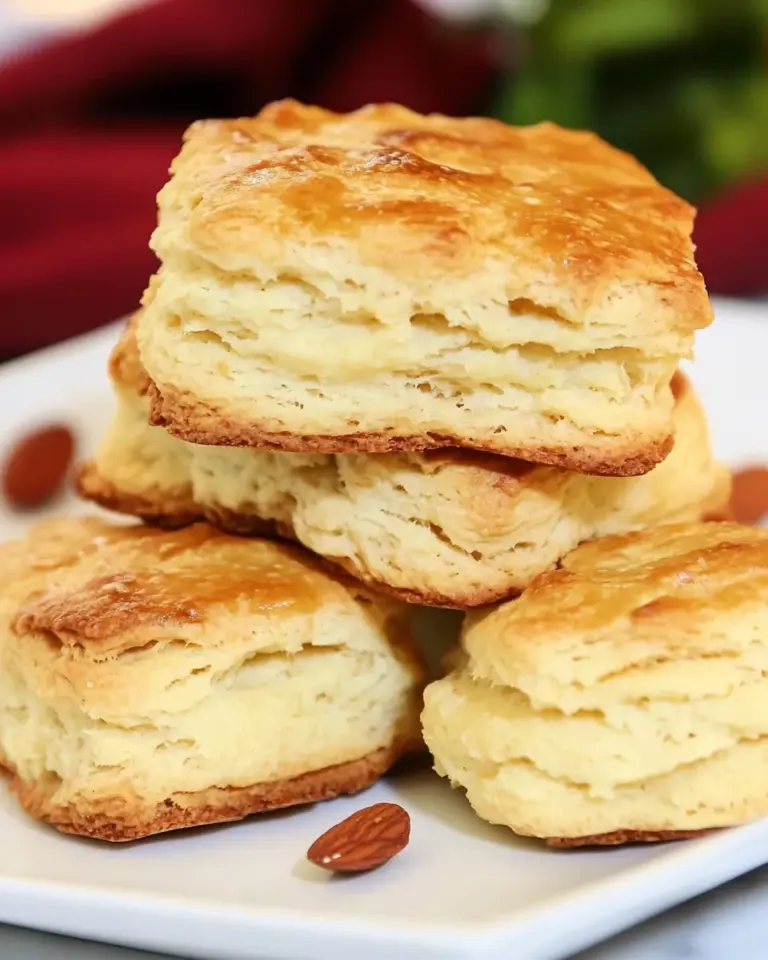
These Cheddar Scallion Biscuits are the sort of thing I make when I want something comforting, quick, and reliably delicious. They come together with just a handful of pantry staples and a little bit of gentle handling. The result is a flaky, tender biscuit with a salty cheese hit and fresh scallion brightness — excellent alongside soup, with a smear of butter, or tucked into a breakfast sandwich.
I love recipes that respect time in the kitchen without sacrificing texture. This one asks for a high oven temperature and minimal fuss: you mix, fold in cheese and scallions, pat to thickness, cut, and bake. Short active time, big payoff. The technique is forgiving, which is perfect whether you’re baking these for a weeknight dinner or a last-minute weekend brunch.
Below you’ll find a clear shopping list, the exact ingredient breakdown with helpful notes, step-by-step baking directions (kept exactly as the recipe specifies), and practical tips I use in my own kitchen to get consistent results. Read the “Easy-to-Miss Gotchas” section before you start if you’re new to quick-biscuit doughs — a small habit change will make a big difference in the final lift.
Shopping List

Gather the bare essentials before you start. These are the only items the recipe requires, so a quick trip to the store will do if you’re missing any one of them.
- 2 cups (226 g) self-rising flour
- 1 1/2 cups (357 g) heavy whipping cream
- 1/2 cup (56.5 g) grated cheddar cheese
- 2 (30 g) scallions, finely chopped
Ingredients
- 2 cups (226 g) self-rising flour — provides the structure and comes with leavening already mixed in; sift or fluff before measuring for the most consistent result.
- 1 1/2 cups (357 g) heavy whipping cream — the liquid and fat source; adds tenderness and steam for lift. Use cold or room temperature cream depending on how quickly you want the dough to come together.
- 1/2 cup (56.5 g) grated cheddar cheese — gives savory flavor and pockets of gooey melt; sharper cheddar yields more bite, mild keeps it gentle.
- 2 (30 g) scallions, finely chopped — fresh, oniony brightness; chop finely so it disperses evenly without weighing the dough down.
Cheddar Scallion Biscuits: How It’s Done
- Preheat oven to 475°F. Line a rimmed baking sheet with parchment paper and set aside.
- In a large mixing bowl, add 2 cups (226 g) self-rising flour.
- Slowly pour in 1 1/2 cups (357 g) heavy whipping cream while stirring gently with a spatula or spoon until the dough is just combined — do not overmix.
- Fold in 1/2 cup (56.5 g) grated cheddar cheese and the 2 scallions (30 g), finely chopped, until evenly distributed.
- Turn the dough out onto a lightly floured countertop or dough board. Use floured hands to handle the dough; do not compress it excessively.
- Gently pat or roll the dough to about 1/2-inch (1.3 cm) thickness.
- Cut biscuits using a ~2-inch biscuit cutter. Gather any scraps, gently press together (do not overwork), and cut additional biscuits until dough is used.
- Place the cut biscuits on the prepared baking sheet, leaving about 1 inch between each biscuit.
- Bake in the preheated oven for 10–12 minutes, until the biscuits are golden on top.
- Remove from the oven and serve warm.
Why This Recipe Is Reliable

This recipe is reliable because it leans on two important things: a short ingredient list with predictable chemistry, and minimal handling. Self-rising flour has measured leavening built in, so you avoid the variability of working with separate baking powder and salt ratios. The high oven temperature creates immediate steam from the cream, helping the biscuits rise quickly and form a tender crumb.
Another layer of reliability is the method: you mix just until combined and avoid overworking the dough. Overworking develops gluten and gives you denser, chewier biscuits. The instruction to pat gently and to not compress the dough too much preserves those delicate layers. The 10–12 minute bake time at 475°F is short and punchy, giving a golden top while keeping the interior moist.
Finally, the ingredient mix is forgiving. Cheddar and scallion are robust flavors that remain pleasant even if a biscuit is slightly thicker or thinner. This makes the recipe great for bakers who want consistent, tasty results without fussing over exact shaping or perfect lamination.
Ingredient Swaps & Substitutions

- Self-rising flour — If you only have all-purpose flour, you can usually make a self-rising substitute by adding leavening and salt. If you prefer not to mix your own, seek a store brand labeled “self-rising.”
- Heavy whipping cream — You can use half-and-half or a high-fat milk in a pinch, but expect a slightly less rich texture and less steam-based lift. The dough may be a touch more fragile.
- Grated cheddar cheese — Any firm, flavorful cheese that grates well works here. For a milder profile, try a young cheddar; for nuttier notes, a sharp or aged cheddar will punch through more.
- Scallions — Mild onion alternatives like chives work well too. If using a stronger onion (red or white), sauté briefly first to mellow the bite and reduce moisture.
Kitchen Gear Checklist
Here’s what I keep on the counter when I make these so the process stays smooth:
- Rimmed baking sheet lined with parchment — prevents sticking and collects any melted cheese overflow.
- Mixing bowl (large) — roomy enough to stir without spilling.
- Spatula or spoon — for gentle stirring; a rubber spatula works great to fold the cream into the flour.
- Biscuit cutter (~2-inch) — a fluted or straight-edge cutter both work; if you don’t have one, a clean can with both ends removed will do in a pinch.
- Measuring cups/scale — I recommend a scale for flour accuracy, but measuring cups will work.
- Light dusting of flour on your countertop or dough board — to prevent sticking while keeping the dough tender.
Easy-to-Miss Gotchas
These are the small mistakes I see even home bakers make that impact final texture. Watch for them and you’ll have better outcomes.
- Overmixing the dough — stir only until the flour is hydrated. The recipe explicitly warns not to overmix; follow it. Overmixed dough equals tough biscuits.
- Heavy hands when shaping — pressing too hard compresses the dough layers. Pat gently and lift rather than pressing down firmly when cutting with a cutter.
- Incorrect oven temperature — 475°F is intentional. If your oven runs cold, the biscuits will take longer and may not rise properly. Preheat fully and use an oven thermometer if you’re unsure.
- Not spacing biscuits — leaving them too close makes them bake together and interrupt crisp edges. About 1 inch apart is the right balance.
- Adding wet scallions — if your scallions are very moist, blot them on a paper towel; excess moisture can weigh down the dough and change texture.
Dietary Swaps & Alternatives
If you need to adapt these biscuits for dietary restrictions, here are some approaches that maintain texture and flavor without inventing new measurements.
- Dairy-free — Swap heavy cream for a full-fat plant-based cream alternative designed to mimic dairy cream. Expect slight differences in browning and richness.
- Lower-fat — Use a reduced-fat dairy option like half-and-half, but be prepared for a less tender interior; adding a small pat of butter on top of hot biscuits can help add richness back.
- Cheese-free — Omit the cheddar and boost scallions or add herbs for aromatics. The biscuits will be less savory but still tender.
- Gluten-free — This is a trickier swap because self-rising flour contributes structure and leavening. Use a labeled gluten-free self-rising blend where possible, or a blend designed for biscuits; results will vary by brand.
Notes on Ingredients
A few practical notes on the core items, based on what I keep in my pantry and what I tell readers when they ask for more detail.
Self-rising flour: It’s a convenience and a consistency tool. If your recipe calls for different amounts of leavening or salt, making your own self-rising can introduce error unless you’re precise. When measuring cups are used, spoon the flour into the cup and level it rather than scooping directly from the bag, which compacts the flour.
Heavy whipping cream: The fat content here matters more than the brand. Higher fat means richer biscuits and better steam lift. If the cream is very warm, the dough may feel stickier; slightly chilled cream slows hydration and can help if you want a firmer dough to work with.
Cheddar: Freshly grated cheese incorporates more evenly than pre-shredded bags, which often contain anti-caking agents. Grate it yourself if you can for the best melt and distribution.
Scallions: Use the tender green and white parts. The white end has more onion punch; the green adds color. Chop fine so you don’t get a large wet pocket in any biscuit.
Prep Ahead & Store
Make ahead
You can mix the dough and shape the biscuits a few hours ahead, then keep them covered in the refrigerator on the baking sheet. Cold biscuits can go straight into the oven; the bake time may be a minute or two longer. Keep them tightly covered so they don’t dry out.
Freezing
Cut biscuits freeze well. Arrange them on a baking sheet in a single layer until solid, then transfer to a freezer bag. Bake from frozen, adding a few minutes to the baking time, or thaw in the fridge before baking.
Storage
Once cooled, store biscuits in an airtight container at room temperature for up to 2 days. Reheat in a 350°F oven for 5–8 minutes to refresh the exterior; avoid the microwave if you want to keep crisp edges.
Ask the Chef
Q: My biscuits spread instead of rising. What happened?
A: Likely the dough was overmixed, or your oven temperature was too low. Overmixed dough develops gluten and loses the lift provided by the self-rising flour. Make sure your oven is fully preheated to 475°F and that you stir just until combined.
Q: Can I add butter to the dough for more flakiness?
A: This base recipe uses cream for fat and steam-based lift. Adding cold butter will change the texture and require a different handling technique to create layers. If you want a flakier biscuit, you can experiment by cutting small cold butter pieces in and keeping the dough chilled, but the current method is intentionally simple and quick.
Q: My biscuits are undercooked in the middle but golden on top — how to avoid that?
A: Check your oven rack position (middle is best) and verify the oven temperature with a thermometer. If you’re consistently getting over-browned tops, lower the rack or tent loosely with foil for the last few minutes while the centers finish baking.
Make It Tonight
Plan 20–30 minutes from start to table: 5–10 minutes to preheat and mix, 5–10 minutes to pat and cut, and 10–12 minutes to bake. Preheat the oven first so you can get the biscuits into a hot environment quickly. While they bake, set the table, slice a few extra scallions for garnish, and get butter ready for serving. Serve warm straight from the pan — simple, fast, and reliably rewarding.

Cheddar Scallion Biscuits Recipe
Ingredients
Ingredients
- 2 cups 226 gself-rising flour
- 1 1/2 cups 357 gheavy whipping cream
- 1/2 cup 56.5 ggrated cheddar cheese
- 2 30 gscallions, finely chopped
Instructions
Instructions
- Preheat oven to 475°F. Line a rimmed baking sheet with parchment paper and set aside.
- In a large mixing bowl, add 2 cups (226 g) self-rising flour.
- Slowly pour in 1 1/2 cups (357 g) heavy whipping cream while stirring gently with a spatula or spoon until the dough is just combined — do not overmix.
- Fold in 1/2 cup (56.5 g) grated cheddar cheese and the 2 scallions (30 g), finely chopped, until evenly distributed.
- Turn the dough out onto a lightly floured countertop or dough board. Use floured hands to handle the dough; do not compress it excessively.
- Gently pat or roll the dough to about 1/2-inch (1.3 cm) thickness.
- Cut biscuits using a ~2-inch biscuit cutter. Gather any scraps, gently press together (do not overwork), and cut additional biscuits until dough is used.
- Place the cut biscuits on the prepared baking sheet, leaving about 1 inch between each biscuit.
- Bake in the preheated oven for 10–12 minutes, until the biscuits are golden on top.
- Remove from the oven and serve warm.
Equipment
- Rimmed baking sheet
- Parchment Paper
- Large Mixing Bowl
- Spatula or spoon
- biscuit cutter