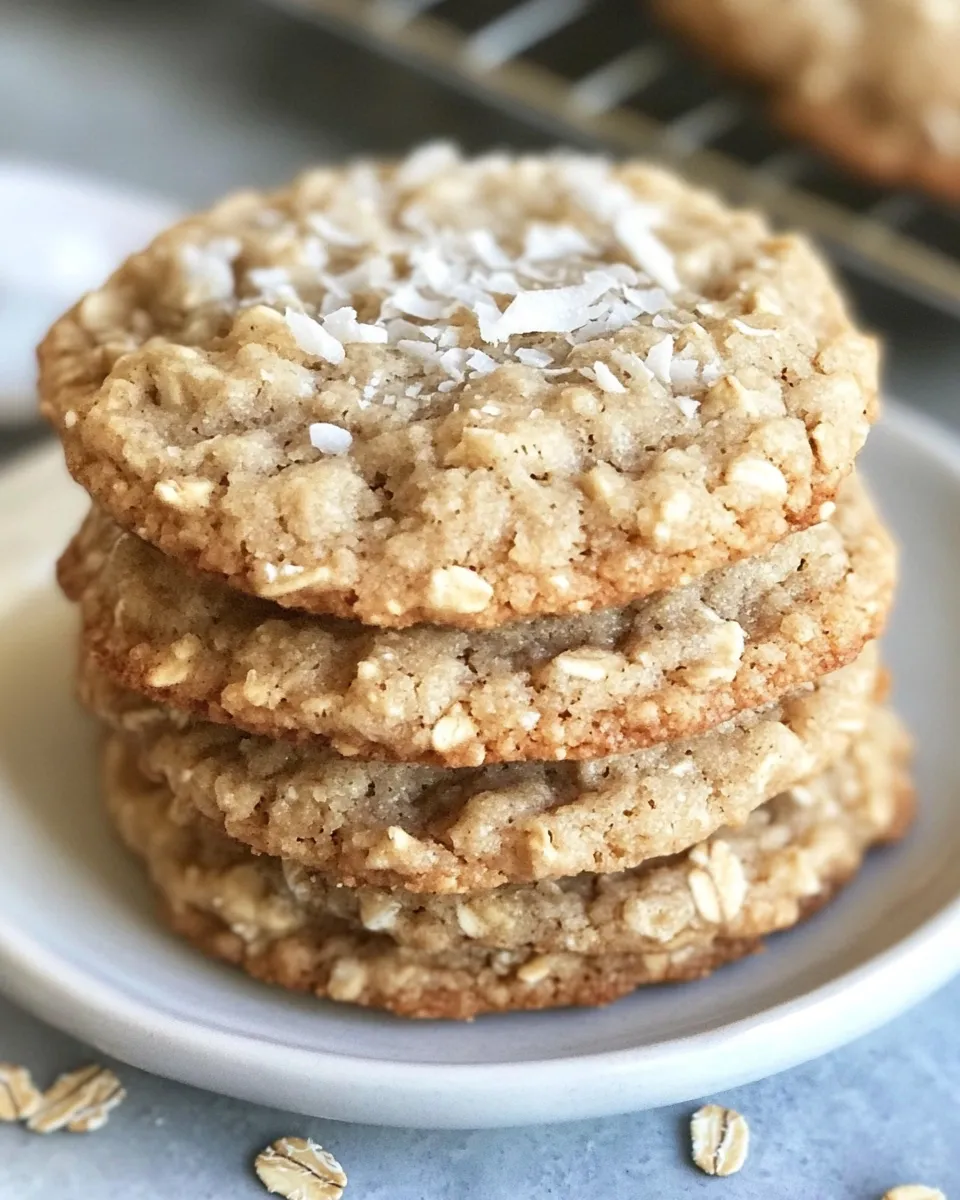
I bake a lot. These cookies are the kind I reach for when I want something that feels honest and homey: a little crisp at the edges, tender and chewy in the middle, with coconut and oats standing front and center. They come together quickly, and they travel well — perfect for a midday pick-me-up or a casual bake sale.
There’s no fuss here: familiar pantry ingredients, a straight‑forward method, and reliable results. The coconut oil keeps them soft and gives a subtle coconut note, while the quick oats and shredded coconut add chew and texture. You’ll find the dough easy to handle and the timing forgiving.
The Essentials
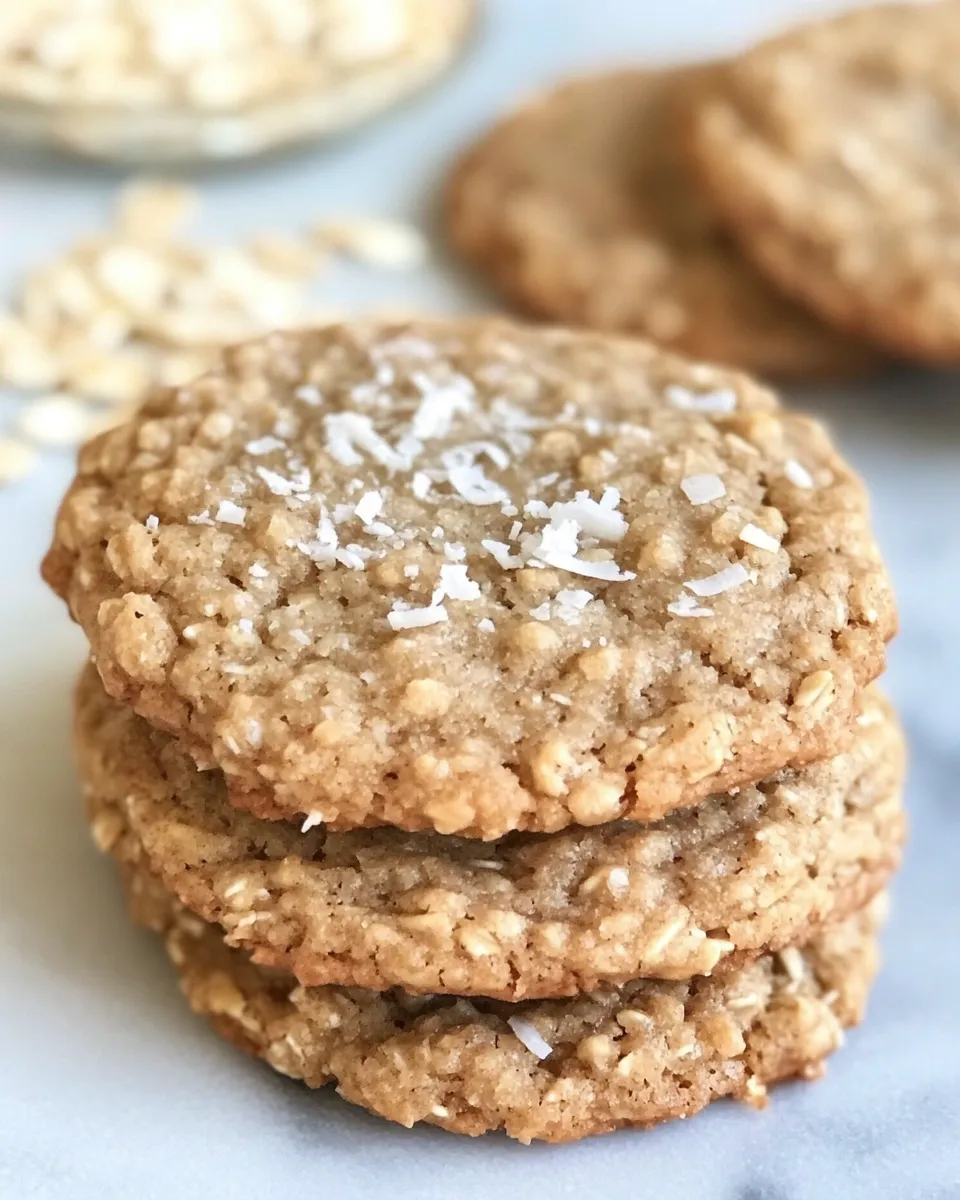
These cookies balance chew and light crunch. They aren’t cakey. They’re slightly golden, chewy through the center, and nicely coconutty. The sweetness comes from a mix of granulated and brown sugar which also helps with texture and the slight chew you want from an oatmeal cookie.
Prep time is brief because there’s no chilling step, and bake time is short. You can have a sheet in the oven in under 20 minutes. Make sure your coconut oil is measured correctly (solid then melted and cooled) so the dough behaves the way the recipe intends.
Ingredients
- 2 3/4 cups all-purpose flour — provides the structure for a chewy cookie; spoon into the cup and level for accuracy.
- 1 teaspoon baking soda — gives lift and helps edges brown.
- 1 teaspoon baking powder — adds gentle rise and lightness.
- 1/2 teaspoon salt — balances the sweetness and enhances flavor.
- 1 cup granulated sugar — adds sweetness and helps with spread.
- 1 cup brown sugar — brings moisture and chew; the molasses in it deepens flavor.
- 2 large eggs — bind the dough and add tenderness.
- 1 cup coconut oil, measured solid, melted and slightly cooled — fat choice that keeps cookies tender and provides a mild coconut note.
- 2 teaspoons vanilla extract — lifts and rounds the overall flavor.
- 1 cup shredded, sweetened coconut — the main coconut flavor and chewy bits throughout.
- 1 cup quick oats — adds chew and structure; quick oats blend into the dough for a softer bite.
Cooking (Chewy Coconut Oatmeal Cookies): The Process
- Preheat the oven to 350°F (175°C). Line a large baking sheet with parchment paper or a Silpat baking mat.
- In a large bowl, whisk together 2 3/4 cups all-purpose flour, 1 teaspoon baking soda, 1 teaspoon baking powder, and 1/2 teaspoon salt. Set aside.
- In a separate large bowl, combine 1 cup granulated sugar, 1 cup brown sugar, and 2 large eggs; beat or whisk until smooth and slightly pale.
- Gradually add 1 cup coconut oil (measured solid, melted and slightly cooled) to the egg–sugar mixture, mixing until incorporated. Stir in 2 teaspoons vanilla extract.
- Add the dry ingredients to the wet ingredients in batches, mixing until just combined—do not overmix.
- Fold in 1 cup shredded sweetened coconut and 1 cup quick oats until evenly distributed.
- Drop the dough by tablespoonfuls onto the prepared baking sheet, spacing about 2 inches apart. If desired, gently flatten each mound slightly for even baking.
- Bake at 350°F (175°C) for 10 minutes, or until the cookies are set and the edges are lightly browned.
- Let the cookies cool on the baking sheet for 2 minutes, then transfer them to a wire cooling rack to cool completely.
What Makes This Recipe Special
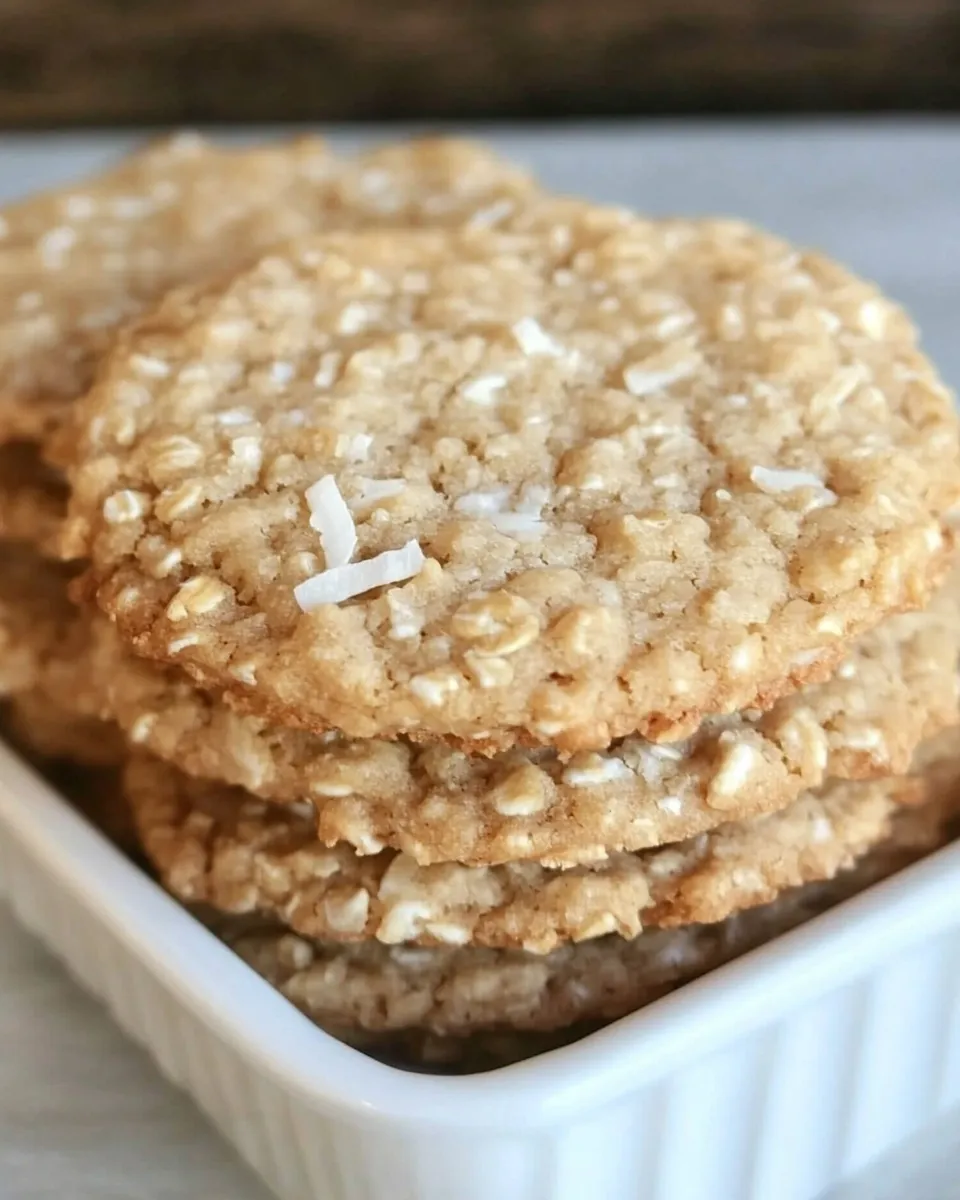
Three things: texture, simplicity, and a clear coconut presence. The combination of brown and white sugar is deliberate — white sugar helps with spread and crispness at the edges while brown sugar keeps the centers chewy. Quick oats and shredded coconut give contrast in every bite without being coarse.
The use of coconut oil instead of butter changes the mouthfeel and flavor. It yields a softer crumb and amplifies the coconut character without needing extra ingredients. The result is a cookie that’s straightforward, reliably chewy, and distinctly coconut-forward.
If You’re Out Of…

If you’re out of one item, here are practical options or tips to keep you baking:
- Quick oats — you can pulse old-fashioned oats briefly in a blender to make them finer if you need a closer texture to quick oats.
- Shredded sweetened coconut — unsweetened coconut can work but expect a drier, less sweet bite; you may notice a subtler coconut flavor.
- Coconut oil — if you don’t have it, a neutral oil or softened butter can be used, but the texture and coconut note will shift.
- Brown or granulated sugar — swapping ratios will change chew and color; keep in mind brown sugar contributes moisture.
What You’ll Need (Gear)
- Large mixing bowls — for the dry and wet ingredients.
- Whisk and sturdy spoon or spatula — for mixing without overworking the dough.
- Baking sheet and parchment paper or Silpat — for even baking and easy cleanup.
- Measuring cups and spoons — accuracy matters for texture.
- Wire cooling rack — cools cookies quickly to set their chew.
- Spoon or small cookie scoop — for uniform cookies.
Pitfalls & How to Prevent Them
- Dry, crumbly cookies — often from too much flour. Spoon and level your flour instead of scooping directly from the bag. Mix until just combined.
- Flat, greasy cookies — caused by overly hot or liquid fat. Measure coconut oil solid, melt it, then cool slightly before adding.
- Overbaked, hard cookies — bake only until edges are lightly browned and centers are set; they continue to firm up as they cool on the sheet.
- Uneven baking — keep cookie mounds uniform in size and space them about 2 inches apart for proper airflow and even browning.
Better-for-You Options
- Reduce granulated sugar by swapping a portion for a natural sweetener with less refined sugar; be aware this will change texture and spread.
- Use unsweetened shredded coconut instead of sweetened to lower added sugar; taste and texture will be slightly different.
- Substitute half the white flour with whole wheat pastry flour for more fiber while keeping tenderness; results will be denser.
- For lower saturated fat, replace part of the coconut oil with applesauce in small batches to see how the dough reacts.
Chef’s Rationale
Every step supports texture and flavor. The double leavening (baking soda and powder) gives a gentle lift without turning the cookie cakey. The two sugars balance chew and browning, and the measured coconut oil keeps the fat content consistent so the cookies spread predictably.
Folding in oats and shredded coconut at the end preserves the integrity of the mix and ensures they remain distributed rather than getting pulverized. Dropping the dough by tablespoonfuls creates a cookie that bakes through in the stated time while still retaining a soft center.
Best Ways to Store
Cool the cookies completely before storing. To keep them chewy, store in an airtight container at room temperature for up to 3–4 days. If you want to preserve them longer, freeze in a single layer on a tray until firm, then transfer to a freezer-safe container for up to 3 months. Thaw at room temperature when ready to eat.
If the cookies firm a bit in the fridge or freezer, a short zap in the microwave (5–8 seconds) brings back a freshly-baked softness. For longer freshness, place a slice of bread in the container — it helps maintain moisture. Replace the bread every day or two to avoid stale flavors.
Popular Questions
Can I make the dough ahead of time?
Yes. You can prepare the dough and refrigerate it for up to 24 hours. Give it a gentle stir before scooping. If you refrigerate longer, allow the dough to sit at room temperature a few minutes to soften for easier dropping.
Can I use large flake (old-fashioned) oats instead?
Yes, but the texture will be chewier and more rustic. If you prefer the finer texture of quick oats, pulse old-fashioned oats briefly in a food processor.
Do these cookies need to be chilled before baking?
No. This recipe is written for immediate baking. Chilling will firm up the dough and can slightly reduce spread; if you chill, expect a slightly denser cookie and adjust baking time if needed.
Why measure the coconut oil solid, then melt it?
Measuring coconut oil while solid ensures an accurate volume. Melting it afterwards incorporates more uniformly into the wet ingredients, preventing pockets of unmixed solid fat.
Bring It to the Table
Serve these cookies warm with a tall glass of milk, a cup of black coffee, or a milky chai. They’re also great packed in lunchboxes or presented on a simple plate at a casual gathering. If you want a little extra, toast a handful of coconut and sprinkle it on top after baking for a touch of crunch and color.
They’re not fussy. They sit well with other cookies or as the main attraction on a dessert tray. Make a batch, share them, and you’ll see how a straightforward, well-executed cookie becomes a small, reliable joy.
Chewy Coconut Oatmeal Cookies
Ingredients
Ingredients
- 2 3/4 cupsall-purpose flour
- 1 teaspoonbaking soda
- 1 teaspoonbaking powder
- 1/2 teaspoonsalt
- 1 cupgranulated sugar
- 1 cupbrown sugar
- 2 large eggs
- 1 cupcoconut oil measured solid, melted and slightly cooled
- 2 teaspoonsvanilla extract
- 1 cupshredded sweetened coconut
- 1 cupquick oats
Instructions
Instructions
- Preheat the oven to 350°F (175°C). Line a large baking sheet with parchment paper or a Silpat baking mat.
- In a large bowl, whisk together 2 3/4 cups all-purpose flour, 1 teaspoon baking soda, 1 teaspoon baking powder, and 1/2 teaspoon salt. Set aside.
- In a separate large bowl, combine 1 cup granulated sugar, 1 cup brown sugar, and 2 large eggs; beat or whisk until smooth and slightly pale.
- Gradually add 1 cup coconut oil (measured solid, melted and slightly cooled) to the egg–sugar mixture, mixing until incorporated. Stir in 2 teaspoons vanilla extract.
- Add the dry ingredients to the wet ingredients in batches, mixing until just combined—do not overmix.
- Fold in 1 cup shredded sweetened coconut and 1 cup quick oats until evenly distributed.
- Drop the dough by tablespoonfuls onto the prepared baking sheet, spacing about 2 inches apart. If desired, gently flatten each mound slightly for even baking.
- Bake at 350°F (175°C) for 10 minutes, or until the cookies are set and the edges are lightly browned.
- Let the cookies cool on the baking sheet for 2 minutes, then transfer them to a wire cooling rack to cool completely.
Equipment
- Oven
- Baking Sheet
- Parchment Paper
- Silpat baking mat
- Large Bowl
- Whisk
- Wire cooling rack