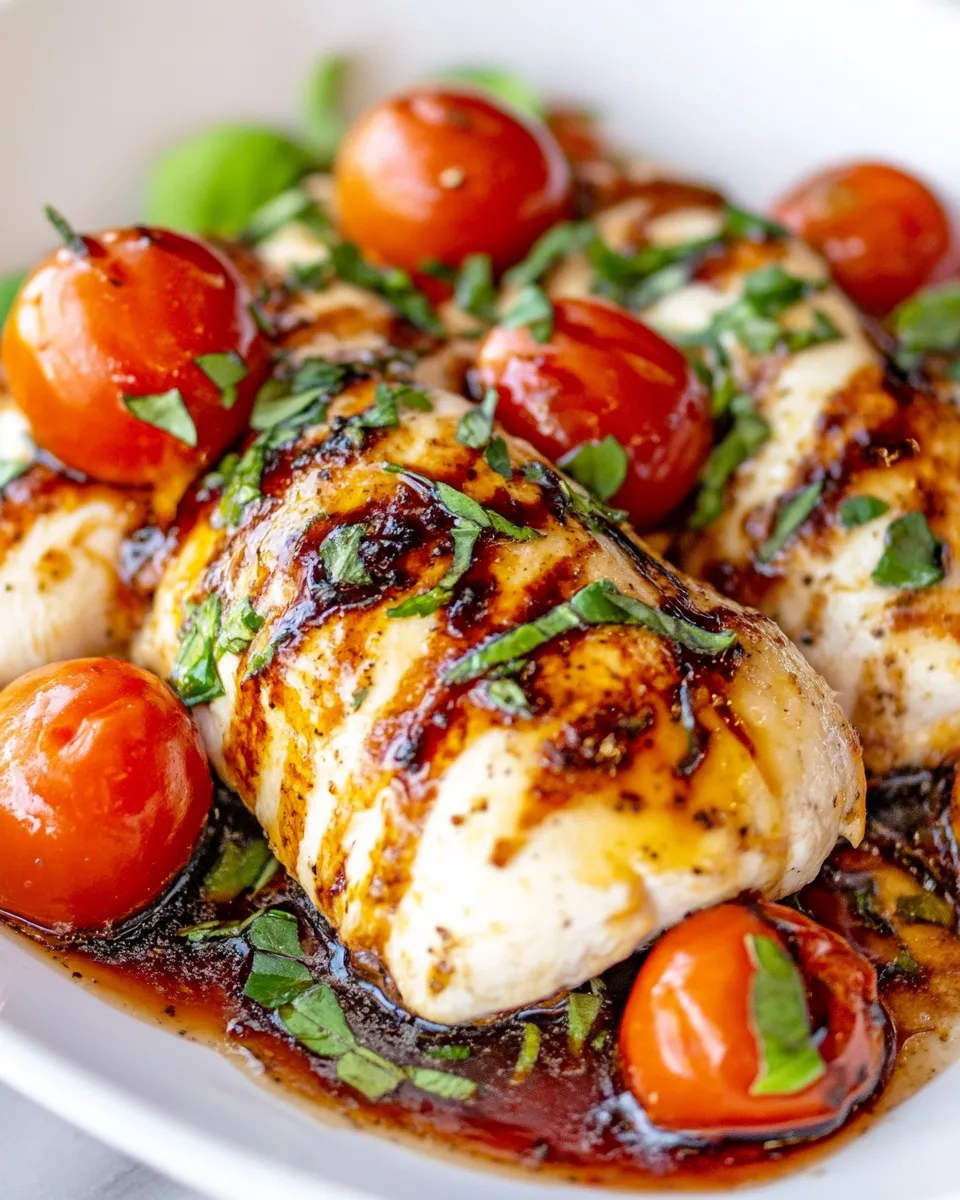
Bright, simple, and impossibly satisfying—Chicken Caprese is one of those recipes that feels special without demanding a lot of fuss. It brings together seared chicken, a sweet-tangy balsamic glaze, fresh tomatoes, butter-soft mozzarella and basil. The result is a dinner that looks restaurant-ready but comes together on a weeknight.
I rely on straightforward technique: dry the chicken, season, sear to golden, reduce a quick pan sauce, finish in the oven, then melt mozzarella under the broiler. Timing matters, but the steps are forgiving. You’ll end up with juicy chicken and a sauce that ties the whole plate together.
This post walks you through the ingredients, the exact directions, common pitfalls, and small changes that keep the spirit of the dish while letting you adapt to what’s in your kitchen. No fluff—just practical advice to make this Chicken Caprese turn out great every time.
Ingredient Rundown
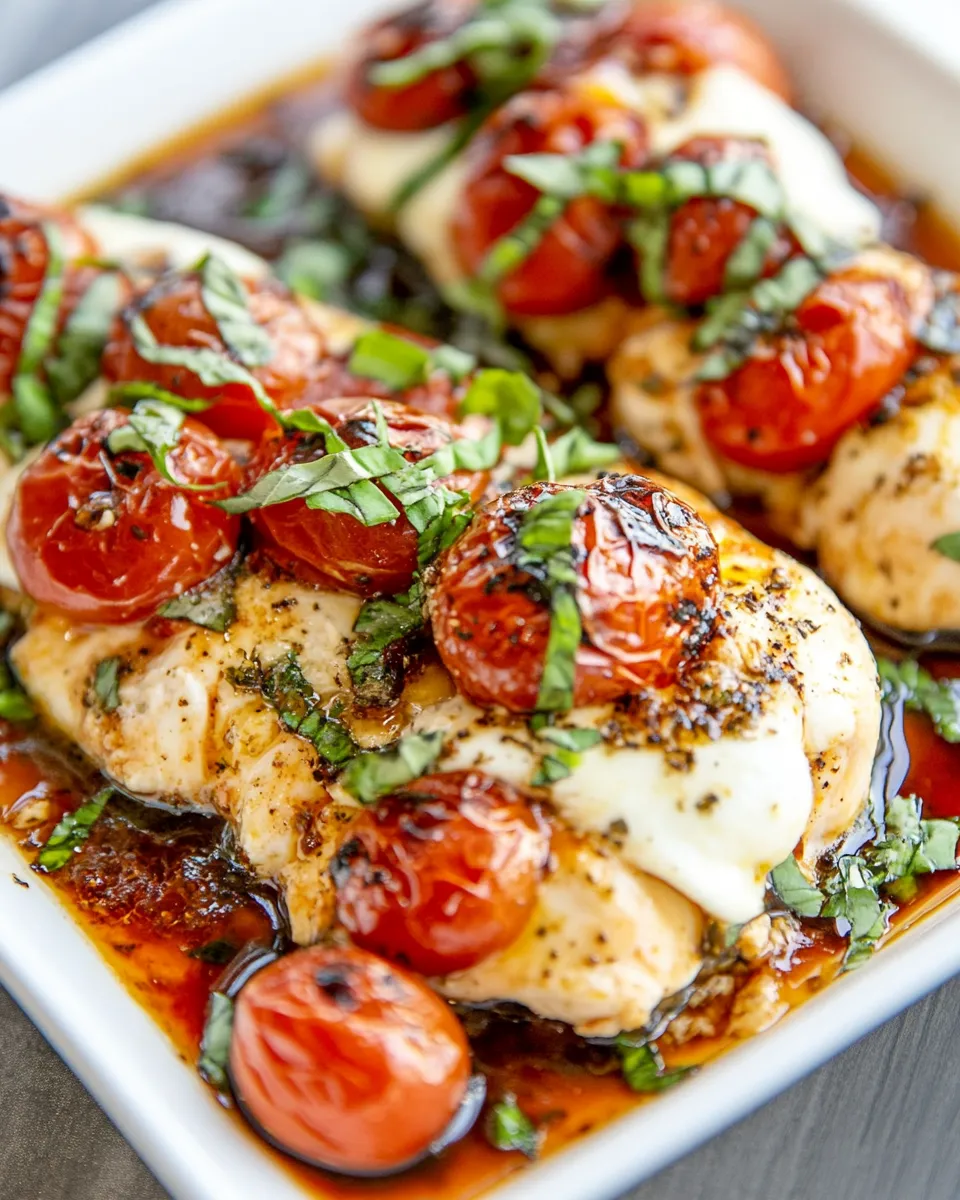
- 3-4 boneless skinless chicken breasts* — the main protein; trim fat and choose similar thickness for even cooking.
- 2 Tablespoons olive oil — for seasoning and searing; split between seasoning and the hot skillet for best browning.
- 3/4 teaspoon dried basil — provides Italian herb backbone; dried works fine in the seasoning mix.
- 3/4 teaspoon Dried oregano — pairs with basil to round the chicken’s savory profile.
- salt and pepper — simple seasoning; salt enhances flavor and helps the crust form during sear.
- 1/3 cup red onion, diced — adds sweetness and body to the balsamic reduction; dice small so it softens quickly.
- 1/3 cup balsamic vinegar — the acid backbone of the pan sauce; reduces to a glossy glaze.
- 2 Tablespoons light brown sugar — tempers the balsamic’s tang and helps create a sticky pan sauce.
- 1 clove garlic — minced; adds aromatic depth to the sauce—don’t let it burn in the pan.
- 2 Roma tomatoes, sliced — fresh topping; slice to similar thickness so each serving looks consistent.
- 8 ounces fresh mozzarella cheese, sliced — melty topping; use fresh slices and broil briefly to get a creamy finish.
- fresh basil leaves, chiffonade cut — finish with bright, peppery freshness; add right before serving to preserve color and aroma.
Directions: Chicken Caprese
- Preheat oven to 350°F (175°C). Pat the 3–4 chicken breasts dry with paper towels. Season both sides of the chicken with 1 Tablespoon olive oil, 3/4 teaspoon dried basil, 3/4 teaspoon dried oregano, and salt and pepper to taste.
- Heat a large oven-proof skillet over medium-high heat. Add the remaining 1 Tablespoon olive oil and heat until shimmering.
- Add the seasoned chicken to the hot skillet and sear until golden, about 2–3 minutes per side, flipping once. Remove the chicken to a plate.
- In a small bowl, combine the 1/3 cup diced red onion, 1 clove garlic (minced), 1/3 cup balsamic vinegar, and 2 Tablespoons light brown sugar. Stir to combine.
- Pour the onion–balsamic mixture into the skillet and bring to a simmer over medium heat. Cook, stirring, for about 3 minutes to reduce slightly.
- Return the seared chicken to the skillet, spooning some of the sauce over each piece. Transfer the skillet to the preheated 350°F oven and roast until the chicken reaches an internal temperature of 165°F (74°C), about 10–20 minutes depending on thickness. Check temperature at the thickest part.
- Remove the skillet from the oven and set the oven to broil. Top each chicken breast with slices of the fresh mozzarella (from the 8 ounces prepared).
- Broil the chicken just until the mozzarella melts and begins to bubble, watching closely so it does not burn (usually 1–2 minutes).
- Remove from the oven. Serve each chicken breast topped with the sliced Roma tomatoes and the chiffonade fresh basil leaves, and spoon the pan sauce over the top. Serve immediately.
Why This Recipe is a Keeper
This Chicken Caprese hits a few key notes: beautiful presentation, dependable technique, and layered flavor. The sear locks in juices and builds Maillard flavor. The balsamic–onion reduction turns into a glossy sauce that clings to the chicken and pairs beautifully with the cool mozzarella and fresh tomato. Fresh basil brightens every bite.
It’s forgiving, too. As long as you dry the chicken, get a good sear, and finish to the right internal temperature, the dish will sing. The components come together fast and then simply wait for a quick oven finish. That balance of speed and reliability is why I keep this recipe in regular rotation.
Flavor-Forward Alternatives
If you want to tweak the profile, small swaps take this in different directions without losing the spirit of the dish.
Cheese & finishing
- Try burrata or a torn fresh mozzarella for an extra-luxurious, creamy finish.
- A drizzle of a good balsamic glaze over the finished plate intensifies the sweet-tang factor.
Herbs & aromatics
- Fold in a few torn baby arugula leaves at the end for peppery contrast.
- Finish with lemon zest if you want a brighter, citrus lift.
These are ideas to nudge the dish. Use what you like and what’s on hand—no need to overcomplicate it.
Essential Tools for Success
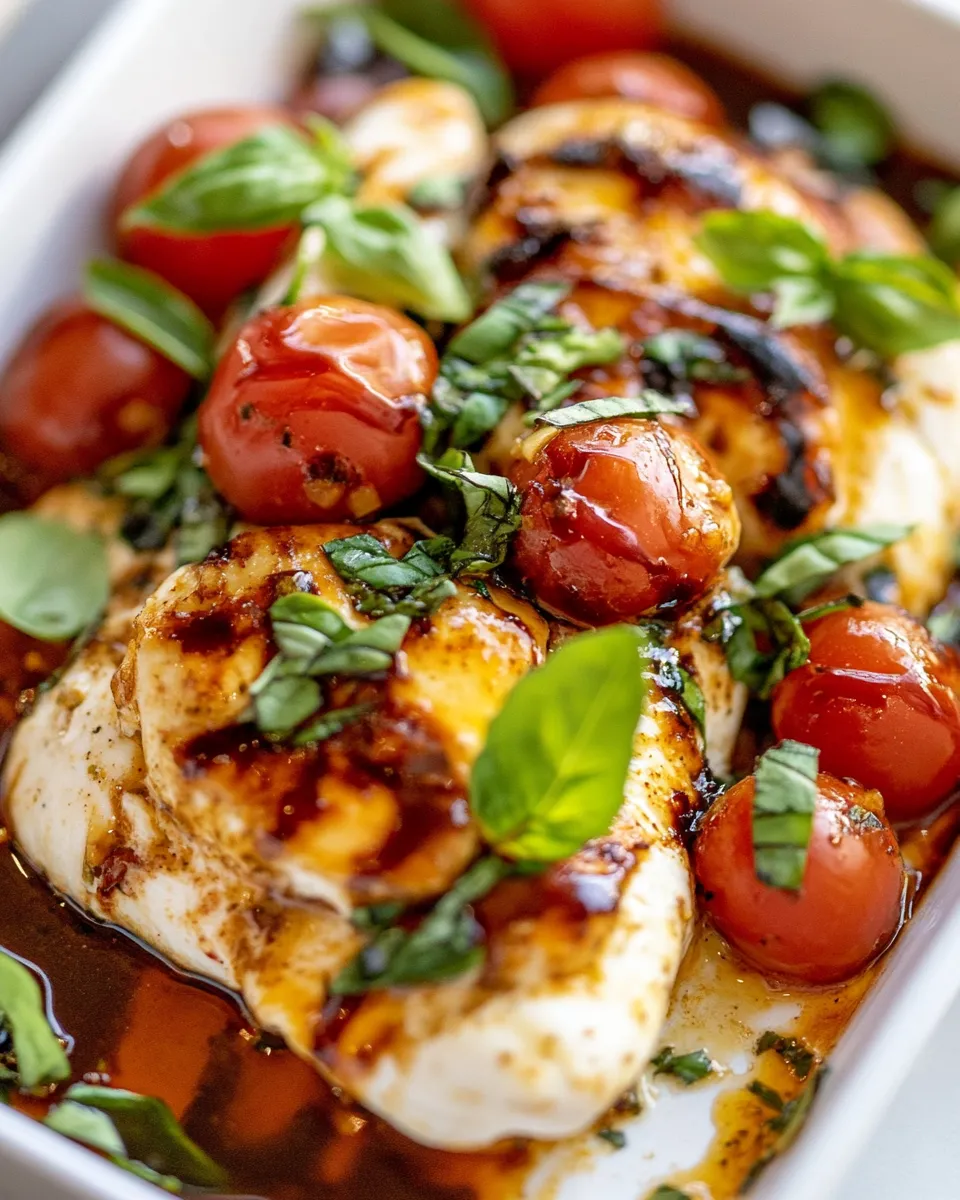
You don’t need fancy kit, but a few basics make the process easier and more consistent.
- Heavy oven-proof skillet (cast iron or stainless) — perfect for searing on the stovetop and finishing in the oven without transferring.
- Instant-read thermometer — the most reliable way to hit 165°F (74°C) without overcooking.
- Sharp knife and cutting board — for even tomato slices and a tidy chiffonade of basil.
- Small mixing bowl and wooden spoon — for whisking the onion–balsamic mixture and stirring the pan sauce.
Easy-to-Miss Gotchas
These small mistakes are common and easy to avoid.
- Not drying the chicken — wet chicken steams and won’t brown properly. Pat it thoroughly with paper towels.
- Overcrowding the pan — leave enough space between breasts so they sear instead of steam.
- Broiling without watching — mozzarella melts quickly; the cheese can go from bubbly to brown in seconds. Stay by the oven.
- Not checking the thickest part — ovens and breast thickness vary. Use an instant-read thermometer to confirm 165°F (74°C).
Make It Year-Round
Even though Caprese is often thought of as a summer dish, it adapts well across seasons. In summer, use ripe, sun-warmed tomatoes and basil picked at peak flavor. In colder months, reach for the best-stored Roma tomatoes you can find and rely on the balsamic’s richness to compensate for less vibrant tomatoes.
For holiday dinners, double the sauce and serve family-style from the skillet. The dish scales easily—just sear chicken in batches and keep everything warm in a low oven before the final broil.
Author’s Commentary
I return to this recipe because it checks so many boxes: pretty plating, fast prep, and flavors that people actually comment on. When I taught friends to make it, the biggest surprises were how much the quick balsamic reduction changes the dish and how a short broil transforms simple slices of mozzarella into something decadent.
My personal tweak is to let the reduced balsamic sit for a minute off the heat before returning the chicken. That brief rest concentrates flavors further and keeps the sauce from becoming too sharp. It’s a marginal change but a reliable one.
How to Store & Reheat
Storage: Cool any leftovers to room temperature (no more than two hours at room temp) and transfer to an airtight container. Refrigerate for up to 3–4 days. The fresh tomatoes and basil lose peak texture after a day or two, so consider storing sliced tomatoes separately if you expect multiple-day leftovers.
Reheating: Reheat gently to preserve texture. Preheat the oven to 325°F (160°C). Place the chicken in a shallow baking dish, spoon a little of the pan sauce over the pieces, and cover loosely with foil. Heat until warmed through, about 10–15 minutes depending on thickness. If you want the mozzarella melted again, remove foil and broil for 30–60 seconds—watch closely.
Quick Q&A
- Can I use bone-in chicken? — Yes, but increase oven roasting time and check temperature at the thickest part.
- What if I only have powdered mozzarella? — Fresh sliced mozzarella gives the best texture and melt; avoid shredded low-moisture types if you want that creamy finish.
- Is the brown sugar necessary? — It balances the balsamic’s acidity and helps the sauce thicken; you can reduce it slightly, but the glaze will be less silky.
- Can this be made ahead? — You can sear and keep chicken warm, then make the sauce and finish with mozzarella just before serving for best texture.
That’s a Wrap
Chicken Caprese is an elegant weeknight dinner that rewards a little technique. Dry the chicken, get a good sear, reduce the balsamic sauce, and finish with fresh mozzarella, tomatoes, and basil. The steps are clear and the result is always worth the effort.
Make it once, and you’ll likely find yourself reaching for it when you want something special with minimal stress. Keep the method, personalize the little details, and enjoy a plate that’s as lovely to look at as it is to eat.
Chicken Caprese
Ingredients
Ingredients
- 3-4 boneless skinless chicken breasts*
- 2 Tablespoonsolive oil
- 3/4 teaspoondried basil
- 3/4 teaspoonDried oregano
- salt and pepper
- 1/3 cupred onion diced
- 1/3 cupbalsamic vinegar
- 2 Tablespoonslight brown sugar
- 1 clovegarlic
- 2 Roma tomatoes sliced
- 8 ouncesfresh mozzarella cheese sliced
- fresh basil leaves chiffonade cut
Instructions
Instructions
- Preheat oven to 350°F (175°C). Pat the 3–4 chicken breasts dry with paper towels. Season both sides of the chicken with 1 Tablespoon olive oil, 3/4 teaspoon dried basil, 3/4 teaspoon dried oregano, and salt and pepper to taste.
- Heat a large oven-proof skillet over medium-high heat. Add the remaining 1 Tablespoon olive oil and heat until shimmering.
- Add the seasoned chicken to the hot skillet and sear until golden, about 2–3 minutes per side, flipping once. Remove the chicken to a plate.
- In a small bowl, combine the 1/3 cup diced red onion, 1 clove garlic (minced), 1/3 cup balsamic vinegar, and 2 Tablespoons light brown sugar. Stir to combine.
- Pour the onion–balsamic mixture into the skillet and bring to a simmer over medium heat. Cook, stirring, for about 3 minutes to reduce slightly.
- Return the seared chicken to the skillet, spooning some of the sauce over each piece. Transfer the skillet to the preheated 350°F oven and roast until the chicken reaches an internal temperature of 165°F (74°C), about 10–20 minutes depending on thickness. Check temperature at the thickest part.
- Remove the skillet from the oven and set the oven to broil. Top each chicken breast with slices of the fresh mozzarella (from the 8 ounces prepared).
- Broil the chicken just until the mozzarella melts and begins to bubble, watching closely so it does not burn (usually 1–2 minutes).
- Remove from the oven. Serve each chicken breast topped with the sliced Roma tomatoes and the chiffonade fresh basil leaves, and spoon the pan sauce over the top. Serve immediately.
Equipment
- oven-proof skillet
- Oven
- Small Bowl
- Paper Towels
Notes
Chicken:
If your chicken breasts are overly thick, you can butterfly them by cutting them in half, horizontally, to make two thinner chicken breast halves that will cook faster.
Storing Instructions:
Keep leftovers in an airtight container in the refrigerator for up to 3 days. I enjoy the cold chicken chopped over salad greens for lunch!
Freezing Instructions:
You may freeze the chicken before adding the cheese and tomatoes in an airtight container for up to 2 months. Thaw overnight in the fridge, then re-warm and add caprese toppings.
Grilled Chicken Caprese:
Season the raw chicken as directed, but grill on a well greased grill, until cooked through. Add mozzarella cheese and close grill lid until cheese has melted. Add tomato and basil and serve.
Chicken Caprese Pasta:
Double the balsamic sauce and serve the chicken caprese over hot cooked pasta, drizzling the pasta in the extra sauce.
Chicken Caprese Sandwich:
Cook chicken in oven as directed. Serve each cooked breast inside your favorite kind of toasted bread or crusty roll, with a slice of mozzarella, tomato, and handful of arugula. Garnish with salt, pepper, and a small drizzle of balsamic sauce.