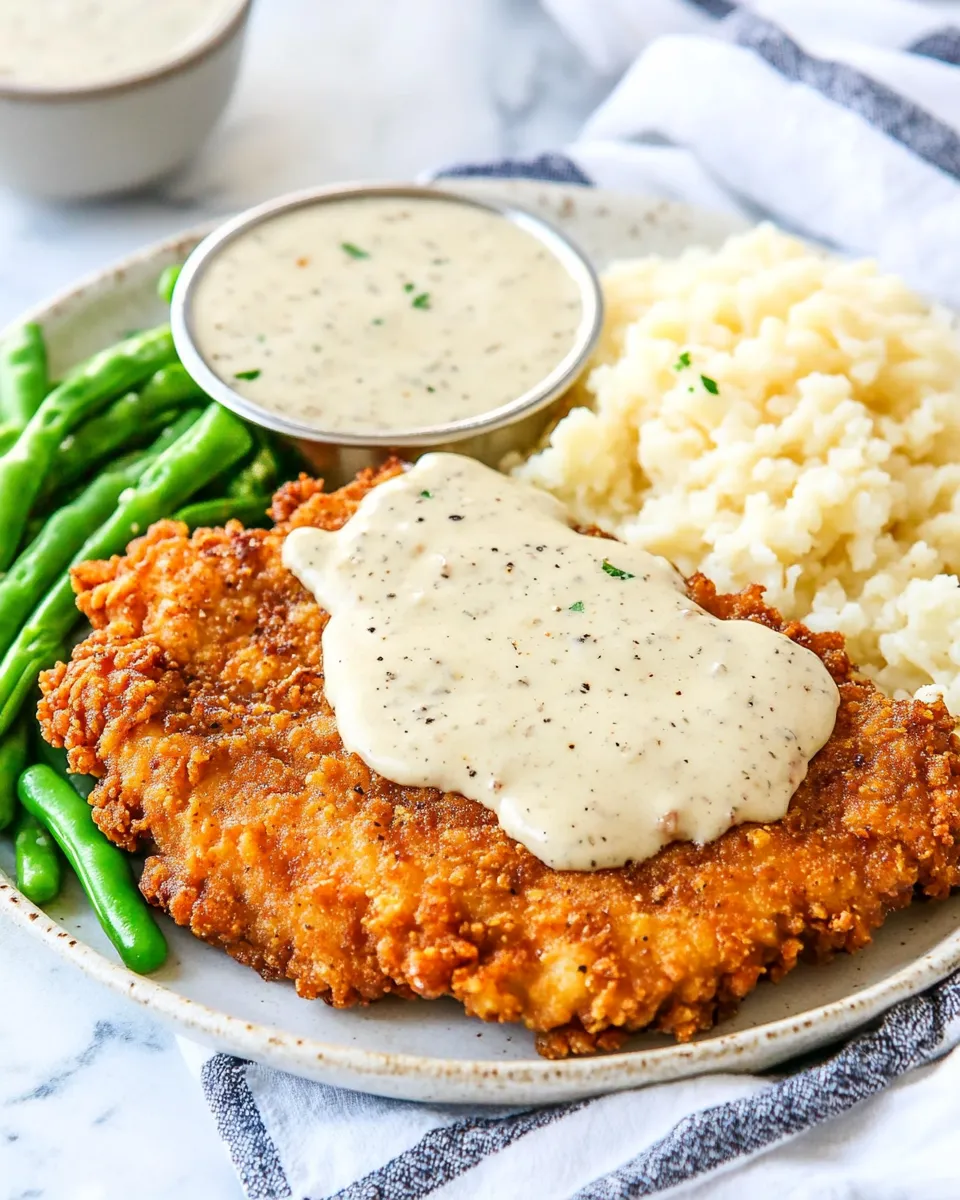
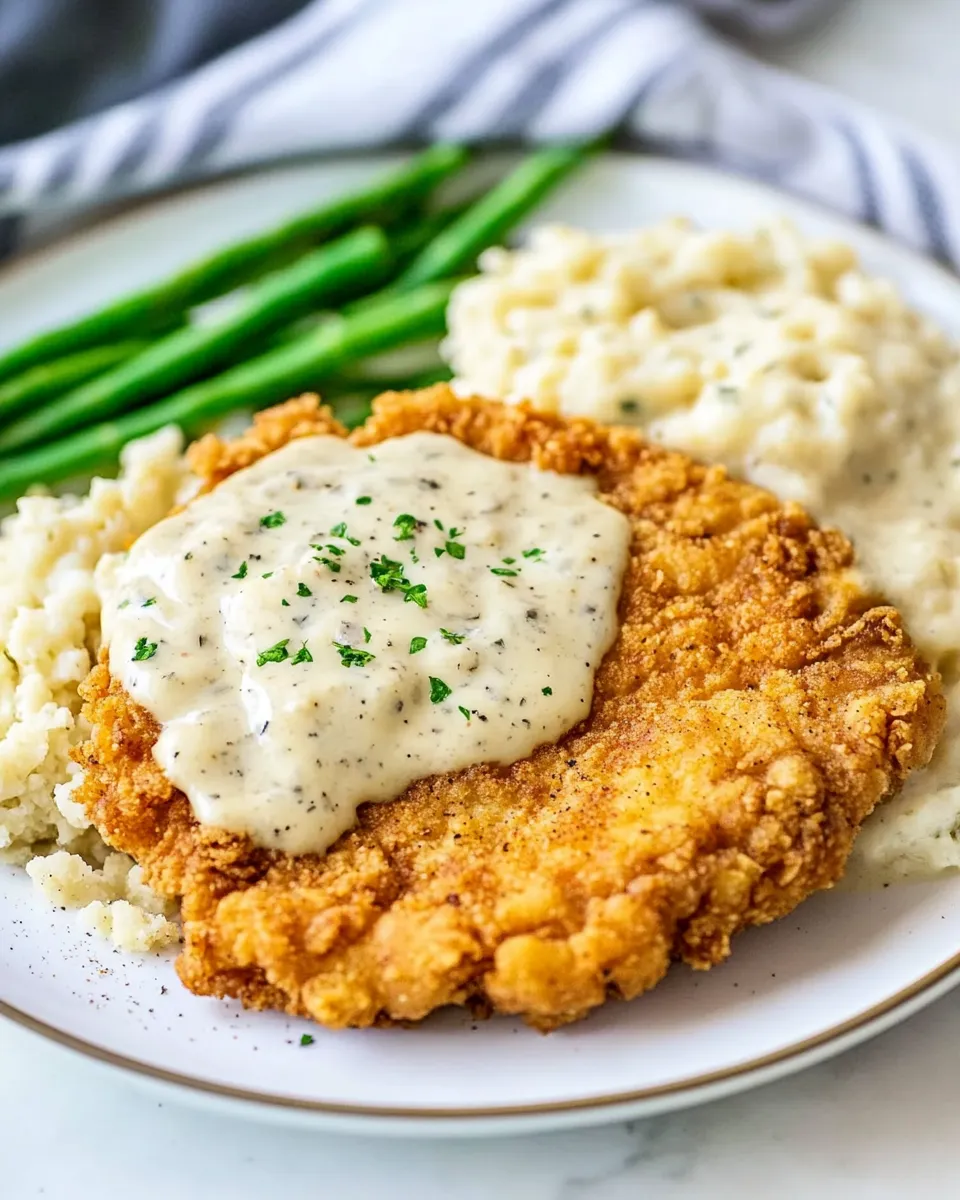
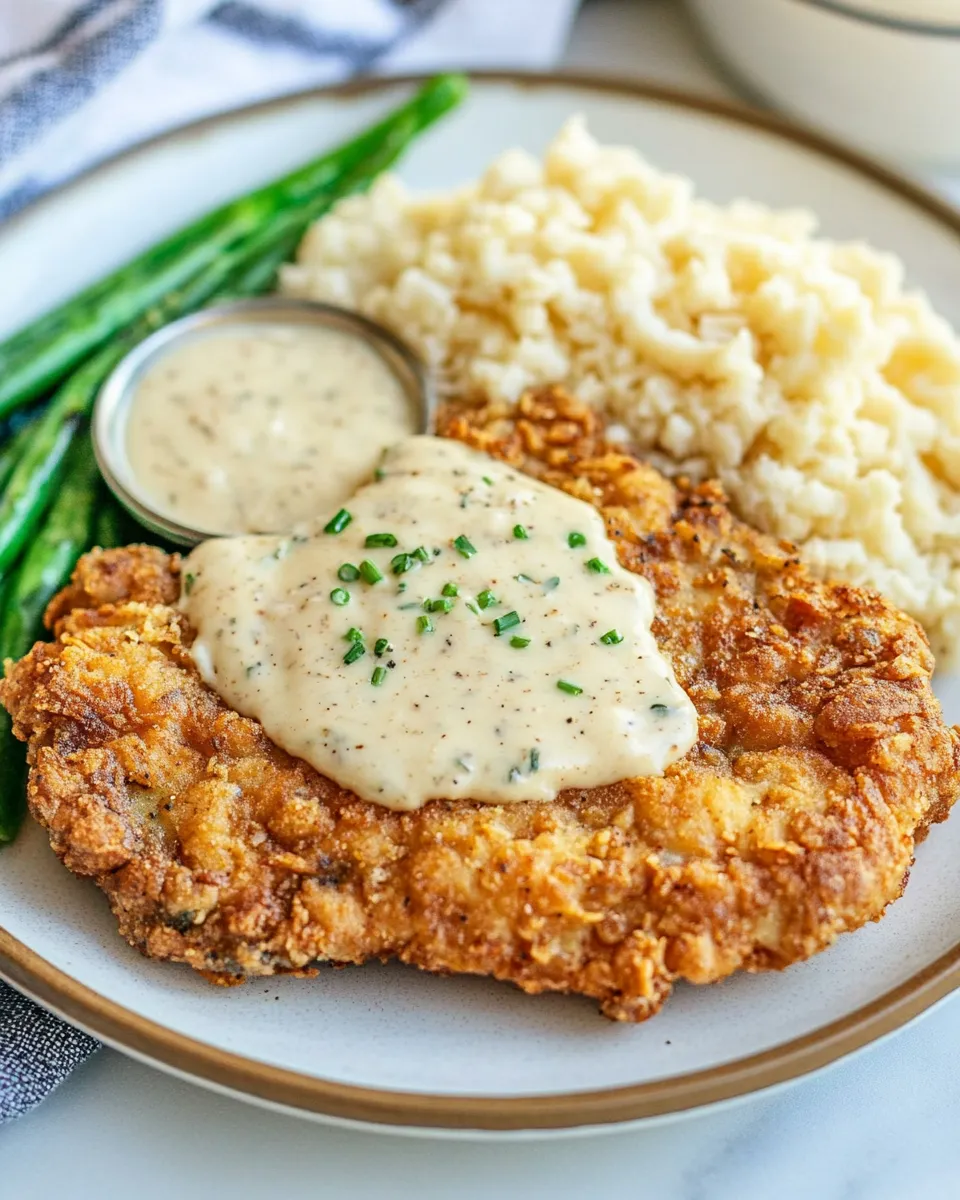
There’s something very satisfying about a well-made chicken fried steak: a thin, tenderized cube steak encased in a crisp, brown crust and finished with a peppery white gravy. It’s not fussy food. It’s confident, homey cooking—ideal for a weeknight that needs comforting or a weekend that wants to impress without stress.
I keep this version in heavy rotation because it balances texture and flavor reliably. The double-stage coating—cornstarch, egg-buttermilk, then a seasoned flour—gives a crunchy exterior that holds up under gravy. The gravy is straightforward: a roux made from the pan drippings and flour, whisked with milk until silky and seasoned boldly with coarse black pepper.
Below you’ll find a clear ingredient rundown, the exact step-by-step process, troubleshooting tips, equipment notes, and sensible substitutions that preserve texture. Read straight through for timing and storage tips, or jump to the section you need. Let’s get to it.
Ingredient Rundown
- 4 cube steaks (about 1/4 to 1/2 pound each, about 2 pounds / 900 g total) — the main protein; pat dry and pound thin to tenderize and ensure quick, even cooking.
- 1 teaspoon salt — for seasoning the steaks before dredging.
- 1 cup (120 g) cornstarch — the first dry coating; gives an initial dry barrier that helps the egg mixture cling and contributes to a crisp crust.
- 1 large egg — combined with buttermilk to bind the flour coating to the steak.
- 1 cup (250 ml) buttermilk — tangy liquid for the egg wash; tenderizes and adds flavor. Reserve 1/4 cup for the flour mixture per the recipe.
- 1 tablespoon Tabasco hot sauce — adds a mild, sharp heat to the egg-buttermilk wash; can be swapped with another hot sauce if needed.
- 2 cups (240 g) all-purpose flour — base of the seasoned flour coating (Bowl C) that creates the crunchy crust.
- 1 teaspoon salt — salt for the seasoned flour mix; distinct from the salt used to season the steaks.
- 1 teaspoon ground black pepper — pepper in the flour mix to build savory heat into the crust.
- 2 teaspoons smoked paprika — adds color and a subtle smoky note to the coating.
- 1/4 teaspoon dried thyme — a background herb note that complements the savory crust.
- 2 teaspoons garlic powder — garlic flavor in the flour mix; dries and concentrates flavor so it survives frying.
- 1 teaspoon onion powder — adds sweet, savory depth to the coating.
- 1 teaspoon baking powder — a lift agent in the flour mix that helps the crust puff slightly and stay crisp.
- Oil for frying — vegetable, canola, or peanut oil; choose a neutral oil with a high smoke point for shallow frying.
- 1/4 cup (30 g) all-purpose flour — for making the gravy roux with reserved frying oil.
- 2 1/4 cups (530 ml) 2% milk (semi-skimmed) — the liquid for the gravy; brings creaminess without being too heavy.
- 1 tablespoon coarsely ground black pepper — bold pepper added to the gravy for a hallmark peppery finish.
- 1/2 teaspoon salt — final seasoning for the gravy; adjust to taste.
Cooking (Chicken Fried Steak): The Process
- Pat the 4 cube steaks dry with paper towels. Place one steak at a time between plastic wrap or in a zip-top bag and pound to about 1/4-inch (6 mm) thickness. Season both sides of each steak with the 1 teaspoon salt listed for seasoning.
- Set up a three-part dredging station:
- Bowl A: 1 cup (120 g) cornstarch.
- Bowl B: 1 large egg, 3/4 cup of the buttermilk (reserve the remaining 1/4 cup), and 1 tablespoon Tabasco (or other hot sauce). Whisk to combine.
- Bowl C: 2 cups (240 g) all-purpose flour, 1 teaspoon salt, 1 teaspoon ground black pepper, 2 teaspoons smoked paprika, 1/4 teaspoon dried thyme, 2 teaspoons garlic powder, 1 teaspoon onion powder, and 1 teaspoon baking powder. Mix to combine.
- Pour the reserved 1/4 cup buttermilk into Bowl C (the dry flour mixture). Use your hands or a fork to rub the buttermilk into the flour mixture until it has a coarse, wet-sand texture and is evenly moistened. Set Bowl C aside.
- Working one steak at a time, dredge in this order:
- Coat the steak in cornstarch from Bowl A; shake off any excess.
- Dip the steak into the egg-buttermilk-hot sauce mixture in Bowl B; allow excess to drip off.
- Press the steak firmly into the flour mixture in Bowl C so the coating adheres well. Shake off any loose flour.
Place each coated steak on a wire rack (set over a baking sheet) while you finish coating the rest.
- Pour oil for frying into a large, heavy skillet, Dutch oven, or wok to a depth of about 1/2 to 1 inch (enough for shallow frying). Heat the oil to 350°F (180°C) and monitor with a thermometer. Keep the oil temperature steady; adjust heat as needed.
- Fry the steaks one at a time (do not overcrowd the pan). Carefully add a steak to the hot oil and cook, turning once, until the crust is deep golden and crisp and the steak is cooked through, about 4–6 minutes total per steak. Timing will vary with pan size and oil temperature.
- Transfer each cooked steak to a clean wire rack set over paper towels to drain while you cook the remaining steaks. Reserve some of the frying oil and browned bits for the gravy (see next step).
- To make the gravy: pour about 1/4 cup of the reserved frying oil (use oil from the pan) into a medium saucepan and heat over medium. Whisk in 1/4 cup (30 g) all-purpose flour and cook, whisking constantly, for about 1 minute until the roux is lightly browned.
- Gradually whisk in 2 1/4 cups (530 ml) 2% milk. Continue whisking and bring the mixture to a gentle simmer. Cook until the gravy thickens to your desired consistency, about 3–6 minutes.
- Stir in 1 tablespoon coarsely ground black pepper and 1/2 teaspoon salt. Taste and adjust seasoning if needed. Remove the gravy from the heat.
- Serve the hot gravy spooned over the chicken fried steaks.
Why It Deserves a Spot
Chicken fried steak is the kind of dish that hits a lot of marks: it’s textural (crisp crust, tender center), flavorful (seasoned, peppery gravy), and filling. For many, it’s comforting in the most literal sense—hot, salty food with gravy that soaks into every bite.
This version keeps the technique straightforward while leaning on a few deliberate choices—cornstarch first, wet-sand flour mix with a touch of baking powder, and a pepper-forward gravy—that make the final plate consistently satisfying. If you want a guaranteed crowd-pleaser that doesn’t require tricky timing or fussy prep, this is a reliable go-to.
Texture-Safe Substitutions
If you need to swap an ingredient but want to keep the texture predictable, choose substitutions that replicate the original’s function:
- Cornstarch: Potato starch works similarly for that initial dry coat and crispness.
- All-purpose flour (coating): A 1:1 gluten-free flour blend will work for the crust, though results vary—look for blends that include xanthan gum for structure.
- Buttermilk: Plain yogurt thinned with a little milk mimics the acidity and thickness if you’re out of buttermilk.
- Milk for gravy: Use an unsweetened plant-based milk with neutral flavor (soy or oat) for a dairy-free option; it may be slightly thinner, so cook a bit longer to reduce if needed.
Setup & Equipment
Preparation and the right tools simplify this recipe.
- Heavy skillet, Dutch oven, or wok: Holds heat steadily for shallow frying.
- Candy or frying thermometer: Keeps oil at 350°F (180°C); crucial to prevent greasy or under-browned crusts.
- Three bowls for dredging: One for cornstarch, one for egg/buttermilk, one for the seasoned flour.
- Wire racks over baking sheets: For the steaks to rest and drain—this keeps the crust crisp compared with paper towels alone.
- Medium saucepan and whisk: For the gravy roux and finishing.
Mistakes Even Pros Make
Small missteps can turn this simple dish into a soggy or overcooked one. Watch for these recurring issues:
- Overcrowding the pan: Adds steam and drops oil temperature—cook one at a time or only as many as your pan comfortably holds without touching.
- Skipping the cornstarch step: The cornstarch layer helps the egg mixture cling and yields a lighter, crisper crust; omitting it can give a heavier, less stable coating.
- Incorrect oil temperature: Too cool = oily crust; too hot = burnt exterior and undercooked center. Keep a thermometer handy and adjust heat to maintain ~350°F (180°C).
- Not shaking excess flour: Loose flour fries off and can burn in the pan; shake off gently before frying.
- Using a pan that’s too shallow or small: Oil splatters and temperature swings increase; use a heavy pan with at least 1/2–1 inch of oil depth.
Dietary Customizations
Here are straightforward ways to adapt this recipe without losing its character:
- Gluten-free: Substitute the all-purpose flour with a cup-for-cup gluten-free blend in the coating and use a gluten-free flour for the gravy roux. Expect slightly different color and crispness but similar structure.
- Dairy-free: Use a neutral, unsweetened plant milk for the gravy and a dairy-free yogurt thinned with water or plant milk in place of buttermilk. The coating and frying process remain the same.
- Lower-fat: You can brown the steaks in a skillet with a bit of oil then finish in the oven, but know the crust won’t be as deeply fried or as crisp as shallow frying in oil. The gravy can be made with lower-fat milk as written.
Cook’s Notes
These are the small details that make the biggest difference:
- Pound consistently: Aim for 1/4-inch (6 mm) thickness; it cooks quickly and stays tender. Thicker pieces take longer and risk burning the crust before the center cooks.
- Let the coating set: After dredging, rest the steaks on a wire rack while you heat the oil. This helps the crust adhere and reduces fallout in the pan.
- Reserve oil bits for gravy: Use the browned bits and some of the frying oil for the roux—this adds depth. If the oil is overly dark or burnt, use fresh oil and incorporate a bit of pan fond from a different pan if available.
- Gravy thickness: If the gravy is too thin, simmer a bit longer. Too thick? Whisk in a splash of milk to loosen it.
How to Store & Reheat
Store leftovers properly to keep texture and flavor.
- Refrigerate: Cool steaks completely, then store in an airtight container for up to 3 days. Keep gravy in a separate container.
- Reheat steaks: Reheat in a 375°F (190°C) oven on a wire rack set over a baking sheet for 8–12 minutes until heated through; this helps re-crisp the crust. Avoid microwaving unless necessary—it makes the crust soggy.
- Reheat gravy: Warm gently on the stovetop over low to medium heat, whisking. Add a splash of milk if it has thickened too much in the fridge.
Popular Questions
Q: Can I cook multiple steaks at once?
A: Only if your pan is large enough to keep the steaks from touching and the oil temperature from dropping significantly. Otherwise, cook one at a time for best results.
Q: Why is there cornstarch before the egg wash?
A: The cornstarch helps dry the surface and creates a tooth for the egg wash to cling to. It also contributes to a crispier crust after frying.
Q: Can I make the gravy ahead?
A: Yes—store it separately in the fridge for up to 3 days. Reheat gently, whisking, and add a little milk if it’s too thick.
Q: Is cube steak necessary?
A: Cube steak is traditional because it’s been mechanically tenderized and pounds thin easily. You can use other thin steaks, but texture and tenderness will vary.
Final Thoughts
Chicken fried steak feels like an indulgence because it is—crispy fried coating and a peppery, creamy gravy are hard to resist. The method here keeps things consistent and approachable: pound, dredge in three stages, shallow-fry at a steady temperature, then turn those pan bits into gravy. With a little attention to oil temperature and a wire rack to keep the crust crisp, you’ll end up with a plate that’s genuinely rewarding.
If you try it, take note of what you liked or what you’d tweak—salt level in the coating, how peppery you like the gravy, or whether you prefer a thicker crust. This is a recipe meant to be adjusted for the perfect weeknight or Sunday supper in your kitchen.
Chicken Fried Steak
Ingredients
Ingredients
- ?4 900 gcube steaksabout ? to 1/2 pound each, about 2 pounds (900 g) in total
- ?1 teaspoonsaltto season the steaks
- ?1 cup 120 gcornstarch
- ?1 largeegg
- ?1 cup 250 mlbuttermilk
- ?1 tablespoontabasco hot sauceor any other hot sauce
- ?2 cups 240 gall purpose flour
- ?1 teaspoonsalt
- ?1 teaspoonground black pepper
- ?2 teaspoonssmoked paprika
- ?1/4 teaspoondried thyme
- ?2 teaspoonsgarlic powder
- ?1 teaspoononion powder
- ?1 teaspoonbaking powder
- ?Oilfor frying. Vegetable canola, or peanut oil
- ?1/4 cup 30 gall purpose flour
- ?2 1/4 cups 530 mlmilk2% (semi-skimmed milk)
- ?1 tablespooncoarsely ground black pepper
- ?1/2 teaspoonsalt
Instructions
Instructions
- Pat the 4 cube steaks dry with paper towels. Place one steak at a time between plastic wrap or in a zip-top bag and pound to about 1/4-inch (6 mm) thickness. Season both sides of each steak with the 1 teaspoon salt listed for seasoning.
- Set up a three-part dredging station: - Bowl A: 1 cup (120 g) cornstarch. - Bowl B: 1 large egg, 3/4 cup of the buttermilk (reserve the remaining 1/4 cup), and 1 tablespoon Tabasco (or other hot sauce). Whisk to combine. - Bowl C: 2 cups (240 g) all-purpose flour, 1 teaspoon salt, 1 teaspoon ground black pepper, 2 teaspoons smoked paprika, 1/4 teaspoon dried thyme, 2 teaspoons garlic powder, 1 teaspoon onion powder, and 1 teaspoon baking powder. Mix to combine.
- Pour the reserved 1/4 cup buttermilk into Bowl C (the dry flour mixture). Use your hands or a fork to rub the buttermilk into the flour mixture until it has a coarse, wet-sand texture and is evenly moistened. Set Bowl C aside.
- Working one steak at a time, dredge in this order: a. Coat the steak in cornstarch from Bowl A; shake off any excess. b. Dip the steak into the egg-buttermilk-hot sauce mixture in Bowl B; allow excess to drip off. c. Press the steak firmly into the flour mixture in Bowl C so the coating adheres well. Shake off any loose flour. Place each coated steak on a wire rack (set over a baking sheet) while you finish coating the rest.
- Pour oil for frying into a large, heavy skillet, Dutch oven, or wok to a depth of about 1/2 to 1 inch (enough for shallow frying). Heat the oil to 350°F (180°C) and monitor with a thermometer. Keep the oil temperature steady; adjust heat as needed.
- Fry the steaks one at a time (do not overcrowd the pan). Carefully add a steak to the hot oil and cook, turning once, until the crust is deep golden and crisp and the steak is cooked through, about 4–6 minutes total per steak. Timing will vary with pan size and oil temperature.
- Transfer each cooked steak to a clean wire rack set over paper towels to drain while you cook the remaining steaks. Reserve some of the frying oil and browned bits for the gravy (see next step).
- To make the gravy: pour about 1/4 cup of the reserved frying oil (use oil from the pan) into a medium saucepan and heat over medium. Whisk in 1/4 cup (30 g) all-purpose flour and cook, whisking constantly, for about 1 minute until the roux is lightly browned.
- Gradually whisk in 2 1/4 cups (530 ml) 2% milk. Continue whisking and bring the mixture to a gentle simmer. Cook until the gravy thickens to your desired consistency, about 3–6 minutes.
- Stir in 1 tablespoon coarsely ground black pepper and 1/2 teaspoon salt. Taste and adjust seasoning if needed. Remove the gravy from the heat.
- Serve the hot gravy spooned over the chicken fried steaks.
Equipment
- meat tenderizer
- 6 Quart Dutch Oven
- Kitchen tongs
Notes
Pat the steaks dry with a paper towel.The coating will stick better.
Don’t overcrowd the pan.It’s best to fry the steaks one at a time to ensure you get a nice crunchy crust.
Makesausage gravy.Some people like to add crumbled-up breakfast sausage to their gravy for added flavor and texture. It’s amazing both ways!
Keep the first batch warm.As you fry the steaks, keep the ready ones in a 225°F/110°C oven to keep them warm.
Add the browned bitsfrom the bottom of the pan you fried the steaks into the gravy saucepan. They’ll give it lots of great flavor!