
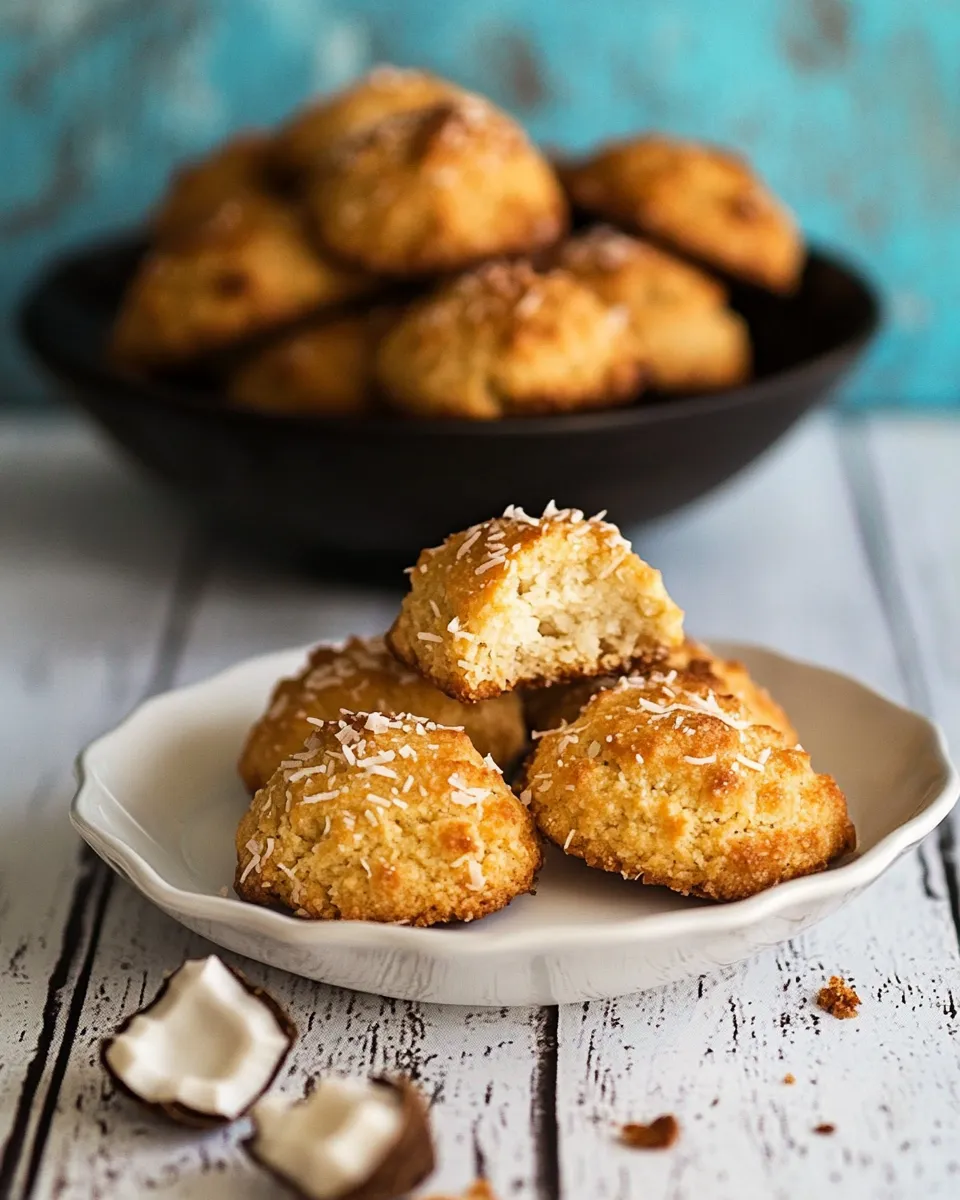
These coconut cookies are the kind of homemade treat that arrives at the table slightly imperfect and entirely welcome. They are rustic, tender in the center, and edged with golden-brown sweetness. No need for fancy piping bags or perfect rounds—just a couple of spoons and good coconut.
I make these when I want something that feels like a family recipe: quick to mix, forgiving in the oven, and sturdy enough to pack in a lunchbox. They carry a warm cinnamon note and the chewy pop of coarsely grated coconut in each bite. They are exactly what they say on the tin—simple, honest cookies.
Below you’ll find a clear ingredient list (with quick tips), step-by-step directions copied from the tested source, and practical notes on variations, common problems, and storage. Bake a tray and let them cool on the sheet; they settle and finish their flavor there.
Ingredient Rundown

These ingredients are straightforward. There’s butter for flavor and greasing, brown sugar for moisture and caramel notes, eggs to bind, and a good measure of coarsely grated coconut for texture. A small amount of baking soda and salt give lift and balance. Cinnamon is the subtle spice that ties the coconut and brown sugar together.
Ingredients
- salted butter,or unsalted, for greasing baking tray — prevents sticking; use what you have, salted adds a touch of savory contrast.
- ½teaspoonbaking soda — provides a gentle lift and lightness.
- ½teaspooncinnamon powder — warm spice that complements the coconut and brown sugar.
- ¼teaspoonsalt — balances sweetness and enhances flavor.
- 1½cupall-purpose flour — the structure of the cookie; measure with a scoop-and-level for consistency.
- 1cupbrown sugar — adds moisture and a toffee-like sweetness.
- ⅓cupsalted butter,room-temperature (½ stick) — creamed with the sugar for texture and richness.
- 2egg (medium) — binds the dough and adds lift.
- 1¼cupcoarsely grated coconut — the star ingredient; use coarsely grated for chew and visible coconut bits.
Cooking (Coconetes): The Process
- Preheat the oven to 300 °F (145 °C). Grease a baking tray with the salted or unsalted butter.
- Sift the baking soda, cinnamon, salt, and all-purpose flour together into a bowl; set this dry mixture aside.
- In the bowl of a stand mixer, combine the brown sugar and the 1/3 cup room-temperature salted butter. Beat at low speed until the butter lightens in color and the mixture is evenly combined.
- With the mixer running, add the eggs one at a time, beating after each addition until incorporated. Stop the mixer and scrape down the bowl as needed.
- Remove the bowl from the mixer. Using a spatula, fold the coarsely grated coconut into the wet mixture until evenly distributed.
- Fold the sifted flour mixture into the wet ingredients in two or three additions, mixing gently with the spatula until just combined and no large streaks of flour remain.
- Using two spoons, form little mounds of dough on the greased baking tray—use two spoonfuls per mound. Leave space between the mounds so they do not touch as they bake.
- Bake the cookies, checking at the 15-minute mark. Continue baking until the cookies turn golden brown.
- Remove the tray from the oven and let the cookies cool to room temperature on the tray before serving.
Why It Deserves a Spot
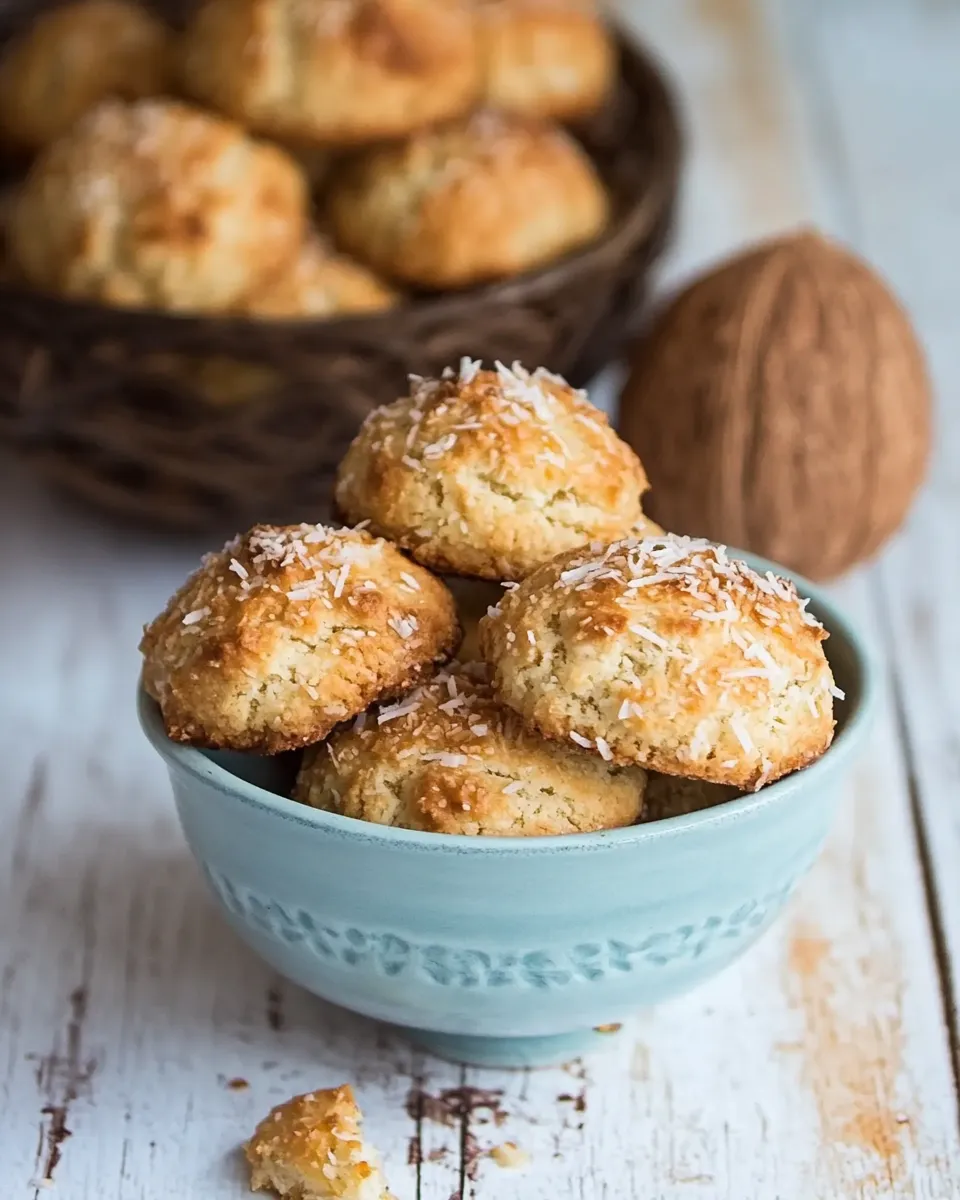
These cookies reward very little fuss with a satisfying result. They are quick to assemble and don’t require chilling the dough or rolling. The texture is pleasing: a lightly crisp exterior with a chewy, coconut-forward interior. They are also forgiving—slightly different spoon sizes or a small variance in oven temperature won’t ruin the batch.
Beyond convenience, they carry character: the coconut is unmistakably present, and the cinnamon-brown sugar combo creates a warm background flavor. They work as an afternoon snack, a companion to coffee, or a low-key dessert to share.
Ingredient Flex Options
Keep changes small and intentional. The recipe already acknowledges salted and unsalted butter—choose one and adjust added salt if needed. If you prefer a less pronounced cinnamon note, reduce the ½ teaspoon slightly or omit it entirely; the cookies will still perform well.
If your coconut is very fine rather than coarsely grated, expect a different texture—less chew, more uniform dough. You can still bake them, but the mouthfeel will change. Brown sugar is responsible for moisture; substituting with a different sweetener will alter texture and sweetness level, so stick with the listed 1 cup brown sugar for predictable results.
Appliances & Accessories
Stand mixer (or a sturdy bowl and hand mixer): the mixer makes creaming the butter and sugar effortless. A spatula: for folding coconut and flour without overworking. A sieve or sifter: to combine and aerate the dry ingredients. Baking tray: greased as specified. Two spoons: the simplest tool to form the rustic mounds. An oven thermometer can be handy if your oven runs hot or cool.
Common Errors (and Fixes)
Issue: Cookies spread too much or run together
Fix: Ensure you left enough space between mounds on the tray and used two spoonfuls per mound as described. If spreading is extreme, your butter may have been too soft or your dough too warm—chill the tray briefly before baking next time.
Issue: Cookies are dense or tough
Fix: Mix gently when you fold in the flour mixture. Overworking develops the gluten in the all-purpose flour and yields a tougher cookie. Follow the instruction to mix until just combined.
Issue: Undercooked centers while edges brown
Fix: Oven temperatures vary. Check at the 15-minute mark as instructed; if edges are getting dark but centers are unset, lower the oven temperature slightly and extend baking time until the cookies are uniformly golden.
Fit It to Your Goals
Want quick snacks for tea? Stick with the recipe and serve once cooled on the tray. Making ahead for a gathering? Bake the day before—the flavor settles nicely. If you’re packing them for a lunchbox, let them cool completely and store in an airtight container so they keep their texture.
Looking to make a larger batch? Multiply the recipe, but work in stages: cream in manageable portions or use a larger bowl and give the mixer room to operate. The folding steps remain the same.
Behind the Recipe
These cookies have a rustic Dominican character—simple, unfussy, and coconut-forward. The name reflects regional variations and the casual nature of the treat: small masses of dough that bake into little golden pockets of coconut and spice. They echo a kitchen where ingredients are modest and the end result is meant to be shared.
The method—creaming butter and sugar, adding eggs, folding in coconut, and gently incorporating the dry mix—keeps the dough tender while distributing coconut throughout. The low oven temperature ensures a slow, even bake so the coconut cooks through without burning the edges.
Storage & Reheat Guide
Store cooled cookies in an airtight container at room temperature for a few days. They remain pleasant for snacking; the coconut and brown sugar keep them from drying out quickly. If you need longer storage, freezing is acceptable—flash-freeze the mounds on a tray, transfer to a sealed bag, and thaw before warming or serving.
To refresh: warm briefly in a low oven or a toaster oven until just warmed through; this brings back some of the original texture and aroma. Avoid overheating—these cookies are best gentle and warm, not piping hot.
Coconetes FAQs
Q: Can I make these without a stand mixer?
A: Yes. Use a hand mixer or beat the butter and brown sugar with a sturdy spoon and a little elbow grease. The key is to get the butter lightened and evenly combined with the sugar before adding the eggs.
Q: Is coarsely grated coconut necessary?
A: Coarse coconut gives chew and texture—it’s central to the cookie’s character. Finer coconut will yield a different mouthfeel; the cookie will be more uniform and less textured.
Q: Are these cookies crisp or soft?
A: They finish with a slightly crisp exterior and a chewy interior because of the coconut and brown sugar. Letting them cool on the tray helps them set to the intended texture.
Q: Can I omit the cinnamon?
A: Yes. Cinnamon is a subtle flavoring. Omitting it will not break the recipe—just change the aromatic profile slightly.
Let’s Eat
Serve these cookies at room temperature after they cool on the tray. They pair perfectly with coffee or a glass of cold milk, and they travel well for picnics or lunchboxes. They are plain in the best possible way—simple to make, honest to taste, and always ready to disappear from the plate.

Coconetes, Conconetes, o Masitas (Dominican Rustic Coconut Cookies)
Ingredients
Ingredients
- salted butter or unsalted, for greasing baking tray
- 1/2 teaspoonbaking soda
- 1/2 teaspooncinnamon powder
- 1/4 teaspoonsalt
- 1 1/2 cupall-purpose flour
- 1 cupbrown sugar
- 1/3 cupsalted butter room-temperature (1/2 stick)
- 2 egg medium
- 1 1/4 cupcoarsely grated coconut
Instructions
Instructions
- Preheat the oven to 300 °F (145 °C). Grease a baking tray with the salted or unsalted butter.
- Sift the baking soda, cinnamon, salt, and all-purpose flour together into a bowl; set this dry mixture aside.
- In the bowl of a stand mixer, combine the brown sugar and the 1/3 cup room-temperature salted butter. Beat at low speed until the butter lightens in color and the mixture is evenly combined.
- With the mixer running, add the eggs one at a time, beating after each addition until incorporated. Stop the mixer and scrape down the bowl as needed.
- Remove the bowl from the mixer. Using a spatula, fold the coarsely grated coconut into the wet mixture until evenly distributed.
- Fold the sifted flour mixture into the wet ingredients in two or three additions, mixing gently with the spatula until just combined and no large streaks of flour remain.
- Using two spoons, form little mounds of dough on the greased baking tray—use two spoonfuls per mound. Leave space between the mounds so they do not touch as they bake.
- Bake the cookies, checking at the 15-minute mark. Continue baking until the cookies turn golden brown.
- Remove the tray from the oven and let the cookies cool to room temperature on the tray before serving.
Notes
If yours turn out flatter, don't fret, that's exactly how the store-bought ones look.