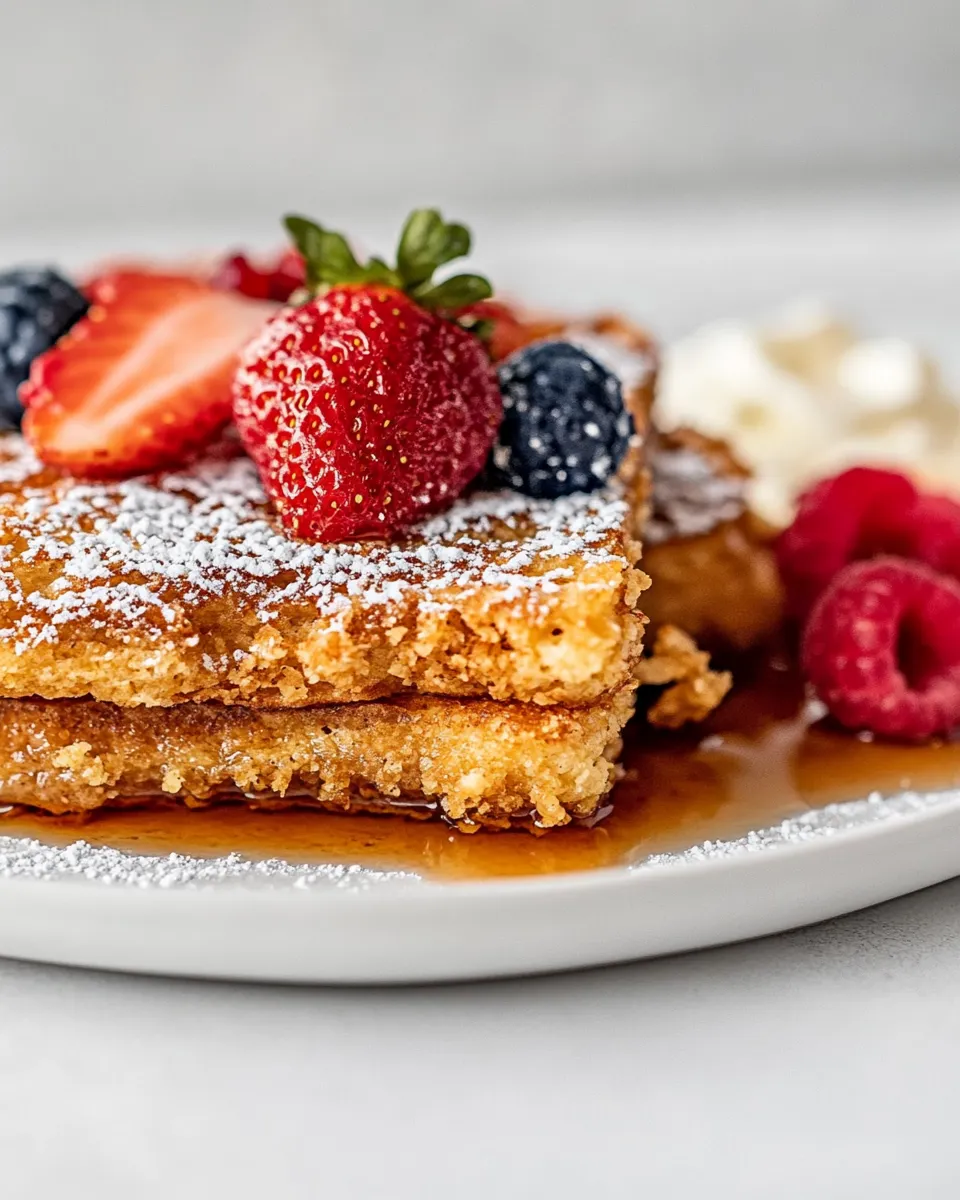
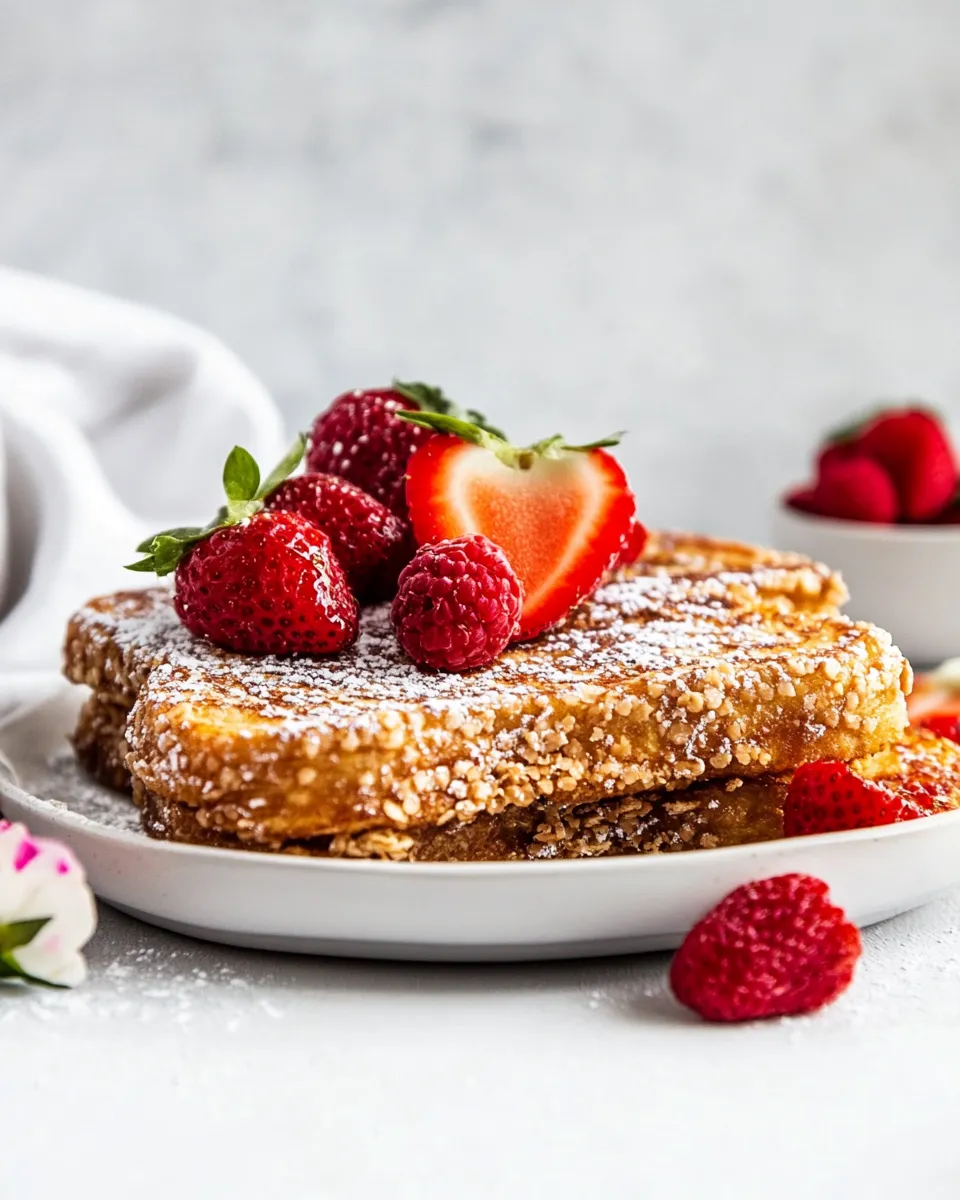
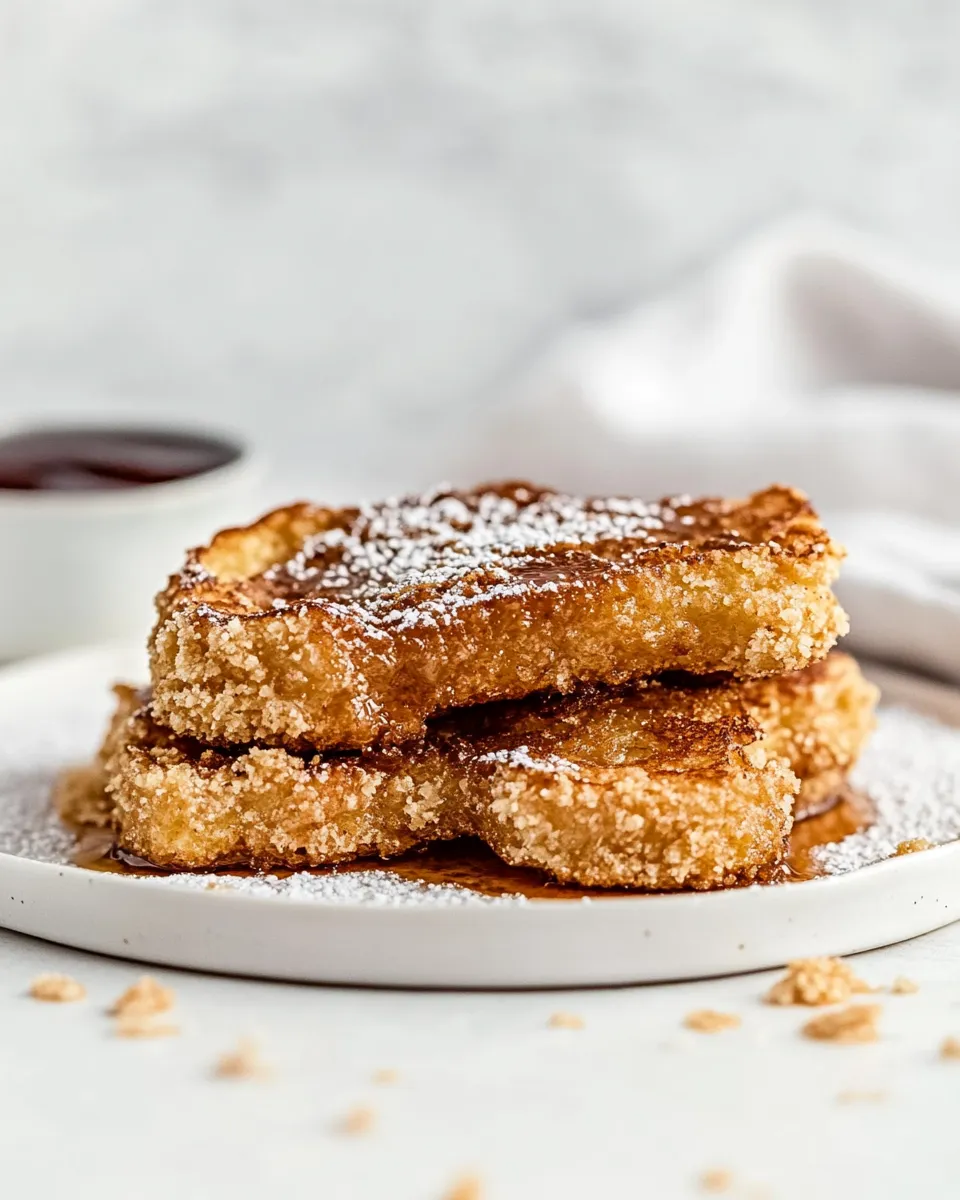
This Crunchy French Toast turns a cozy breakfast into a dish with real texture and presence. The cornflake crust gives each slice a satisfying snap while the brioche or challah soaks up the custard without turning soggy. It’s simple in technique but delivers contrast — soft interior, crunchy exterior — which is the point.
I like this as a weekend project: it cooks quickly, plates beautifully, and scales easily for company. The method below is direct. You don’t need fancy tools or rare ingredients, just attention to the dipping, pressing, and cooking temperatures.
Follow the steps in order and you’ll have an impressive brunch that’s actually practical to pull off. Notes and swaps later in the post cover common pitfalls and adaptations for dietary needs.
What Goes In
- 4 large eggs — the base of the custard; provides structure and richness.
- 3/4 cup whole milk — thins the eggs into a dippable custard and adds creaminess.
- 1 teaspoon vanilla extract — lifts and balances the egginess with warm aromatics.
- 1 teaspoon ground cinnamon — gives gentle spice and warmth to the custard.
- Pinch of salt — sharpens the flavors and prevents the custard from tasting flat.
- 4 cups cornflakes — crushed to form the crunchy coating; choose plain flakes for best flavor control.
- 8 thick slices Brioche or Challah bread — rich, soft breads that soak up custard without collapsing.
- Unsalted butter, for cooking — used to brown the crust and add flavor without oversalting.
- Maple syrup, powdered sugar, and berries, for serving — finishing touches that add sweetness, brightness, and contrast.
Stepwise Method: Crunchy French Toast
- If using an electric griddle, preheat it to 350°F. If using a skillet, heat a large skillet over medium heat.
- In a shallow pan or pie plate, combine 4 large eggs, 3/4 cup whole milk, 1 teaspoon vanilla extract, 1 teaspoon ground cinnamon, and a pinch of salt. Whisk until well combined.
- Place 4 cups cornflakes in a large bowl and crush with your hands until the pieces are small but not powdery, aiming for mostly uniform small flakes.
- Working with one slice at a time, dip both sides of each of the 8 thick slices of brioche or challah into the egg mixture, letting any excess drip off briefly.
- Press both sides of the egg-coated slice firmly into the crushed cornflakes so the flakes adhere. Transfer the coated slice to a baking sheet or platter. Repeat until all slices are coated.
- Melt a little unsalted butter in the preheated skillet or on the griddle, using enough to coat the cooking surface.
- Cook the coated slices in a single layer (work in batches if needed) until golden brown, about 3 to 4 minutes per side. Add more unsalted butter between batches as needed.
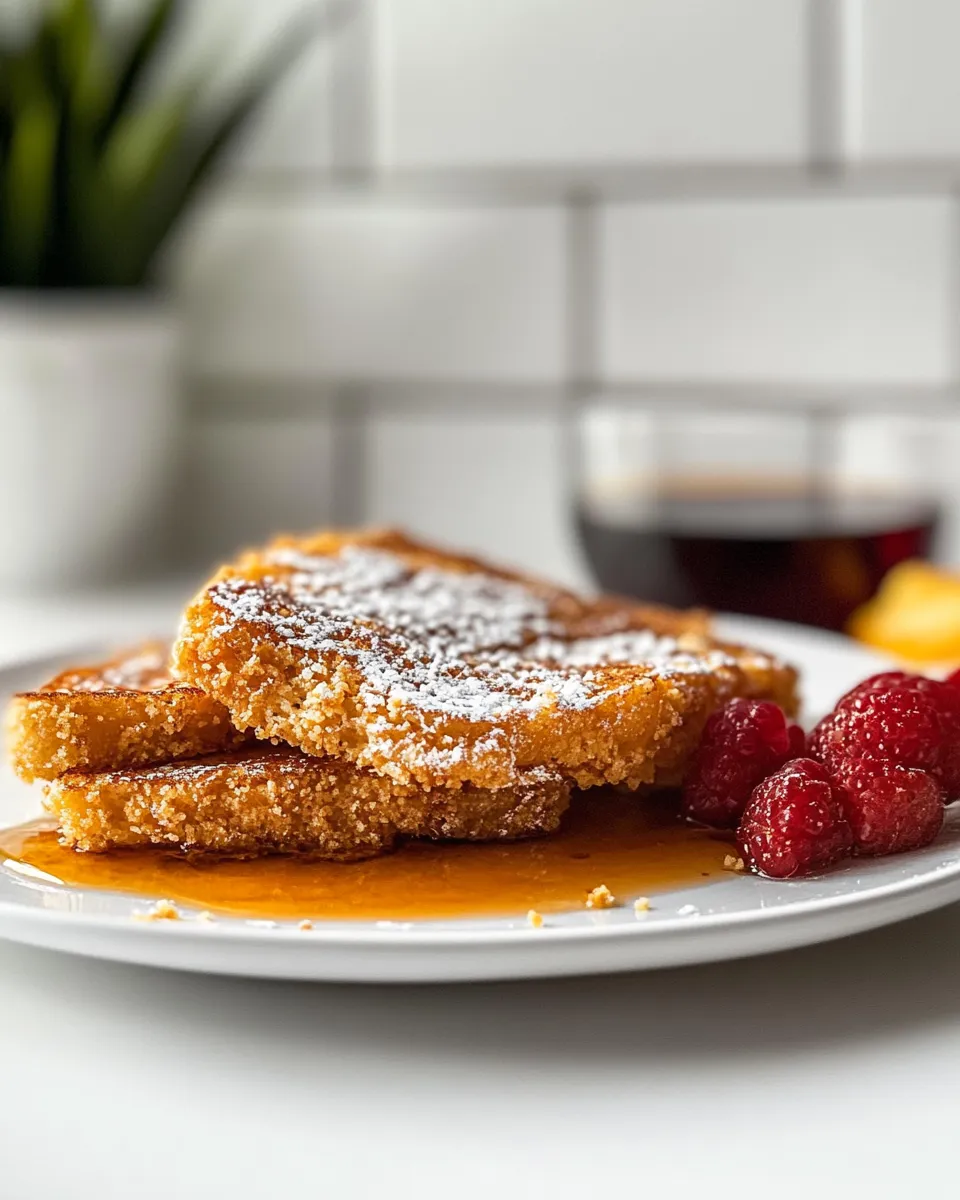
- Serve the French toast warm with maple syrup, powdered sugar, and berries.
Why This Recipe Is Reliable
The reliability comes down to three clear strategies: a well-balanced custard, a sturdy bread choice, and an effective crust. The 4 eggs to 3/4 cup milk ratio makes a thick custard that clings to bread without drenching it. That keeps the interior tender and custardy after cooking.
Brioche or challah are forgiving. Their tight crumb soaks up custard and holds shape. Stale-but-not-hard slices are ideal: they absorb without collapsing. The cornflake crust is forgiving, too — it browns quickly and gives textured contrast even if your stovetop temp fluctuates slightly.
Finally, the method is batch-friendly. Cooking in a single layer and replenishing butter between batches keeps browning consistent. If every slice comes out a reliable golden brown, the flavors and textures will follow.
Dairy-Free/Gluten-Free Swaps
- Dairy-free milk — replace whole milk with a creamy plant milk (oat, soy, or full-fat canned coconut thinned slightly) to keep the custard viscous.
- Dairy-free butter — use a neutral-tasting plant-based butter or a high-smoke neutral oil if you need to avoid dairy; add a touch less if it’s oil to prevent excess soaking.
- Gluten-free bread — use a sturdy, thick-sliced gluten-free brioche-style loaf or another dense gluten-free bread. Toast it lightly first if it’s too fragile.
- Gluten-free cereal — replace cornflakes with certified gluten-free corn flakes or crushed gluten-free substitute flakes to keep the crunchy coating safe for gluten-intolerant eaters.
Gear Checklist
- Electric griddle or large skillet — griddle for even surface cooking; skillet works fine for smaller quantities.
- Shallow pan or pie plate — to whisk and hold the custard for easy dipping.
- Large bowl — to crush and hold the cornflakes.
- Whisk — to combine the eggs and milk smoothly.
- Baking sheet or platter — to rest coated slices before cooking.
- Spatula — a thin, sturdy spatula helps flip without removing the coating.
- Measuring cups and spoons — accuracy matters for the custard ratio and spices.
Things That Go Wrong
- Coating falls off while flipping — press the cornflakes firmly into the custard-coated bread and let the coating sit a minute before transferring to the pan. A thin film of egg on the bread acts like glue.
- Interior soggy, exterior browned too fast — the heat is too high. Reduce to medium or ensure butter isn’t burning; cook a little longer at a gentler temp so heat penetrates.
- Burning before interior cooks — lower the heat and add a touch more butter between batches to moderate pan temperature.
- Bread falling apart — the slices were too fresh or too thin. Use thicker, slightly stale slices to maintain structure.
- Coating not crunchy after resting — the crushed flakes will soften if left under syrup. Serve immediately, or keep extra flakes to sprinkle on right before serving.
Seasonal Twists
Small seasonal touches turn this into an appropriate dish year-round. In spring and summer, use fresh berries and a squeeze of lemon juice on top to brighten the plate. Late summer peaches sliced and quickly macerated with a touch of maple are excellent.
In autumn, swap the cinnamon for a pinch of pumpkin spice in the custard and top with warm stewed apples and toasted pecans. Winter calls for citrus accents: orange-scented maple syrup or a scattering of crystallized ginger adds warmth and depth.
If You’re Curious
Finishing options
- Oven keep-warm — if you’re making multiple batches, keep cooked slices on a rack in a 200°F oven so they stay crisp on the outside without steaming on the tray.
- Oven-finish for thick loaves — for very thick slices, sear both sides then finish in a 350°F oven for 4–6 minutes to ensure the center is heated through without burning the crust.
- Crunch level — adjust how much you crush the cornflakes. Bigger pieces give more pronounced crunch; finer crumbs give uniform crust but less audible snap.
Storing Tips & Timelines
- Short term (refrigerator) — store cooled slices in an airtight container for up to 2 days. Reheat in a 350°F oven on a wire rack for 6–8 minutes to refresh the crust. Avoid microwaving if you want to preserve crunch.
- Freezing — flash-freeze single slices on a tray, then transfer to a freezer bag for up to 1 month. Reheat from frozen in a 375°F oven for 10–12 minutes, flipping halfway through.
- Prepared components — you can mix the custard ahead and keep it refrigerated up to 8 hours; don’t soak the bread until just before cooking. Crush cornflakes and store them in an airtight container for a few days to keep them crunchy.
Troubleshooting Q&A
- Q: My cornflake coating isn’t sticking — what did I miss? A: The bread likely wasn’t coated evenly or you shook off too much custard. Dip, let excess drip briefly, then press firmly into the flakes so they adhere.
- Q: My toast is greasy after cooking — how do I avoid that? A: Use just enough butter to coat the pan. If you see the butter turning brown quickly, lower the heat; use a paper towel to blot excess butter between batches.
- Q: Can I make this ahead for a crowd? A: Yes. Coat and arrange slices on a baking sheet, cover loosely, and refrigerate for up to 2 hours. Cook just before serving for best texture. Or cook ahead, keep warm in the oven, and re-crisp if necessary.
- Q: Bread is too soft and disintegrates when dipped — any fix? A: Use slightly stale or day-old bread. If you must use fresh bread, toast it lightly on both sides first to firm the crumb.
Next Steps
Start by assembling ingredients and preparing the custard and cornflake station; organization makes the process fast and smooth. If you’re serving company, do one test slice first to calibrate your stove or griddle temperature. That one slice tells you whether to raise or lower heat and how much butter to use.
Serve immediately with a selection of toppings on the side: warm maple syrup, fresh berries, or a dusting of powdered sugar. Invite feedback from guests — slight tweaks in crunch or spice often become your signature touch next time.
If you try a twist — spiced apples, citrus maple, or a dairy-free version — note what worked and what didn’t. The core method is quick to adapt and, when done right, reliably delicious.
Crunchy French Toast
Ingredients
Ingredients
- 4 large eggs
- 3/4 cupwhole milk
- 1 teaspoonvanilla extract
- 1 teaspoonground cinnamon
- Pinchof salt
- 4 cupscornflakes
- 8 thick slices Brioche or Challah bread
- Unsalted butter for cooking
- Maple syrup powdered sugar, and berries, for serving
Instructions
Instructions
- If using an electric griddle, preheat it to 350°F. If using a skillet, heat a large skillet over medium heat.
- In a shallow pan or pie plate, combine 4 large eggs, 3/4 cup whole milk, 1 teaspoon vanilla extract, 1 teaspoon ground cinnamon, and a pinch of salt. Whisk until well combined.
- Place 4 cups cornflakes in a large bowl and crush with your hands until the pieces are small but not powdery, aiming for mostly uniform small flakes.
- Working with one slice at a time, dip both sides of each of the 8 thick slices of brioche or challah into the egg mixture, letting any excess drip off briefly.
- Press both sides of the egg-coated slice firmly into the crushed cornflakes so the flakes adhere. Transfer the coated slice to a baking sheet or platter. Repeat until all slices are coated.
- Melt a little unsalted butter in the preheated skillet or on the griddle, using enough to coat the cooking surface.
- Cook the coated slices in a single layer (work in batches if needed) until golden brown, about 3 to 4 minutes per side. Add more unsalted butter between batches as needed.
- Serve the French toast warm with maple syrup, powdered sugar, and berries.
Equipment
- electric griddle
- Skillet
- Large Bowl
- shallow pan or pie plate
- baking sheet or platter
- Whisk
Notes
To keep the French toast warm, heat the oven to 200 degrees F. Place a wire rack on a large baking sheet and place the French toast on the rack. Keep warm in the oven for up to 30 minutes.