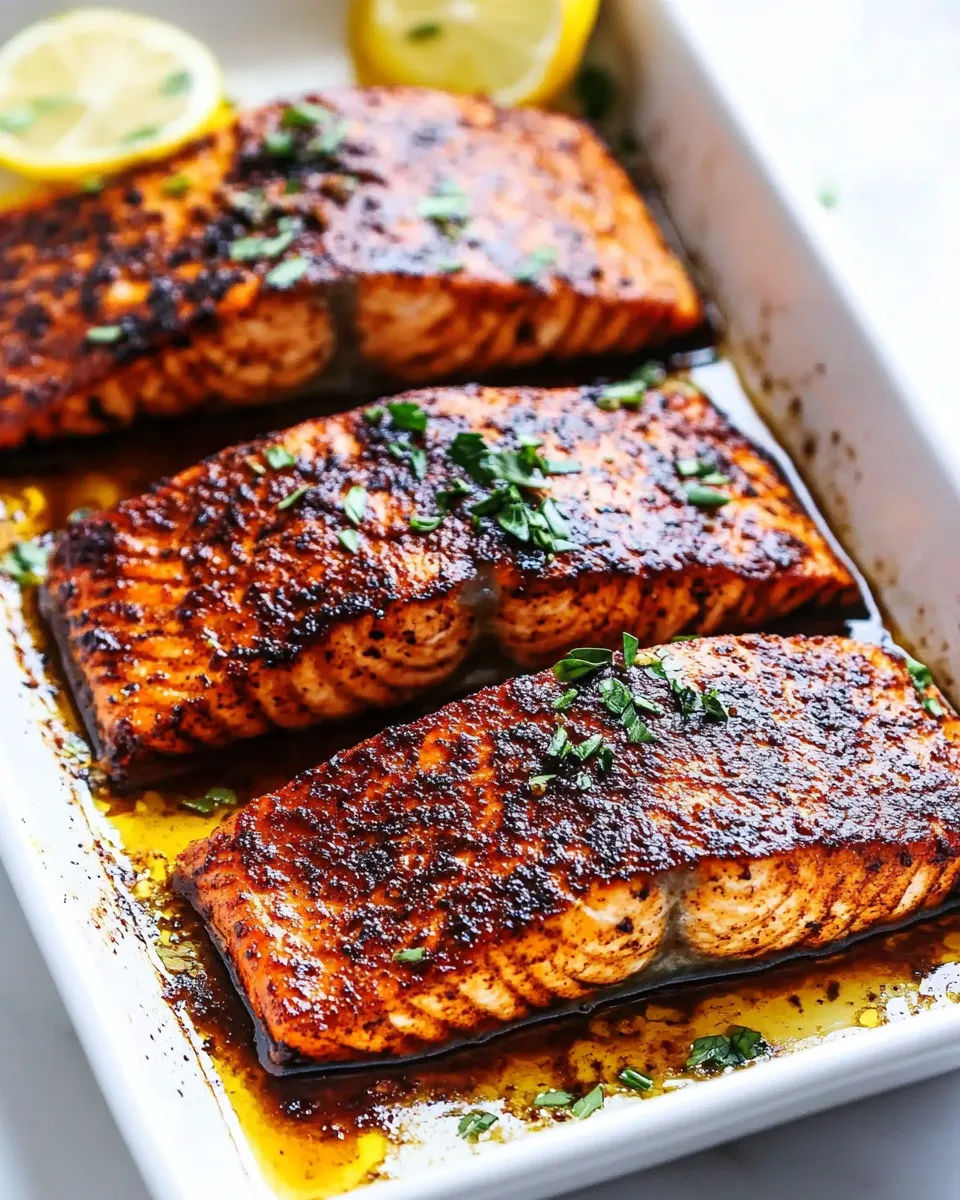
I keep this blackened salmon in my weeknight rotation because it delivers big, smoky flavor with almost no effort. The crust forms quickly, the fish cooks in about eight minutes, and you end up with a flaky, bright fillet that looks like you spent way longer on it than you did. It’s the sort of recipe that feels impressive but is reassuringly repeatable.
This recipe thrives on heat and timing. You don’t need a fancy marinade or dozens of pantry items—just salmon, a little oil, and blackened seasoning. The technique is straightforward: dry the fish, oil it, season, and sear in a hot skillet. The result is a crisp, seasoned exterior and tender, medium-to-well interior when you follow the timing and temperature.
I’ll walk you through exactly what to do, why each step matters, and how to adapt it without losing the essential texture that makes blackened salmon so good. Expect practical tips on equipment, common pitfalls, and small finishing touches that lift the dish for a dinner party or a simple solo meal.
Ingredient Notes
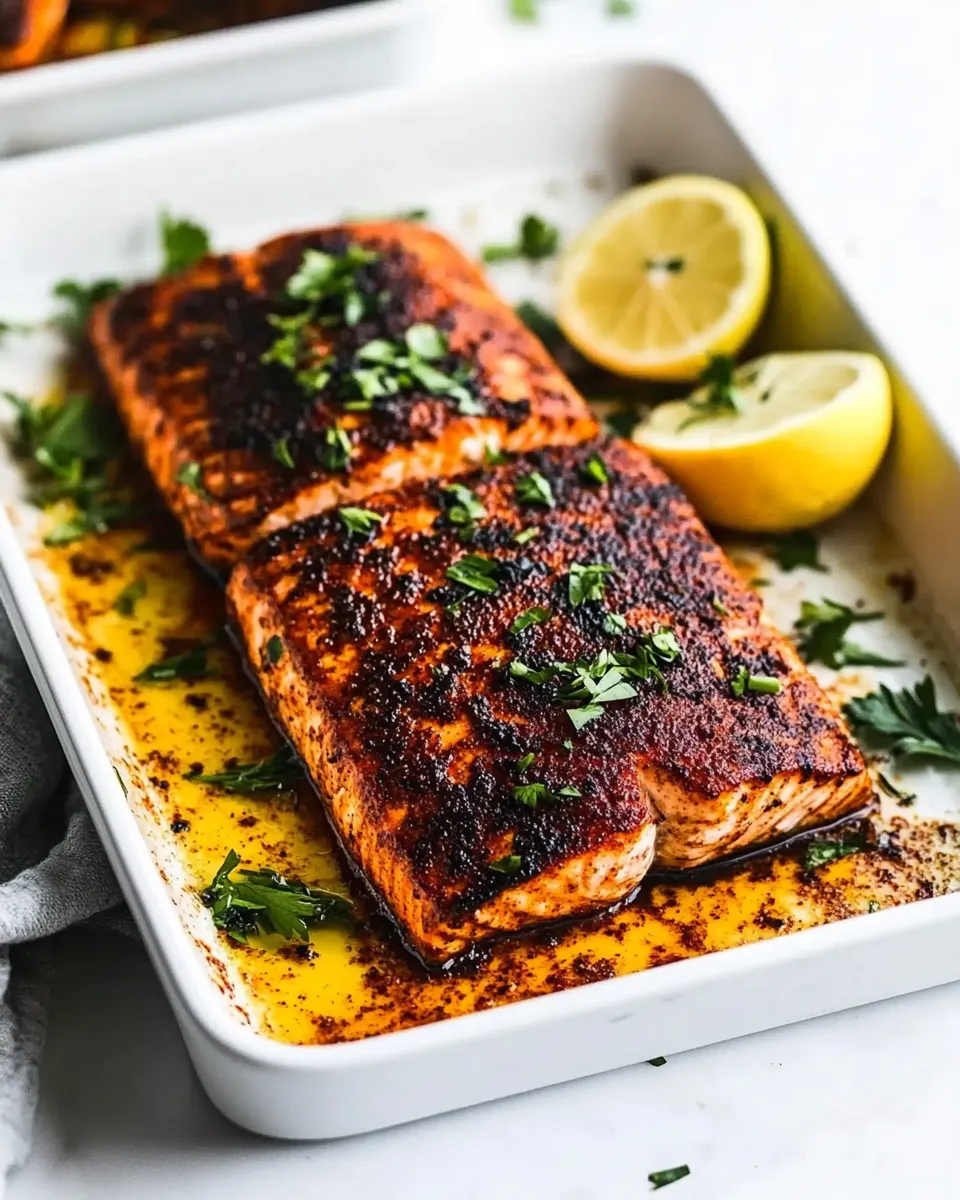
Before we jump to the ingredients and steps, a few quick notes that matter when you’re aiming for that perfect crust and flaky center.
- Salmon: Choose firm, fresh filets with even thickness for even cooking. Skin-on works well because the skin helps hold the fish together during a flip; if you prefer skinless, treat the presentation side as the “down” side when you first sear.
- Oil: Use a neutral oil with a high smoke point so the pan gets hot without burning—this creates a quick sear and crisp exterior.
- Blackened seasoning: A premade blend saves time and guarantees consistent spice. The seasoning’s paprika and cayenne contribute color and a smoky, slightly spicy profile; rub it well so the surface develops a dark, flavorful crust rather than just dusting the top.
Ingredients
- 1 pound salmon filets — main ingredient; choose even-thickness pieces so they cook uniformly.
- 1 tablespoon olive oil — helps the seasoning adhere and promotes a quick, even sear.
- 1 tablespoon blackened seasoning — provides the classic crust and bold flavor; rub it in so it forms a crust as the salmon sears.
Blackened Salmon — Do This Next
- Preheat a 12- or 14-inch nonstick skillet over medium-high heat until hot.
- Pat the 1 pound salmon filets dry with a paper towel.
- Rub the salmon all over with 1 tablespoon olive oil.
- Sprinkle and rub 1 tablespoon blackened seasoning evenly over the salmon (both sides, if desired).
- Place the salmon in the hot skillet skin side up if the filets have skin; if skinless, place the side you want to present down. Cook undisturbed for about 3–4 minutes.
- Carefully flip the salmon and cook an additional 3–4 minutes, or until the salmon is opaque, flakes easily with a fork, and reaches an internal temperature of 145°F.
- Remove from the skillet and let rest for a minute or two before serving.
Why This Recipe Is Reliable
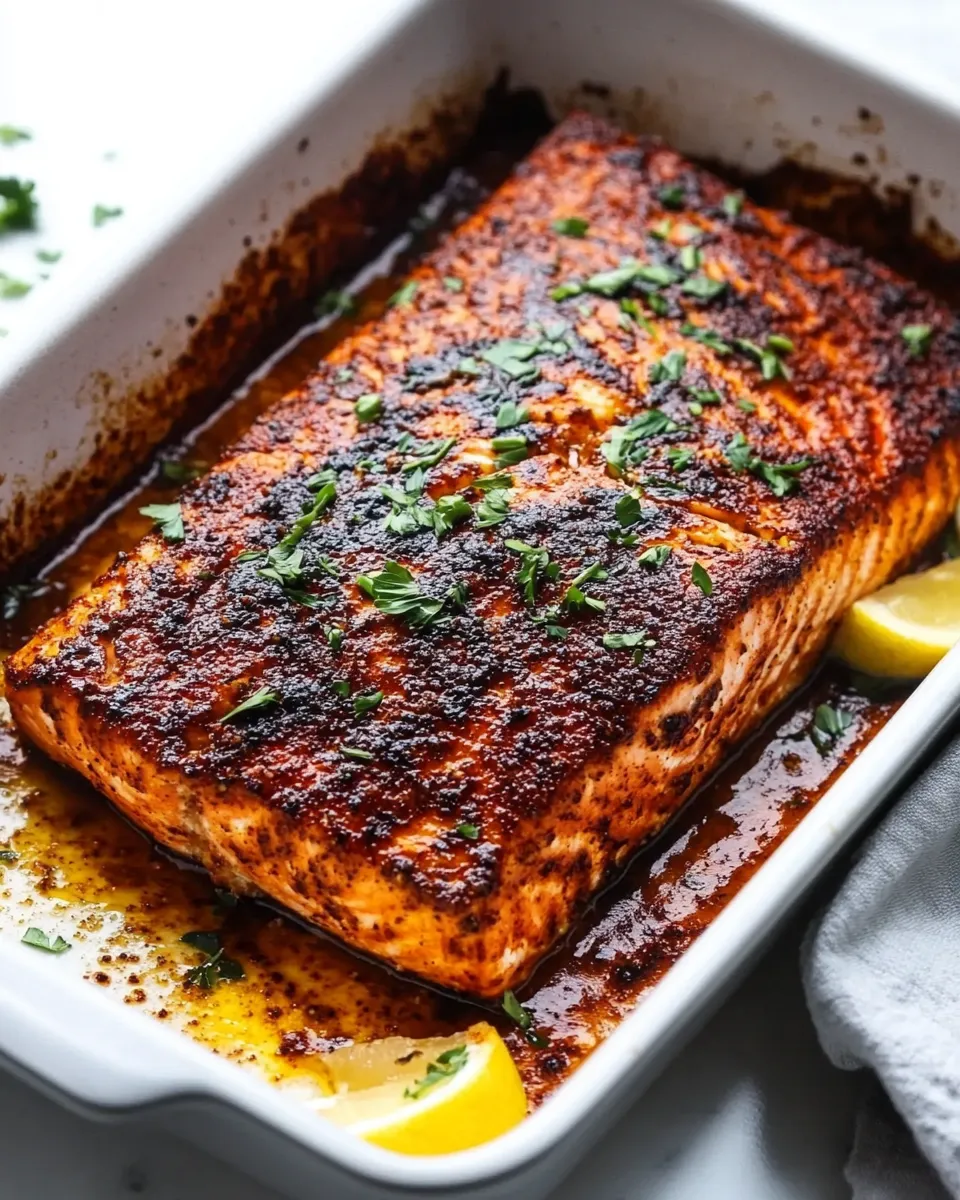
This method works because it focuses on a few controllable variables: surface dryness, a little fat, high but managed heat, and short total cooking time. Drying the fillets removes surface moisture so the spice can toast instead of steam. The olive oil conducts heat and helps the seasonings adhere and brown. The hot pan creates Maillard reactions almost immediately, building a flavorful crust in minutes.
Timing is forgiving within a minute or so, but relying on visual cues and a thermometer keeps the results consistent. The target internal temperature of 145°F ensures the fish is cooked through and safe while staying moist. The quick sear means you don’t overcook the center, and letting the fillets rest for a minute preserves juiciness.
Flavor-Forward Alternatives
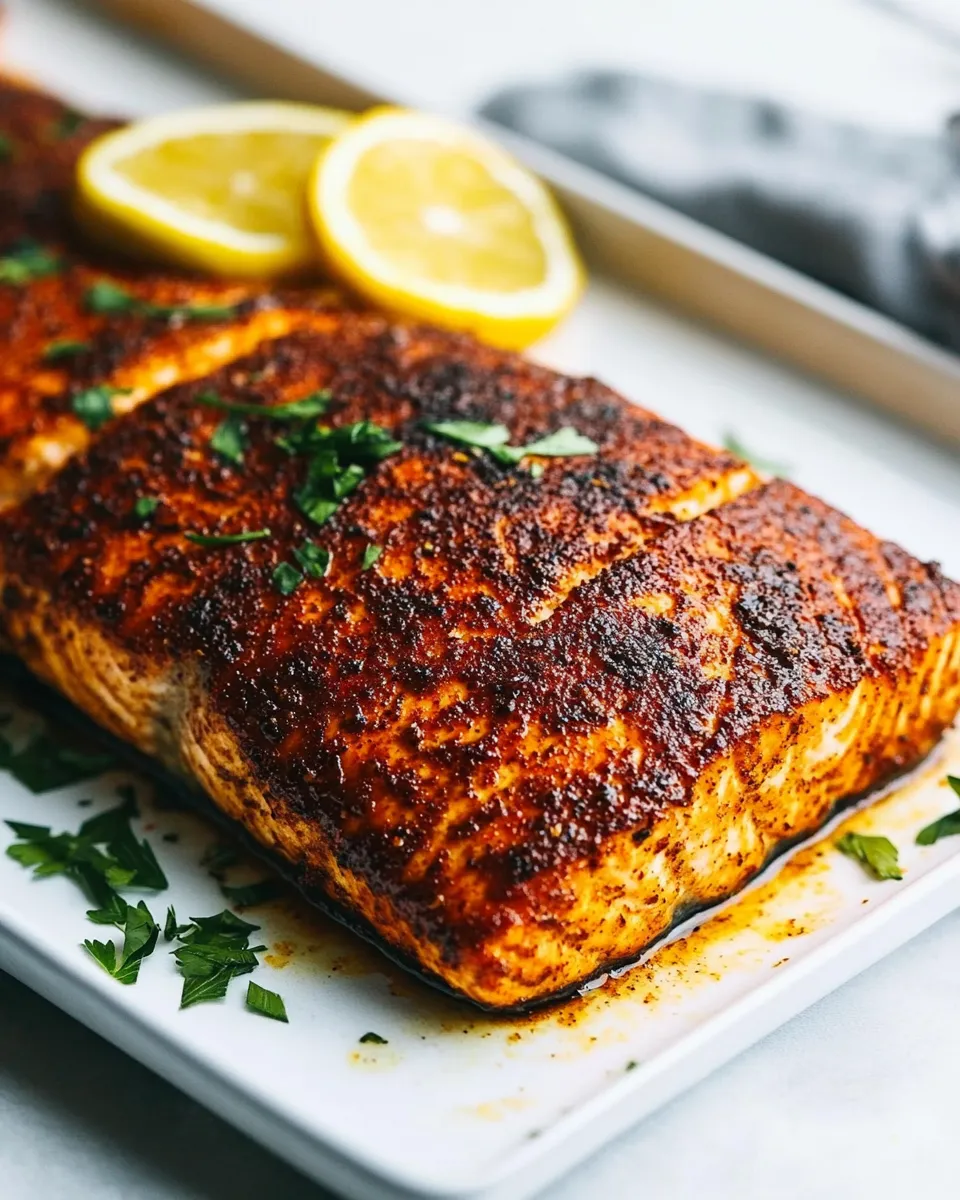
- Swap the blackened seasoning for a citrus-forward rub right before serving—bright acidity complements the rich fish. (No quantities added here: use a light finishing touch.)
- Top the finished fillet with a compound butter or herb drizzle for an indulgent contrast to the spice-forward crust.
- For a milder profile, use less of the seasoning on the presentation side and more on the side that contacts the pan to form the crust.
Setup & Equipment
Use a heavy 12- or 14-inch nonstick skillet and place it on medium-high heat to build that fast, even sear. A wide pan gives you space for the fillets without crowding—overcrowding drops the pan temperature and encourages steaming instead of searing. A thin metal spatula or fish spatula helps you flip the fillets cleanly. Keep paper towels, a plate, and a meat thermometer within reach.
Small touches that help: preheat the pan with nothing in it until it’s genuinely hot (a few drops of water should sizzle away quickly). Pat the salmon completely dry before oiling and seasoning. Have your plate or serving surface ready so the fish rests immediately after cooking.
Errors to Dodge
- Overcrowding the pan — causes steaming and a pale exterior. Cook in batches if needed.
- Not drying the fish — surface moisture prevents a crust from forming and dilutes the seasoning.
- Using too low heat — you’ll miss the caramelized crust and may overcook the interior while waiting for color.
- Leaving the fish to flip repeatedly — flip once. Too much handling tears the flesh and loses crust.
- Assuming doneness by time alone — thickness varies; use a thermometer or the fork-flake test to confirm.
Fresh Seasonal Changes
Blackened salmon pairs beautifully with seasonal sides. In spring and summer, serve with lemon-garlic greens, a bright herb salad, or lightly dressed slaw to balance the spice with acidity. Late-summer corn and tomato succotash or a cucumber-dill salad adds freshness.
In fall and winter, serve the salmon over roasted root vegetables or a warm grain salad—think farro or barley with roasted squash and toasted seeds. A spoonful of something creamy, like a plain yogurt sauce with a fresh squeeze of citrus, calms the heat and makes the plate feel more composed.
Behind the Recipe
Blackening is a classic technique that champions high heat and spice. The method sears the surface so the spice mix develops a deep, browned coating instead of burning into bitterness. The goal is a short, intense heat exposure that quickly transforms the crust while preserving tender flesh inside.
This simplified version streamlines the process: minimal hands-on time, a consistent seasoning measure, and an accessible pan. It’s meant for cooks who want bold flavor without fuss or marinades. The balance between crisp exterior and moist interior comes down to prep and timing rather than complicated steps.
Make Ahead Like a Pro
- Dry and season the fillets up to a day ahead, cover lightly, and refrigerate. Bring them to near-room temperature before searing for even cooking.
- If you must cook ahead, briefly sear and finish in a moderate oven until just shy of done, then cool quickly and refrigerate. Reheat gently in a low oven or covered skillet to avoid overcooking; these options preserve texture better than the microwave.
- Prep any sides, dressings, or compound butter ahead so the final assembly takes minutes.
Your Top Questions
- Should I cook salmon skin-side up or down? If the filets have skin, start skin-side up so the presentation side gets the initial crust and the skin crisps on the second side. If skinless, start with the side you want to present down.
- Is 145°F the right temperature? Yes—145°F is the USDA recommended final temperature for fish. Some cooks prefer 125–135°F for a medium finish; if you choose a lower target, be consistent and aware of the tradeoff between texture and doneness.
- Can I use a grill instead of a skillet? You can, but the direct-contact crust achieved in a hot skillet is part of this method’s appeal. On the grill, the seasoning may char faster; control flare-ups and consider a cast-iron grate for even heat.
- How do I avoid a smoky kitchen? Use a high-smoke-point oil and ensure good ventilation. Heat the pan to hot but not smoking before adding the fish, and don’t use excess oil.
Next Steps
Now that you know the straightforward technique, choose your salmon and get the skillet hot. Follow the simple steps, trust the timing, and rest the fillets for a minute before serving. Finish with a bright squeeze of citrus or a light drizzle of oil if you like.
Serve this blackened salmon with a crisp salad, seasonal vegetables, or your favorite grain. Once you’ve tried it as written, experiment with small adjustments: different seasonings applied the same way, or a quick finish of butter and herbs. The core method stays the same, and that’s why this recipe is so easy and satisfying.
If you try it, tell me how you finished the plate—simple swap ideas and little wins are the best kind of feedback. Happy cooking.
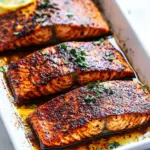
Easy and Amazing Blackened Salmon
Ingredients
Ingredients
- 1 poundsalmon filets
- 1 tablespoonolive oil
- 1 tablespoonblackened seasoning
Instructions
Instructions
- Preheat a 12- or 14-inch nonstick skillet over medium-high heat until hot.
- Pat the 1 pound salmon filets dry with a paper towel.
- Rub the salmon all over with 1 tablespoon olive oil.
- Sprinkle and rub 1 tablespoon blackened seasoning evenly over the salmon (both sides, if desired).
- Place the salmon in the hot skillet skin side up if the filets have skin; if skinless, place the side you want to present down. Cook undisturbed for about 3–4 minutes.
- Carefully flip the salmon and cook an additional 3–4 minutes, or until the salmon is opaque, flakes easily with a fork, and reaches an internal temperature of 145°F.
- Remove from the skillet and let rest for a minute or two before serving.
Equipment
- nonstick skillet