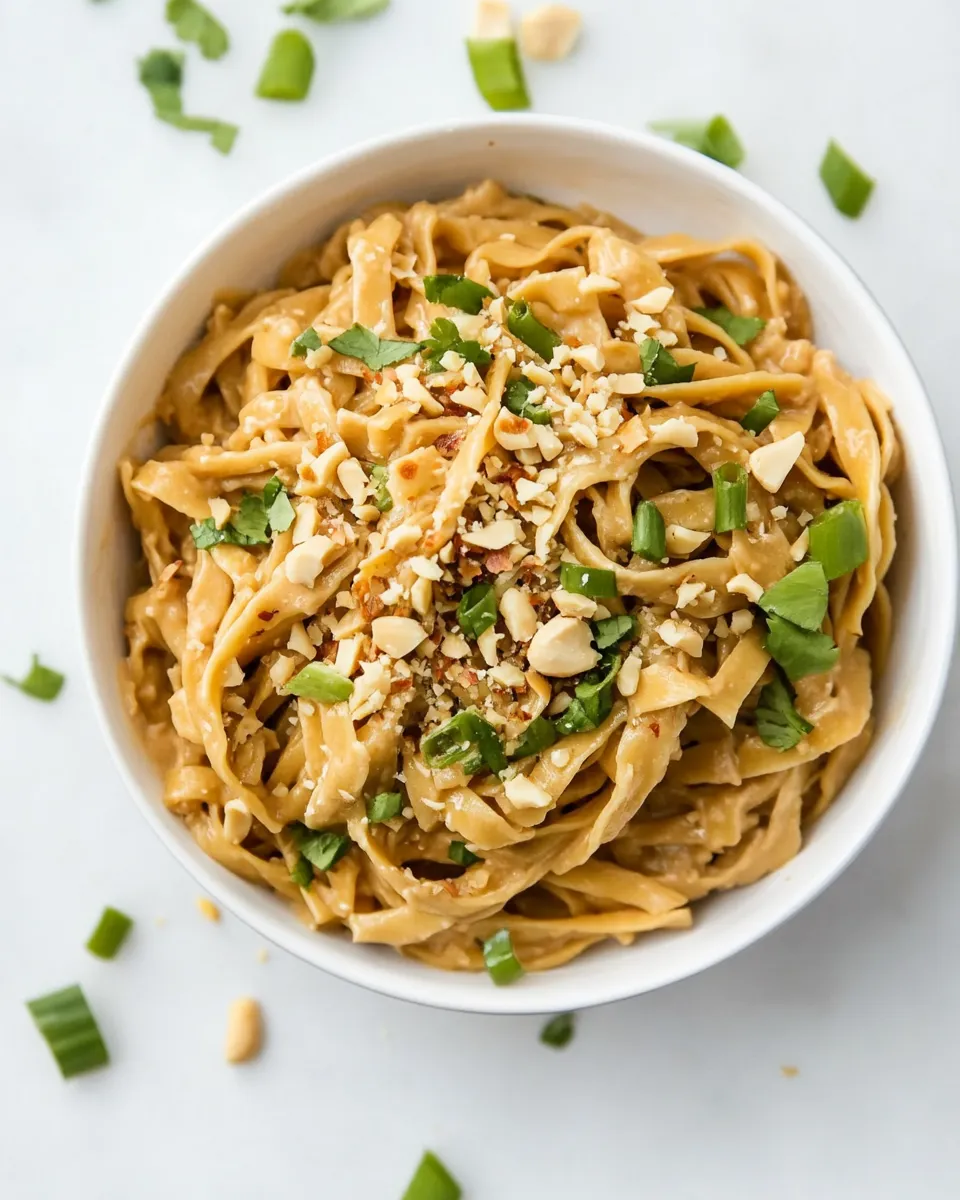
Peanut noodles are my go-to when I want something cozy, fast, and a little bit indulgent without a pile of dishes. This version leans on pantry-friendly staples—linguine, peanut butter, a bright hit of lime—and a quick sauté of cabbage and peppers for crunch. It comes together in one skillet after the pasta cooks, and the sauce is the kind of creamy, savory thing you’ll want to spoon over everything.
I write recipes that actually work on a weeknight, and this one does. Prep happens while the pasta boils: shred, slice, whisk, toss. The sauce is forgiving—too thick? Use reserved pasta water. Too thin? Let it sit a minute and it clings to the noodles as it cools slightly.
No fuss, no exotic shopping list, and it stores well for lunch. Serve it warm with a simple green onion garnish, or make it part of a bigger meal with a crisp salad. Below I’ll walk you through what’s in the bowl, the exact build steps, sensible swaps, what to avoid, and notes for freezing or reheating.
What’s in the Bowl
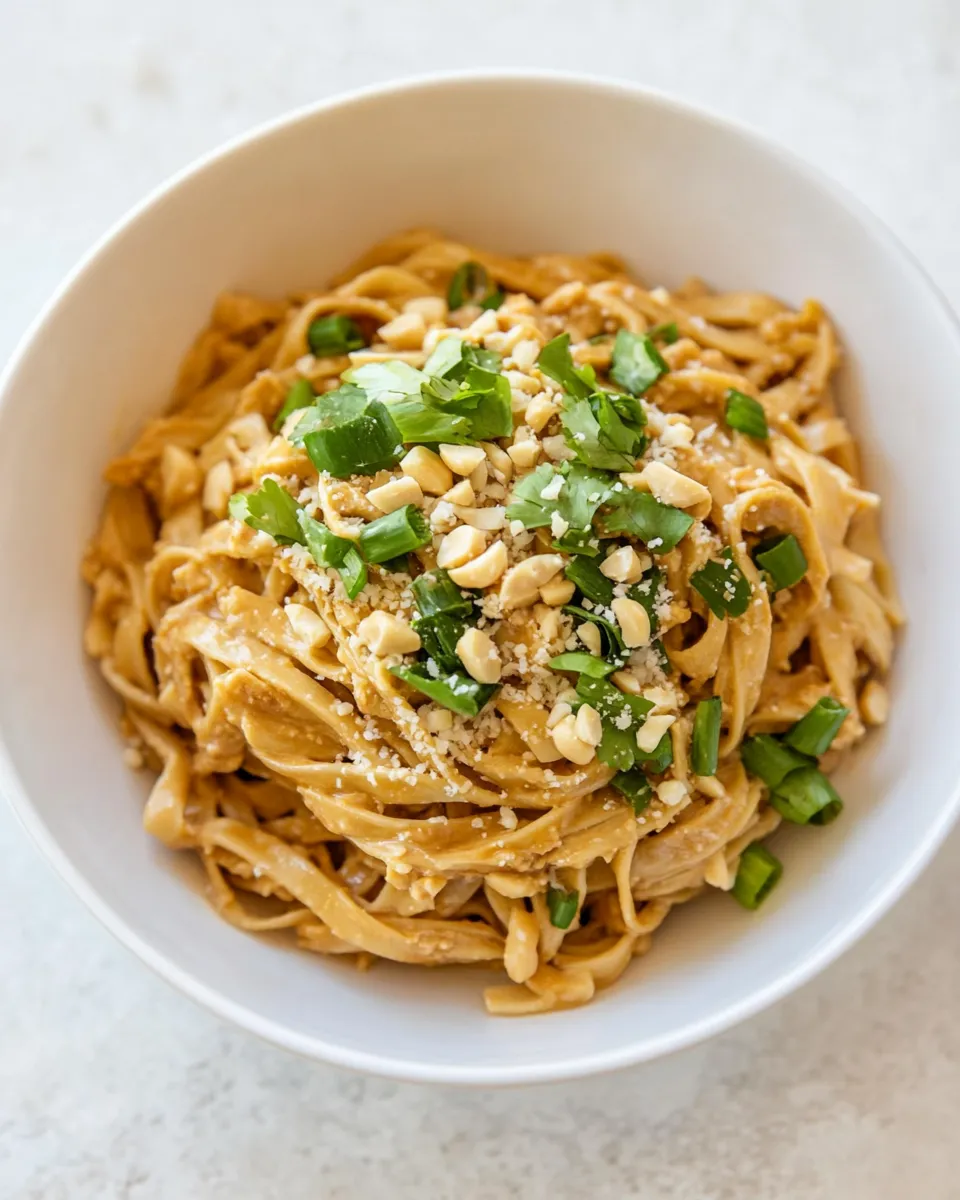
- 4 ounces linguine noodles (I use Banza chickpea noodles) — The noodle base; linguine holds the creamy sauce nicely.
- 1 tablespoon olive oil — For sautéing the vegetables and preventing sticking.
- 1/2 head green cabbage, shredded (about 3-4 cups) — Adds bulk, crunch, and mild sweetness when sautéed.
- 1 red bell pepper, sliced (seeds removed) — Bright color and a fresh, sweet bite.
- 1/2 red onion, thinly sliced — Sharpness that softens when sautéed; balances the peanut richness.
- 1/2 teaspoon fine sea salt (4 grams; I use Real Salt brand) — Brings everything into balance; adjust if your tamari is salty.
- 2 carrots, peeled & shredded — More crunch and a hint of sweetness; they also add great texture contrast.
- 1 cup fresh cilantro, chopped — Bright herb note; fold in at the end for freshness.
- 2 green onions, chopped (for garnish) — Fresh, oniony finish when sprinkled on top.
- 1/4 cup creamy all-natural peanut butter (70 grams) — The sauce base; use a smooth, simple peanut butter.
- 2 tablespoons tamari (32 grams; gluten-free soy sauce) — Umami and salt; adjust if using regular soy sauce.
- 1 tablespoon sriracha (18 grams) — Heat and a touch of vinegar; scale to taste.
- 2 tablespoons fresh lime juice (26 grams) — Bright acidity that lifts the whole dish.
- 1 tablespoon toasted sesame oil (12 grams) — Toasty, nutty aroma—small but defining.
- 1 tablespoon maple syrup (20 grams) — Balances salt and acid with a rounded sweetness.
- 1 inch fresh minced ginger (4 grams; about 1 tablespoon) — Warm, peppery flavor; mince finely so it disperses.
- 1 clove garlic (2 grams) — Classic aromatic; mince or press for best distribution.
Build Peanut Noodles Step by Step
- Cook the linguine according to the package directions. Before draining, scoop out and reserve about 1/4 cup (4 tablespoons) of the hot pasta cooking water, then drain the noodles and set them aside.
- While the pasta cooks (or immediately after draining), heat 1 tablespoon olive oil in a large, deep skillet over medium-high heat. Add the shredded cabbage, sliced red bell pepper, thinly sliced red onion, and 1/2 teaspoon fine sea salt. Sauté, stirring occasionally, until the vegetables are softened, about 6–8 minutes. If the vegetables begin to stick, add 1–2 tablespoons of the reserved pasta water and continue cooking.
- In a medium bowl, combine 1/4 cup creamy peanut butter, 2 tablespoons tamari, 1 tablespoon sriracha, 2 tablespoons fresh lime juice, 1 tablespoon toasted sesame oil, 1 tablespoon maple syrup, 1 inch minced fresh ginger, and 1 clove minced garlic. Whisk until smooth. If the sauce is too thick to pour or coat the noodles, whisk in 1–2 tablespoons of the reserved pasta water to reach a pourable consistency.
- Add the drained noodles to the skillet with the sautéed vegetables. Add the 2 shredded carrots and 1 cup chopped cilantro.
- Pour the peanut sauce over the noodles and vegetables. Toss everything together until evenly coated and heated through, adding up to 2 more tablespoons of reserved pasta water if needed to loosen the sauce. Cook 1–2 minutes until everything is hot.
- Divide into bowls and garnish with the chopped green onions. Serve warm.
- Store leftovers in an airtight container in the refrigerator for up to 3 days; reheat in a skillet until warmed through.
Why You’ll Keep Making It
This meal is fast, forgiving, and hits comforting flavor notes—salty, sweet, tangy, and nutty—without a lot of hands-on time. It’s one-skillet-forward after the pasta is cooked, which means fewer dishes and faster cleanup. The sauce plays well with many add-ins, so once you have the base down, it becomes a template you’ll return to.
It’s also built for real-life eating: it reheats well, portions easily for lunches, and offers enough veggie volume to feel like a full plate without much prep. If you like a little heat, the sriracha is an instant mood-lifter; if you don’t, the lime and maple syrup keep it balanced.
Quick Replacement Ideas
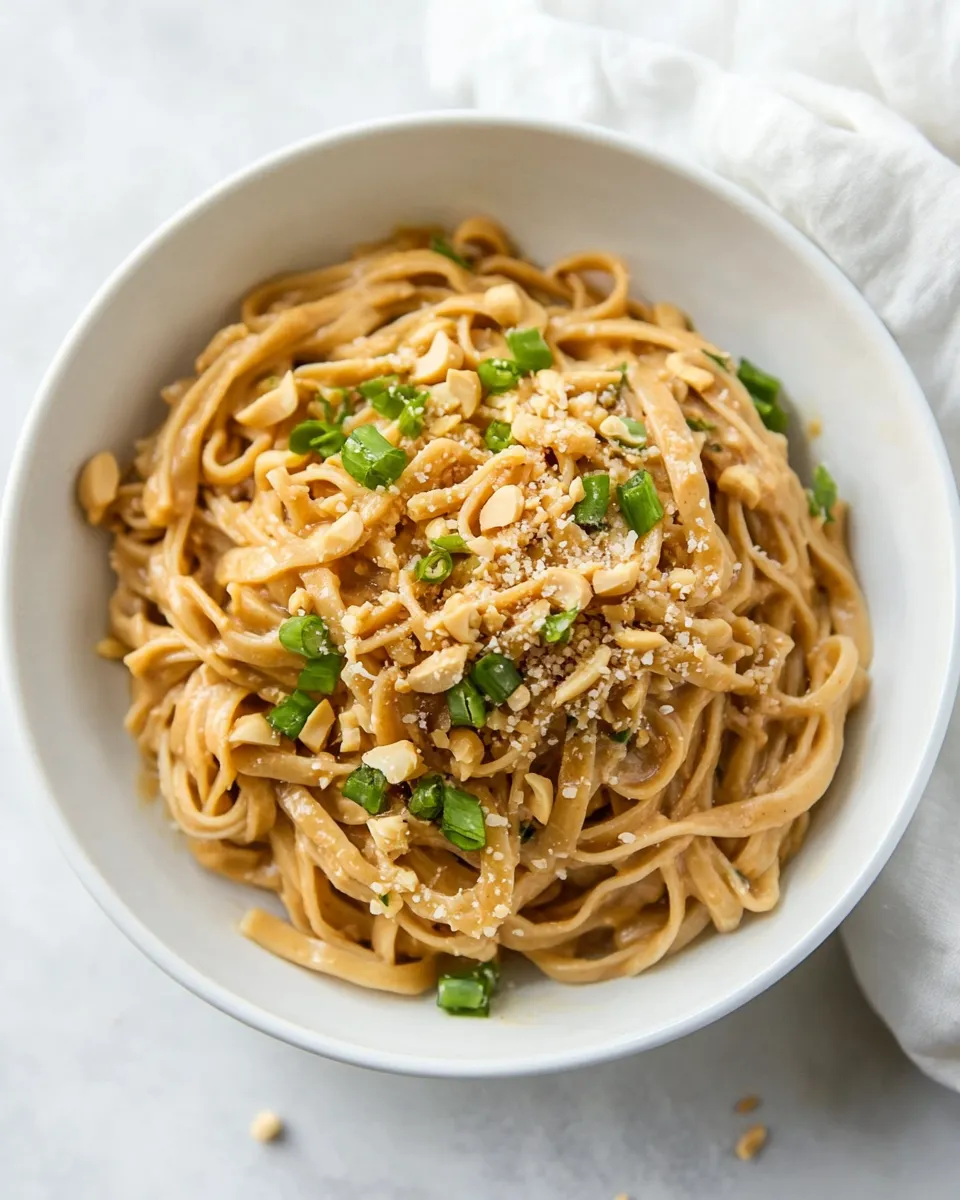
- Swap linguine for any long pasta you have on hand: spaghetti or rice noodles will work if you prefer. Adjust cooking time per the package.
- If you don’t have tamari, use regular soy sauce or a low-sodium soy alternative; taste before adding salt.
- No fresh cilantro? Flat-leaf parsley or a handful of chopped spinach stirred in at the end will still add color and brightness.
- To change the nut profile, sub crunchy peanut butter for a textural twist—expect a slightly thicker sauce.
Equipment Breakdown
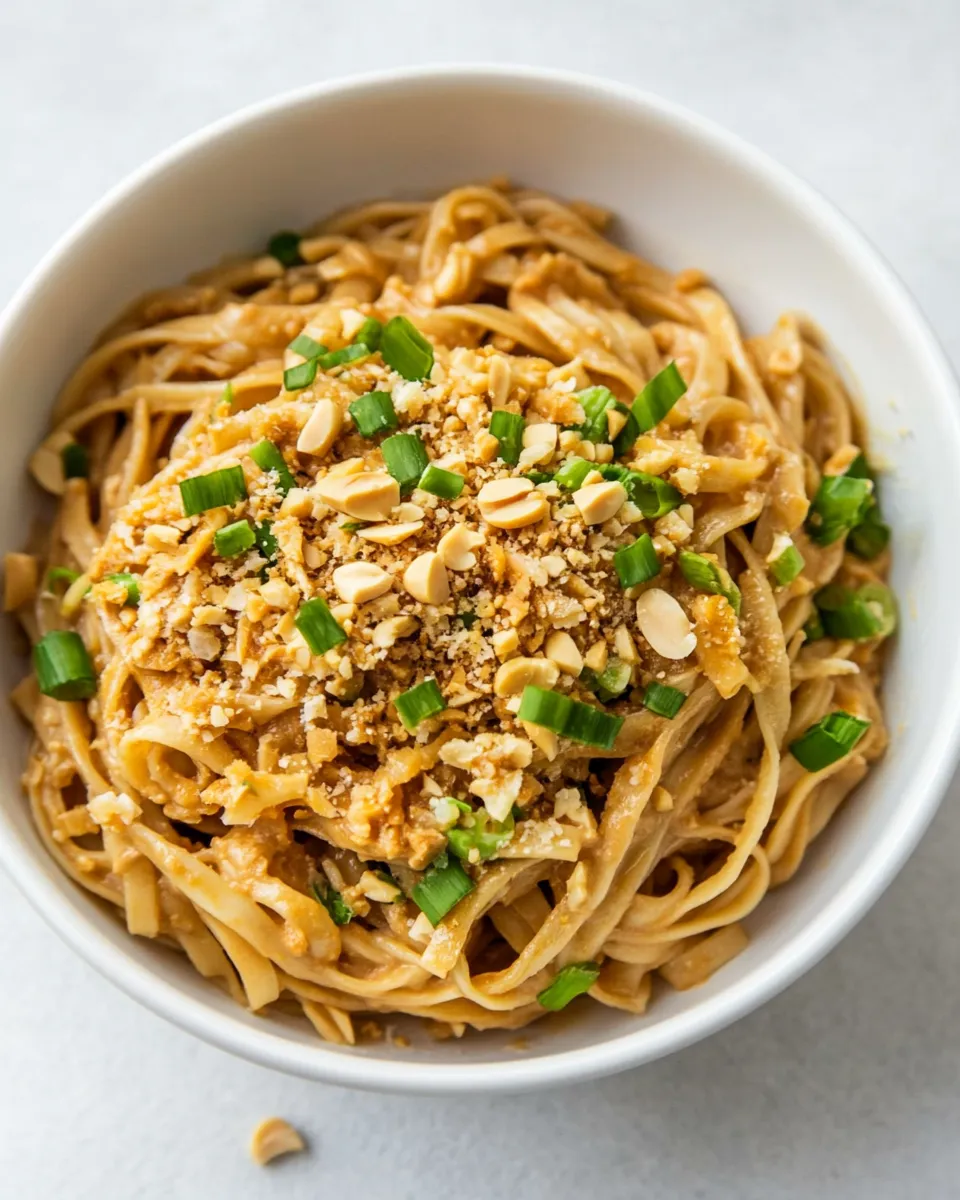
You only need basic tools for this: a large pot for boiling pasta, a large deep skillet for sautéing and tossing, a medium bowl for whisking the sauce, and a good whisk or fork. A vegetable peeler or box grater speeds up shredding the carrots and cabbage.
Optional but helpful: a spider or slotted spoon to transfer noodles directly from the pot to the skillet without losing too much pasta water, and a microplane for finely grating fresh ginger if you want a smoother texture.
Avoid These Mistakes
- Over-salting early. Tamari is salty—taste the sauce before adding extra salt and remember the pasta water adds salt too.
- Skipping reserved pasta water. That liquid is magic for adjusting sauce consistency and helping the peanut sauce cling to noodles.
- Overcooking the vegetables. Aim for softened but still slightly crisp cabbage and pepper; they should have texture.
- Mincing ginger too coarsely. Large chunks can overpower bites—mince finely for even flavor distribution.
Variations by Season
In spring, add thinly sliced snap peas or blanched asparagus for bright green crunch. Summer invites thin cucumber ribbons and extra herbs—basil or mint play nicely with peanut. In fall and winter, swap half the cabbage for shredded Brussels sprouts or stir in sautéed mushrooms for a heartier dish. The peanut sauce is versatile; adapt the vegetable mix to what’s fresh and on sale.
Cook’s Notes
Sauce texture
The written quantities yield a relatively thick, clingy sauce that coats the noodles well. If you prefer a looser, soupier finish, add the reserved pasta water in small increments until you reach the consistency you like.
Make-ahead prep
You can shred the cabbage and carrots and chop the cilantro up to a day ahead. Store them separately in the fridge in airtight containers or bags so they stay crisp.
Ginger and garlic
Fresh is best. If you must use a substitute like powdered ginger, use it sparingly—start with 1/4 teaspoon and adjust, but fresh delivers the best flavor lift.
Freezer-Friendly Notes
This dish freezes okay but not perfectly—the sauce can thicken and the texture of the vegetables softens on thawing. If you plan to freeze, it’s better to freeze the sauce separately in a freezer-safe container and keep the cooked noodles and vegetables refrigerated for up to 3 days.
To freeze the entire assembled dish: cool completely, pack into airtight containers, and freeze for up to one month. Thaw overnight in the fridge and reheat gently in a skillet with a splash of water to loosen the sauce. Expect a change in texture; fresh is preferable.
Quick Q&A
Q: Can I make this gluten-free?
A: Yes—use gluten-free linguine or rice noodles and ensure your tamari is gluten-free (many are labeled as such).
Q: Is this spicy?
A: With 1 tablespoon of sriracha it has a gentle kick. Reduce to 1 teaspoon for mild heat or omit entirely if you prefer no spice.
Q: Can I add protein?
A: Yes—grilled chicken, shrimp, or tofu would be useful additions. Sear them separately and add to the skillet in step 5 so they finish warm with the sauce.
The Last Word
Peanut Noodles like this one are utility players in a busy life: quick to assemble, satisfying, and flexible. The method—reserve pasta water, sauté simple vegetables, whisk a balanced peanut sauce, and toss—will serve you for other noodle bowls too. Keep the ingredients stocked, and you’ll have a reliable weeknight dinner ready in under 30 minutes.
Make a little extra sauce if you love leftovers that much; it holds in the fridge for a few days and makes reheating even better. Garnish simply with green onions and a wedge of lime on the side, and you’re done. Enjoy.
Easy Peanut Noodles
Ingredients
Ingredients
- 4 ounceslinguine noodles I use Banza chickpea noodles
- 1 tablespoonolive oil
- 1/2 headgreen cabbage shredded (about 3-4 cups)
- 1 red bell pepper sliced (seeds removed)
- 1/2 red onion thinly sliced
- 1/2 teaspoonfine sea salt 4 grams; I use Real Salt brand
- 2 carrots peeled & shredded
- 1 cupfresh cilantro chopped
- 2 green onions chopped (for garnish)
- 1/4 cupcreamy all-natural peanut butter 70 grams
- 2 tablespoonstamari 32 grams; gluten-free soy sauce
- 1 tablespoonsriracha 18 grams
- 2 tablespoonsfresh lime juice 26 grams
- 1 tablespoontoasted sesame oil 12 grams
- 1 tablespoonmaple syrup 20 grams
- 1 inchfresh minced ginger 4 grams; about 1 tablespoon
- 1 clovegarlic 2 grams
Instructions
Instructions
- Cook the linguine according to the package directions. Before draining, scoop out and reserve about 1/4 cup (4 tablespoons) of the hot pasta cooking water, then drain the noodles and set them aside.
- While the pasta cooks (or immediately after draining), heat 1 tablespoon olive oil in a large, deep skillet over medium-high heat. Add the shredded cabbage, sliced red bell pepper, thinly sliced red onion, and 1/2 teaspoon fine sea salt. Sauté, stirring occasionally, until the vegetables are softened, about 6–8 minutes. If the vegetables begin to stick, add 1–2 tablespoons of the reserved pasta water and continue cooking.
- In a medium bowl, combine 1/4 cup creamy peanut butter, 2 tablespoons tamari, 1 tablespoon sriracha, 2 tablespoons fresh lime juice, 1 tablespoon toasted sesame oil, 1 tablespoon maple syrup, 1 inch minced fresh ginger, and 1 clove minced garlic. Whisk until smooth. If the sauce is too thick to pour or coat the noodles, whisk in 1–2 tablespoons of the reserved pasta water to reach a pourable consistency.
- Add the drained noodles to the skillet with the sautéed vegetables. Add the 2 shredded carrots and 1 cup chopped cilantro.
- Pour the peanut sauce over the noodles and vegetables. Toss everything together until evenly coated and heated through, adding up to 2 more tablespoons of reserved pasta water if needed to loosen the sauce. Cook 1–2 minutes until everything is hot.
- Divide into bowls and garnish with the chopped green onions. Serve warm.
- Store leftovers in an airtight container in the refrigerator for up to 3 days; reheat in a skillet until warmed through.
Notes
Nutrition information is for 1/4 of this recipe. This is automatically calculated using generic ingredients, so it's just an estimate, and not a guarantee. For a more filling portion, divide this recipe into just 3 servings instead.
Don't care for peanut butter? Use
almond butter
or
sunflower seed butter
instead!
This recipe is inspired by a meal in my friend Angela's new book,
Oh She Glows for Dinner
. Be sure to check it out for more dinner inspiration!