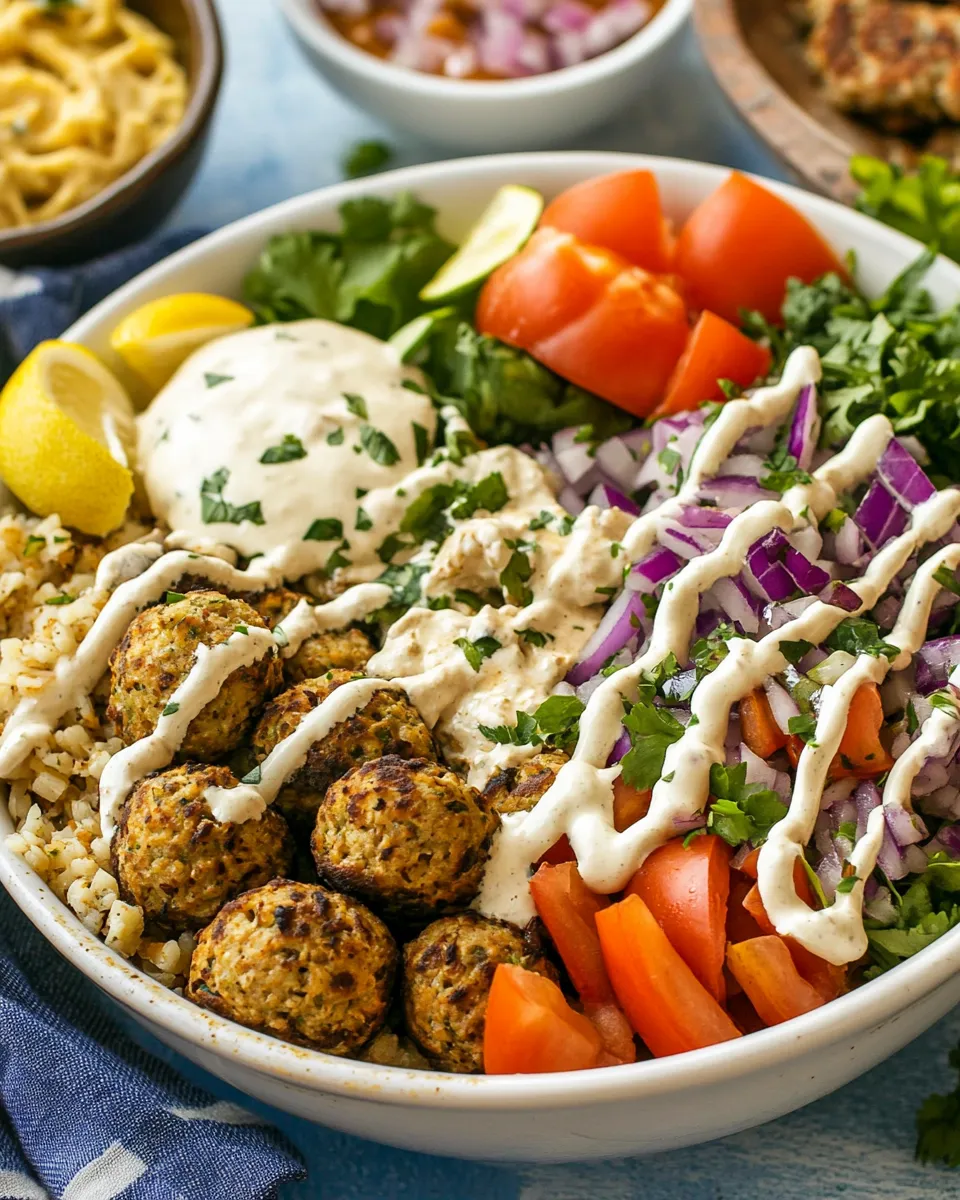
I love a bowl that feels like a full meal but comes together with straightforward, sensible steps. This Falafel Bowl is built around crisp, herby falafel and three Mediterranean sides that balance each other: a lemony rice pilaf, a bright lentil tabbouleh, and smoky grilled eggplant. A creamy Tahini Caesar Dressing finishes it all—rich, tangy, and just enough to tie flavors together.
No gimmicks here. You’ll do the slow, essential work—soaking chickpeas, pulsing the batter, chilling to firm up—then quick frying and a simple assembly. The result is reliable, portable, and great for feeding a hungry household or for making ahead and assembling later.
This post walks through the practical choices I make while cooking, troubleshooting for common slip-ups, and sensible substitutions so you can adapt the bowl to what’s in your pantry or the season. Read through the setup and equipment notes before you start; they’ll save time and stress.
The Essentials
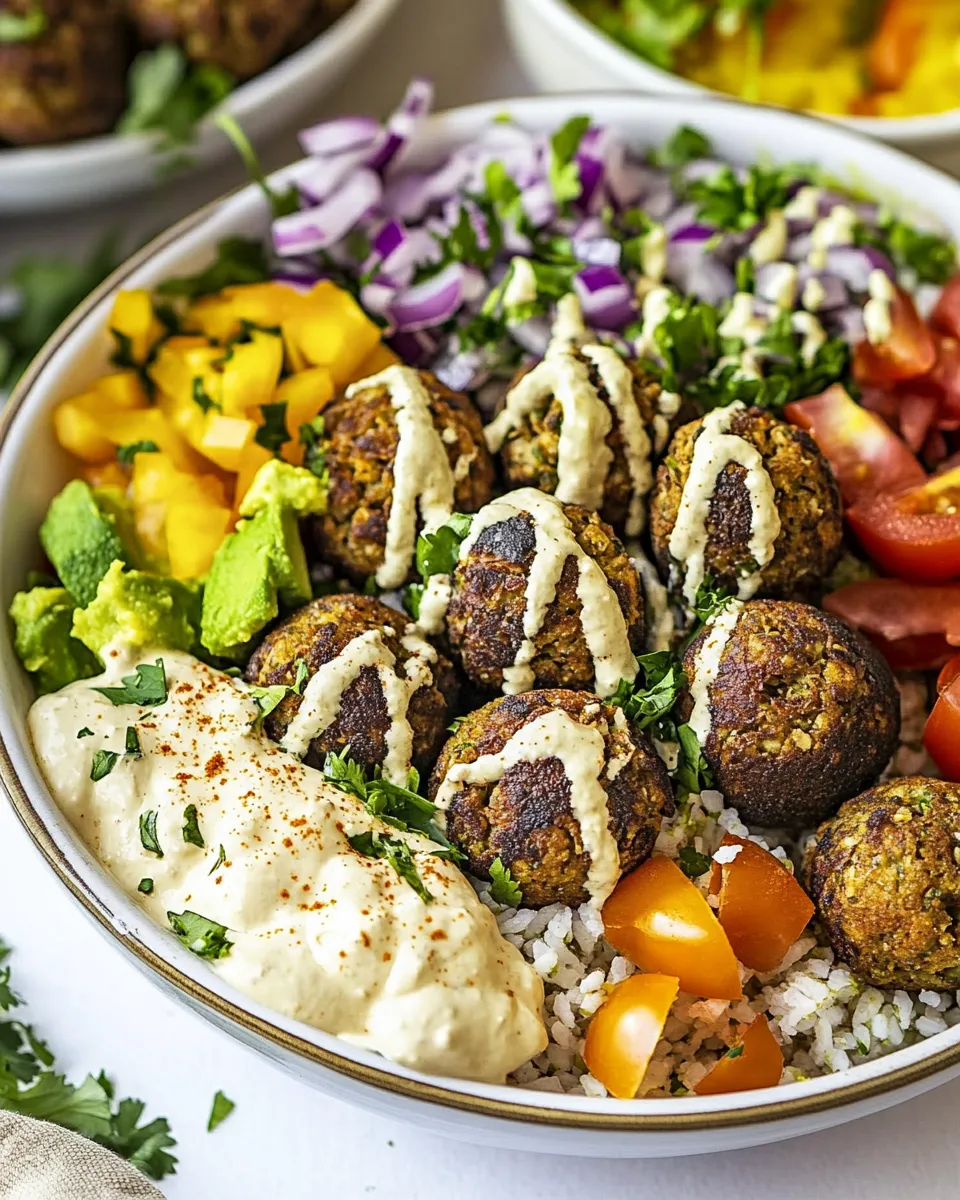
This recipe centers on texture and contrast. The falafel must be moist enough to hold together yet coarse so the interior stays bright green and not mushy. The sides—Rice Pilaf, Lentil Tabbouleh, and Grilled Eggplant—provide starch, freshness, and smokiness, respectively. The Tahini Caesar adds fat and acidity to bring everything into focus.
Plan on at least one overnight soak for the chickpeas. The short chill after blending is non-negotiable: it firms the mixture and makes shaping a lot easier. Frying in batches keeps the oil temperature stable and produces an even golden crust.
Timing tip: while chickpeas soak, get the sides and dressing made. That parallel work keeps active time low on the day of frying and assembly.
Ingredients
- 1+½cupChickpeas (dry not canned)dried — The foundation for falafel; dry chickpeas must be soaked overnight so they keep structure when fried.
- 1Onion (medium) — Adds moisture and savory sweetness; peel and roughly chop before processing.
- 4clovesGarlic — Sharp aromatics to brighten the falafel; use fresh cloves for best flavor.
- 0.8ozFresh parsley — Provides herbaceous color and freshness inside the falafel.
- 0.6ozFresh cilantro — Compliments parsley with a citrusy lift; optional if you prefer all-parsley but included in source list.
- 1+½tspGround cumin seeds — Warm spice that gives falafel its signature savory depth.
- 2TbspSesame seeds — Toast or not as you prefer; they add nuttiness and texture.
- 1tspSalt — Essential for seasoning; distribute evenly in the mix.
- ¼tspBlack pepper — A touch of heat and balance.
- 1tspBaking soda — Lightens the mixture and helps create a tender interior.
- ½cupCold water — Hydrates the blend; keep it cold so the mixture doesn’t warm up during processing.
- 2servingsLentil Tabbouleh — One of the three bowl components; provides freshness and protein.
- 2servingsMediterranean Grilled Eggplant — Smoky vegetable element; great for texture contrast.
- 2servingsMediterranean Rice Pilaf — Starchy base to make the bowl hearty.
- 2servingsTahini Caesar Dressing — Finishing sauce; creamy, tangy, and used for drizzling.
From Start to Finish: Falafel Bowl
- Soak the dried chickpeas in cold water overnight (do not cook them).
- While the chickpeas soak (or after), make the Lentil Tabbouleh, Mediterranean Grilled Eggplant, Mediterranean Rice Pilaf, and Tahini Caesar Dressing according to their recipes; set them aside for assembly.
- Drain the soaked chickpeas and add them to a food processor. Add the peeled and roughly chopped onion, garlic cloves, fresh parsley, fresh cilantro, ground cumin seeds, salt, black pepper, baking soda, sesame seeds, and the ½ cup cold water.
- Pulse/blend the mixture until it becomes a coarse, creamy paste — it should be moist and hold together but not completely pureed. Stop and scrape down the bowl as needed.
- Transfer the falafel mixture to a large bowl, cover, and chill in the refrigerator for at least 1 hour to firm up (this makes shaping easier).
- After chilling, use a spoon or your palms to form the mixture into balls or patties of your preferred size.
- Preheat a large skillet over medium heat and add enough oil to coat the bottom of the pan for frying. Heat until shimmering. Do not overcrowd the pan.
- Fry the falafel in batches, turning as needed, until the exterior is golden brown (about 4–6 minutes per batch). Remove to a paper towel or rack to drain. A cooked falafel should be browned outside and vibrant green inside.
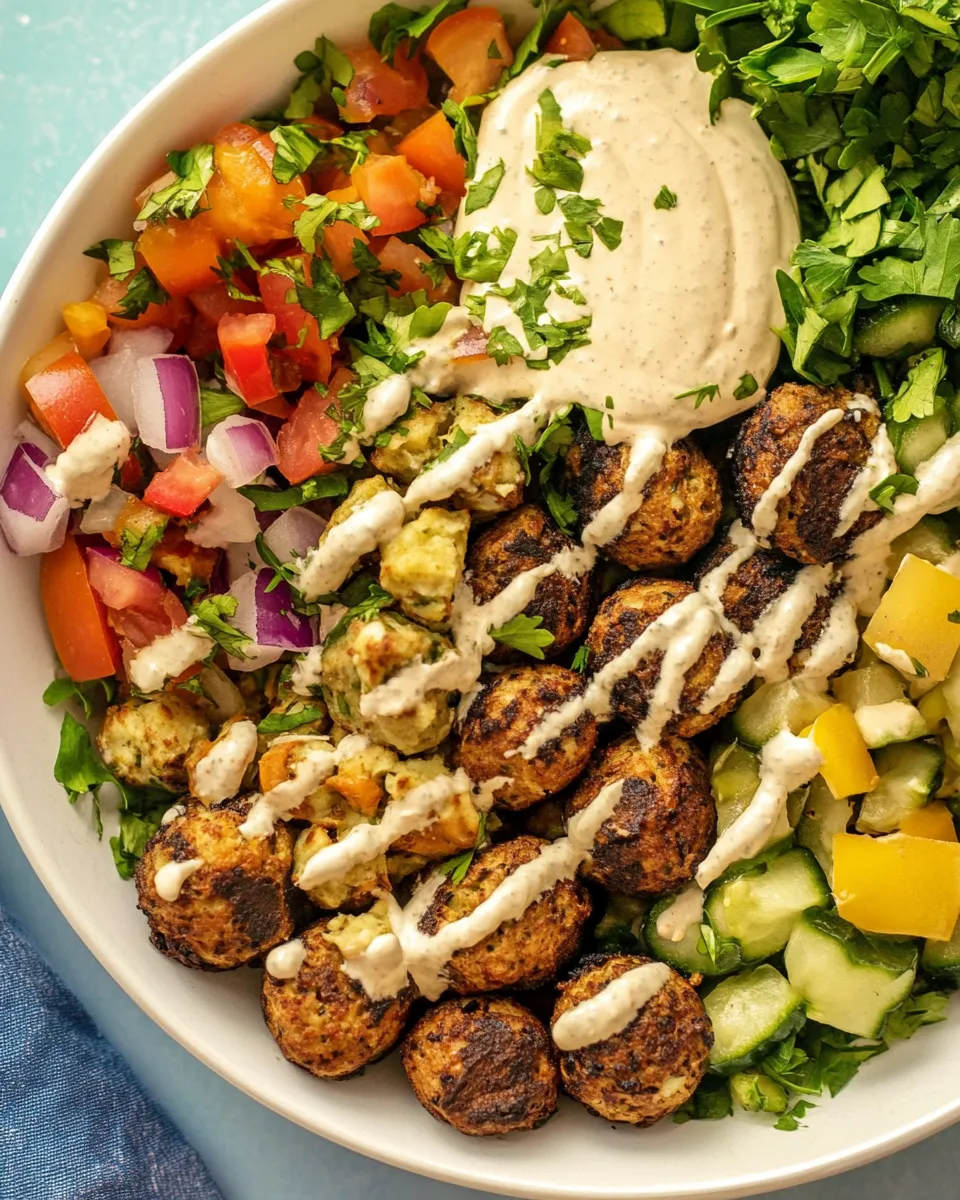
- To assemble each bowl: place the Mediterranean Rice Pilaf in one third of the bowl, the Lentil Tabbouleh in the second third, and the Mediterranean Grilled Eggplant in the final third (or layer as you prefer).
- Arrange the cooked falafel on top of the bowl components and drizzle with the Tahini Caesar Dressing. Serve immediately.
Why This Recipe Is Reliable
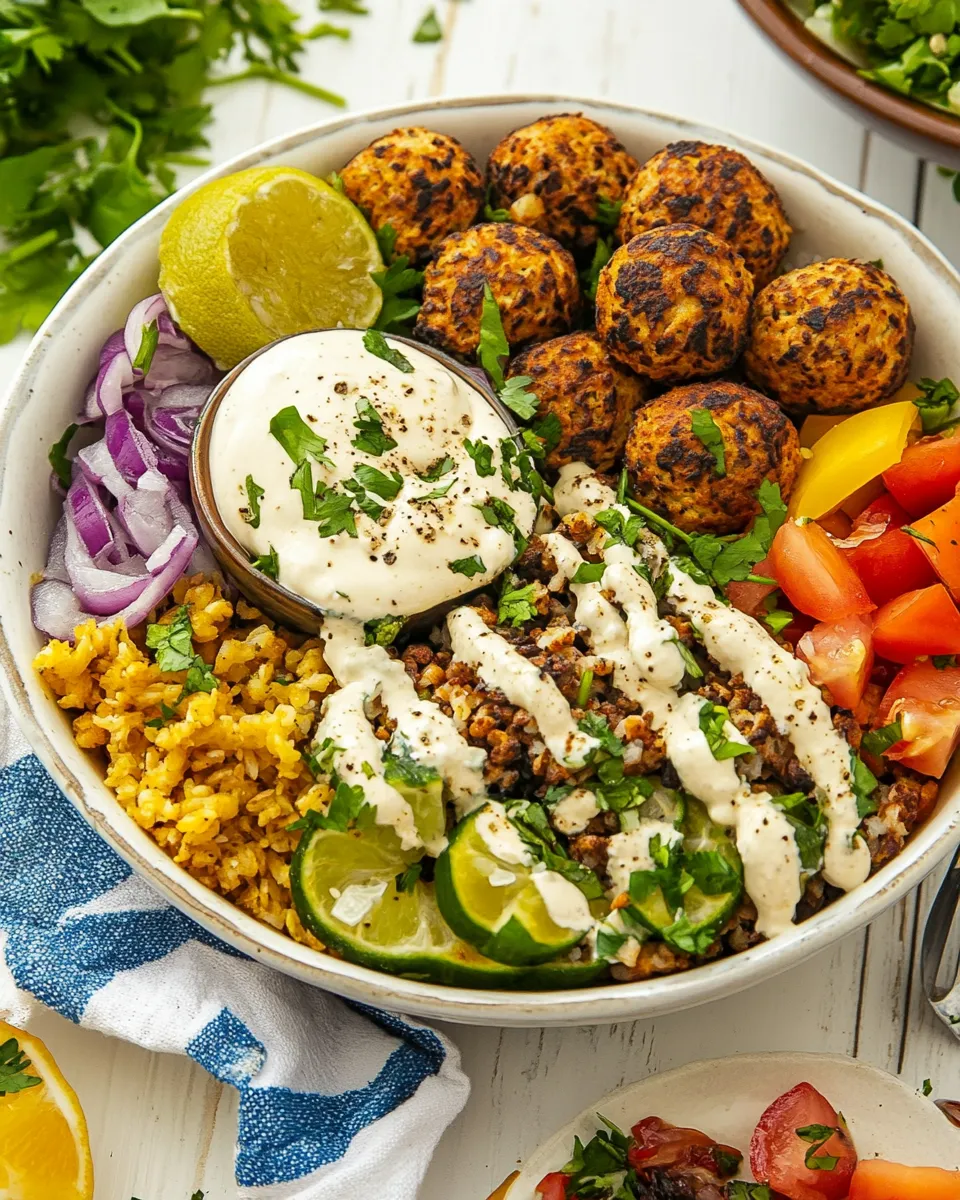
This approach isolates the variables that cause falafel to fail: under-soaked chickpeas, over-processing, and skipping the chill. Soaking the chickpeas overnight ensures they stay textured and don’t dissolve into paste while processing. Pulsing rather than pureeing preserves little pockets of whole ingredients so the inside stays bright green. Chilling firms the mixture so you shape neat balls or patties without them collapsing.
Using a skillet with oil to shallow fry rather than deep-frying reduces oil use while still letting you achieve a crisp crust. Frying in batches keeps the oil temperature stable, avoiding greasy, undercooked falafel.
Finally, assembling with distinct components instead of mixing everything together lets each element shine. The Rice Pilaf carries the meal, Tabbouleh cuts the richness, Eggplant adds depth, and the Tahini Caesar finishes with cream and acid.
Substitutions by Category
Protein/herb:
– If you don’t have cilantro, double the parsley. The flavor shifts slightly but remains herb-forward.
– For a nuttier falafel, use toasted sesame seeds (already in the list); you can increase to taste if you like more crunch.
Binding and texture:
– Baking soda is included to lift the mixture; do not omit unless you accept a denser texture.
– If you prefer to avoid frying, you can flatten patties and roast at a high temperature (425°F / 220°C) on a greased sheet—but note the texture will be different and browning less even than frying.
Sides and sauce:
– The specified sides and dressing are in the source list—substitute other Mediterranean salads (cucumber-yogurt, tabbouleh variations) only if desired, but keep their serving count consistent for balance.
– Tahini Caesar is the finishing touch; a simple lemon-tahini or yogurt-tahini works in a pinch.
Oils and heat:
– Use a neutral oil with a high smoke point for frying (vegetable, canola, or light olive oil). Extra-virgin olive oil will darken more quickly.
Setup & Equipment
– Large bowl for chilling the falafel mix.
– Food processor with a reasonably sharp blade; pulse in short bursts to avoid over-processing.
– Large skillet (10–12 inches) with good heat conductivity to maintain even frying temperature.
– Slotted spoon or spatula for turning falafel.
– Paper towels or a wire rack set over a sheet pan for draining fried falafel.
– Measuring spoons and cups for the ingredients listed.
– Optional: thermometer to monitor oil temperature (steady medium heat is fine; you want the oil shimmering but not smoking).
Prep workflow: soak chickpeas overnight. While they soak, make and cool the Rice Pilaf, Lentil Tabbouleh, Grilled Eggplant, and Tahini Caesar Dressing. Drain chickpeas, process, chill, then fry while reheating or finishing the sides. This parallel prep minimizes active time when frying.
Slip-Ups to Skip
– Do not use canned chickpeas. Canned beans are already cooked and will turn to mush when you process them, making it impossible to get the right texture.
– Don’t over-process. If the mixture becomes a puree, the falafel will be dense and gray instead of bright and tender.
– Skip frying in an overcrowded pan. Overcrowding drops the oil temperature and leads to greasy, under-browned falafel.
– Avoid skipping the chill. Shaping warm mixture is messy and the falafel are more likely to fall apart.
– Don’t skip seasoning. Taste your sides and dressing and adjust salt/acid before assembly; under-seasoned components flatten the bowl’s profile.
Warm & Cool Weather Spins
Warm weather:
– Serve with extra fresh herbs and lemon wedges. The falafel hold up well at room temperature—assemble bowls slightly in advance for picnics.
– Swap the warm Rice Pilaf for a chilled herbed couscous or bulgur to make the bowl more refreshing.
Cool weather:
– Serve the Rice Pilaf warm and place falafel hot on top so the bowl feels cozy. Add a dollop of warm yogurt-tahini sauce if you want extra comfort.
– Consider roasting the eggplant until silky rather than quick-grilling for a heartier texture.
Seasonal produce:
– Summer: add charred peppers or cherry tomatoes for freshness.
– Fall/Winter: fold in roasted root vegetables or caramelized onions to deepen flavor.
Chef’s Rationale
I build this bowl around contrasts: crisp versus tender, acidic versus rich, and herbal versus smoky. The falafel must remain vibrant inside, which is why I use fresh herbs and control processing. Sesame seeds contribute mild nuttiness and help with surface texture. The ½ cup of cold water is enough to hydrate the mix for cohesion without making it paste-like.
The three sides were chosen to cover typical needs: something starchy and comforting (Rice Pilaf), something bright and herbaceous (Lentil Tabbouleh), and something smoky and meaty (Grilled Eggplant). The Tahini Caesar brings fat and acidity; it’s not just a dip but a flavor bridge.
This method scales well. Make more Falafel Bowl components in advance; falafel fry quickly and hold up for a couple of hours, making this a practical choice for meal prep or casual entertaining.
Store, Freeze & Reheat
Store:
– Keep leftover falafel in an airtight container in the fridge for up to 3 days. Store the sides and dressing separately to preserve texture.
Freeze:
– Flash-freeze shaped but unfried falafel on a sheet until firm, then transfer to a freezer bag. They’ll keep for up to 1 month. To cook from frozen, fry a couple minutes longer per batch or bake at 400°F until heated through and browned.
Reheat:
– Reheat fried falafel in a 375°F oven or toaster oven on a wire rack for 8–10 minutes to revive crispness. Microwaving will warm them but soften the crust.
– Reheat Rice Pilaf gently in a skillet with a splash of water or broth to refresh grains. Lentil Tabbouleh is best served cold or at room temperature; grilled eggplant can be reheated briefly to take the chill off.
Reader Q&A
Q: Can I bake the falafel instead of frying?
A: Yes, you can, but expect a different texture. Flatten the patties and bake at high heat (around 425°F) on a lightly oiled sheet, flipping once. They’ll brown but won’t have quite the same crust as frying.
Q: My falafel fell apart in the pan. What went wrong?
A: The most common reasons are insufficient chilling, over-processing (creating a paste), or oil that’s too hot or too cool. Make sure to chill the mixture for at least an hour and fry over steady medium heat without crowding.
Q: How do I keep the inside vibrant green?
A: Avoid over-processing and don’t heat the mix while blending. Stop when you have a moist, coarse paste. Using fresh parsley and cilantro as listed is key.
Q: Can I use canned chickpeas?
A: Not for this technique. Canned chickpeas are cooked and will make a mushy mixture. The recipe specifies dried chickpeas soaked overnight for structure.
Ready, Set, Cook
Gather your ingredients, set the chickpeas to soak tonight, and prep the sides while they soak. When you’re ready to fry, the assembly is quick and the payoff is a bowl that looks and tastes like effort well spent. Serve immediately with extra lemon and the Tahini Caesar Dressing on the side for guests to add as they like. Enjoy the satisfying rhythm of soaking, pulsing, chilling, frying, and assembling—each step matters, and the result is worth the care.
Falafel Bowl
Ingredients
Ingredients
- 1 +1/2 cupChickpeas dry not canneddried
- 1 Onion medium
- 4 clovesGarlic
- 0.8 ozFresh parsley
- 0.6 ozFresh cilantro
- 1 +1/2 tspGround cumin seeds
- 2 TbspSesame seeds
- 1 tspSalt
- 1/4 tspBlack pepper
- 1 tspBaking soda
- 1/2 cupCold water
- 2 servingsLentil Tabbouleh
- 2 servingsMediterranean Grilled Eggplant
- 2 servingsMediterranean Rice Pilaf
- 2 servingsTahini Caesar Dressing
Instructions
Instructions
- Soak the dried chickpeas in cold water overnight (do not cook them).
- While the chickpeas soak (or after), make the Lentil Tabbouleh, Mediterranean Grilled Eggplant, Mediterranean Rice Pilaf, and Tahini Caesar Dressing according to their recipes; set them aside for assembly.
- Drain the soaked chickpeas and add them to a food processor. Add the peeled and roughly chopped onion, garlic cloves, fresh parsley, fresh cilantro, ground cumin seeds, salt, black pepper, baking soda, sesame seeds, and the ½ cup cold water.
- Pulse/blend the mixture until it becomes a coarse, creamy paste — it should be moist and hold together but not completely pureed. Stop and scrape down the bowl as needed.
- Transfer the falafel mixture to a large bowl, cover, and chill in the refrigerator for at least 1 hour to firm up (this makes shaping easier).
- After chilling, use a spoon or your palms to form the mixture into balls or patties of your preferred size.
- Preheat a large skillet over medium heat and add enough oil to coat the bottom of the pan for frying. Heat until shimmering. Do not overcrowd the pan.
- Fry the falafel in batches, turning as needed, until the exterior is golden brown (about 4–6 minutes per batch). Remove to a paper towel or rack to drain. A cooked falafel should be browned outside and vibrant green inside.
- To assemble each bowl: place the Mediterranean Rice Pilaf in one third of the bowl, the Lentil Tabbouleh in the second third, and the Mediterranean Grilled Eggplant in the final third (or layer as you prefer).
- Arrange the cooked falafel on top of the bowl components and drizzle with the Tahini Caesar Dressing. Serve immediately.
Equipment
- Food Processor
- Large Bowl
- Skillet
- Spoon
- Paper Towels
- Cooling rack