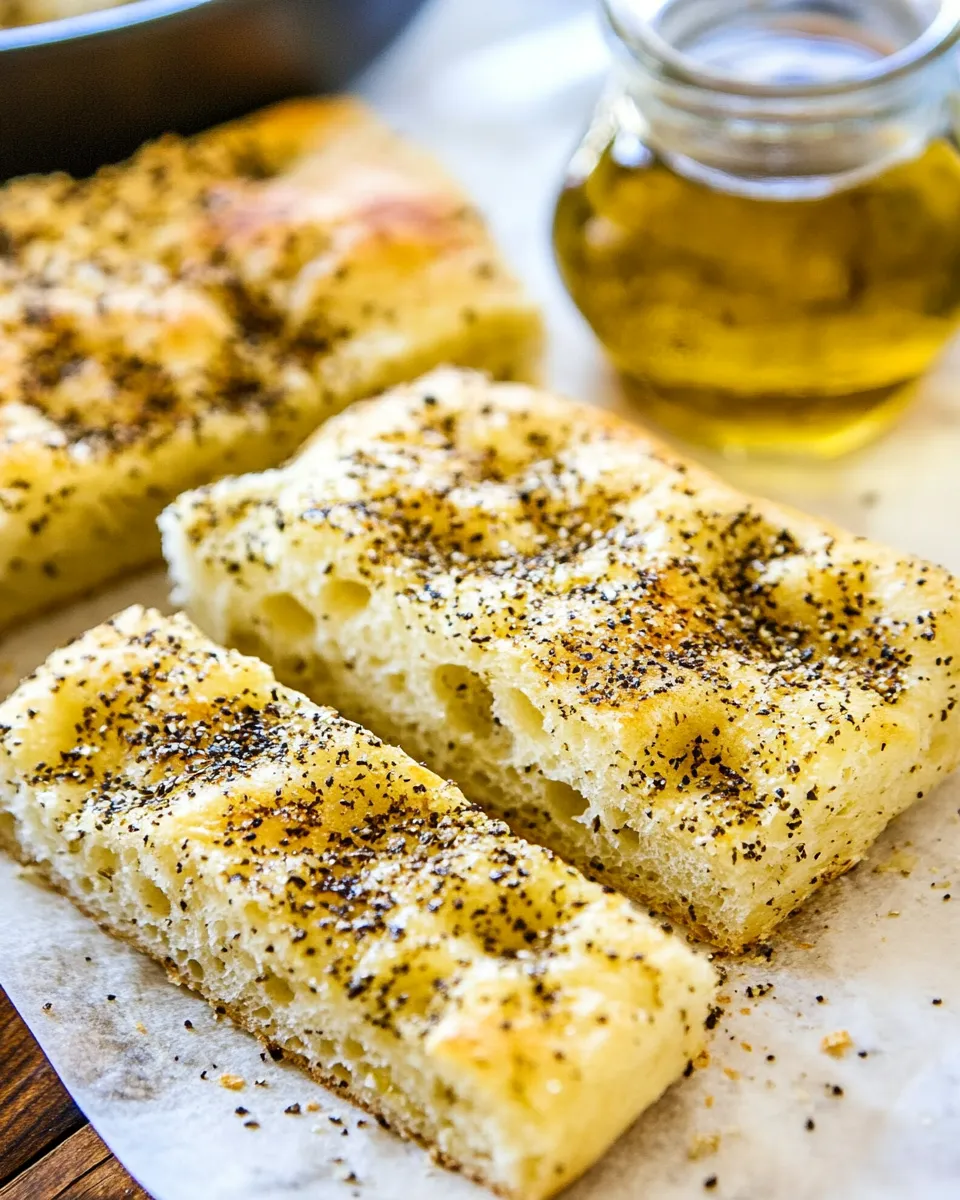
Focaccia is the kind of bread that makes a kitchen feel like a home. It’s rustic, forgiving, and brilliant as a weeknight centerpiece or a simple side for soup and salad. This no-knead version trims the fuss but keeps the flavor: olive oil, dimples, and a light, airy crumb.
I like this dough because it responds to gentle handling. You’re not wrestling with it — you mix, press, wait, and bake. The result is a golden sheet of fragrant bread with a chewy interior and a crisp edge.
Below I’ll walk you through the exact ingredients and the step-by-step method. I’ll also cover why it works, common mistakes, useful substitutions, and how to store and reheat so you get consistent results every time.
What You’ll Need
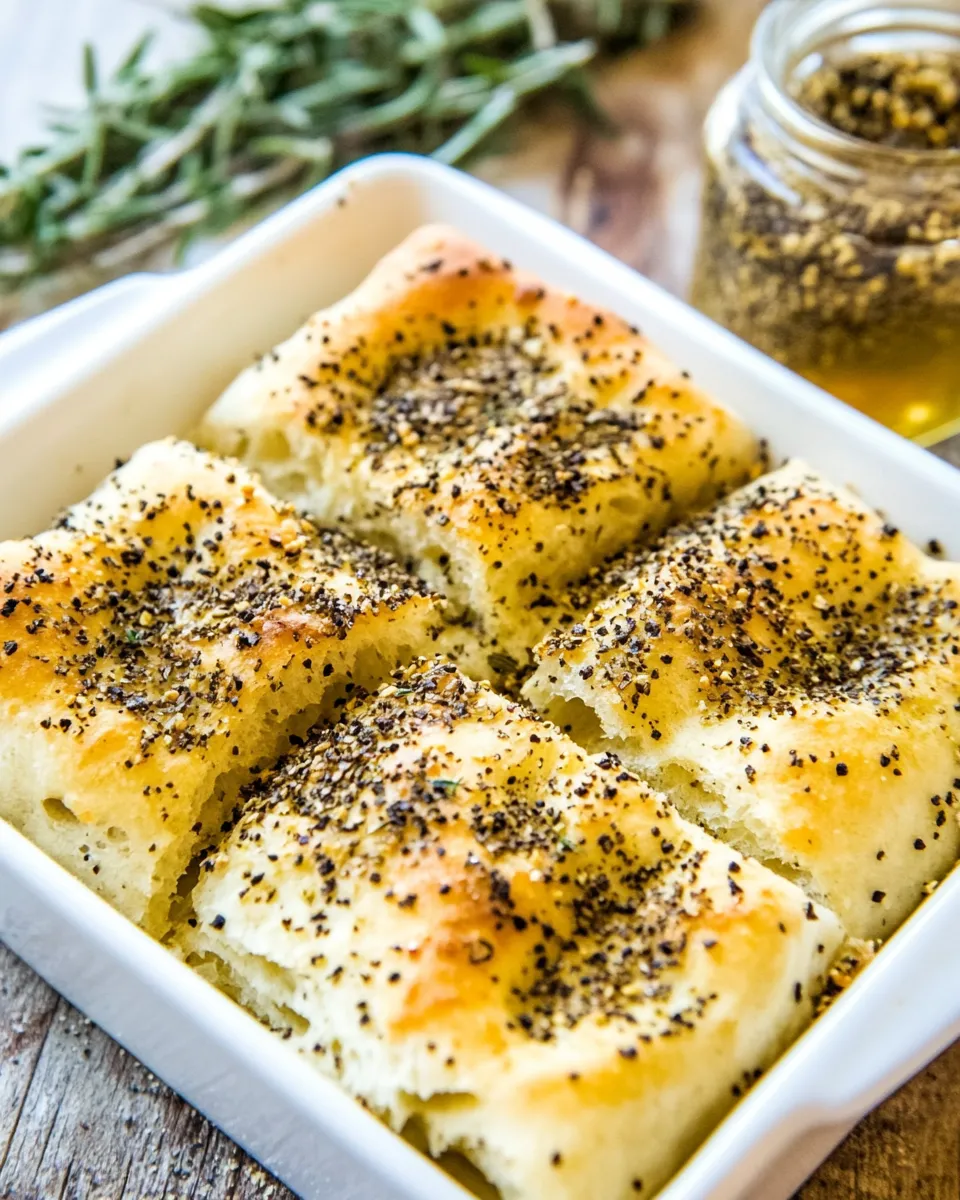
Ingredients
- 3 cups (372 g) all-purpose flour — The backbone of the dough; measure by weight for accuracy when possible.
- 1 envelope (2 ¼ teaspoons or 7 g) rapid rise or fast acting yeast NOT active dry yeast — Fast-acting yeast shortens the rise time; don’t swap with active dry unless you adjust.
- 1 tablespoon (13 g) granulated sugar — Feeds the yeast and balances flavor.
- 1 teaspoon salt — Adds structure and basic seasoning to the dough.
- 1 ⅔ cups (395 ml) very warm water (heated to between 120°–130°F) — Temperature wakes the rapid-rise yeast without killing it.
- 4 tablespoons (60 ml) olive oil divided — Divided for greasing the pan and finishing the top; it flavors and crisps the crust.
- 1 tablespoon Italian seasoning — Ready-made herb blend for immediate flavor; sprinkle on top.
- ½ teaspoon salt — For sprinkling on the top; enhances surface flavor.
- ½ teaspoon pepper — Adds a subtle bite to the finish.
Focaccia Bread — Do This Next
- Lightly grease a 9×13-inch pan with 1 tablespoon of the olive oil (tilt the pan and use the oil to coat the bottom and sides).
- In a large bowl, combine 3 cups (372 g) all-purpose flour, 1 envelope (2 ¼ tsp / 7 g) rapid-rise yeast, 1 tablespoon (13 g) granulated sugar, and 1 teaspoon salt; stir to mix.
- Heat 1 ⅔ cups (395 ml) very warm water to 120°–130°F. In a separate measuring cup or small bowl, add 2 tablespoons (30 ml) of the olive oil to the warm water and stir briefly.
- Pour the warm water + oil mixture into the dry ingredients. Stir with a spatula or wooden spoon until a sticky, well-mixed dough forms (do not knead).
- Transfer the dough to the prepared pan and press it evenly to the edges with oiled hands or a spatula.
- Cover the pan loosely with plastic wrap or a clean kitchen towel and let the dough rise in a warm, draft-free place until roughly doubled in size, about 30 minutes.
- While the dough is rising (or immediately after it has doubled), preheat the oven to 375°F.
- After the first rise, use the handle of a wooden spoon to make dimples all over the surface of the dough. Drizzle the remaining 1 tablespoon (15 ml) olive oil over the dough.
- Evenly sprinkle 1 tablespoon Italian seasoning, ½ teaspoon salt, and ½ teaspoon pepper over the oiled dough. Cover again and let rise an additional 15 minutes.
- Bake the focaccia in the preheated 375°F oven for 30–35 minutes, or until the top is lightly browned.
- Remove from the oven, let cool slightly in the pan, then slice and serve.
Why It Works Every Time
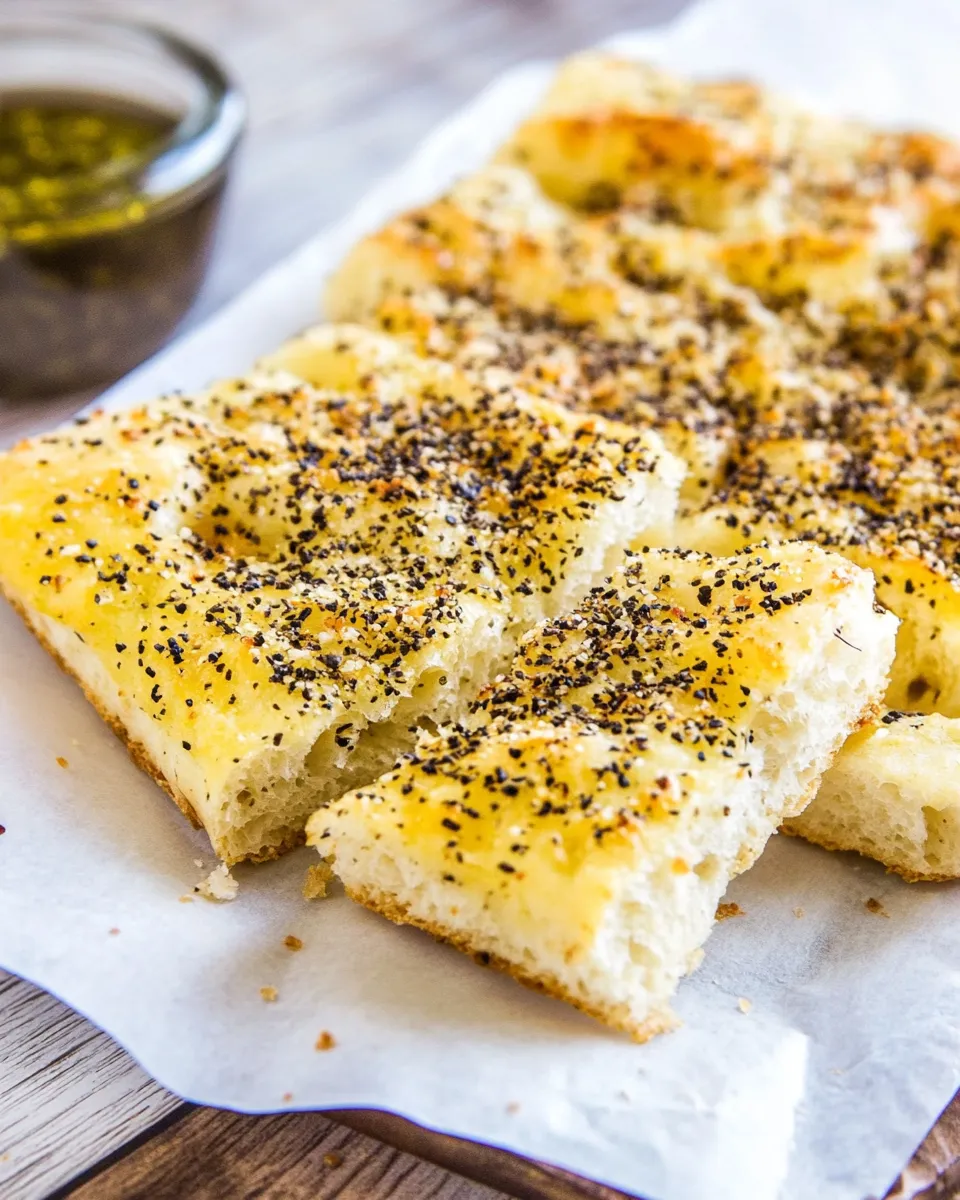
This recipe is simple but deliberate. Rapid-rise yeast accelerates fermentation so you get a reliably quick rise without extended bulk fermentation. The warm water and sugar wake the yeast immediately and the high hydration (relative to old-school loaves) gives you those signature air pockets.
Pressing the dough into the oiled pan replaces kneading. The oil prevents sticking and encourages a crisp bottom and edges. Dimples trap oil and seasoning, producing concentrated pockets of flavor and the classic focaccia texture.
Because this is a no-knead method, gluten develops via the mixing and resting stages rather than through mechanical work. As long as the dough is mixed until cohesive and given the short rises described, the structure will be there and the crumb will be open and tender.
Smart Substitutions
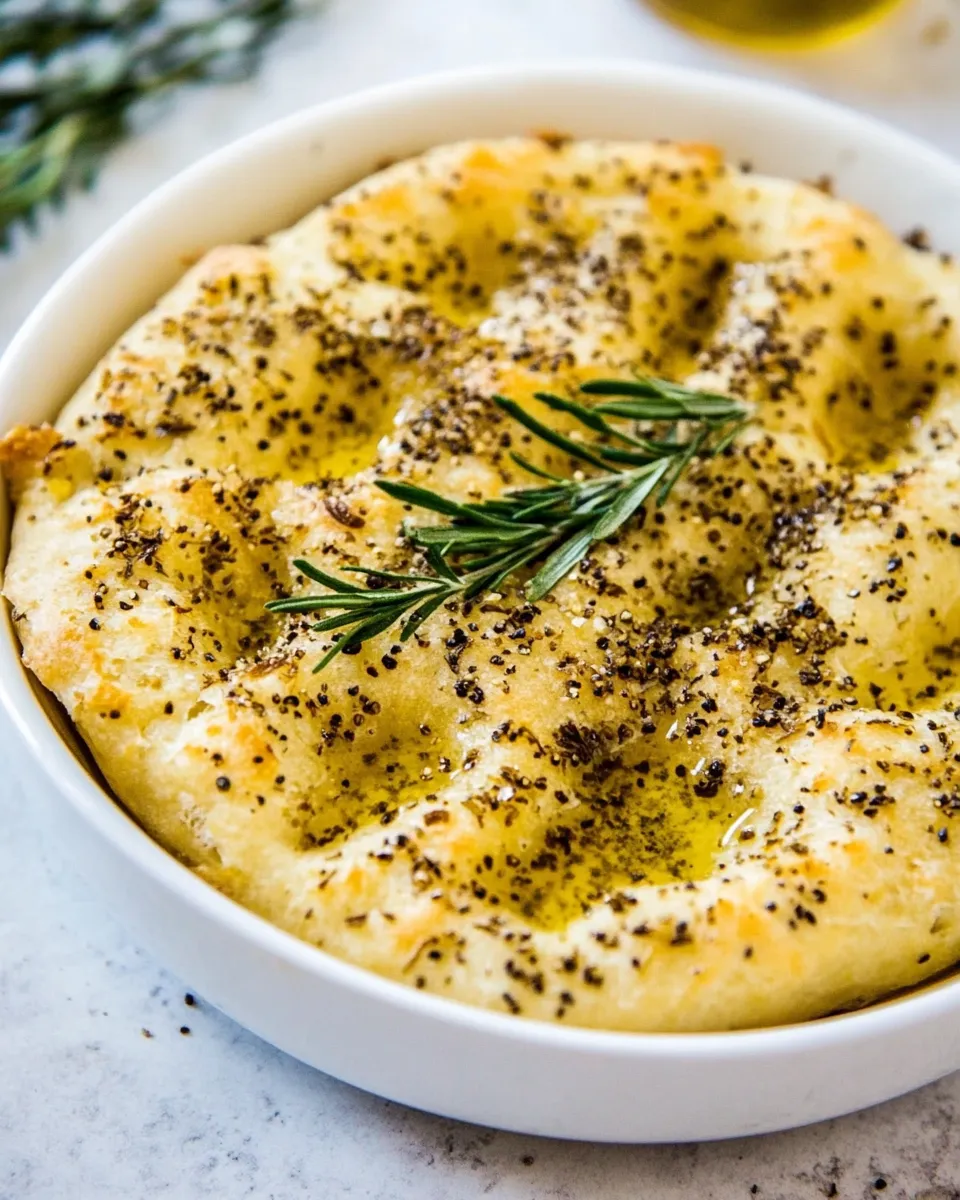
Substitutions can adapt the recipe to what you have on hand, but keep in mind that quantities and techniques here are tuned for the specified ingredients.
- Flour: You can use a mix of bread flour and all-purpose for a chewier texture; if you do, keep total weight the same (372 g).
- Yeast: This recipe calls for rapid-rise yeast. If you must use active dry yeast, proof it in the warm water and sugar for 5–10 minutes until foamy, and expect slightly longer rising times.
- Oil: Olive oil is preferred for flavor. A neutral oil will work for texture but not for the same taste.
- Herbs: If you don’t have Italian seasoning, use a blend of dried rosemary, oregano, and thyme to total roughly 1 tablespoon.
Must-Have Equipment
Minimal tools make this recipe approachable.
- 9×13-inch rimmed baking pan — Size matters; it determines thickness and bake time.
- Large mixing bowl — For mixing and rising.
- Measuring spoons and a scale (optional) — Weighing flour gives best results.
- Wooden spoon or spatula — To mix the sticky dough without fuss.
- Thermometer (optional) — Handy to confirm the water is 120°–130°F for the yeast.
Learn from These Mistakes
A few small errors are common and easy to fix.
- Water too hot: If it exceeds 130°F you risk killing the yeast. Use a thermometer or let the water cool slightly after heating.
- Using the wrong yeast: Active dry yeast needs proofing and typically longer rises. Using the prescribed rapid-rise yeast keeps the timing accurate.
- Not oiling hands: The dough is sticky. If you try to press it out with dry hands, it tears and sticks. Oil your hands or the spatula.
- Skipping the dimples: Those depressions are functional — they hold oil and seasoning and help the focaccia bake evenly.
- Overbaking: Watch for light browning. Overdone focaccia becomes dry and loses the tender crumb.
Seasonal Twists
Focaccia is a fantastic canvas. Use seasonal produce and fresh herbs to pivot its personality.
- Spring: Top with thinly sliced radishes, fresh pea shoots, or blanched asparagus and a sprinkle of lemon zest after baking.
- Summer: Cherry tomato halves, fresh basil, and a few flakes of sea salt right out of the oven make a bright version.
- Autumn: Caramelized onions, roasted garlic cloves, and a few fresh thyme leaves add warmth.
- Winter: Sautéed mushrooms with rosemary or a scattering of grated hard cheese before the final rise gives depth and comfort.
Cook’s Notes
Timing and environment matter, but this recipe is forgiving.
- Room temperature: A warm, draft-free spot speeds rising. If your kitchen is cool, place the pan near a warm (off) oven or on top of the fridge.
- Salt placement: The recipe uses salt in the dough and again on top. That second sprinkle brightens the finished bread and balances the oil.
- Herb distribution: For even flavor, shake the Italian seasoning through a small sieve or scatter from a height to avoid clumping.
- Cutting: Let the focaccia rest a few minutes in the pan before slicing to avoid squishing the crumb. Serve warm.
Keep-It-Fresh Plan
Focaccia is best the day it’s made but stores well with a little care.
- Short term: Cool completely, wrap tightly in plastic wrap or place in an airtight container, and keep at room temperature up to 2 days.
- Longer storage: For up to a month, slice and freeze in a zipper bag with parchment between layers. Reheat directly from frozen in a 375°F oven for 8–12 minutes or until warmed through.
- Reheating tip: To revive crispness, reheat on a baking sheet in the oven rather than the microwave. A light brush of olive oil before warming adds shine and flavor.
Focaccia Bread Q&A
Answers to the questions I get most often when friends try this recipe.
- Can I make this in a different pan? Yes — a similar-sized rimmed sheet or two smaller pans will work. The final thickness and baking time may vary slightly.
- Why is my focaccia dense? Either the dough wasn’t mixed to cohesion, the yeast was old, or the rise was cut short. Check yeast freshness and dough texture — it should be sticky and hold together.
- Can I add cheese? Yes. Add shredded cheese during the last 2–5 minutes of baking for a melted finish, or sprinkle freshly grated cheese after baking for a different texture.
- Do I have to use Italian seasoning? No — use fresh herbs or single dried herbs to taste, keeping the total herb weight roughly the same.
Bring It to the Table
Serve warm, torn into rustic pieces or sliced into fingers for dipping. It pairs beautifully with soups, simple salads, and as the base for sandwiches. A bowl of extra-virgin olive oil and balsamic for dipping is always appreciated, as is a ramekin of marinated olives or roasted red peppers.
If you want to make dinner effortless, top the focaccia with thinly sliced vegetables and a few olives, bake, then pair with a green salad and a pitcher of wine. Casual, comforting, and satisfying — that’s what this focaccia does best.
Focaccia Bread Recipe (no knead)
Ingredients
Ingredients
- 3 cups 372 g all-purpose flour
- 1 envelope 2 1/4 teaspoons or 7 g rapid rise or fast acting yeastNOT active dry yeast
- 1 tablespoon 13 g granulated sugar
- 1 teaspoonsalt
- 1 2/3 cups 395 ml very warm water(heated to between 120°-130°F)
- 4 tablespoons 60 ml olive oildivided
- 1 tablespoonItalian seasoning
- 1/2 teaspoonsalt
- 1/2 teaspoonpepper
Instructions
Instructions
- Lightly grease a 9×13-inch pan with 1 tablespoon of the olive oil (tilt the pan and use the oil to coat the bottom and sides).
- In a large bowl, combine 3 cups (372 g) all-purpose flour, 1 envelope (2 ¼ tsp / 7 g) rapid-rise yeast, 1 tablespoon (13 g) granulated sugar, and 1 teaspoon salt; stir to mix.
- Heat 1 ⅔ cups (395 ml) very warm water to 120°–130°F. In a separate measuring cup or small bowl, add 2 tablespoons (30 ml) of the olive oil to the warm water and stir briefly.
- Pour the warm water + oil mixture into the dry ingredients. Stir with a spatula or wooden spoon until a sticky, well-mixed dough forms (do not knead).
- Transfer the dough to the prepared pan and press it evenly to the edges with oiled hands or a spatula.
- Cover the pan loosely with plastic wrap or a clean kitchen towel and let the dough rise in a warm, draft-free place until roughly doubled in size, about 30 minutes.
- While the dough is rising (or immediately after it has doubled), preheat the oven to 375°F.
- After the first rise, use the handle of a wooden spoon to make dimples all over the surface of the dough. Drizzle the remaining 1 tablespoon (15 ml) olive oil over the dough.
- Evenly sprinkle 1 tablespoon Italian seasoning, ½ teaspoon salt, and ½ teaspoon pepper over the oiled dough. Cover again and let rise an additional 15 minutes.
- Bake the focaccia in the preheated 375°F oven for 30–35 minutes, or until the top is lightly browned.
- Remove from the oven, let cool slightly in the pan, then slice and serve.
Equipment
- 9x13-inch pan
- Large Bowl
- Measuring Cup
- Wooden Spoon
- Spatula
- Plastic wrap or kitchen towel
Notes
This takes time to rise, so plan accordingly.
You can add garlic powder or fresh garlic to make garlic bread, or even turn this into pizza!