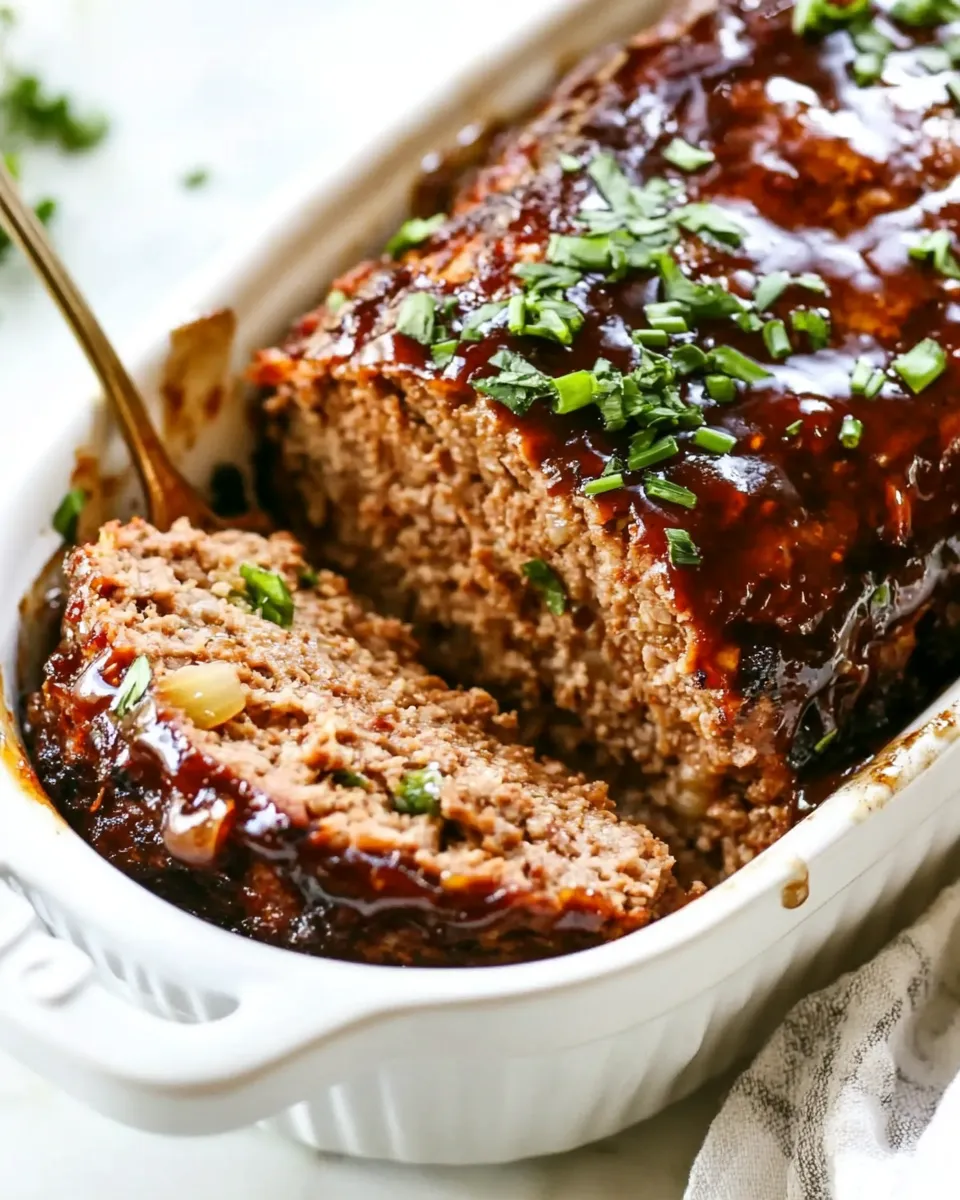
This is the meatloaf I trust when I want dinner to be comforting, straightforward, and reliably good. No tricks, no fussy steps—just a classic, well-seasoned loaf with a glossy balsamic-ketchup glaze that keeps it moist and gives a bright finish. It’s the kind of recipe you can make on a weeknight and still feel proud to serve.
I’ll walk you through the exact ingredients and steps I use every time, then share the small techniques that turn an ordinary meatloaf into one your family will ask for again. Expect practical tips on texture, timing, and how to rescue things if they start to go sideways.
What Goes Into Glazed Meatloaf
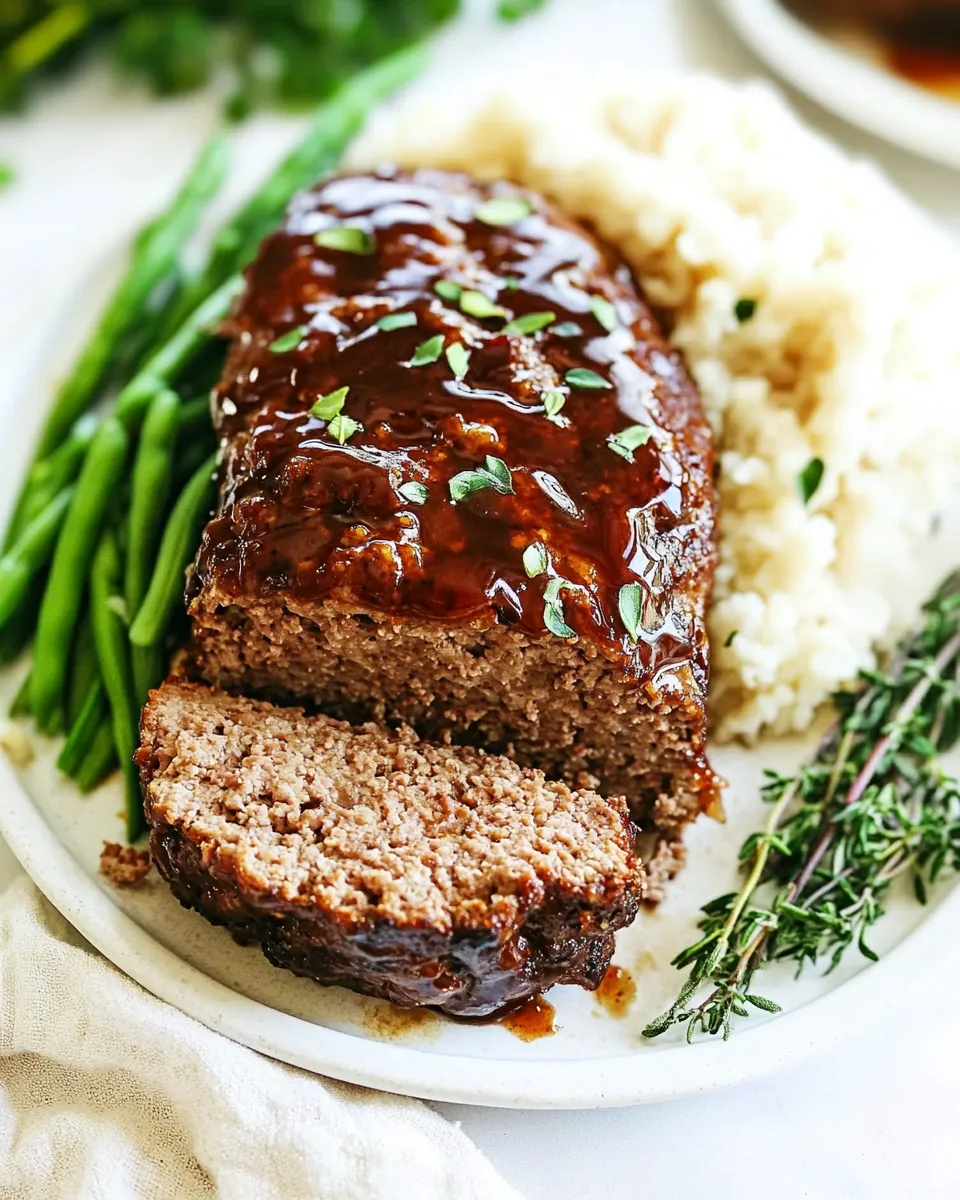
Ingredients
- 2 pounds lean ground beef — the base; lean keeps shrinkage and excess grease down.
- 1 small chopped onion — adds moisture and savory depth.
- 3 tablespoons chopped fresh parsley — brightens the flavor and adds a fresh note.
- ¾ cup Italian bread crumbs — binder that helps the loaf hold together while keeping it tender.
- ½ cup milk — hydrates the crumbs so they soften the meat, preventing dryness.
- 1 tablespoon Worcestershire sauce — adds umami and a subtle savory tang.
- 2 large eggs — binders that give the loaf structure.
- 1 teaspoon garlic powder — concentrated garlic flavor without extra moisture.
- salt and pepper — essential; season to taste, start with a moderate amount.
- ¼ cup ketchup — the base of the glaze for sweetness and tomato flavor.
- 1 tablespoon balsamic vinegar — gives the glaze acidity and depth.
- 1 tablespoon brown sugar — balances the vinegar and creates that glossy, slightly caramelized finish.
Glazed Meatloaf Made Stepwise
- Preheat the oven to 350 degrees Fahrenheit. Lightly spray a 9 x 5-inch loaf pan with non-stick cooking spray.
- In a large bowl combine 2 pounds lean ground beef, 1 small chopped onion, 3 tablespoons chopped fresh parsley, ¾ cup Italian bread crumbs, ½ cup milk, 1 tablespoon Worcestershire sauce, 2 large eggs, 1 teaspoon garlic powder, and salt and pepper.
- Use your hands to mix the ingredients gently until just combined, being careful not to overmix.
- Press the meat mixture evenly into the prepared loaf pan.
- In a small bowl whisk together ¼ cup ketchup, 1 tablespoon balsamic vinegar, and 1 tablespoon brown sugar.
- Brush half of the glaze evenly over the top of the meatloaf and reserve the remaining half.
- Bake the meatloaf in the preheated oven for 50 minutes.
- Remove the meatloaf, brush the remaining glaze on top, then return it to the oven and bake an additional 10 minutes, or until an instant-read thermometer inserted into the center reads 160 degrees Fahrenheit.
- Let the meatloaf rest for about 10 minutes before slicing and serving.
Why This Recipe is a Keeper
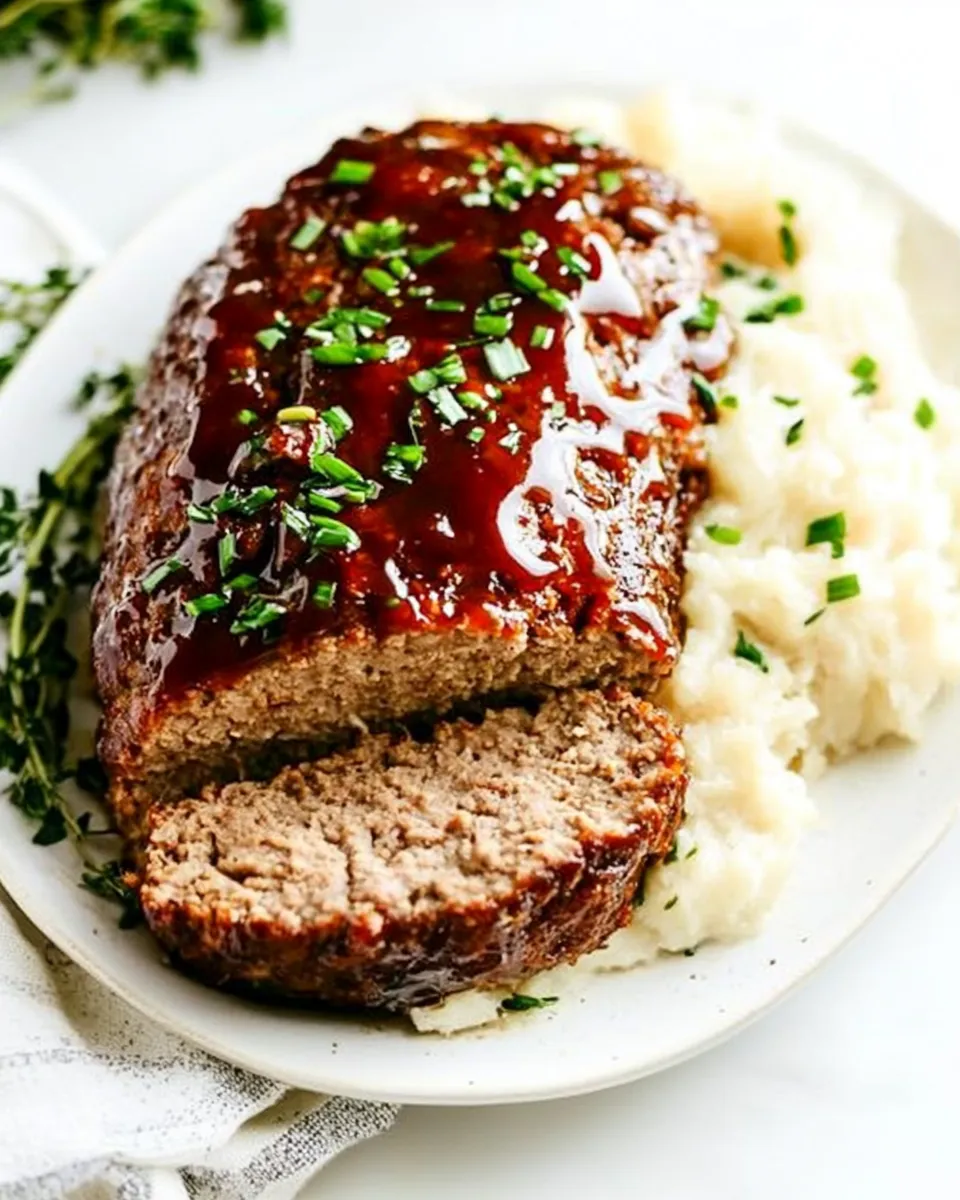
This meatloaf balances flavor, texture, and simplicity. The combo of breadcrumbs and milk keeps the interior tender and prevents it from becoming dense. Worcestershire sauce gives savory depth without adding extra work, and the glaze—ketchup, balsamic, and brown sugar—does heavy lifting: it caramelizes slightly in the last 10 minutes and provides a glossy, sweet-tangy counterpoint to the savory meat.
It’s forgiving. The instructions are designed to avoid common pitfalls: gentle mixing prevents toughness, a single-pan roast reduces handling and cleanup, and the two-stage glazing builds flavor without burning the sugars. If you want a dependable, family-friendly main that doesn’t require babysitting, this is it.
Low-Carb/Keto Alternatives
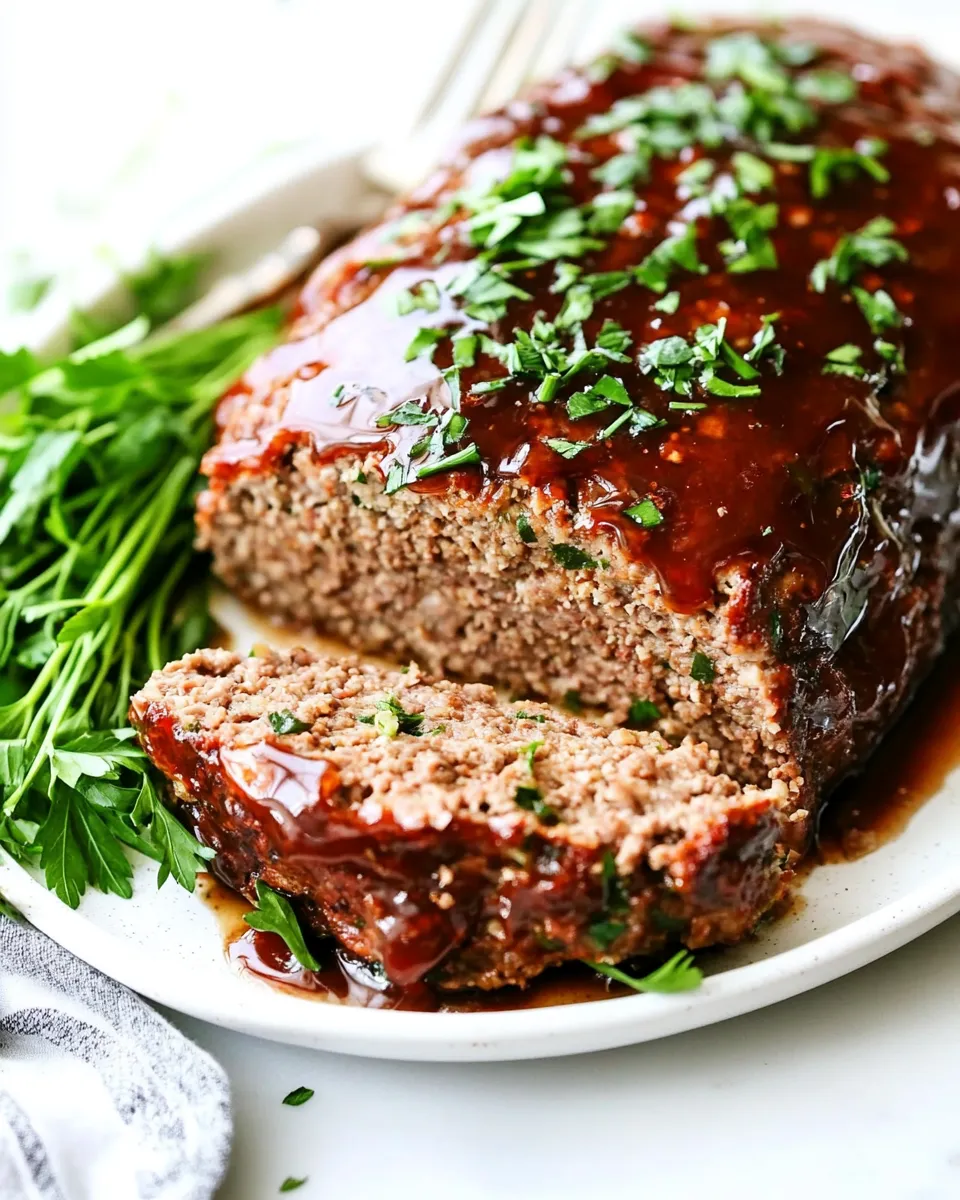
If you’re watching carbs, you can adapt the concept without losing the texture that makes the loaf pleasant. Replace the Italian bread crumbs with a low-carb binder—options include almond flour or crushed pork rinds—to keep the loaf from being crumbly. Swap the ½ cup milk for an unsweetened nut milk if you prefer. For the glaze, use a no-sugar ketchup or a mixture of tomato paste with a touch of a keto-friendly sweetener and balsamic for tang.
Note: when substituting binders, start with less and check the mixture’s feel; low-carb binders absorb liquids differently, so you may need to adjust slightly to keep the mixture moist but not wet.
Gear Up: What to Grab
- 9 x 5-inch loaf pan — keeps the loaf uniform and makes slicing tidy.
- Mixing bowl (large) — room to combine without overworking the meat.
- Rubber spatula or wooden spoon — helpful for scraping bowls when mixing glaze and ingredients.
- Basting brush or spoon — to apply the glaze in two stages.
- Instant-read thermometer — the most reliable way to know doneness without guessing.
- Cutting board and sharp knife — for clean slices after the 10-minute rest.
Things That Go Wrong
Dry, crumbly meatloaf: usually from overworking the meat or skipping the milk-and-crumbs step. Mix only until combined and make sure the crumbs are hydrated by the milk before forming the loaf.
Dense, heavy texture: often a sign of too much compacting. Press the mixture evenly into the pan, but don’t pack it tightly—treat it gently.
Burned or overly dark glaze: if the glaze contains sugar, it can caramelize quickly. That’s why half the glaze is applied at the end. If your oven runs hot, keep an eye on it during the final 10 minutes or tent lightly with foil if it’s browning too fast.
Undercooked center: an instant-read thermometer is the fix here. The recipe calls for 160°F in the center; if you don’t have a thermometer, test by ensuring juices run clear and the loaf has a firm but springy feel, but the thermometer is far more reliable.
Fresh Seasonal Changes
Spring/Summer: Fold in finely grated carrots or zucchini (squeeze out excess moisture) for added color and nutrition. Swap parsley for a mix of parsley and chives for a fresher profile.
Fall/Winter: Increase warm spice notes by adding a pinch of smoked paprika or use a little chopped sage for an autumnal twist. A caramelized onion folded into the mix adds depth for colder months.
Holiday: Serve with a side of roasted root vegetables and replace the parsley garnish with chopped fresh thyme or rosemary for a festive aroma.
Little Things that Matter
- Temperature of ingredients: cold meat straight from the fridge is fine; don’t let it sit out long. Room-temperature eggs or milk aren’t necessary here.
- Chop onions finely so they integrate evenly and don’t create moist pockets that cause uneven cooking.
- Let the meatloaf rest after baking — it firms up and makes slicing cleaner.
- Save pan juices: after cooking, there’s flavor in the bottom of the pan. Spoon some over slices when serving for extra moisture and flavor.
Freezer-Friendly Notes
To freeze before baking: form the loaf in a foil-lined loaf pan, wrap tightly with plastic wrap and foil, and freeze for up to 3 months. Thaw in the refrigerator overnight before baking, then proceed with glazing and the full bake time—expect an extra 10–15 minutes if still slightly cool in the center.
To freeze after baking: cool completely, slice if you prefer, and freeze in an airtight container or heavy-duty freezer bag for up to 3 months. Reheat gently in the oven at 325°F until warmed through, or microwave slices on medium power to avoid drying them out.
Common Qs About Glazed Meatloaf
Can I use other ground meats? Yes, you can substitute part or all of the beef with ground pork, turkey, or a combination. Ground turkey tends to be leaner and can dry out, so consider adding a tablespoon more milk or an extra egg to keep it moist.
Do I have to use a loaf pan? You can form a free-form loaf on a rimmed baking sheet for crisper edges. Baking time may change slightly—watch the internal temperature to reach 160°F.
How do I keep slices from falling apart? Let the loaf rest 10 minutes before slicing and use a sharp knife. The rest time allows juices to redistribute and helps the loaf hold its shape.
Can I make the glaze spicier? Yes—stir in a little hot sauce or a pinch of cayenne to the glaze if you want heat. Apply in the same two-stage method to avoid burning.
In Closing
This Glazed Meatloaf is built to be straightforward and dependable. Follow the measurements and the gentle-mixing rule, use the two-stage glaze to prevent burning while building flavor, and rely on an instant-read thermometer to take the guesswork out of doneness. It’s a recipe that rewards small attentions—gentle handling, brief resting, and a little patience—and it’ll deliver a moist, flavorful dinner every time.
Give it a try this week: set aside an hour, keep the steps simple, and enjoy the kind of dinner that makes leftovers taste even better the next day.
Foolproof Glazed Meatloaf Recipe
Ingredients
Ingredients
- 2 poundslean ground beef
- 1 smallchopped onion
- 3 tablespoonschopped fresh parsley
- 3/4 cupItalian bread crumbs
- 1/2 cupmilk
- 1 tablespoonWorcestershire sauce
- 2 largeeggs
- 1 teaspoongarlic powder
- salt and pepper
- 1/4 cupketchup
- 1 tablespoonbalsamic vinegar
- 1 tablespoonbrown sugar
Instructions
Instructions
- Preheat the oven to 350 degrees Fahrenheit. Lightly spray a 9 x 5-inch loaf pan with non-stick cooking spray.
- In a large bowl combine 2 pounds lean ground beef, 1 small chopped onion, 3 tablespoons chopped fresh parsley, ¾ cup Italian bread crumbs, ½ cup milk, 1 tablespoon Worcestershire sauce, 2 large eggs, 1 teaspoon garlic powder, and salt and pepper.
- Use your hands to mix the ingredients gently until just combined, being careful not to overmix.
- Press the meat mixture evenly into the prepared loaf pan.
- In a small bowl whisk together ¼ cup ketchup, 1 tablespoon balsamic vinegar, and 1 tablespoon brown sugar.
- Brush half of the glaze evenly over the top of the meatloaf and reserve the remaining half.
- Bake the meatloaf in the preheated oven for 50 minutes.
- Remove the meatloaf, brush the remaining glaze on top, then return it to the oven and bake an additional 10 minutes, or until an instant-read thermometer inserted into the center reads 160 degrees Fahrenheit.
- Let the meatloaf rest for about 10 minutes before slicing and serving.
Equipment
- 9 x 5-inch loaf pan
- Oven
- Large Bowl
- Small Bowl
- Whisk
- Instant-read thermometer