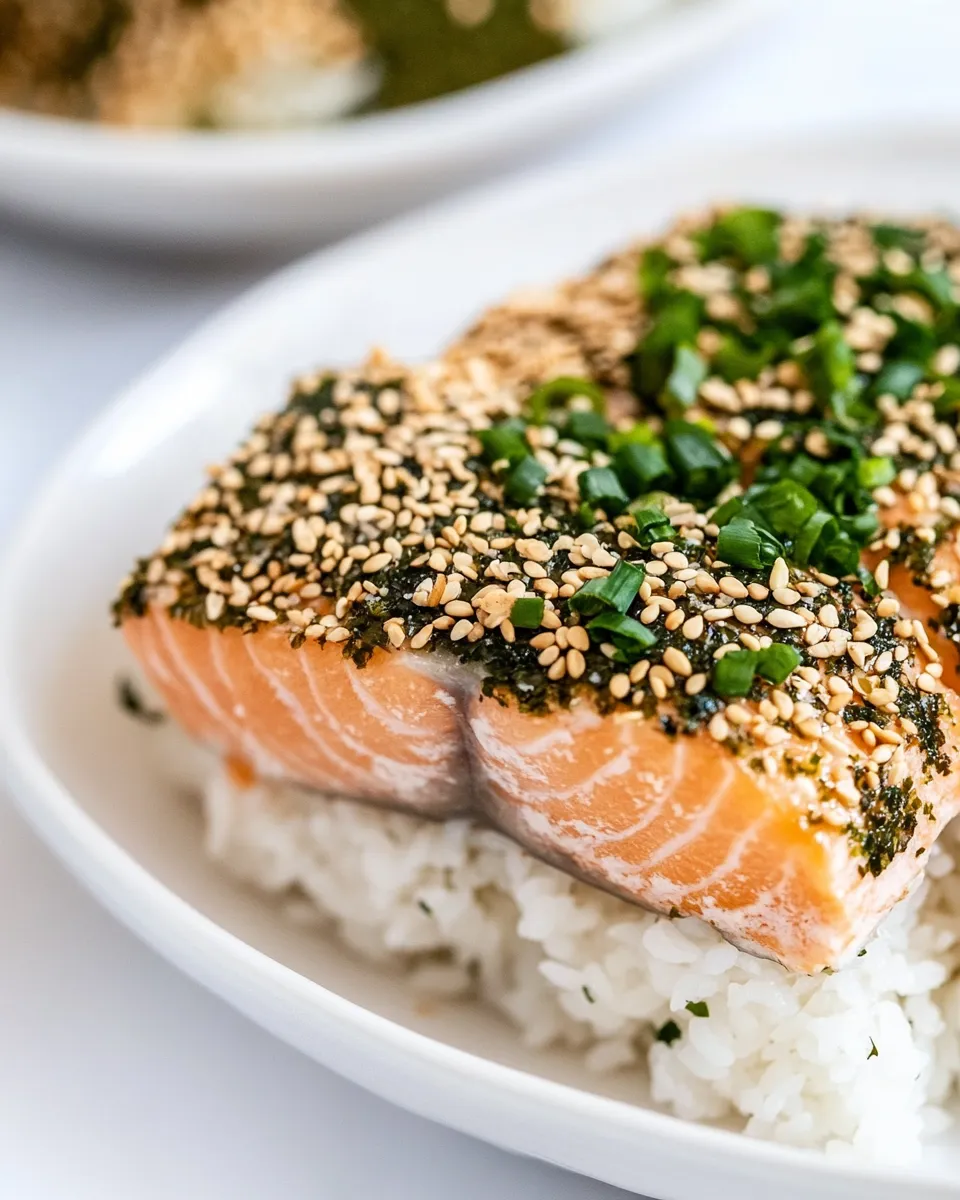
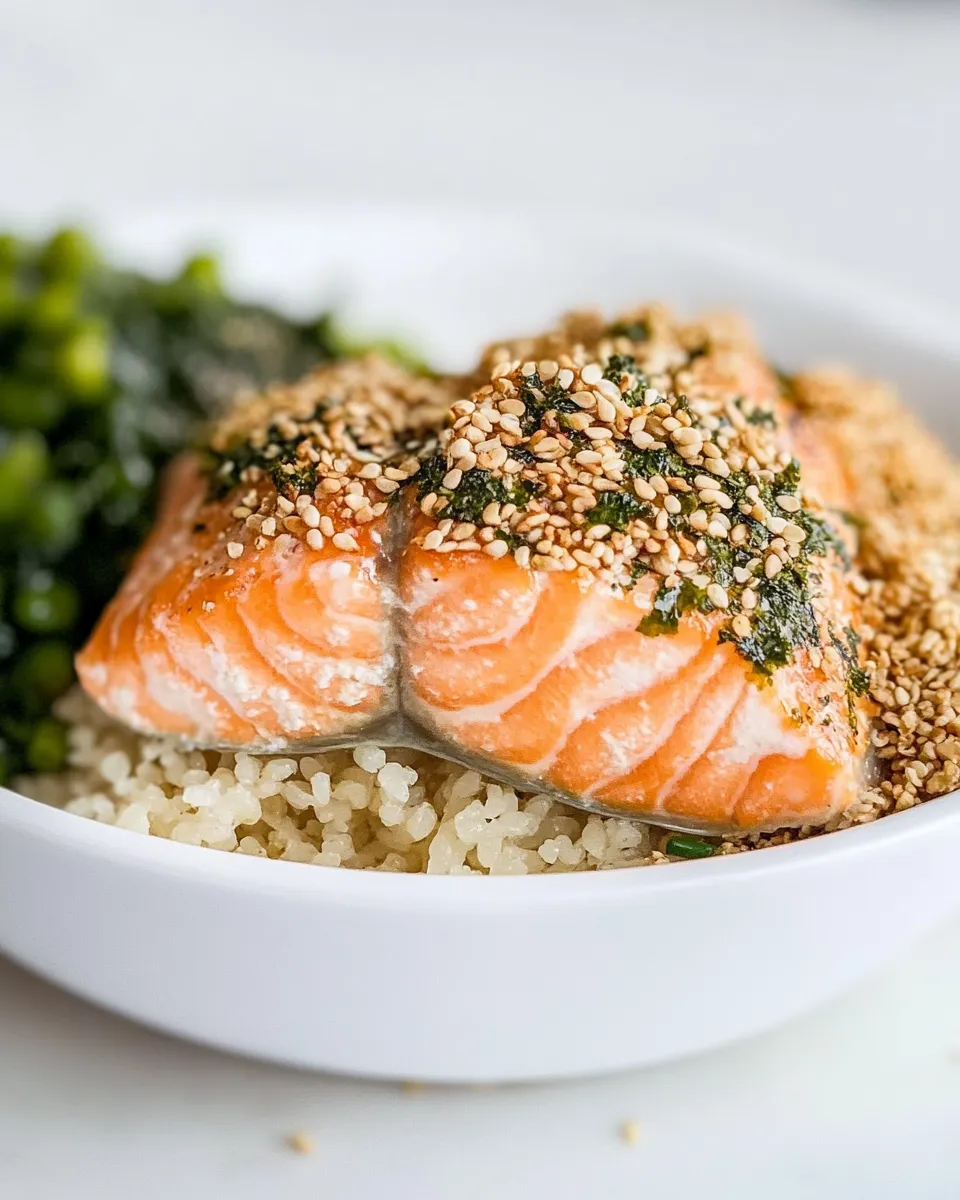
I love this recipe because it’s fast, dependable, and has a crunchy, umami-packed top that turns ordinary salmon into something a little celebratory. The furikake gives toasted sesame, nori, and a salty-sweet pop; the wasabi-mayonnaise layer helps it stick and adds a gentle kick. It cooks in minutes, which makes it perfect for weeknights or when you need a low-effort dinner that still feels put-together.
This version is written for skinless fillets and works equally well in the oven or an air fryer. There’s very little hands-on time: mix a quick spread, slather it on, sprinkle furikake, and roast. The timing window is short, so don’t walk away—but the payoff is high: moist salmon with a crisped, seasoned crust.
I’ll walk you through the exact ingredients and the step-by-step directions, then cover substitutions, common mistakes, storage, and ways to serve it so you can make it again and again with confidence. If you want tips for presentation or how to adjust for thick vs thin fillets, I’ve got you covered below.
What Goes In
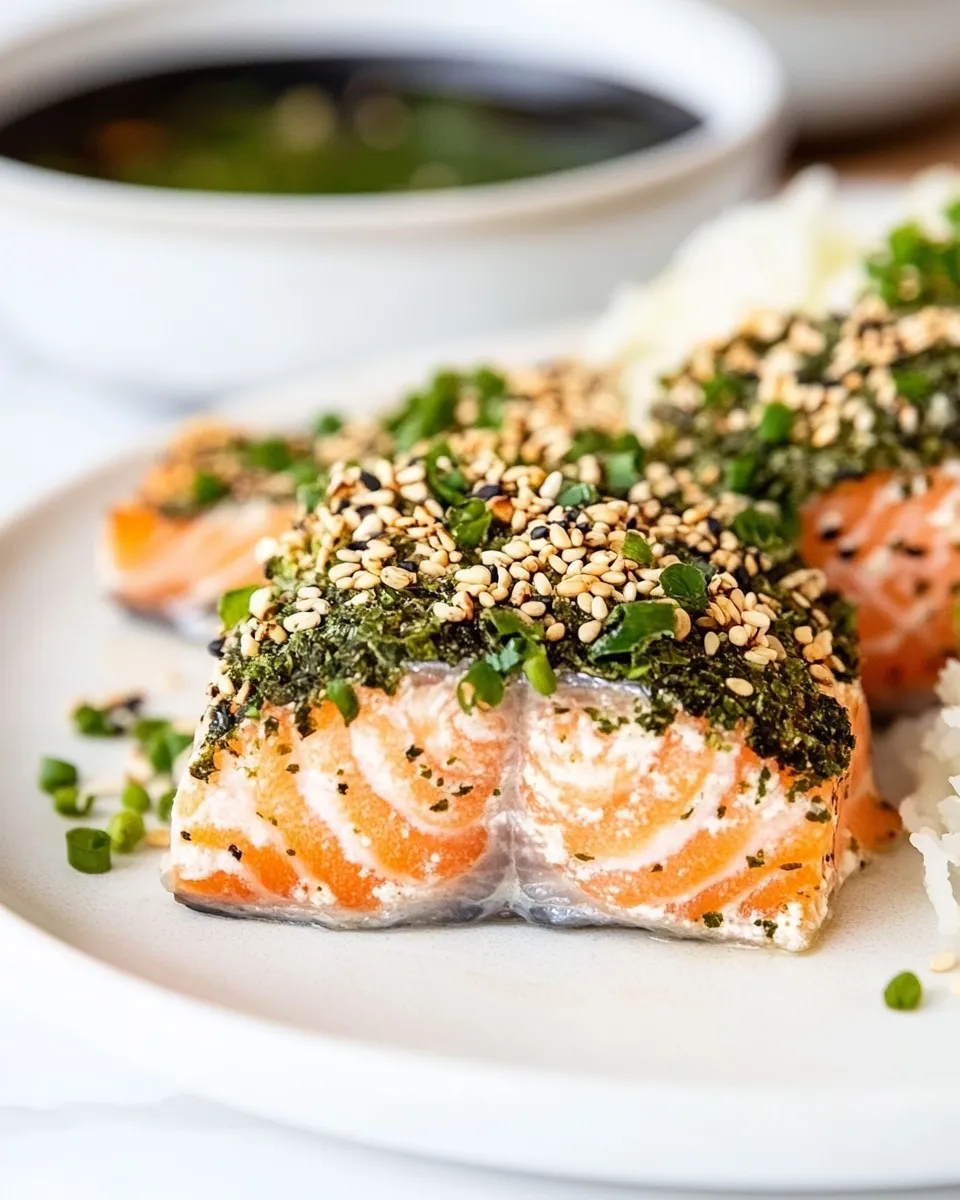
Ingredients
- 1 lb salmon fillets, skinless (see note 1) — The primary protein; let them come closer to room temp before cooking for even doneness.
- 2 tablespoons mayonnaise (see note 2) — Binds the seasoning to the fish and adds richness; it browns slightly under heat.
- 1 teaspoon wasabi — Adds a sharp, clean heat that cuts the richness of the mayo and salmon.
- ½ teaspoon soy sauce — Gives depth and a touch of salt; helps balance the wasabi.
- 3 tablespoons Furikake — The crunchy umami topping; provides sesame, seaweed, and savory notes.
Directions: Furikake Salmon
- Preheat the oven or air fryer to 400°F (200°C).
- While the appliance heats, let the 1 lb skinless salmon fillets come to room temperature (about 15–20 minutes).
- In a small bowl, stir together 2 tablespoons mayonnaise, 1 teaspoon wasabi, and ½ teaspoon soy sauce until smooth.
- Pat the salmon fillets dry with paper towels and place them skin-side down (they are skinless) on a plate or cutting board.
- Spread the mayonnaise–wasabi mixture evenly over the top of each fillet.
- Sprinkle 3 tablespoons furikake evenly over the coated fillets.
- For oven cooking: line a baking sheet with parchment paper, arrange the fillets on the sheet, and bake on the middle rack at 400°F (200°C) for 6–8 minutes for four thin fillets or 8–10 minutes for two thick fillets, until the salmon is opaque and flakes easily.
- For air-fryer cooking: line the air-fryer basket with a square of parchment paper or a liner, place the fillets in the basket with space between them, and cook at 400°F (200°C) for 6–8 minutes for four thin fillets or 8–10 minutes for two thick fillets, until opaque and flaky.
- Remove the salmon and let it rest 2–3 minutes before serving.
What Sets This Recipe Apart
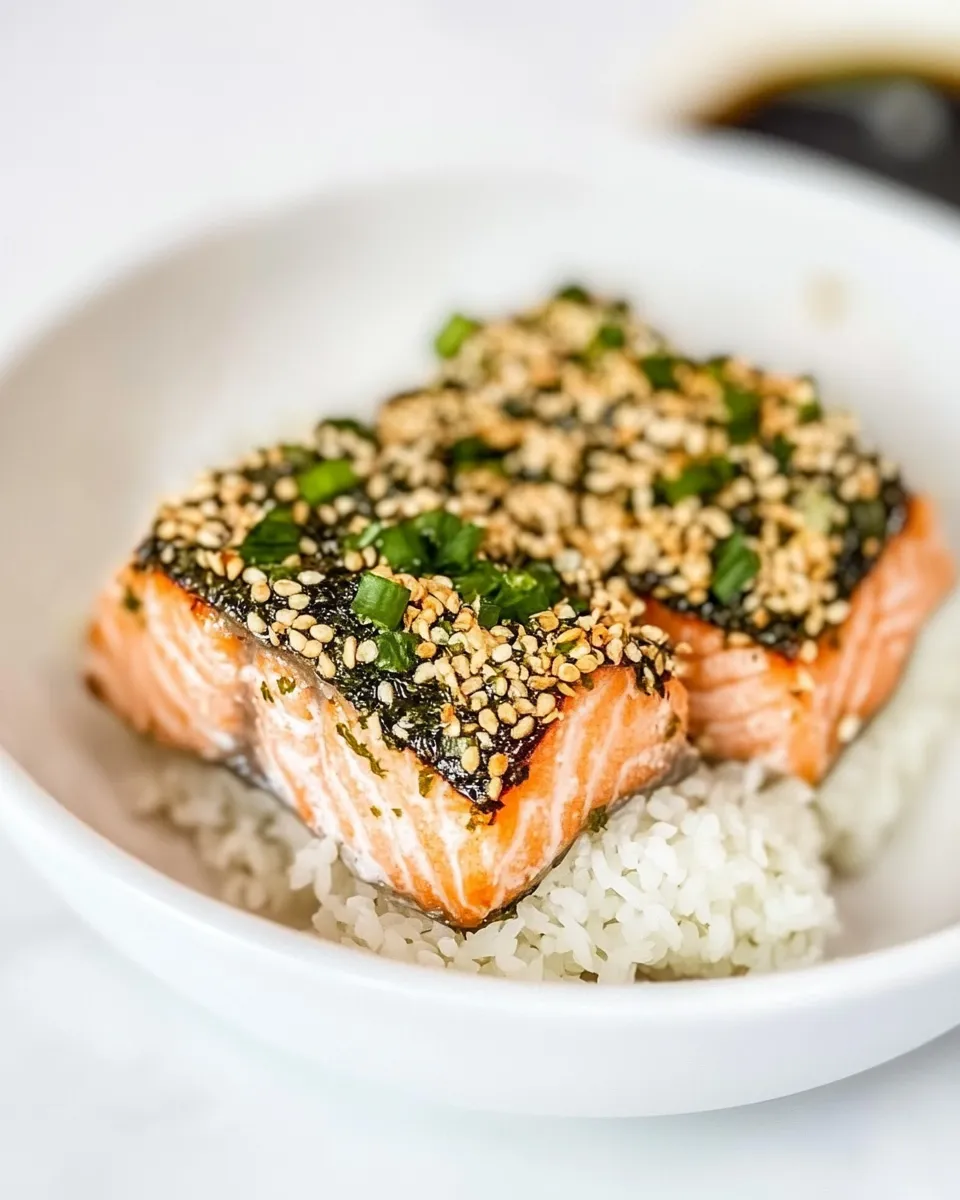
This is not just “fish with a crust.” The combination of mayonnaise and wasabi creates a stable emulsion that browns lightly and adheres furikake without sliding off. Furikake itself brings a layered savory profile—seaweed, toasted sesame seeds, sometimes dried fish flakes or sugar—that you don’t get with plain breadcrumbs or herbs.
The recipe’s strength is in contrast: tender, flaky salmon against a textured, salty topping. It’s also intentionally minimal. You don’t need a marinade or long salt-brining; a short rest at room temperature and a quick coat deliver excellent results. Lastly, the timing and temperatures are set so the topping crisps while the fish stays moist—important with leaner, skinless fillets.
Smart Substitutions
- Mayonnaise — Greek yogurt can replace mayo for a tangier, lighter top; use the same volume if you do substitute, though expect a softer crust.
- Wasabi — If you don’t have wasabi paste, use a small pinch of horseradish or a light drizzle of Sriracha; flavor will shift slightly but the spice element remains.
- Soy sauce — Tamari works as a gluten-free alternative. Coconut aminos are an option if you need soy-free, though they are sweeter so use sparingly.
- Furikake — If unavailable, a mix of toasted sesame seeds, finely crumbled nori (seaweed), and a pinch of flaky salt will approximate it.
- Salmon — If you prefer another fish, thick trout or cod steaks will work but may need slight timing adjustments; watch for flake and opacity rather than strictly following minutes.
Gear Checklist
Essentials
- Oven or air fryer preheated to 400°F (200°C).
- Small mixing bowl and spoon for the spread.
- Sharp paper towels for patting the fish dry.
- Baking sheet with parchment paper for the oven, or an air-fryer basket and liner.
Nice-to-have
- An instant-read thermometer to check internal temperature (145°F / 63°C is USDA guideline — many cooks remove earlier for medium doneness).
- A fish spatula to transfer fillets gently without breaking the crust.
Errors to Dodge
Overcooking is the most common mistake. Salmon continues to cook while it rests, so pull it when it’s just opaque and flakes with gentle pressure. For thick fillets, follow the longer time, but still check visually.
Another pitfall: too-wet fillets. If the fish is damp, the mayo-wasabi won’t adhere and the furikake won’t form a crisp crust. Pat the fillets dry thoroughly before spreading the mixture. Finally, pile the furikake on, but don’t pack it so thick that the fish can’t cook through properly.
How to Make It Lighter
To reduce calories and fat without losing texture, swap the mayonnaise for an equal amount of plain Greek yogurt or a light mayonnaise. Greek yogurt gives tang and binds the furikake, though the browning will be subtler. You can also use less mayo—try 1 tablespoon blended with 1 tablespoon Greek yogurt—to cut fat while keeping adhesion.
Another small change is portion control: slicing fillets into smaller pieces served with a generous side of steamed vegetables and brown rice makes the meal feel satisfying while lowering per-person calories.
Insider Tips
- Bring the salmon to room temperature: this helps the fish cook evenly and reduces the chance of a dry exterior and raw interior.
- Spread the mayo mixture thinly and evenly—thin is better than thick. A thinner layer crisps more quickly and lets the furikake toast.
- Distribute furikake with a light, even hand. Pressing it gently into the mayo helps adhesion but pressing too hard compacts it and reduces texture.
- If using an air fryer, don’t overcrowd the basket. Space allows hot air to circulate and promotes even crisping.
- Rest the fish for 2–3 minutes after cooking. This brief rest allows juices to redistribute and finish any carryover cooking.
Storing, Freezing & Reheating
Store cooked furikake salmon in an airtight container in the refrigerator for up to 3 days. The topping will soften over time; to refresh the crunch, reheat briefly at high heat.
For reheating: preheat the oven or air fryer to 375°F (190°C). Place the fillets on a parchment-lined tray or in the air-fryer basket and warm for 4–6 minutes until heated through and the topping has some regained texture. Avoid microwaving if you care about the crust—microwaves make it soggy.
Freezing cooked fillets is possible but the texture of the topping and the fish will change. If you need to freeze, wrap tightly and freeze no more than 1 month. Thaw in the refrigerator overnight and re-crisp gently in a hot oven or air fryer.
Common Questions
Q: Can I use skin-on salmon? A: Yes. If your fillets have skin, place them skin-side down as directed. The skin will protect the flesh from overcooking; however, cooking times are similar. You can remove the skin after cooking if you prefer.
Q: How can I tell when it’s done? A: Look for opaque flesh that flakes easily with a fork. An instant-read thermometer will read about 125–135°F (52–57°C) for medium doneness and 145°F (63°C) for well done. Cooking a shade under USDA temp is common for moist salmon—use your judgment.
Q: Is wasabi necessary? A: No. Wasabi provides a bright heat that complements the fish. If you don’t like heat, omit it or reduce to ½ teaspoon. The mayo and furikake still deliver plenty of flavor.
Q: Can I scale the recipe? A: Yes. The method scales linearly. If you double the fillets, keep the ratios and cook in a single layer to maintain crisping. Work in batches if your appliance is crowded.
Bring It to the Table
Serve Furikake Salmon over steamed rice or a bed of lightly dressed greens. A wedge of lemon or a small pot of soy-sashi (soy mixed with a little citrus) brightens the dish. For a simple bowl, add pickled cucumbers, sliced scallions, and a drizzle of sesame oil—this keeps the meal balanced and visually appealing.
For entertaining, plate fillets with a scattering of extra furikake and a side of quick miso-glazed eggplant or sautéed bok choy. The salty-crisp topping pairs particularly well with neutral starches and sharp, acidic sides that cut the richness.
Make this on a weeknight and you’ll have a fast, flavorful dinner. Keep the components on hand—mayonnaise, furikake, and wasabi—and you’ll be able to repeat the recipe without a trip to the store whenever you want a quick, elegant fish dish.
Furikake Salmon
Ingredients
Ingredients
- 1 lbsalmon fillets skinless (see note 1)
- 2 tablespoonsmayonnaise see note 2
- 1 teaspoonwasabi
- 1/2 teaspoonsoy sauce
- 3 tablespoonsFurikake
Instructions
Instructions
- Preheat the oven or air fryer to 400°F (200°C).
- While the appliance heats, let the 1 lb skinless salmon fillets come to room temperature (about 15–20 minutes).
- In a small bowl, stir together 2 tablespoons mayonnaise, 1 teaspoon wasabi, and ½ teaspoon soy sauce until smooth.
- Pat the salmon fillets dry with paper towels and place them skin-side down (they are skinless) on a plate or cutting board.
- Spread the mayonnaise–wasabi mixture evenly over the top of each fillet.
- Sprinkle 3 tablespoons furikake evenly over the coated fillets.
- For oven cooking: line a baking sheet with parchment paper, arrange the fillets on the sheet, and bake on the middle rack at 400°F (200°C) for 6–8 minutes for four thin fillets or 8–10 minutes for two thick fillets, until the salmon is opaque and flakes easily.
- For air-fryer cooking: line the air-fryer basket with a square of parchment paper or a liner, place the fillets in the basket with space between them, and cook at 400°F (200°C) for 6–8 minutes for four thin fillets or 8–10 minutes for two thick fillets, until opaque and flaky.
- Remove the salmon and let it rest 2–3 minutes before serving.
Equipment
- Oven
- Air Fryer
- Baking Sheet
- Parchment Paper
- air fryer basket
- Small Bowl
- Plate
- Cutting Board
- Paper Towels
Notes
I like to use kewpie mayo for this recipe but use your favorite brand. Please don't use a low-fat or fat-reduced alternative, as they don't cook well.