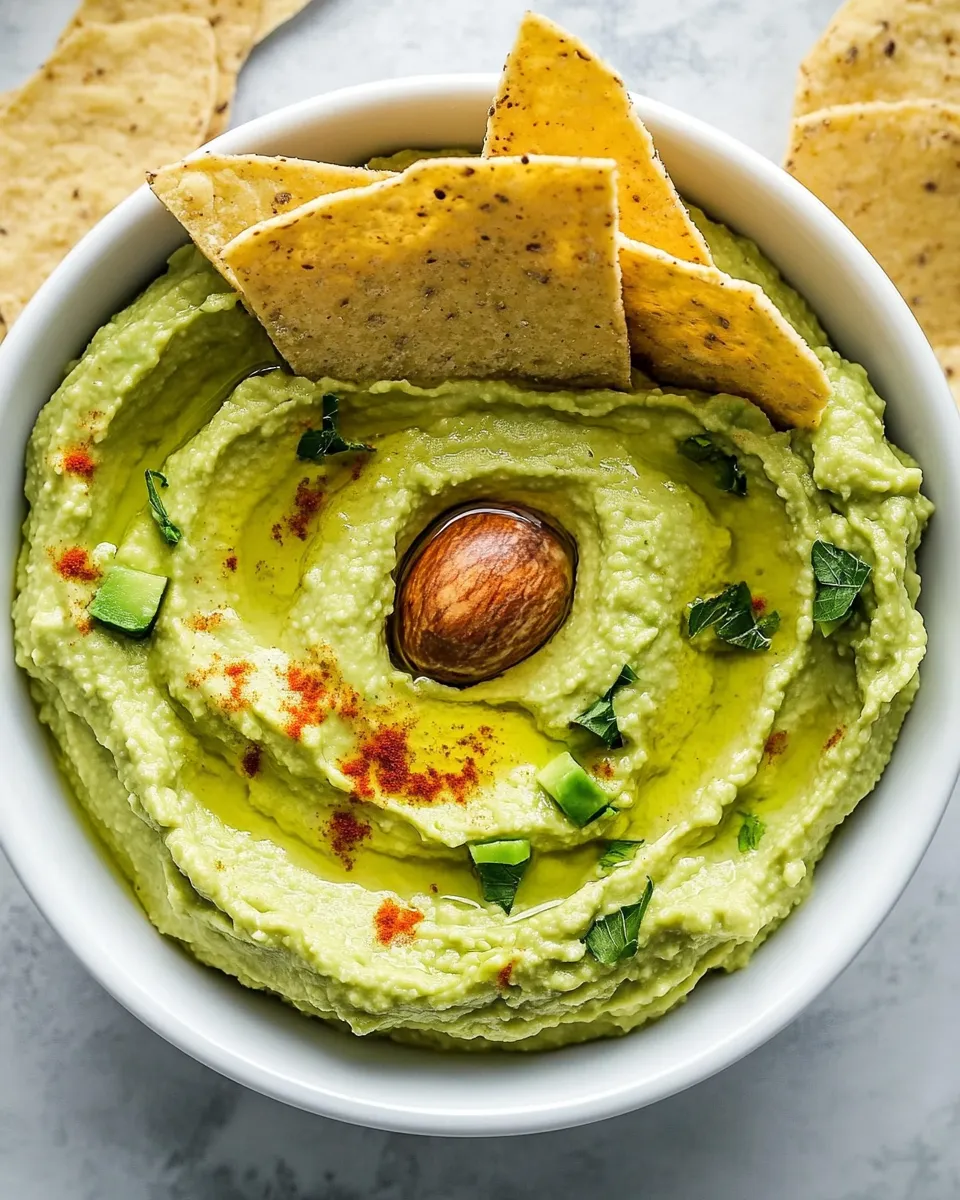
I make a lot of dips in my kitchen, but this Healthy Avocado Hummus has become a weekly favorite. It’s faster than a traditional hummus because the ripe avocado does half the work for texture, and the bright lemon and garlic keep it lively. I love it as a snack, a spread for sandwiches, or a healthy party dip that travels well.
This version is forgiving: it accepts yogurt, tahini, or even a dollop of sour cream, depending on what’s in your fridge. You’ll notice the recipe calls for reserving a little olive oil—small moves like that let you fine-tune the consistency so the final hummus is silky without becoming greasy.
Below you’ll find the exact ingredient list and step-by-step directions, followed by practical tips, swaps, and storage advice. Toss a handful of chopped veggies and pita on the counter, and you’ll have a satisfying, nutrient-dense snack in under ten minutes.
Ingredient List
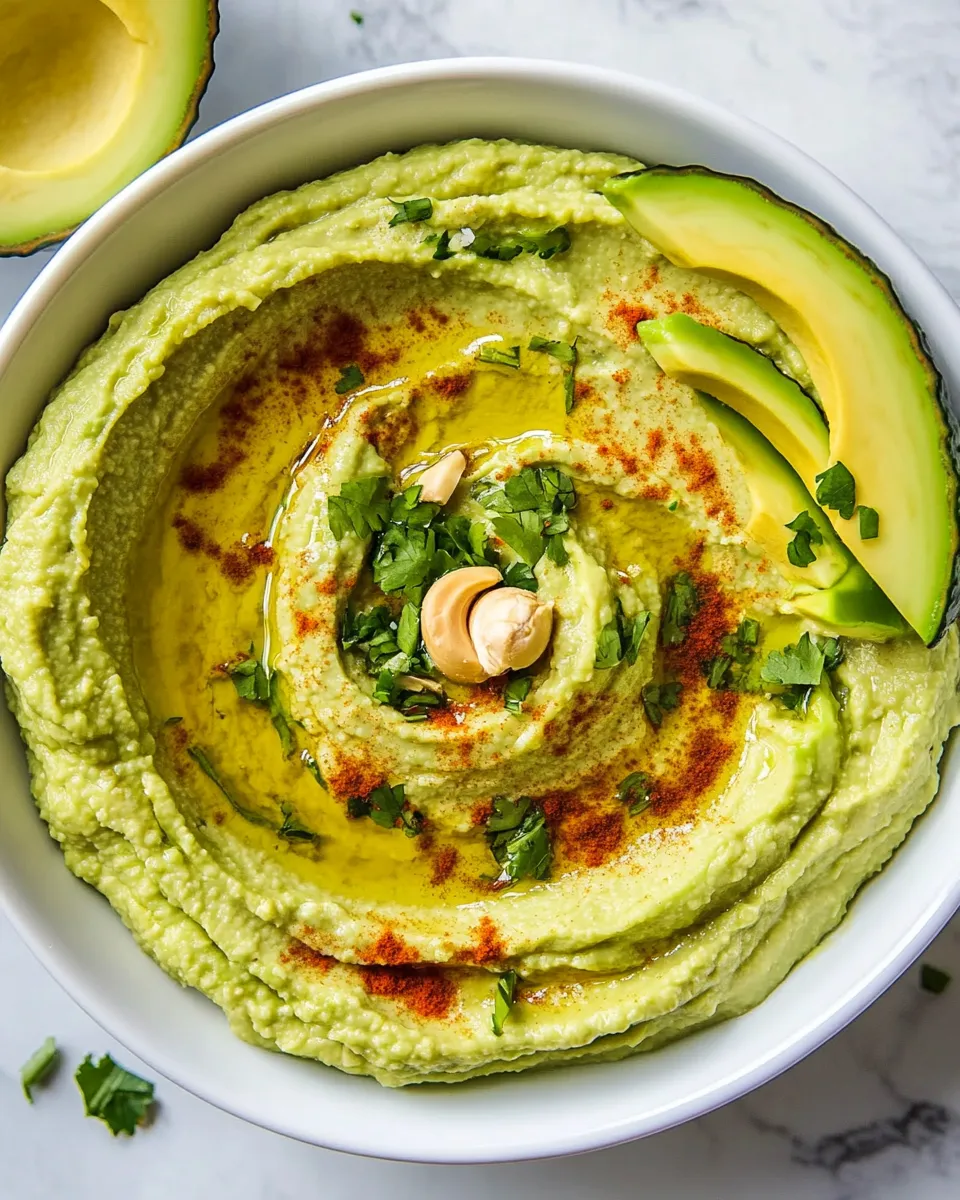
- 115-ounce can chickpeas (garbanzo beans), drained and rinsed — the protein-rich base that gives hummus its body and mild nutty flavor.
- 1 ripe medium-large avocado, or 2 mini avocados — adds creaminess and healthy fats; use ripe for best texture and taste.
- ¼ cup cilantro, leaves and stems, optional — bright, herbal note; stems are tender and safe to use for extra flavor.
- 3 Tablespoons Greek yogurt, or Tahini, or sour-cream — tang and silk; choose Greek yogurt for tanginess, tahini for classic sesame flavor, or sour cream for richness.
- 2 cloves garlic — sharp aromatic backbone; adjust if you prefer milder garlic presence.
- 2 Tablespoons fresh lemon juice, or lime — acidity to lift flavors; fresh juice works best for brightness.
- 2 Tablespoons olive oil — contributes smoothness and mouthfeel; the recipe asks you to reserve 1 Tablespoon to finish and adjust consistency.
- 1/2 Teaspoon cumin — warm, earthy spice that complements chickpeas and avocado.
- 1/2 Teaspoon salt — essential for balancing and enhancing all flavors; taste and add more if needed.
- dash freshly ground pepper — a small kick that rounds out the seasoning.
Directions: (Healthy Avocado Hummus)
- Add the drained and rinsed 115-ouncecan chickpeas, the ripe avocado (or 2 mini avocados), cilantro (if using; leaves and tender stems), 3 Tablespoons Greek yogurt (or tahini, or sour-cream), 2 cloves garlic, 2 Tablespoons fresh lemon juice (or lime), 1 Tablespoon of the 2 Tablespoons olive oil (reserve the other 1 Tablespoon), 1/2 Teaspoon cumin, 1/2 Teaspoon salt, and a dash of freshly ground pepper to the bowl of a food processor.
- Process the mixture for 1 minute to break down the ingredients.
- Stop the processor, scrape down the sides and bottom of the bowl with a spatula, then process again until the hummus is thick and smooth, about 1 to 2 minutes more.
- If the hummus is too thick, add the reserved 1 Tablespoon olive oil in 1-teaspoon increments, processing briefly after each addition, until you reach your desired consistency.
- Taste the hummus and adjust salt as needed.
- Transfer the hummus to a serving bowl and, if you reserved any olive oil, drizzle a little on top if desired. Serve immediately or refrigerate.
Why This Healthy Avocado Hummus Stands Out
This hummus bridges health and texture without sacrificing flavor. The avocado brings immediate creaminess so you don’t need as much oil or tahini to get a luscious mouthfeel. Combined with chickpeas, it’s a balanced spread with plant-based protein and heart-healthy fats. The lemon and garlic keep it bright, while cumin gives it a grounding warmth.
It’s also efficient. Using canned chickpeas and a food processor cuts active time dramatically—no soaking or long cooking. And because the recipe lists interchangeable binders (Greek yogurt, tahini, or sour cream), you can tailor it to what you have on hand or dietary needs without losing the core character of the dish.
Finally, the texture is approachable. Unlike some hummuses that feel chalky or dry, the avocado smooths everything into a silky, scoopable dip that stays good on the plate and travels well to picnics or potlucks.
Quick Replacement Ideas
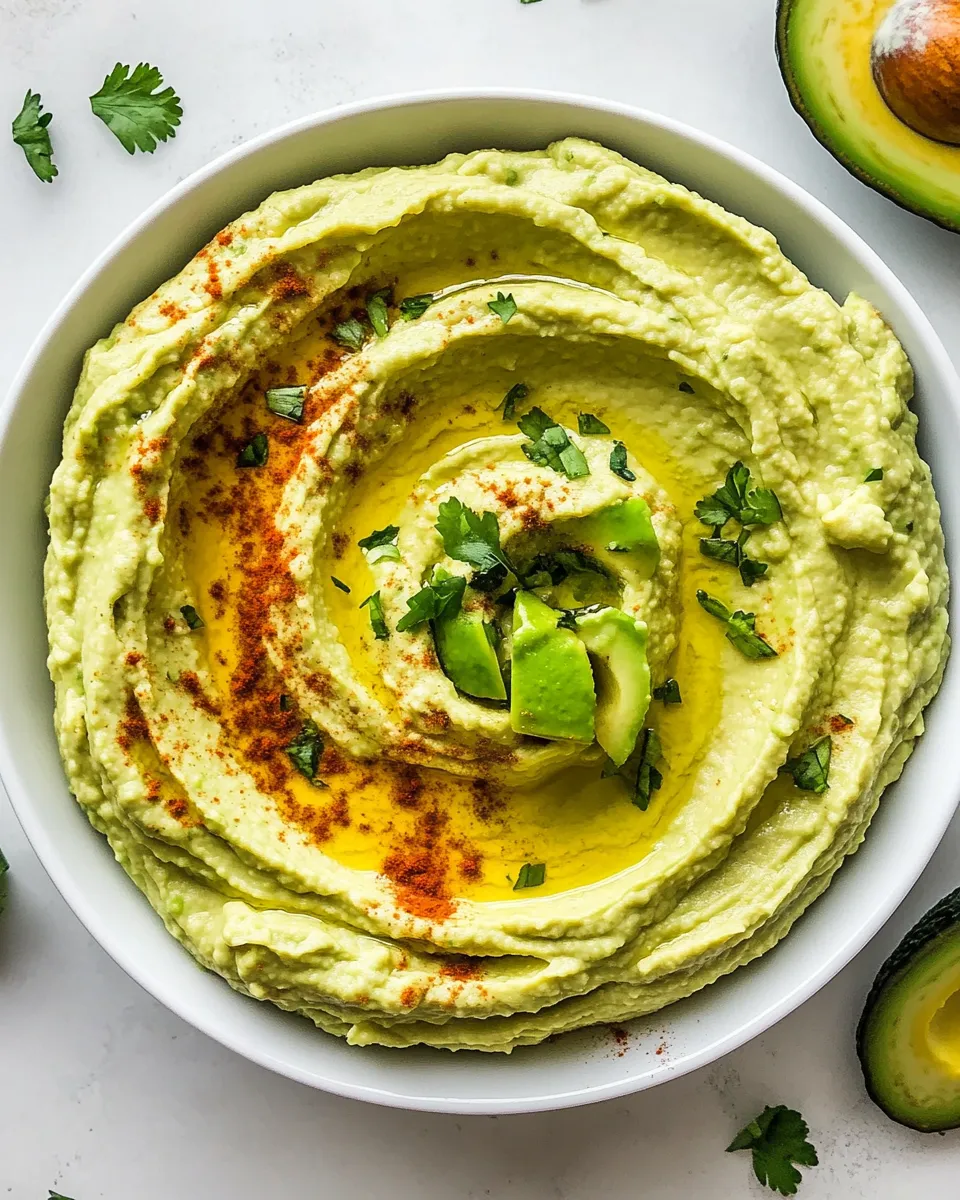
- Greek yogurt → tahini or sour cream — swap as noted in the ingredient list depending on whether you want sesame depth (tahini) or tang and extra creaminess (sour cream).
- Fresh lemon → lime — lime sharpens things in a brighter, slightly sweeter way that pairs nicely with cilantro.
- Cilantro → parsley — if cilantro is polarizing in your crowd, flat-leaf parsley gives freshness without the distinct cilantro flavor.
- Olive oil → avocado oil — neutral in flavor but still adds needed fat; olive oil remains preferable for its fruitiness.
- Chickpeas → white beans — if you want an even milder base, cannellini or great northern beans will work, though the flavor profile shifts.
Recommended Tools
- Food processor — the simplest way to get a uniform, silky hummus quickly.
- Spatula — for scraping the bowl so nothing gets left behind and for smooth transfers to a serving dish.
- Measuring spoons — accurate small measurements make a big difference with cumin, salt, and lemon juice.
- Can opener and colander — to drain and rinse the chickpeas well before processing.
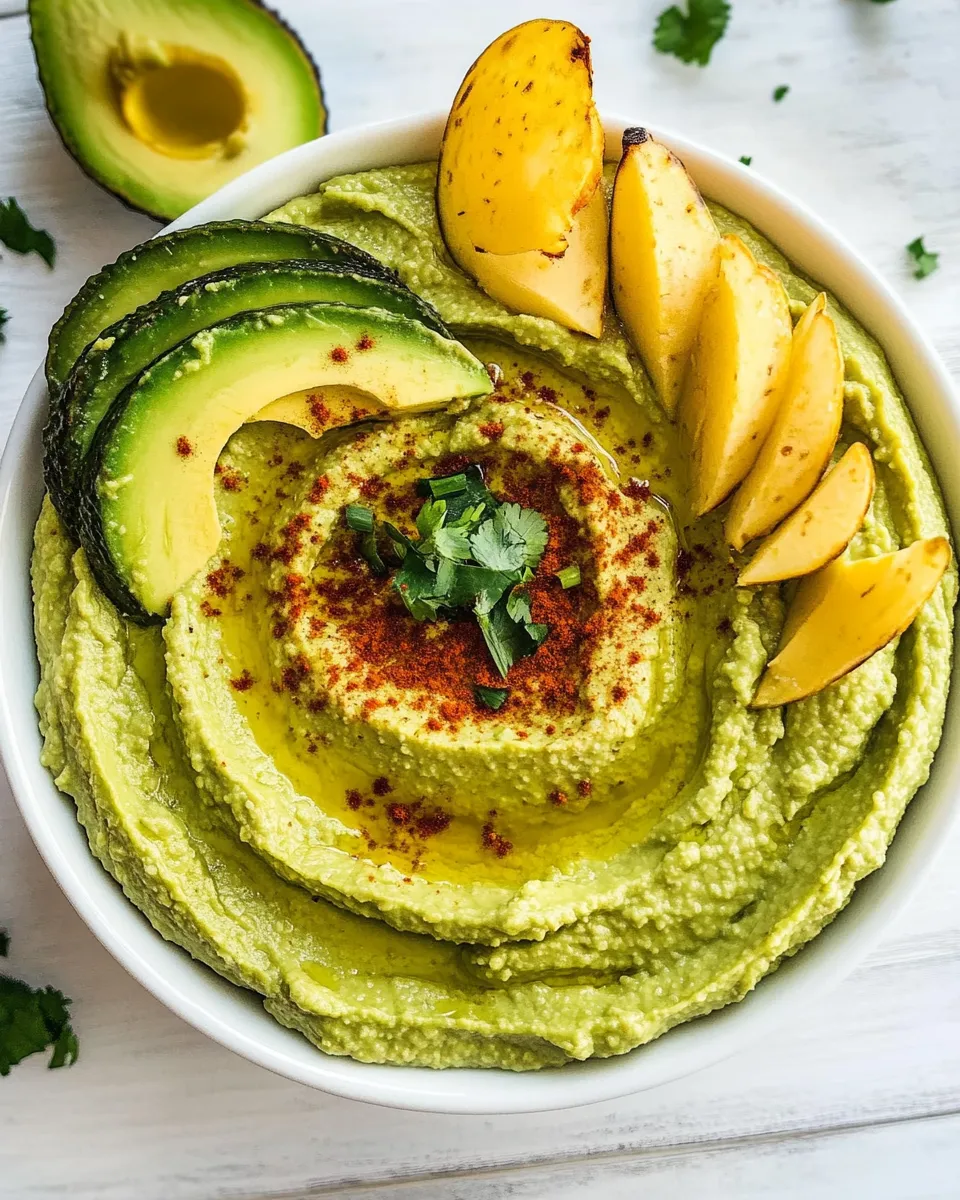
- Serving bowl and spoon — choose a shallow bowl so you can add a drizzle of oil and spices on top for presentation.
Errors to Dodge
- Using an underripe avocado — it won’t mash smoothly and can make the hummus stringy rather than creamy. Choose an avocado that yields to gentle pressure.
- Skipping the scrape — not scraping the processor bowl leads to uneven texture with lumps; stop and scrape at least once as directed.
- Add too much oil at once — it’s easy to end up greasy. Add the reserved oil in teaspoon increments until you reach the right viscosity.
- Under-seasoning — avocado masks salt a bit. Always taste and add salt incrementally until the flavors pop.
- Overblending — while you want smoothness, running the processor for too long can warm the mixture and change the texture; pulse to check consistency.
Smart Substitutions
When you need to adapt the recipe, think about function rather than matching ingredients exactly. The Greek yogurt here contributes tang and body; if you’re dairy-free, tahini provides body plus nutty flavor. If you want a lower-fat version, use a reduced-fat Greek yogurt and reduce the olive oil slightly, but expect a thinner mouthfeel.
If cilantro is unavailable, chopped parsley keeps the herbaceous quality without the distinct cilantro bite. For a smoky touch, swap half a teaspoon of cumin for smoked paprika. If you prefer a spicier hummus, add a small pinch of cayenne or a quarter teaspoon of ground chipotle and taste as you go.
Chef’s Rationale
Each ingredient has a clear role. Chickpeas bring bulk and a neutral canvas. Avocado melts into the chickpeas to produce a velvety texture that traditional tahini or oil-heavy hummus needs more of—this lets you use less oil and still have richness. The Greek yogurt (or tahini/sour cream) contributes body and a rounded flavor profile, while lemon juice cuts through the fat and brightens the palate.
Cumin and freshly ground pepper are subtle enhancers: cumin lends warmth and a savory note, and pepper provides a slight bite. Salt is the final balancing agent—without it, the dip will taste flat. Reserving some oil lets you correct texture after blending so you avoid overshooting while still achieving a glossy finish.
Keep It Fresh: Storage Guide
Store the hummus in an airtight container in the refrigerator for up to 3 days for best flavor and color. Because avocado oxidizes, press a piece of plastic wrap directly onto the surface before sealing the container and drizzle a thin layer of olive oil on top to limit browning. If color changes a little, stirring will usually restore an acceptable look and the flavor remains fresh.
Freezing is possible but not ideal for texture; the avocado may become grainy after thawing. If you decide to freeze, portion into airtight containers and freeze for up to 1 month. Thaw overnight in the refrigerator and give it a quick blitz in the food processor with a teaspoon of olive oil to help reincorporate the texture.
FAQ
- Can I make this without a food processor? — You can use a high-speed blender, but you may need to add a little liquid (water or extra lemon juice) to help it blend. A blender may yield a slightly smoother result but requires more attention to avoid splattering.
- Is this recipe kid-friendly? — Yes. The flavors are simple and mild. Omit the cilantro if your kids are picky about herbs, and reduce garlic if they are sensitive to strong flavors.
- Can I use dried chickpeas? — Yes, but they must be cooked until very tender. The recipe uses a canned option for speed; cooked dried chickpeas will work and can deepen the hummus’ flavor.
- How do I prevent the hummus from being too avocado-forward? — Increase the chickpea percentage slightly by using a smaller avocado or add a touch more yogurt or tahini. Adjust salt and lemon to rebalance flavors.
- Is this suitable for meal prep? — Yes. It’s great for prepping veggies, sandwiches, or bowls. Just note the 3-day refrigerator window for best quality due to the avocado.
Wrap-Up
This Healthy Avocado Hummus is one of those recipes that’s practical, adaptable, and reliably delicious. It’s fast enough for weekday snacks, flexible for dietary tweaks, and straightforward to scale for guests. Keep the salt and lemon in reach while you taste, and reserve the extra olive oil so you can dial the texture in precisely. Try it with charred pita, raw vegetables, or slathered on toast—the creamy, bright result is always a winner.
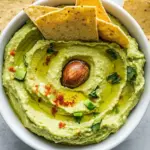
Healthy Avocado Hummus
Ingredients
Ingredients
- 115- ouncecan chickpeas garbanzo beans, drained and rinsed
- 1 ripe medium-large avocado or 2 mini avocados
- 1/4 cupcilantro leaves and stems, optional
- 3 TablespoonsGreek yogurt or Tahini, or sour-cream
- 2 clovesgarlic
- 2 Tablespoonsfresh lemon juice or lime
- 2 Tablespoonsolive oil
- 1/2 Teaspooncumin
- 1/2 Teaspoonsalt
- dashfreshly ground pepper
Instructions
Instructions
- Add the drained and rinsed 115-ouncecan chickpeas, the ripe avocado (or 2 mini avocados), cilantro (if using; leaves and tender stems), 3 Tablespoons Greek yogurt (or tahini, or sour-cream), 2 cloves garlic, 2 Tablespoons fresh lemon juice (or lime), 1 Tablespoon of the 2 Tablespoons olive oil (reserve the other 1 Tablespoon), 1/2 Teaspoon cumin, 1/2 Teaspoon salt, and a dash of freshly ground pepper to the bowl of a food processor.
- Process the mixture for 1 minute to break down the ingredients.
- Stop the processor, scrape down the sides and bottom of the bowl with a spatula, then process again until the hummus is thick and smooth, about 1 to 2 minutes more.
- If the hummus is too thick, add the reserved 1 Tablespoon olive oil in 1-teaspoon increments, processing briefly after each addition, until you reach your desired consistency.
- Taste the hummus and adjust salt as needed.
- Transfer the hummus to a serving bowl and, if you reserved any olive oil, drizzle a little on top if desired. Serve immediately or refrigerate.
Equipment
- Food Processor
- Spatula
- Serving Bowl
Notes
To Store:
Transfer leftover hummus to an airtight container, drizzled with olive oil, and refrigerate up to one week.
To make the hummus spicy:
Add one jalapeno to the mixture before processing, seeded or de-seeded depending on how spicy you want the hummus!
To cook your own chickpeas:
Add 1 cup of dried chickpeas and 1/2 teaspoon baking soda to a medium pot of boiling water and cook over medium heat for 1 to 1.5 hours or until mushy. Cool and drain before using.
Additional options:
Replace cilantro with parsley or arugula.