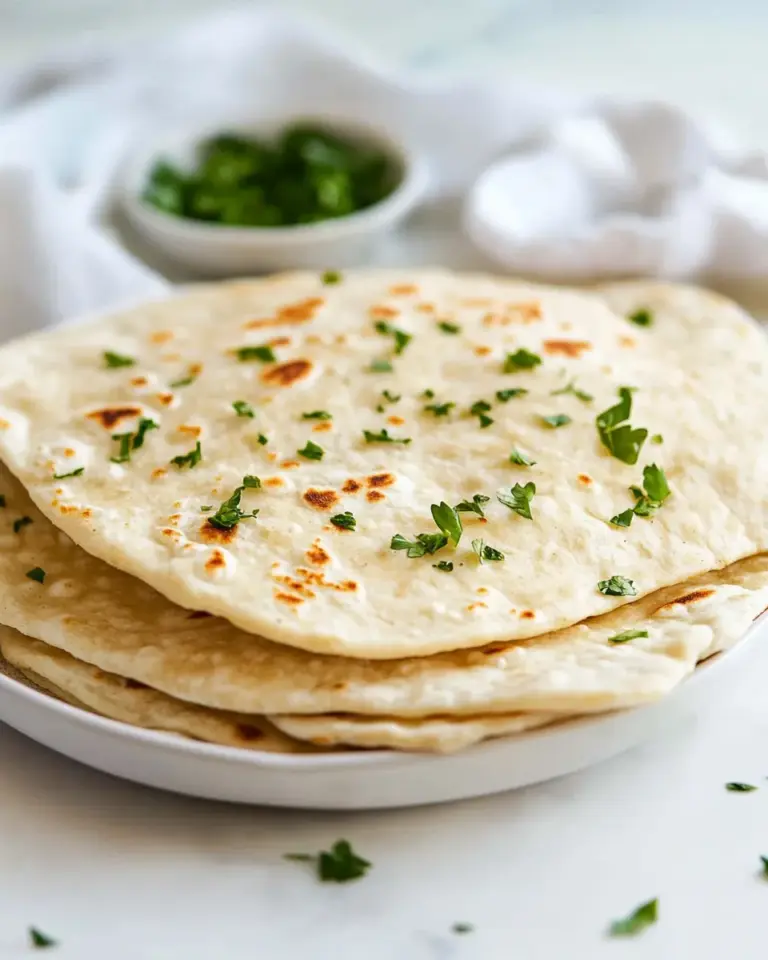
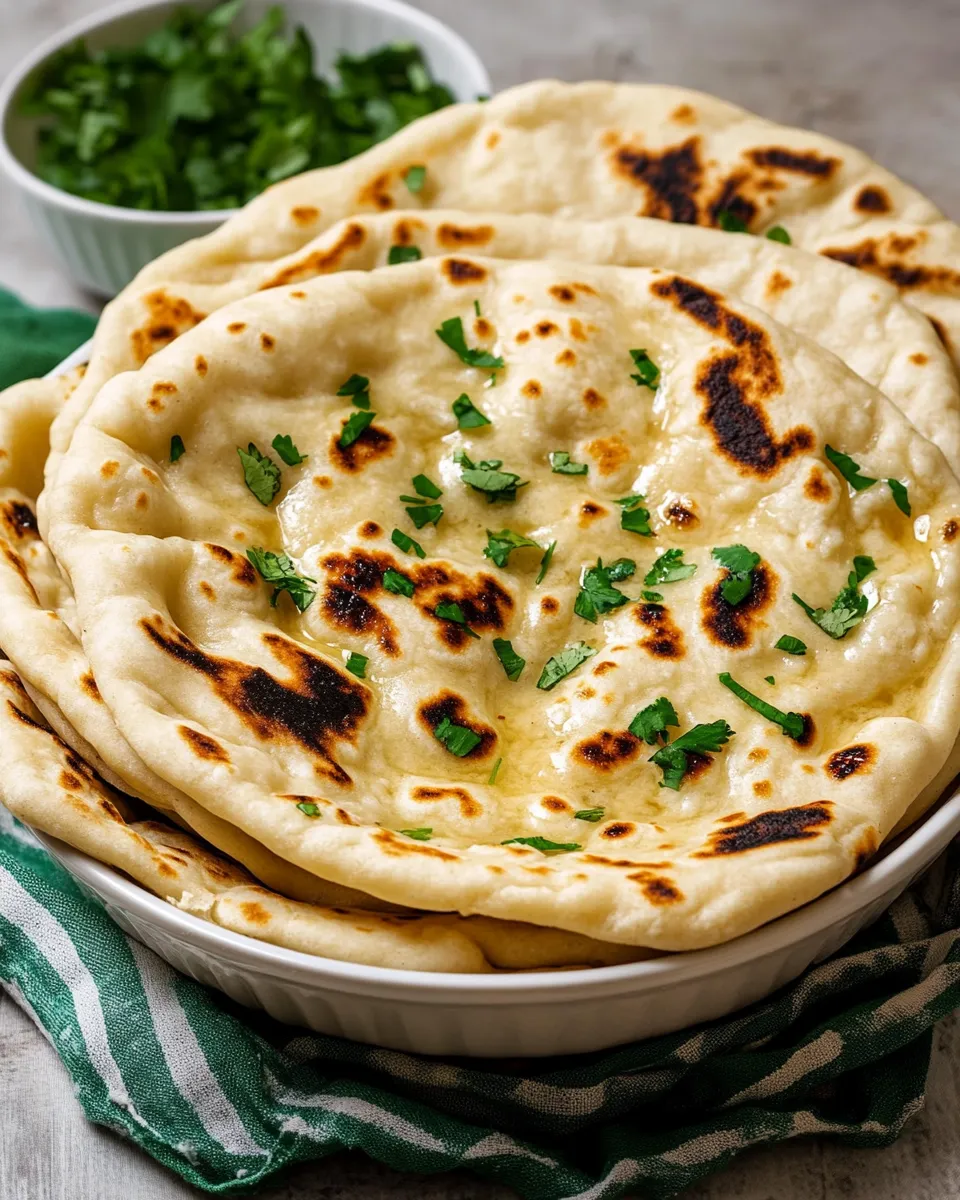
I love the smell of warm bread in the kitchen: it’s honest, comforting, and somehow instantaneously makes whatever’s on the table feel more intentional. This naan is the kind I make when I want pillowy, slightly charred flatbreads but don’t want to haul out a grill or oven tricks. It cooks fast on a hot skillet and finishes with melted butter so each piece is soft, glossy, and ready to mop up a sauce.
The technique is straightforward: activate the yeast, mix a tender dough with yogurt and an egg yolk, let the dough rise, then roll and sear in a hot cast-iron pan. Small steps, clear timing, and a few simple checks (temperature of liquids, dough texture, skillet heat) are all it takes to get consistent results every time.
Below you’ll find everything: the exact ingredients and their roles, step-by-step instructions from prep to plate, troubleshooting tips, storage advice, and a few ideas to put your personal stamp on the finished naan. Let’s make bread that comes together quickly and feels like something special.
What Goes In
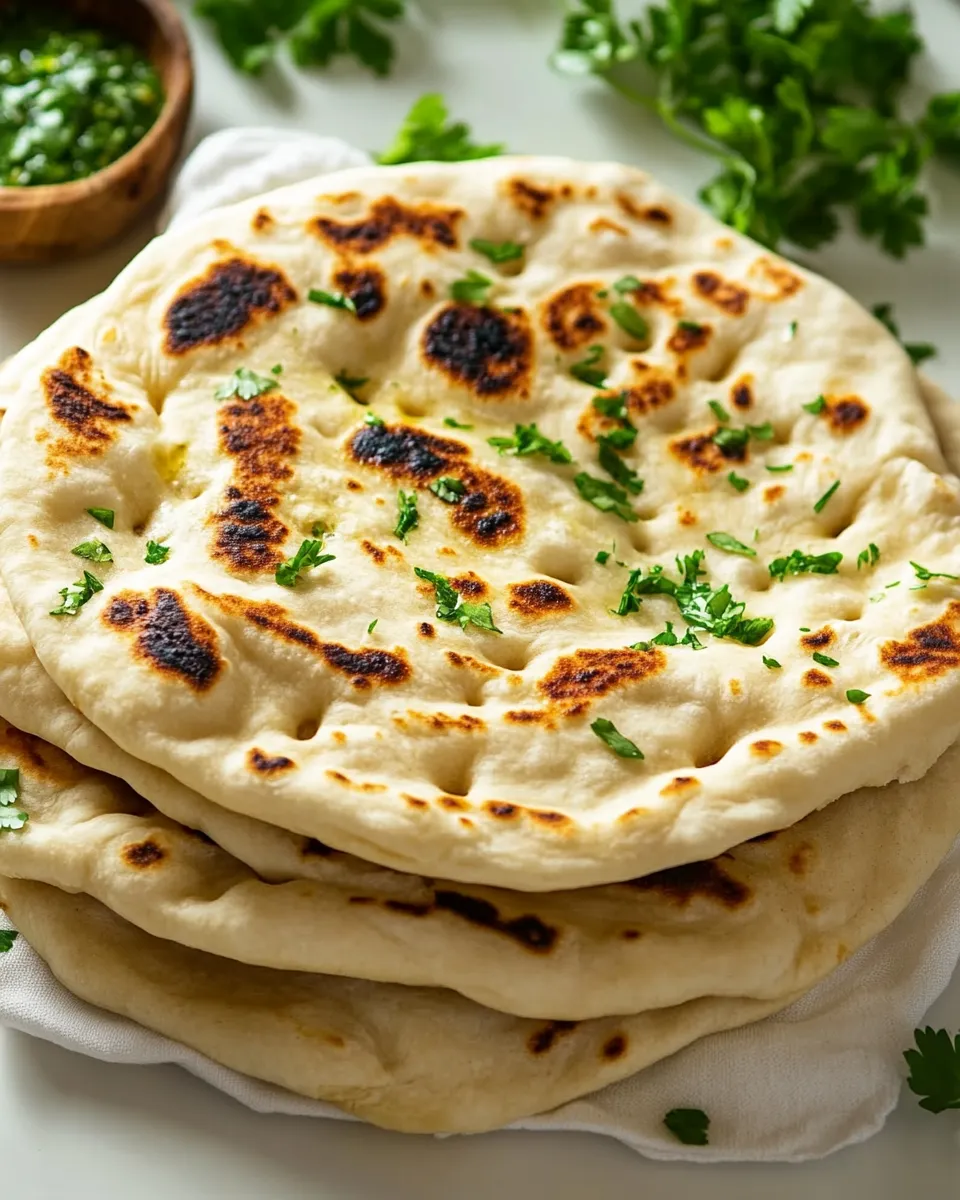
Ingredients
- 3Tbspwarm water,110 – 115 degrees — activates the yeast; warming to the stated temperature wakes the yeast without killing it.
- 1 1/2tspactive dry yeast — leavens the dough and creates that light internal texture.
- 1Tbsp + 1/4 tspgranulated sugar,divided — feeds the yeast and adds a touch of sweetness to balance the tang from the yogurt; note the recipe splits the sugar.
- 1/2cupwhole milk,warmed to 110 – 115 degrees — adds tenderness and richness; warmed to the same range as the water for consistent yeast activation.
- 1/3cup (77g)plain yogurt,warmed to room temperature — gives the dough its characteristic tang and soft crumb; bring to room temperature so it mixes smoothly.
- 2Tbspolive oil — keeps the dough pliable and adds a bit of flavor and richness.
- 1largeegg yolk — enriches the dough for a softer, more tender naan.
- 1tspsalt — seasons the dough and strengthens gluten for structure.
- 2 1/4cups (318g)unbleached all-purpose flour(scoop and level to measure) — the main structure-building ingredient; measure as directed for consistent texture.
- 2Tbspbutter,melted (salted or unsalted) — brushed on at the end for flavor, sheen, and a soft finish.
Homemade Naan Bread: From Prep to Plate
- Warm 3 Tbsp water and 1/2 cup whole milk to 110–115°F. Bring the 1/3 cup plain yogurt to room temperature.
- In the bowl of an electric stand mixer whisk together the warm water, 1 1/2 tsp active dry yeast, and 1/4 tsp of the granulated sugar. Let sit 5–10 minutes, until the mixture is foamy.
- Fit the mixer with the paddle attachment. Add the warmed milk, room-temperature yogurt, 2 Tbsp olive oil, 1 large egg yolk, the remaining 1 Tbsp granulated sugar, and 1 tsp salt. Mix just until combined.
- Stir in about two-thirds of the 2 1/4 cups (318 g) unbleached all-purpose flour.
- Switch to the dough hook. Add the remaining one-third of the flour and knead on low speed until the dough pulls away from the sides of the bowl and is slightly sticky, about 2 minutes.
- Transfer the dough to a large, lightly oiled bowl, turning it once to coat. Cover tightly with plastic wrap and let rise until doubled in volume, about 1 1/2–2 hours.
- Gently punch the risen dough down. Divide it into 6 equal portions (use a floured bench scraper or knife to cut like a pizza into 6 wedges). Round each portion into a ball. Keep the dough pieces covered with greased plastic wrap while you work.
- Preheat a cast-iron skillet over medium-high heat (a nonstick skillet may be used if needed).
- Working with one dough ball at a time, roll it on a lightly floured surface into a 9-inch oval or teardrop shape about 1/6-inch thick.
- Dip your fingertips in water and dot the top of the rolled dough, or mist the top lightly with a spray bottle.
- Place the dough moistened side down in the hot skillet. Cook until golden-brown spots appear on the bottom, about 30 seconds. Flip and cook the other side until golden-brown spots appear, about 30 seconds more. Reduce the heat if the naan is browning too quickly.
- Repeat steps 9–11 with the remaining dough pieces.
- Brush each finished naan with 2 Tbsp melted butter (salted or unsalted) before serving. Serve warm.
Why It Works Every Time
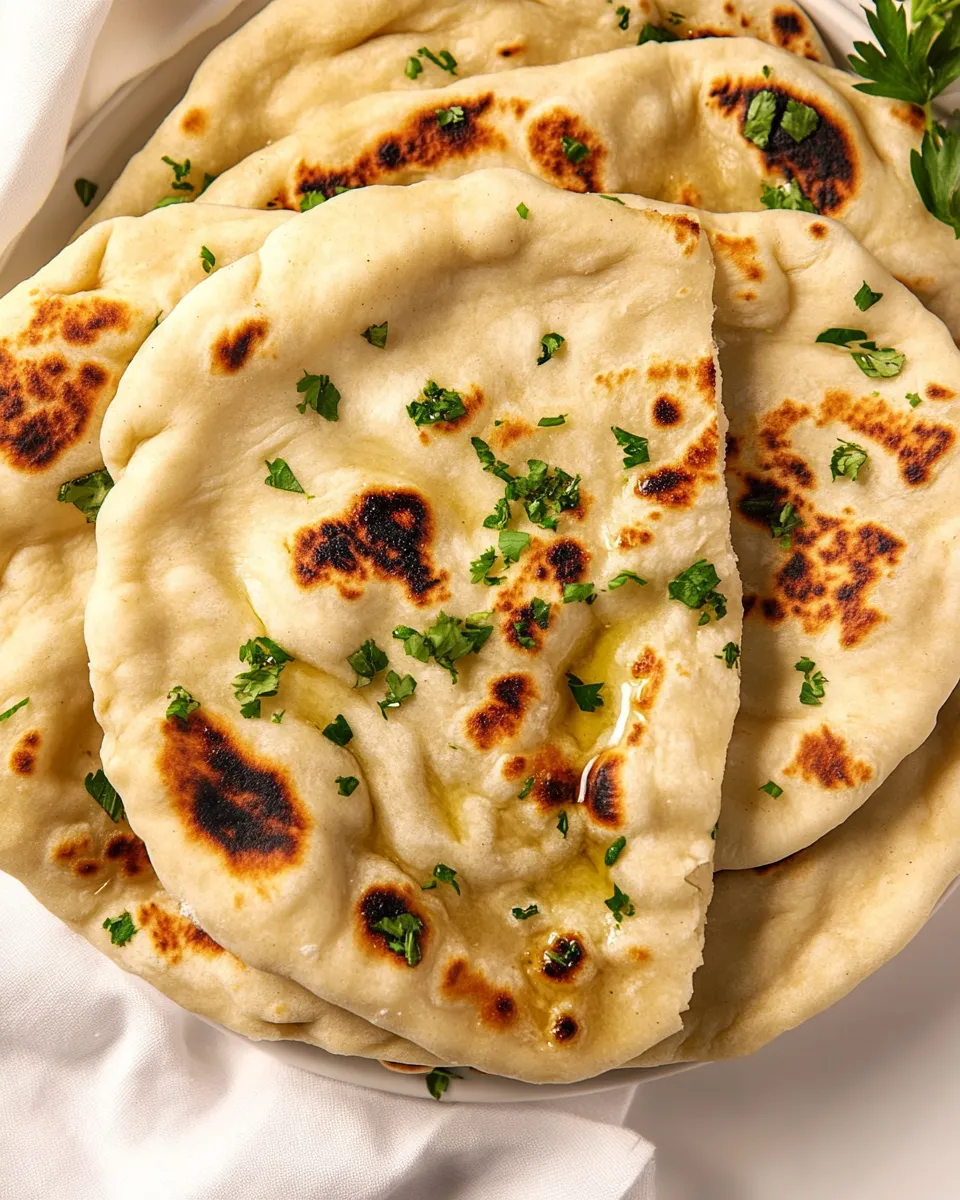
This recipe balances hydration, fat, and acid to produce naan that’s soft but not gummy. The warm liquids and sugar give the yeast a friendly environment so it blooms reliably; the yogurt and egg yolk add richness and tenderness, while the oil keeps the dough flexible during shaping. A short knead is enough because you’re aiming for a slightly sticky dough that will relax and rise into a pillowy interior. Cooking on a very hot skillet quickly forms those signature brown spots and a thin crisp exterior while keeping the interior soft.
Two practical checks make the difference: bread-warm liquid temperatures (110–115°F) for yeast activation, and the dough’s texture — slightly sticky but cohesive — before rising. Respect those, and timing becomes predictable.
Low-Carb/Keto Alternatives

This particular recipe is built around unbleached all-purpose flour and dairy, so a direct low-carb swap won’t produce the same texture. If you need a low-carb option, a couple of practical approaches work better than trying to substitute flours one-for-one here:
- Use a purpose-built low-carb flatbread recipe or a store-bought low-carb flatbread designed to withstand high heat; these are formulated to behave similarly under a skillet.
- Consider serving smaller portions of this naan alongside larger quantities of low-carb sides so you still get the experience without a high-carb serving.
Prep & Cook Tools
Good tools make this simple process easier and more consistent. You don’t need much, but the right items save time and improve results.
- Stand mixer with paddle and dough hook — speeds up mixing and ensures consistent kneading.
- Large mixing bowl — for the first rise; choose one that gives the dough room to double.
- Bench scraper or sharp knife — for dividing the dough into equal portions cleanly.
- Cast-iron skillet (preferred) or a heavy nonstick skillet — holds heat and creates those quick brown spots.
- Rolling pin — for shaping the dough into consistent ovals.
- Pastry brush or clean hand — for finishing with melted butter.
Pitfalls & How to Prevent Them
Yeast doesn’t foam
If the yeast solution doesn’t become foamy after 5–10 minutes, either the yeast is dead or the water was outside the 110–115°F range. Start over with fresh yeast and double-check the water temperature with a thermometer.
Dough too dry or too wet
Follow the flour measuring instruction: scoop and level. If your dough absorbs flour differently (humidity varies), adjust by feel: aim for a dough that’s slightly sticky but pulls away from the bowl during kneading. Add small pinches of flour only if it’s slack and won’t hold shape, or a teaspoon of water if it’s overly dry.
Naan burns before it cooks through
That’s usually skillet temp. Preheat well, then reduce heat slightly if the surface is browning too fast. A cast-iron skillet retains a lot of heat; medium-high is usually enough. You want quick color without char on both sides.
Gummy interior
Under-cooking or excess moisture causes a gummy crumb. Make sure the skillet is hot enough so the exterior cooks quickly, and roll the dough to an even 1/6-inch thickness so heat penetrates evenly.
Make It Your Way
The technique here is your blank canvas. Once you’re comfortable with the dough’s feel and the skillet timing, small changes transform the final naan. Roll shapes freely — rounds, ovals, teardrops — and adjust thickness for chewier or crisper results. Finish with melted butter as directed for a classic finish.
If you want to add flavor accents, do so sparingly and with an eye to moisture: press additions lightly into the surface before cooking so they adhere, and avoid anything that will release excess liquid while cooking.
Chef’s Notes
Bring dairy to the temperatures noted. It matters. Warm milk and water at 110–115°F will wake the yeast without stressing it; room-temperature yogurt blends smoothly and won’t chill the mix. The egg yolk enriches and tenderizes — don’t skip it if you want that pillowy feel.
When dividing the dough, aim for equal portions so each naan cooks in the same time. I like using a floured bench scraper to cut the round dough into wedges and then round each wedge into a ball. Cover pieces with lightly oiled plastic to prevent a skin from forming while you work.
Best Ways to Store
Store cooled naan in an airtight container or zip-top bag at room temperature for up to 24 hours for best softness. For longer storage, freeze wrapped flat in single portions for up to 2 months. Reheat from frozen in a hot skillet or in a preheated oven until warmed through, then brush with a little melted butter before serving.
Common Questions
Can I use instant yeast instead of active dry? Yes, you can, but reduce proofing time: instant yeast often does not require the initial bloom step. If you use instant yeast, mix it with the dry flour and adjust rising times as needed. Note the original method proofing step helps confirm yeast is active.
Can I skip the egg yolk? You can, but the dough will be slightly less tender and rich. The egg yolk contributes to the soft crumb and a subtle richness in flavor.
Why is the yogurt warmed to room temperature? Cold yogurt would lower the overall dough temperature and can slow or stall yeast activity. Bringing it to room temperature keeps the dough in the optimal range for fermentation.
Let’s Eat
Serve hot, brushed with butter and pulled apart while it’s still pliant. Use it to scoop up stews, wrap roasted vegetables or proteins, or simply enjoy with a smear of butter. It’s quick to make and reliably comforting—one of those recipes you’ll come back to because it elevates a weeknight meal with little fuss.
Make a batch, and once you’re comfortable with pan temperature and dough feel, the whole process becomes second nature. Warm, soft naan on the table in under two hours is a small, satisfying win.

Homemade Naan Bread
Ingredients
Ingredients
- 3 Tbspwarm water 110 - 115 degrees
- 1 1/2 tspactive dry yeast
- 1 Tbsp + 1/4 tspgranulated sugar divided
- 1/2 cupwhole milk warmed to 110 - 115 degrees
- 1/3 cup 77 gplain yogurt, warmed to room temperature
- 2 Tbspolive oil
- 1 largeegg yolk
- 1 tspsalt
- 2 1/4 cups 318 gunbleached all-purpose flour(scoop and level to measure)
- 2 Tbspbutter melted (salted or unsalted)
Instructions
Instructions
- Warm 3 Tbsp water and 1/2 cup whole milk to 110–115°F. Bring the 1/3 cup plain yogurt to room temperature.
- In the bowl of an electric stand mixer whisk together the warm water, 1 1/2 tsp active dry yeast, and 1/4 tsp of the granulated sugar. Let sit 5–10 minutes, until the mixture is foamy.
- Fit the mixer with the paddle attachment. Add the warmed milk, room-temperature yogurt, 2 Tbsp olive oil, 1 large egg yolk, the remaining 1 Tbsp granulated sugar, and 1 tsp salt. Mix just until combined.
- Stir in about two-thirds of the 2 1/4 cups (318 g) unbleached all-purpose flour.
- Switch to the dough hook. Add the remaining one-third of the flour and knead on low speed until the dough pulls away from the sides of the bowl and is slightly sticky, about 2 minutes.
- Transfer the dough to a large, lightly oiled bowl, turning it once to coat. Cover tightly with plastic wrap and let rise until doubled in volume, about 1 1/2–2 hours.
- Gently punch the risen dough down. Divide it into 6 equal portions (use a floured bench scraper or knife to cut like a pizza into 6 wedges). Round each portion into a ball. Keep the dough pieces covered with greased plastic wrap while you work.
- Preheat a cast-iron skillet over medium-high heat (a nonstick skillet may be used if needed).
- Working with one dough ball at a time, roll it on a lightly floured surface into a 9-inch oval or teardrop shape about 1/6-inch thick.
- Dip your fingertips in water and dot the top of the rolled dough, or mist the top lightly with a spray bottle.
- Place the dough moistened side down in the hot skillet. Cook until golden-brown spots appear on the bottom, about 30 seconds. Flip and cook the other side until golden-brown spots appear, about 30 seconds more. Reduce the heat if the naan is browning too quickly.
- Repeat steps 9–11 with the remaining dough pieces.
- Brush each finished naan with 2 Tbsp melted butter (salted or unsalted) before serving. Serve warm.
Equipment
- Stand mixer
- paddle attachment
- dough hook
- Large Bowl
- Plastic Wrap
- Bench scraper
- Cast-Iron Skillet
- nonstick skillet (optional)
Notes
**When you flip naan if there are large bubbles you can press down on naan with spatula to flatten those extra large bubbles so it cooks evenly.
Naan can be kept warmed wrapped in foil in 175 degree oven for up to 15 minutes.