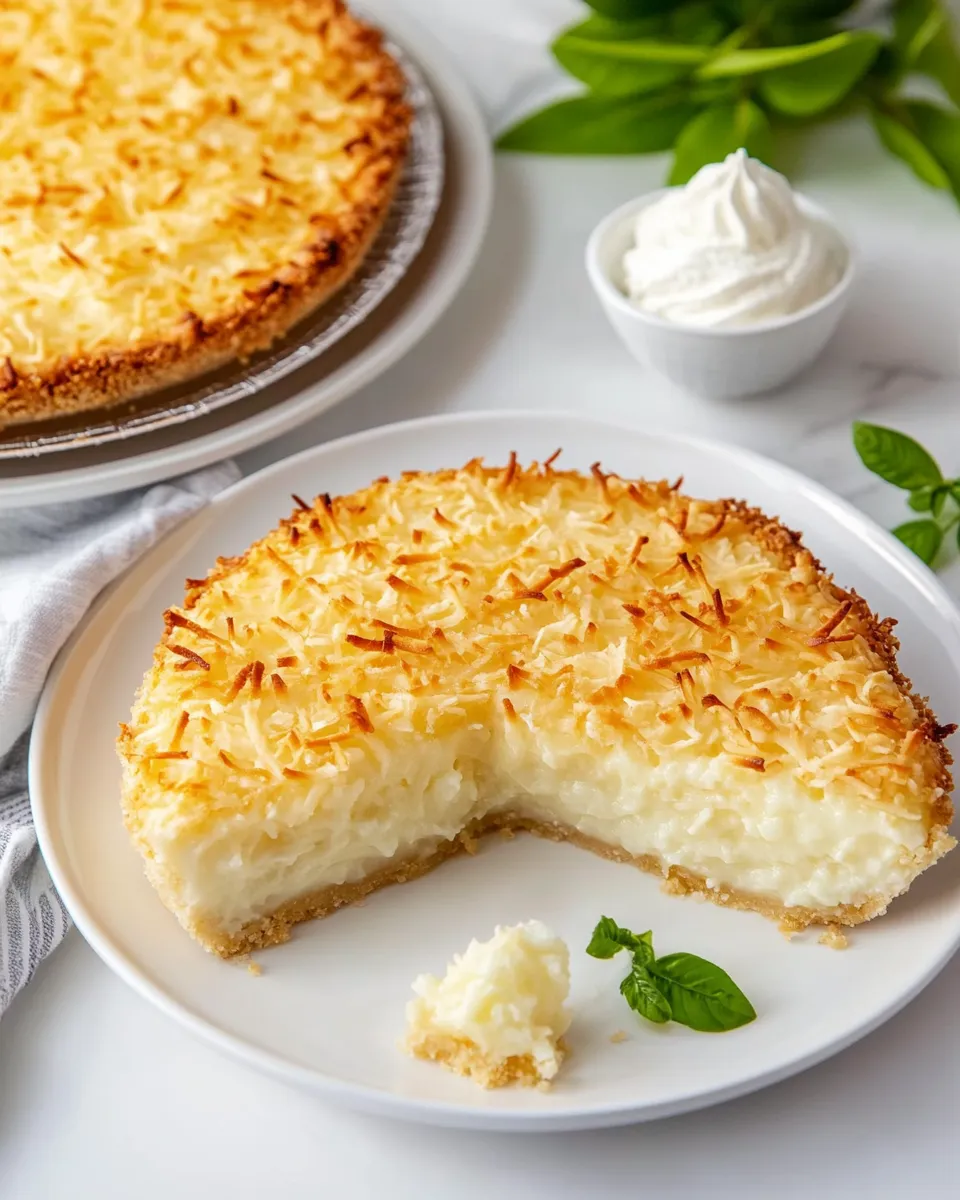
This pie is one of those deceptively simple desserts that becomes a regular in my rotation because it never fails. It’s an “impossible” pie in the classic sense: batter that separates, the dense bits sinking and the custardy layer rising to create a two-texture marvel without fuss. You get a tender, slightly custardy center framed by coconut-studded cake-like edges. It’s forgiving and fast, which is exactly how I like to bake on weeknights or for last-minute guests.
I use pantry staples and a homemade bisquick mix, and the recipe comes together in one bowl. There’s no crust to fancy up, no tempering of eggs—just whisk, stir, pour, and bake. The result is comforting, reliably coconut-forward, and easy to adapt if you want to nudge the texture or chill it before serving.
Below you’ll find the ingredient list and the step-by-step directions straight from the recipe source, plus practical notes: why it works, quick troubleshooting, safe substitutions for texture, storage, and answers to common questions I get when friends try it for the first time. If you like coconut and a dessert that behaves like both cake and custard, this one will be in your regular dessert repertoire in no time.
Ingredient List

- 4 large eggs — provide structure and the custard foundation; whisk thoroughly for even texture.
- ¾ cup granulated sugar — sweetens and helps the top brown lightly; measure carefully for predictable set.
- ½ cup homemade bisquick mix — adds flour, leavening, and a tender crumb; homemade mix gives better flavor than store versions.
- 2 cups milk — hydrates the batter and creates the custardy layer; full-fat milk gives richer results.
- ¼ cup unsalted butter (melted and cooled) — adds richness and mouthfeel; let it cool so it doesn’t scramble the eggs when added.
- Pinch of salt — rounds and balances the sweetness; always include even if it’s small.
- 2 teaspoons pure vanilla extract — lifts the flavor and complements the coconut; use pure vanilla for the best aroma.
- 1 ½ cups sweetened shredded or flaked coconut — the star ingredient; shredded gives more integration, flakes give texture.
Impossible Coconut Pie Made Stepwise
- Preheat the oven to 350°F and place a rack in the center. Lightly spray a 9-inch pie plate with nonstick cooking spray and set the pie plate on a rimmed baking sheet; set aside.
- In a large bowl, whisk together the 4 eggs, ¾ cup granulated sugar, and ½ cup homemade bisquick mix until well combined.
- Add 2 cups milk, the ¼ cup unsalted butter (melted and cooled), a pinch of salt, and 2 teaspoons pure vanilla extract to the egg mixture; whisk until smooth.
- Stir in 1½ cups sweetened shredded or flaked coconut until evenly distributed.
- Pour the batter into the prepared pie plate on the rimmed baking sheet.
- Bake for 45–50 minutes, until the top is evenly puffed and the center is mostly set. A knife inserted near the center should come out mostly clean (it may have a few moist crumbs) and the center will still have a slight, custard-like jiggle.
- Remove the pie from the oven and let it cool on a wire rack for at least 1 hour (the top will fall as it cools).
- Serve at room temperature or chilled. Refrigerate covered for up to 3 days.
Why This Recipe is a Keeper
This recipe earns a permanent spot in my collection for three reasons: simplicity, reliability, and texture. It uses basic pantry ingredients and one bowl, so it’s accessible any time. The method is forgiving—timing tolerates a few minutes’ variance, and it still turns out well even if your mixing isn’t picture-perfect.
Texture-wise, the pie sits between custard and cake: a faint jiggle at the center gives way to tender edges pricked with coconut. That contrast keeps it interesting with every forkful. The coconut adds chew and flavor intensity, while the bisquick mix gives structure without making the pie heavy.
It’s also versatile. Serve it slightly warm for a soft, custard-forward experience, or chill it for a firmer texture that’s easier to slice and plate. Either way, guests always ask for the recipe because it looks and tastes more sophisticated than the effort suggests.
Texture-Safe Substitutions

To keep the texture similar while swapping ingredients
- If you need a dairy swap: use a full-fat non-dairy milk (like canned coconut milk diluted with water to match 2 cups total) to maintain richness. This will amplify the coconut flavor and keep the custardy quality.
- For a lighter set: use 2% milk instead of whole milk. The pie will be slightly less rich and set a touch softer; bake time may remain similar—watch for the center jiggle.
- To reduce sweetness without changing structure: use unsweetened shredded coconut and keep the ¾ cup granulated sugar. The overall sweetness will be milder but the bake chemistry stays intact.
Options that change texture intentionally
- To make it firmer and more sliceable like a conventional pie: chill the finished pie thoroughly (several hours or overnight) before slicing. The custard firms up when cold.
- For a cake-like, taller result: try a deeper dish and extend baking by 5–10 minutes, watching for the knife test. The structure will be slightly denser.
Tools of the Trade

You don’t need a lot of specialized equipment for this pie. The right basic tools make everything easier and more reliable:
- 9-inch pie plate — the recipe calls for this size; it creates the expected depth and bake time.
- Rimmed baking sheet — the pie goes on it to catch any drips and makes it easier to move in and out of the oven.
- Large mixing bowl and whisk — a whisk is enough to fully combine the eggs, sugar, and bisquick; no mixer required.
- Wire rack — allow cooling and prevent the bottom from steaming so the top settles properly.
- Measuring cups and spoons — accurate measuring keeps the custard texture consistent.
What Not to Do
There are a few missteps that can compromise the final texture. Avoid these to get the best result every time:
- Do not add hot melted butter directly to the eggs. Let the butter cool before whisking it in or you risk scrambling the eggs and creating grainy texture.
- Do not overbake in pursuit of “fully set” with no jiggle—this will turn the custard rubbery and dry. Use the knife test: mostly clean with a few moist crumbs is perfect.
- Do not skip placing the pie on a rimmed baking sheet. Without it, a small spill can burn on the oven floor and smoke, and it’s harder to handle the pie safely.
- Do not slice the pie immediately after removing it from the oven. The pie needs at least an hour to cool and settle; slicing too soon will cause a loose, runny center and uneven slices.
Seasonal Ingredient Swaps
Seasonal twists keep this pie feeling fresh without changing the method. Here are safe swaps that work well with the core recipe:
- Late summer: fold in a small handful of finely chopped macadamia nuts or sprinkle toasted coconut on top after baking for a warm, island feel.
- Autumn/winter: stir in a pinch of ground cinnamon and nutmeg to the batter for cozy spice notes that pair nicely with the coconut.
- Spring: add a teaspoon of freshly grated lemon zest to the batter to brighten the flavor; lemon complements coconut and lifts the custard.
Notes on Ingredients
Quick notes to keep the flavor and texture consistent:
- Bisquick mix: the recipe specifies homemade bisquick mix. If you use a store-bought mix, the result will be similar but homemade often offers fresher flavor and you can control the leavening level.
- Shredded vs flaked coconut: shredded coconut incorporates more thoroughly and disperses coconut flavor through the filling. Flaked coconut gives larger pockets of chew—either is fine; just know your preference.
- Milk: whole milk produces the creamiest custard. Using lower-fat dairy will still work but results will be less rich.
- Butter: unsalted butter allows you to control the salt level; if you only have salted, omit the pinch of salt or use a lighter hand.
Shelf Life & Storage
Store the pie covered in the refrigerator. The recipe notes refrigeration covered for up to 3 days; I agree. Chilled, the center firms up and slices cleaner. If you plan to keep it for the full 3 days, cover it tightly with plastic wrap or an airtight container to prevent the top from drying out or absorbing other fridge odors.
If you prefer it at room temperature, remove it from the fridge 30–45 minutes before serving; this brings back a tender, slightly custardy mouthfeel. I don’t recommend freezing this pie—the custard texture degrades with thawing and becomes watery or grainy.
Popular Questions
Q: Can I make this dairy-free?
A: Yes. Substitute a full-fat non-dairy milk (canned coconut milk diluted to reach 2 cups works well) and use a dairy-free butter alternative that melts cleanly. Expect a slightly different mouthfeel but the structure should hold.
Q: My pie collapsed after baking—did I do something wrong?
A: The top will intentionally fall as it cools; the recipe calls this out. A significant collapse usually results from overbaking or rapid cooling. Let it cool gradually on a wire rack and don’t overbake the center—look for the slight, custard-like jiggle when it comes out.
Q: Can I halve the recipe?
A: Technically yes, but halving a custard-based recipe can change how it bakes because the depth and surface area affect setting. If you halve it, use a smaller dish and reduce bake time, watching for the knife test frequently.
Q: Can I add more coconut?
A: You can increase the coconut modestly for more texture, but adding too much will dry the custard and may affect setting. Stick near the stated 1½ cups for best balance.
Next Steps
Make the pie the day before a gathering to allow clean slices and an easy finish on the day of serving. If you’re sharing, a light garnish of extra toasted coconut or a zested citrus flourish can make the dish look intentional and polished. Pair with a cup of black coffee or a mellow tea; the coconut sweetness balances those bolder beverages nicely.
If you try a substitution or a timing tweak, note it down. This recipe is forgiving, but small changes (different milk or coconut amount) will alter texture and flavor enough that you’ll want to reproduce your favorite version next time. Happy baking—this one rewards simple care with a satisfying, crowd-pleasing result.
Impossible Coconut Pie
Ingredients
Ingredients
- 4 large eggs
- 3/4 cupgranulated sugar
- 1/2 cuphomemade bisquick mix
- 2 cupsmilk
- 1/4 cupunsalted buttermelted and cooled
- Pinchof salt
- 2 teaspoonspure vanilla extract
- 1 1/2 cupssweetened shredded or flaked coconut
Instructions
Instructions
- Preheat the oven to 350°F and place a rack in the center. Lightly spray a 9-inch pie plate with nonstick cooking spray and set the pie plate on a rimmed baking sheet; set aside.
- In a large bowl, whisk together the 4 eggs, ¾ cup granulated sugar, and ½ cup homemade bisquick mix until well combined.
- Add 2 cups milk, the ¼ cup unsalted butter (melted and cooled), a pinch of salt, and 2 teaspoons pure vanilla extract to the egg mixture; whisk until smooth.
- Stir in 1½ cups sweetened shredded or flaked coconut until evenly distributed.
- Pour the batter into the prepared pie plate on the rimmed baking sheet.
- Bake for 45–50 minutes, until the top is evenly puffed and the center is mostly set. A knife inserted near the center should come out mostly clean (it may have a few moist crumbs) and the center will still have a slight, custard-like jiggle.
- Remove the pie from the oven and let it cool on a wire rack for at least 1 hour (the top will fall as it cools).
- Serve at room temperature or chilled. Refrigerate covered for up to 3 days.
Equipment
- 9-inch pie plate
- Whisk
- Mixing bowl set
Notes
Adapted from Betty Crocker