
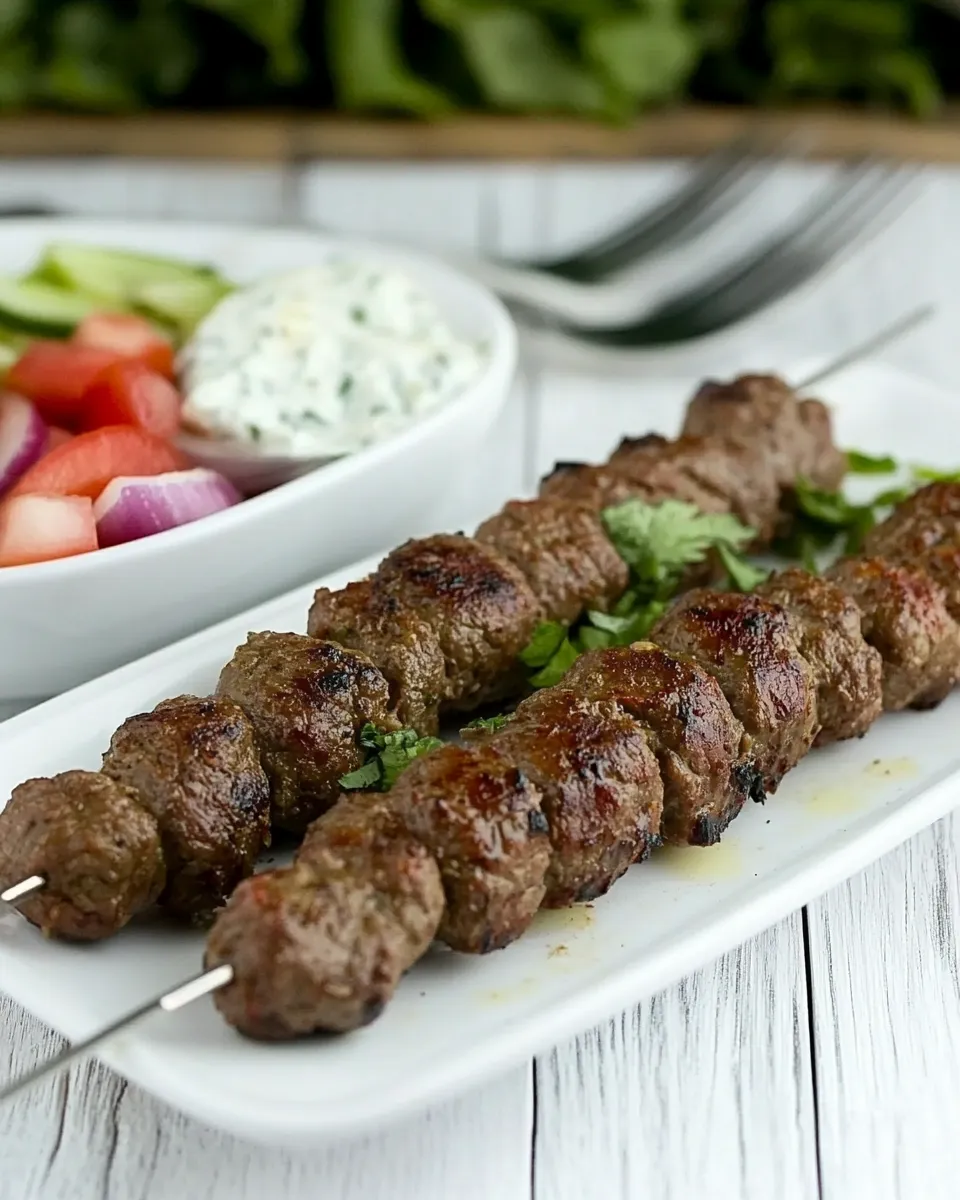
This is one of those recipes I come back to when I want something impressive without a lot of fuss. Kabob Koobideh is all about texture and seasoning: finely textured ground beef, a precise blend of spices, and intense direct heat from a grill. The result is juicy, slightly charred kabobs that pair beautifully with rice, grilled tomatoes, or a simple salad.
I love that it’s mostly hands-on in the early stages — shaping the meat, pressing it onto skewers — then mostly hands-off while the grill does its work. The method in this post keeps things practical: a single food processor step if you have one, chill to firm up, then a hot grill and careful timing. No long marinating. No complicated steps.
Make a batch for a weeknight dinner or for guests; the flavor holds up and the kabobs reheat well. I’ll walk you through the exact ingredient list, every step from prep to grill, useful swaps for vegetarian or vegan diets, tools that make the job easier, and common pitfalls to avoid. Let’s get cooking.
Ingredient Checklist

- 1.3 lbs. ground beef — the base; pick 80/20 for flavor and juiciness or leaner if you prefer less fat.
- 1 medium onion, very finely chopped — adds moisture and binding; finely chop or pulse so the meat holds together.
- 2 T Sadaf Ground Meat Kabob Seasoning (See notes for other options) — the primary spice blend that gives Koobideh its signature flavor.
- 1 T Spike Seasoning (see notes) — an additional seasoning layer; optional if you prefer a single blend.
- 1/4 cup water — helps the mixture become sticky and easy to shape around skewers.
- olive oil, for oiling the grill — prevents sticking and helps with browning on the grates.
From Start to Finish: Kabob Koobideh (Persian Ground Beef Kabobs)
- If your onion is not already very finely chopped, finely chop it by hand or pulse it briefly in a food processor with the steel blade.
- Place the finely chopped onion, 1.3 lbs. ground beef, 2 T Sadaf Ground Meat Kabob Seasoning, 1 T Spike Seasoning, and 1/4 cup water into a food processor. (If you do not have a food processor, combine these ingredients thoroughly in a large bowl by hand until smooth and well blended.)
- Process or mix the ingredients until the mixture is homogeneous and the meat is finely textured and sticky enough to hold its shape.
- Transfer the mixture to a plastic container with a snap-on lid (or cover the bowl) and refrigerate for at least 2 hours, or up to all day, to firm the mixture and let the flavors meld.
- When ready to cook, preheat your gas or charcoal grill to high heat. Oil the grill grates by dipping a folded paper towel in olive oil and wiping the grates (use tongs to hold the towel). The grill should be hot enough that you can only hold your hand a few seconds above it.
- Divide the chilled meat mixture and shape it around skewers into long cylinder-shaped kabobs, pressing firmly so the meat adheres to the skewers. If using thin round skewers, thread two skewers through each kabob for stability; double or blade-type skewers work well.
- Reduce the grill heat to medium-high and place the kabobs on the oiled grates.
- Cook the kabobs on the first side for about 4–5 minutes until the meat is well browned and releases from the grate. For criss-cross grill marks, after 4–5 minutes rotate each kabob 90 degrees on the same side and cook an additional 3–4 minutes without flipping.
- Flip the kabobs and cook the other side until done, about enough additional time so the total cooking time is approximately 15 minutes, depending on grill temperature and kabob thickness.
- Check doneness with an instant-read thermometer — ground beef should reach an internal temperature of 160°F. Remove kabobs from the grill and serve hot.
Why I Love This Recipe
There’s a straightforward honesty to Koobideh that I admire. It relies on simple ingredients handled with care, not on long marinades or complicated techniques. The finely textured meat binds and cooks evenly, producing a tender interior and a satisfingly charred exterior.
It’s also incredibly flexible. You can scale up easily without changing the technique; the method works on a gas grill, charcoal, or even under a broiler in a pinch. And because the flavors concentrate during the chill period, prep in the morning or earlier in the day and grill when you’re ready.
Vegan & Vegetarian Swaps
Want the Koobideh experience without beef? Here are swaps that capture texture and flavor without copying meat exactly.
Ground-protein alternatives
- Plant-based ground meat — brands that mimic beef texture work best for shaping and grilling. Press and chill similarly so they firm up around the skewer.
- Lentil or mushroom mix — cook lentils and finely chop sautéed mushrooms, then bind with breadcrumbs, flax egg (if needed), and the same seasonings to echo the spice profile.
- Firm tofu or tempeh — crumble and press to remove excess moisture, then combine with spices, onion, and a binder; expect different grilling behavior and shorter cook times.
Note: If you use vegan substitutes, the exact cooking times and internal-temperature targets will differ. Watch for firmness and color changes rather than relying on 160°F, which applies to ground beef.
Cook’s Kit
- Food processor (highly recommended) or a sturdy mixing bowl and strong hands for mixing.
- Metal skewers — double skewers or flat/blade-style skewers are best to prevent spinning.
- Instant-read thermometer to confirm safe doneness for ground beef (160°F).
- Tongs for flipping and rotating kabobs on the grill.
- Paper towels and tongs for oiling the grill grates safely.
- Plastic container with snap-on lid or bowl covered tightly for chilling the mixture.
Steer Clear of These
Common mistakes turn promising kabobs into a mess. Avoid these pitfalls.
- Using large chunks of onion: If the onion isn’t finely chopped or pulsed, the mixture won’t bind and the kabobs can fall apart during grilling.
- Skipping the chill: Shaping and chilling the mixture for at least 2 hours is critical. Warm meat won’t adhere to the skewer and will disintegrate on the grill.
- Overhandling the meat: Press firmly when forming, but don’t compress until rock-hard. Overworking can make kabobs dense instead of tender.
- Too-low grill temp: You need the initial high heat to sear and create a crust. If the grill is only lukewarm, kabobs will dry out before they brown.
Nutrition-Minded Tweaks
If you want to lighten this dish or make it fit specific nutrition goals, there are straightforward adjustments that keep flavor front and center.
- Lean ground beef: Use 90/10 or 93/7 blends to reduce fat; expect slightly less juiciness but still good flavor.
- Mix in vegetables: Finely grated carrot or zucchini (squeezed dry) can add fiber and moisture. Keep quantities small so binding isn’t compromised.
- Serve smart: Pair kabobs with a big salad, whole-grain pilaf, or cauliflower rice to boost fiber and control portions of starchy sides.
Cook’s Notes
Little details make a big difference. Here are practical notes I use every time I make Koobideh.
- Skewer stability: If your skewers are thin and round, thread two through each kabob close together. This prevents spinning and helps flip cleanly.
- Shaping technique: Wet your hands slightly when pressing the meat onto skewers to prevent sticking and to smooth the surface.
- Char control: Move kabobs to a cooler part of the grill if they’re browning too fast. You want a deep color, not burnt edges.
- Seasoning alternatives: The recipe calls for Sadaf and Spike. If you don’t have those blends, a mix of ground cumin, turmeric, sumac, and black pepper can approximate a similar profile.
Meal Prep & Storage Notes
Koobideh is surprisingly friendly to meal prep. Make the mixture ahead, store it, or freeze uncooked kabobs.
- Make ahead: After processing and chilling, the meat can be refrigerated up to a day before shaping and grilling. Chilled mixture firms and becomes easier to handle.
- Freeze for later: Shape uncooked kabobs and freeze on a tray until solid. Transfer to a sealed bag and freeze up to 1 month. Thaw in the fridge before grilling.
- Leftovers: Cooked kabobs keep in an airtight container in the fridge for 3–4 days. Reheat gently under a broiler, in a skillet, or on the grill to restore some exterior crispness.
Quick Q&A
Q: Can I make these without a food processor? A: Yes. Mix thoroughly by hand in a large bowl until the mixture is homogeneous and sticky enough to shape.
Q: What if the kabobs fall apart on the grill? A: Chill the mix longer next time and press firmly onto the skewers. Also ensure the onion is very finely chopped so it helps bind the meat.
Q: Can I use lamb instead of beef? A: Yes, lamb works beautifully and is traditional in many regions. If you switch to lamb, expect slightly different fat content and flavor.
Q: Do I need to flip often? A: No. Follow the timing in the steps: initial sear, rotate for crosshatch if desired, then flip once to finish. Excessive flipping prevents a good crust.
The Takeaway
Kabob Koobideh is an elegant, hands-on grill dish that rewards a little prep with big flavor. Finely texture the meat, chill the mixture, and use a hot grill for caramelized exterior and juicy interior. Keep to the simple list of ingredients—ground beef, finely chopped onion, the specified seasonings, and a splash of water—and you’ll get consistently excellent results.
Follow the steps in order, use the tips above to avoid common mistakes, and adapt the protein if you need vegetarian or lower-fat versions. This is a recipe I return to when I want a reliably delicious meal that feels special but stays practical.
Kabob Koobideh (Persian Ground Beef Kabobs)
Ingredients
Ingredients
- 1.3 lbs. ground beef (
- 1 medium onion very finely chopped
- 2 T Sadaf Ground Meat Kabob Seasoning See notes for other options
- 1 T Spike Seasoning see notes
- 1/4 cup water
- olive oil for oiling the grill
Instructions
Instructions
- If your onion is not already very finely chopped, finely chop it by hand or pulse it briefly in a food processor with the steel blade.
- Place the finely chopped onion, 1.3 lbs. ground beef, 2 T Sadaf Ground Meat Kabob Seasoning, 1 T Spike Seasoning, and 1/4 cup water into a food processor. (If you do not have a food processor, combine these ingredients thoroughly in a large bowl by hand until smooth and well blended.)
- Process or mix the ingredients until the mixture is homogeneous and the meat is finely textured and sticky enough to hold its shape.
- Transfer the mixture to a plastic container with a snap-on lid (or cover the bowl) and refrigerate for at least 2 hours, or up to all day, to firm the mixture and let the flavors meld.
- When ready to cook, preheat your gas or charcoal grill to high heat. Oil the grill grates by dipping a folded paper towel in olive oil and wiping the grates (use tongs to hold the towel). The grill should be hot enough that you can only hold your hand a few seconds above it.
- Divide the chilled meat mixture and shape it around skewers into long cylinder-shaped kabobs, pressing firmly so the meat adheres to the skewers. If using thin round skewers, thread two skewers through each kabob for stability; double or blade-type skewers work well.
- Reduce the grill heat to medium-high and place the kabobs on the oiled grates.
- Cook the kabobs on the first side for about 4–5 minutes until the meat is well browned and releases from the grate. For criss-cross grill marks, after 4–5 minutes rotate each kabob 90 degrees on the same side and cook an additional 3–4 minutes without flipping.
- Flip the kabobs and cook the other side until done, about enough additional time so the total cooking time is approximately 15 minutes, depending on grill temperature and kabob thickness.
- Check doneness with an instant-read thermometer — ground beef should reach an internal temperature of 160°F. Remove kabobs from the grill and serve hot.
Equipment
- Food Processor
- Large Bowl
- grill (gas or charcoal)
- Skewers
- Tongs
- Instant-read thermometer
- plastic container with lid
- Paper Towels
Notes
Mixture should be chilled at least 2 hours to firm up before shaping and grilling.