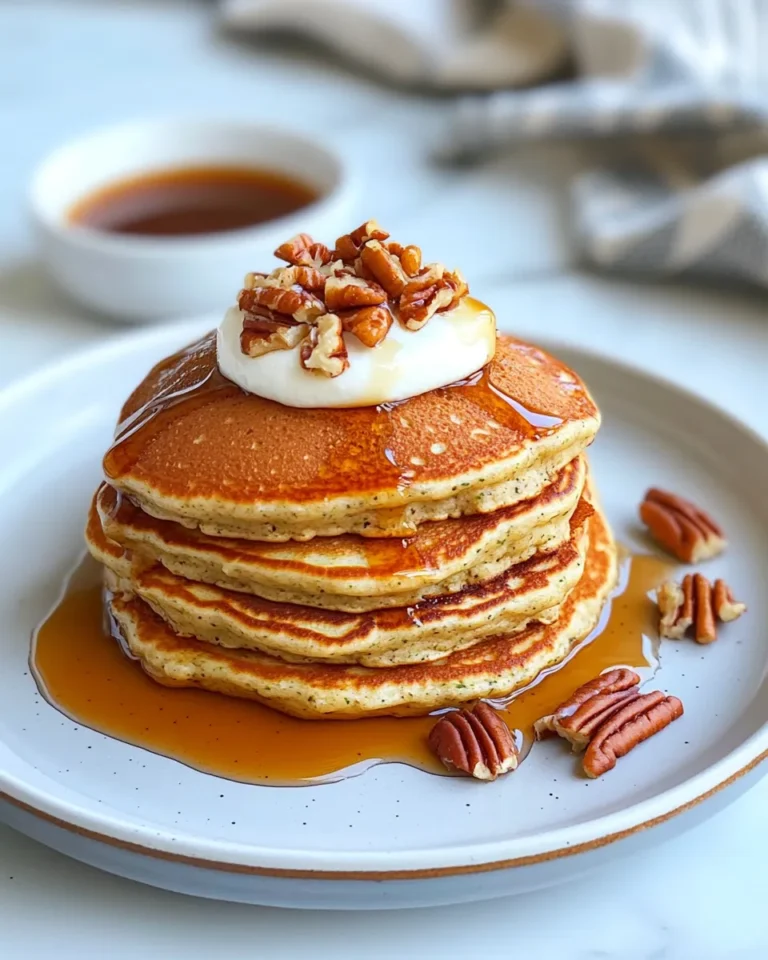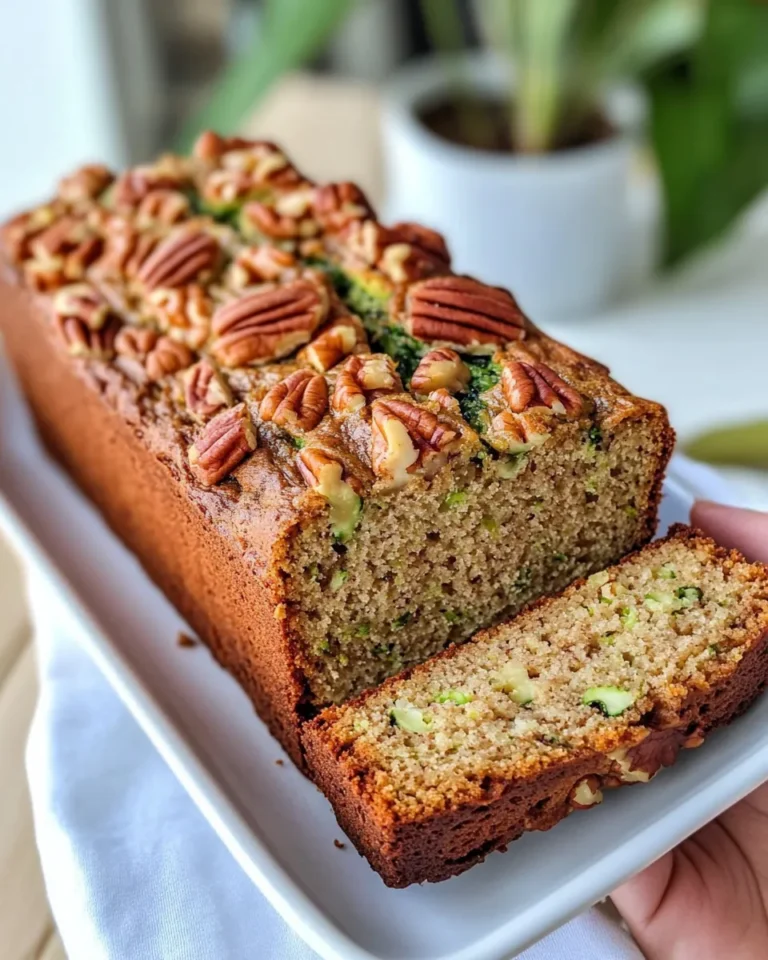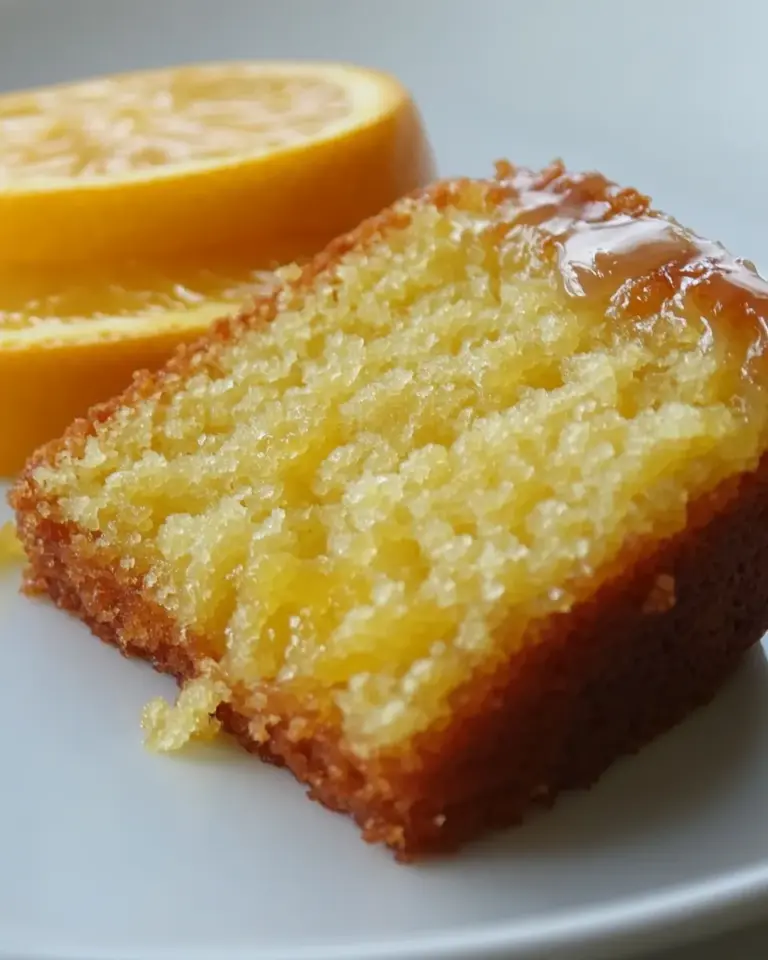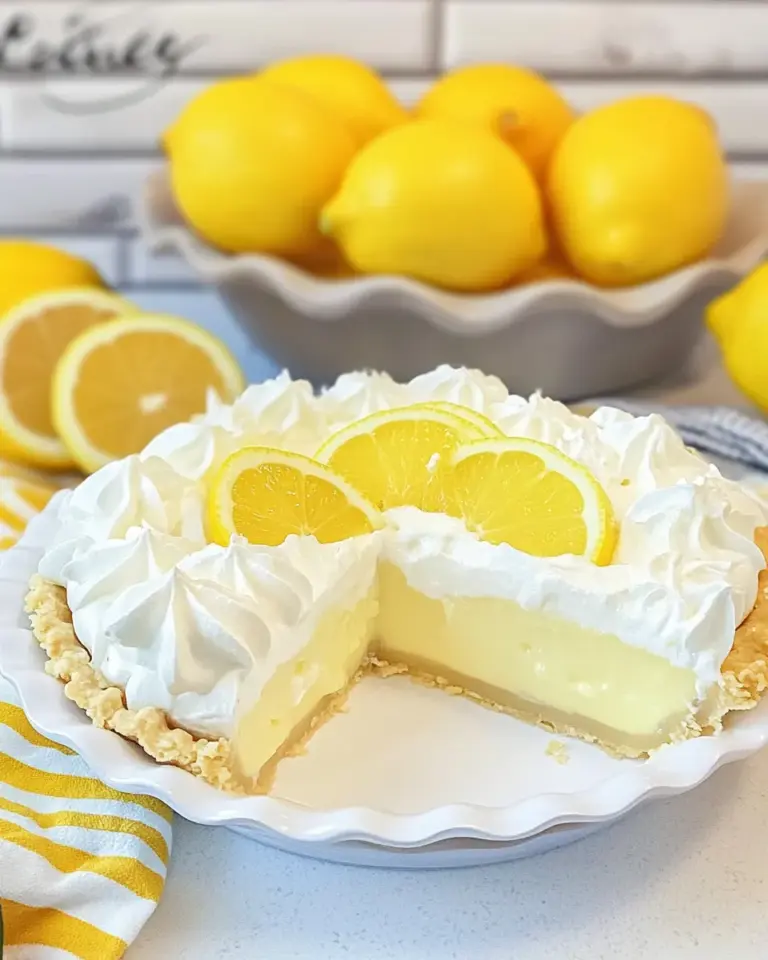
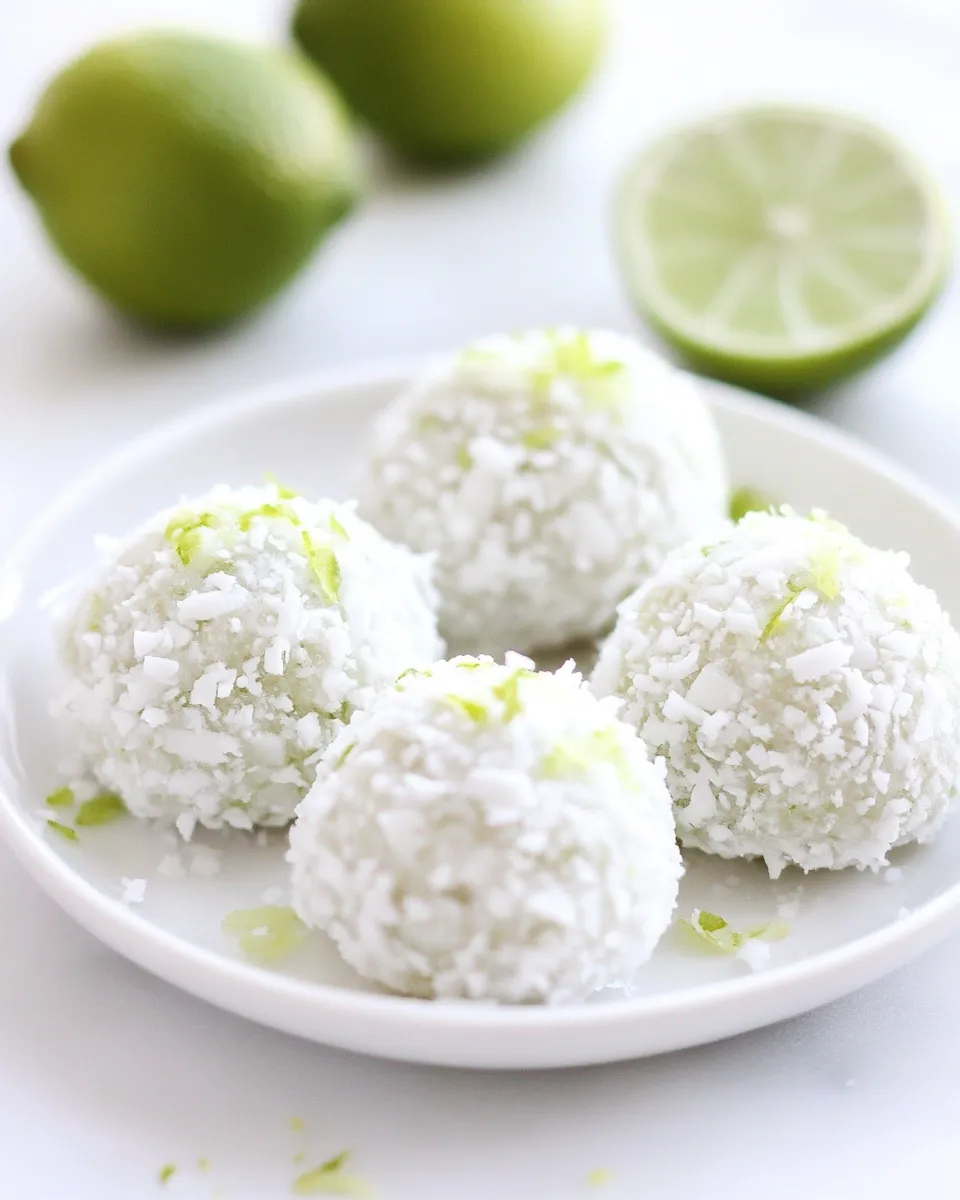
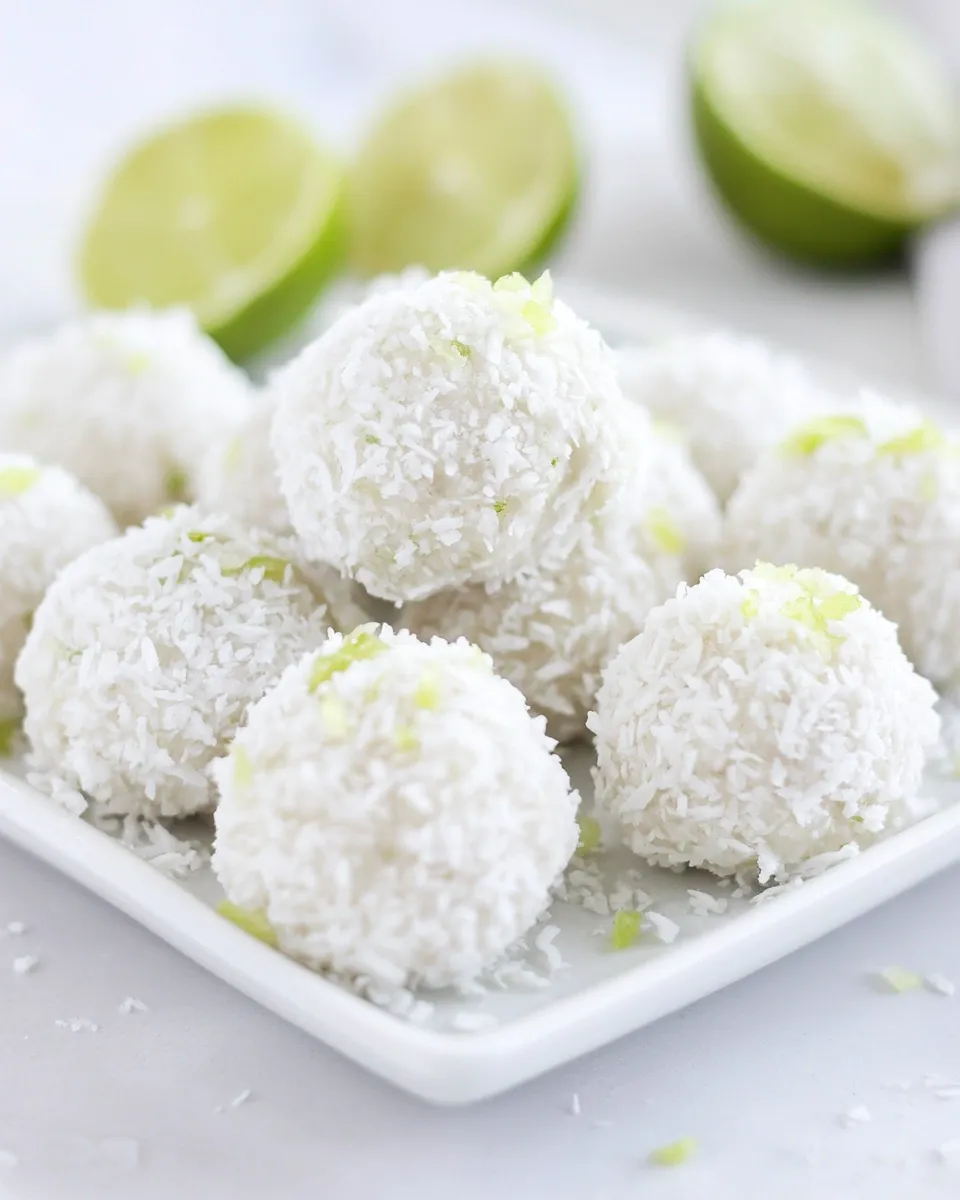
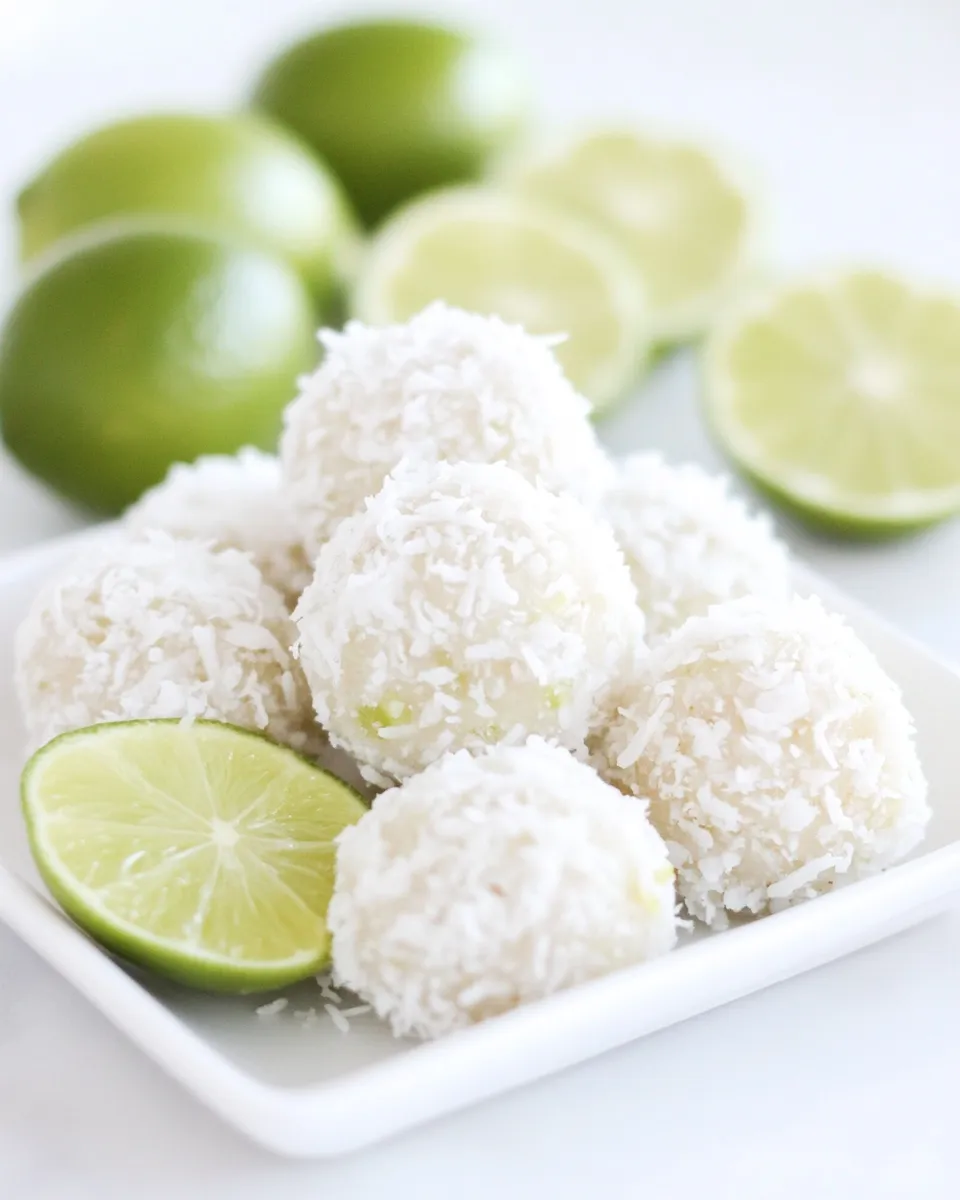
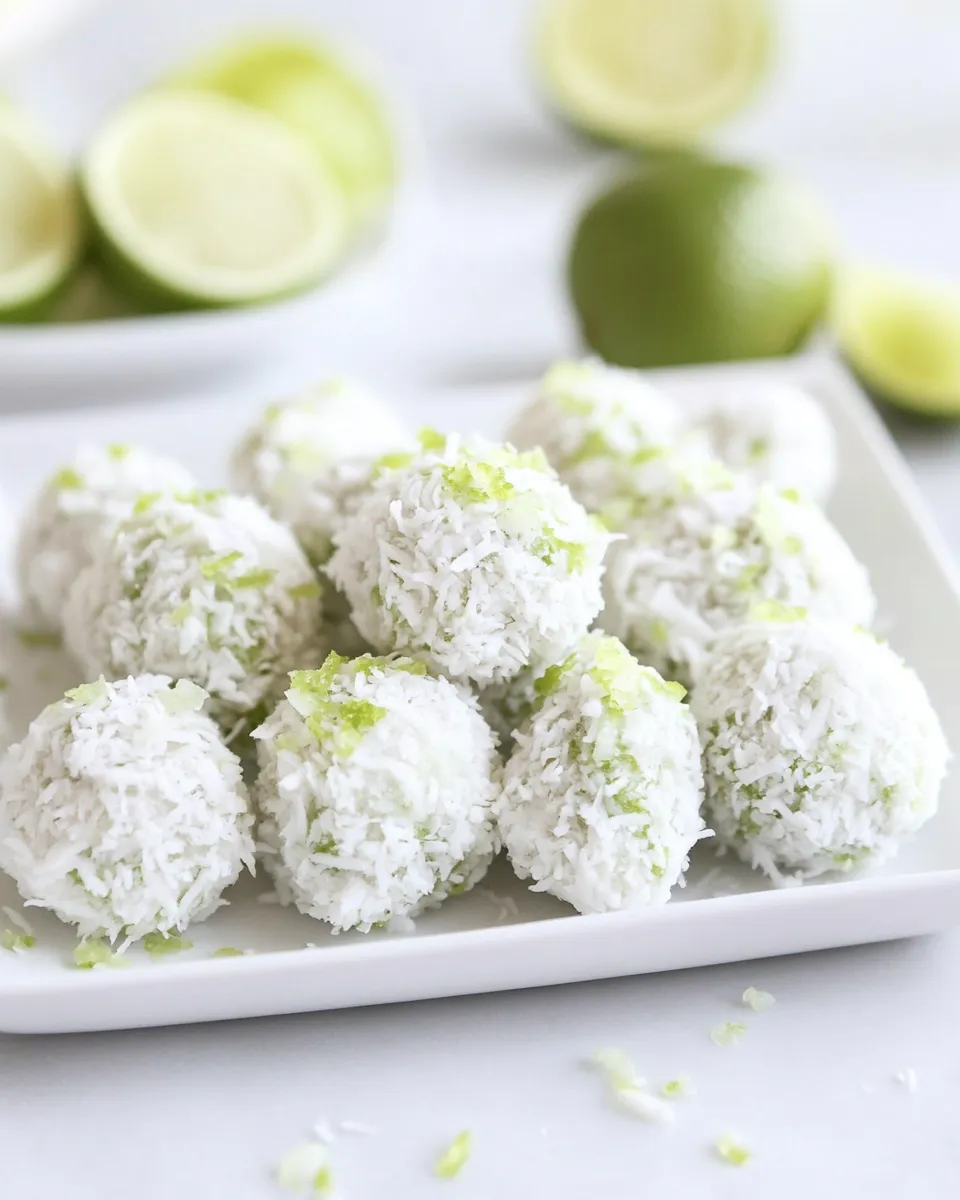
Bright, tender, and lightly tropical — these Lime Coconut Snowballs are the kind of cookie I reach for when I want something that feels both festive and everyday. They have a delicate, crumbly base that’s studded with lime zest and finished with a shiny lime glaze and a generous roll in sweetened coconut. The contrast of crisp edges and soft centers never fails.
I keep the method straightforward: mix dry ingredients, cut in cold butter until crumbly, add small amounts of cream cheese and vanilla to bring the dough together, shape, bake, cool, glaze, and coat. Little steps — like baking one sheet at a time and using superfine sugar — make a big difference in texture. No fancy tools required, just a stand mixer and a few pantry staples.
Below you’ll find the exact ingredient list I use, the step-by-step directions (kept in the original order so you can follow along exactly), plus tips, common mistakes, and storage notes. If you want adjustments or a printable version, tell me what you’re after and I’ll help you adapt these for your kitchen.
What You’ll Gather
- 2 1/2 cups all-purpose flour — the cookie’s structure; spoon and level for accuracy.
- 1 teaspoon grated lime zest — concentrated lime flavor in the dough; zest before juicing the limes.
- 3/4 cup superfine sugar* — finer texture dissolves into the dough for a tender crumb. If you don’t have superfine, pulse granulated sugar briefly in a food processor.
- 1/4 teaspoon salt — balances sweetness and brightens flavors.
- 1 cup unsalted butter, cut into sixteen 1/2-inch pieces, at cool room temperature — lends richness and flakiness; keep pieces small for even distribution.
- 2 teaspoons vanilla extract — rounds the citrus notes and deepens overall flavor.
- 2 tablespoons cream cheese, at room temperature — helps bind the dough and adds a subtle tang.
- 1 tablespoon cream cheese, at room temperature — reserved for the glaze; softens easily at room temp for smooth whisking.
- 3 tablespoons fresh lime juice — 2 tablespoons used initially in glaze and up to 1 tablespoon more to adjust consistency; use fresh for the cleanest flavor.
- 1 1/2 cups powdered (confectioners’) sugar — sweetens and thickens the glaze; sift if lumpy.
- 1 1/2 cups sweetened shredded coconut — for coating the glazed tops; gives texture and a tropical finish.
Mastering Lime Coconut Snowballs: How-To
- Preheat oven to 375°F. Line baking sheets with parchment paper.
- In the bowl of a stand mixer fitted with the paddle (beater) attachment, combine 2 1/2 cups all-purpose flour, 1 teaspoon grated lime zest, 3/4 cup superfine sugar, and 1/4 teaspoon salt. Mix on low speed just until combined, about 5 seconds.
- With the mixer running on low, add 1 cup unsalted butter (cut into sixteen 1/2-inch pieces) one piece at a time. Continue mixing on low until the mixture looks crumbly and slightly wet, about 1 minute.
- Add 2 teaspoons vanilla extract and 2 tablespoons cream cheese (at cool room temperature) to the mixer. Mix on low until the dough just begins to form large clumps, about 30 seconds. Stop the mixer and gather the dough if needed.
- Use your hands to roll the dough into 1-inch balls. Place the balls on the prepared baking sheets, spacing them about 1 1/2 inches apart. Bake one sheet at a time in the preheated oven until the bottoms and edges are lightly browned, about 12 minutes.
- Remove the cookies from the oven and transfer to a wire rack; cool completely to room temperature.
- For the glaze, in a medium bowl whisk together 1 tablespoon cream cheese (at room temperature) and 2 tablespoons fresh lime juice until no lumps remain.
- Whisk 1 1/2 cups powdered (confectioners’) sugar into the cream cheese–lime mixture until smooth. If the glaze is too thick to spread easily, whisk in the remaining 1 tablespoon fresh lime juice (from the 3 tablespoons total) a little at a time until the glaze is thin enough to spread.
- Dip the top of each cooled cookie into the glaze, scraping away any excess glaze with the edge of the bowl or a small spatula.
- Immediately dip the glazed top of each cookie into 1 1/2 cups sweetened shredded coconut to coat. Transfer coated cookies to a parchment-lined baking sheet and let stand until the glaze is dry and set.
- Store the cookies in an airtight container for up to four days.
Why This Lime Coconut Snowballs Stands Out
These cookies balance texture and flavor in a way that feels intentional: the dough is crumbly and tender because of the butter and a small amount of cream cheese, which also helps the dough hold together without weighing it down. Lime zest in the dough gives a bright, aromatic baseline while the lime-sweet glaze amplifies that brightness and adds a glossy finish. Rolling the glazed top in sweetened coconut adds chew and tropical contrast.
Another standout is the technique: cutting the butter into small pieces and starting the mixer on low creates small pockets of fat that bake into delicate, slightly flaky bites. Baking one sheet at a time ensures even heat and predictable browning. The recipe’s proportions are designed so the glaze sets cleanly without melting into the cookie, preserving that coconut-coated dome effect.
Quick Replacement Ideas
- Superfine sugar: pulse regular granulated sugar in a food processor until finer if you don’t have superfine.
- Unsalted butter: if using salted butter, omit or reduce the added salt to taste.
- Cream cheese: for a similar binding effect, full-fat Greek yogurt can work in the dough (use a slightly smaller amount and chill the dough briefly), but expect a different texture and tang.
- Sweetened shredded coconut: use unsweetened if you want less sweetness and a cleaner coconut flavor — the cookies will be less sweet overall.
- Lime juice: if limes are unavailable, bottled lime juice works in a pinch, but fresh juice gives a brighter flavor.
Equipment Breakdown
- Stand mixer with paddle attachment — recommended for even mixing and to follow the method precisely; a hand mixer or sturdy wooden spoon can substitute, but expect more manual time.
- Baking sheets — flat, rimmed sheets; bake one at a time to control browning.
- Parchment paper — prevents sticking and makes cleanup easier.
- Wire rack — essential for cooling so cookies don’t steam on the sheet.
- Medium bowl and small spatula — for the glaze and dipping work.
- Measuring cups and spoons — accurate measures matter here for texture.
- Microplane or fine zester — for the lime zest; use the fine side to capture bright oils without the bitter white pith.
Mistakes Even Pros Make
- Overworking the dough: mixing until the dough is smooth instead of just clumping will produce tougher cookies. Stop when large clumps form.
- Using warm cream cheese: cream cheese that’s too warm makes the dough too soft and can affect spreading. Use cool room temperature as directed.
- Baking multiple sheets at once: stacking sheets in the oven or baking two on different racks can lead to unevenly browned bottoms. Bake one sheet at a time.
- Glazing warm cookies: dipping any warm cookie into the glaze will cause the glaze to melt and not set properly. Cool completely first.
- Too-thick glaze: skipping the extra lime juice if the glaze is stiff will make dipping messy — thin it a bit at a time until it spreads easily.
In-Season Flavor Ideas
- Summer: add a few drops of coconut extract to the glaze for an extra tropical push; or swap some lime for Meyer lemon when they’re in season for a sweeter citrus note.
- Fall: stir in 1/4 teaspoon of ground ginger to the dough and use toasted coconut for a nuttier finish.
- Winter: use a mix of lime and orange zest in the dough for a festive citrus blend and swap sweetened coconut for finely chopped white chocolate for a snowball-like look.
Recipe Notes & Chef’s Commentary
Measure flour by spooning it into the measuring cup and leveling with a knife — packing flour leads to dry, dense cookies. Superfine sugar dissolves faster and gives a silkier texture; if you don’t have it, a quick pulse in a food processor will do the trick.
Cream cheese plays two roles: a little in the dough gives extra tenderness and a mild tang that complements lime; a dollop in the glaze helps it set smoothly and keeps the glaze from being overly shiny or runny. Make sure both portions of cream cheese are at room temperature (but not warm) for easiest incorporation.
When forming 1-inch balls, keep them uniform for even baking. The recipe specifies spacing them about 1 1/2 inches apart — they don’t spread much, but avoid crowding. Baking one sheet at a time ensures each cookie sees consistent heat; if you must bake two at once, rotate the pans halfway through and monitor closely.
Shelf Life & Storage
Store the cookies in an airtight container for up to four days, as the recipe states. Keep them at room temperature in a single layer or separated with parchment if stacking. The coconut coating can absorb moisture over time; for best texture, eat within the first two days.
If you’d like to keep them longer, freeze unglazed cookie balls on a baking sheet until firm, transfer to a freezer bag, and freeze for up to three months. Thaw completely, then make and apply the glaze and coconut coating before serving. Alternatively, you can freeze fully finished cookies between layers of parchment, but the coconut’s texture will change slightly on thawing.
Quick Q&A
- Can I make the dough ahead of time? Yes — you can form the balls and freeze them spaced on a tray until firm, then transfer to a bag and bake from frozen (add a minute or two to bake time) or thaw in the fridge before baking.
- Why bake one sheet at a time? It ensures even browning and predictable results; crowded ovens or multiple pans can alter bake times and color.
- How do I get the glaze smooth? Use room-temperature cream cheese and whisk the powdered sugar in gradually. Sift the sugar first if it’s lumpy, and add lime juice a little at a time to reach the right consistency.
- Can I use dessicated coconut? Yes, but sweetened shredded gives more visual texture and chew. Desiccated coconut will be drier and less visible after glazing.
In Closing
These Lime Coconut Snowballs are one of those recipes that feel special without being fussy. A few thoughtful techniques — small butter pieces, cool cream cheese, baking one tray at a time — produce reliably delicate cookies. The lime–cream cheese glaze with that coconut jacket turns a simple shortbread-like base into something lively and memorable.
Make them for a summer gathering, a holiday platter, or whenever you want a small, bright cookie with texture and personality. If you try a variation or want help scaling or adapting the recipe (gluten-free, less sugar, or vegan options), tell me what you have and I’ll guide you through it.

Lime Coconut Snowballs
Ingredients
Ingredients
- 2 1/2 cupsall-purpose flour
- 1 teaspoongrated lime zest
- 3/4 cupsuperfine sugar*
- 1/4 teaspoonsalt
- 1 cupunsalted butter cut into sixteen 1/2-inch pieces, at cool room temperature
- 2 teaspoonsvanilla extract
- 2 tablespoonscream cheese at room temperature
- 1 tablespooncream cheese at room temperature
- 3 tablespoonsfresh lime juice
- 1 1/2 cupspowedered sugar
- 1 1/2 cupssweetened shredded coconut
Instructions
Instructions
- Preheat oven to 375°F. Line baking sheets with parchment paper.
- In the bowl of a stand mixer fitted with the paddle (beater) attachment, combine 2 1/2 cups all-purpose flour, 1 teaspoon grated lime zest, 3/4 cup superfine sugar, and 1/4 teaspoon salt. Mix on low speed just until combined, about 5 seconds.
- With the mixer running on low, add 1 cup unsalted butter (cut into sixteen 1/2-inch pieces) one piece at a time. Continue mixing on low until the mixture looks crumbly and slightly wet, about 1 minute.
- Add 2 teaspoons vanilla extract and 2 tablespoons cream cheese (at cool room temperature) to the mixer. Mix on low until the dough just begins to form large clumps, about 30 seconds. Stop the mixer and gather the dough if needed.
- Use your hands to roll the dough into 1-inch balls. Place the balls on the prepared baking sheets, spacing them about 1 1/2 inches apart. Bake one sheet at a time in the preheated oven until the bottoms and edges are lightly browned, about 12 minutes.
- Remove the cookies from the oven and transfer to a wire rack; cool completely to room temperature.
- For the glaze, in a medium bowl whisk together 1 tablespoon cream cheese (at room temperature) and 2 tablespoons fresh lime juice until no lumps remain.
- Whisk 1 1/2 cups powdered (confectioners') sugar into the cream cheese–lime mixture until smooth. If the glaze is too thick to spread easily, whisk in the remaining 1 tablespoon fresh lime juice (from the 3 tablespoons total) a little at a time until the glaze is thin enough to spread.
- Dip the top of each cooled cookie into the glaze, scraping away any excess glaze with the edge of the bowl or a small spatula.
- Immediately dip the glazed top of each cookie into 1 1/2 cups sweetened shredded coconut to coat. Transfer coated cookies to a parchment-lined baking sheet and let stand until the glaze is dry and set.
- Store the cookies in an airtight container for up to four days.
Equipment
- Stand mixer
- paddle attachment
- Baking Sheets
- Parchment Paper
- Wire Rack
- Mixing Bowl
- Spatula
Notes
To make the superfine sugar, pulse ¾ cup of sugar in a food processor for about 30 seconds.