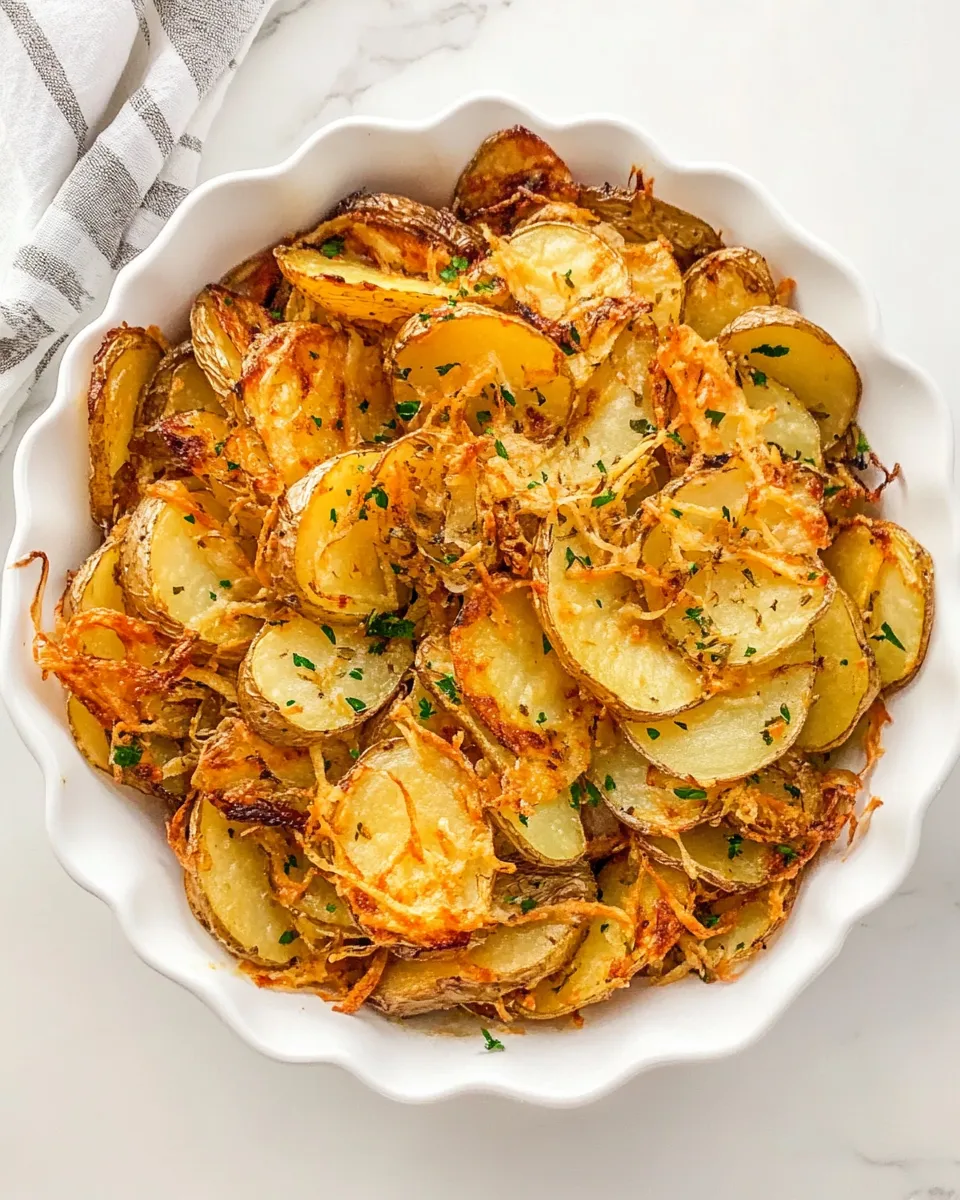
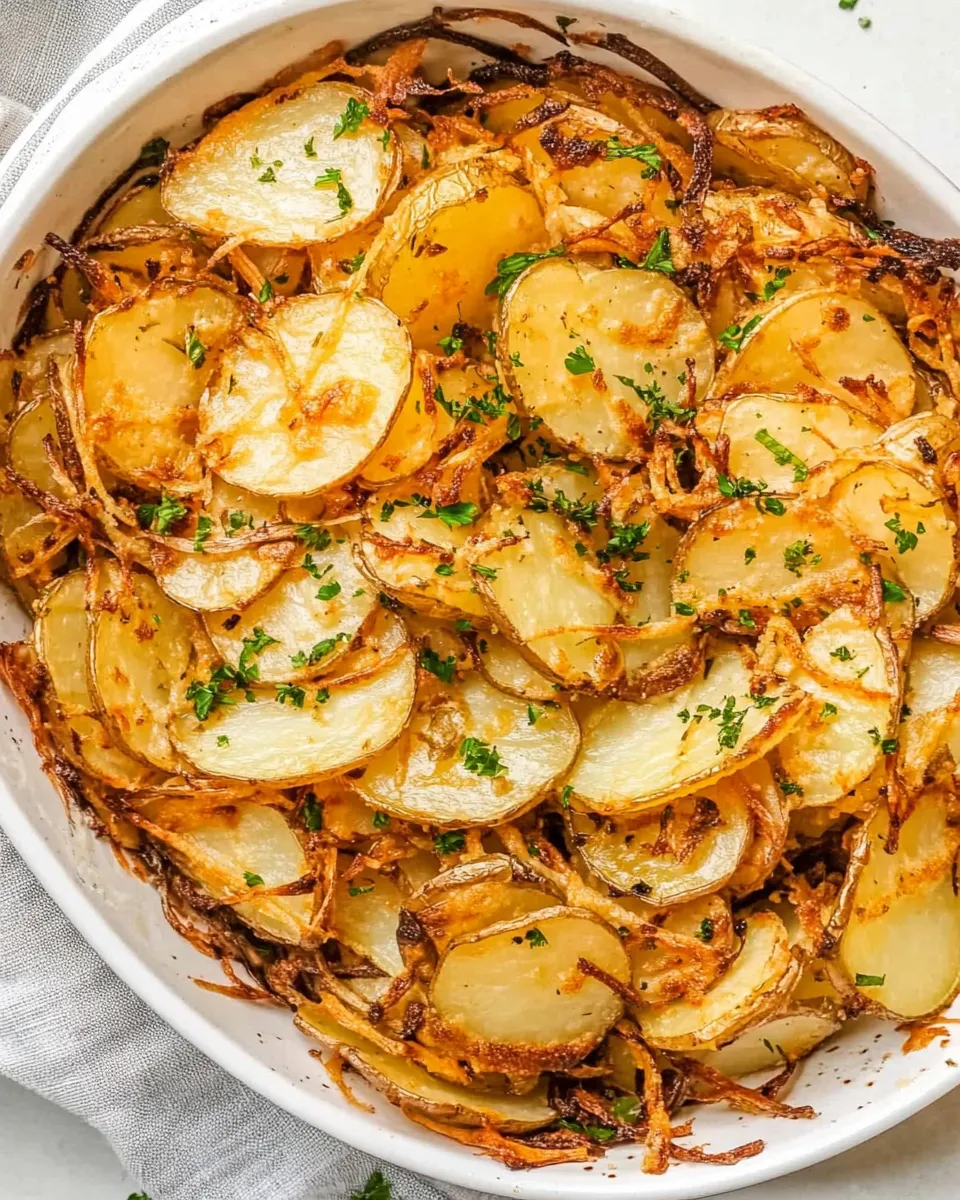
I grew up watching a skillet of golden potatoes and sweet caramelized onions emerge from the stove like a little celebration. Lyonnaise potatoes are simple, honest food — starchy russets, slowly softened, then crisped and kissed with butter and olive oil. The contrast between the tender centers and the browned edges, finished with bright parsley, is what keeps me coming back to this dish.
This is the version I return to when I want a side that’s comforting but not fussy. The technique is straightforward: parboil to set the shape, caramelize the onions low and slow, then brown the potato slices in batches. A few minutes of patient cooking yield layers of flavor you wouldn’t expect from three main ingredients.
Below you’ll find everything you need: a shopping guide, the exact step-by-step cooking guide, ingredient notes, common fixes, and ways to make this ahead when you’re feeding a crowd. No fluff — just actionable tips so your Lyonnaise potatoes turn out reliably excellent every time.
Ingredients
- 3 pounds russet potatoes — starchy potatoes that hold shape when boiled and crisp beautifully when browned.
- 1 large onion (thinly sliced) — provides sweetness and the classic Lyonnaise flavor when caramelized.
- 4 tablespoons unsalted butter (divided) — divided so some butter flavors the onions and the rest helps brown the potatoes.
- 2 tablespoons extra virgin olive oil — raises the smoke point and adds a gentle, fruity backbone to the frying fat.
- 2 tablespoons fresh parsley (chopped) — brightens the finished dish and cuts through the richness.
- salt and pepper (to taste) — essential seasoning; add gradually and taste before serving.
Your Shopping Guide
Buy firm, dry russet potatoes without green spots or soft areas. For this dish you want starchy potatoes — they break down less during parboiling and develop a crisp edge when seared. If your market has numbered potatoes, choose those labeled “baking” or “russet.”
Pick a large, sweet onion for better caramelization. Yellow onions are my go-to because they balance sweetness and savory depth as they cook. If you prefer a milder finish, you can choose a sweet onion variety, but thin slicing matters most.
Use good-quality unsalted butter and extra virgin olive oil. The butter gives brown, savory flavor and the oil helps prevent the butter from burning. Fresh parsley is inexpensive and transforms the plate — buy it shortly before cooking so it stays bright.
Lyonnaise Potatoes Cooking Guide
- PeeI the potatoes and slice them into 1/4-inch-thick rounds. Place the slices in a large pot, cover with cold water, and add salt to the water.
- Bring to a boil over high heat, then cook until the potatoes are just tender but still hold their shape, about 5 minutes. Drain in a colander and let sit briefly to steam-dry or pat dry with a kitchen towel.
- Heat a large skillet over medium heat and melt 2 tablespoons of the butter. Add the thinly sliced onion and cook, stirring occasionally, until the onion is soft and caramelized, about 15–20 minutes. Reduce the heat if the onions begin to brown too quickly.
- Remove the caramelized onions from the skillet and set them aside on a plate.
- In the same skillet, heat the remaining 2 tablespoons of butter and the 2 tablespoons extra-virgin olive oil over medium-high heat until the butter melts and the oil shimmers.
- Add potato slices in a single layer (work in batches if needed so they are not crowded). Cook until golden brown on the bottom, about 4–6 minutes, then flip and cook the other side until golden, another 4–6 minutes.
- Transfer each browned batch to a plate as it finishes and continue with the remaining potatoes.
- When all potato slices are browned, return all potatoes to the skillet along with the caramelized onions. Reduce heat to medium and gently toss or stir to combine and heat through, about 1–2 minutes.
- Season with salt and pepper to taste, sprinkle with the chopped fresh parsley, and serve.
Reasons to Love Lyonnaise Potatoes
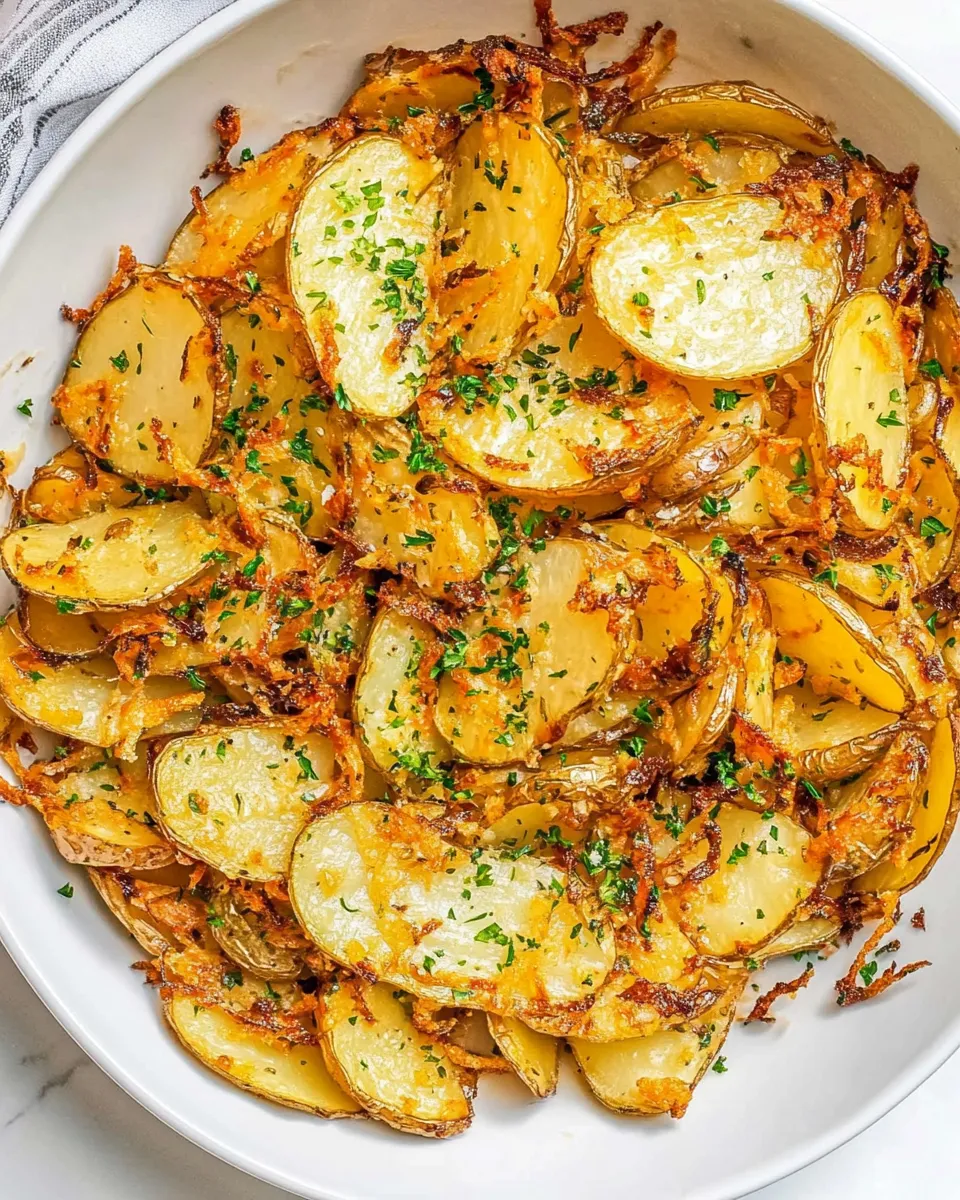
This recipe balances texture and flavor: tender interiors, crisp edges, and sweet deeply caramelized onions. It’s versatile — it stands beside roast meats, fish, or a simple green salad and shines at brunch or dinner. The ingredients are pantry-friendly and inexpensive, yet the result feels special.
They’re forgiving. A short parboil makes the outcome consistent even if your slices vary slightly in thickness. Batch cooking for browning gives you control over the crust. And they reheat well — which makes them a great make-ahead option for busy nights.
Easy Ingredient Swaps
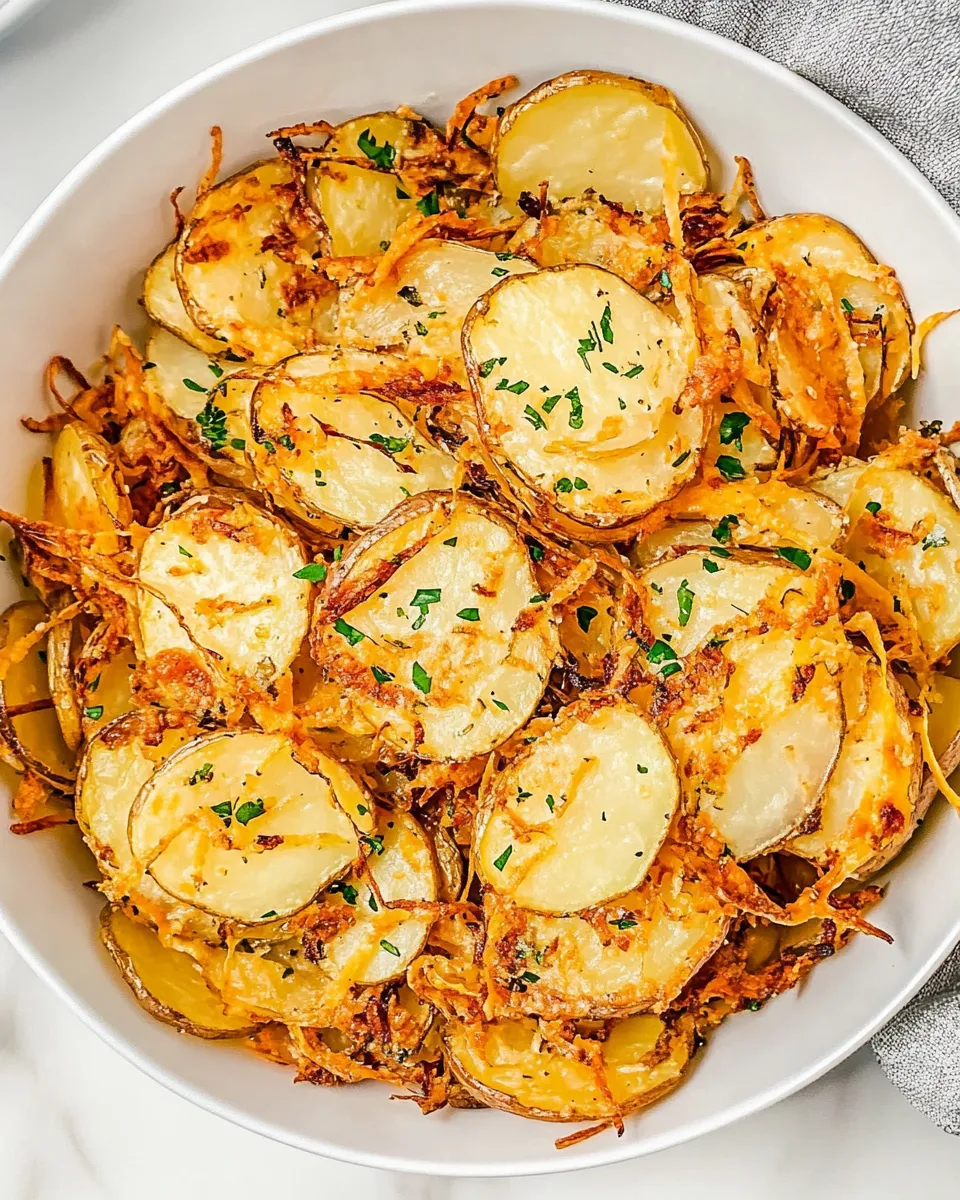
- Potatoes — Yukon Gold can be used for a creamier interior, though they crisp less than russets.
- Onion — a sweet onion or a mix of yellow and red onion will change the sweetness profile slightly but still caramelize nicely.
- Butter + Olive Oil — if dairy is a concern, use a high-smoke-point oil like avocado oil and finish with a small knob of dairy-free butter alternative for richness.
- Parsley — replace with chives for a milder oniony freshness or tarragon for a hint of anise (use sparingly).
Tools of the Trade
- Large skillet (preferably heavy-bottomed) — retains heat for even browning and prevents hot spots.
- Sharp chef’s knife — for consistent 1/4-inch potato slices; thickness controls cook time.
- Large pot — for parboiling; choose one that allows the slices to submerge without crowding.
- Colander and kitchen towels — for draining and drying the potatoes so they brown instead of steam.
- Spatula or tongs — essential for flipping without breaking the slices.
Troubleshooting Tips
Potatoes falling apart during searing
That usually means the parboil went too long. Parboil just until the potatoes are “just tender” — a firm fork bite but not yielding. Drain and allow them to steam-dry or pat them well; excess surface moisture will cause steam instead of a sear.
Onions browning too fast or burning
Reduce the heat and stir more frequently. Onions should cook low and slow to develop sweetness; high heat speeds to burning. If they start to crisp quickly, turn the heat down and give them time.
No crispy edge on potatoes
Work in batches and ensure a single layer with space between slices. Crowding drops the skillet temperature and promotes steaming. Also be patient — let a golden crust form before flipping.
Better Choices & Swaps
Choosing unsalted butter lets you control salt at the end. If you prefer a richer, nuttier finish, use European-style butter. For a lighter pan-fried texture, increase the olive oil slightly and cut back on butter, but expect less of that caramelized richness.
If you need a gluten-free or vegan option, swap the butter with a blend of neutral oil and a vegan butter alternative and finish with extra chopped herbs for brightness. For a sharper finish, add a splash of white wine or a squeeze of lemon to the pan after returning the potatoes and onions — it brightens the richness without changing the core method.
Flavor Logic
Three main flavor moves drive Lyonnaise potatoes: the starch of russets gives structure and browns crisply; butter supplies richness and Maillard flavor; and slow-cooked onions contribute sweet, savory depth. Olive oil raises the butter’s smoke point so you can get a proper sear without bitter burned butter.
Parsley is the counterpoint — it adds freshness and color. Salt and pepper at the end let you judge seasoning against the caramelized aromatics rather than over-salting early in the process.
Make Ahead Like a Pro
Parboil and cool the potato slices, then refrigerate them in a single layer on a tray for up to 24 hours. Caramelize the onions and store them separately. When you’re ready, brown the chilled potatoes in the skillet (they’ll take a minute longer), add the onions, warm through, season, and serve.
For larger batches, finish cooking all potatoes and onions, cool them, then reheat in a 375°F oven on a sheet pan until warmed and crisped, about 10–15 minutes. Re-crisping in a hot oven helps restore a fresh-cooked texture without re-frying.
Handy Q&A
Q: Can I skip parboiling?
A: Not recommended. Parboiling assures the centers are tender without overcooking the edges. Skipping it will leave you with raw centers or burnt outsides.
Q: How thin should the slices be?
A: The recipe calls for 1/4-inch-thick rounds. That thickness gives a quick parboil and a good balance between crisp edge and creamy center.
Q: Can I make these in the oven?
A: Yes — arrange parboiled slices in a single layer on a sheet, dot with butter or oil, roast at 425°F until golden, then toss with caramelized onions. The skillet method gives more direct browning, though.
Q: How much salt should I use?
A: Add salt to the boiling water to season the potatoes from within, and then salt to taste at the end. Start with a light hand when finishing; you can always add more.
The Last Word
Lyonnaise potatoes are a humble show-off: minimal ingredients, maximal payoff. They reward patience — slow onions, careful parboiling, and deliberate browning. Follow the steps, respect the temperatures, and you’ll have a side dish that feels like a celebration of simple technique. Serve them hot, finish with parsley, and enjoy the small, perfect contrast of creamy interiors and golden, buttery edges.
Lyonnaise Potatoes
Ingredients
Ingredients
- 3 poundsrusset potatoes
- 1 largeonion thinly sliced
- 4 tablespoonsunsalted butter divided
- 2 tablespoonsextra virgin olive oil
- 2 tablespoonsfresh parsley chopped
- salt and pepper to taste
Instructions
Instructions
- Peel the potatoes and slice them into 1/4-inch-thick rounds. Place the slices in a large pot, cover with cold water, and add salt to the water.
- Bring to a boil over high heat, then cook until the potatoes are just tender but still hold their shape, about 5 minutes. Drain in a colander and let sit briefly to steam-dry or pat dry with a kitchen towel.
- Heat a large skillet over medium heat and melt 2 tablespoons of the butter. Add the thinly sliced onion and cook, stirring occasionally, until the onion is soft and caramelized, about 15–20 minutes. Reduce the heat if the onions begin to brown too quickly.
- Remove the caramelized onions from the skillet and set them aside on a plate.
- In the same skillet, heat the remaining 2 tablespoons of butter and the 2 tablespoons extra-virgin olive oil over medium-high heat until the butter melts and the oil shimmers.
- Add potato slices in a single layer (work in batches if needed so they are not crowded). Cook until golden brown on the bottom, about 4–6 minutes, then flip and cook the other side until golden, another 4–6 minutes.
- Transfer each browned batch to a plate as it finishes and continue with the remaining potatoes.
- When all potato slices are browned, return all potatoes to the skillet along with the caramelized onions. Reduce heat to medium and gently toss or stir to combine and heat through, about 1–2 minutes.
- Season with salt and pepper to taste, sprinkle with the chopped fresh parsley, and serve.
Equipment
- All-Clad Hard Anodized Nonstick Fry Pan Set 2
Notes
If the potatoes start to brown too quickly, reduce the heat to avoid burning while ensuring they cook through.