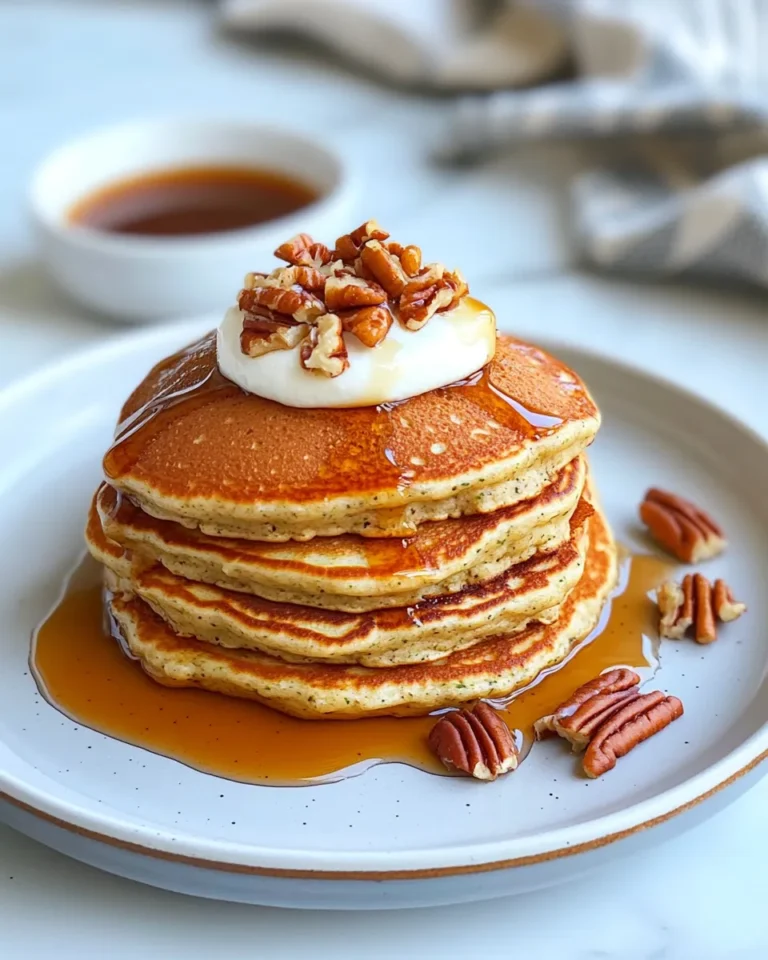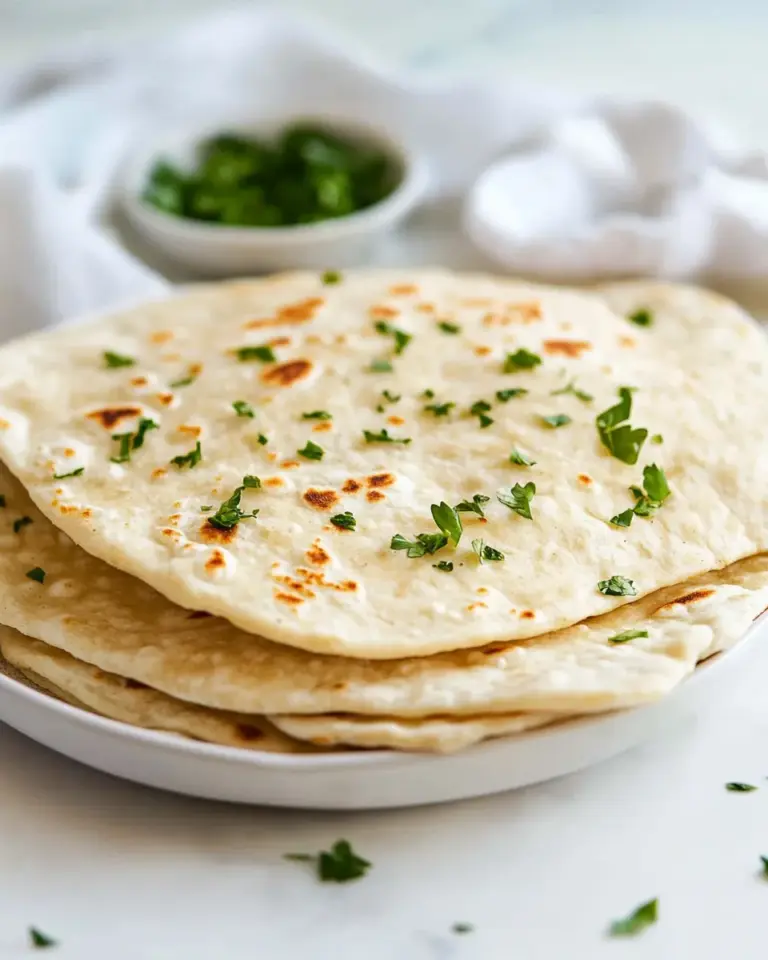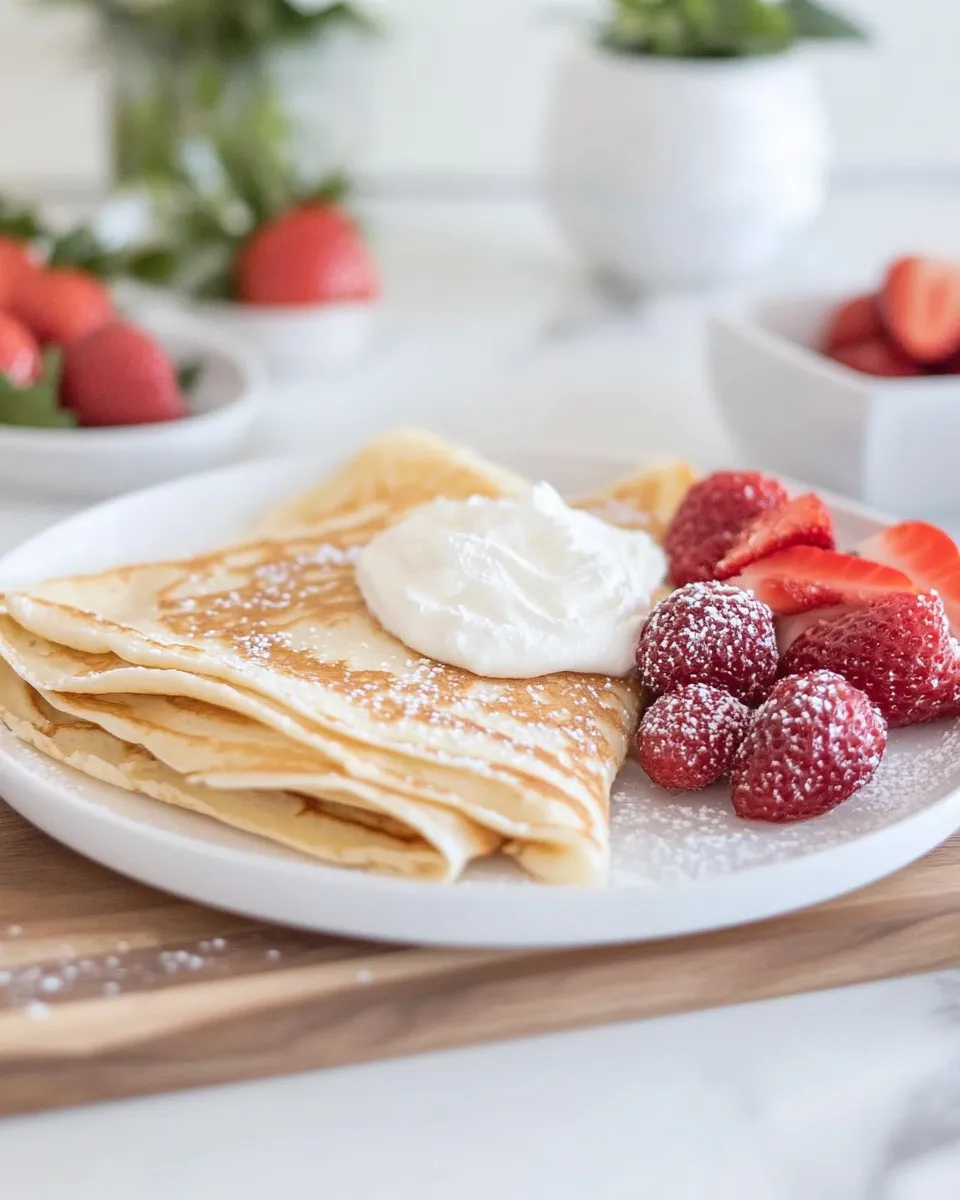
These Norwegian pancakes are thin, tender, and quick to make — the kind you can roll, fill with jam, and eat without ceremony. They live somewhere between a crepe and a classic American pancake: delicate, pliable, and lightly buttery. They don’t need elaborate toppings to be delicious; a smear of your favorite jam is more than enough.
I make these when I want something comforting that doesn’t take all morning. The batter comes together in minutes, and the cooking rhythm is almost meditative: a little butter in the pan, a pour, a flip, a roll. If you like a pancake you can roll up and eat with your hands or serve on a plate for breakfast, brunch, or a light dessert, these are exactly that.
Below I walk through everything you’ll need, the exact step-by-step method, troubleshooting, and a few seasonal variations. I promise practical advice — nothing fussy — so you get consistent, rollable pancakes every time.
What You’ll Gather
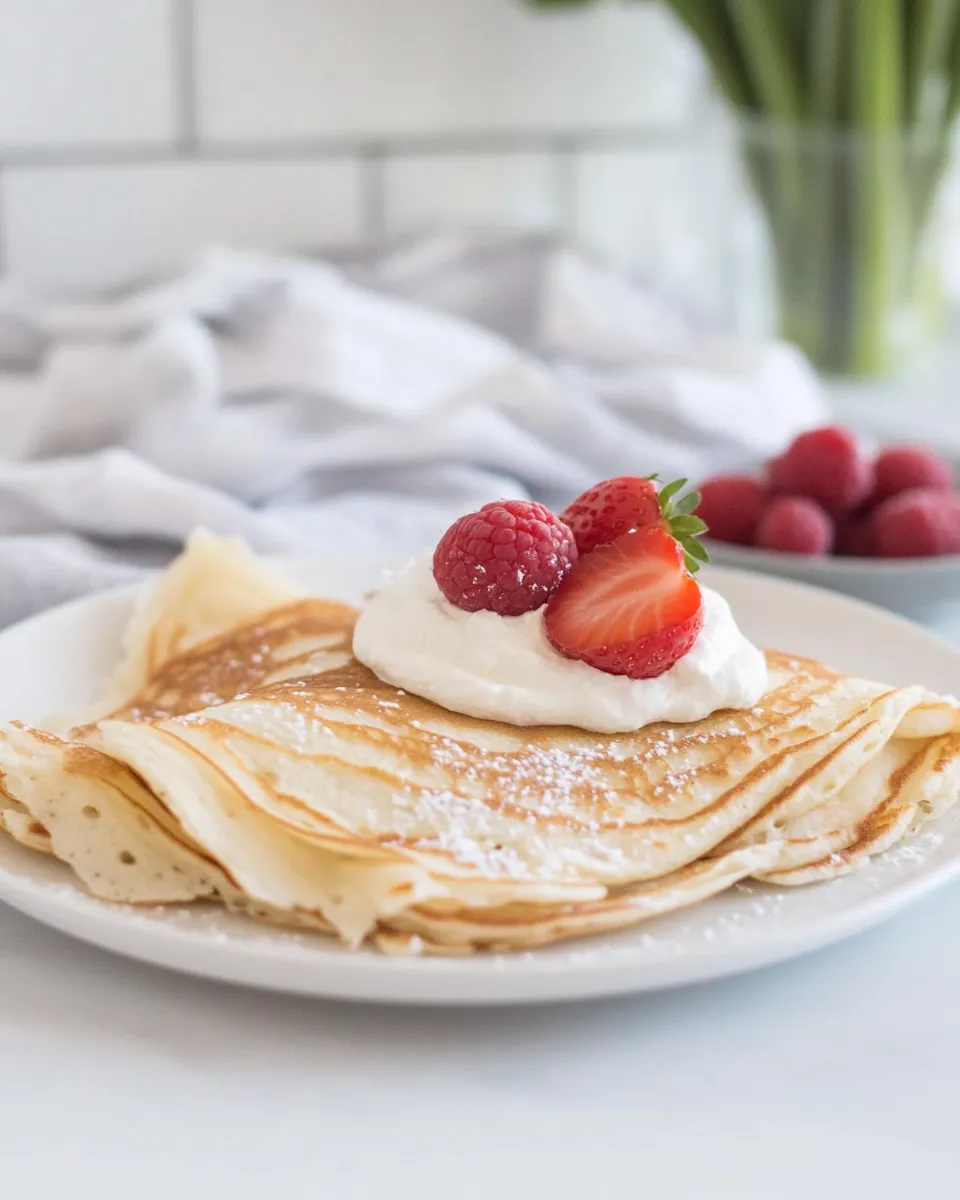
Gather the ingredients and a few basic tools before you start. Having the butter and pan ready makes the cooking flow go smoothly. These pancakes are forgiving, but preparation keeps the batter smooth and the cooking quick.
Ingredients
- 3 large eggs — provide structure, richness, and a bit of lift.
- 1 cup all-purpose flour — the base; measure by spooning into the cup for accuracy.
- ½ teaspoon salt — balances flavor and brightens the batter.
- 2 tablespoons melted butter — adds flavor and helps the batter spread.
- 1½ cups milk — thins the batter to a pourable consistency; use whole or 2% for the best texture.
- additional butter for frying the pancakes — for coating the pan and giving each pancake a light golden edge.
- jam, for serving — classic topping; rub it onto the rolled pancakes or serve alongside.
Mastering Norwegian Pancakes: How-To
- In a large bowl, beat 3 large eggs until well combined.
- Add 1 cup all-purpose flour and ½ teaspoon salt; whisk until the mixture is thick and there are no large dry pockets of flour.
- Whisk in 2 tablespoons melted butter until incorporated.
- Gradually whisk in 1½ cups milk until the batter is smooth and free of lumps.
- Heat a nonstick skillet or griddle over medium heat and add a little of the additional butter, swirling to coat the surface.
- Pour about ¼ cup batter per pancake into the hot skillet (or pour multiple ¼-cup portions at once on a larger griddle). Cook until the top appears set and edges look dry, about 1–2 minutes—adjust the heat if pancakes brown too quickly.
- Flip each pancake and cook the other side until golden, about 30–60 seconds more.
- Transfer cooked pancakes to a plate and keep warm while you cook the remaining batter, adding more butter to the skillet as needed.
- To serve, roll the pancakes with a fork or plate as desired and top with jam.
Why You’ll Love This Recipe
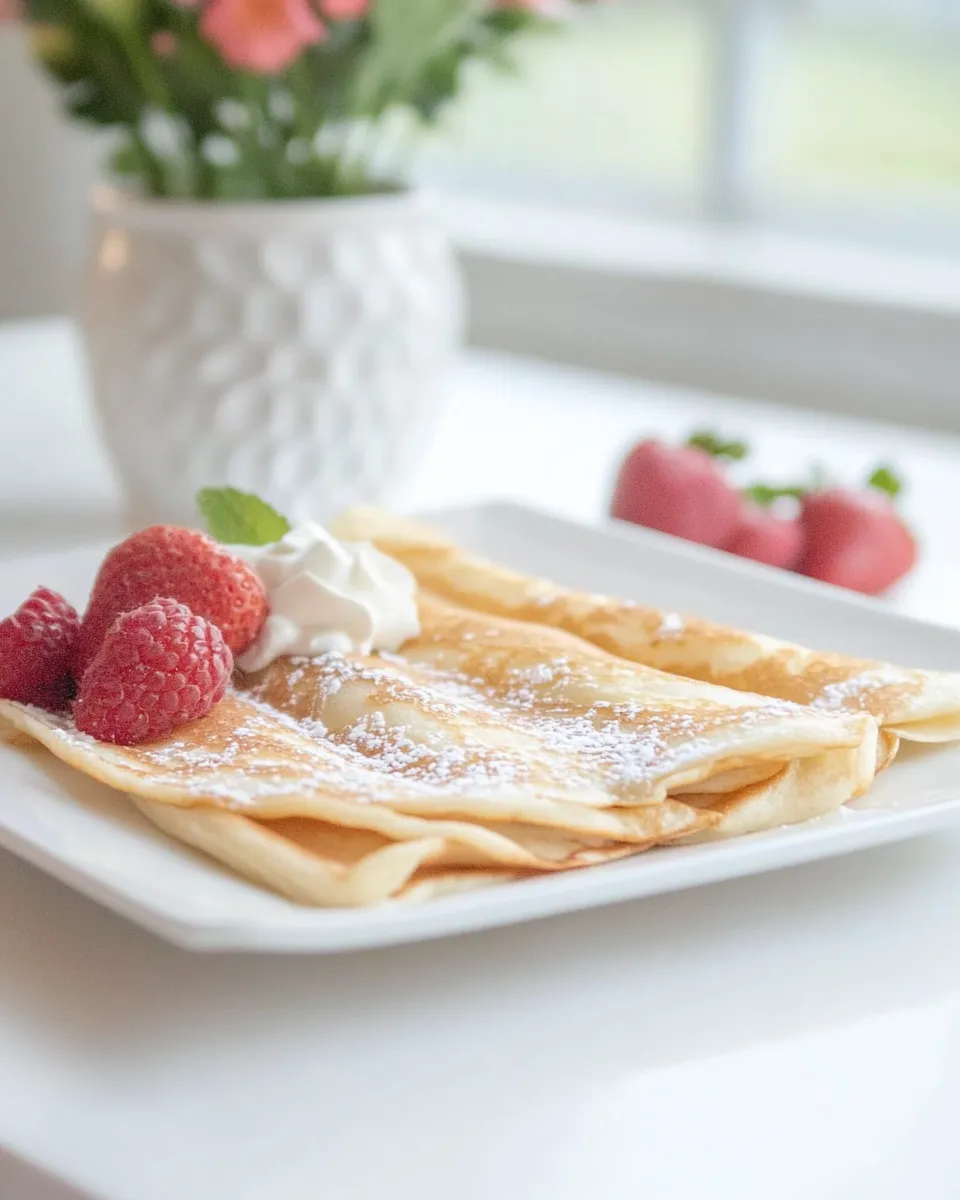
They’re fast. From cracked eggs to the first warm roll on your plate takes less than 25 minutes when you’re practiced. The texture is silky and thin, which makes the pancakes ideal for rolling around jam or delicate fillings without falling apart.
They’re flexible. Serve them sweet with jam and powdered sugar, or keep them simple and savory with a smear of butter and smoked salmon. The flavor is subtle — butter, egg, and a hint of salt — which lets whatever you pair them with shine.
They’re also a crowd-pleaser. Kids love rolling them up; adults love how light they feel after a big weekend. They’re a reliable standby when you want something homemade but not fussy.
Vegan & Vegetarian Swaps
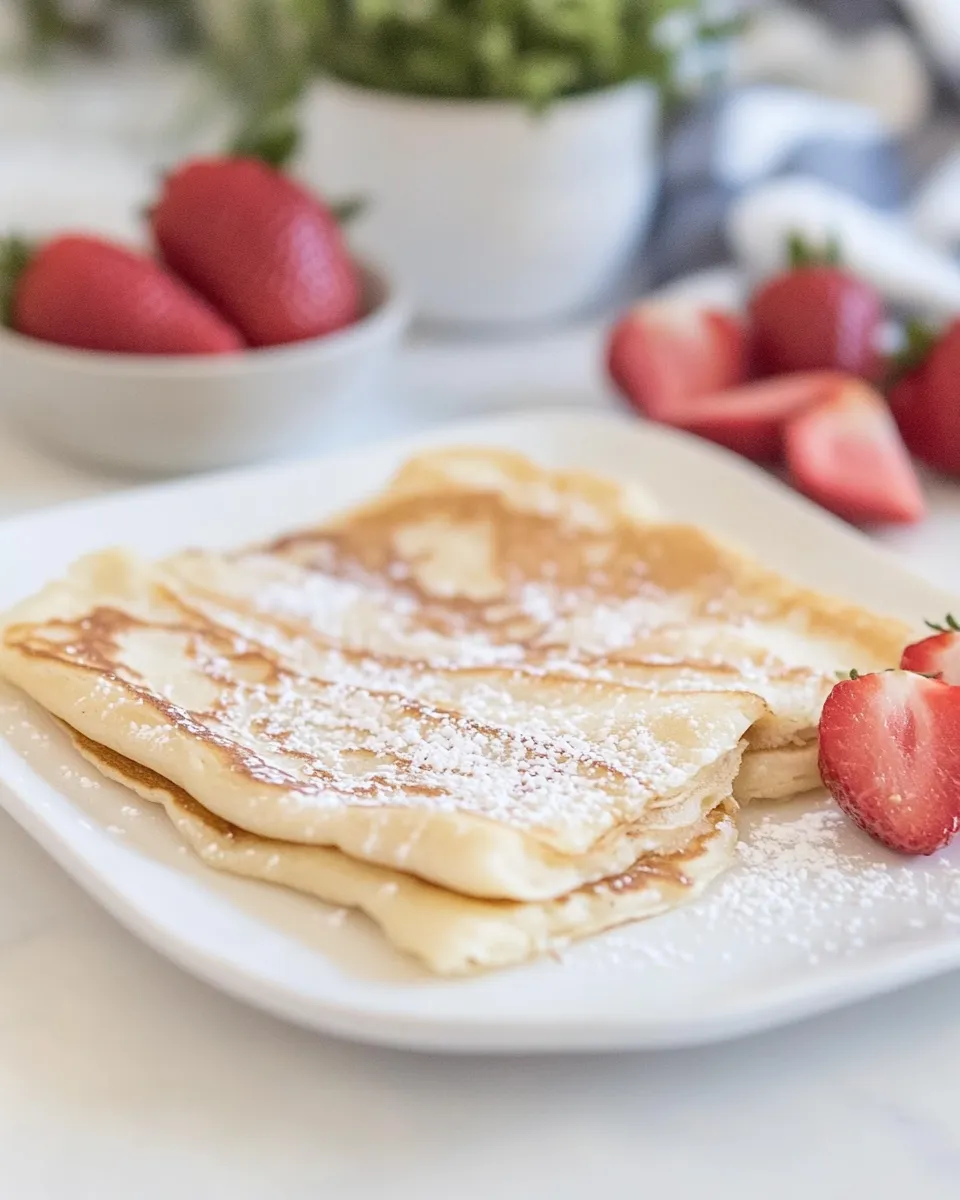
Vegetarian? You’re already set — eggs and dairy are part of the original recipe and give the pancakes their classic texture.
Vegan? A few adjustments will get you close. Replace the milk with an unsweetened plant milk of your choice (soy or oat will behave most like dairy). For the eggs, try a flax egg (1 tablespoon ground flax + 2.5 tablespoons water per egg, let sit until gelled) or aquafaba (3 tablespoons aquafaba per egg). Use a vegan butter or a neutral oil in place of the melted butter, and cook in a little oil on the griddle so you still get a lightly crisp edge.
Hardware & Gadgets
You don’t need anything fancy. A smooth, even-heating nonstick skillet is ideal and prevents sticking when you swirl butter into the pan. If you make these often, a flat griddle gives you more cooking real estate so you can pour multiple ¼-cup portions at once.
Other helpful tools:
- Whisk — for lump-free batter.
- Measuring cups and spoons — accurate dry and liquid measures keep the batter consistent.
- Rubber spatula or thin metal spatula — to flip without tearing.
- Small ladle or ¼-cup measure — for consistent pancake size.
Things That Go Wrong
Pancakes too thick and heavy: you likely didn’t whisk in the milk gradually or the flour was packed into your measuring cup. Thin the batter with a tablespoon or two of milk until pourable but still slightly viscous.
Pancakes tearing when you flip: the pan may be too hot, or you flipped too soon. Wait until the top looks set and the edges look dry. Use a thin spatula and a confident motion.
Pancakes browning too fast: reduce the heat by a notch. These cook quickly — the inside sets fast, so low and steady prevents overly dark outsides and raw centers.
Variations by Season
Spring: Fold in a spoonful of lightly mashed strawberries or top with a warm rhubarb compote. The light batter lets fruity flavors sing.
Summer: Serve rolled with fresh berries and a drizzle of lemon-infused sugar or a simple berry jam. Add chopped mint to the jam for brightness.
Autumn: Fill with warm apple butter or spiced pear compote and a light dusting of cinnamon. A smear of plum jam also feels seasonal and indulgent.
Winter: Serve with thick berry preserves, or go savory with smoked salmon, a smear of crème fraîche (or a plant-based spread), and a sprinkle of fresh dill.
Pro Tips & Notes
Timing & Heat
Keep the heat on medium or slightly below. A too-hot pan ruins the pacing: outsides go brown before the middle cooks. If your skillet is uneven, rotate it occasionally or move pancakes around to finish cooking evenly.
Batter & Rest
You can use the batter right away. If you have time, let it rest 10–15 minutes in the fridge — the flour hydrates and you’ll get a slightly silkier texture. If it thickens during a rest, whisk in a splash of milk to loosen it.
Portion Control
Use a ¼-cup measure for uniform pancakes. That helps with consistent cooking time and makes rolling simpler.
Keeping Warm
Keep cooked pancakes in a single layer on a plate and cover loosely with foil, or place in a low oven (around 200°F/95°C) on an oven-safe plate while you finish the batch.
Freezer-Friendly Notes
Cool pancakes completely, then stack them with parchment or wax paper between each one to prevent sticking. Place the stack in an airtight bag or container and freeze for up to 2 months.
To reheat, defrost in the fridge for a few hours or reheat straight from frozen in a low oven or a warm skillet. A quick 20–30 second zap in the microwave works in a pinch, but the oven or skillet retains better texture.
Ask & Learn
Q: Can I make the batter ahead? A: Yes. The batter can sit in the fridge for up to 24 hours. It may thicken slightly; stir or whisk in a tablespoon of milk if needed.
Q: Why does the recipe use melted butter rather than oil? A: Melted butter adds a richer flavor and helps the batter spread evenly. You can use neutral oil if you prefer a less buttery taste.
Q: How thin should they be? A: Pour about ¼ cup per pancake — the goal is a thin circle that’s easy to roll. If you like them even thinner, use a little less batter, but the cook time will be slightly shorter.
Ready to Cook?
These Norwegian Pancakes are forgiving, quick, and endlessly adaptable. Keep the routine simple: whisk, pour, cook, flip, and roll. Serve warm with jam or any topping you love. They make a weekday breakfast feel special and a weekend brunch effortlessly cozy.
If you try them, let me know which jam you chose and whether you kept them classic or gave them a seasonal twist. Happy cooking — and enjoy rolling up a little bit of comfort.
Norwegian Pancakes
Ingredients
Ingredients
- 3 largeeggs
- 1 cupall purpose flour
- 1/2 teaspoonsalt
- 2 tablespoonsmelted butter
- 1 1/2 cupsmilk
- additional butter for frying the pancakes
- jam for serving
Instructions
Instructions
- In a large bowl, beat 3 large eggs until well combined.
- Add 1 cup all-purpose flour and ½ teaspoon salt; whisk until the mixture is thick and there are no large dry pockets of flour.
- Whisk in 2 tablespoons melted butter until incorporated.
- Gradually whisk in 1½ cups milk until the batter is smooth and free of lumps.
- Heat a nonstick skillet or griddle over medium heat and add a little of the additional butter, swirling to coat the surface.
- Pour about ¼ cup batter per pancake into the hot skillet (or pour multiple ¼-cup portions at once on a larger griddle). Cook until the top appears set and edges look dry, about 1–2 minutes—adjust the heat if pancakes brown too quickly.
- Flip each pancake and cook the other side until golden, about 30–60 seconds more.
- Transfer cooked pancakes to a plate and keep warm while you cook the remaining batter, adding more butter to the skillet as needed.
- To serve, roll the pancakes with a fork or plate as desired and top with jam.
Equipment
- Large Bowl
- Whisk
- nonstick skillet or griddle
- Spatula
- Plate