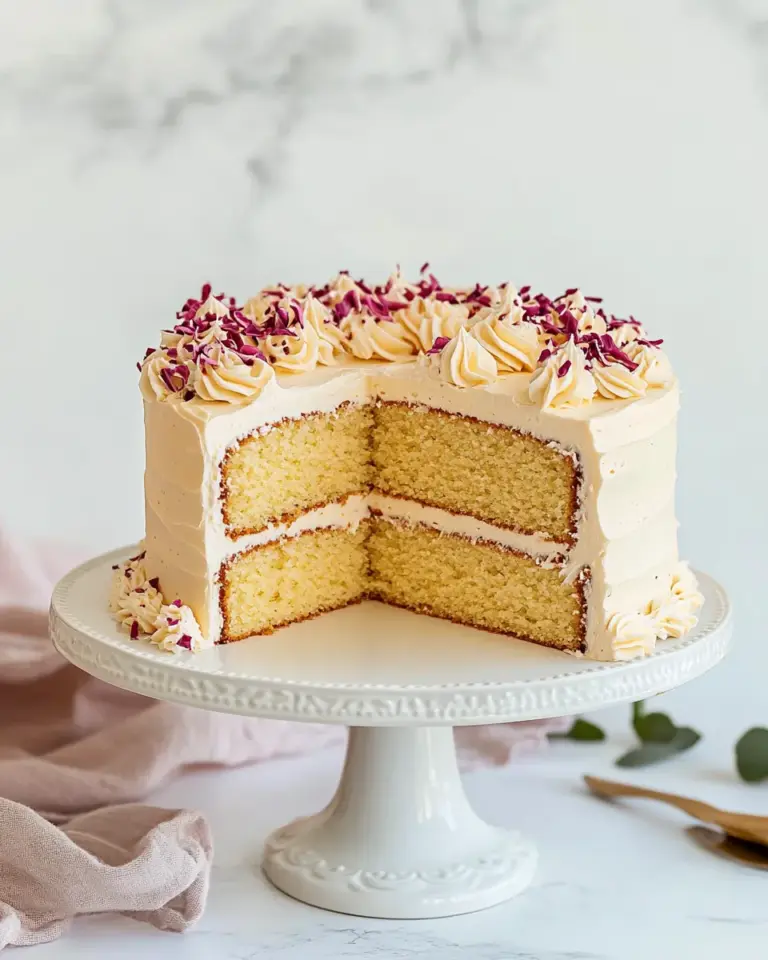
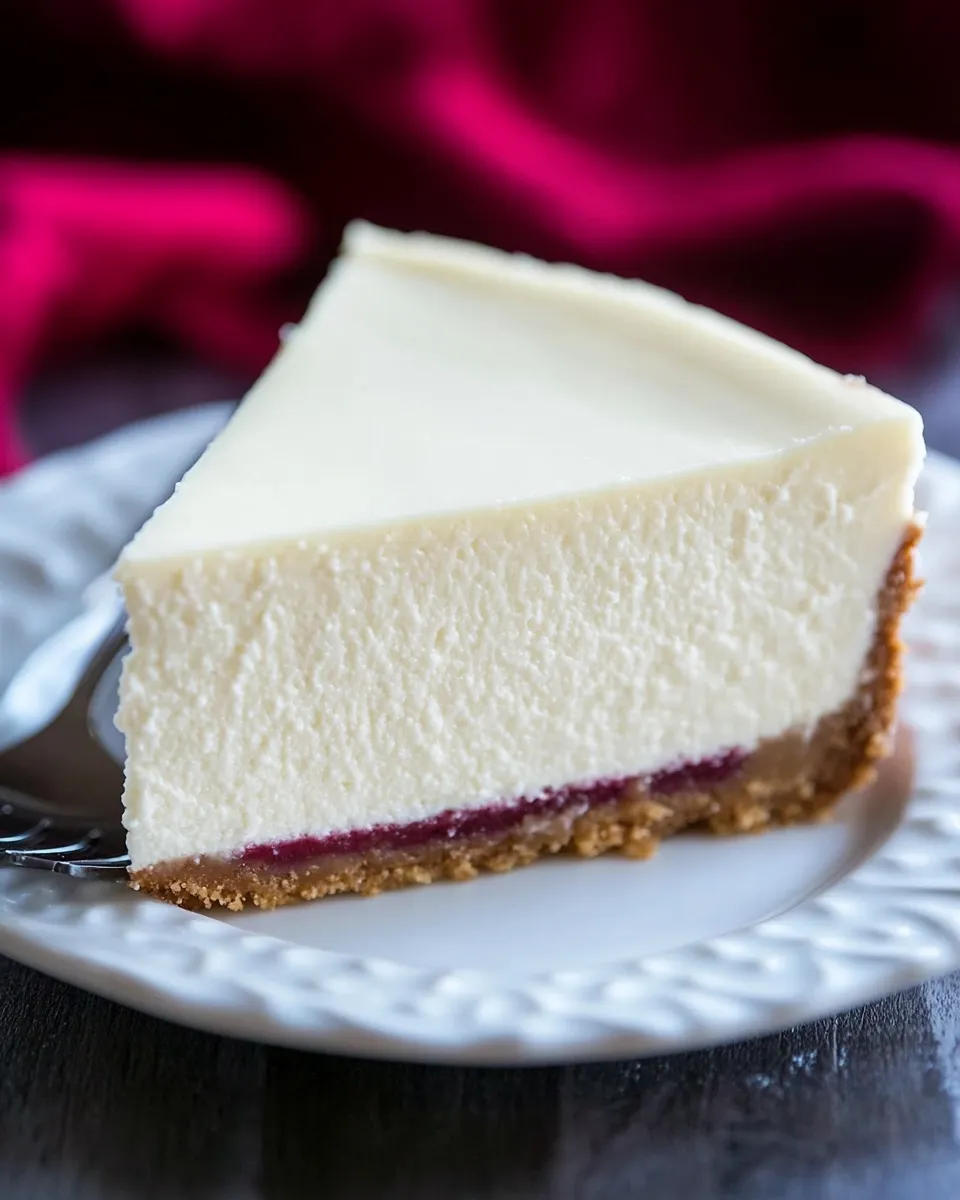
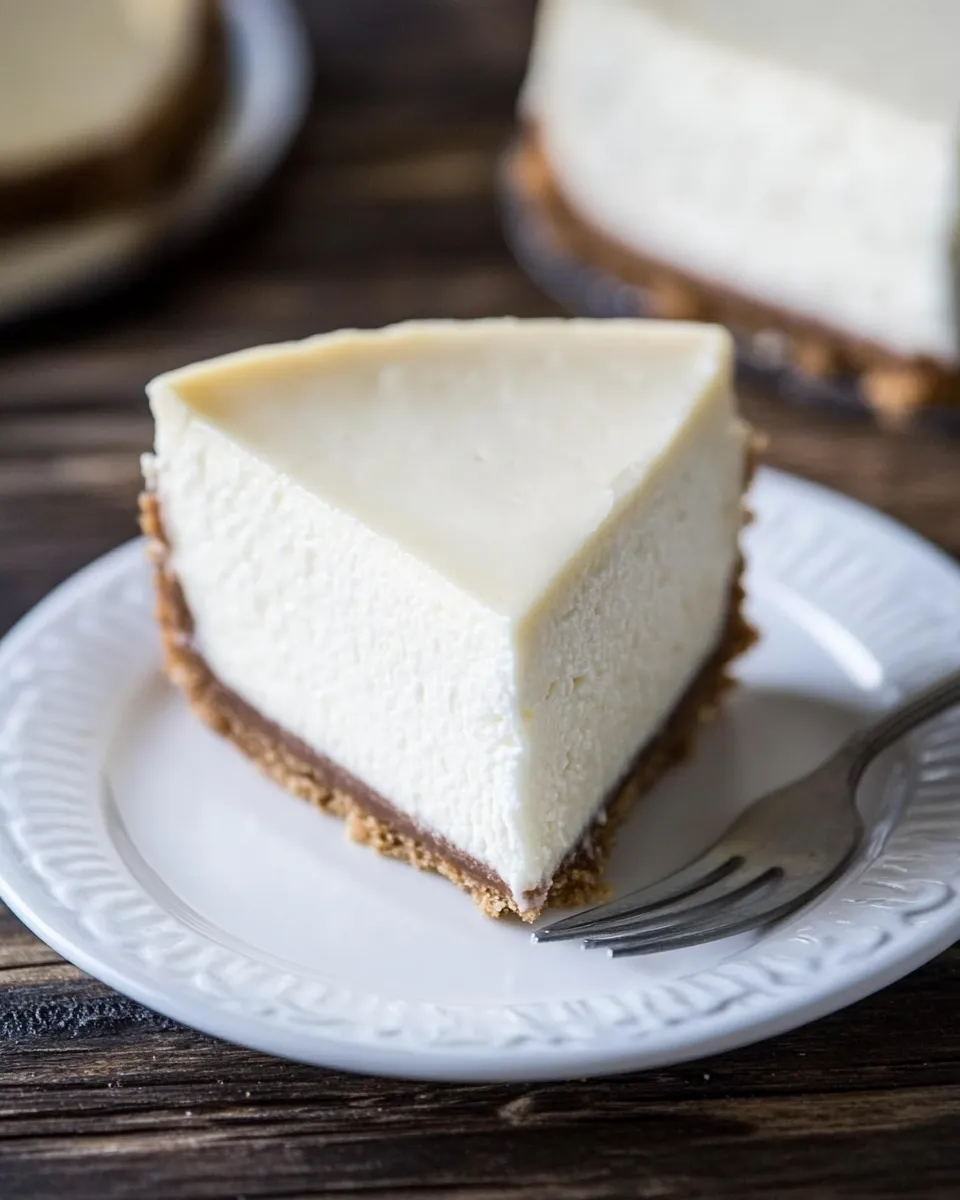
I love a good cheesecake because it’s the kind of dessert that feels special without being fussy. This recipe makes a dense, creamy classic with a crisp graham crust and a silky interior that sets firm after a long, patient chill. It’s reliable and forgiving if you follow the water-bath step and the cooling routine.
There are a few straightforward techniques that change everything — room-temperature cream cheese, careful mixing speeds, a sealed foil wrap for the water bath, and an overnight chill. I’ll walk you through each of those steps so you get a near-perfect slice every time.
If you bake a lot, you’ll appreciate how this recipe scales and how its flavor base accepts toppings or citrus notes without losing structure. Read through the steps, gather your ingredients, and I’ll guide you from crust to slice with practical tips that actually matter.
Ingredient Checklist
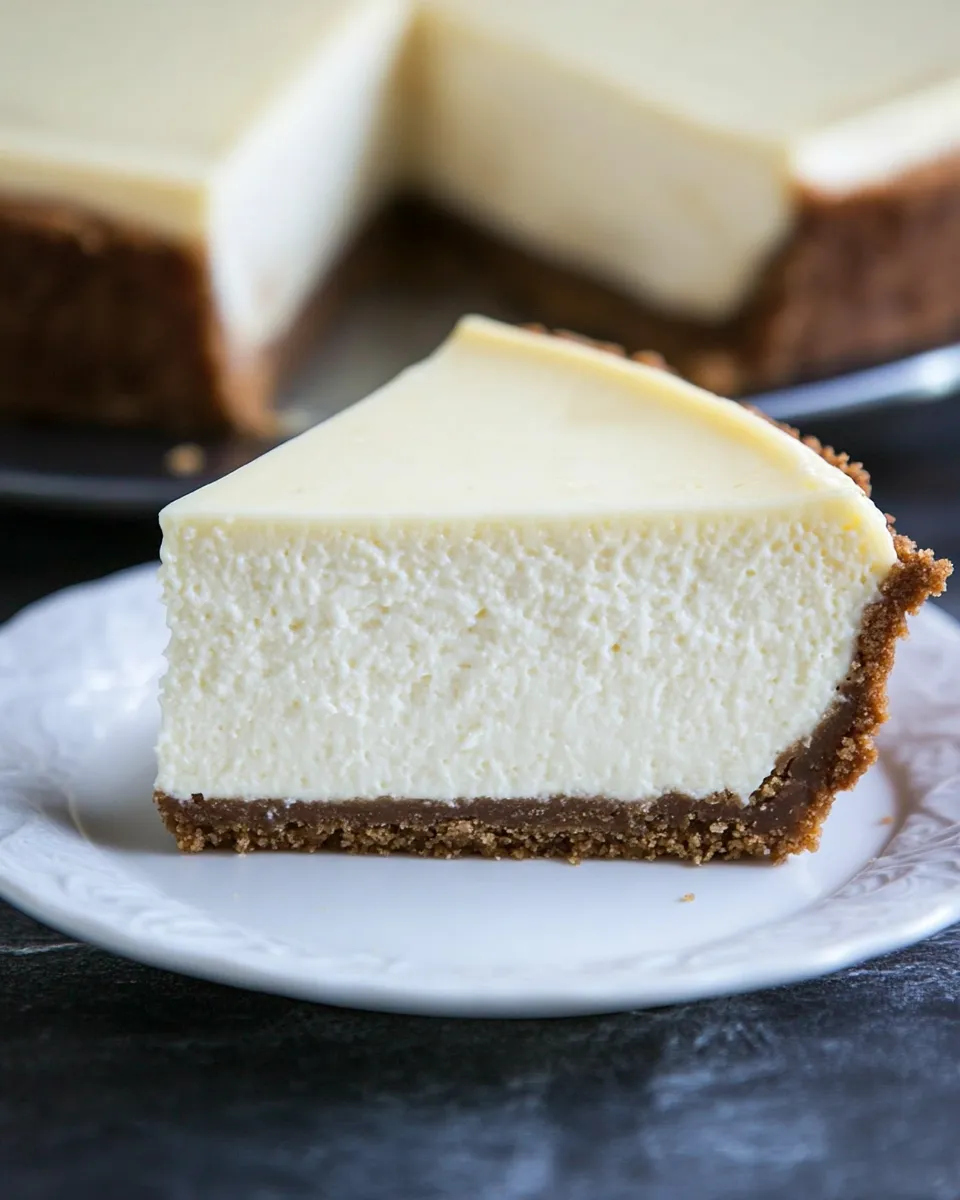
- 1 1/2 cups graham cracker crumbs — from 12 whole crackers; gives you a sturdy, flavorful crust.
- 6 Tbsp unsalted butter, melted — binds the crumbs and keeps the crust tender; use unsalted to control sodium.
- 1 Tbsp granulated sugar — sweetens the crust slightly and helps it brown.
- 2 1/4 lb cream cheese, room temperature (4 1/2 packages, 8-oz each) — the star of the cake; room temperature yields the smoothest batter.
- 1 1/4 cups granulated sugar — balances the tang of the cream cheese without making it overly sweet.
- 6 large eggs, room temperature — add structure and silkiness; room temperature helps them incorporate evenly.
- 1/4 cup sour cream — adds moisture and a slight tang that smooths the finish.
- 1/2 Tbsp vanilla extract — rounds and enhances the overall flavor.
Make Cheesecake: A Simple Method
- Position a rack in the center of the oven and preheat to 350°F. In a medium bowl, combine the 1 1/2 cups graham cracker crumbs, 6 Tbsp melted unsalted butter, and 1 Tbsp granulated sugar; stir until the crumbs are evenly moistened.
- Press the crumb mixture firmly into the bottom and slightly up the sides of a 9″ springform pan. Bake on the center rack at 350°F for 8 minutes. Remove from the oven and let the crust cool to room temperature on a wire rack.
- Lay two large sheets of extra-wide heavy-duty foil on the counter. Set the cooled springform pan in the center of the foil and fold the foil up and around the sides of the pan, covering the bottom and sides completely and ensuring there are no rips or holes. Fan the foil slightly at the top so the rim of the pan remains clear for the cheesecake to rise.
- Preheat the oven to 450°F.
- In the bowl of a stand mixer fitted with the paddle attachment, beat the 2 1/4 lb cream cheese and 1 1/4 cups granulated sugar on medium-high speed for about 5 minutes, until completely smooth. Scrape down the bowl and paddle as needed.
- Reduce mixer speed to medium and add the 6 large eggs one at a time, mixing until each egg is incorporated before adding the next. Scrape down the bowl as needed.
- Reduce speed to low and add the 1/4 cup sour cream and 1/2 Tbsp vanilla extract. Mix just until incorporated. Do not overmix.
- Pour the batter into the cooled crust in the foil-wrapped springform pan and smooth the top if needed.
- Bring a pot of water to a boil (use more than you think you’ll need). Place the foil-wrapped springform pan in a deep roasting pan. Carefully pour the hot water into the roasting pan until it reaches about 1 1/2″ to 2″ up the sides of the springform pan.
- Carefully transfer the roasting pan to the center rack of the oven. Bake at 450°F for 15 minutes. Without opening the oven door, reduce the oven temperature to 225°F and continue baking for an additional 60–75 minutes, or until the center of the cheesecake still wobbles slightly when you gently tap the pan.
- Remove the roasting pan from the oven and let the cheesecake rest in the roasting pan with the water still around it for 45 minutes.
- After 45 minutes, lift the springform pan out of the water bath and transfer it to a wire rack to cool completely.
- Once cooled, cover the pan loosely with plastic wrap, taking care that the wrap does not touch the surface of the cheesecake, and refrigerate overnight to fully set before slicing.
Why Cooks Rave About It
This cheesecake nails three essential things: texture, flavor, and reliability. The high ratio of cream cheese to other dairy gives it a dense, luxurious mouthfeel without being chalky. The sour cream keeps the center moist and adds a clean tang that balances the sugar. Using a water bath and a two-phase bake — high heat to set the edges, then low and slow — reduces cracks and gives you an even bake from edge to center.
It’s also a flexible base. The neutral vanilla-forward batter accepts a swirl of fruit, a brush of citrus, or a salted caramel pour without losing its structural integrity. That makes it a top pick for both simple family desserts and more dressed-up dinner-party endings.
Ingredient Swaps & Substitutions
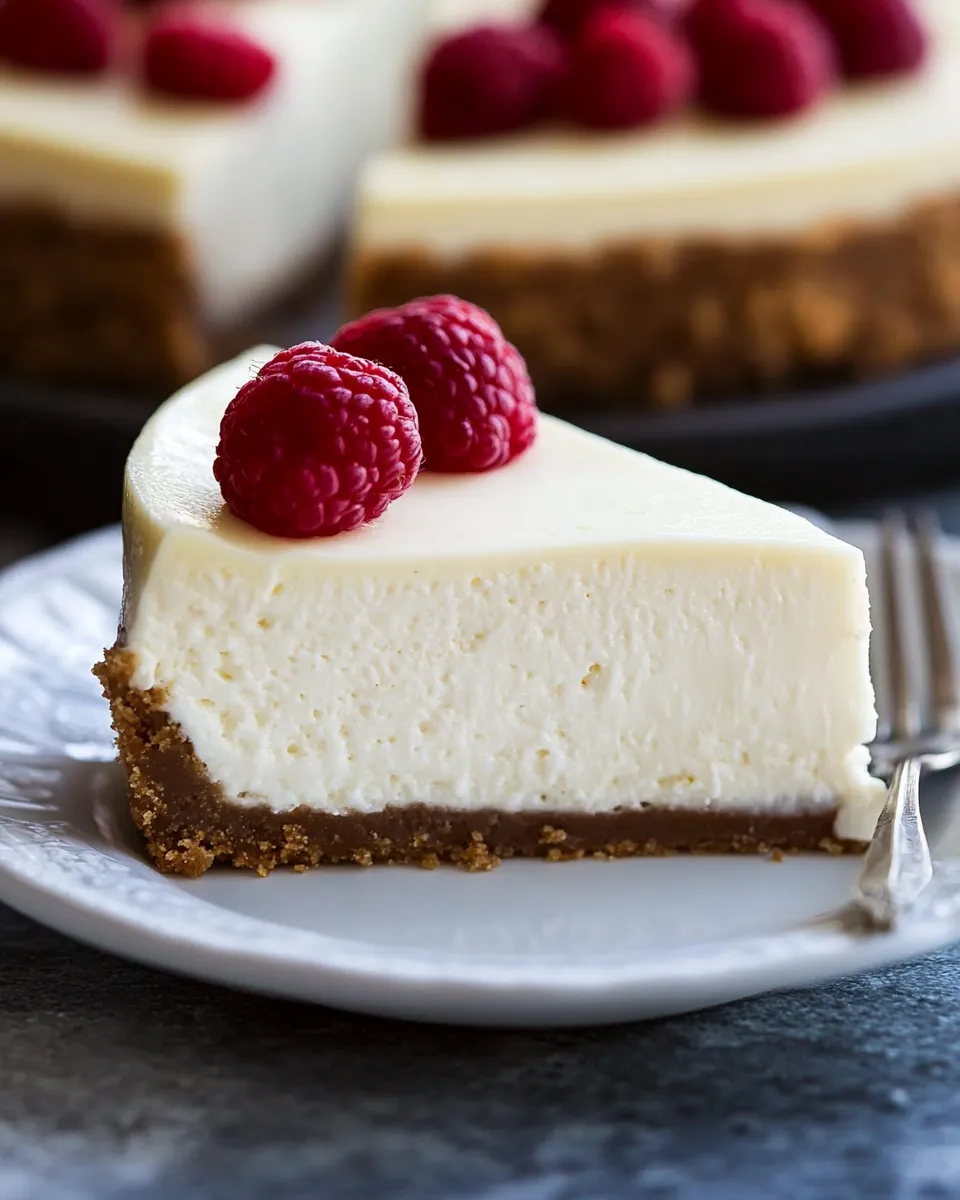
- Graham cracker crumbs — substitute with an equal amount of digestive biscuits or chocolate cookies for a different flavor profile.
- Unsalted butter — you can use salted butter; reduce or omit added salt elsewhere in the menu.
- Cream cheese — full-fat cream cheese is ideal. Neufchâtel (lower fat) will change texture and firmness; avoid if you want a classic mouthfeel.
- Sour cream — plain Greek yogurt can work in a pinch but will slightly alter tang and texture.
- Vanilla extract — try 1/2 Tbsp lemon zest for a brighter profile, but keep the extract if you also plan flavored toppings.
Gear Up: What to Grab
- 9″ springform pan — essential for unmolding cleanly; make sure the latch seals well.
- Stand mixer with paddle attachment — yields the smoothest batter. A hand mixer is acceptable; beat in a large bowl and scrape often.
- Deep roasting pan — for the water bath. It needs to be large and deep enough to hold hot water around the springform pan.
- Extra-wide heavy-duty foil — prevents water from seeping into the pan; double-wrap to be safe.
- Wire rack — for cooling the crust and the finished cake evenly.
Mistakes That Ruin Cheesecake
Overmixing the batter, adding eggs too quickly, or using cold ingredients are the most common killers. Overmixing incorporates air that makes the cake puff and then crack as it cools. Cold cream cheese lumps and creates a grainy texture. Skipping the water bath or having a foil with holes lets water seep in and ruin the cake.
Baking at one steady high temperature is another misstep. This recipe uses a brief high-heat period, then a long gentle bake. That initial burst helps set the edges while the low temperature finishes the center slowly. Ignoring the resting and overnight chill also leads to a cheesecake that’s too soft to slice cleanly.
Seasonal Ingredient Swaps
- Spring — fold in a tablespoon of lemon zest into the batter and top with macerated strawberries.
- Summer — swirl in a lightly cooked raspberry compote before baking for a ribbon of fruit.
- Autumn — add 1 tsp cinnamon to the crust and serve with a warm spiced apple compote.
- Winter — mix 2 Tbsp dark cocoa into half the batter to create a marbled chocolate-cheesecake, or top with salted caramel and toasted pecans.
Flavor Logic
This cheesecake works because it balances fat, acid, and sugar. The cream cheese provides fat and richness. Sugar mellows the tang. Sour cream adds a touch of acid and moisture. Vanilla extracts bridge flavors and amplifies perceived sweetness without adding more sugar. The graham crust contributes both sweetness and texture contrast.
When adding mix-ins or toppings, think about how they interact: bright fruits cut through richness, while caramel and nuts enhance it. Strong spices such as cinnamon or ginger should be used sparingly so they don’t overpower the cheesecake’s creamy base.
Store, Freeze & Reheat
Store:
- Refrigerator: Cover loosely with plastic wrap, ensuring it doesn’t touch the surface, and refrigerate. Properly stored, it will keep well for up to 4 days with minimal quality loss.
Freeze:
- Whole cake: After chilling overnight, wrap the whole springform pan in plastic wrap, then foil, and freeze. Remove the outer wrapping and thaw in the refrigerator overnight when ready to serve.
- Slices: Wrap individual slices in plastic wrap and place them in an airtight container or freezer bag. Thaw in the refrigerator for several hours or overnight.
Reheat:
- Cheesecake is best served cold or at cool room temperature. If you prefer it slightly warmer, let slices sit at room temperature for 15–20 minutes. Avoid microwaving — it can make textures grainy and cause weeping.
Your Top Questions
How do I prevent cracks?
Use room-temperature ingredients, don’t overmix, and avoid rapid temperature changes. The water bath and slow cool-down in the pan reduce cracking. If a small crack appears, cover it with fruit compote or ganache.
Can I make it without a springform pan?
A springform pan is strongly recommended. A standard cake pan can work, but unmolding will be difficult and the presentation won’t be the same. If you must use a non-springform, line with parchment and be very careful when removing.
Why do recipes call for room-temperature eggs and cream cheese?
Room-temperature ingredients incorporate more evenly and reduce the risk of lumps or overmixing. Cold ingredients require more mixing to become smooth, which can add air and cause texture problems.
What’s the role of the high-temperature pre-bake?
The initial 450°F step quickly sets the outer ring of the cheesecake so the structure holds while the center cooks slowly. After 15 minutes, reducing to 225°F finishes the cake without drying or cracking.
Make It Tonight
If you want this on the table tomorrow, start this afternoon. Make the crust first and give it time to cool while you bring the cream cheese and eggs to room temperature. The bake and the resting time take a few hours, and an overnight chill finishes the texture.
Plan for about 30 minutes of prep, roughly 1 hour 45 minutes of active oven time (including the two-temperature sequence), plus the 45-minute in-bath rest and an overnight chill. The timing might feel long, but every minute matters for the smooth, dense texture you expect.
Follow the steps, be patient with the chill, and slice with a hot, dry knife for clean pieces. Then serve plain or top as you please — a simple fresh berry compote is my go-to. Enjoy the process and the payoff: a classic, perfected Cheesecake that’s worth the effort.

Perfect Cheesecake Recipe
Ingredients
Ingredients
- 1 1/2 cupsgraham cracker crumbs from 12 whole crackers
- 6 Tbspunsalted butter melted
- 1 Tbspgranulated sugar
- 2 1/4 lbcream cheese room temperature (4 1/2 packages, 8-oz each)
- 1 1/4 cupsgranulated sugar
- 6 large eggs room temperature
- 1/4 cupsour cream
- 1/2 Tbspvanilla extract
Instructions
Instructions
- Position a rack in the center of the oven and preheat to 350°F. In a medium bowl, combine the 1 1/2 cups graham cracker crumbs, 6 Tbsp melted unsalted butter, and 1 Tbsp granulated sugar; stir until the crumbs are evenly moistened.
- Press the crumb mixture firmly into the bottom and slightly up the sides of a 9" springform pan. Bake on the center rack at 350°F for 8 minutes. Remove from the oven and let the crust cool to room temperature on a wire rack.
- Lay two large sheets of extra-wide heavy-duty foil on the counter. Set the cooled springform pan in the center of the foil and fold the foil up and around the sides of the pan, covering the bottom and sides completely and ensuring there are no rips or holes. Fan the foil slightly at the top so the rim of the pan remains clear for the cheesecake to rise.
- Preheat the oven to 450°F.
- In the bowl of a stand mixer fitted with the paddle attachment, beat the 2 1/4 lb cream cheese and 1 1/4 cups granulated sugar on medium-high speed for about 5 minutes, until completely smooth. Scrape down the bowl and paddle as needed.
- Reduce mixer speed to medium and add the 6 large eggs one at a time, mixing until each egg is incorporated before adding the next. Scrape down the bowl as needed.
- Reduce speed to low and add the 1/4 cup sour cream and 1/2 Tbsp vanilla extract. Mix just until incorporated. Do not overmix.
- Pour the batter into the cooled crust in the foil-wrapped springform pan and smooth the top if needed.
- Bring a pot of water to a boil (use more than you think you'll need). Place the foil-wrapped springform pan in a deep roasting pan. Carefully pour the hot water into the roasting pan until it reaches about 1 1/2" to 2" up the sides of the springform pan.
- Carefully transfer the roasting pan to the center rack of the oven. Bake at 450°F for 15 minutes. Without opening the oven door, reduce the oven temperature to 225°F and continue baking for an additional 60–75 minutes, or until the center of the cheesecake still wobbles slightly when you gently tap the pan.
- Remove the roasting pan from the oven and let the cheesecake rest in the roasting pan with the water still around it for 45 minutes.
- After 45 minutes, lift the springform pan out of the water bath and transfer it to a wire rack to cool completely.
- Once cooled, cover the pan loosely with plastic wrap, taking care that the wrap does not touch the surface of the cheesecake, and refrigerate overnight to fully set before slicing.
Equipment
- 9-inch springform pan
- stand mixer with paddle attachment
- Mixing bowls
- Medium Bowl
- Roasting pan
- Heavy-Duty Foil
- Wire Rack
- Pot
Notes
For best results, be sure to bake in a conventional oven (not convection).