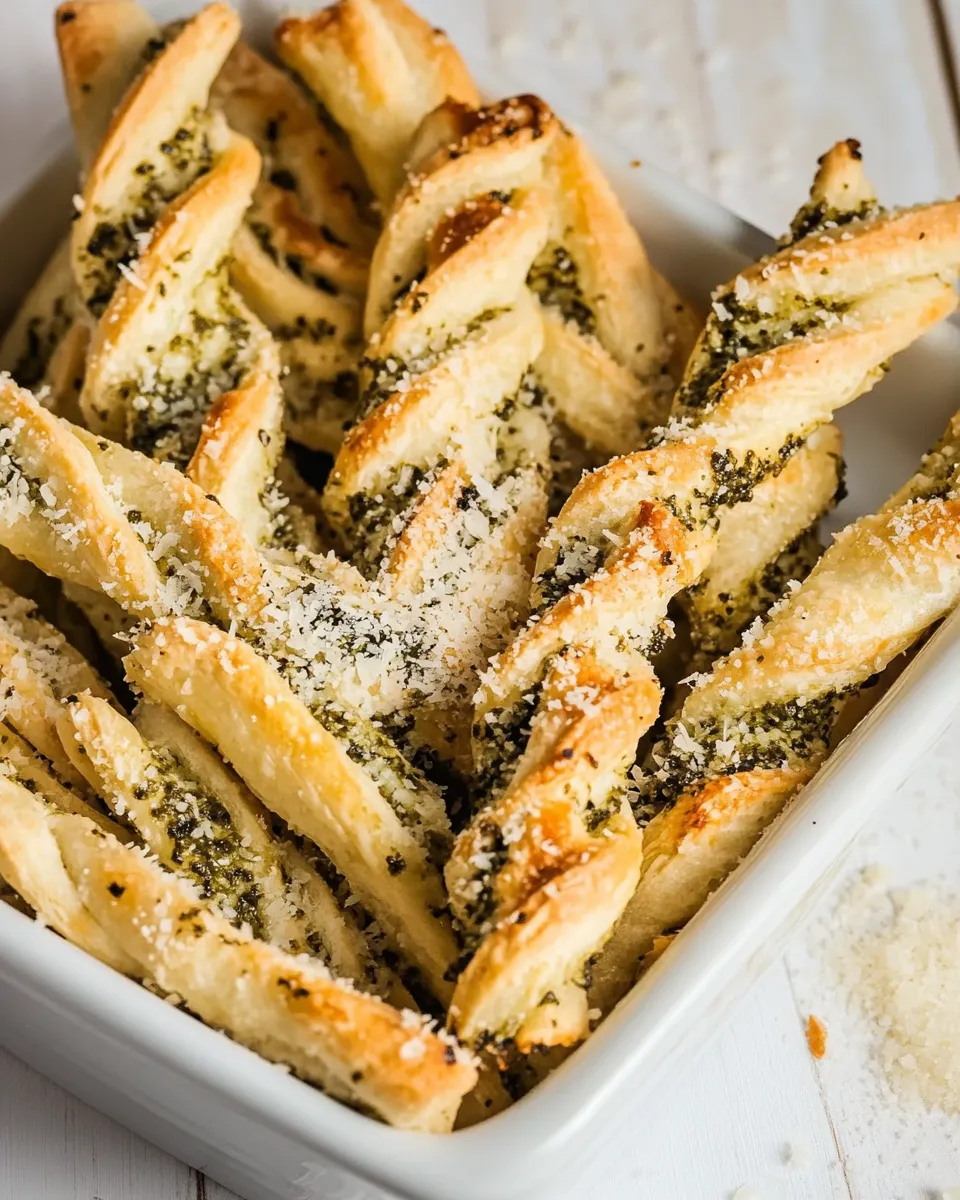
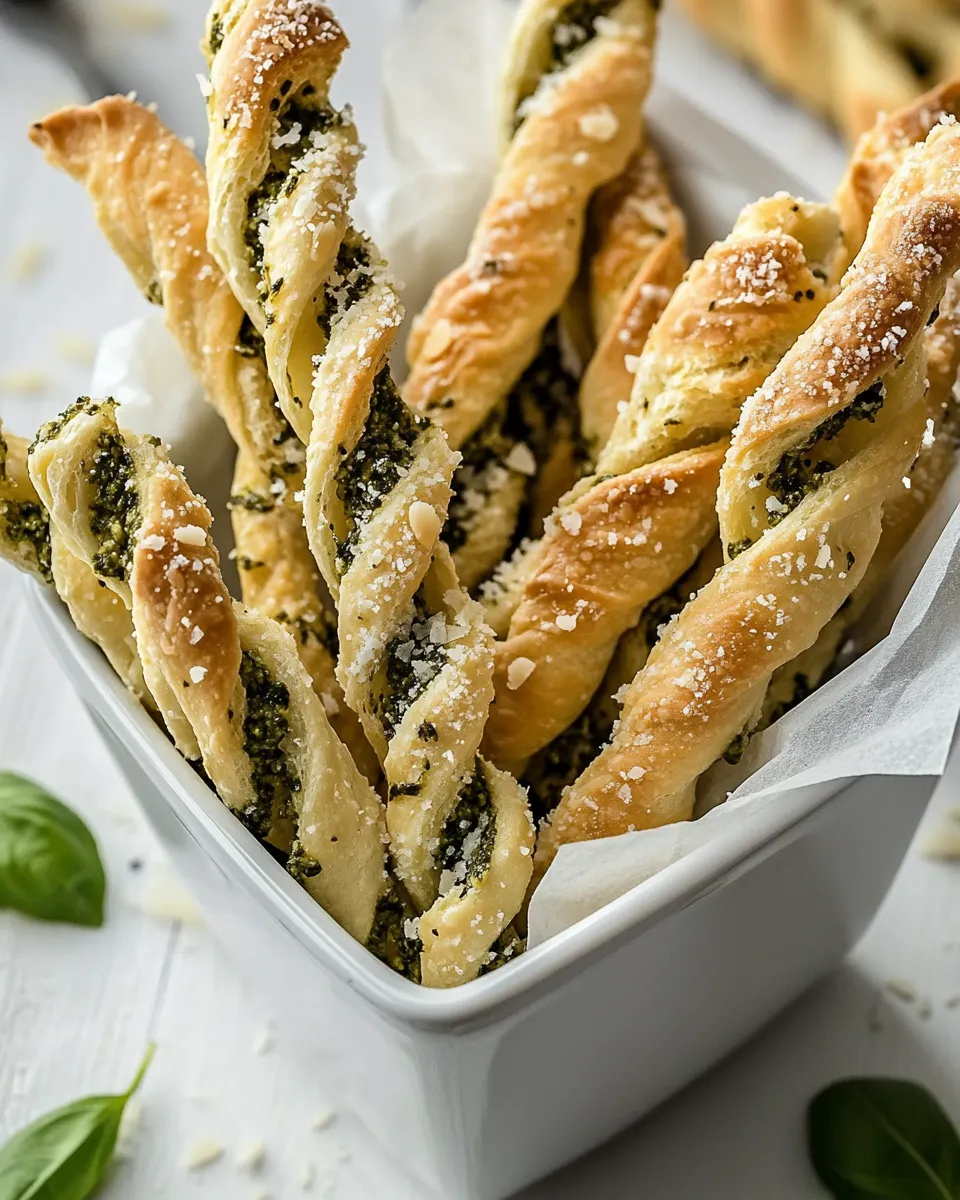
These Pesto Parmesan Cheese Straws are one of those recipes that feel fancy but take almost no time. With sheet puff pastry, a smear of vibrant pesto, and a shower of salty Parmesan, the straws bake up golden, crisp, and utterly snackable. They’re perfect for a casual appetizer, a picnic nibble, or a last-minute party platter.
I keep a box of puff pastry in the freezer for moments like this; the dough does the heavy lifting. The assembly is straightforward: spread, layer, cut, twist, brush, sprinkle, and bake. No rolling pin required, and no complicated techniques. The result is a delicate, flaky straw with a buttery crunch and an herbal hit from the pesto.
Below you’ll find a clear shopping list, the exact step-by-step instructions, and practical tips to make these every time. I’ll cover common mistakes, swaps, storage, and serving ideas so you can get them out of the oven confidently and on schedule.
Shopping List
Ingredients
- 2 sheets puff pastry, thawed — the flaky base that puffs and creates the straw shape; keep chilled until ready to work with.
- 3 tablespoons pesto — provides the herbaceous flavor; use your favorite store-bought jar or a homemade batch if you have it.
- 1/3 cup grated Parmesan cheese, plus 3 tablespoons, divided — the first portion goes inside for savory richness; the divided 3 tablespoons are for topping before baking.
- 1 egg — beaten into an egg wash to give the straws a glossy, golden finish.
- 1 tablespoon water — mixed with the egg to make the egg wash easy to brush.
- Garnish: Extra Parmesan cheese — optional finishing touch for extra salty punch and visual appeal.
From Start to Finish: Pesto Parmesan Cheese Straws
- Preheat oven to 400°F (200°C). Line two baking sheets with parchment paper and set aside.
- Unfold both thawed puff pastry sheets onto a large piece of parchment or wax paper. Cut each sheet into 4 equal long rectangles (8 rectangles total).
- Spread the 3 tablespoons pesto evenly over 4 of the rectangles. Sprinkle the 1/3 cup grated Parmesan evenly over the pesto-covered rectangles.
- Place the remaining 4 rectangles directly on top of the pesto/Parmesan rectangles to form 4 layered pieces. Gently press the edges to seal.
- Using a sharp knife or pastry cutter, cut each layered piece into 4 long strips (4 layered pieces × 4 strips = 16 strips total).
- Twist each strip several times and place the twisted straws on the prepared baking sheets, spacing them about 1 inch apart.
- In a small bowl, beat the egg and 1 tablespoon water together with a fork. Brush each pastry straw lightly with the egg wash using a pastry brush.
- Evenly sprinkle the remaining 3 tablespoons Parmesan cheese over the egg-washed straws.
- Bake for 12 to 15 minutes, or until golden brown, rotating the pans halfway through baking for even color.
- Remove the baking sheets from the oven and let the straws cool on the sheets. Transfer to a platter, garnish with extra Parmesan if desired, and serve.
Why This Recipe Works
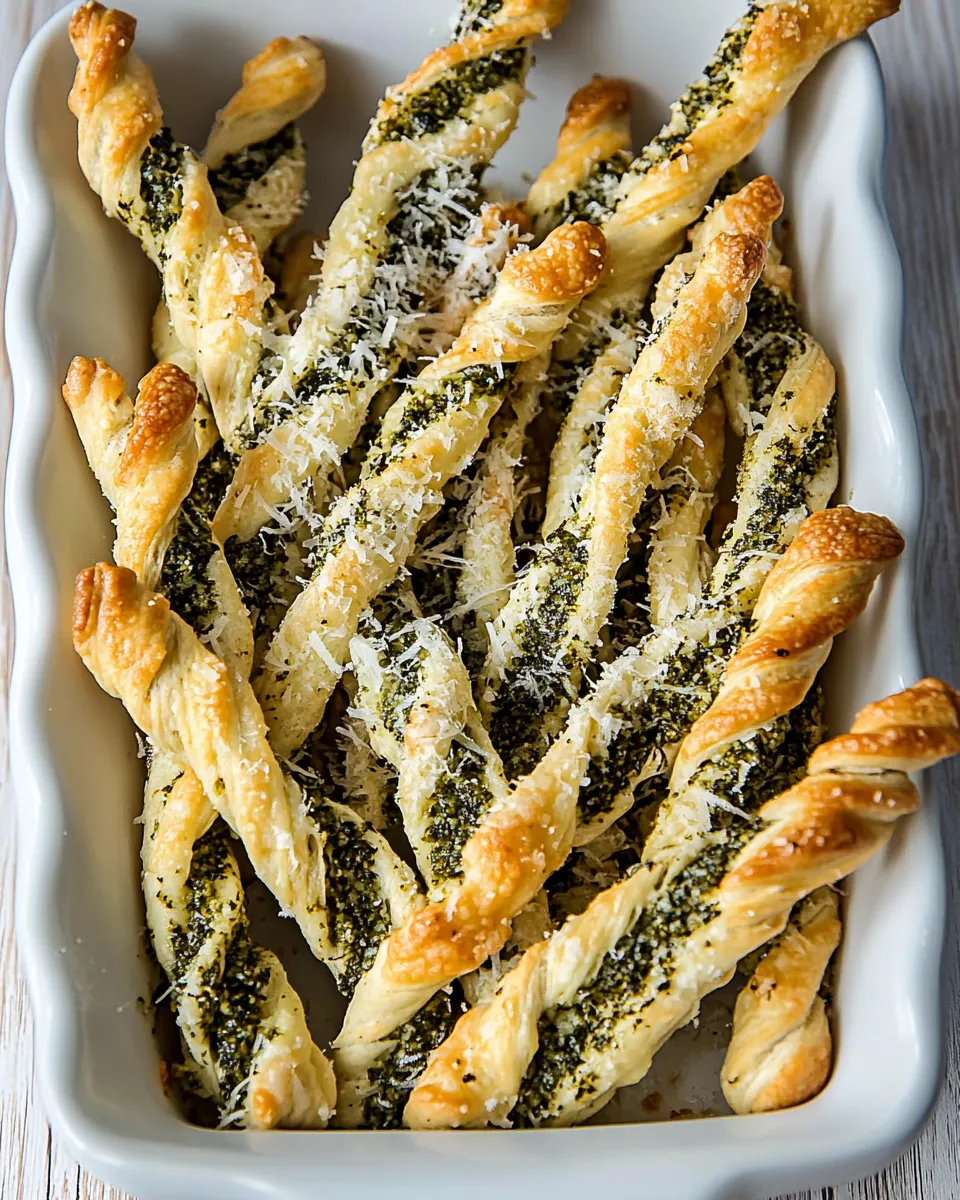
- Puff pastry architecture: The laminated layers of butter and dough in puff pastry separate and steam in the oven, creating a crisp, airy texture that’s perfect for handheld straws.
- Pesto as a flavor carrier: Pesto is concentrated—just a thin layer imparts basil, garlic, and oil, so it flavors without sogginess. When combined with Parmesan inside, it delivers a balanced, savory profile.
- Egg wash and final cheese: Brushing with egg helps the surface brown evenly and hold the finishing Parmesan, which crisps and adds an extra savory crunch.
- Simple layering: By stacking pastry rectangles, you trap the pesto and cheese between crisp sheets so the filling doesn’t leak out during baking. It’s efficient and reliable.
International Equivalents
- Italy: Think of these as a riff on savory grissini (breadsticks) crossed with pastry—basil and Parmesan are classic Italian flavor notes.
- France: In French kitchens, puff pastry (pâte feuilletée) is a go-to for savory bites; these would be at home as an apéritif alongside olives and cheese.
- United Kingdom: Swap the pesto for a herb paste or chutney to mirror local tastes; the technique still yields a tea-time savory crisp.
- Global swaps: If you prefer different regional cheeses or spreads, the method works the same—thin smear, layer, cut, twist, and bake.
Kitchen Gear Checklist
- Baking sheets — two, for even baking and rotation.
- Parchment paper — prevents sticking and simplifies cleanup.
- Sharp knife or pastry cutter — for clean, straight cuts through layered pastry.
- Pastry brush — to apply the egg wash evenly.
- Mixing bowl and fork — to beat the egg and water for the wash.
- Measuring spoons/cups — to measure pesto and cheese accurately.
- Cooling rack or platter — for resting and serving the straws.
Frequent Missteps to Avoid
- Working with warm pastry: If the puff pastry gets too soft, it will be hard to get neat twists and the filling may squish out. Keep it cool and work quickly.
- Overloading with pesto: Use only the specified 3 tablespoons spread across 4 rectangles. Too much filling can make the pastry soggy and difficult to seal.
- Uneven sealing: If edges aren’t lightly pressed together, layers can separate and leak. A gentle press is sufficient—don’t squish the air out of the layers.
- Skipping the egg wash: This step aids browning and helps the grated Parmesan adhere. Omit it and the straws will look pale and lose a bit of crisp finish.
- Overcrowding the pan: Straws should sit about 1 inch apart. Overlapping or tight placement prevents air circulation and uneven browning.
Make It Fit Your Plan
- Make-ahead: Assemble the straws up to the point of brushing with egg, cover lightly, and refrigerate for a few hours. Brush and bake when ready to serve.
- Party scaling: The recipe yields 16 straws. Double the ingredients and bake on multiple sheets in batches; rotate pans for even color.
- Vegetarian-friendly: This recipe is vegetarian as written. For stricter preferences, check your pesto label for vegetarian rennet in the Parmesan or choose a certified vegetarian cheese.
- Gluten-free note: These rely on traditional puff pastry. For gluten-free needs, look for a dedicated GF puff pastry alternative and follow package handling tips—results will vary.
Cook’s Commentary
I make these whenever I need a quick, crowd-pleasing nibble. They come together in about 20 minutes of active time and offer a warm, buttery crunch that guests always reach for first. The technique is forgiving; if a strip twists unevenly, it still crisps deliciously.
One small habit I keep is spacing the twists on a single sheet without crowding so I can slide a spatula under them easily after baking. Also, I often use a small offset spatula to lift delicate straws—less breakage than a fork or finger. If you like a bolder basil flavor, a touch more pesto can be fine, but watch for sogginess. The divided Parmesan approach—some inside, some on top—gives both internal flavor and a crisp, savory top layer.
Shelf Life & Storage
- At room temperature: Store cooled straws in an airtight container for up to 24 hours. They’re best the day they’re baked for maximum crispness.
- Refrigeration: Refrigerating will make them lose some crispness. If you must, keep in an airtight container for up to 3 days and re-crisp in a 325°F (160°C) oven for 5–7 minutes.
- Freezing: You can freeze baked, fully cooled straws in a single layer on a tray until firm, then transfer to a freezer bag for up to 1 month. Reheat from frozen in a 350°F (175°C) oven until heated and crisp.
Reader Questions
- Q: Can I use homemade puff pastry? A: Yes. Homemade puff pastry will work; handle it chilled and follow the same assembly steps. Baking time may vary slightly depending on thickness.
- Q: What if I don’t have Parmesan? A: Parmesan provides a salty, nutty punch. Hard Italian cheeses with similar melting behavior can be used, but flavor will change.
- Q: Can I make these ahead and bake later? A: Assemble up to step 6, cover lightly, and refrigerate for a few hours. Apply egg wash and top with the remaining Parmesan just before baking for best results.
- Q: How do I get even browning? A: Rotate the pans halfway through baking and ensure the oven is fully preheated to 400°F (200°C). Using parchment helps the bottoms brown without burning.
Bring It Home
These Pesto Parmesan Cheese Straws are proof that great appetizers don’t need to be complicated. With just a few pantry staples and a bit of hands-on time, you’ll have a tray of golden, fragrant straws that look and taste like you spent much longer in the kitchen. Make them for a casual get-together or to elevate a weeknight snack—the crisp texture and bright pesto note will disappear fast, guaranteed.
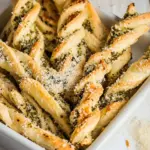
Pesto Parmesan Cheese Straws
Ingredients
Ingredients
- 2 sheets puff pastry thawed
- 3 tablespoonspesto
- 1/3 cupgrated Parmesan cheese plus 3 tablespoons, divided
- 1 egg
- 1 tablespoonwater
- Garnish: Extra Parmesan cheese
Instructions
Instructions
- Preheat oven to 400°F (200°C). Line two baking sheets with parchment paper and set aside.
- Unfold both thawed puff pastry sheets onto a large piece of parchment or wax paper. Cut each sheet into 4 equal long rectangles (8 rectangles total).
- Spread the 3 tablespoons pesto evenly over 4 of the rectangles. Sprinkle the 1/3 cup grated Parmesan evenly over the pesto-covered rectangles.
- Place the remaining 4 rectangles directly on top of the pesto/Parmesan rectangles to form 4 layered pieces. Gently press the edges to seal.
- Using a sharp knife or pastry cutter, cut each layered piece into 4 long strips (4 layered pieces × 4 strips = 16 strips total).
- Twist each strip several times and place the twisted straws on the prepared baking sheets, spacing them about 1 inch apart.
- In a small bowl, beat the egg and 1 tablespoon water together with a fork. Brush each pastry straw lightly with the egg wash using a pastry brush.
- Evenly sprinkle the remaining 3 tablespoons Parmesan cheese over the egg-washed straws.
- Bake for 12 to 15 minutes, or until golden brown, rotating the pans halfway through baking for even color.
- Remove the baking sheets from the oven and let the straws cool on the sheets. Transfer to a platter, garnish with extra Parmesan if desired, and serve.
Equipment
- Baking Sheet
- Parchment Paper
- large piece of parchment or wax paper
- sharp knife or pastry cutter
- Small Bowl
- Fork
- Pastry Brush
- platter
Notes
to thaw the puff pastry, follow the instructions on the back of the box. The pastry sheets should unfold easily but still be cold. If the pastry cracks, you can sprinkle the cracks with a little water and press the edges to seal.
You can use
homemade basil pesto
or store-bought pesto. For store-bought, we like Private Selection brand.