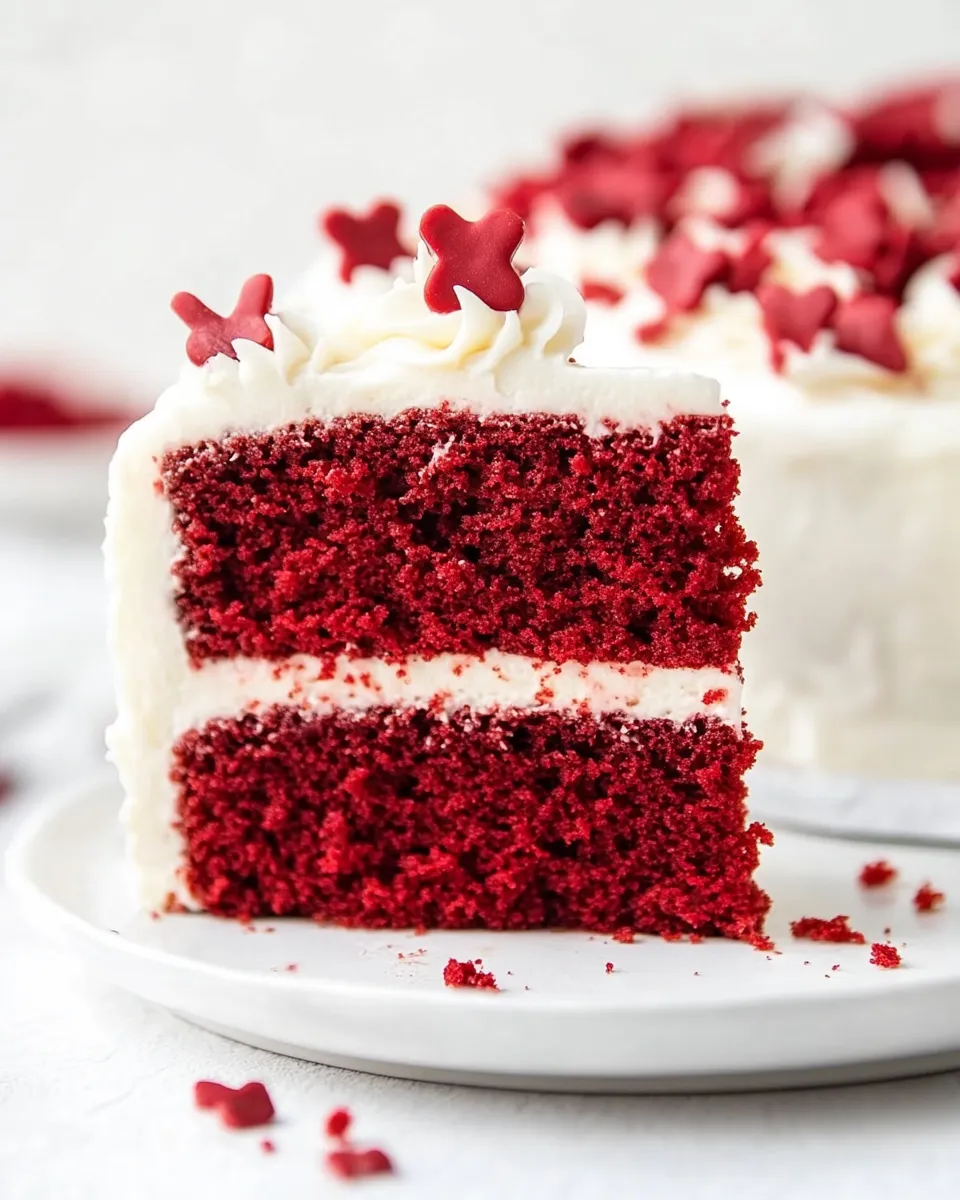
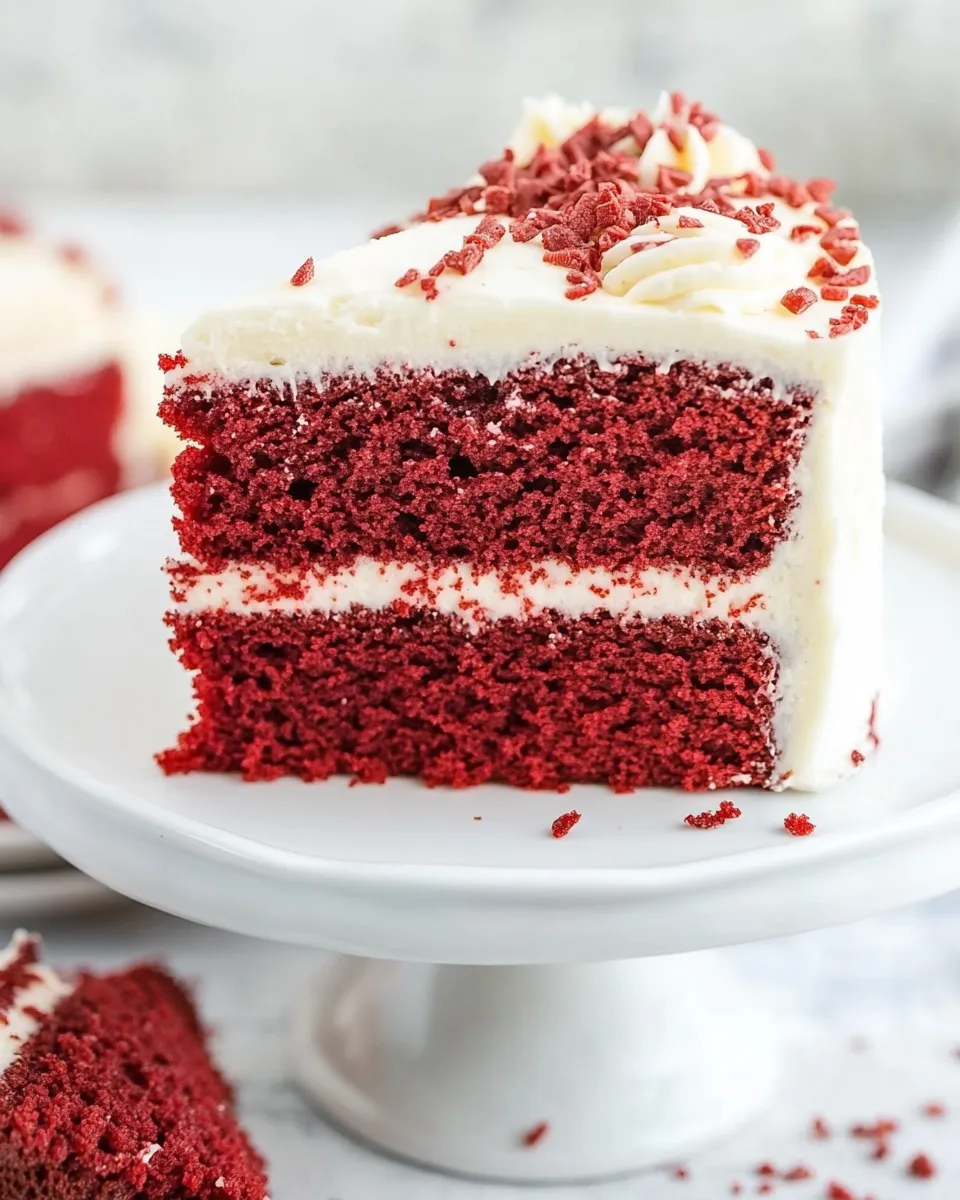
I bake a lot, but this Red Velvet Cake always feels like a small celebration. It’s got the classic tender crumb, that gentle cocoa whisper, and the tangy lift from buttermilk and vinegar that makes the cream cheese frosting sing. No drama—just reliable texture and vivid color when you want something simple that looks special.
I write recipes for people who cook on weeknights and for those who want to impress at a weekend dinner. This version uses oil for a moist crumb and keeps steps straightforward so the bake comes out consistent. I include practical tips throughout—how to prep pans, when to stop mixing, and how to handle the layers—so you avoid the common pitfalls.
Follow the steps as written and you’ll have two 9-inch layers ready for a generous coat of Cream Cheese Frosting. I also cover swaps for common allergies and small details that make a big difference: timing, cooling, and storing. Let’s get into the kitchen.
Ingredient Rundown
Ingredients
- 2 1/2 cups all-purpose flour, plus more to dust the pans — provides structure; dusting helps the cake release cleanly.
- 2 Tbsp unsweetened cocoa powder — gives the subtle chocolate note classic to red velvet.
- 1 tsp baking soda — the leavening that lifts the cake.
- 1/2 tsp salt — balances sweetness and enhances flavor.
- 1/2 cup unsalted butter, room temperature, plus more to grease pans — adds richness and helps the crumb tenderize.
- 1 1/2 cups granulated sugar — sweetens and helps with structure and browning.
- 2 tsp vanilla extract — deepens flavor; use pure vanilla when possible.
- 2 large eggs, room temp — bind and stabilize the batter; room temperature eggs incorporate more evenly.
- 3/4 cup light olive oil or vegetable oil — keeps the cake moist; neutral oil is safest if you want pure red color.
- 1 cup low-fat buttermilk, room temp — provides tang and reacts with baking soda for lift.
- 1 tsp white distilled vinegar — boosts tender crumb and reacts with baking soda for volume.
- 1/2 tsp red gel food coloring — the concentrated gel gives vivid color without thinning the batter.
- 1 Cream Cheese Frosting Recipe — the classic pairing; tangy and smooth to finish the cake.
From Start to Finish: Red Velvet Cake Recipe
- Preheat the oven to 350°F. Position the oven racks in the center. Grease two 9-inch cake pans with the additional butter and dust them with flour, tapping out any excess flour.
- In a bowl, sift together 2 1/2 cups all-purpose flour, 2 Tbsp unsweetened cocoa powder, 1 tsp baking soda, and 1/2 tsp salt. Set the dry mixture aside.
- In a large mixing bowl using an electric mixer, beat 1/2 cup room-temperature unsalted butter and 1 1/2 cups granulated sugar for a few minutes until the mixture looks moistened and slightly powdery.
- Add the 2 large room-temperature eggs one at a time, beating well after each addition so each egg is fully incorporated.
- Beat in 2 tsp vanilla extract until blended.
- With the mixer running on low, gradually pour in 3/4 cup oil (light olive oil or vegetable oil). Increase to medium speed and beat until the oil is well incorporated and the batter is smooth. Scrape down the bowl as needed.
- Stir 1 tsp white distilled vinegar into the 1 cup low-fat buttermilk. With the mixer on medium speed, add the buttermilk-vinegar mixture to the batter and mix until just incorporated. Scrape down the bowl as needed.
- Add the sifted dry ingredients to the batter all at once. Mix on medium speed just until the flour is blended and no streaks of flour remain—do not overmix. Scrape down the bowl and beat briefly if needed to reach uniform batter.
- Add 1/2 tsp red gel food coloring and mix just until the color is evenly distributed, scraping down the bowl as needed. (Add a little more coloring only if you want a deeper red, but do not change the listed amount.)
- Divide the batter evenly between the two prepared 9-inch pans and smooth the tops.
- Bake in the preheated 350°F oven for about 30 minutes, or until a toothpick inserted into the center comes out clean or with a few moist crumbs. Rotate the pans halfway through baking only if your oven bakes unevenly.
- Remove the cakes from the oven and let them rest in the pans for 20 minutes. Run a knife around the edges if needed, then invert the cakes onto a wire cooling rack. Let the layers cool completely to room temperature before assembling and frosting with the Cream Cheese Frosting.
Why This Recipe is a Keeper
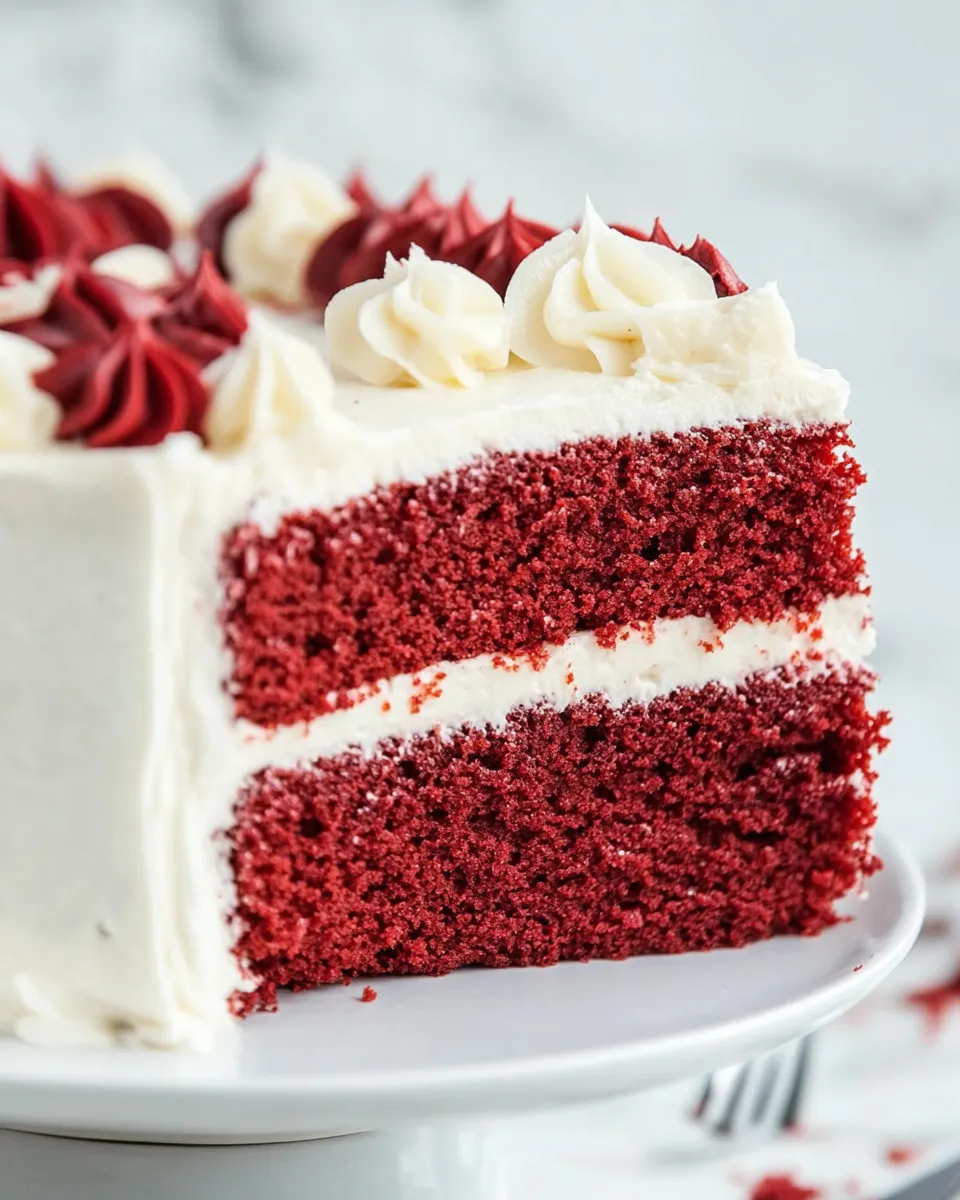
It reliably produces moist, tender layers with a balanced flavor. The combination of oil and butter gives you the best of both worlds: richness from butter and long-lasting moistness from oil. Buttermilk and a touch of vinegar create that slight tang and react with baking soda for a good rise without being cakey.
The recipe keeps measurements straightforward and avoids unusual techniques, so it’s friendly for bakers at any level. The red gel food coloring provides a bright, consistent color without watering down the batter like liquid colorings can. And because you bake in two 9-inch pans, the layers stack and frost easily—perfect for showing off a simple, handsome cake.
Allergy-Friendly Substitutes
If you need changes for allergies or preferences, here are practical swaps that keep the cake close to the original in texture and flavor.
- Dairy: Replace the 1/2 cup unsalted butter with a dairy-free stick butter or equal amount of neutral oil for a fully dairy-free cake. Use a plant-based cream cheese frosting to finish.
- Eggs: For each egg, a commercial egg replacer or 1/4 cup unsweetened applesauce can work, but texture will be slightly denser. I don’t recommend changing eggs if you can avoid it—this recipe depends on them for structure.
- Buttermilk: If you don’t have buttermilk, make your own by adding 1 Tbsp lemon juice to 1 cup milk and letting it rest 5–10 minutes. Use plant-based milk plus 1 Tbsp vinegar for a dairy-free alternative.
- Gluten: A 1:1 gluten-free flour blend can be substituted cup-for-cup, but results vary—look for blends with xanthan gum included and expect a slightly different crumb.
Essential Tools for Success
- Two 9-inch cake pans: Even heat and same-size pans make the layers bake uniformly.
- Electric mixer: Speeds up creaming and ensures even incorporation of oil and eggs.
- Sifter or fine mesh sieve: For the flour and cocoa—this prevents lumps and helps with an even crumb.
- Rubber spatula: For scraping the bowl and smoothing batter into pans.
- Cooling rack: Proper cooling prevents a soggy bottom and helps layers set before frosting.
Learn from These Mistakes
Overmixing the batter
Too much mixing after the flour goes in develops gluten and yields a tougher cake. Mix until the streaks of flour are gone and stop. Scrape the bowl; then give one brief final stir if needed.
Skipping room-temperature ingredients
Cold eggs or butter can lead to an uneven batter and a denser texture. Bring eggs and butter to room temperature before you start.
Underdone or overdone layers
Ovens vary. Start checking at 25 minutes. A toothpick should come out clean or with a few moist crumbs. If the tops brown too fast, lower the oven temp 15°F and add 3–5 minutes to the bake time.
Better Choices & Swaps
- Neutral oil over flavored oil: Use vegetable or light olive oil to avoid a green or oily flavor.
- Gel food coloring: The recipe calls for 1/2 tsp—stick with gel over liquid for a vivid color without changing batter consistency.
- Pure vanilla: Small upgrades like pure vanilla extract improve flavor noticeably over imitation.
- Room temp buttermilk: Helps the batter emulsify smoothly; it’s worth warming to room temperature from the fridge.
Little Things that Matter
Grease and flour your pans well and tap out excess flour—that little step ensures clean layer removal and smooth sides. When you invert the cakes after the 20-minute rest, do it gently so the edges don’t catch. Use a thin knife to release stubborn edges before flipping.
When you add the food coloring, mix just until the color is even. Overmixing at that stage can add unwanted air and affect crumb structure. Let the layers cool completely before frosting; frosting warm cake melts the cream cheese and makes a mess.
Prep Ahead & Store
You can bake the layers a day ahead. Wrap them tightly in plastic wrap once cooled and store at room temperature. For longer storage, freeze layers wrapped well in plastic and foil for up to one month. Thaw in the fridge or at room temperature before frosting.
Frosted cake will keep at room temperature for a day if your kitchen is cool. Because of the cream cheese frosting, I recommend refrigerating leftovers tightly covered for up to 4 days. Bring slices to room temperature before serving for the best texture and flavor.
Top Questions & Answers
- Can I make this in one pan and split it? Yes. Bake in a deeper pan and slice horizontally when cool, but baking time will increase—check doneness with a toothpick.
- Why is there cocoa in red velvet? A small amount of cocoa adds the classic subtle chocolate note and works with the buttermilk to create the true red velvet profile.
- How intense should the red be? The recipe specifies 1/2 tsp gel color for a classic hue. Add more if you prefer a deeper red, but resist changing the batter volume by using liquid colorings.
- Is cream cheese frosting necessary? It’s traditional and balances the cake’s sweetness with tang. You can use a stabilized whipped cream or mascarpone frosting if you prefer, but the flavor profile will change.
Ready to Cook?
Gather your ingredients, preheat your oven to 350°F, and line two 9-inch pans. Follow the steps in order and keep an eye on mixing time—especially once you add the flour. If you’ve got the Cream Cheese Frosting at the ready, assembly is quick once the layers cool. This cake rewards simple attention: measure carefully, don’t overmix, and let the layers cool fully before frosting.
Make it for a birthday, an afternoon treat, or any time you want a cake that delivers classic flavor with a sure result. If you have questions while you bake, note the step and come back—I’ll help troubleshoot.
Red Velvet Cake Recipe
Ingredients
Ingredients
- 2 1/2 cupsall-purpose flour plus more to dust the pans
- 2 Tbspunsweetened cocoa powder
- 1 tspbaking soda
- 1/2 tspsalt
- 1/2 cupunsalted butter room temperature, plus more to grease pans
- 1 1/2 cupsgranulated sugar
- 2 tspvanilla extract
- 2 large eggs room temp
- 3/4 cuplight olive oil or vegetable oil
- 1 cuplow-fat buttermilk room temp
- 1 tspwhite distilled vinegar
- 1/2 tspred gel food coloring
- 1 Cream Cheese Frosting Recipe
Instructions
Instructions
- Preheat the oven to 350°F. Position the oven racks in the center. Grease two 9-inch cake pans with the additional butter and dust them with flour, tapping out any excess flour.
- In a bowl, sift together 2 1/2 cups all-purpose flour, 2 Tbsp unsweetened cocoa powder, 1 tsp baking soda, and 1/2 tsp salt. Set the dry mixture aside.
- In a large mixing bowl using an electric mixer, beat 1/2 cup room-temperature unsalted butter and 1 1/2 cups granulated sugar for a few minutes until the mixture looks moistened and slightly powdery.
- Add the 2 large room-temperature eggs one at a time, beating well after each addition so each egg is fully incorporated.
- Beat in 2 tsp vanilla extract until blended.
- With the mixer running on low, gradually pour in 3/4 cup oil (light olive oil or vegetable oil). Increase to medium speed and beat until the oil is well incorporated and the batter is smooth. Scrape down the bowl as needed.
- Stir 1 tsp white distilled vinegar into the 1 cup low-fat buttermilk. With the mixer on medium speed, add the buttermilk-vinegar mixture to the batter and mix until just incorporated. Scrape down the bowl as needed.
- Add the sifted dry ingredients to the batter all at once. Mix on medium speed just until the flour is blended and no streaks of flour remain—do not overmix. Scrape down the bowl and beat briefly if needed to reach uniform batter.
- Add 1/2 tsp red gel food coloring and mix just until the color is evenly distributed, scraping down the bowl as needed. (Add a little more coloring only if you want a deeper red, but do not change the listed amount.)
- Divide the batter evenly between the two prepared 9-inch pans and smooth the tops.
- Bake in the preheated 350°F oven for about 30 minutes, or until a toothpick inserted into the center comes out clean or with a few moist crumbs. Rotate the pans halfway through baking only if your oven bakes unevenly.
- Remove the cakes from the oven and let them rest in the pans for 20 minutes. Run a knife around the edges if needed, then invert the cakes onto a wire cooling rack. Let the layers cool completely to room temperature before assembling and frosting with the Cream Cheese Frosting.
Equipment
- 9-inch Cake Pans
- Mixing bowls
- Electric Mixer
- Measuring Cups
- Measuring Spoons
- Wire cooling rack
- Knife
Notes
If you prefer a deeper red, you may add a little more red gel food coloring to taste.