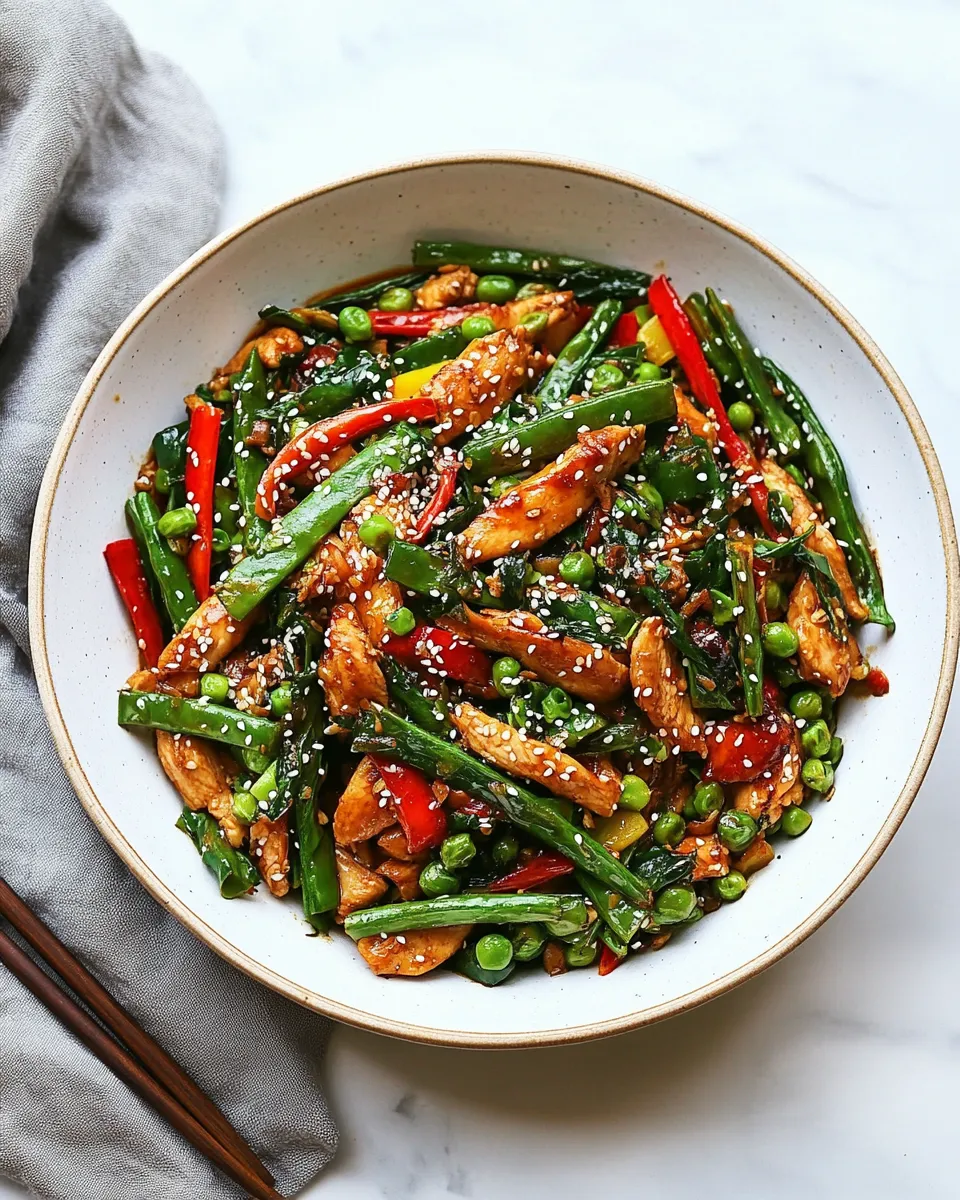
Weeknight dinners should be honest: fast, flavorful, and forgiving. That’s exactly what this Rotisserie Chicken Stir-Fry delivers. It leans on store-bought rotisserie chicken so you spend your time building texture and sauce instead of slow-cooking protein. The result is bright, crisp vegetables, punchy aromatics, and a glossy sauce that clings to each bite.
I reach for this dish when the calendar is full but appetite is not negotiable. It’s a one-skillet kind of meal that comes together in under 20 minutes once the sauce is mixed. You can plate it over rice, toss it with noodles, or eat it straight from the pan — warm, fast, and satisfying.
Below I’ll walk you through the exact ingredient checklist, follow-the-dot instructions, helpful swaps for dietary needs, and the small chef habits that turn good stir-fries into great ones. Keep the rotisserie chicken on standby and let the wok do the rest.
Ingredient Checklist
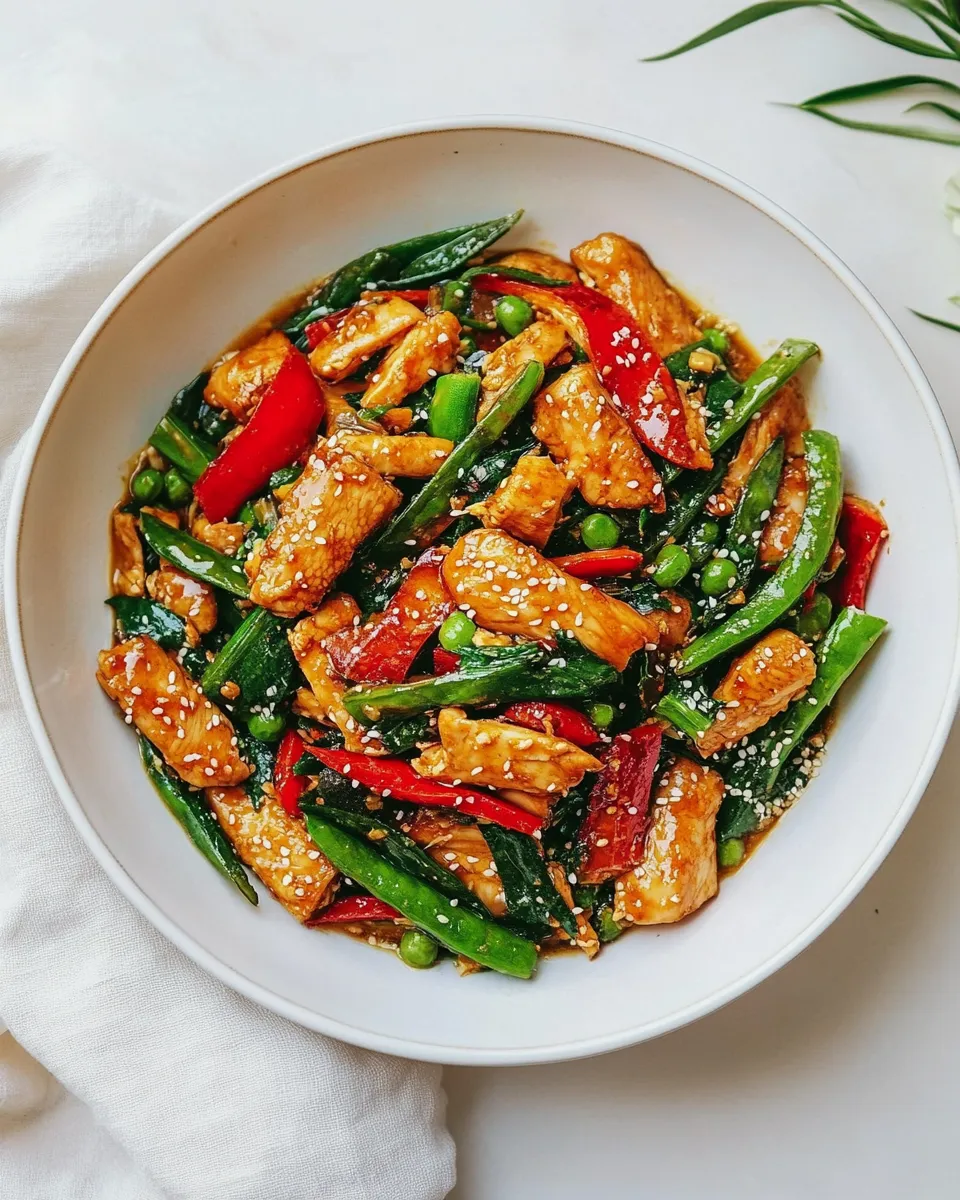
- 2 teaspoons cornstarch — thickener for the sauce; creates that glossy coating.
- 1-1/2 tablespoons reduced-sodium soy sauce — salt backbone and savory umami that balances the sweetness.
- 1 tablespoon toasted sesame oil — for the sauce; adds warm, nutty aroma.
- 1 tablespoon oyster sauce — deep savory note and a touch of sweetness to enrich the sauce.
- 3/4 cup chicken broth — thins and gives body to the sauce; use low-sodium if you prefer.
- 1 tablespoon light brown sugar, gently packed — rounds acidity and adds caramelized flavor to the sauce.
- 1 tablespoon toasted sesame oil — remaining oil to stir-fry the vegetables; keeps flavor consistent.
- 1/2 large yellow onion, thinly sliced — provides sweetness and structure; slice thin so it softens quickly.
- 20 ounces frozen sugar snap pea stir-fry vegetables — convenience mix for crisp-tender veg; cook from frozen per package timing.
- 1 tablespoon minced garlic — aromatic punch; add toward the end so it doesn’t burn.
- 2 teaspoons ginger paste — fresh heat and brightness; paste keeps the timing predictable.
- 2 cups rotisserie chicken, thinly sliced or shredded — cooked protein shortcut; adds immediate savory substance.
- Green onions, thinly sliced, optional for topping — fresh finish and mild onion crunch.
- Sesame seeds, optional for topping — nutty crunch and visual contrast.
- Sriracha, optional for topping — bright heat if you like a chili kick at the table.
Rotisserie Chicken Stir-Fry, Made Easy
- In a small bowl, whisk 2 teaspoons cornstarch and 1-1/2 tablespoons reduced-sodium soy sauce until smooth. Add 1 tablespoon oyster sauce, 3/4 cup chicken broth, 1 tablespoon light brown sugar, and 1 tablespoon toasted sesame oil; whisk until combined. Set the sauce aside.
- Heat the remaining 1 tablespoon toasted sesame oil in a large wok or skillet over medium-high heat.
- Add 1/2 large yellow onion (thinly sliced) and sauté, stirring occasionally, for 2 minutes, until beginning to soften.
- Add 20 ounces frozen sugar snap pea stir-fry vegetables and cook, stirring occasionally, according to package directions — about 6–7 minutes total.
- When the vegetables have cooked for about 6 minutes, stir in 1 tablespoon minced garlic and 2 teaspoons ginger paste and cook, stirring, until fragrant (about 30–60 seconds).
- Add 2 cups rotisserie chicken (thinly sliced or shredded) to the pan and pour the prepared sauce over the chicken and vegetables.
- Gently toss or stir everything over medium-high heat until the sauce thickens and coats the ingredients, about 1–2 minutes.
- Taste and adjust seasoning as desired.
- Garnish with thinly sliced green onions, sesame seeds, and a drizzle of Sriracha, if using. Serve immediately.
Why This Recipe Works
This stir-fry balances speed and texture. Using rotisserie chicken removes the long, hands-on cook time for protein, so you can focus on two things: building a glossy sauce and getting vegetables to a crisp-tender state. Cornstarch and a short simmer give you that professional, clingy finish that makes every forkful satisfying.
The sauce is a compact formula: soy for salt, oyster sauce for depth, light brown sugar for balance, and toasted sesame oil for aroma. Chicken broth thins the sauce to the right consistency before cornstarch finishes it off. The timing keeps aromatics like garlic and ginger sharp and fragrant rather than bitter.
Finally, the frozen vegetable mix is a practical shortcut without sacrificing texture. It’s blanched and frozen at peak freshness, so with a little high heat and attentive tossing you get bright color and snap. The technique is the real secret: hot pan, quick movement, and a brief thickening step to marry everything.
Dairy-Free/Gluten-Free Swaps
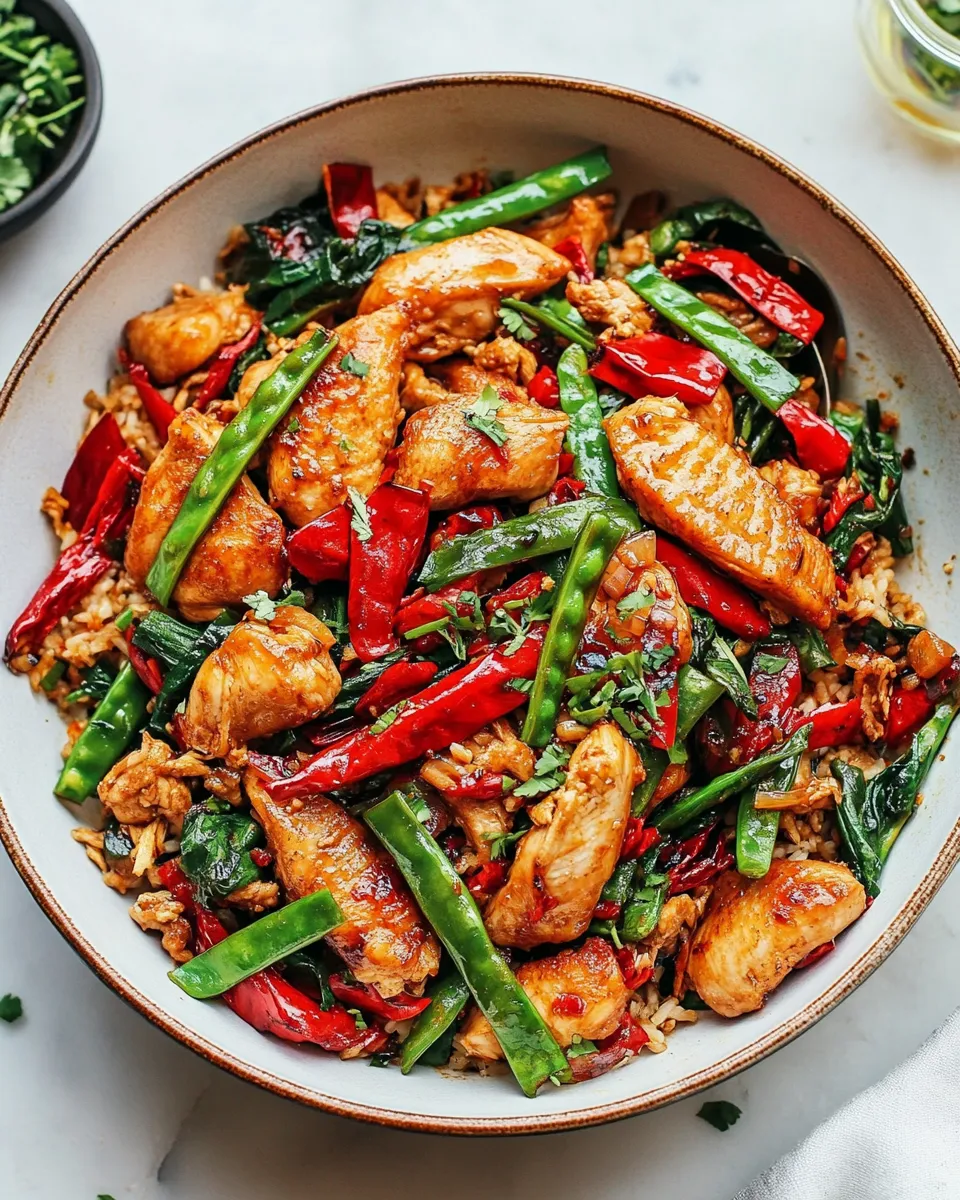
Dairy isn’t in the ingredient list, so this recipe is naturally dairy-free. For gluten-free, swap the reduced-sodium soy sauce for a certified gluten-free tamari or coconut aminos (note that coconut aminos are sweeter and less salty, so you may want to taste and adjust). Also verify your oyster sauce is gluten-free — some brands use wheat-based thickeners.
If you need a completely soy-free version, use coconut aminos and replace oyster sauce with a gluten-free vegetarian mushroom sauce or a reduced amount of miso dissolved in the broth; both introduce umami without soy-based soy sauce.
Hardware & Gadgets
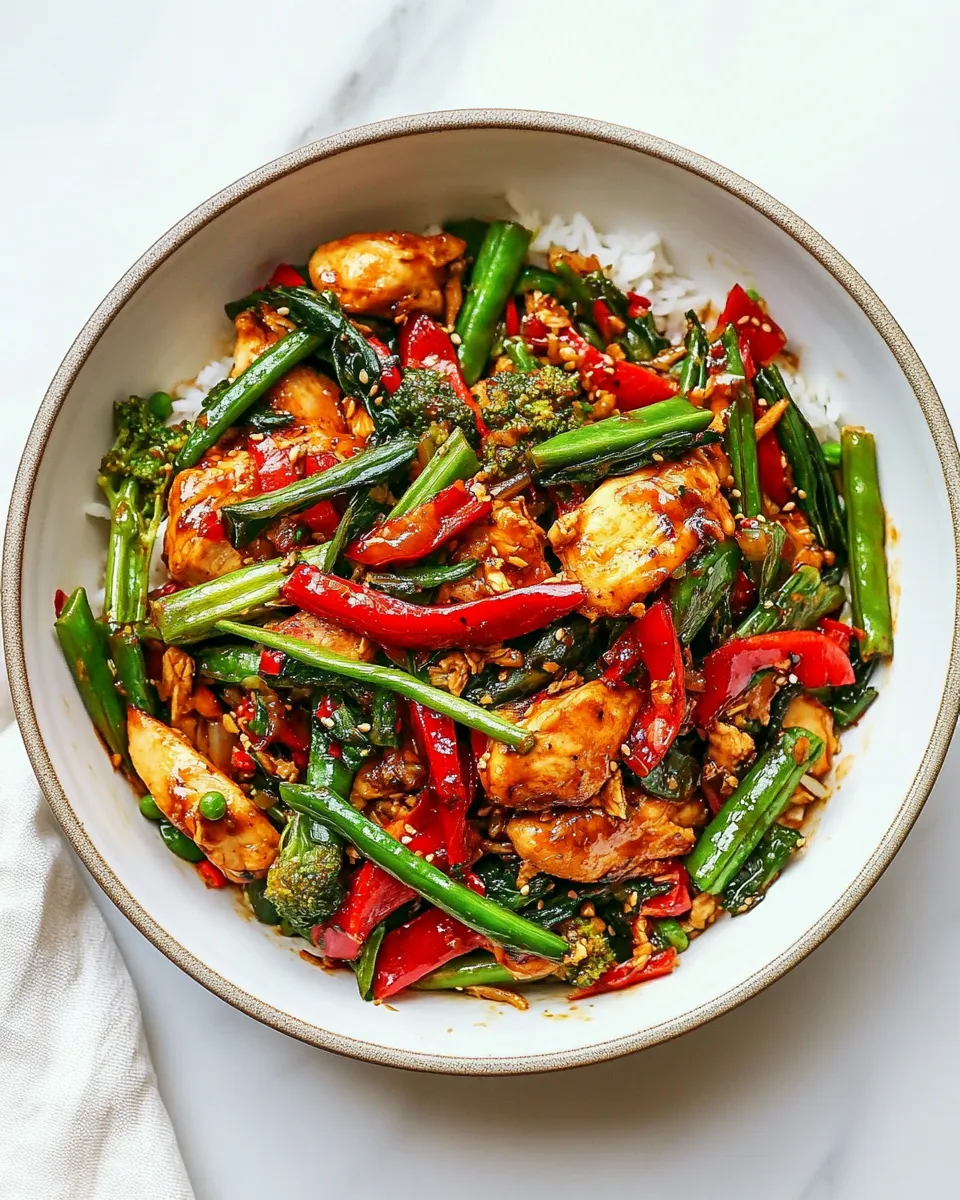
A hot wok is ideal because its sloped sides concentrate the heat and make tossing effortless, but a heavy-bottomed large skillet works equally well. Use a wide spatula or a long-handled spoon to stir and toss without splashing the sauce. A small whisk or fork is handy for mixing the cornstarch slurry until lump-free.
Other helpful tools: an oil mister or measuring spoon to control the toasted sesame oil, a good chef’s knife for quickly slicing the onion and shredding chicken if needed, and a splatter screen if your burner runs hot. A thermometer isn’t necessary here — visual cues (glossy sauce, hot steam) are sufficient.
Mistakes Even Pros Make
1) Crowding the pan. Too many vegetables or adding the chicken too early drops the pan temperature and steams instead of sears. Use a large wok or skillet and keep pieces in a single layer when possible.
2) Overcooking aromatics. Garlic and ginger are delicate; add them late in the cooking process. If you add them at the beginning they’ll bitterly char and degrade the sauce’s flavor.
3) Skipping the cornstarch step. Not whisking cornstarch smoothly with soy sauce first can create lumps. Take the extra 20 seconds to make a smooth slurry so the sauce thickens evenly.
4) Using cold sauce straight from the fridge. If the sauce is cold it will briefly lower the pan temperature. Let it sit at room temp for a minute or whisk it again so it mixes evenly into the hot pan.
Health-Conscious Tweaks
To lighten the dish, use low-sodium chicken broth and keep the reduced-sodium soy sauce as specified. Increase the vegetable ratio — add extra snap peas or a handful of baby spinach at the very end to boost fiber and micronutrients. For lower sugar, reduce the brown sugar to 1/2 tablespoon; the sauce will still caramelize but with less sweetness.
To cut calories further, serve over cauliflower rice or a base of steamed vegetables instead of white rice. For a higher-protein version, fold in an extra cup of shredded rotisserie chicken or a softly scrambled egg at the end for added texture and satiety.
Recipe Notes & Chef’s Commentary
Timing & Prep
Prep everything before you heat the pan: slice the onion, measure the sauces, shred the chicken, and have the frozen vegetables ready. Stir-frying is an assembly line — once the pan is hot the clock runs fast.
Sauce Notes
The two tablespoons of toasted sesame oil are split intentionally: one goes in the sauce for flavor and one is used to stir-fry so the pan and ingredients carry that sesame aroma. If sesame is strong for you, reduce to 1-1/2 teaspoons in the sauce and 1/2 teaspoon for the pan.
Serving Suggestions
I like to serve this with hot jasmine rice or quick-cooked soba noodles tossed with a splash of the remaining pan sauce. For a low-carb plate, mound the stir-fry on soft butter lettuce leaves and eat like lettuce cups.
Keep-It-Fresh Plan
Store leftover stir-fry in an airtight container in the refrigerator for up to 3 days. The sauce thickens as it cools; when reheating, add a splash of chicken broth and reheat over medium heat, stirring gently until warm and saucy again. That extra broth restores loose texture without diluting the flavor.
For meal prep, keep rice or noodles separately from the stir-fry to avoid sogginess. If you plan to freeze leftovers, remove any garnishes like green onions or sesame seeds first. Frozen for up to 2 months is possible, but texture of the vegetables will soften more on thawing.
Common Questions
Q: Can I use fresh vegetables instead of frozen?
A: Yes. If you use fresh snap peas, bell peppers, or broccoli, slice them thin and adjust cooking time — fresh veg may need slightly longer on high heat to reach crisp-tender. Start them after the onions and follow package-like timing until color and snap are where you want them.
Q: Can I make the sauce spicier?
A: Absolutely. Stir in 1/2 teaspoon red pepper flakes while the aromatics cook, or finish with a drizzle of Sriracha as suggested. You can also add a teaspoon of chili garlic sauce to the sauce mixture before adding it to the pan.
Q: My sauce separated when reheating. Fix?
A: Add a splash of warm chicken broth and whisk or stir over medium heat; the cornstarch will reincorporate and the sauce will re-emulsify. Avoid overheating — gentle heat prevents the starch from breaking down.
That’s a Wrap
This Rotisserie Chicken Stir-Fry is a pragmatic weeknight champion: minimal prep, big flavor, and flexible enough to fit whatever you have on hand. Use the rotisserie bird as your time-saving shortcut, respect high heat and timing for the vegetables, and finish with fresh garnishes to lift the dish. It’s the kind of recipe I keep close when the week gets busy but we still want to sit down to a satisfying, home-cooked meal.
Make it once and you’ll find yourself swapping vegetables, adjusting heat, and tailoring the sauce to your pantry. That’s the point — a reliable framework that responds to small, smart tweaks. Enjoy, and let me know what swap became your new favorite.
Rotisserie Chicken Stir-Fry
Ingredients
Ingredients
- 2 teaspoonscornstarch
- 1-1/2 tablespoonsreduced-sodium soy sauce
- 1 tablespoontoasted sesame oil
- 1 tablespoonoyster sauce
- 3/4 cupchicken broth
- 1 tablespoonlight brown sugargently packed
- 1 tablespoontoasted sesame oil
- 1/2 largeyellow onionthinly sliced
- 20 ouncesfrozen sugar snap pea stir-fry vegetables
- 1 tablespoonminced garlic
- 2 teaspoonsginger paste
- 2 cupsrotisserie chickenthinly sliced or shredded
- Green onionsthinly sliced optional for topping
- Sesame seedsoptional for topping
- Srirachaoptional for topping
Instructions
Instructions
- In a small bowl, whisk 2 teaspoons cornstarch and 1-1/2 tablespoons reduced-sodium soy sauce until smooth. Add 1 tablespoon oyster sauce, 3/4 cup chicken broth, 1 tablespoon light brown sugar, and 1 tablespoon toasted sesame oil; whisk until combined. Set the sauce aside.
- Heat the remaining 1 tablespoon toasted sesame oil in a large wok or skillet over medium-high heat.
- Add 1/2 large yellow onion (thinly sliced) and sauté, stirring occasionally, for 2 minutes, until beginning to soften.
- Add 20 ounces frozen sugar snap pea stir-fry vegetables and cook, stirring occasionally, according to package directions — about 6–7 minutes total.
- When the vegetables have cooked for about 6 minutes, stir in 1 tablespoon minced garlic and 2 teaspoons ginger paste and cook, stirring, until fragrant (about 30–60 seconds).
- Add 2 cups rotisserie chicken (thinly sliced or shredded) to the pan and pour the prepared sauce over the chicken and vegetables.
- Gently toss or stir everything over medium-high heat until the sauce thickens and coats the ingredients, about 1–2 minutes.
- Taste and adjust seasoning as desired.
- Garnish with thinly sliced green onions, sesame seeds, and a drizzle of Sriracha, if using. Serve immediately.
Equipment
- Large nonstick panor wok
Notes
Once water is at a rolling boil, salt the water and add rice.
Boil without reducing the heat for 10 minutes (taste test to ensure it is tender), then drain and fluff with a fork. Easy!