
I love weeknight meals that feel thoughtful without a fuss. This Salmon and Sweet Potato combo hits that mark: bright, satisfying fish paired with roasted sweet cubes that caramelize at the edges. It’s a simple sheet-pan routine that delivers flavor and texture with minimal cleanup.
The method is straightforward and forgiving. You roast the sweet potatoes first so they start to soften, then add salmon to finish everything together. Timing matters, but it’s not fragile — I’ll walk you through the exact steps and small adjustments that keep the salmon moist and the potatoes tender.
If you want dinner on the table fast and still feel like you made something worth eating, this is it. The seasoning is focused: rosemary, onion powder, garlic powder, olive oil, and salt and pepper. No need for dozens of pantry items. Stick with the plan below for reliable results.
What’s in the Bowl
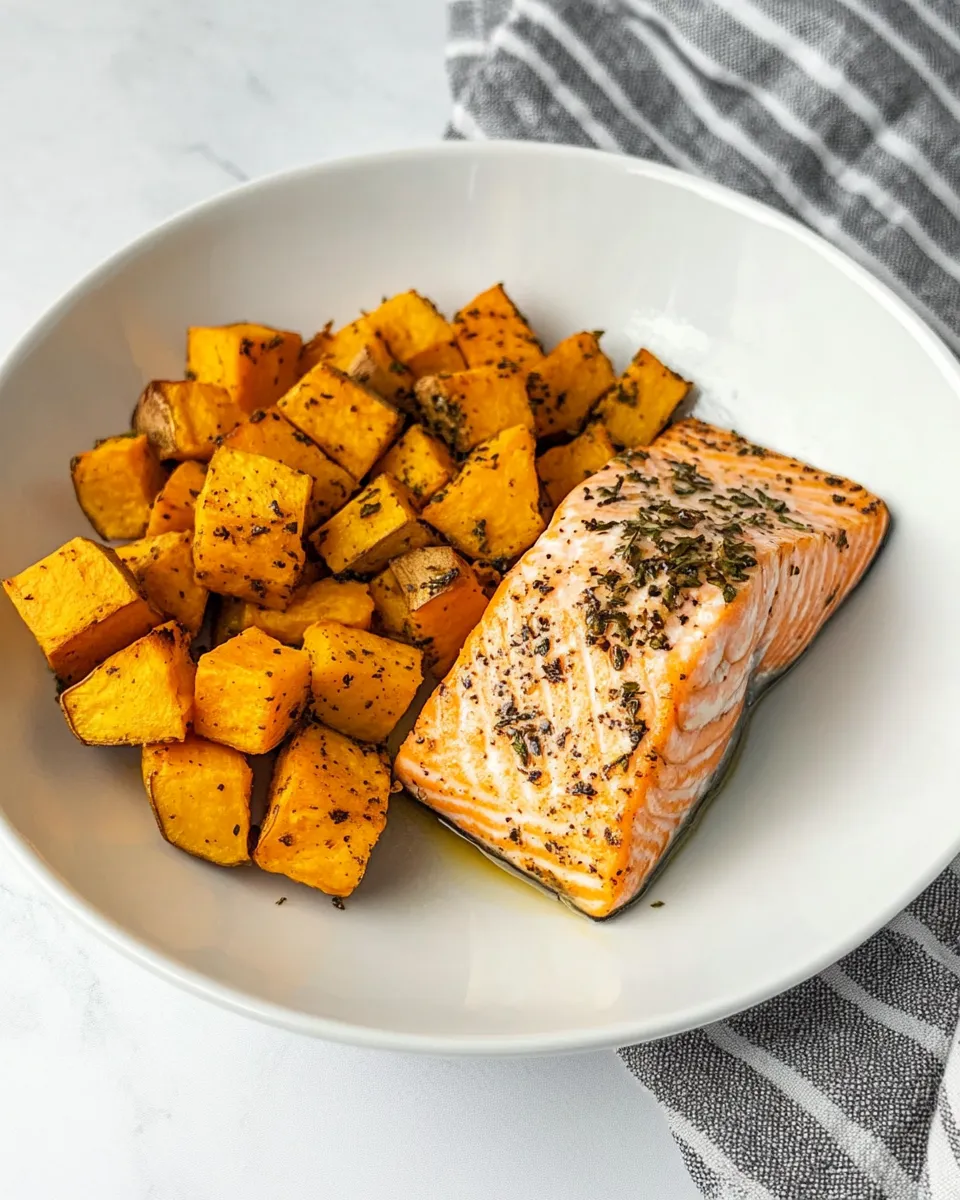
- 2 salmon fillets (6 ounces each) — the protein and flavor star; use fillets of similar size so they cook evenly.
- 2 medium sweet potatoes — peeled and diced into 1-inch cubes — sweetness and texture; 1-inch cubes roast evenly and develop caramelized edges.
- 2 tablespoons olive oil — divides between potatoes and salmon; helps carry seasoning and promotes browning.
- Salt and black pepper to taste — essential seasoning; add incrementally and taste the finished dish if you can.
- 1 teaspoon dried rosemary — herby backbone for the potatoes; dried rosemary gives a concentrated savory note.
- 1/2 teaspoon onion powder — adds depth without needing fresh aromatics; it rounds the potato seasoning.
- 1/2 teaspoon garlic powder — subtle garlic warmth that plays well with salmon; powdered form won’t burn like minced garlic at high heat.
Salmon and Sweet Potato Made Stepwise
- Preheat oven to 400°F.
- In a bowl, combine the 2 medium peeled and diced sweet potatoes (1-inch cubes) with 1 tablespoon olive oil, 1 teaspoon dried rosemary, 1/2 teaspoon onion powder, 1/2 teaspoon garlic powder, and salt and black pepper to taste. Toss until evenly coated.
- Spread the seasoned sweet potatoes in a single layer on a baking sheet.
- Bake the potatoes for 15 minutes, until they begin to soften.
- While the potatoes bake, drizzle the 2 salmon fillets (6 ounces each) with the remaining 1 tablespoon olive oil and season with salt and black pepper to taste.
- Remove the baking sheet from the oven, push the sweet potatoes to one side, and place the salmon fillets on the other side of the sheet with space around them.
- Return the baking sheet to the oven and bake 10–15 minutes more, or until the salmon is cooked through and flakes easily with a fork.
- Remove from oven and serve.
Why I Love This Recipe
This meal is efficient. Two components, one pan, and the oven does most of the work. I appreciate recipes that respect busy evenings and still give you something wholesome and satisfying. The sweet potatoes develop a toasty sweetness while the salmon remains tender when timed right.
The seasoning is straightforward but effective. Dried rosemary and powdered aromatics are pantry-friendly and they bring a savory counterpoint to the natural sweetness of the potatoes. Olive oil ties everything together and helps the salmon develop a gentle crust without drying out.
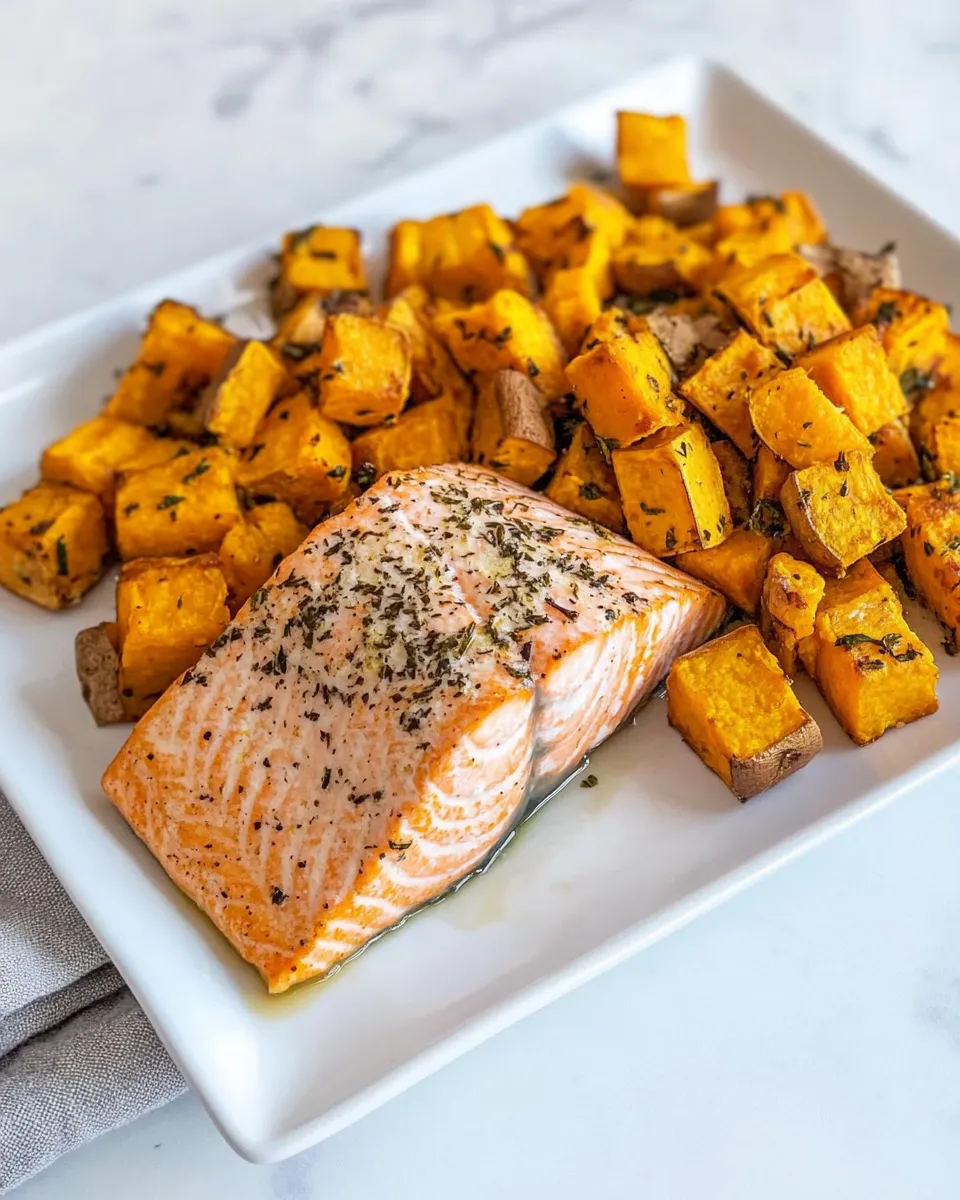
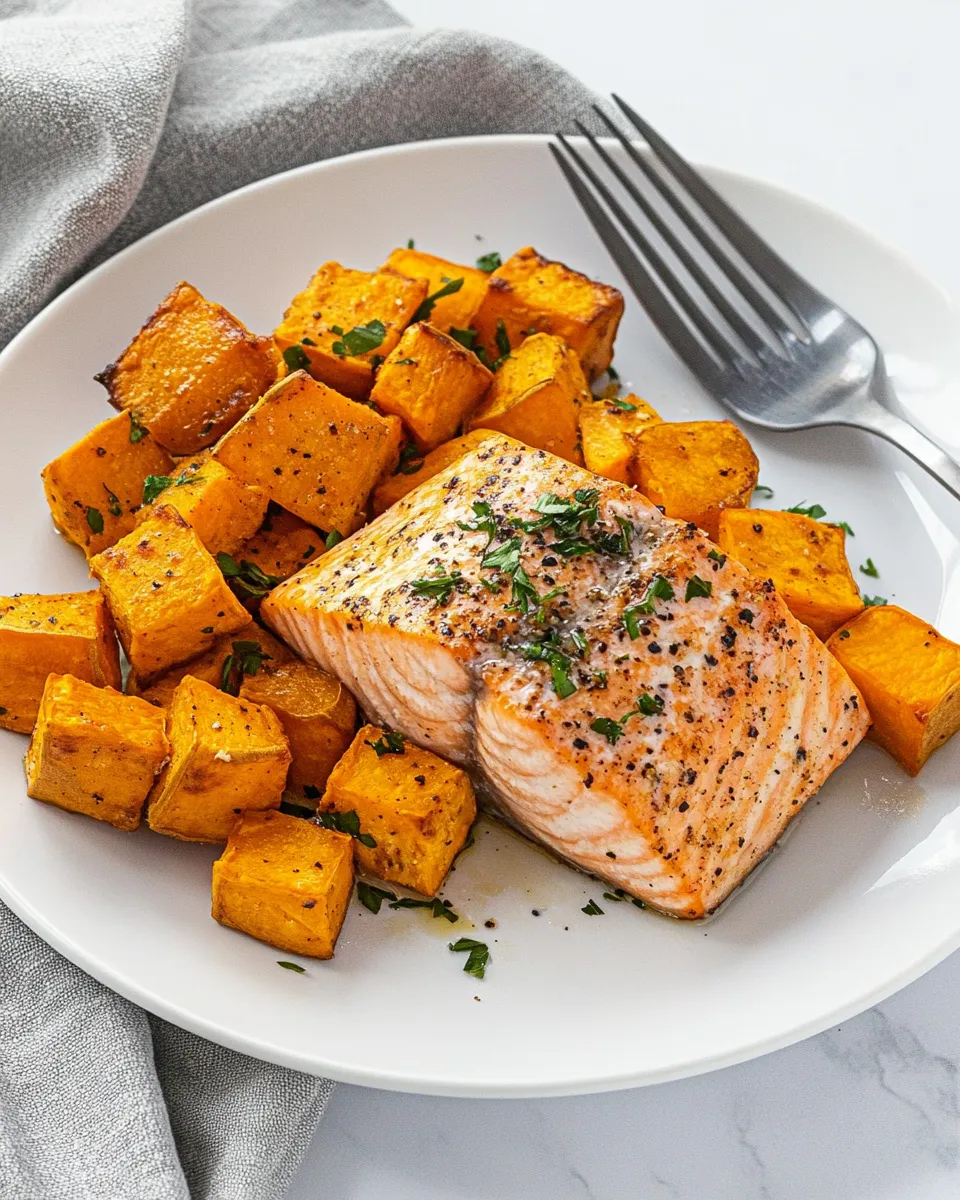
It’s also visually pleasing — orange cubes and pink fillets look like effort even when they’re simple. You can plate it quickly, toss a bright herb or lemon slice on top, and call it dinner. That ease is why I make it regularly.
Quick Replacement Ideas
- Swap salmon fillets for a similarly thick fish fillet if needed (cook time may vary).
- Use regular potatoes instead of sweet potatoes, but increase the initial bake time by 5–10 minutes so they soften properly.
- Replace dried rosemary with dried thyme if you prefer a subtler herb profile.
- If you don’t have onion or garlic powder, a pinch of finely grated shallot or a small clove of minced garlic can work — add minced aromatics later so they don’t burn.
Essential Tools for Success
A few simple tools make this recipe consistent. A rimmed baking sheet prevents juices from spilling in the oven. Use parchment or a nonstick spray if you want easier cleanup. A sharp knife and a sturdy cutting board ensure uniform 1-inch sweet potato cubes so they cook evenly.
An oven thermometer is useful if your oven runs hot or cold — baking at a true 400°F makes timing predictable. Finally, a fish spatula or thin metal spatula helps transfer the salmon without breaking the fillets.
Things That Go Wrong
Salmon overcooks. This is the most common problem. If your oven runs hot or your fillets are thinner than 6 ounces, start checking at the 8-minute mark of the second bake. Look for flakiness and an opaque center that still feels slightly springy. Carryover heat will finish the fish.
Potatoes remain hard. That happens when cubes are larger than 1 inch or the sheet is overcrowded. Give them space on the sheet and keep them in a single layer. If your potatoes are still firm after the initial 15 minutes, give them another 5–8 minutes before adding the salmon.
Uneven browning. Make sure the oven rack is centered and the pan isn’t pressed against other pans. Rotate the pan halfway through the first bake if your oven has hot spots.
Smart Substitutions
- Use olive oil alternatives (avocado oil or light vegetable oil) if you need a higher smoke point; adjust for flavor differences.
- If you only have frozen salmon, thaw fully and pat dry before seasoning so it roasts instead of steaming.
- Fresh rosemary can replace dried; use about three times the amount if substituting fresh leaves.
- For lower sodium, reduce added salt and finish with a squeeze of lemon to brighten flavors without adding salt.
Flavor Logic
Sweet potatoes bring natural sweetness and starch. The dried rosemary and powdered aromatics add savory depth that balances that sweetness. Olive oil acts as a flavor carrier: it helps the spices adhere and promotes Maillard browning on the potato cubes and a light crust on the salmon.
Salt and pepper are essential here because they sharpen the inherent flavors. If you add a finishing acid like lemon or a drizzle of yogurt, it cuts through the richness of the salmon and complements the caramelized edges of the potatoes.
Keep-It-Fresh Plan
Store leftovers in an airtight container in the refrigerator for up to 3 days. Keep salmon and potatoes in the same container if you plan to reheat together; otherwise store separately to preserve texture. Reheat gently in a 325°F oven for 8–12 minutes or until warmed through — this helps keep the salmon from drying out. A quick stovetop reheat in a nonstick skillet over low heat works, too.
For freezing, place cooled components in a freezer-safe container and use within 1 month. Thaw overnight in the refrigerator before reheating. Note that texture of the potatoes may soften after freezing, so they’re best enjoyed fresh when possible.
Quick Q&A
How do I know when the salmon is done?
It flakes easily with a fork and the center becomes opaque. If you prefer a thermometer, aim for 125–130°F for medium doneness; residual heat will raise it slightly after you remove it.
Can I add vegetables to the sheet?
Yes. Choose quick-roasting vegetables like bell peppers, cherry tomatoes (added later), or asparagus (added with the salmon). Denser veg like carrots or whole Brussels sprouts should be par-cooked so everything finishes together.
Any tips for presentation?
Wipe the plate edges, scatter fresh herbs like chopped parsley or dill, and add a lemon wedge. A light drizzle of extra virgin olive oil or a dollop of yogurt mixed with lemon and a pinch of salt brightens the dish.
Before You Go
This Salmon and Sweet Potato routine is a dependable weeknight hero. It asks for just a few pantry staples and gives you a balanced plate with minimal fuss. Use the timing as written, adjust for oven quirks, and trust your eyes and a fork when checking doneness.
If you try it, tell me how you adjusted it—swap an herb, add a veggie, or change the finish. Small changes can make this recipe your own, while the core technique keeps dinner simple and satisfying.

Salmon and Sweet Potato
Ingredients
Ingredients
- 2 salmon fillets6 ounces each
- 2 medium sweet potatoespeeled and diced into 1-inch cubes
- 2 tablespoonsolive oil
- Salt and black pepper to taste
- 1 teaspoondried rosemary
- 1/2 teaspoononion powder
- 1/2 teaspoongarlic powder
Instructions
Instructions
- Preheat oven to 400°F.
- In a bowl, combine the 2 medium peeled and diced sweet potatoes (1-inch cubes) with 1 tablespoon olive oil, 1 teaspoon dried rosemary, 1/2 teaspoon onion powder, 1/2 teaspoon garlic powder, and salt and black pepper to taste. Toss until evenly coated.
- Spread the seasoned sweet potatoes in a single layer on a baking sheet.
- Bake the potatoes for 15 minutes, until they begin to soften.
- While the potatoes bake, drizzle the 2 salmon fillets (6 ounces each) with the remaining 1 tablespoon olive oil and season with salt and black pepper to taste.
- Remove the baking sheet from the oven, push the sweet potatoes to one side, and place the salmon fillets on the other side of the sheet with space around them.
- Return the baking sheet to the oven and bake 10–15 minutes more, or until the salmon is cooked through and flakes easily with a fork.
- Remove from oven and serve.
Equipment
- Bowl
- Baking Sheet
- Oven