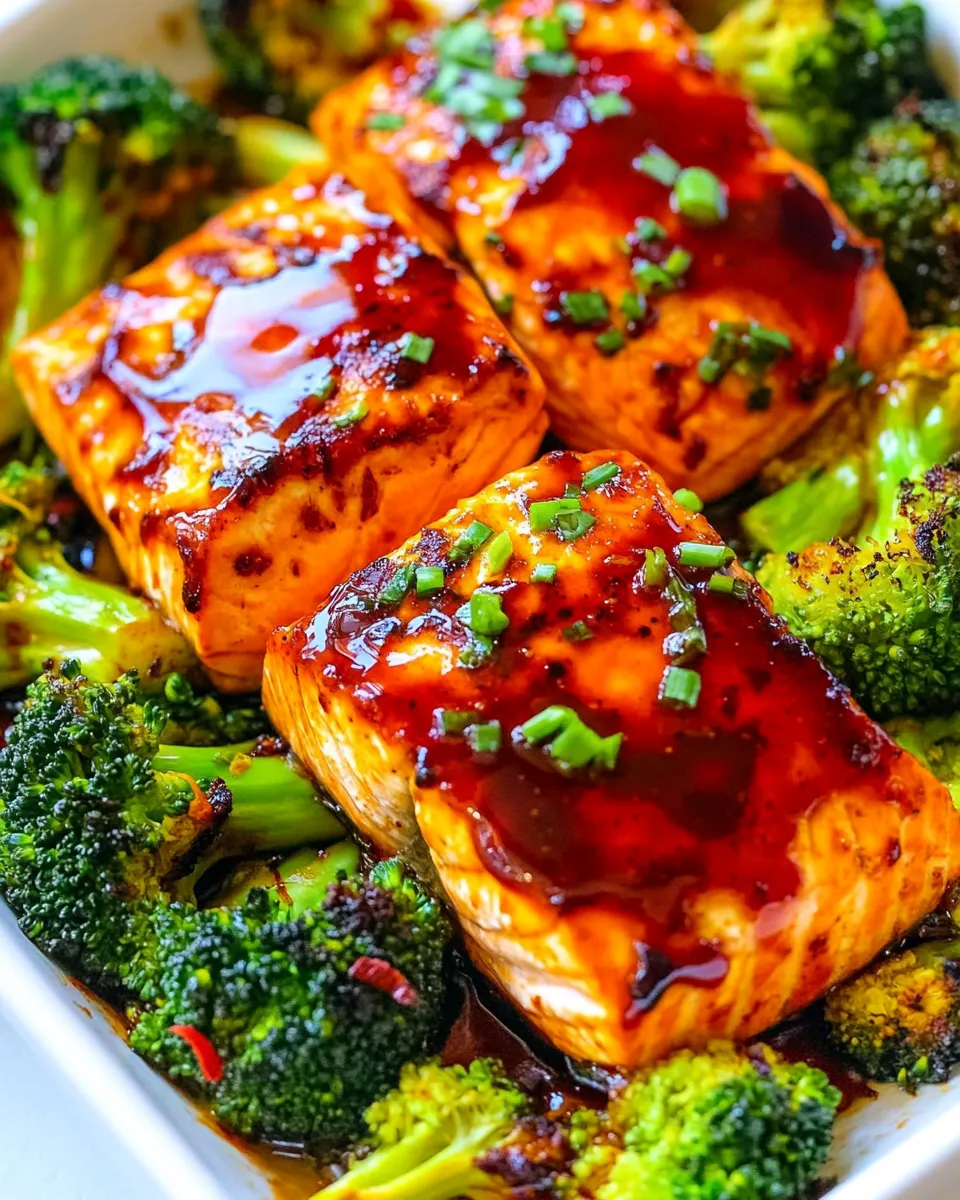
This sheet-pan dinner is the sort of weeknight solution I reach for when I want something fast, bright, and reliably flavorful without babysitting a stove. The salmon roasts gently while broccoli steams beside it, and a quick honey-soy-sesame glaze turns everything glossy and slightly caramelized when you finish under the broiler. It feels like effort but comes together in a single pan.
I like this recipe because timing and technique give consistent results: a short bake to cook the salmon through, then a fast broil to finish the glaze. That two-stage approach keeps the fish moist while delivering the texture and color that make the dish look restaurant-ready.
No fuss, minimal cleanup, and a handful of pantry staples are all you need. Below I break down ingredients, give the exact step-by-step from my testing notes, offer practical swaps, and point out the few mistakes that will cost you texture or flavor.
Ingredient Breakdown
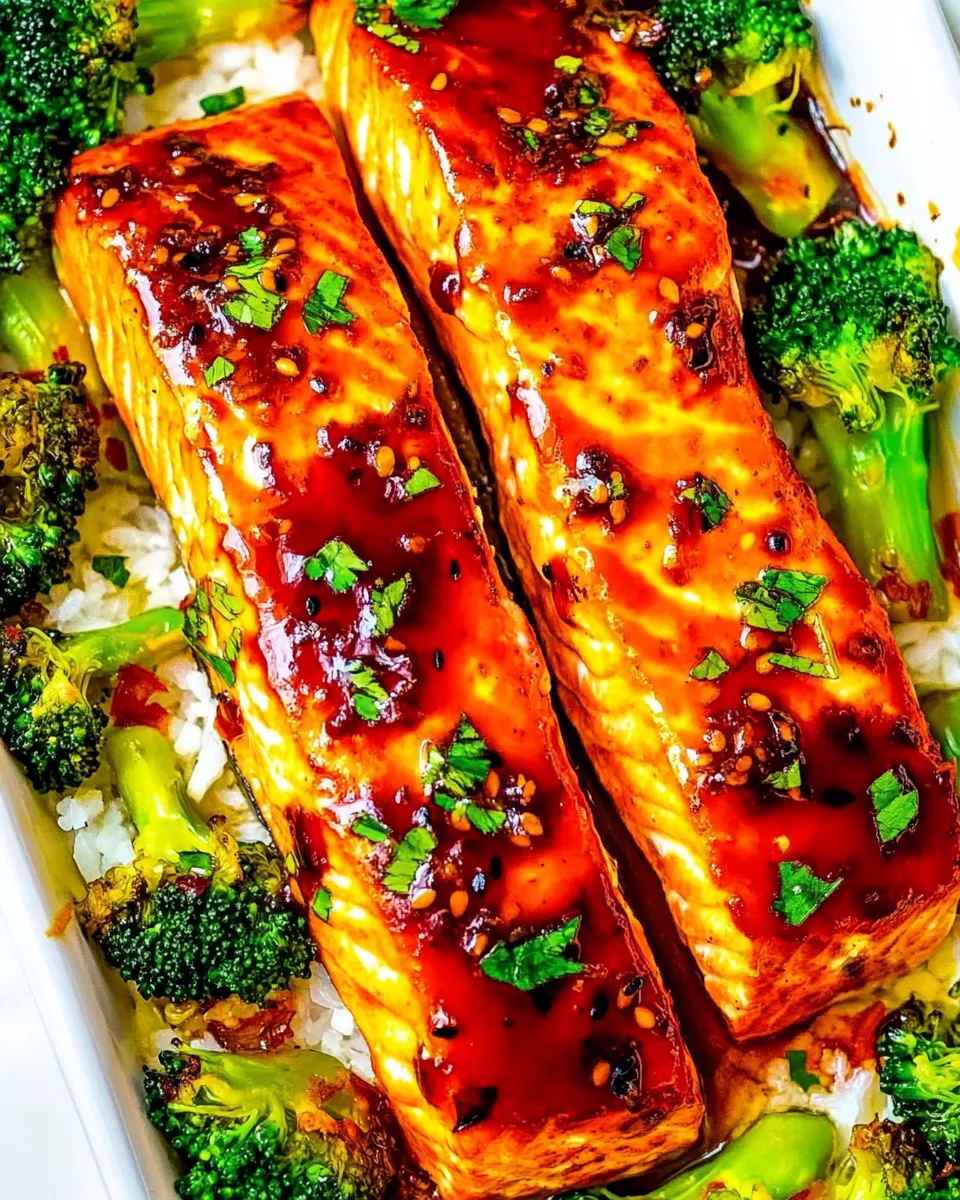
- 1.50-pound skin-on salmon fillet — The protein and the centerpiece; skin-side down helps protect the flesh and crisps if broiled briefly.
- 3 cups broccoli florets — Roasts beside the salmon and soaks up the glaze; trim to similar-sized florets for even cooking.
- 3 to 4 tablespoons honey — Balances salt and heat and helps the glaze caramelize under the broiler; choose the lower amount for less sweetness.
- 3 tablespoons reduced-sodium lite soy sauce — Provides savory depth and salt; note: use certified GF if this is important to you.
- 3 tablespoons sesame oil — Adds toasty, nutty flavor; a small amount goes a long way, so measure carefully.
- 1 tablespoon chili garlic sauce — Gives heat and umami; I use a heaping tablespoon, reduce to taste for less heat.
- 1 tablespoon rice vinegar — Gives brightness and acidity to balance the glaze; another vinegar may be substituted if needed.
- fresh cilantro — optional for garnishing.
- salt and pepper, to taste — optional if desired; add at the end so you can control seasoning after glazing.
Directions: Sheet Pan Asian Salmon and Broccoli
- Preheat oven to 375°F (use convection if you have it). Line a baking sheet with aluminum foil. Place the 1.50-pound skin-on salmon fillet skin-side down on the baking sheet and nestle the 3 cups broccoli florets evenly around the salmon; set aside.
- In a small bowl, combine 3 to 4 tablespoons honey, 3 tablespoons reduced-sodium lite soy sauce, 3 tablespoons sesame oil, 1 tablespoon chili garlic sauce, and 1 tablespoon rice vinegar. Stir until the mixture is uniform.
- Slowly spoon most of the sauce mixture over the top of the salmon. Dot the broccoli lightly with the remaining sauce (the broccoli will absorb runoff from the salmon).
- Bake at 375°F for about 12 to 15 minutes, or until the salmon is nearly cooked through (the flesh is mostly opaque but not fully flaked).
- Change the oven setting to Broil on High and broil for 3 to 5 minutes, watching closely, until the salmon is fully cooked and the glaze is slightly caramelized. If you prefer not to broil, continue baking a few extra minutes until done; avoid overcooking.
- Optionally season with salt and pepper to taste and garnish with fresh cilantro. Serve immediately.
Why This Recipe Is Reliable
There are three small, repeatable reasons this comes out well every time: single-pan roasting keeps juices localized so the broccoli benefits from the salmon’s flavors; the timed bake-to-broil sequence cooks gently then finishes with high heat for color and caramelization; and the glaze composition—sweet, salty, acidic, and oily—creates a stable coating that won’t separate during cooking.
The specified oven temperature and short bake window (12–15 minutes) are deliberately conservative—salmon is forgiving at this range. Broiling for only a few minutes is what makes the top glossy and slightly charred without drying the fillet. Following those two stages is what separates a drying, flakey result from a moist, vibrant one.
No-Store Runs Needed
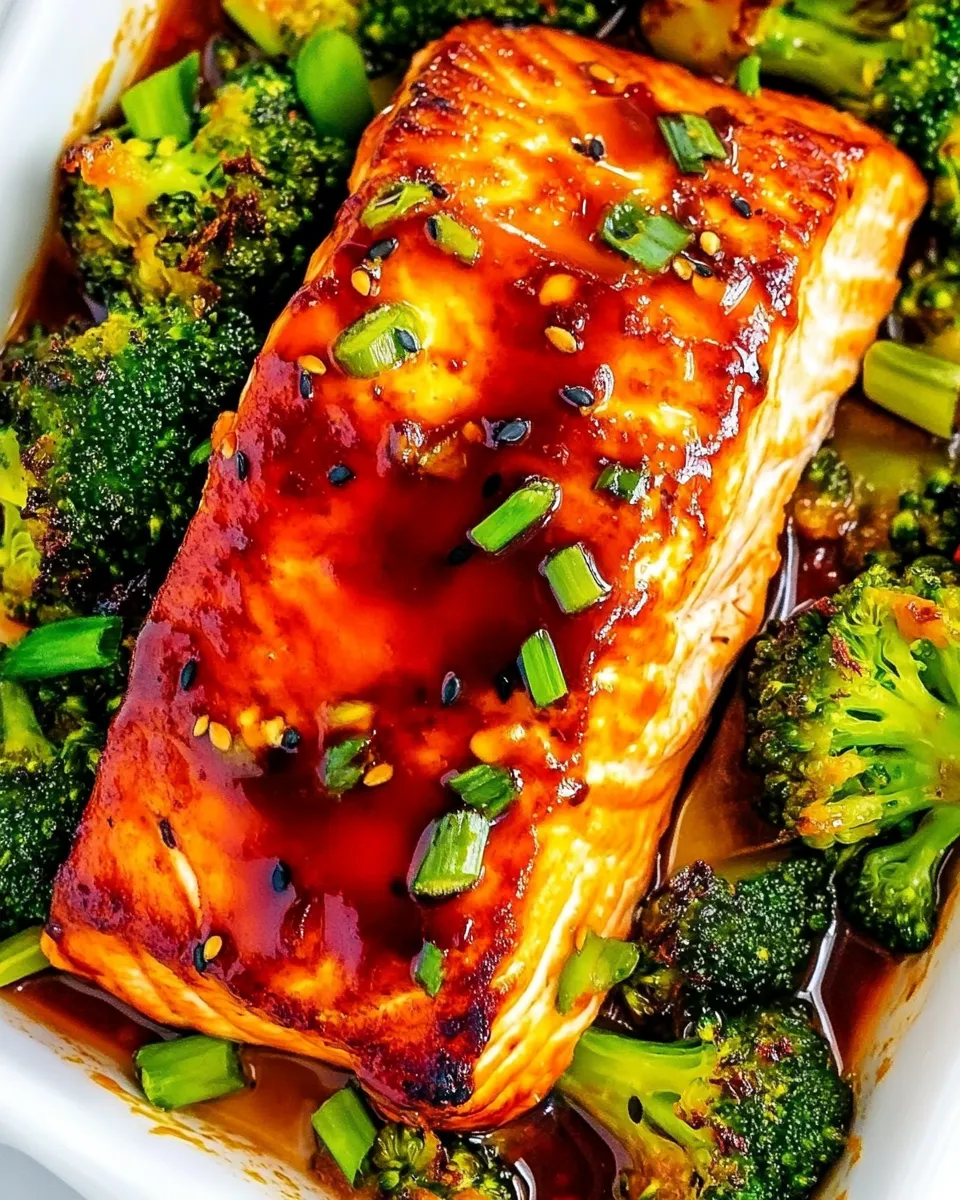
If you already keep the basics on hand—honey, some kind of soy sauce, oil, vinegar, and a hot condiment—you can make this without a last-minute shop. The recipe’s components are pantry-friendly: honey, soy, sesame oil, rice vinegar, and a chile paste are long-lived items. Fresh salmon and broccoli are the only perishable parts; if you have those, you’re set.
If you don’t have cilantro or salt and pepper, you can skip them; they’re finishing touches rather than structural. The glaze is the star, so prioritizing the honey, soy sauce, sesame oil, chili garlic sauce, and rice vinegar will keep things on track.
Tools of the Trade
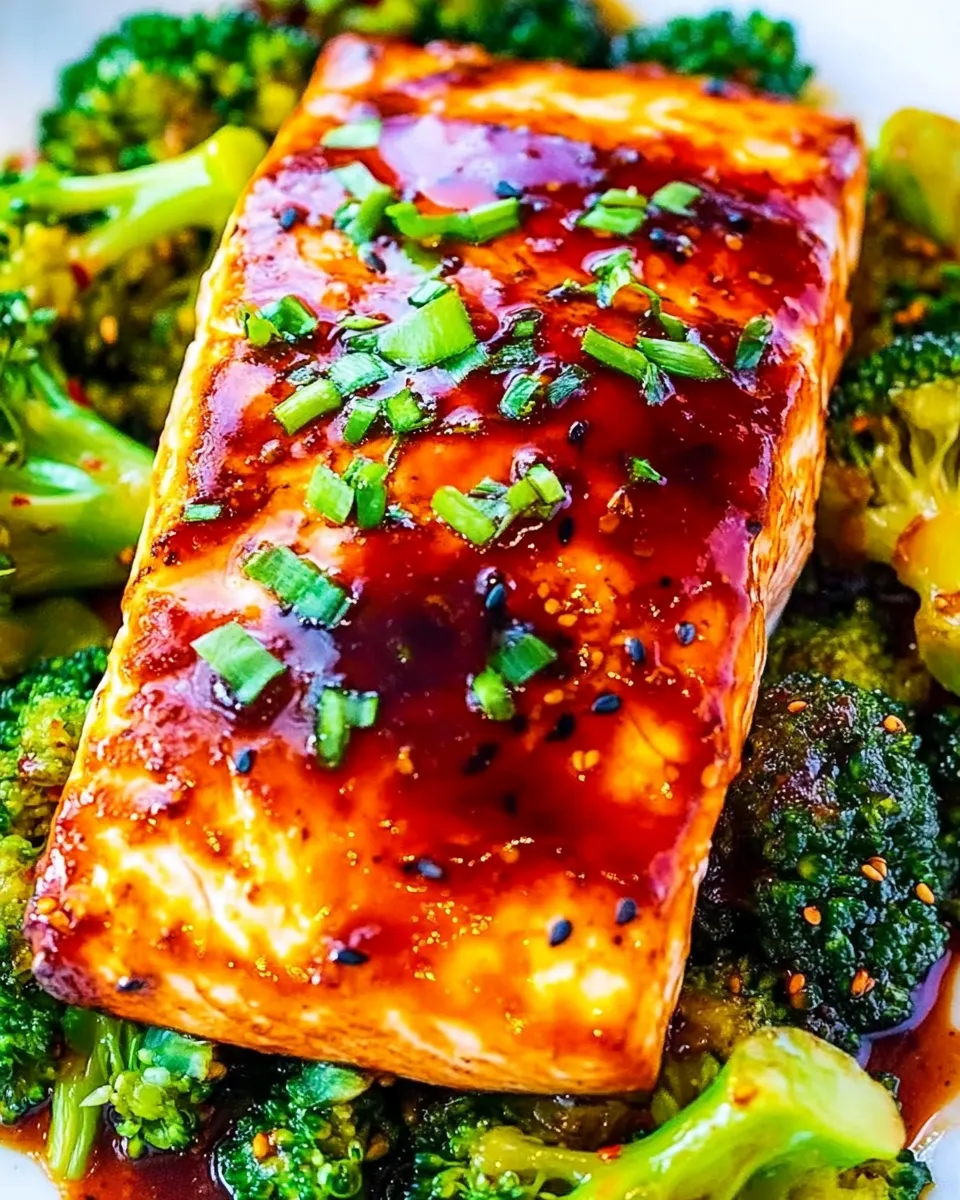
- Baking sheet — wide enough to hold the salmon and broccoli without crowding.
- Aluminum foil — for easy cleanup and to prevent sticking.
- Small mixing bowl — to whisk together the sauce.
- Spoon or small ladle — to spoon sauce over the salmon.
- Oven with broil setting — used to finish and caramelize the glaze.
- Instant-read thermometer (optional) — helpful if you prefer precise doneness checks.
Avoid These Mistakes
1) Over-broiling. The broil step is short by design. Watch closely during those 3–5 minutes—glazes can go from caramelized to burnt quickly. Keep the oven door closed and your attention open.
2) Crowding the pan. If the broccoli is packed tightly or the salmon spills its juices across too much surface, nothing browns properly. Give the florets some breathing room so they roast rather than steam completely.
3) Skipping the “nearly cooked” check. Broiling is a finishing step, not a substitute for cooking the fish through. Make sure the salmon is mostly opaque before broiling; otherwise the top will char before the center is done.
4) Using too much heat for the whole bake. The initial 375°F step gives gentle, predictable cooking; cranking the oven higher to speed things up risks drying the fish before the glaze sets.
Allergy-Friendly Swaps
Gluten: The ingredient list already calls for reduced-sodium lite soy sauce and notes to use certified GF soy sauce if that’s important to you—do that to make the dish gluten-free.
Sesame Allergy: If sesame oil is a problem, substitute a neutral oil you tolerate (for example, canola or vegetable oil) to preserve the fat in the glaze; you’ll lose the sesame aroma but retain moisture and mouthfeel.
Heat: If chili garlic sauce is too spicy, reduce the amount or omit it and add a pinch of black pepper or a small splash of sweet chili if that’s available. The honey, soy, and vinegar will still produce a balanced glaze.
Testing Timeline
Follow the recipe’s timing as your baseline: 12–15 minutes at 375°F, then 3–5 minutes under a high broil. Use these checkpoints while you cook:
- At 10 minutes: check broccoli color and salmon’s opacity along the thickest part. If the broccoli is shy of color, give it another minute or two.
- At 12 minutes: the salmon should be mostly opaque (not flaking fully). This is the cue to switch to broil.
- During the 3–5 minute broil: watch for the glaze to bubble and take on deep color—stop as soon as you see that sheen or a few darker spots; the flesh will finish cooking from residual heat if needed.
Storage Pro Tips
Refrigerate leftovers within two hours of cooking. Store in an airtight container for up to 3 days. The broccoli will soften more over time, and the glaze will tighten; gently reheat in a 300°F oven until warmed through (about 8–10 minutes), or microwave in short bursts if time is tight.
Freezing cooked salmon and broccoli is possible but not ideal—the texture of both will be softer after freezing and reheating. If you must freeze, wrap tightly and use within one month. Thaw in the refrigerator before reheating and accept some texture changes.
Common Qs About Sheet Pan Asian Salmon and Broccoli
Q: Can I use frozen broccoli?
A: You can, but thaw and drain it thoroughly first and pat dry—otherwise it will release extra water and steam instead of roast. Adjust bake time down slightly if the florets are partly thawed.
Q: How do I know when the salmon is done?
A: The recipe timing is a guide. Look for the flesh to move from translucent to mostly opaque and test the thickest part: it should flake gently when prodded with a fork but still be moist. An instant-read thermometer should read about 125–130°F for medium-rare to medium—adjust to your preference.
Q: What if I don’t want to broil?
A: Continue baking at 375°F for an extra 3–6 minutes until the glaze has deepened slightly and the salmon reaches your desired doneness. You won’t get the same quick caramelization but you’ll avoid any risk of over-browning.
Q: Can I double the recipe?
A: Yes, but use two baking sheets or a very large sheet pan so everything has space. Crowding will cause the broccoli to steam and will lower overall browning and texture quality.
Q: What should I serve with it?
A: Simple steamed rice, a quick noodle dish, or a light salad work well. The glaze is fairly bold, so neutral sides like jasmine rice or a simple cucumber salad complement without competing.
The Takeaway
This Sheet Pan Asian Salmon and Broccoli recipe is a practical weeknight winner: minimal prep, one pan, strong flavor, and quick cook time. Follow the two-stage cooking method—bake until nearly opaque, then broil briefly for caramelization—to keep the salmon moist and give the glaze a glossy finish. Keep the glaze proportions as written, watch the broiler closely, and you’ll have a fast, balanced dinner that cleans up in minutes.
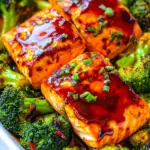
Sheet Pan Asian Salmon and Broccoli
Ingredients
Ingredients
- 1.50 poundskin-on salmon fillet
- 3 cupsbroccoli florets
- 3 to 4 tablespoonshoney
- 3 tablespoonsreduced-sodium lite soy sauce (use certified GF if this is important to you)
- 3 tablespoonssesame oil
- 1 tablespoonchili garlic sauce (I use a heaping tablespoon, reduce to taste for less heat)
- 1 tablespoonrice vinegar (another vinegar may be substituted)
- fresh cilantro ,optional for garnishing
- salt and pepper to taste, optional if desired
Instructions
Instructions
- Preheat oven to 375°F (use convection if you have it). Line a baking sheet with aluminum foil. Place the 1.50-pound skin-on salmon fillet skin-side down on the baking sheet and nestle the 3 cups broccoli florets evenly around the salmon; set aside.
- In a small bowl, combine 3 to 4 tablespoons honey, 3 tablespoons reduced-sodium lite soy sauce, 3 tablespoons sesame oil, 1 tablespoon chili garlic sauce, and 1 tablespoon rice vinegar. Stir until the mixture is uniform.
- Slowly spoon most of the sauce mixture over the top of the salmon. Dot the broccoli lightly with the remaining sauce (the broccoli will absorb runoff from the salmon).
- Bake at 375°F for about 12 to 15 minutes, or until the salmon is nearly cooked through (the flesh is mostly opaque but not fully flaked).
- Change the oven setting to Broil on High and broil for 3 to 5 minutes, watching closely, until the salmon is fully cooked and the glaze is slightly caramelized. If you prefer not to broil, continue baking a few extra minutes until done; avoid overcooking.
- Optionally season with salt and pepper to taste and garnish with fresh cilantro. Serve immediately.
Equipment
- Baking Sheet
- Aluminum Foil
- Small Bowl
- Spoon
- Oven
Notes
Note about broiling
– Keep a very watchful eye on your food if you broil it because the honey in the sauce will be prone to burning and it can go from fine looking to burnt in less than 1 minute so don’t leave the kitchen and watch it the whole time.
Read blog post for suggestions about how to know when salmon is done. All pieces vary in their thickness and therefore all cooking times will vary. You need to be the judge of when it’s done and not go by solely what the clock says.
Storage:
Recipe is best fresh but will keep airtight in the fridge for up to 4 days.