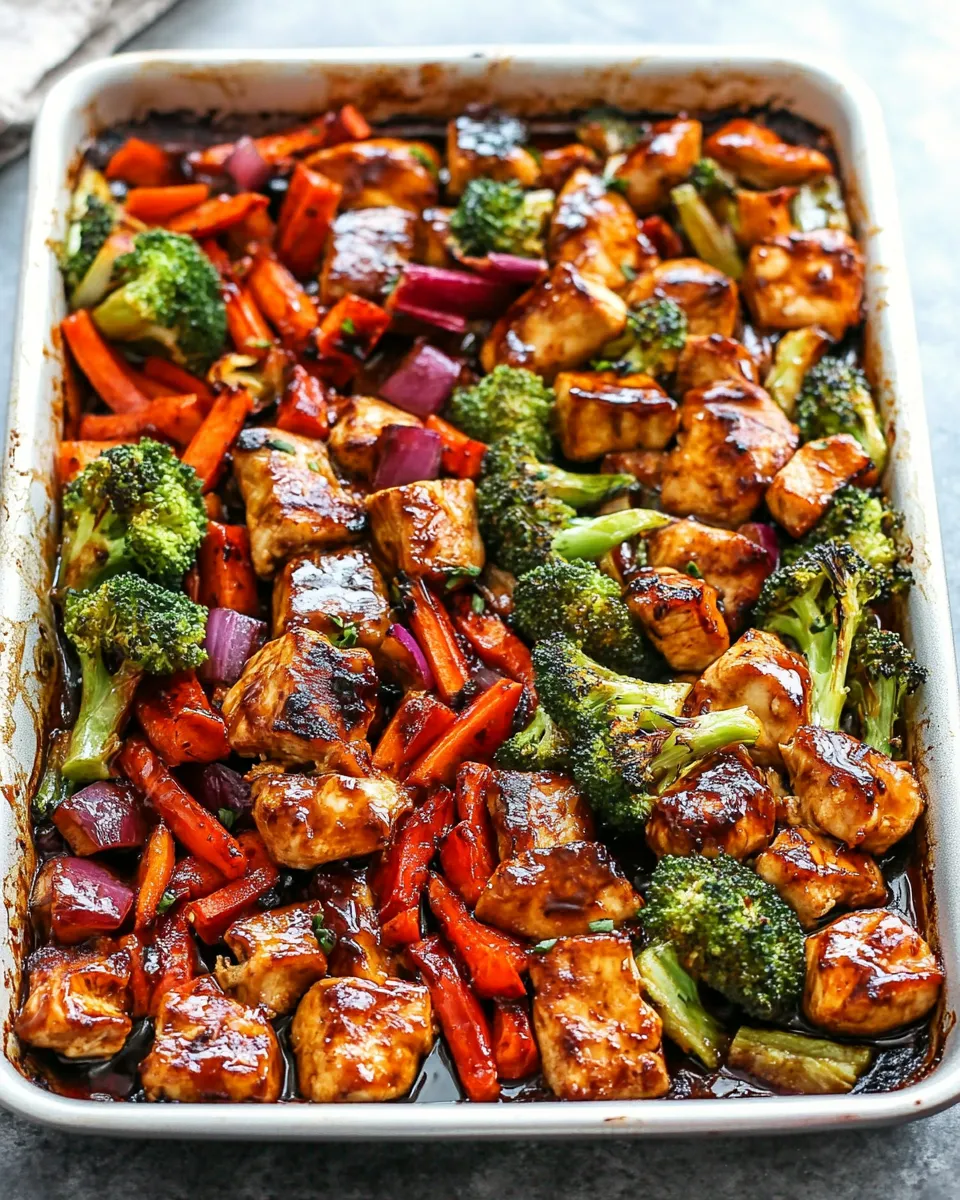
I love recipes that feel like a small win on a busy weeknight: one pan, big flavor, and clean-up that doesn’t steal the evening. This Sheet Pan Teriyaki Chicken With Vegetables is exactly that—bright, savory teriyaki lacquer, tender chicken, and a medley of vegetables roasted until they have a little caramelized edge. It’s practical, forgiving, and keeps the pantry basics front and center.
There’s nothing fancy required here—just a quick stovetop sauce, a sheet pan, and twenty-odd minutes in a hot oven. The sauce is the star, made from soy, brown sugar, sesame oil, garlic, and ginger, thickened with a cornstarch slurry so it clings to the chicken and veg. I like to reserve some sauce for finishing so everything comes out glossy and saucy.
If you want a straightforward family dinner that doubles as meal prep for the week, this is a go-to. Below I walk through ingredient notes, step-by-step instructions from start to finish, helpful swaps, troubleshooting, and serving ideas so you can adapt it confidently.
Ingredient Notes
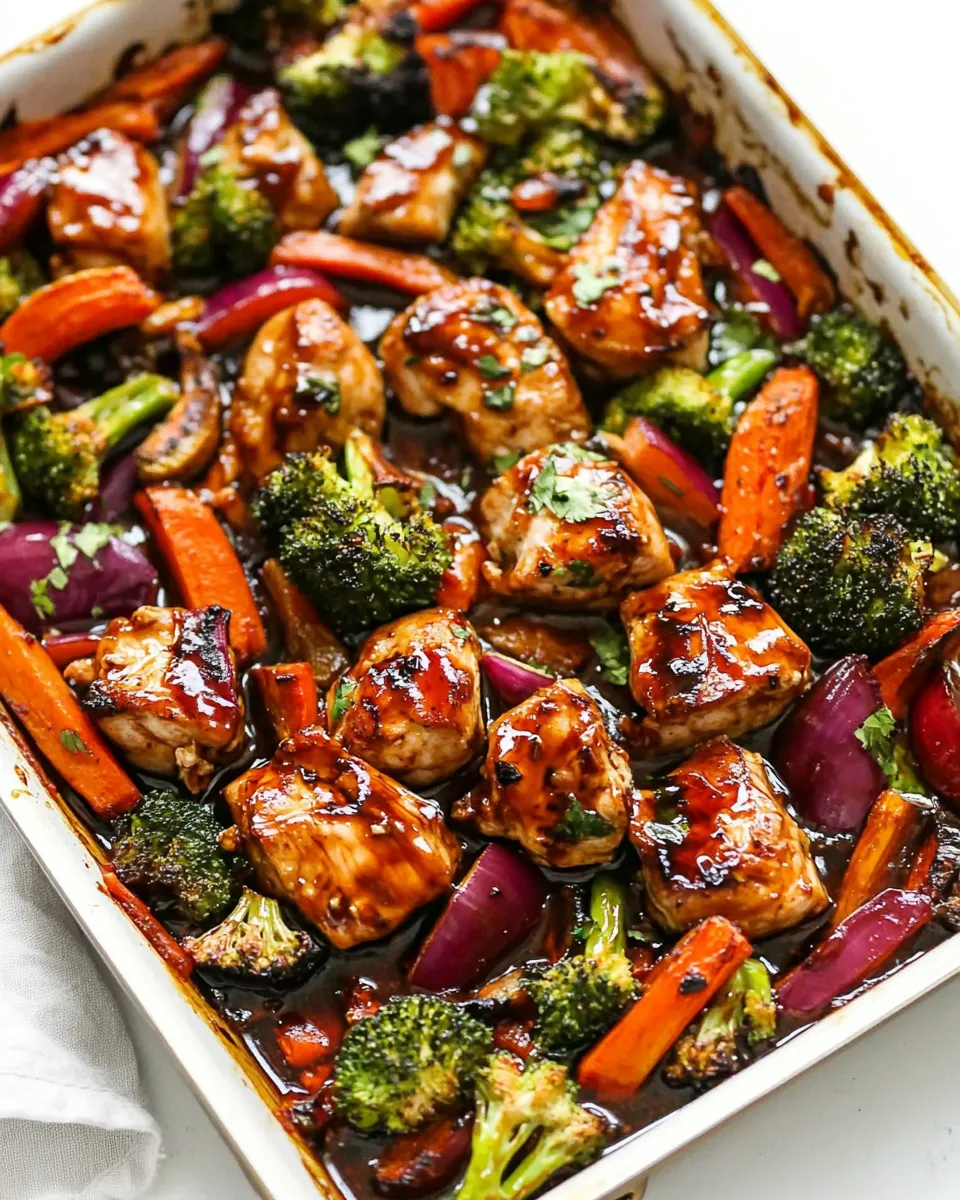
Ingredients
- 1 cup soy sauce — the salty, umami backbone of the teriyaki; use low-sodium if you want a gentler salt level.
- ¼ cup brown sugar — adds sweetness and helps the sauce caramelize on the chicken and vegetables.
- 1 ½ teaspoons sesame oil — small but essential for authentic toasted sesame aroma.
- 3 cloves garlic, minced — provides savory depth; mince finely so it disperses evenly in the sauce.
- 1 teaspoon grated ginger — bright, peppery counterpoint to the sweet-salty sauce; freshly grated is best.
- 1 tablespoon cornstarch — thickening agent; makes the teriyaki glossy and clingy.
- ¼ cup water — used to make the cornstarch slurry so it mixes smoothly into the hot sauce.
- salt and black pepper, to taste — season to your preference; remember soy sauce contributes salt.
- 3 boneless skinless chicken breasts, cut in half lengthwise (about 1 1/2 pounds) — halving them makes thinner pieces that cook evenly and quickly.
- 2 cups broccoli florets — roast well and hold their texture; cut into uniform florets for even cooking.
- 1 cup carrots, sliced — I slice on the bias for more surface area to caramelize.
- ½ red onion, sliced — sweetens as it roasts and adds color.
- 1 bell pepper, sliced — any color will do; red or orange will give extra sweetness and color contrast.
Notes on produce: aim for even-sized pieces so everything finishes at the same time. If your broccoli crowns are large, break them down so the florets are similar in size to the carrot slices. The chicken pieces should be thin and similar in thickness; this prevents overcooking the vegetables while you wait for the center of the meat to reach temperature.
Sheet Pan Teriyaki Chicken With Vegetables Made Stepwise
- Preheat the oven to 400°F (204°C).
- Make the teriyaki sauce: in a medium saucepan combine 1 cup soy sauce, 1/4 cup brown sugar, 1 1/2 teaspoons sesame oil, 3 cloves minced garlic, and 1 teaspoon grated ginger. Bring to a boil over medium heat, stirring until the sugar dissolves.
- In a small bowl whisk 1 tablespoon cornstarch with 1/4 cup water until smooth. Stir the cornstarch slurry into the boiling sauce, season with salt and black pepper to taste, reduce heat and simmer for about 4–5 minutes, stirring occasionally, until the sauce thickens. Remove from heat and set aside.
- Prepare the chicken and vegetables: cut each of the 3 boneless skinless chicken breasts in half lengthwise so you have six thinner pieces. Arrange the chicken pieces in the center of a large sheet pan. Spread 2 cups broccoli florets, 1 cup sliced carrots, 1/2 red onion sliced, and 1 bell pepper sliced in an even layer on either side of the chicken.
- Drizzle about two-thirds of the teriyaki sauce evenly over the chicken and vegetables, reserving the remaining sauce for finishing.
- Bake in the preheated oven for 20–25 minutes, or until the vegetables are tender and lightly browned and an instant-read thermometer inserted into the thickest part of the chicken reads 165°F (74°C).
- Remove the sheet pan from the oven, drizzle or spoon the reserved teriyaki sauce over the cooked chicken and vegetables, let rest for 2–3 minutes, then serve.
Why Cooks Rave About It
This recipe hits a few reliable pleasure points: it’s fast without feeling rushed, it produces layered flavors (sweet, salty, toasty, bright), and it’s visually pleasing straight out of the oven. The method keeps everything on one pan so flavors mingle but don’t get lost—roasting concentrates the vegetables’ natural sweetness and gives the chicken pleasant browning along the edges.
People also appreciate the control: the sauce is made on the stove so you can adjust sweetness, acidity, and thickness before it ever touches the poultry. Reserving a portion of the sauce for finishing gives the dish a fresh lacquered look and a final pop of flavor. Finally, because textures are balanced—tender chicken, slightly crisp-tender broccoli, and caramelized peppers—most eaters find it satisfying and approachable.
Substitutions by Category
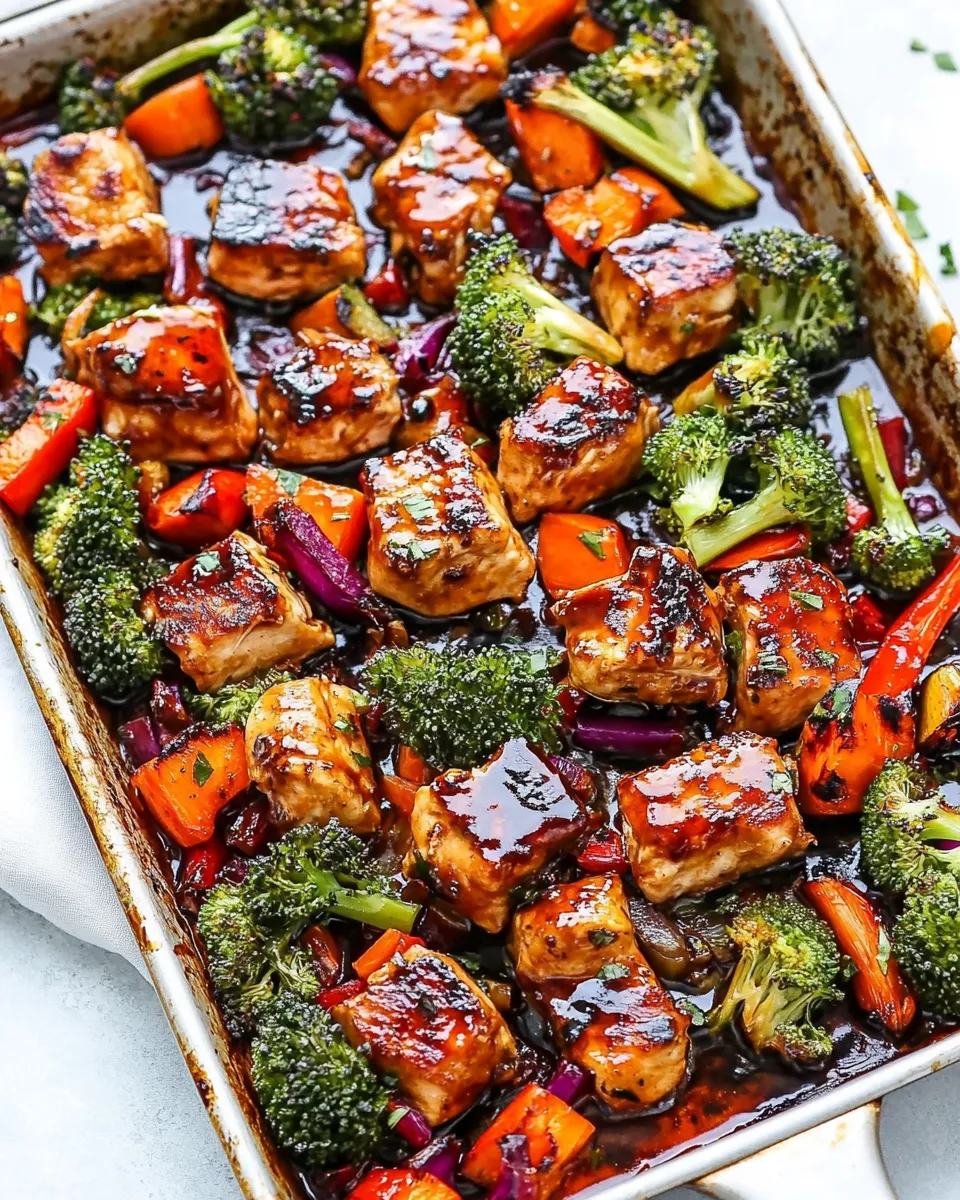
Protein
- Chicken thighs (bone-in or boneless) — use for richer flavor; boneless thighs will cook faster than bone-in, so adjust timing accordingly.
- Firm tofu — press excess moisture before slicing; bake until edges are golden for best texture.
Vegetables
- Green beans, snap peas, or cauliflower — all roast well; choose based on what you have and cut to similar sizes.
- Sweet potatoes — cube into small pieces; they’ll take longer, so either par-cook or roast separately.
Sauce & Sweeteners
- Tamari — swap for soy sauce to make it gluten-free.
- Maple syrup or honey — can replace some or all of the brown sugar for a different caramel note; reduce heat gently so it doesn’t scorch.
Appliances & Accessories
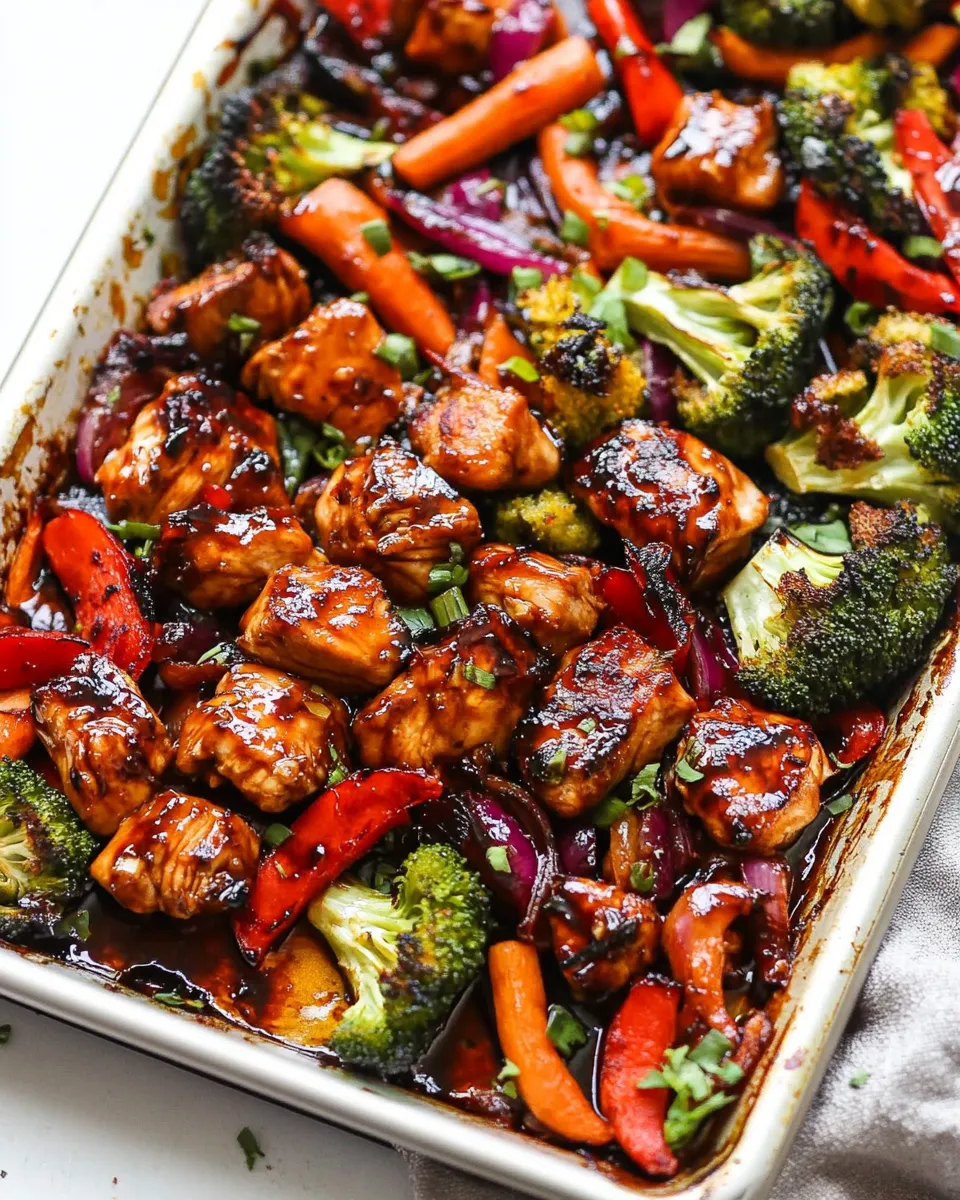
Essentials: a large rimmed sheet pan, a medium saucepan for the sauce, a small bowl for the cornstarch slurry, a whisk, a sharp knife, and an instant-read thermometer. Parchment paper or a silicone baking mat makes cleanup much easier and prevents sticking and burnt sugar buildup from the sauce.
Optional but handy: a wire rack fitted inside the sheet pan can improve airflow and allow the underside of the chicken to brown slightly, though it does add one more thing to wash. A silicone spatula helps scrape up any caramelized sauce from the pan to spoon over the finished dish.
Troubles You Can Avoid
Under-cooked center on chicken: halving the breasts lengthwise is the right move—thinner pieces reach 165°F evenly. Always use an instant-read thermometer to be sure.
Soggy vegetables: avoid crowding the pan. Spread the vegetables in a single layer with some space between pieces so hot air circulates and edges can caramelize.
Sauce too thin or too gloopy: the cornstarch slurry should be whisked smooth and added to boiling sauce; simmer for 4–5 minutes and it will thicken properly. If it becomes too thick while resting, whisk in a teaspoon or two of hot water to loosen it before finishing the dish.
Burnt sugar on the pan: the brown sugar in the sauce can caramelize quickly. Lining the pan with parchment or a silicone mat reduces sticking. If you like more sauce on the plate, spoon reserved sauce onto the cooked components off the direct hot surface rather than pouring additional sauce onto the hot pan and letting it bake further.
Dietary Swaps & Alternatives
Gluten-free: replace soy sauce with tamari. Check labels for any added gluten in brown sugars or other pre-mixed ingredients.
Lower-sodium: use low-sodium soy sauce and taste the teriyaki before seasoning with additional salt. You can also reduce the soy by 1/4 cup and replace with a splash of water if you prefer.
Vegetarian/vegan: swap the chicken for extra-firm tofu or tempeh. Press tofu well, slice into pieces similar in size to the chicken halves, and roast until golden. If you use honey as a sweetener normally, replace it with maple syrup to keep it vegan.
Author’s Commentary
I reach for this particular configuration when I want the comfort of a takeout-style meal without the delivery wait or extra packaging. The stovetop teriyaki makes the flavor customizable: add more ginger if you like brightness, or a pinch of chili flakes if you want heat. I often double the sauce and keep the extra in the fridge for 3–4 days—it’s great as a quick glaze for rice bowls or drizzled over greens.
I also recommend letting the finished pan rest for the 2–3 minutes called for in the recipe. It’s a small pause that helps the sauce settle and the juices redistribute in the chicken, so each bite is juicy and the sauce clings properly.
Leftovers & Meal Prep
Storage: cool the chicken and vegetables to room temperature, then store in an airtight container in the refrigerator for up to 3–4 days. If you’ve doubled the sauce, keep it in a sealed jar or container in the fridge and stir before reheating.
Reheating: reheat gently in a 325°F (163°C) oven for 8–12 minutes until warmed through, or microwave individual portions for 1–2 minutes depending on your microwave. If you want to crisp things up, a quick sear in a hot skillet for a minute or two will revive edges.
Meal prep idea: serve over freshly steamed rice or cooked quinoa, and add a handful of raw greens or sliced scallions to brighten lunches through the week. Assemble lunches with rice on the bottom, the teriyaki chicken and veg on top, and a small container of extra sauce to keep everything glossy.
Handy Q&A
Q: Can I prepare this ahead and bake later?
A: Yes. Assemble the sheet pan with the drizzled two-thirds of the sauce, cover tightly, and refrigerate for a few hours. Bring the pan to room temperature before baking and allow an extra few minutes in the oven if the contents are chilled.
Q: My sauce separated after cooling—what now?
A: Warm it gently over low heat and whisk; the emulsion usually comes back together. If it’s very thick, add a teaspoon of hot water at a time until you reach the desired consistency.
Q: Can I use frozen vegetables?
A: If you must, thaw and pat them dry first; frozen veg release more moisture, which can steam instead of roast, so they may not brown as well. You might prefer roasting them separately to manage timing and texture.
The Last Word
Sheet Pan Teriyaki Chicken With Vegetables is one of those recipes that earns its place in a regular rotation: fast to pull together, flexible, and reliably delicious. It’s forgiving enough for weeknight cooks and polished enough to serve company with a simple side of rice and a sprinkle of sesame seeds. Make the sauce your own, keep the pan tidy with parchment, and enjoy a bright, saucy meal with minimal fuss.
Sheet Pan Teriyaki Chicken With Vegetables
Ingredients
Ingredients
- 1 cupsoy sauce
- 1/4 cupbrown sugar
- 1 1/2 teaspoonssesame oil
- 3 clovesgarlic minced
- 1 teaspoongrated ginger
- 1 tablespooncornstarch
- 1/4 cupwater
- salt and black pepper to taste
- 3 boneless skinless chicken breasts cut in half lengthwise (about 1 1/2 pounds)
- 2 cupsbroccoli florets
- 1 cupcarrotssliced
- 1/2 red onion sliced
- 1 bell pepper sliced
Instructions
Instructions
- Preheat the oven to 400°F (204°C).
- Make the teriyaki sauce: in a medium saucepan combine 1 cup soy sauce, 1/4 cup brown sugar, 1 1/2 teaspoons sesame oil, 3 cloves minced garlic, and 1 teaspoon grated ginger. Bring to a boil over medium heat, stirring until the sugar dissolves.
- In a small bowl whisk 1 tablespoon cornstarch with 1/4 cup water until smooth. Stir the cornstarch slurry into the boiling sauce, season with salt and black pepper to taste, reduce heat and simmer for about 4–5 minutes, stirring occasionally, until the sauce thickens. Remove from heat and set aside.
- Prepare the chicken and vegetables: cut each of the 3 boneless skinless chicken breasts in half lengthwise so you have six thinner pieces. Arrange the chicken pieces in the center of a large sheet pan. Spread 2 cups broccoli florets, 1 cup sliced carrots, 1/2 red onion sliced, and 1 bell pepper sliced in an even layer on either side of the chicken.
- Drizzle about two-thirds of the teriyaki sauce evenly over the chicken and vegetables, reserving the remaining sauce for finishing.
- Bake in the preheated oven for 20–25 minutes, or until the vegetables are tender and lightly browned and an instant-read thermometer inserted into the thickest part of the chicken reads 165°F (74°C).
- Remove the sheet pan from the oven, drizzle or spoon the reserved teriyaki sauce over the cooked chicken and vegetables, let rest for 2–3 minutes, then serve.
Equipment
- Sheet Pan
- Medium Saucepan
- Small Bowl
- Whisk
- Instant-read thermometer
Notes
Updated on June 13, 2024
Originally Posted on April 27, 2019