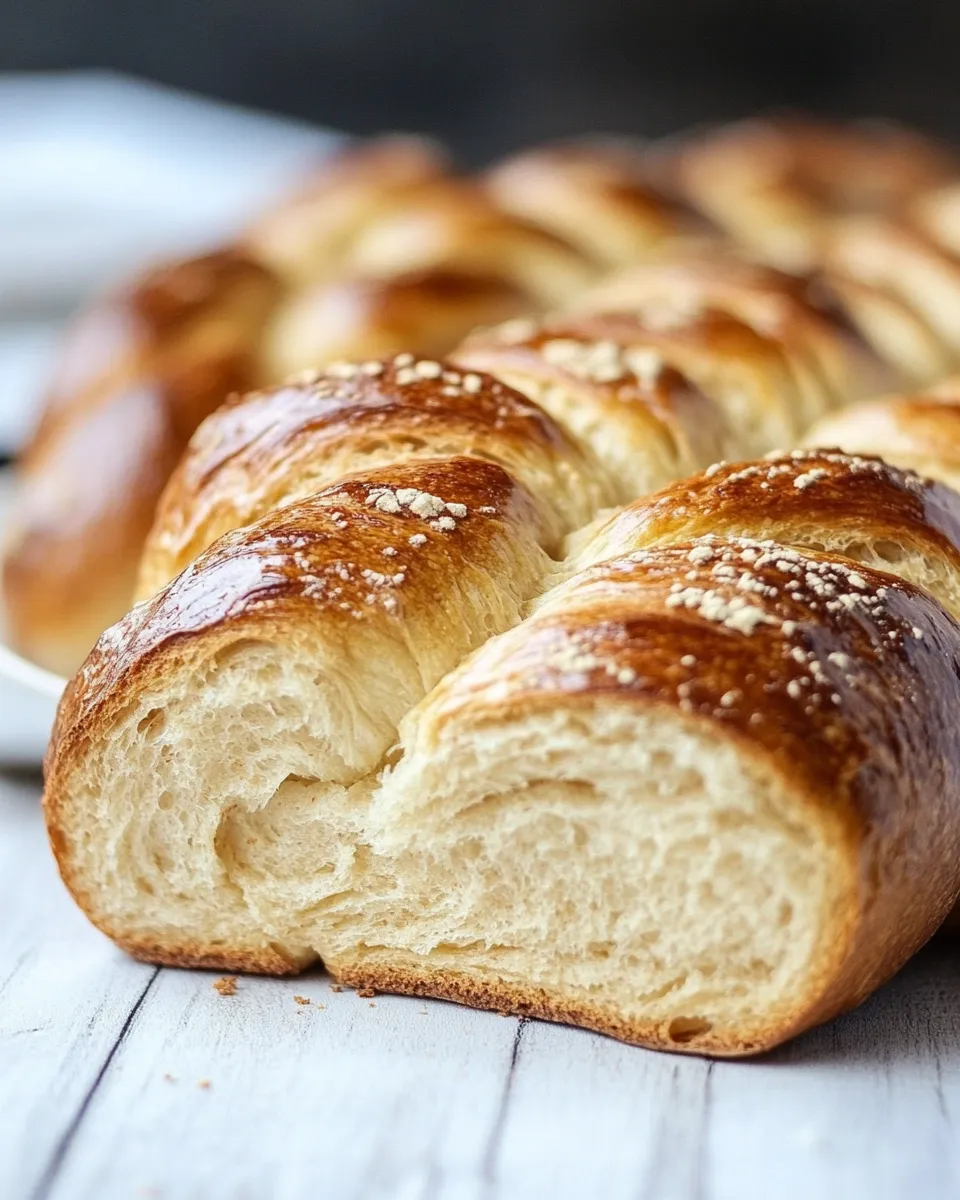
I bake a lot of bread, and this Whole Wheat Challah Bread is one I reach for when I want something wholesome, tender, and reliably beautiful on the table. It balances the nutty flavor of whole wheat with the soft, slightly sweet crumb that makes challah such a crowd-pleaser. The method is forgiving, and the braid gives it a handmade, special look without being fussy.
You don’t need a professional kitchen to make this — just a little planning for the rises and a willingness to braid. The dough handles well, and the recipe includes options to refrigerate if your schedule calls for a slower approach. Follow the steps and you’ll have two glossy, golden loaves worth sharing.
The loaf freezes well, bakes consistently, and uses familiar pantry staples. Below I’ll walk you through exactly what I use, the step-by-step method, troubleshooting tips, and sensible substitutions so you can make it your own while keeping the recipe honest and straightforward.
What You’ll Gather
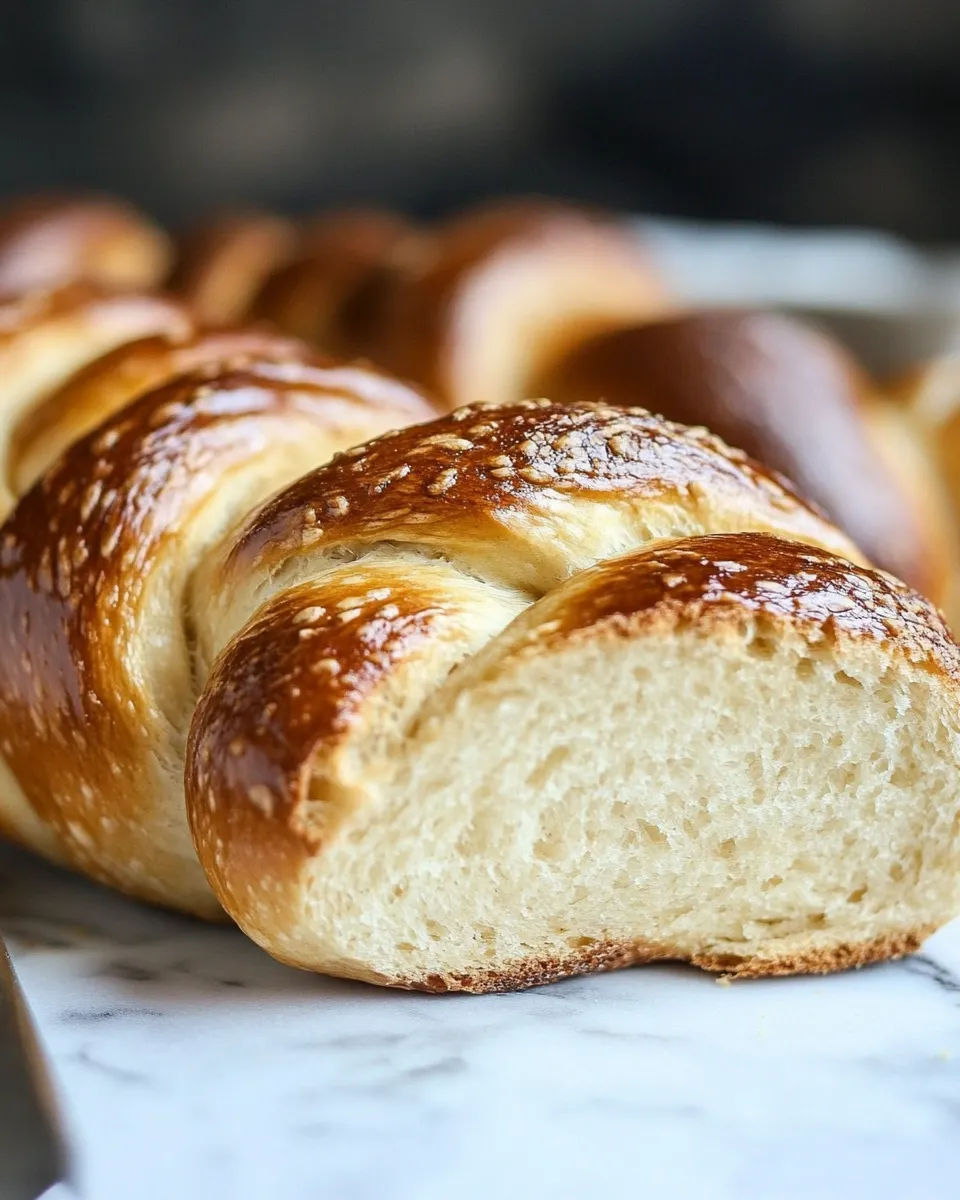
Ingredients
- 4 1/2 teaspoons (2 packages) active dry yeast — the leavening agent; proof it in lukewarm water so it blooms.
- 1/2 cup + 1 tablespoon brown sugar — feeds the yeast and adds a subtle molasses note for color and flavor.
- 1 3/4 cups lukewarm water — temperature matters: should feel warm, not hot, to the touch.
- 1/2 cup olive oil plus more for greasing the bowl — keeps the crumb tender and helps the crust brown.
- 5 large eggs divided — provide structure and richness; one egg is reserved for the egg wash.
- 1 tablespoon kosher salt — balances sweetness and strengthens the dough’s structure.
- 4 – 4 1/2 cups whole wheat pastry flour or white whole wheat flour — the primary whole-grain flour; use the lower amount for a lighter crumb.
- 4 cups all-purpose flour — balances the whole wheat so the loaf remains soft and elastic.
Stepwise Method: (Whole Wheat Challah Bread)
- In a large bowl, dissolve 4 1/2 teaspoons (2 packages) active dry yeast and 1 tablespoon of the brown sugar in 1 3/4 cups lukewarm water. Let sit 5 minutes, until foamy.
- Whisk 1/2 cup olive oil into the yeast mixture. Add the remaining 1/2 cup brown sugar, 1 tablespoon kosher salt, and 4 of the eggs (reserve the 5th egg for the egg wash). Beat or whisk until combined.
- Add the flours gradually: the 4–4 1/2 cups whole wheat pastry (or white whole wheat) flour and the 4 cups all-purpose flour. Stir a cup at a time until the dough begins to hold together. You may use a sturdy stand mixer with a dough hook for mixing and kneading, or mix in a large bowl and finish by hand.
- Turn the dough onto a lightly floured surface and knead until smooth and elastic, about 5–10 minutes. Add small amounts of flour only as needed to prevent sticking.
- Clean the mixing bowl, lightly oil it with additional olive oil, place the kneaded dough back in the bowl, and turn once so the top is lightly oiled. Cover the bowl with plastic wrap or a kitchen towel.
- Let the dough rise in a warm place for 1 hour, until almost doubled in size. (If you prefer, you may refrigerate the dough overnight at this point; if refrigerating, allow it to come to room temperature before continuing.)
- Punch down the dough, cover, and let it rise again in a warm place for 30 minutes. (You may also refrigerate overnight here; if you do, bring to room temperature and allow the dough to finish rising before shaping.)
- To shape a 3-braid challah, divide the dough in half. Work with one half at a time: divide that half into 3 equal pieces, form each into a ball, then roll each ball into a strand about 12 inches long and 1 1/2 inches wide. Pinch the top ends together and braid by bringing the right outside strand over the center, then the left outside strand over the new center, repeating until you reach the ends. Pinch and tuck the ends to seal. Repeat with the other half of dough.
- Place the braided loaves on a lightly oiled baking sheet. Beat the reserved 5th egg and brush the loaves lightly with some of the beaten egg (reserve a little egg wash for brushing again before baking, if desired). Cover the loaves and let them rise for about 1 hour, until puffy and nearly doubled. (Or place in the fridge to rise overnight.)
- If baking immediately, preheat the oven to 375°F while the loaves finish their final rise. Just before baking, brush the loaves again with any remaining beaten egg.
- Bake on the middle oven rack for 30 to 40 minutes, or until the loaves are golden brown. Remove from the oven and cool completely on a wire rack.
- The challah can be frozen either unbaked or baked.
Why It’s Crowd-Pleasing
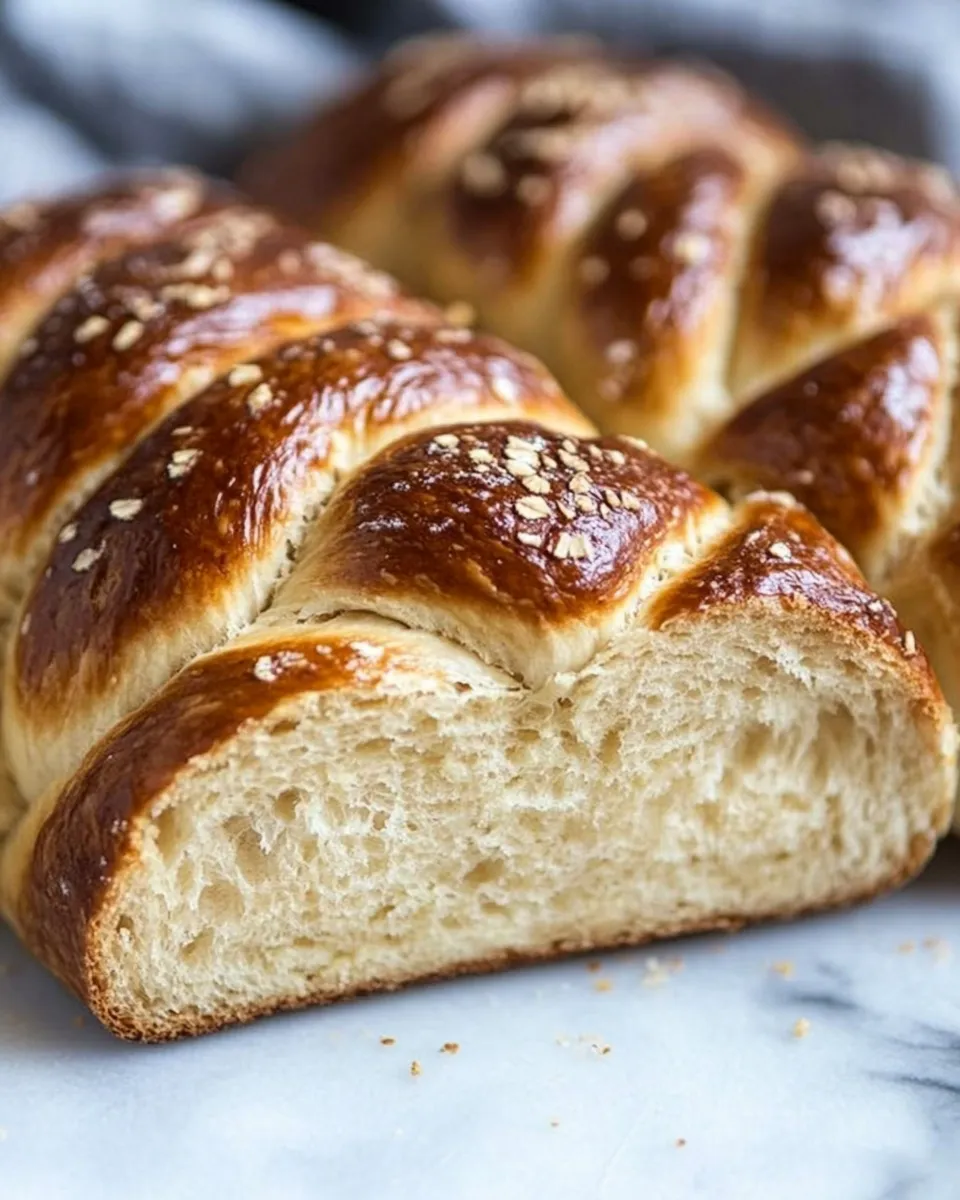
This recipe hits three important points: flavor, texture, and look. The whole wheat pastry or white whole wheat gives a wholesome, slightly nutty flavor without the dense, heavy crumb that you sometimes get with straight whole wheat loaves. The combination of whole wheat and all-purpose flour keeps the crumb soft and springy, which most people expect from challah.
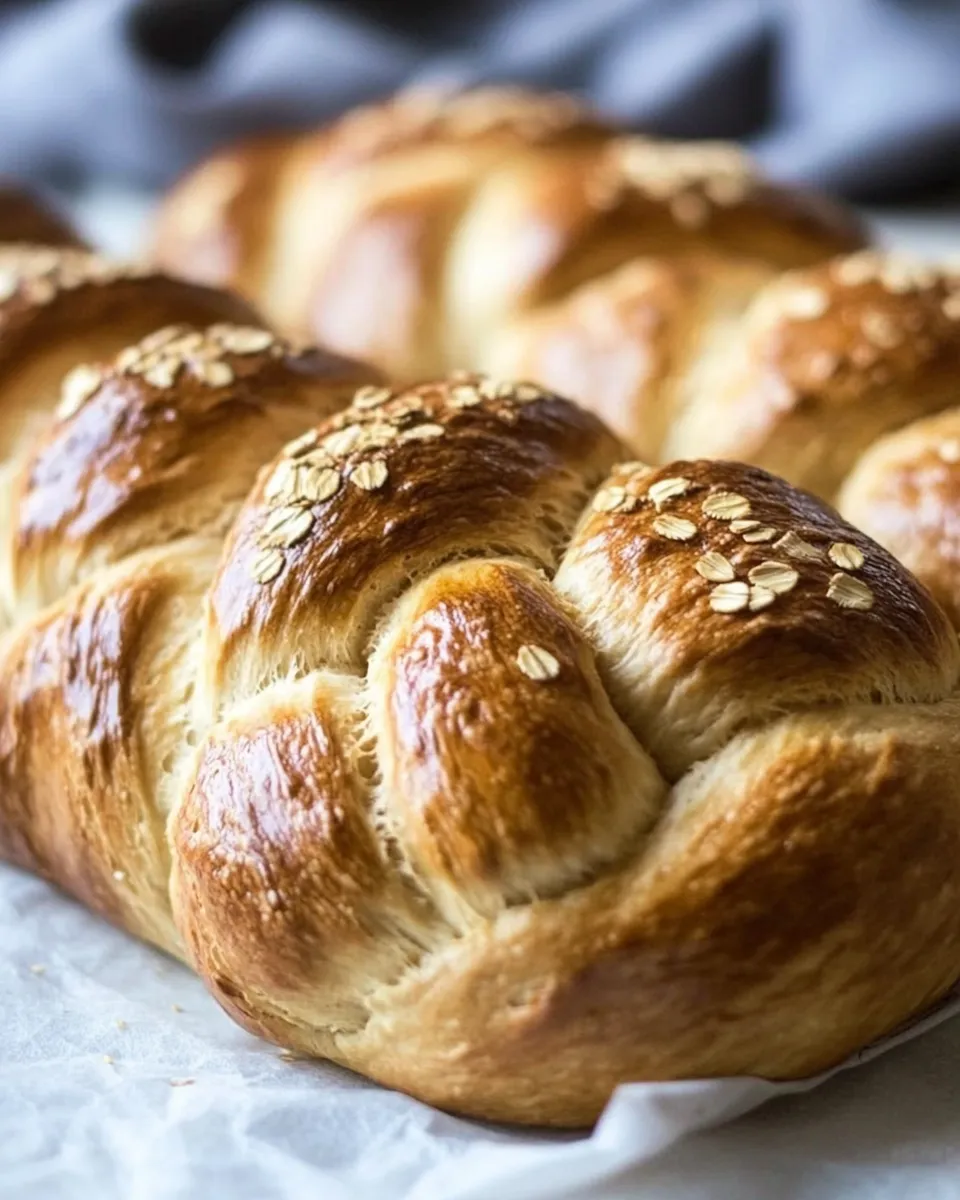
The braid makes it look special. A nicely braided challah reads “home-baked” at a glance, which is perfect for breakfasts, holiday tables, or as a gift. The egg wash gives that glossy, golden finish that people instinctively reach for first.
Finally, the method is forgiving. Two rises and a rest between shaping and baking let the dough develop flavor and structure without requiring exact timing. If your schedule changes, this dough adapts well to refrigeration.
Smart Substitutions
- Whole wheat pastry flour ↔ white whole wheat flour — the recipe already allows either. Choose white whole wheat for a milder taste and lighter color; use whole wheat pastry flour for a bit more nuttiness.
- Stand mixer ↔ hand kneading — both are listed in the method. Use a mixer with a dough hook for less hands-on time; knead by hand to develop a feel for the dough.
- Rise timing flexibility — the recipe includes refrigeration options at two points. If you need to delay, refrigerate after the first or second rise and allow the dough to come back to room temperature before proceeding.
Equipment Breakdown
- Large mixing bowl — for proofing the yeast and mixing the dough.
- Whisk — to dissolve the yeast and combine wet ingredients cleanly.
- Stand mixer with dough hook (optional) — speeds mixing and kneading but not required.
- Lightly floured work surface — for rolling and kneading.
- Plastic wrap or kitchen towel — to cover the dough during rises and prevent skinning.
- Lightly oiled baking sheet — two loaves fit comfortably on a standard sheet.
- Pastry brush — for the egg wash to get a shiny crust.
- Wire rack — to cool loaves thoroughly and avoid a soggy bottom.
- Oven thermometer (optional but helpful) — ensures your oven is at 375°F for consistent results.
Learn from These Mistakes
Do not over-flour in kneading. Adding too much flour will make the crumb dense. Add only small amounts as needed to prevent sticking. Under-kneading leaves the dough slack and hard to shape; knead until smooth and elastic — roughly 5–10 minutes by hand.
Watch your proofing. If the dough doubles too quickly, it may overproof and collapse in the oven; if it barely rises, the crumb will be tight and heavy. Room temperature and yeast freshness matter. If your yeast doesn’t foam in step 1, start over with fresh yeast.
Egg wash timing matters. Brush the loaves once before the final rise and again just before baking for the best sheen and color. Too much egg wash can pool and drip, so tap off excess when brushing.
Finally, check doneness. A golden crust is a good sign, but the internal temperature of a fully baked challah should be around 190–200°F. If your loaves brown quickly but feel soft inside, tent them with foil and continue baking until done.
Make It Your Way
You can make two medium loaves as written, or experiment with braid styles: a simple 3-strand (as directed) is fast and elegant; a 6-strand braid makes a showpiece if you have the time. For a softer crumb, err on the lower end of the whole wheat flour amount. If you like a chewier crust, bake closer to the upper end of the time range at 40 minutes.
If you prefer a lighter loaf, let the dough rise a little longer on the second rise so it reaches nearly doubled. If you want a tighter, denser loaf, reduce the rise slightly. The recipe includes refrigeration options at two points — use them to fit baking into your day without sacrificing flavor or texture.
Notes on Ingredients
- Active dry yeast — needs proofing in lukewarm water with a bit of sugar to ensure it’s alive. If the mixture doesn’t get foamy in about 5 minutes, the yeast may be inactive.
- Brown sugar — adds sweetness and helps with browning. The recipe splits it: a small amount to help the yeast bloom, and the rest in the dough for flavor.
- Lukewarm water — aim for around 100–110°F if you can measure, or warm to the touch. Too hot will kill the yeast; too cool slows activity.
- Olive oil — enriches and keeps the crumb soft. A neutral-flavored olive oil minimizes additional flavor; using a robust olive oil will add a green, fruity note.
- Eggs — add richness and structure. One egg is reserved to brush on for a glossy finish.
- Kosher salt — use it for predictable salinity; if you use a finer salt, reduce slightly.
- Whole wheat pastry flour or white whole wheat — these flours are lighter than standard whole wheat and give a tender crumb while keeping whole-grain character.
- All-purpose flour — provides gluten strength to balance the whole wheat for a soft, elastic dough.
Make Ahead Like a Pro
This dough is very make-ahead friendly. After the first rise (step 6) you can refrigerate overnight; bring it to room temperature before proceeding. You can also refrigerate after punching down for the second rise (step 7) or let the braided loaves rise in the fridge overnight (step 9) and bake the next morning.
For freezing, the recipe notes you can freeze unbaked or baked loaves. To freeze unbaked, shape and freeze on a tray until firm, then wrap tightly and transfer to a bag. Thaw in the fridge overnight and allow a final rise at room temperature before baking. Baked loaves freeze well wrapped; thaw at room temperature and refresh in a low oven if desired.
Top Questions & Answers
- Q: Can I use a stand mixer? A: Yes. The method explicitly allows a sturdy stand mixer with a dough hook. Mix and knead until smooth and elastic, checking the dough’s feel to avoid over-flouring.
- Q: How do I know the dough is kneaded enough? A: It should be smooth, slightly tacky but not sticky, and pass a gentle windowpane test if you stretch a small piece thinly (it should stretch without tearing easily).
- Q: Can I make one large loaf instead of two? A: You can, but baking time will change. A larger loaf may need longer in the oven; check internal temperature and color for doneness.
- Q: How should I store the bread? A: Once cool, keep it in a bread bag or wrapped at room temperature for a couple of days. For longer storage, freeze as directed.
- Q: My loaves brown unevenly. What helps? A: Rotate the pan halfway through baking and make sure loaves are on the middle rack. If the top darkens too quickly, tent with foil.
Serve & Enjoy
Let the loaves cool completely before slicing for the cleanest slices. The bread is excellent for sandwiches, breakfast, or as an accompaniment to soups and stews. Toasts beautifully. If you’ve refrigerated or frozen the loaves, give them a few minutes under a low oven or in a toaster for that freshly-baked warmth and texture.
This is a dependable, wholesome challah that delivers home-baked charm with steady, sensible technique. Bake once, and you’ll find the rhythm — and the braid — become second nature.
Simple Whole Wheat Challah Bread.
Ingredients
Ingredients
- 4 1/2 teaspoons 2 packages active dry yeast
- 1/2 cup+ 1 tablespoon brown sugar
- 1 3/4 cupslukewarm water
- 1/2 cupolive oilplus more for greasing the bowl
- 5 large eggsdivided
- 1 tablespoonkosher salt
- 4 - 4 1/2 cupswhole wheat pastry flour or white whole wheat flour
- 4 cupsall-purpose flour
Instructions
Instructions
- In a large bowl, dissolve 4 1/2 teaspoons (2 packages) active dry yeast and 1 tablespoon of the brown sugar in 1 3/4 cups lukewarm water. Let sit 5 minutes, until foamy.
- Whisk 1/2 cup olive oil into the yeast mixture. Add the remaining 1/2 cup brown sugar, 1 tablespoon kosher salt, and 4 of the eggs (reserve the 5th egg for the egg wash). Beat or whisk until combined.
- Add the flours gradually: the 4–4 1/2 cups whole wheat pastry (or white whole wheat) flour and the 4 cups all-purpose flour. Stir a cup at a time until the dough begins to hold together. You may use a sturdy stand mixer with a dough hook for mixing and kneading, or mix in a large bowl and finish by hand.
- Turn the dough onto a lightly floured surface and knead until smooth and elastic, about 5–10 minutes. Add small amounts of flour only as needed to prevent sticking.
- Clean the mixing bowl, lightly oil it with additional olive oil, place the kneaded dough back in the bowl, and turn once so the top is lightly oiled. Cover the bowl with plastic wrap or a kitchen towel.
- Let the dough rise in a warm place for 1 hour, until almost doubled in size. (If you prefer, you may refrigerate the dough overnight at this point; if refrigerating, allow it to come to room temperature before continuing.)
- Punch down the dough, cover, and let it rise again in a warm place for 30 minutes. (You may also refrigerate overnight here; if you do, bring to room temperature and allow the dough to finish rising before shaping.)
- To shape a 3-braid challah, divide the dough in half. Work with one half at a time: divide that half into 3 equal pieces, form each into a ball, then roll each ball into a strand about 12 inches long and 1 1/2 inches wide. Pinch the top ends together and braid by bringing the right outside strand over the center, then the left outside strand over the new center, repeating until you reach the ends. Pinch and tuck the ends to seal. Repeat with the other half of dough.
- Place the braided loaves on a lightly oiled baking sheet. Beat the reserved 5th egg and brush the loaves lightly with some of the beaten egg (reserve a little egg wash for brushing again before baking, if desired). Cover the loaves and let them rise for about 1 hour, until puffy and nearly doubled. (Or place in the fridge to rise overnight.)
- If baking immediately, preheat the oven to 375°F while the loaves finish their final rise. Just before baking, brush the loaves again with any remaining beaten egg.
- Bake on the middle oven rack for 30 to 40 minutes, or until the loaves are golden brown. Remove from the oven and cool completely on a wire rack.
- The challah can be frozen either unbaked or baked.
Equipment
- Large Bowl
- Mixing Bowl
- stand mixer (optional)
- dough hook (optional)
- Baking Sheet
- Wire Rack
- Plastic wrap or kitchen towel
- Oven
Notes
Adapted from [Smitten Kitchen | http://smittenkitchen.com/blog/2008/09/best-challah-egg-bread/]