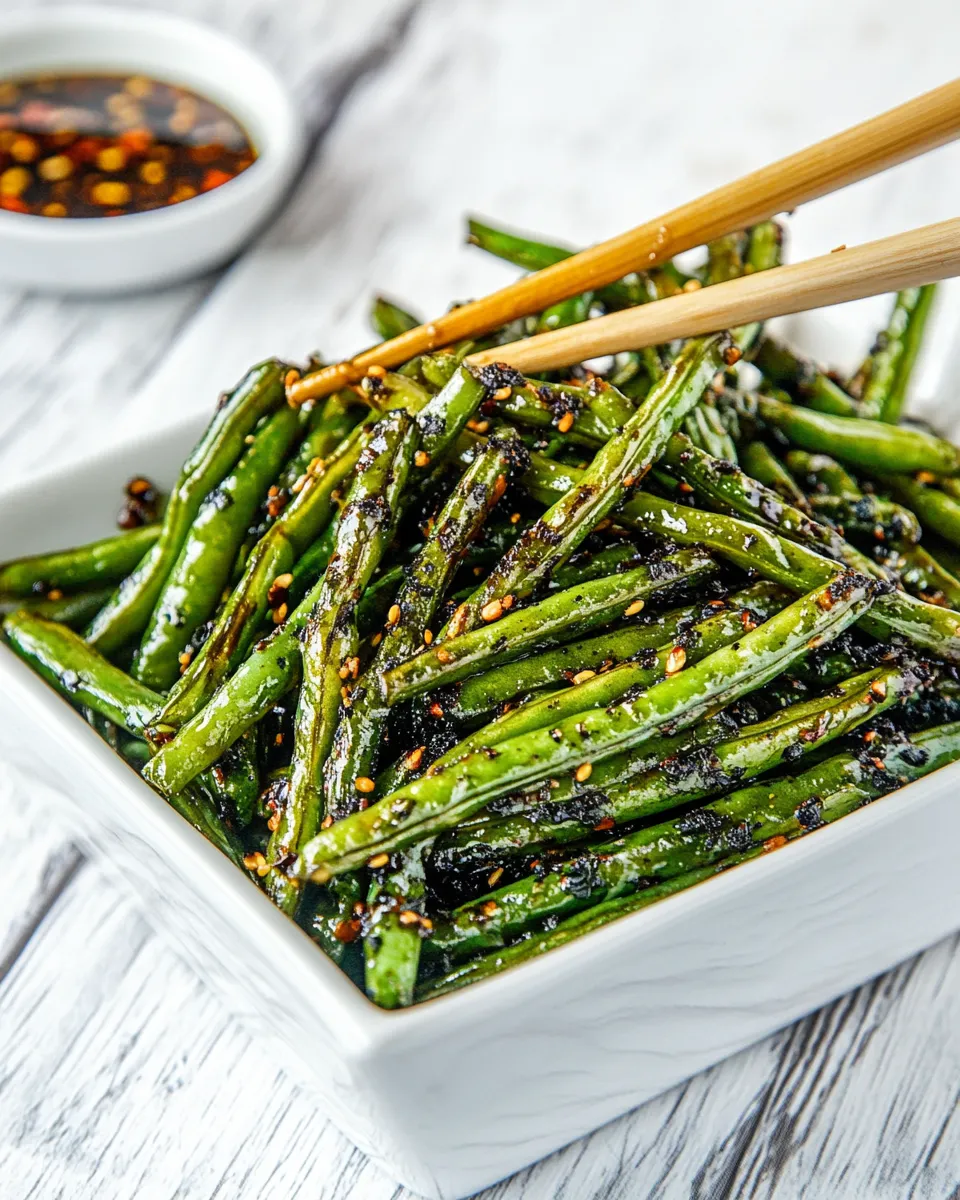
This is a simple, honest take on a favorite Sichuan-style side: blistered green beans spiked with garlic, ginger, and a bright, salty-sour sauce. The recipe is fast, bold, and forgiving. It rewards attention to heat and timing more than fancy technique.
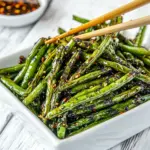
You’ll get a crisp-tender bean with light blistering, a concentrated sauce that clings to the surface, and the warming backdrop of white pepper and red pepper flakes. It’s built to work as a weeknight vegetable, a side for a bigger spread, or a potluck dish that holds up at room temperature.
I’ll walk you through the ingredients, every step in order, sensible swaps that won’t wreck texture, and the few things cooks typically do wrong. Practical, clear, and focused on results.
Ingredient Rundown
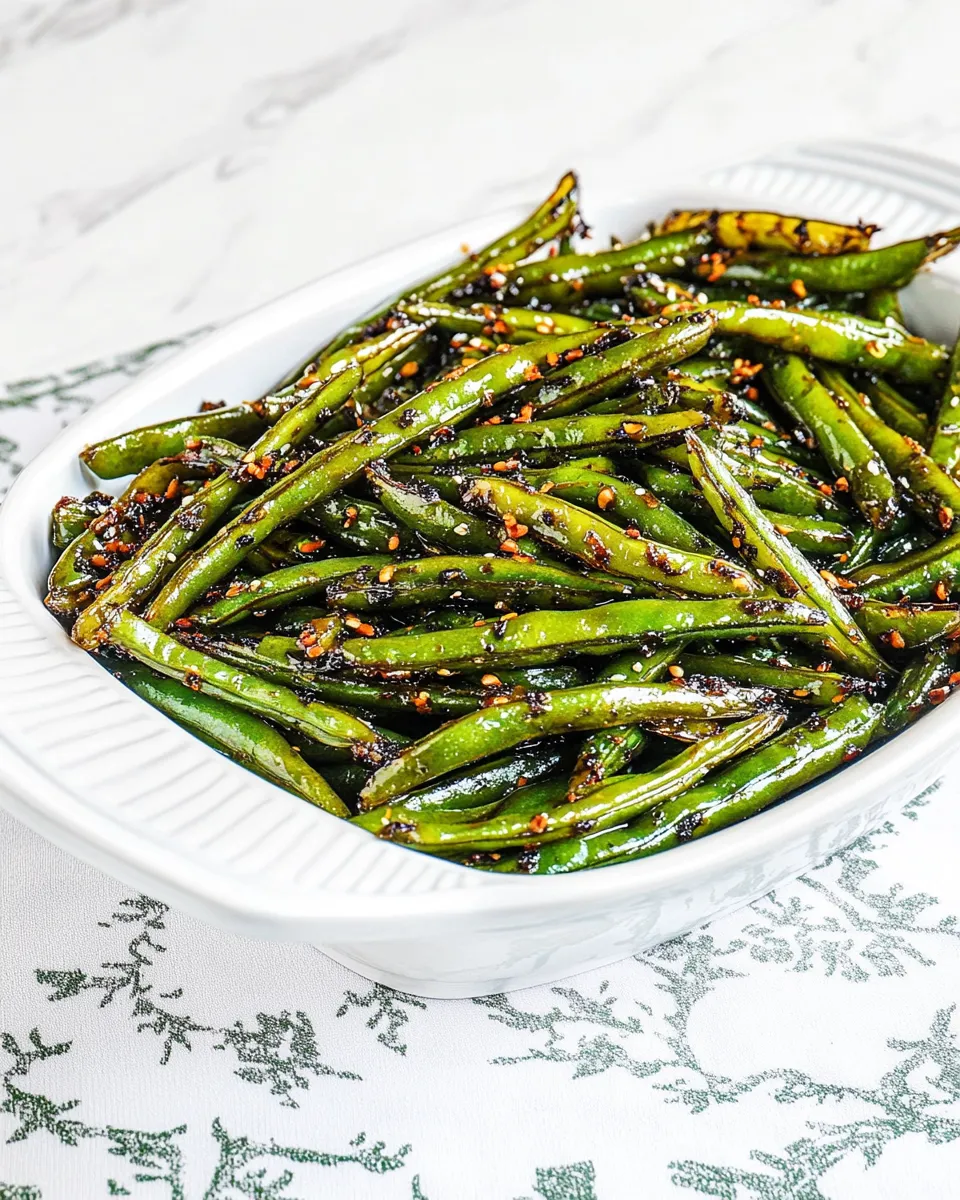
Ingredients
- 1 lb. fresh green beans, trimmed and cut into halves or thirds — the star; trim for even cooking and cut larger beans for consistent bite.
- 2 T soy sauce (see notes) — provides umami and salt; it’s the backbone of the sauce.
- 1 T rice vinegar (not seasoned) — brings acid and brightness to balance the soy.
- 2 tsp. sweetener of your choice (see notes) — rounds the flavors; keeps the sauce from tasting flat.
- red pepper flakes (see notes) — the heat control; add to taste.
- 1/4 tsp. white pepper (or use black pepper if you don’t have white pepper) — subtle heat and nose; white pepper is traditional but black will work.
- 1 T vegetable oil (see notes) — neutral frying oil for high heat; it helps blister the beans.
- 2 T minced garlic — aromatic driver; add later so it doesn’t burn.
- 2 T peeled and minced ginger root — freshness and warmth; pairs with garlic and lifts the sauce.
Spicy Szechuan Green Beans: How It’s Done
- Wash the green beans if needed, trim the ends, and cut into halves or thirds if they are large.
- In a small bowl, whisk together 2 T soy sauce, 1 T rice vinegar, 2 tsp sweetener, red pepper flakes (amount as desired), and 1/4 tsp white pepper; set the sauce aside.
- Peel and mince ginger and garlic so you have 2 T minced ginger and 2 T minced garlic.
- Place a large frying pan with a tight-fitting lid over high heat and let it get hot.
- Add 1 T vegetable oil to the pan, swirl to coat, then add the green beans. Cover the pan, reduce heat to medium-high, and cook 3–5 minutes, stirring or shaking the pan once or twice, until the beans are bright green and beginning to become tender (thin beans take less time; larger beans may need the full 5 minutes).
- Remove the lid and continue to cook, stirring occasionally, until any released moisture has evaporated and the beans show slight blistering or browning.
- Add the 2 T minced garlic and 2 T minced ginger to the pan and cook about 2 minutes, stirring frequently so the garlic and ginger do not burn.
- Pour in the reserved soy sauce mixture, bring it to a boil, and cook about 2 minutes more, stirring, until the sauce thickens slightly and coats the beans and the beans are tender-crisp.
- Remove from heat and serve hot or at room temperature.
Reasons to Love Spicy Szechuan Green Beans
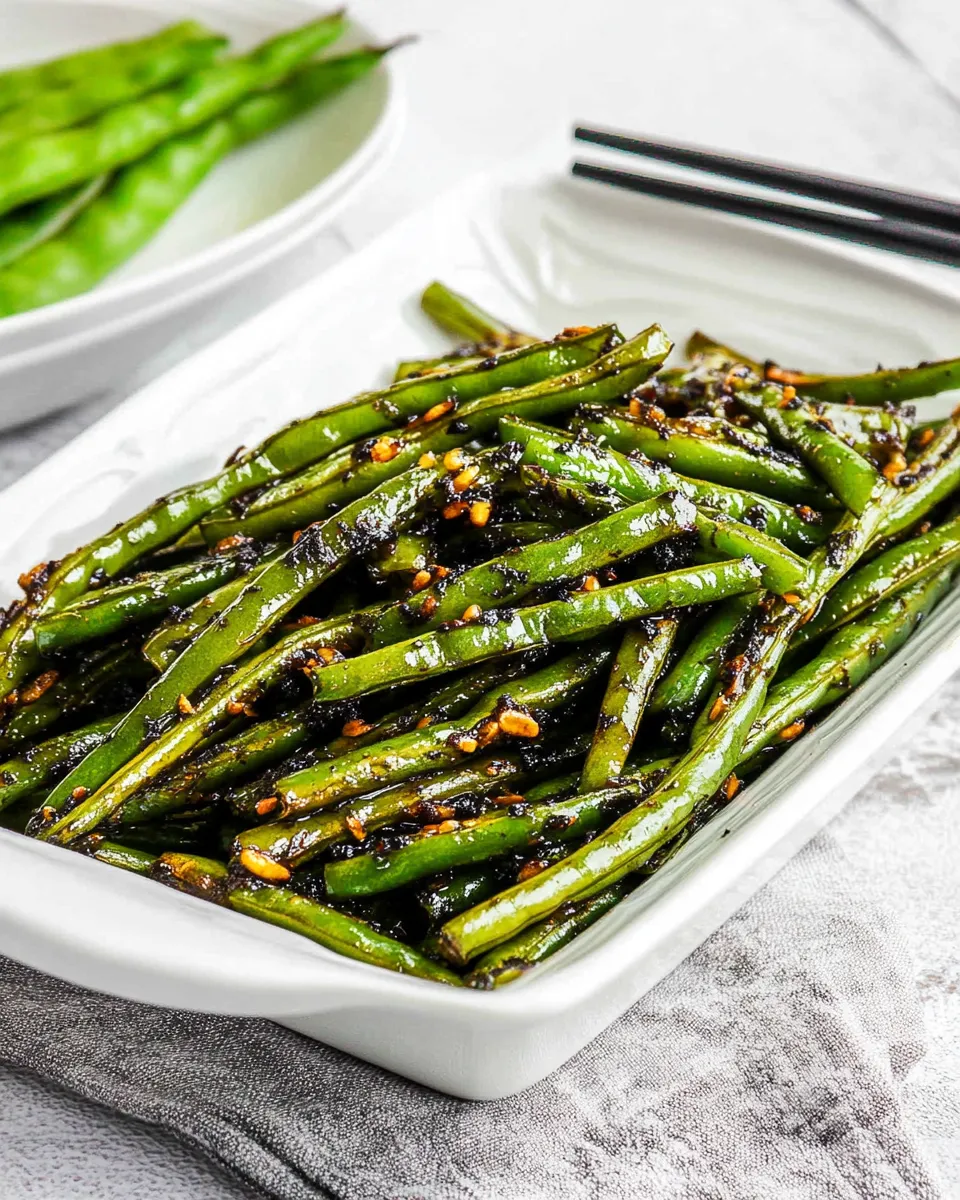
This dish hits several high notes that make it a go-to. First, it’s fast: from prep to table in about 20 minutes if your beans are prepped. Second, texture matters here — you get bright, crisp beans with a little blister and chew. That contrast makes each bite satisfying.
Flavor-wise it’s concentrated but clean. Soy sauce gives the savory base, rice vinegar cuts through with acidity, and a modest sweetener balances everything. Ginger and garlic add warmth and aroma while red pepper flakes bring the heat. It’s bold without being muddled.
Finally, it’s versatile. Serve it warm alongside mains, or at room temperature as part of a larger spread. It travels well to potlucks and picnics because the beans keep their texture if you don’t overcook them.
Texture-Safe Substitutions
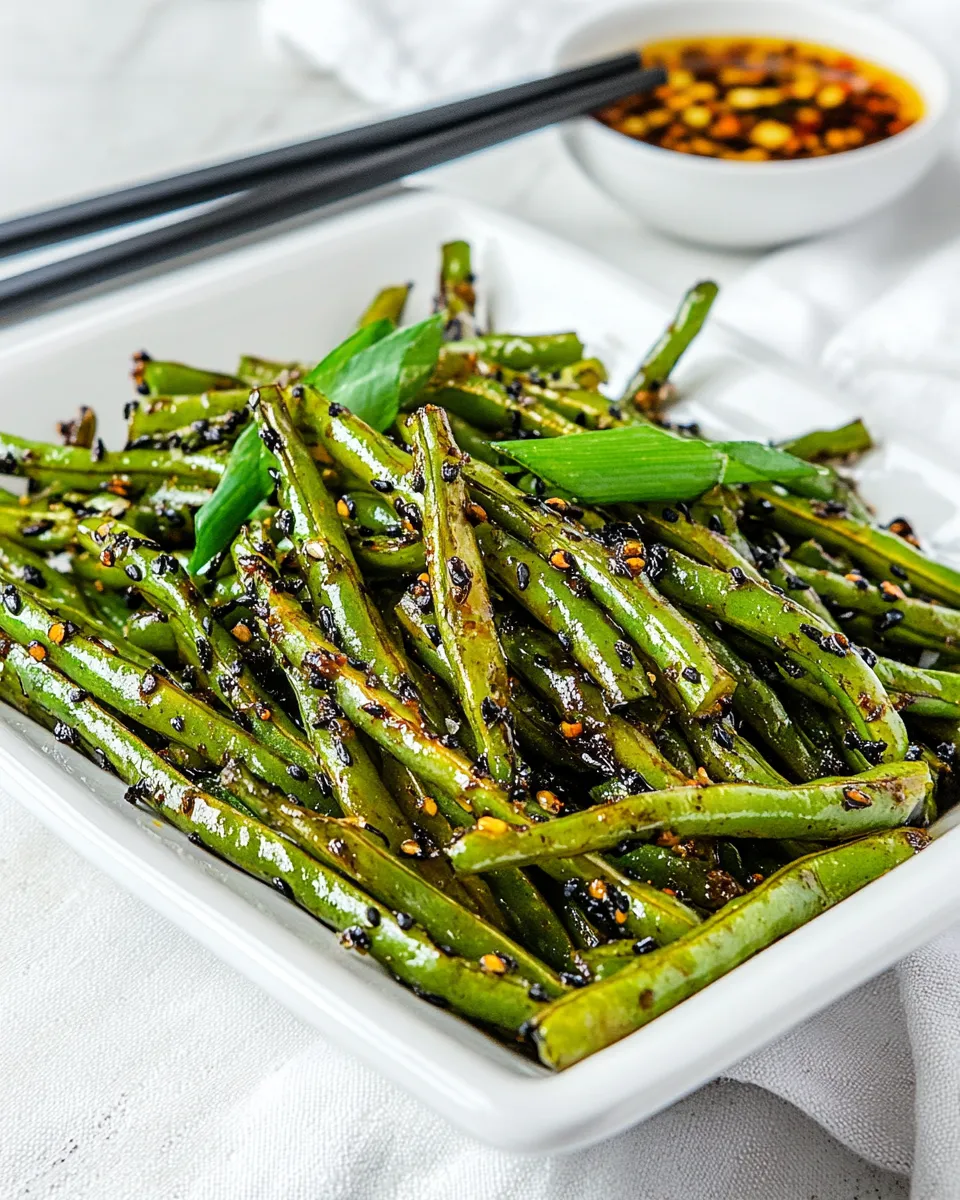
- White pepper — black pepper — the recipe already notes this swap. Black pepper will change the final color slightly but not the overall profile.
- Sweeter option — any neutral sweetener — the recipe calls for a sweetener of your choice; use what you have, but keep the amount the same so the sweet-sour balance remains.
- Oil swaps — neutral burning point — use any neutral oil that tolerates high heat. The goal is blistering without smoking.
- Bean size — cut as directed — thin beans take less time; larger beans need the full steaming and blistering window. Cutting into halves or thirds keeps cooking even.
Cook’s Kit
- Large frying pan with a tight-fitting lid — essential for the steam-and-blister method.
- Small bowl and whisk — to combine the sauce quickly and evenly.
- Sharp knife and cutting board — trimming and cutting beans evenly saves time at the pan.
- Spatula, tongs, or a pan-shaking technique — use what lets you stir and toss without tearing the beans.
- Measuring spoons — the sauce ratios matter; eyeballing can make it too salty or too sweet.
Don’t Do This
- Don’t overcrowd the pan. If the beans pile up they’ll steam and turn soft instead of blistering. Work in a pan that gives them a single layer when possible.
- Don’t add garlic and ginger too early. They burn quickly and bitter notes will dominate. Add them after the beans have blisters and most moisture has evaporated.
- Don’t pour the sauce in before the beans are ready. If the beans are still watery the sauce won’t reduce or cling properly.
- Don’t overcook to mush. The goal is tender-crisp, not falling-apart. Pull the pan off the heat when the beans are just done.
- Don’t assume all beans cook the same. Adjust the covered steaming time for thin versus thick beans as instructed.
Dietary Customizations
There are a few simple adjustments you can make without changing the method.
For lower sodium: reduce the soy sauce slightly and taste before finishing. You’ll lose some umami, so make up a touch of balance by keeping the rice vinegar and ginger elements. If you need a gluten-free version, use a gluten-free soy sauce alternative — keep the same volume so the sauce balance stays intact.
For milder heat: cut back on red pepper flakes. Add them sparingly at first; you can always sprinkle more at the table. For a touch more complexity without extra heat, lean into the ginger and don’t increase the salty elements.
For vegan concerns: the recipe is plant-based as written. Choose a sweetener that fits your diet, since some sweeteners are animal-derived.
Cook’s Commentary
Timing and heat
High initial heat and a covered cook are the trick. The lid traps steam so the beans become tender quickly. Removing the lid lets moisture escape and concentrates flavor while creating those satisfying blisters. It’s a two-stage process: steam, then dry-sear.
Garlic and ginger handling
Both are intentionally added late. When you add them, stir constantly and keep the pan moving. Two minutes is long enough to bloom flavors without browning into bitterness. If your pan is screaming hot, be ready to nudge the heat down a notch the moment you add aromatics.
When you pour in the sauce, you should see a quick bubble and a visual thickening as the liquid reduces to a glaze. That’s your cue to stop — the sauce will cling to the beans and leave a glossy finish.
Meal Prep & Storage Notes
Make-ahead: you can trim and cut the beans a day ahead and store them in a container in the fridge. Mince the garlic and ginger in advance too so you can move quickly when you cook.
Storage: keep leftovers in an airtight container in the refrigerator for up to 3 days. The texture will soften slightly but remains pleasant if you reheat properly.
Reheating: recover some crispness in a hot dry skillet over medium-high heat. Toss until just warmed through. Microwaving will warm them fast but can make them limp — acceptable for convenience, but not for best texture.
Freezing is not recommended. The beans lose their bright bite and turn mushy when thawed.
Questions People Ask
- How spicy does this get? It depends on how many red pepper flakes you add. Start conservatively if you’re unsure. The dish has background heat; the ginger and white pepper add warmth even without heavy flakes.
- Can I double the recipe? Yes, but use a wider pan or cook in batches. Doubling in a single crowded pan will steam rather than blister the beans.
- Can I use frozen green beans? Fresh beans are recommended. Frozen beans carry extra moisture and won’t blister the same way; they often finish softer.
- What’s the purpose of the rice vinegar? Acid brightens the sauce and cuts through the soy sauce’s saltiness. It prevents the final flavor from being one-note.
- Is the sauce too salty sometimes? Taste and adjust. If you find it too salty, reduce the soy sauce next time or add a tiny bit more sweetener and vinegar to rebalance.
The Last Word
Spicy Szechuan Green Beans are the kind of side that makes weeknight dinners feel composed and deliberate. Keep the prep simple, respect the heat, and focus on timing. Make the sauce ahead, get the pan hot, and treat the dish as a two-step steam-then-blister process. With that, you’ll end up with bright, savory, slightly spicy beans that complement almost any main — and are quick enough to become a regular in your rotation.
Spicy Szechuan Green Beans
Ingredients
Ingredients
- 1 lb. fresh green beans trimmed and cut into halves or thirds
- 2 T soy sauce see notes
- 1 T rice vinegar not seasoned
- 2 tsp. sweetener of your choice see notes
- red pepper flakes see notes
- 1/4 tsp. white pepper or use black pepper if you don’t have white pepper
- 1 T vegetable oil see notes
- 2 T minced garlic
- 2 T peeled and minced ginger root
Instructions
Instructions
- Wash the green beans if needed, trim the ends, and cut into halves or thirds if they are large.
- In a small bowl, whisk together 2 T soy sauce, 1 T rice vinegar, 2 tsp sweetener, red pepper flakes (amount as desired), and 1/4 tsp white pepper; set the sauce aside.
- Peel and mince ginger and garlic so you have 2 T minced ginger and 2 T minced garlic.
- Place a large frying pan with a tight-fitting lid over high heat and let it get hot.
- Add 1 T vegetable oil to the pan, swirl to coat, then add the green beans. Cover the pan, reduce heat to medium-high, and cook 3–5 minutes, stirring or shaking the pan once or twice, until the beans are bright green and beginning to become tender (thin beans take less time; larger beans may need the full 5 minutes).
- Remove the lid and continue to cook, stirring occasionally, until any released moisture has evaporated and the beans show slight blistering or browning.
- Add the 2 T minced garlic and 2 T minced ginger to the pan and cook about 2 minutes, stirring frequently so the garlic and ginger do not burn.
- Pour in the reserved soy sauce mixture, bring it to a boil, and cook about 2 minutes more, stirring, until the sauce thickens slightly and coats the beans and the beans are tender-crisp.
- Remove from heat and serve hot or at room temperature.
Equipment
- Large frying pan
- Tight-fitting Lid
- Small Bowl
- Whisk
- Knife
- Cutting Board
Notes
Use unseasoned rice vinegar (not seasoned).
White pepper may be substituted with black pepper if unavailable.