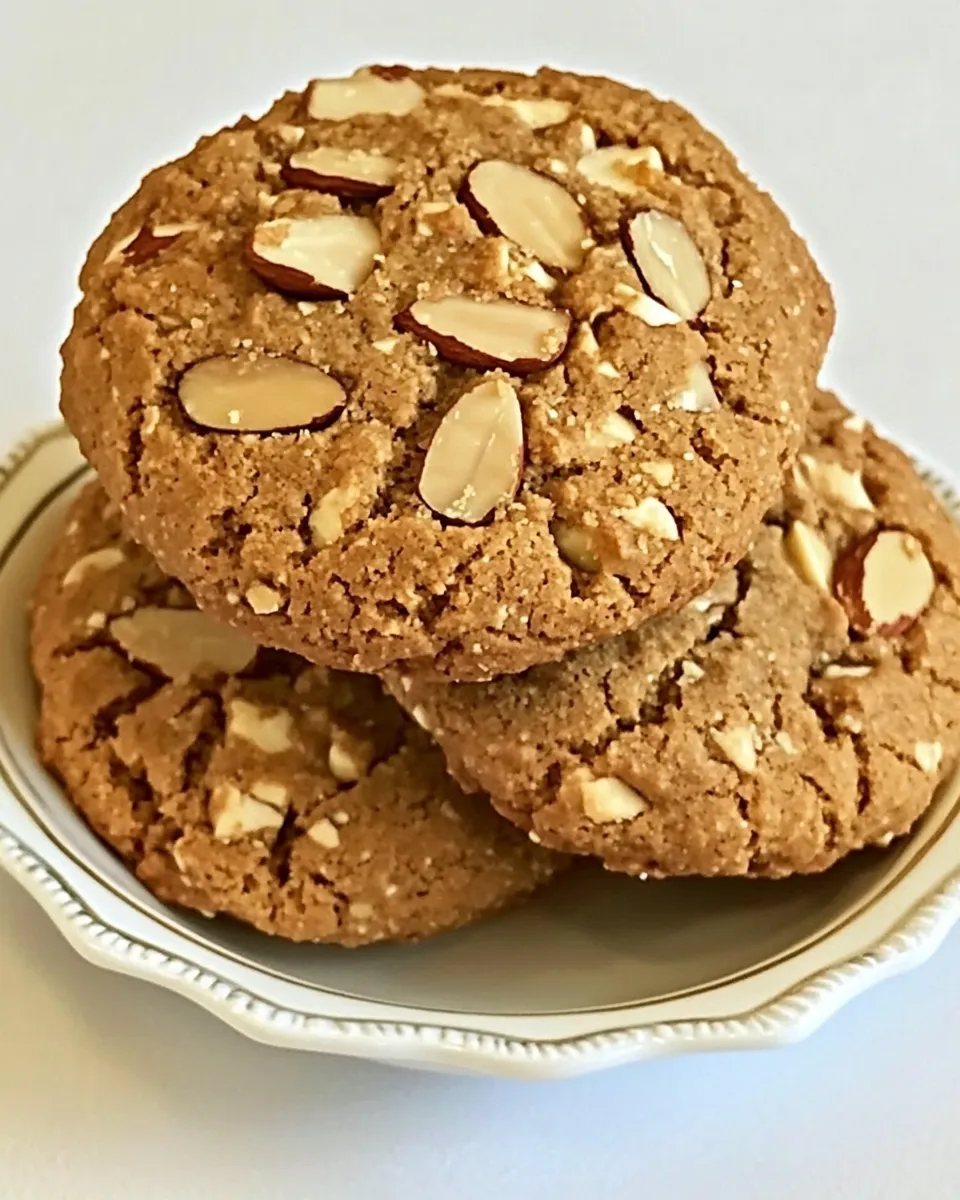
These cookies are the kind I keep in the freezer for when I want something crisp at the edges, tender inside, and pleasantly almond-forward without the sugar crash. They come together quickly, use pantry-friendly ingredients, and they’re sturdy enough to travel in a lunchbox or sit pretty on a holiday plate.
No tricks here — just straightforward steps and a dough that behaves. The texture is the story: a little chew from chopped almonds, a smooth, rich crumb from almond butter, and a delicate sweetness from monkfruit. If you like short ingredient lists and predictable results, this recipe will become a go-to.
I’ll walk you through the ingredients, the exact step-by-step method, what to watch for, useful swaps, and storage tips so you can make a batch and get consistent results every time. Let’s get baking.
What Goes In
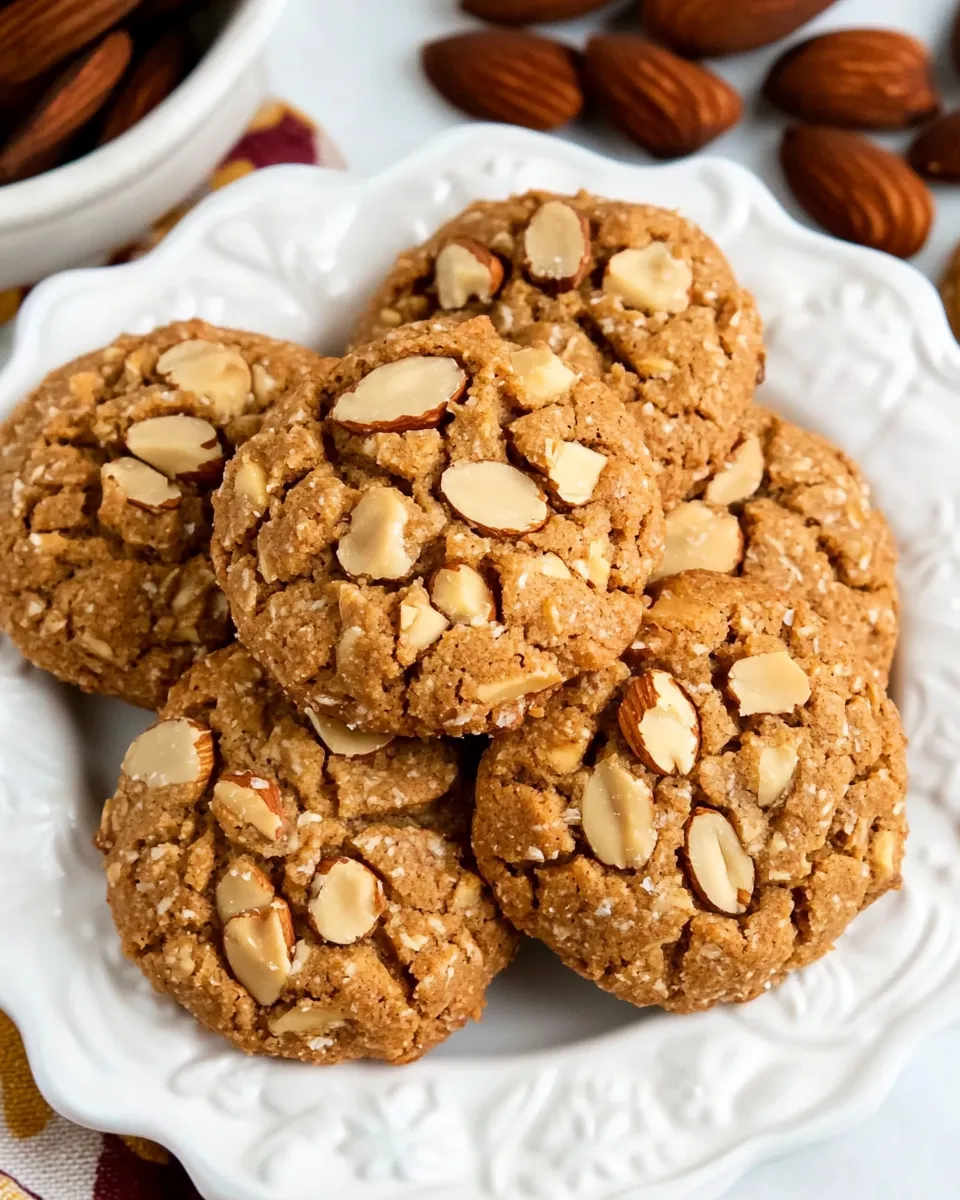
Ingredients
- 2 eggs — bind the dough and add structure; room temperature works best for even mixing.
- 1 cup + 2 T Monkfruit Sweetener (or sweetener of your choice) — provides sweetness without sugar; texture depends on granulation so measure as written.
- 1 tsp. baking powder — gives a gentle lift and keeps the cookies from being too dense.
- 1 tsp. vanilla — rounds flavor and balances the almond notes.
- 1/4 tsp. kosher salt — enhances sweetness and brings out the nut flavors.
- 1/4 – 1/2 tsp. almond extract (probably optional, but use it if you prefer a stronger almond flavor) — optional; adds concentrated almond aroma if you want it bolder.
- 1 cup blanched almond flour — the primary dry component; keeps the cookies tender and gluten-free.
- 1 cup almond butter — provides fat, moisture, and structure; natural or smooth will affect texture slightly.
- 3/4 cup chopped almonds, plus 20 whole almonds for the tops of the cookies — chopped nuts add crunch; whole almonds create a classic finished look.
Stepwise Method: Sugar-Free Almond Cookies
- Preheat oven to 350°F (170°C). Line a large baking sheet with parchment paper. Set aside the 20 whole almonds for topping.
- In the bowl of a stand mixer fitted with the paddle (or in a large bowl using a hand mixer or whisk), beat together 2 eggs, 1 cup + 2 tablespoons Monkfruit sweetener, 1 teaspoon baking powder, 1 teaspoon vanilla, 1/4 teaspoon kosher salt, and 1/4–1/2 teaspoon almond extract (if using) until smooth and combined.
- Add 1 cup blanched almond flour and mix until incorporated.
- Add 1 cup almond butter and mix until fully combined. The dough will be stiff; scrape down the bowl as needed.
- Fold in 3/4 cup chopped almonds until evenly distributed through the dough.
- Using a tablespoon, scoop one level tablespoon of dough, roll it into a ball, and place it on the prepared baking sheet. Repeat with the remaining dough, spacing the cookies on the sheet.
- Flatten each cookie with your palm or the back of a spoon so the tops are even, then press one whole almond into the center of each cookie.
- Bake for about 16 minutes, or until the cookies are just beginning to brown around the edges and still feel slightly soft in the center.
- Remove the baking sheet from the oven and let the cookies cool on the sheet for at least 20 minutes; they will firm up as they cool.
Why Cooks Rave About It
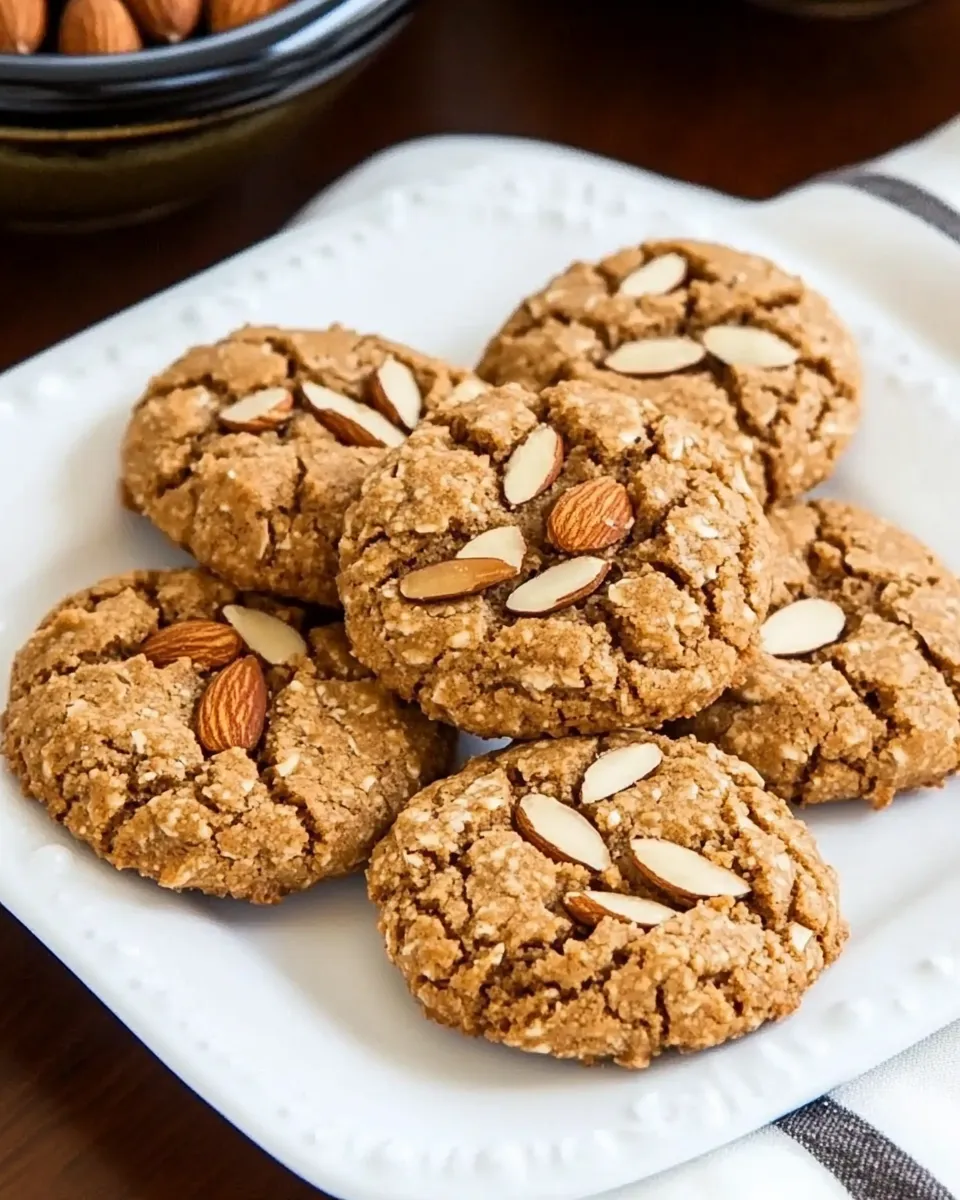
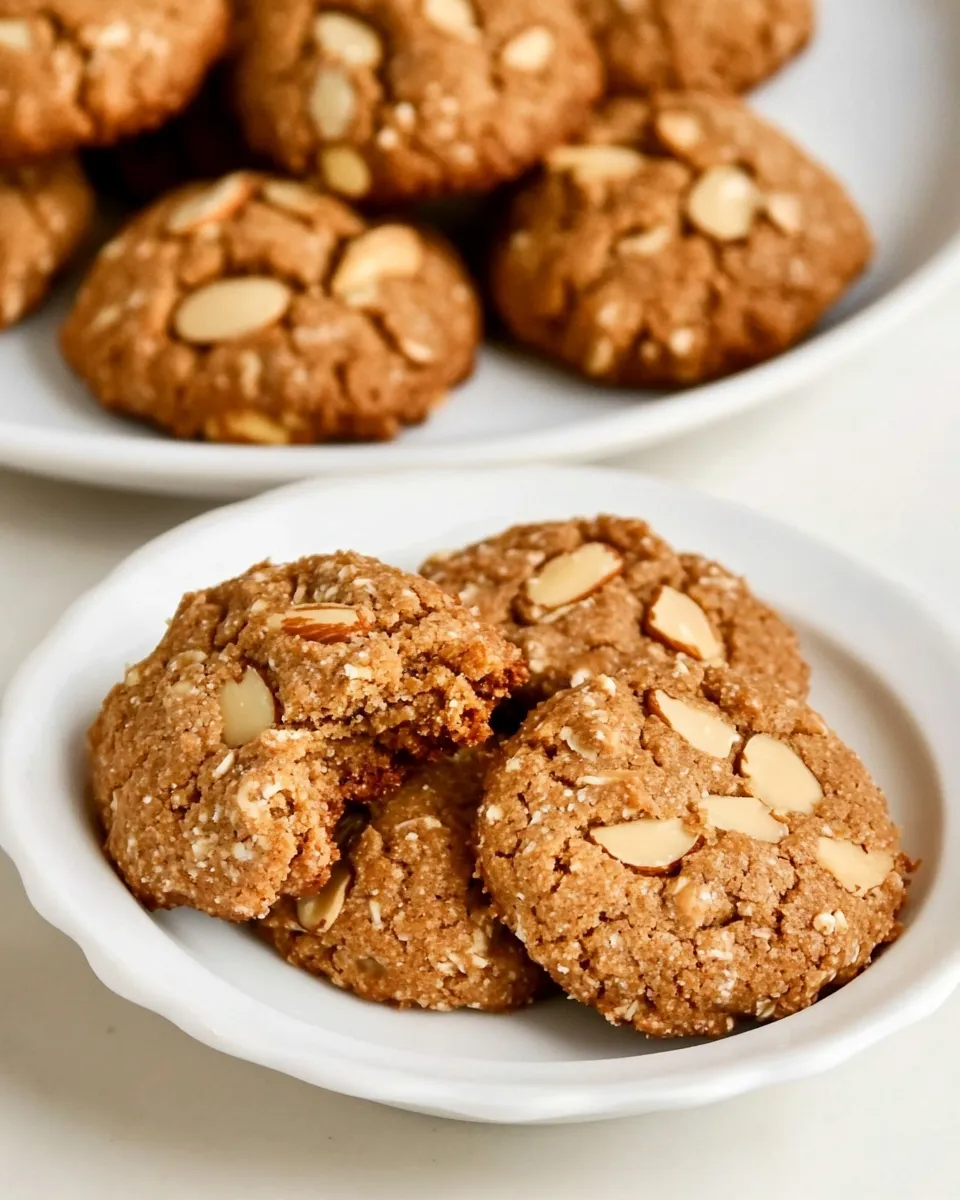
These cookies deliver a clear set of wins. First, they use almond-forward ingredients throughout — almond flour, almond butter, chopped almonds, and optional almond extract — so the flavor feels unified and intentional. That kind of focus gives these cookies a professional, bakery-style almond profile without needing complex techniques.
Second, the texture is thoughtfully balanced. The almond flour and almond butter give a tender, almost shortbread-like crumb. The chopped almonds add interest and crunch. Because the recipe relies on eggs and almond butter for structure rather than gluten, the cookies stay naturally dense and satisfying, with a clean finish.
Finally, they’re sugar-free in the sense that the sweetening comes from monkfruit (or a sugar-free alternative), which makes them suitable for people watching added sugar without compromising texture. Bakers appreciate that the dough handles well: it’s stiff but scoopable, predictable in the oven, and forgiving if you slightly overbake — they’ll still be pleasant.
Quick Replacement Ideas
- Monkfruit sweetener — swap for another granulated sugar substitute suitable for baking (such as erythritol or allulose) if you prefer; keep total volume the same.
- Almond butter — you can use another nut butter like cashew or peanut butter for a different profile; note that flavor and oil content will change texture slightly.
- Blanched almond flour — if you need a different texture, a finely ground nut flour like cashew flour can work, but the flavor shifts; measure the same.
- Chopped almonds — swap with chopped hazelnuts or pecans for variety, or omit for a smooth cookie surface.
Tools & Equipment Needed
- Stand mixer fitted with a paddle or a hand mixer — for efficient, even mixing; a whisk can work but requires more effort.
- Large mixing bowl — if you’re using a hand mixer or whisk.
- Baking sheet (large) and parchment paper — prevents sticking and promotes even browning.
- Tablespoon scoop or small cookie scoop — for consistent cookie sizes so they bake uniformly.
- Spatula — to scrape down the bowl; important because the dough is stiff.
- Measuring cups and spoons — scale your monkfruit and extracts carefully for consistent results.
Avoid These Mistakes
Don’t skip the parchment paper. These cookies have almond butter and can stick to a bare pan, making removal messy and risking breakage. Parchment yields clean bottoms and makes cooling easier.
A common misstep is underestimating how much the cookies firm up as they cool. They should feel slightly soft in the center coming out of the oven; if you wait until they’re firm to remove them, you’ll end up with overly dry cookies. Give them at least 20 minutes on the sheet to finish setting.
Another mistake is using an overly oily almond butter. If your almond butter separates and is very runny, stir it well before measuring. Excess oil will flatten the cookies and change the texture. Likewise, if the chopped almonds are too large, they’ll create weak points in the cookie; roughly chopped is best.
Variations by Season
Winter: Add warm spice. A pinch of ground cinnamon or a tiny dash of ground cardamom (start small) complements almond wonderfully for cozy winter cookies.
Spring: Brighten things with citrus. A small amount of finely grated lemon or orange zest stirred into the dough adds freshness. Keep it to a teaspoon or so so it doesn’t overpower the almond.
Summer: Serve chilled. These cookies hold up well in a cooler and taste great slightly chilled with a cup of iced tea. You can also fold in a few sunflower seeds for texture without changing the almond theme too drastically.
Fall: Toasted nuts amplify flavor. Toast the chopped almonds briefly in a dry skillet until golden, cool them, then fold into the dough for a deeper, nuttier note that pairs well with autumnal spreads.
Testing Timeline
- After mixing: dough should be cohesive and stiff enough to hold a rounded tablespoon scoop.
- 15–17 minutes baking: edges should just be browning while centers remain slightly soft to the touch.
- Immediate cool on sheet: 20 minutes — they firm up and are ready to move to a rack.
- Full cool: 1 hour — texture settles and flavors meld; best if you can wait.
Save It for Later
Short term: Store cooled cookies in an airtight container at room temperature for up to 3 days. Place parchment between layers if stacking to prevent sticking.
Long term: Freeze in a single layer on a sheet until solid, then transfer to a freezer-safe bag or container for up to 3 months. Thaw at room temperature for 20–30 minutes before serving. If you like a warm cookie, 5–7 minutes at 300°F (150°C) will revive them without drying.
Ask & Learn
Q: Can I make the dough ahead?
A: Yes. You can mix the dough and refrigerate it for up to 24 hours. It will firm up in the fridge; give it a minute at room temperature before scooping if it’s too stiff.
Q: My cookies spread too much. Why?
A: Likely an overly oily almond butter or too-wet dough. Stir separated almond butter thoroughly before measuring and avoid using warmed almond butter straight from the microwave. Also make sure you measured almond flour correctly — scooping directly can compact it and reduce volume; spoon and level for accuracy.
Q: Can I omit the chopped almonds?
A: Yes. Omitting them yields a smoother, more uniform cookie. The texture will be slightly less crunchy but still satisfying thanks to the almond butter.
The Last Word
If you want a reliable sugar-free cookie that leans hard into almond flavor and requires just a few steps, this recipe delivers. It’s honest, easy to scale, and adapts well to minor swaps. Follow the method as written the first time, note how your particular almond butter behaves, and you’ll have a dependable batch every time. Enjoy the bake, and don’t forget to press that whole almond on top — it’s the small gesture that makes them feel special.

Sugar-Free Almond Cookies
Ingredients
Ingredients
- 2 eggs
- 1 cup + 2 T Monkfruit Sweetener or sweetener of your choice
- 1 tsp. baking powder
- 1 tsp. vanilla
- 1/4 tsp. kosher salt
- 1/4 - 1/2 tsp. almond extract probably optional, but use it if you prefer a stronger almond flavor
- 1 cup blanched almond flour
- 1 cup almond butter
- 3/4 cup chopped almonds plus 20 whole almonds for the tops of the cookies
Instructions
Instructions
- Preheat oven to 350°F (170°C). Line a large baking sheet with parchment paper. Set aside the 20 whole almonds for topping.
- In the bowl of a stand mixer fitted with the paddle (or in a large bowl using a hand mixer or whisk), beat together 2 eggs, 1 cup + 2 tablespoons Monkfruit sweetener, 1 teaspoon baking powder, 1 teaspoon vanilla, 1/4 teaspoon kosher salt, and 1/4–1/2 teaspoon almond extract (if using) until smooth and combined.
- Add 1 cup blanched almond flour and mix until incorporated.
- Add 1 cup almond butter and mix until fully combined. The dough will be stiff; scrape down the bowl as needed.
- Fold in 3/4 cup chopped almonds until evenly distributed through the dough.
- Using a tablespoon, scoop one level tablespoon of dough, roll it into a ball, and place it on the prepared baking sheet. Repeat with the remaining dough, spacing the cookies on the sheet.
- Flatten each cookie with your palm or the back of a spoon so the tops are even, then press one whole almond into the center of each cookie.
- Bake for about 16 minutes, or until the cookies are just beginning to brown around the edges and still feel slightly soft in the center.
- Remove the baking sheet from the oven and let the cookies cool on the sheet for at least 20 minutes; they will firm up as they cool.
Equipment
- stand mixer (paddle attachment) or hand mixer or whisk
- Large Bowl
- Baking Sheet
- Parchment Paper
- tablespoon or cookie scoop