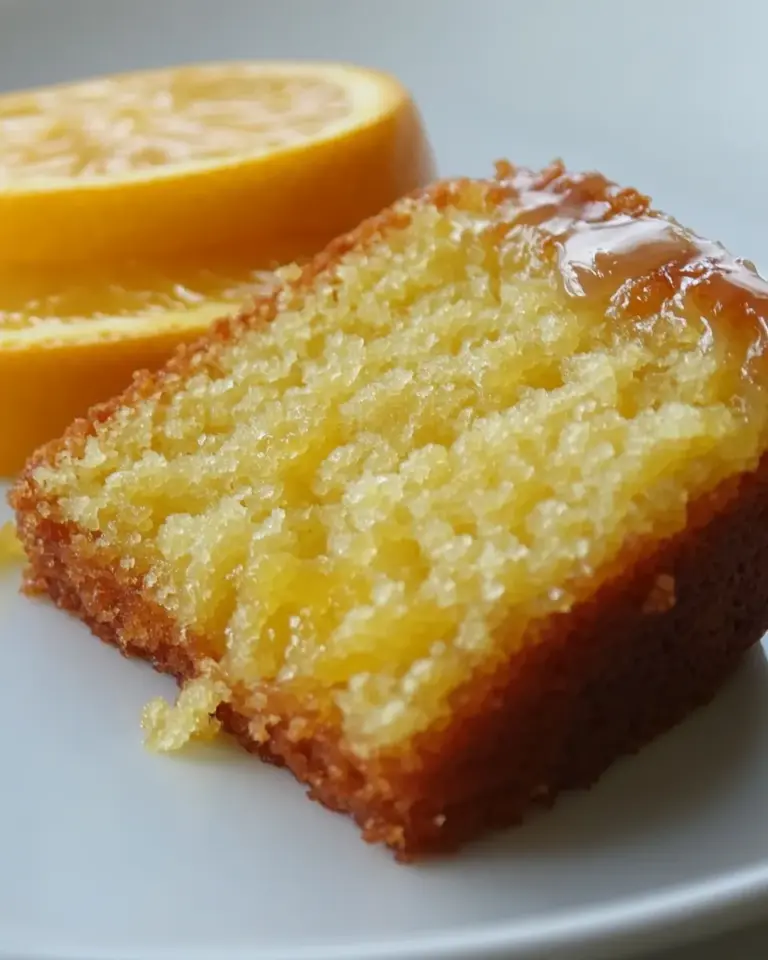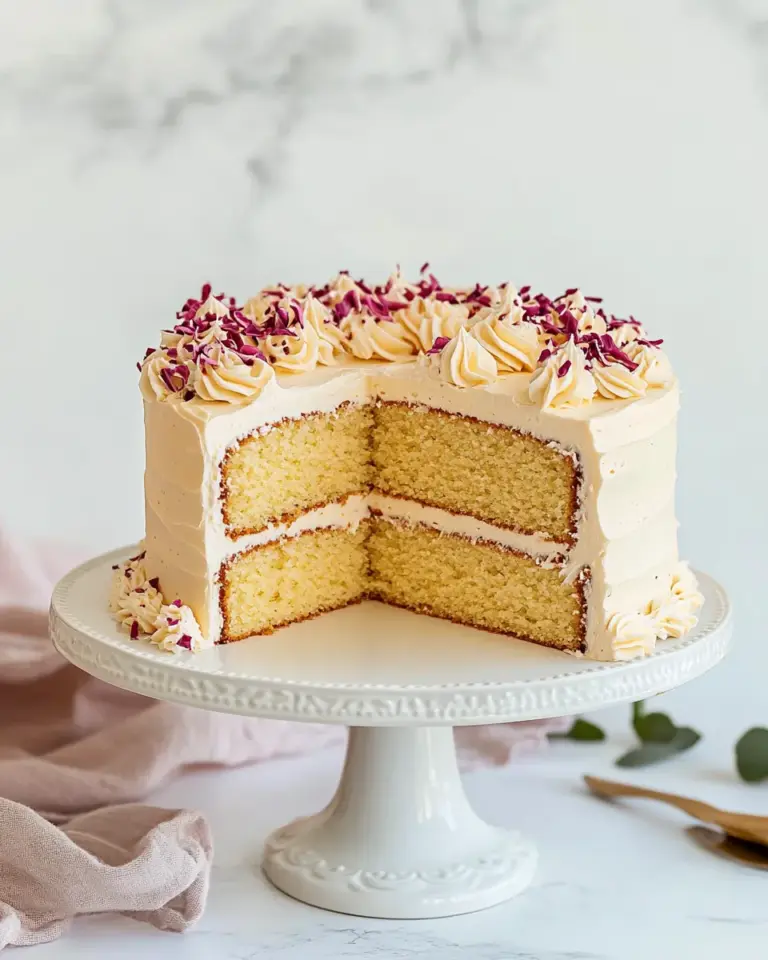
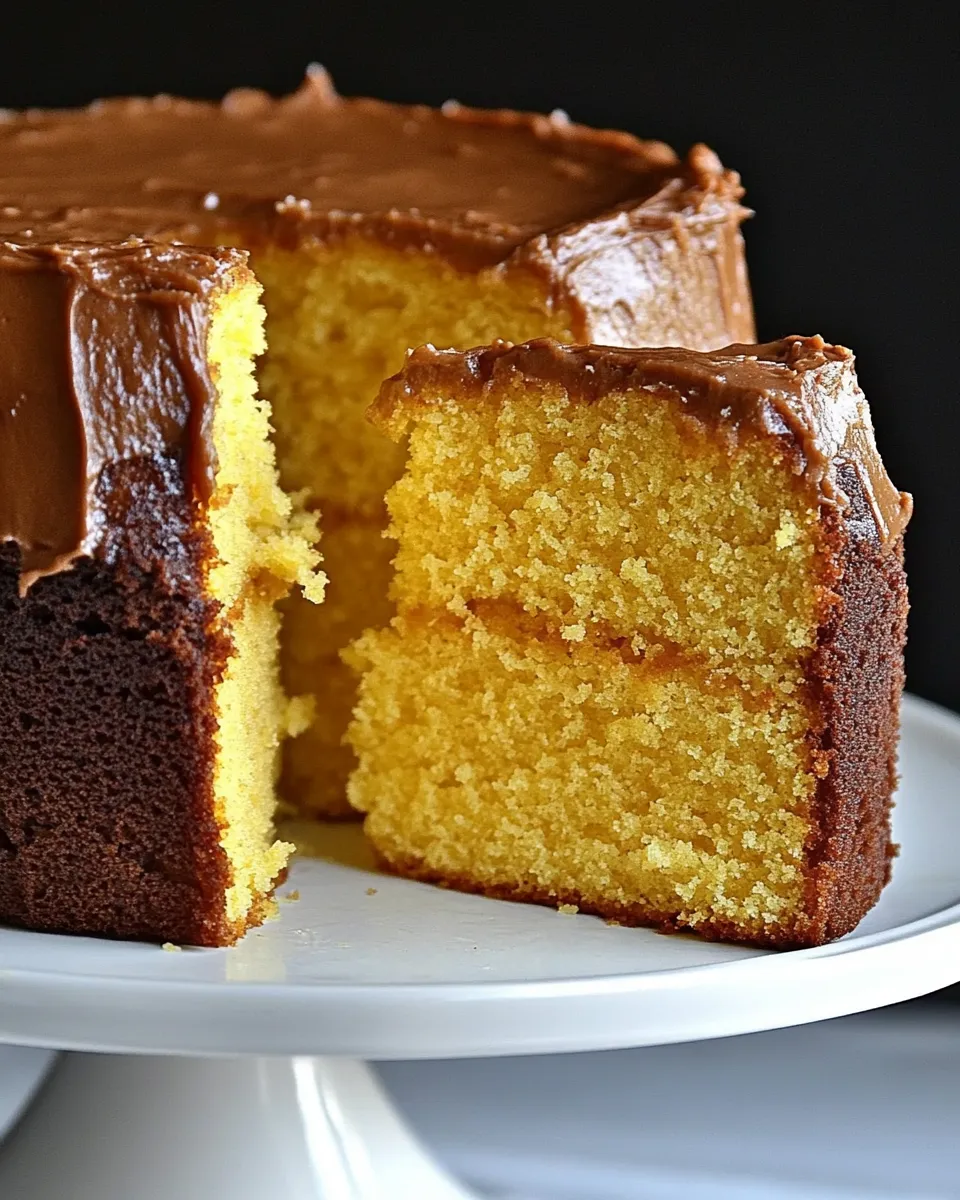
There are recipes you make once and then forget, and there are recipes you keep returning to because they reliably give you what you need: tender crumb, even rise, and that familiar buttery-vanilla flavor everyone recognizes. This classic yellow cake is one of those dependable bakes. It’s straightforward, forgiving, and exactly the sort of recipe you use for birthdays, simple celebrations, or when you want a no-fuss dessert that still tastes special.
I test this cake often because it’s my go-to for layer cakes and sheet cakes alike. It responds well to different frostings, holds up under filling, and the texture is a good middle ground — not too dense, not too airy. If you want a cake that plays well with chocolate frosting, berries, or simply a dusting of powdered sugar, this is the one to start with.
Below you’ll find the ingredient list, the exact steps I follow, and practical notes on hardware, common errors, storage, and small variations. Read through once, then gather your tools and ingredients. You’ll have a classic yellow cake that looks and tastes like it came from a bakery — without the hassle.
The Ingredient Lineup
Ingredients
- 1 cup (226 g) unsalted butter — softened; creamed with sugar to build structure and tenderness.
- 2 cups (396 g) granulated sugar — sweetness and help with a fine crumb when creamed into the butter.
- 4 large (200 g) eggs — whole eggs add lift, moisture, and richness.
- 2 large (28 g) egg yolks — extra yolks boost color and a richer, more tender crumb.
- 1 teaspoon (2.6 g) kosher salt — balances sweetness and highlights flavor.
- 3 teaspoons (12 g) baking powder — the leavening that gives the cake its rise.
- 3 cups (375 g) all-purpose flour — the structure; measure carefully to avoid a heavy cake.
- 2 cups (454 g) buttermilk — acidity tenderizes gluten and adds tang; helps the cake stay moist.
- 2 1/2 teaspoons (11.75 g) vanilla extract — flavor anchor; fold in at the end to preserve aroma.
Make Classic Yellow Cake: A Simple Method
- Preheat oven to 350°F (175°C). Grease and flour two 9-inch round baking pans or coat a 9×13-inch baking pan with butter (or pan release), tapping out any excess flour.
- In a large bowl, beat 1 cup (226 g) softened unsalted butter and 2 cups (396 g) granulated sugar on medium speed until the mixture is pale and light yellow, about 2–3 minutes. Scrape down the bowl.
- Add 4 large eggs to the butter-sugar mixture one at a time, mixing until each egg is fully incorporated before adding the next. Scrape the bowl.
- Add the 2 large egg yolks one at a time, mixing until each yolk is fully incorporated. Scrape the bowl.
- In a separate bowl, whisk together 3 cups (375 g) all-purpose flour, 1 teaspoon (2.6 g) kosher salt, and 3 teaspoons (12 g) baking powder until evenly combined.
- With the mixer on low speed, add half of the dry ingredient mixture to the butter-egg mixture and mix just until combined. Add half of the 2 cups (454 g) buttermilk and mix until combined. Add the remaining dry ingredients and mix until combined. Add the remaining buttermilk and mix until just combined. Scrape the bowl as needed and avoid overmixing.
- Stir in 2 1/2 teaspoons (11.75 g) vanilla extract until evenly distributed, mixing only until blended.
- Divide the batter evenly between the prepared 9-inch pans or pour into the prepared 9×13 pan and smooth the top.
- Bake until the cakes spring back slightly when touched and a toothpick inserted into the center comes out clean or with a few moist crumbs: about 30 minutes for two 9-inch pans or about 35 minutes for a 9×13 pan. Begin checking a few minutes before the minimum time.
- Remove the pan(s) from the oven and place on a wire cooling rack. Let the cake(s) cool in the pan for 8–10 minutes. Run a knife around the pan edges, invert the cakes onto the rack, remove the pans, and let the cakes cool completely.
Why This Recipe Belongs in Your Rotation
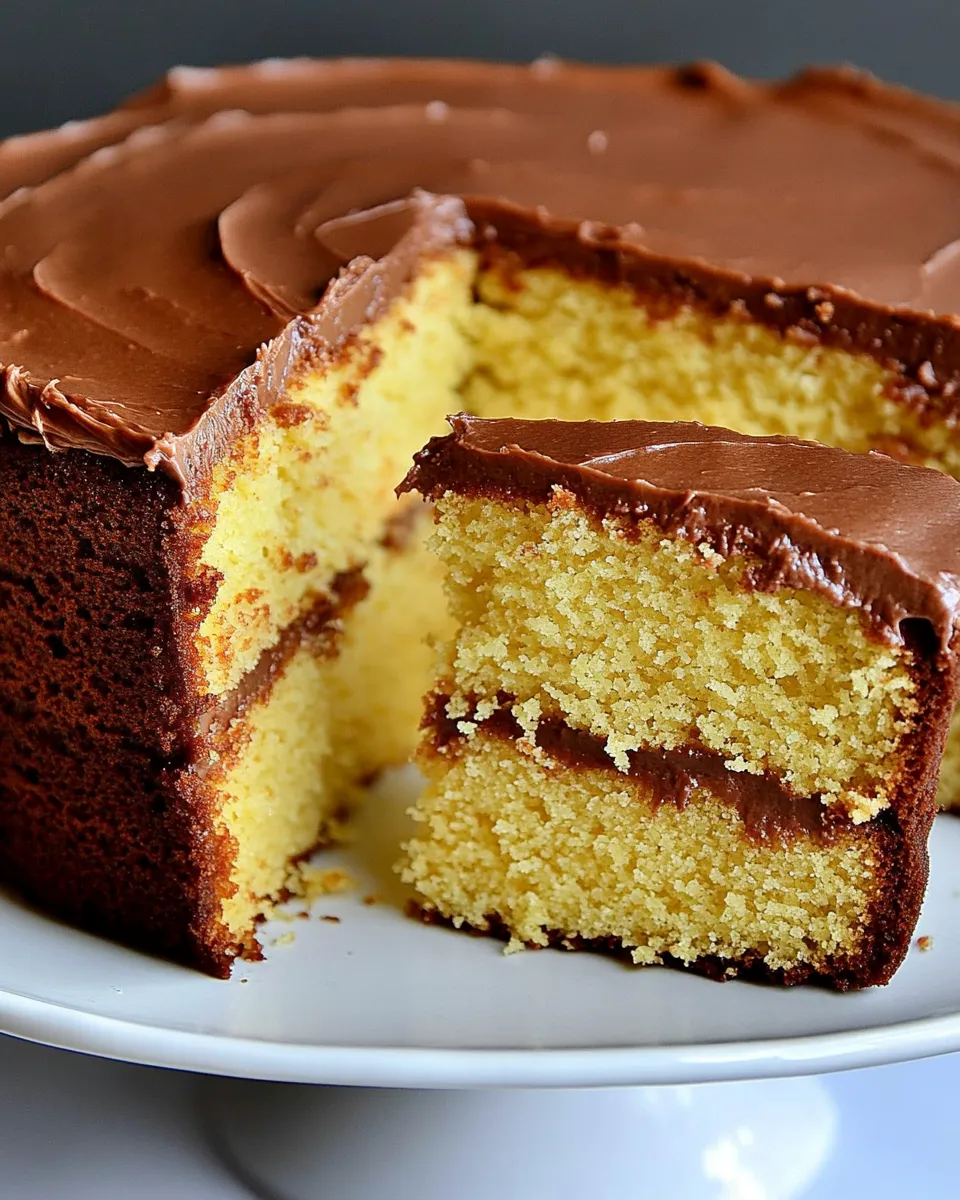
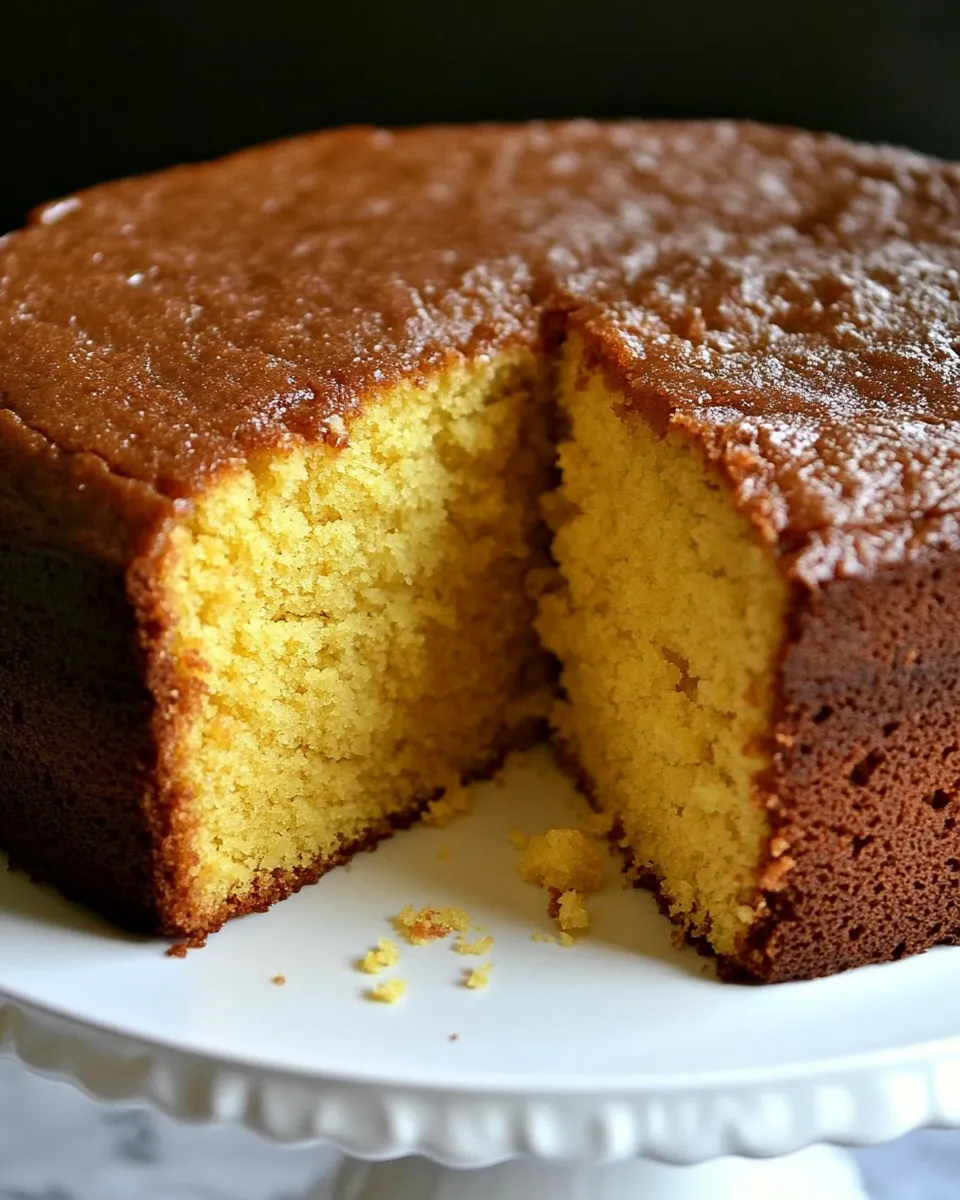
This cake runs the reliability test. The formula balances fat, sugar, eggs, and acid (buttermilk) to give consistent results. It’s forgiving: if your mixing isn’t salon-perfect the cake still tolerates small variations. The crumb stays tender for days when stored properly, and the flavor is classic — not fussy. That makes it excellent for everyday celebrations or last-minute desserts.
It also adapts. Use it as a simple unfrosted sheet cake for a family dinner, slice it into layers for a party cake, or dress it up with fruit and whipped cream. The texture isn’t so fine that fillings overwhelm it, but it’s not so open that frosting leaks through. That middle ground is why I reach for this recipe when I need a crowd-pleaser with minimal drama.
Quick Replacement Ideas
- Buttermilk — if you don’t have buttermilk, use 2 cups milk soured with a tablespoon or two of vinegar or lemon juice; let it sit briefly. The acid is doing the work to tenderize the crumb.
- Unsalted butter — if using salted butter, reduce any added salt slightly; but this recipe’s salt level is modest and often fine as-is.
- All-purpose flour — if you want a lighter crumb, you can try a portion of cake flour, but note that results will change; cake flour reduces protein and yields a softer, finer crumb.
- Sugar — the granulated sugar here gives structure and golden color; substituting with other sugars changes flavor and moisture.
Hardware & Gadgets
A few good tools make this cake easier. You don’t need anything fancy, but the right pieces speed things and improve consistency.
- Stand mixer or hand mixer — for creaming butter and sugar and mixing eggs smoothly.
- Two 9-inch round pans or one 9×13 pan — choose based on how you want to present the cake.
- Wire cooling rack — a must for cooling the cake quickly and preventing sogginess.
- Rubber spatula — for scraping the bowl thoroughly so nothing is left behind.
- Measuring cups and kitchen scale — I prefer weighing ingredients for accuracy, especially flour and butter.
- Toothpick or cake tester — for checking doneness.
Errors to Dodge
Small mistakes make big differences in cakes. Here are traps I see most often and how to avoid them.
- Overmixing after adding flour — mix only until combined. Overworking develops gluten and gives a tough cake.
- Incorrect flour measurement — scoop-and-level adds too much flour. Spoon into the cup or weigh for best results.
- Cold ingredients — the butter should be softened and eggs at room temperature so they incorporate smoothly and the batter emulsifies correctly.
- Wrong oven temperature — ovens vary. Use an oven thermometer and rotate pans if your oven has hot spots.
- Removing cakes too soon — letting them rest 8–10 minutes in the pan prevents breakage; going straight to the cooling rack can cause tearing.
Make It Fit Your Plan
Need to adjust the timing or presentation? This recipe is scalable and forgiving.
- Make ahead — the unfrosted layers keep well wrapped at room temperature for a day. For longer storage, refrigerate or freeze (see storage section).
- Scaling — to halve, reduce each ingredient proportionally; bake time will be shorter for smaller pans. For doubling, use larger pans or multiple batches to ensure even baking.
- Layer cakes — level the tops with a serrated knife for even stacking. Chill layers briefly to make slicing and frosting neater.
If You’re Curious
Why buttermilk? Its acidity reacts with baking powder to give a tender crumb and subtle tang that cuts sweet frostings. Why extra yolks? They add richness, color, and a silkier texture without making the cake dense. The creaming step is important: you want light and pale butter and sugar to trap air, which helps the cake rise evenly.
If you’re experimenting, change one element at a time. Try a different pan or swap a portion of the flour for cake flour and note the change. That way you learn what each adjustment does to texture and flavor.
Refrigerate, Freeze, Reheat
Storage is simple. For short-term, wrap completely cooled, unfrosted layers in plastic wrap and keep at room temperature up to 24 hours. For longer, refrigerate up to 3 days, or freeze up to 2 months. Double-wrap for the freezer to avoid freezer burn. Thaw in the refrigerator overnight, then bring to room temperature before frosting.
If you bake a 9×13 sheet and want warmed slices, reheat gently in a low oven (300°F / 150°C) for 5–10 minutes, covered with foil to prevent drying. Microwaving works for a quick warm piece, but texture can change.
Your Questions, Answered
Can you use oil instead of butter? You can, but the flavor and crumb will change. Butter gives flavor and helps crumb structure in this formula. If you must use oil, expect a different mouthfeel and adjust flavoring accordingly.
Can I make this gluten-free? Substitute a reliable gluten-free flour blend that’s designed for 1:1 replacement; results vary by brand. Expect a slightly different texture and possibly a need for additional binding agents depending on the blend.
How do I know when it’s done? Look for a cake that springs back slightly when touched and for a toothpick inserted in the center to come out clean or with a few moist crumbs. Start checking a few minutes before the minimum time listed to avoid overbaking.
Final Bite
This Classic Yellow Cake is the kind of recipe you keep coming back to because it hits the right notes: straightforward technique, dependable texture, and a flavor profile that supports many frostings and fillings. Follow the method, mind the small traps, and you’ll have a crowd-pleaser every time. Bake it for a birthday, a simple weekend treat, or when you need a reliable cake to build on. It’s a kitchen workhorse — and one I always have in my recipe rotation.
The Best Classic Yellow Cake Recipe
Ingredients
Ingredients
- 1 cup 226 gunsalted butter, , softened
- 2 cups 396 ggranulated sugar
- 4 large 200 geggs
- 2 large 28 gegg yolks
- 1 teaspoon 2.6 gkosher salt
- 3 teaspoons 12 gbaking powder
- 3 cups 375 gall-purpose flour
- 2 cups 454 gbuttermilk
- 2 1/2 teaspoons 11.75 gvanilla extract
Instructions
Instructions
- Preheat oven to 350°F (175°C). Grease and flour two 9-inch round baking pans or coat a 9×13-inch baking pan with butter (or pan release), tapping out any excess flour.
- In a large bowl, beat 1 cup (226 g) softened unsalted butter and 2 cups (396 g) granulated sugar on medium speed until the mixture is pale and light yellow, about 2–3 minutes. Scrape down the bowl.
- Add 4 large eggs to the butter-sugar mixture one at a time, mixing until each egg is fully incorporated before adding the next. Scrape the bowl.
- Add the 2 large egg yolks one at a time, mixing until each yolk is fully incorporated. Scrape the bowl.
- In a separate bowl, whisk together 3 cups (375 g) all-purpose flour, 1 teaspoon (2.6 g) kosher salt, and 3 teaspoons (12 g) baking powder until evenly combined.
- With the mixer on low speed, add half of the dry ingredient mixture to the butter-egg mixture and mix just until combined. Add half of the 2 cups (454 g) buttermilk and mix until combined. Add the remaining dry ingredients and mix until combined. Add the remaining buttermilk and mix until just combined. Scrape the bowl as needed and avoid overmixing.
- Stir in 2 1/2 teaspoons (11.75 g) vanilla extract until evenly distributed, mixing only until blended.
- Divide the batter evenly between the prepared 9-inch pans or pour into the prepared 9×13 pan and smooth the top.
- Bake until the cakes spring back slightly when touched and a toothpick inserted into the center comes out clean or with a few moist crumbs: about 30 minutes for two 9-inch pans or about 35 minutes for a 9×13 pan. Begin checking a few minutes before the minimum time.
- Remove the pan(s) from the oven and place on a wire cooling rack. Let the cake(s) cool in the pan for 8–10 minutes. Run a knife around the pan edges, invert the cakes onto the rack, remove the pans, and let the cakes cool completely.
Equipment
- 2-3Cake Pans (9-inch)